Mold Remediation Coventry, CT
Green Restoration of Tolland County, mold remediation in Coventry, call (860) 222-9498 IICRC S520 Certified, Licensed and Insured, Same-Day Attic Mold Inspection
 IICRC Certified
 Eco-Friendly Solutions For Healthier Spaces
Reviewed by David Megeneishvili·Licensed & Insured In CT·IICRC AMRT + WRT
What Is IICRC S520 Mold Remediation?
Mold remediation is the IICRC S520-2024 documented process of source-cause moisture diagnosis, HEPA-filtered negative-air containment construction, condition-1 vs condition-2 vs condition-3 substrate triage, controlled removal of porous Condition 3 materials, antimicrobial application of EPA-registered formulations, HEPA post-cleaning, and ACAC-certified independent third-party clearance verification before any reconstruction.
In Coventry, CT, remediation is sequenced strictly: identify and stop the moisture source, build containment with negative-air HEPA AFD machines and 6-mil poly barriers, remove visibly contaminated porous materials, decontaminate semi-porous surfaces per S520 § 12.2, antimicrobial mist treat, HEPA vacuum the work area, and only release containment after independent third-party air and surface sample clearance falls inside the Condition 1 envelope.
- IICRC S520-2024 aligned
- HEPA negative-air containment
- ACAC independent clearance
- EPA-registered antimicrobials
Why Coventry Mold Jobs Run IICRC S520
Connecticut has no mandatory mold licensing regime, but IICRC S520-2024 is the de facto industry standard. CT § 20-427 still requires HIC registration for any remediation work over $200, with documented scope, antimicrobial application records, and clearance testing.
Green Restoration runs IICRC S520-2024 protocol with HEPA negative-air containment, ACAC-certified independent third-party clearance, and full chain-of-custody microbial documentation on every remediation.
Complete Mold Remediation In Coventry, CT
Every Coventry mold scope contained by IICRC S520 crews dispatched across Tolland County in 2026.
Black Mold (Stachybotrys) Remediation
Stachybotrys colonization in Coventry basements and local corridor floodplain cavities. IICRC S520 sealed double-layer containment, negative-air HEPA filtration, removal of affected drywall and porous materials, and ACAC lab clearance before re-entry across mixed-era housing assemblies.
Post-Remediation Clearance Testing
Third-party ACAC air sampling after every Coventry remediation. Lab-analyzed spore counts compared against outdoor baseline. Written clearance certificate formatted for Tolland County insurer files. No reoccupancy until counts are at or below baseline per IICRC S520.
Same-Day Mold Inspection And Air Sampling
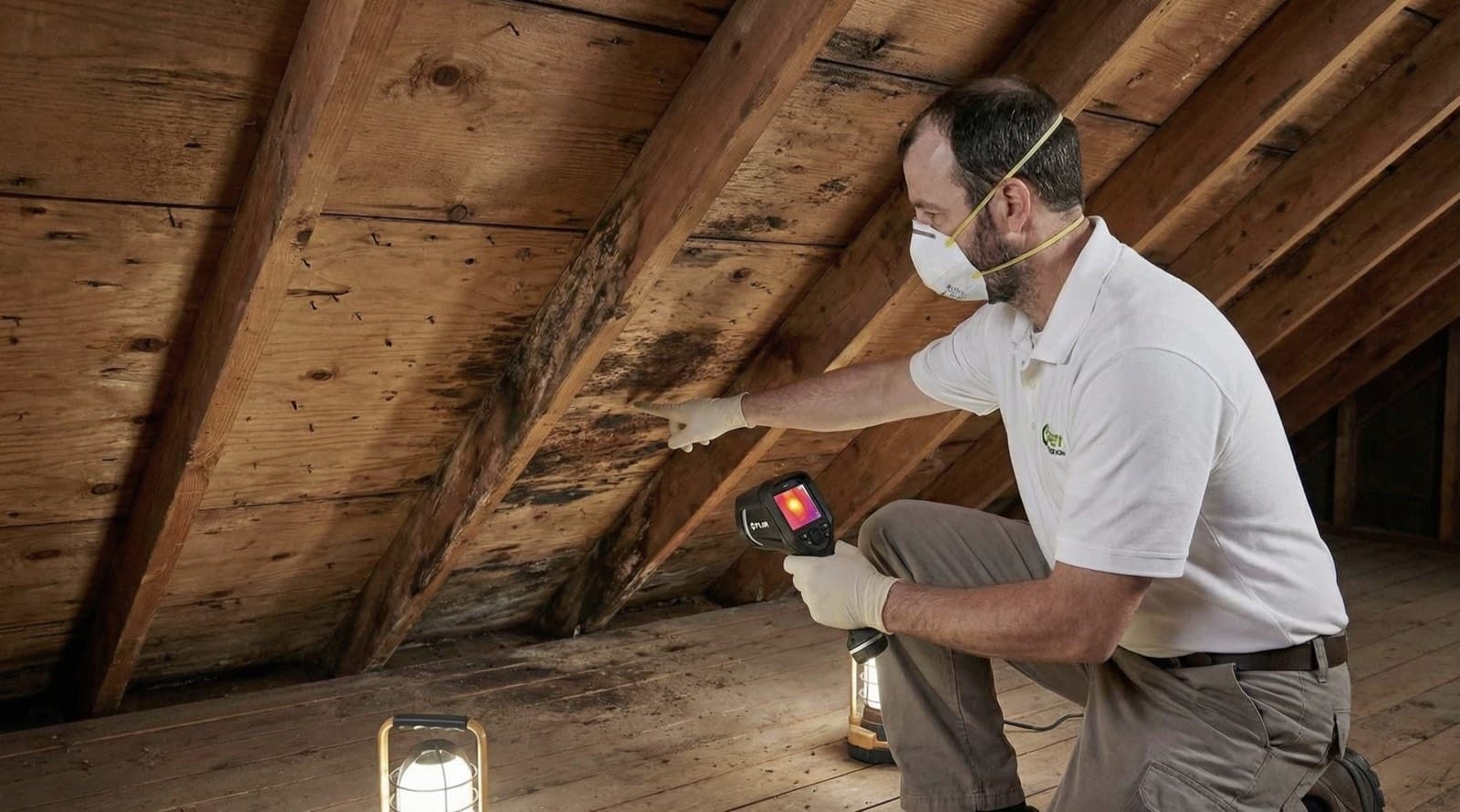
Same-day dispatch across Coventry, Tolland County. Tramex moisture meters, FLIR thermal imaging, and ACAC air sampling kits document scope at first visit. Lab-analyzed pre-remediation baseline informs containment design before any pricing conversation.
Additional Mold Remediation Services In Coventry
Full Mold Remediation And Removal
Complete physical removal across Coventry mixed-era stock. Affected drywall, plaster, insulation, and porous substrate double-bagged and removed. Framing receives EPA-registered antimicrobial per IICRC S520. Timestamped phase photos delivered to your Tolland County adjuster.
HVAC And Duct Mold Cleaning
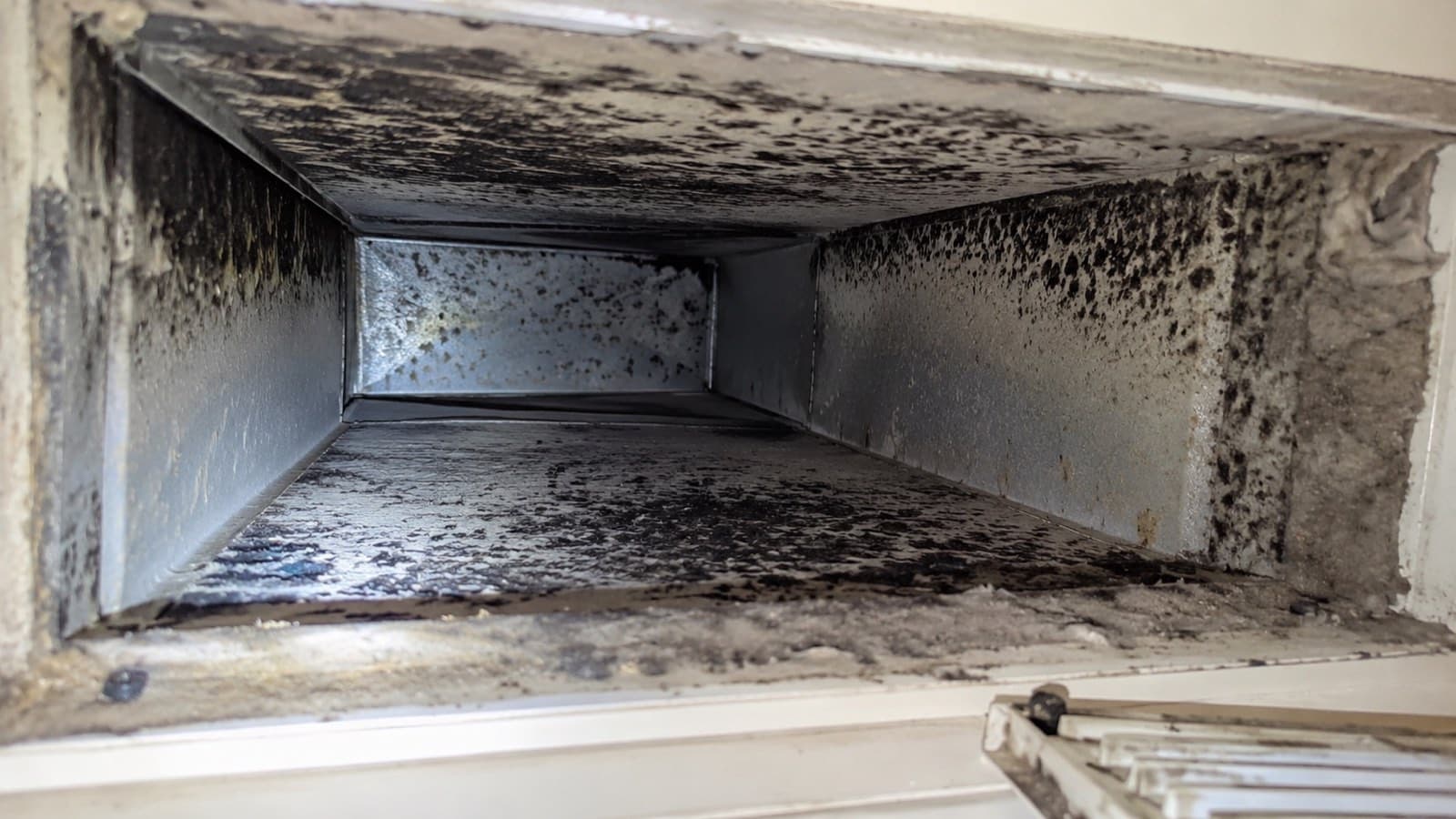
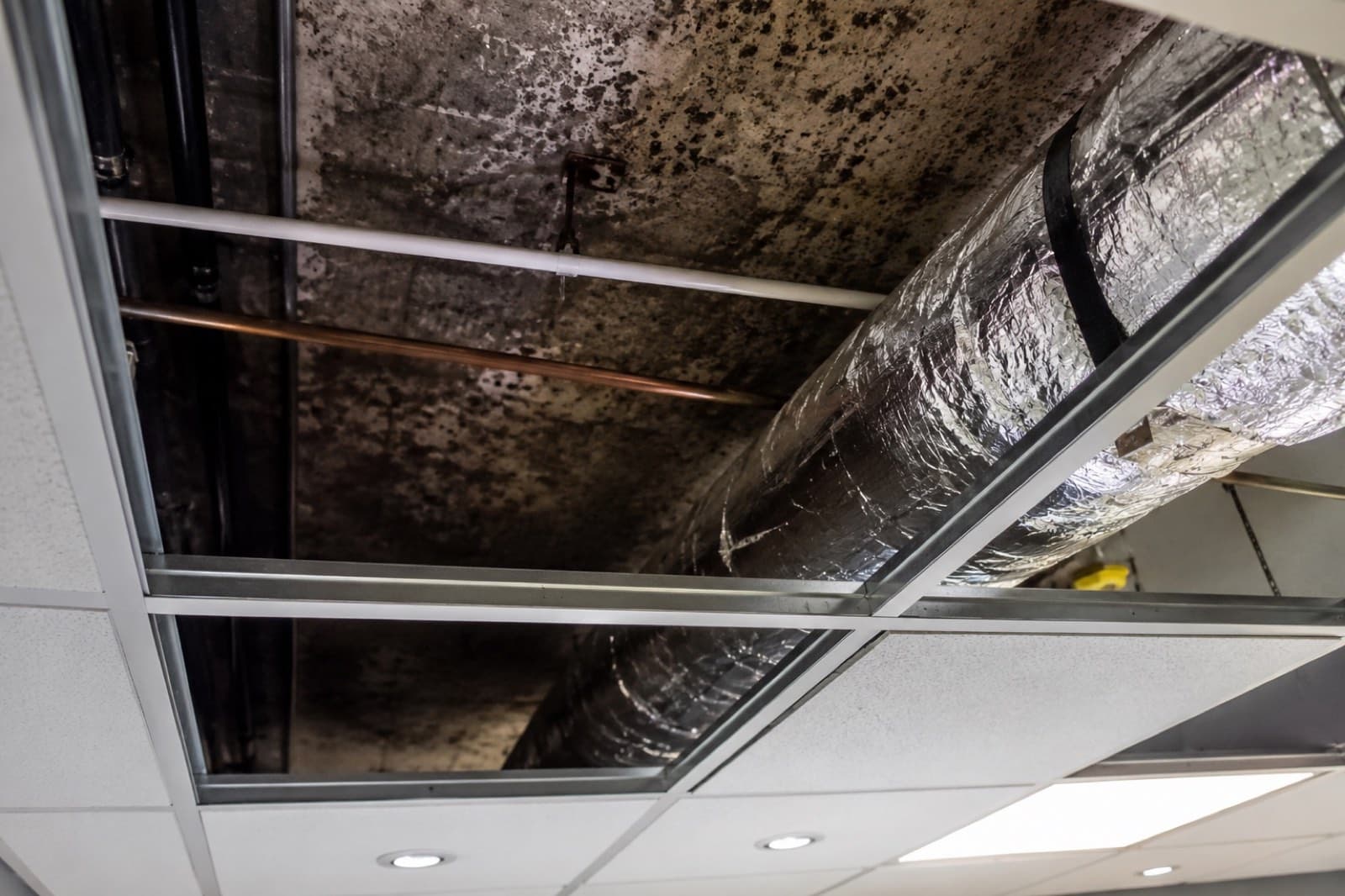
Mold in Coventry HVAC supply trunks, return plenums, and AHU coils. NADCA ACR source-removal protocol with whip rotation, negative-air, and HEPA collection. Coil sanitization with EPA-registered product. Post-clean visual inspection and air sampling for Tolland County property owners.
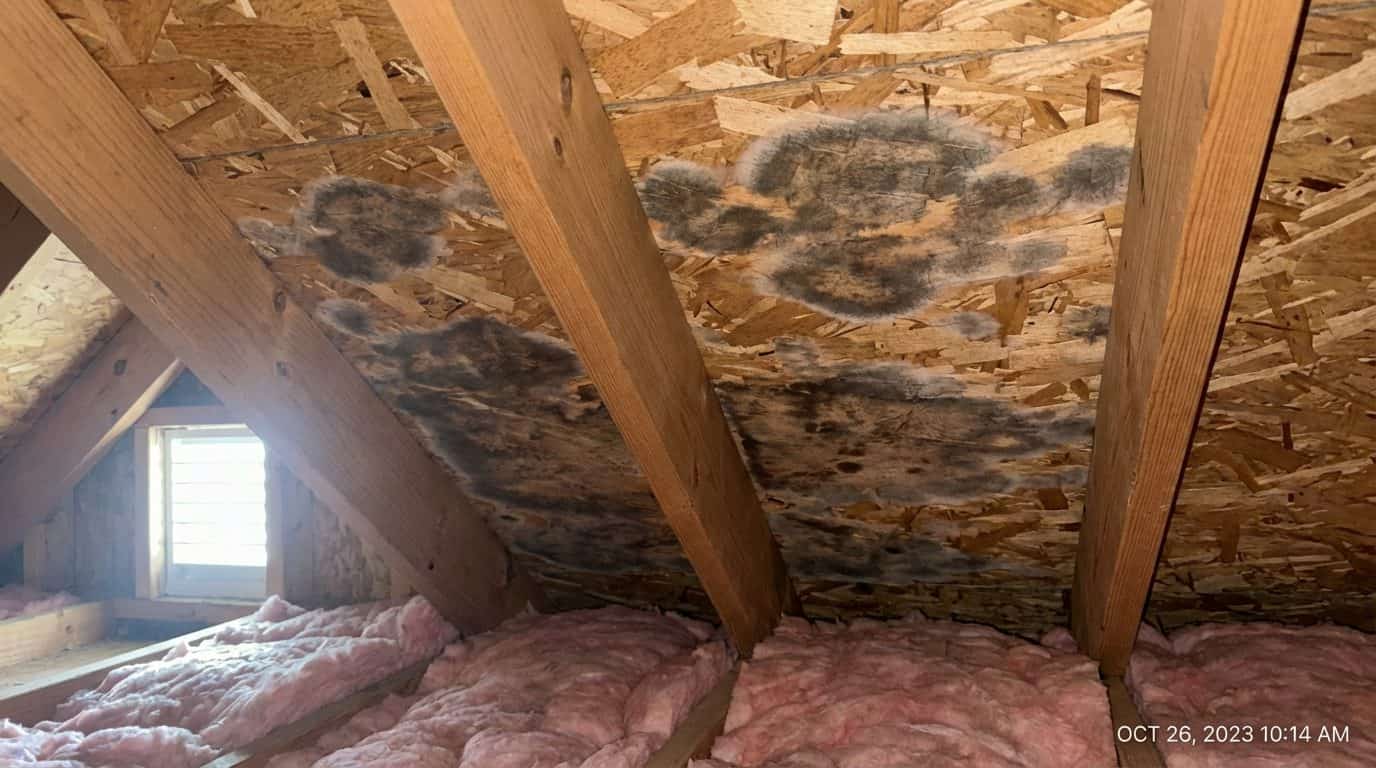
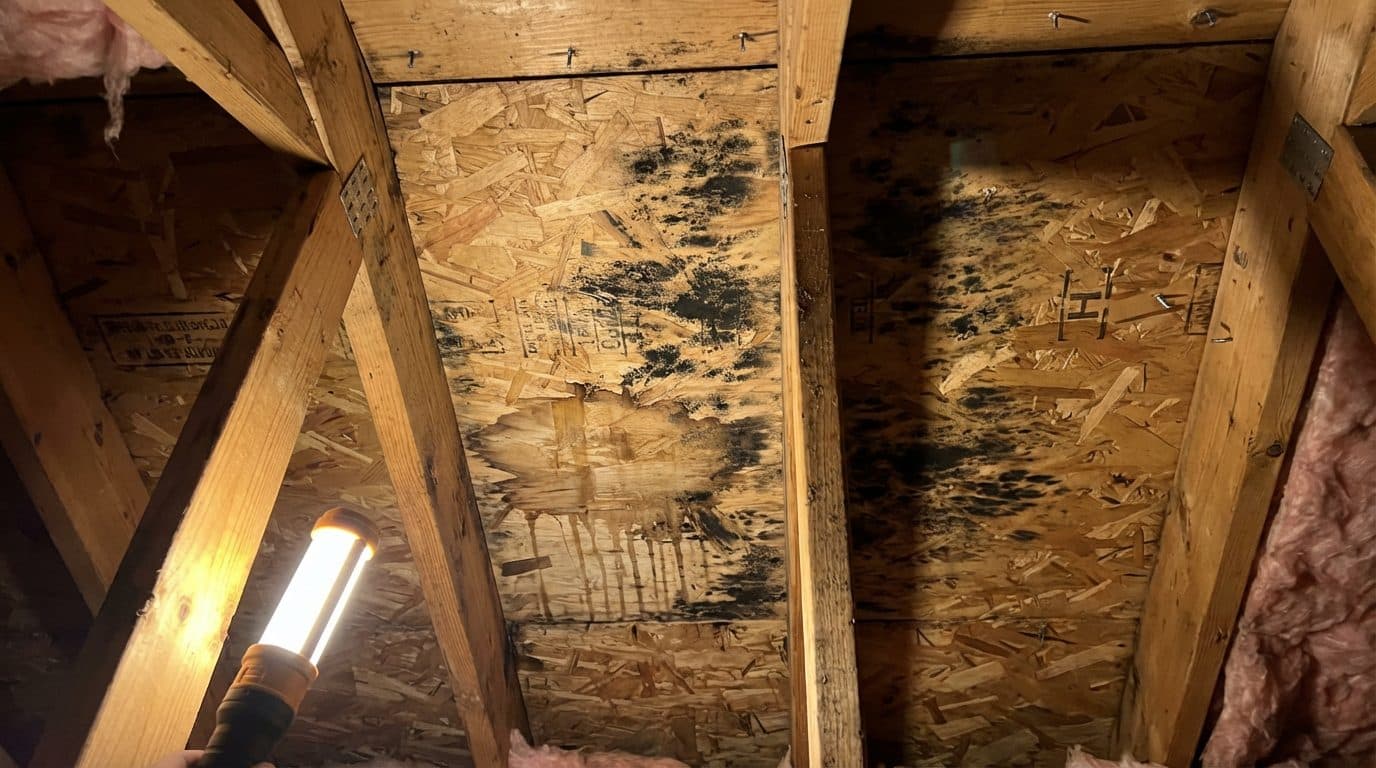
Attic Mold Cleanup
Roof-sheathing Stachybotrys and Penicillium colonies in Coventry attics from soffit-vent blockage, ridge-vent failure, or knee-wall cavity stack effect. IICRC S520 containment, sodium-percarbonate or hydrogen-peroxide foam treatment, sheathing replacement when MC stays above 16% after dry-down.
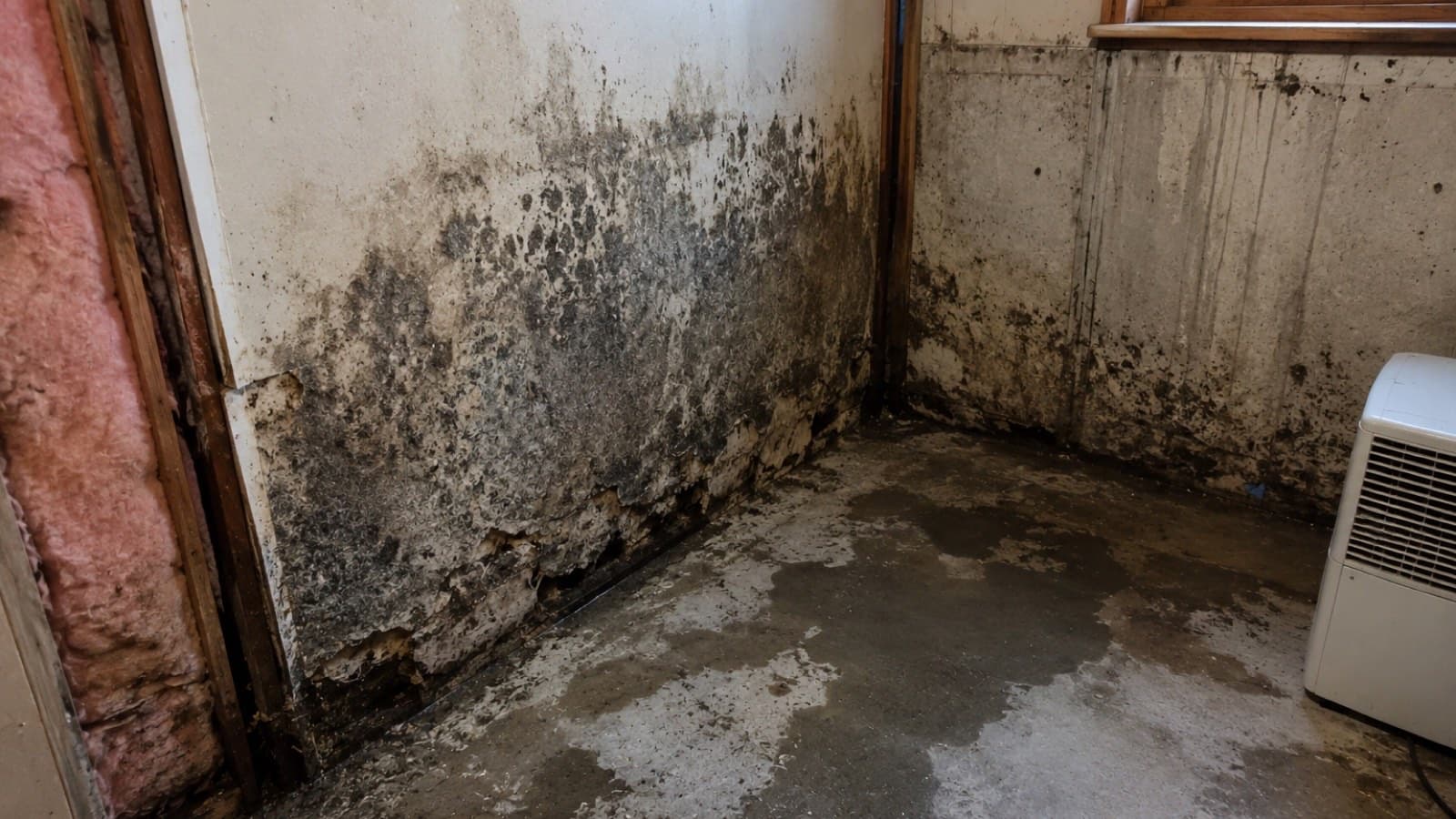
Basement Mold Cleanup
Basement mold across Coventry local corridor fieldstone and poured-foundation properties. Source-correction first (interior drainage, sump pump, vapor barrier), then S520 containment, antimicrobial treatment, and lab clearance. Documented for Tolland County insurance.
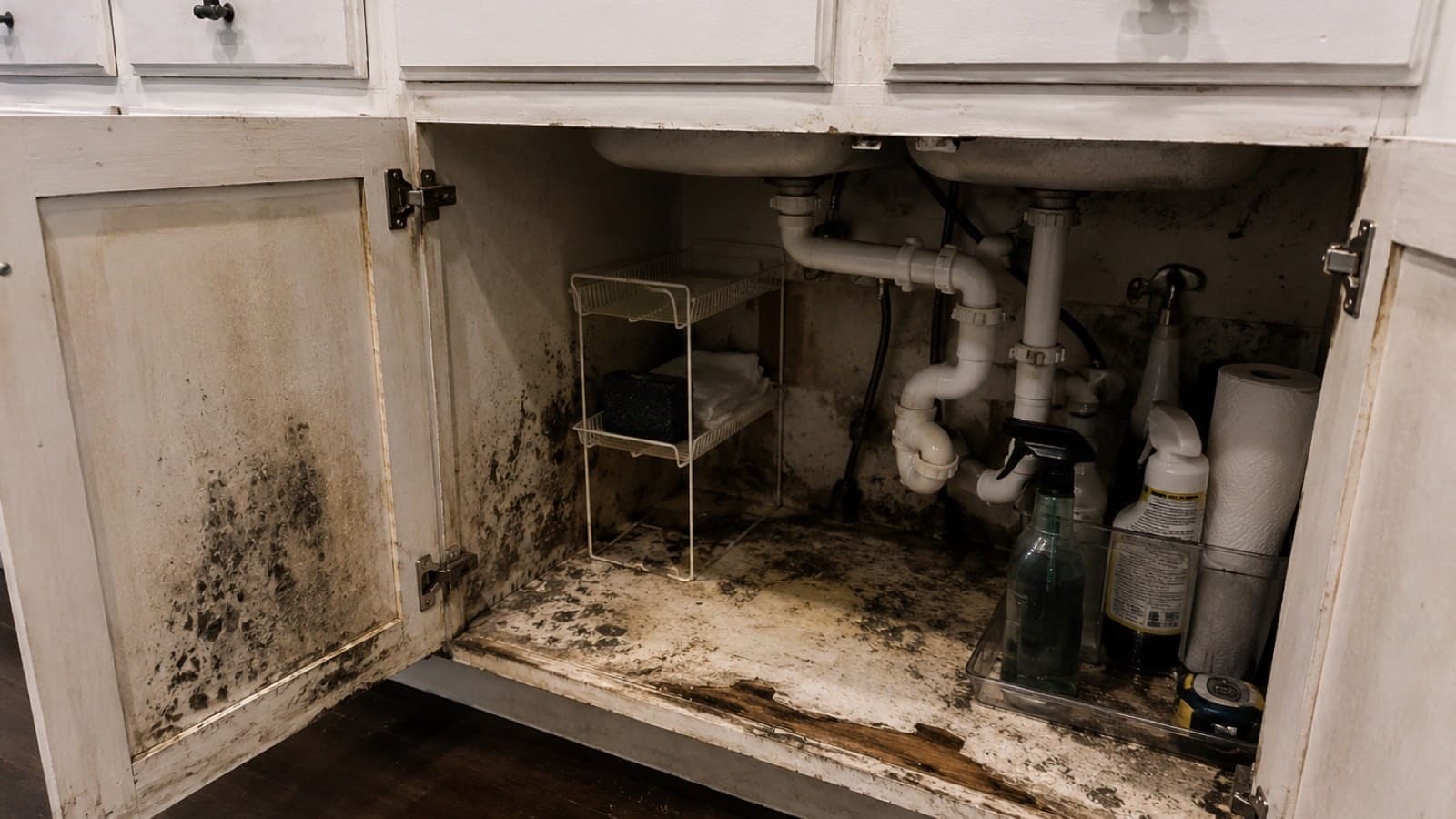
Bathroom And Kitchen Mold Removal
Tile-grout, drywall, and cabinet-base mold in Coventry bathrooms and kitchens from chronic leaks under fixtures and vanities. Containment around the work area, removal of affected substrate, antimicrobial treatment, source-correction coordination with plumbers, and clearance inspection.
Crawlspace Mold Remediation
Crawlspace mold across Coventry mixed-era stock , joist surface mold, fiberglass insulation contamination, vapor-barrier failures. HEPA vacuuming, sanding or soda-blasting affected joists, EPA antimicrobial, and 12-mil reinforced vapor barrier with sealed seams.

Don't Let Mold Spread Another 24 Hours. Same-Day Inspection.
IICRC S520 Certified Crews On Site Same Day Across Coventry And Tolland County. Hospital-Grade Containment, Lab-Verified Clearance.
Green Restoration of Tolland County in Coventry
Green Restoration of Tolland County handles mold remediation in Coventry, CT, where lakefront Cape wall cavities draw Coventry Lake and Eagleville Lake moisture behind sheetrock, sustaining hidden colony growth. Owner-led crews set HEPA containment and remove affected porous materials to IICRC S520 standards, under IICRC Certified Firm #70236106. Call (860) 222-9498.
Why Choose Us In Coventry
Owner-led mold remediation with same-day inspection, lab-verified clearance testing, and hospital-grade containment across Coventry and Tolland County.
Same-Day Mold Inspection
IICRC S520 certified inspectors arrive same day with thermal imaging, moisture meters, and ACAC air sampling kits.
IICRC S520 Containment
Sealed plastic sheeting, negative air pressure, and HEPA-filtered scrubbers isolate every mold work area from the rest of your home.
Benefect + Concrobium Antimicrobials
EPA-registered Benefect Decon-30 botanical disinfectant and Concrobium Mold Control treat every framing surface after physical removal, no harsh fumes.
Lab-Verified Clearance Testing
Third-party ACAC air sampling confirms post-remediation spore counts at or below outdoor baseline before you re-occupy.
What Untreated Mold Costs Your Coventry Home
Most Coventry homeowners do not notice attic mold until a stain spreads across a bedroom ceiling or a real-estate inspection flags the sheathing. Coventry Lake humidity and conversion-era ventilation gaps make it compound fast across the rafter bays.
Coventry Lake And Hop River Corridor Pressure
Lake-Adjacent And Patriots Park Most At Risk
Coventry homes around Coventry Lake and along the Hop River corridor sit in a humidity-loaded watershed where summer lake evaporation drives attic-plane moisture far above outdoor baseline. Combined with winter stack-effect loading from conditioned bedrooms below, spore colonization begins on cold sheathing within 48 hours of every saturation event across the lake-corridor stock.
Lake-Cottage Conversion Ventilation Shortcuts
1950s-70s Lakefront Cottage Stock Across Coventry
Coventry Lake cottages from the 1950s-70s were built as seasonal cabins with minimal attic ventilation, often just a single gable louver. When they got winterized for year-round occupancy through the 1990s-2000s, owners sealed the envelope but rarely added proper ridge and soffit venting, leaving warm moist interior air trapped against cold sheathing all winter long across Coventry lakefront homes.
Patriots Park Area Knee-Wall Cavity Mold
Hidden Behind Cottage-Conversion Side Walls
Patriots Park area and Coventry Lake conversion stock has uninsulated unsealed knee-wall cavities behind second-floor side walls. Humid lake-corridor bedroom air escapes into the cavity, rises through rafter bays, and grows hidden Stachybotrys colonization on Coventry attic sheathing for years before any stain reaches the finished ceiling.
South Coventry Village Cape Ridge-Vent Failure
Route 31 Corridor Cape Cod Stock
South Coventry village and Route 31 corridor 1950s-70s Cape Cod and ranch tracts were built with undersized soffit intake and ridge vents that get blocked by blown-in cellulose retrofits. Warm moist interior air gets trapped against cold OSB sheathing in Coventry Cape attics, growing Stachybotrys across rafter bays through every Tolland County winter.
Disclosure Required On Resale
CT Law Protects Buyers, Not Sellers
Connecticut residential property disclosure law requires attic mold history reporting on every sale. Professional remediation with lab-verified clearance documentation protects your Coventry listing value, whether you are selling a Coventry Lake cottage conversion, a Hop River ranch, or a South Coventry village Cape on the open market.
Aspergillus And Penicillium Across Cottage Plank Decking
Original Plank Sheathing Holds Highest Risk
Original plank decking on Coventry Lake conversion-era cottages runs chronic winter condensation cycles for years after winterization. The result is heavy Aspergillus and Penicillium colonization across the rafter bays that requires sealed attic-plane containment, HEPA air scrubbing, dry-ice or soda blasting, and clearance testing to remove safely under IICRC S520 protocol.
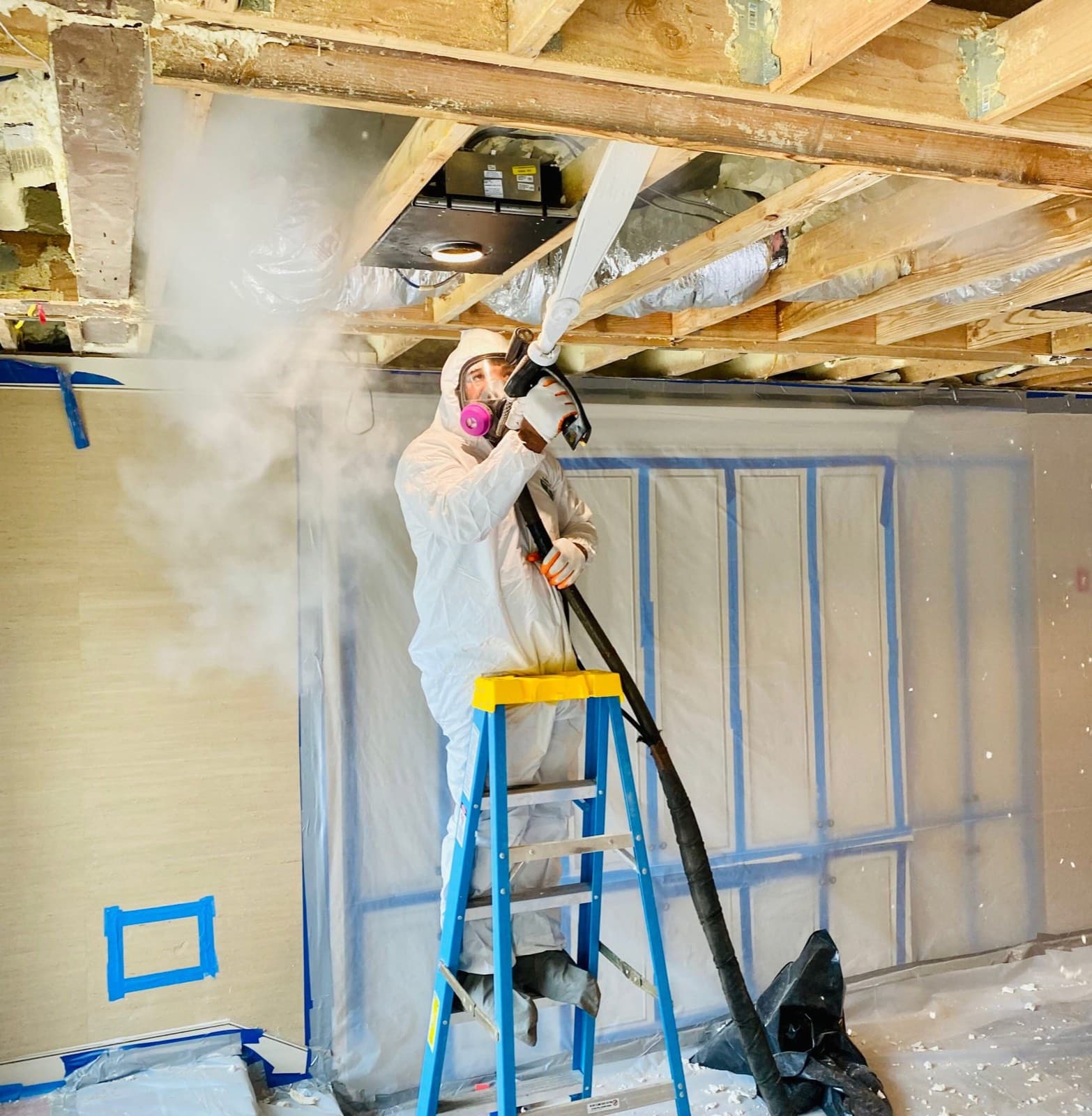
Why Coventry Properties Need Professional Mold Remediation
Coventry attic conditions create mold pressure surface cleaning cannot solve. Hospital-grade attic containment with lab-verified clearance is the only durable fix for lakefront cottage and ranch stock alike.
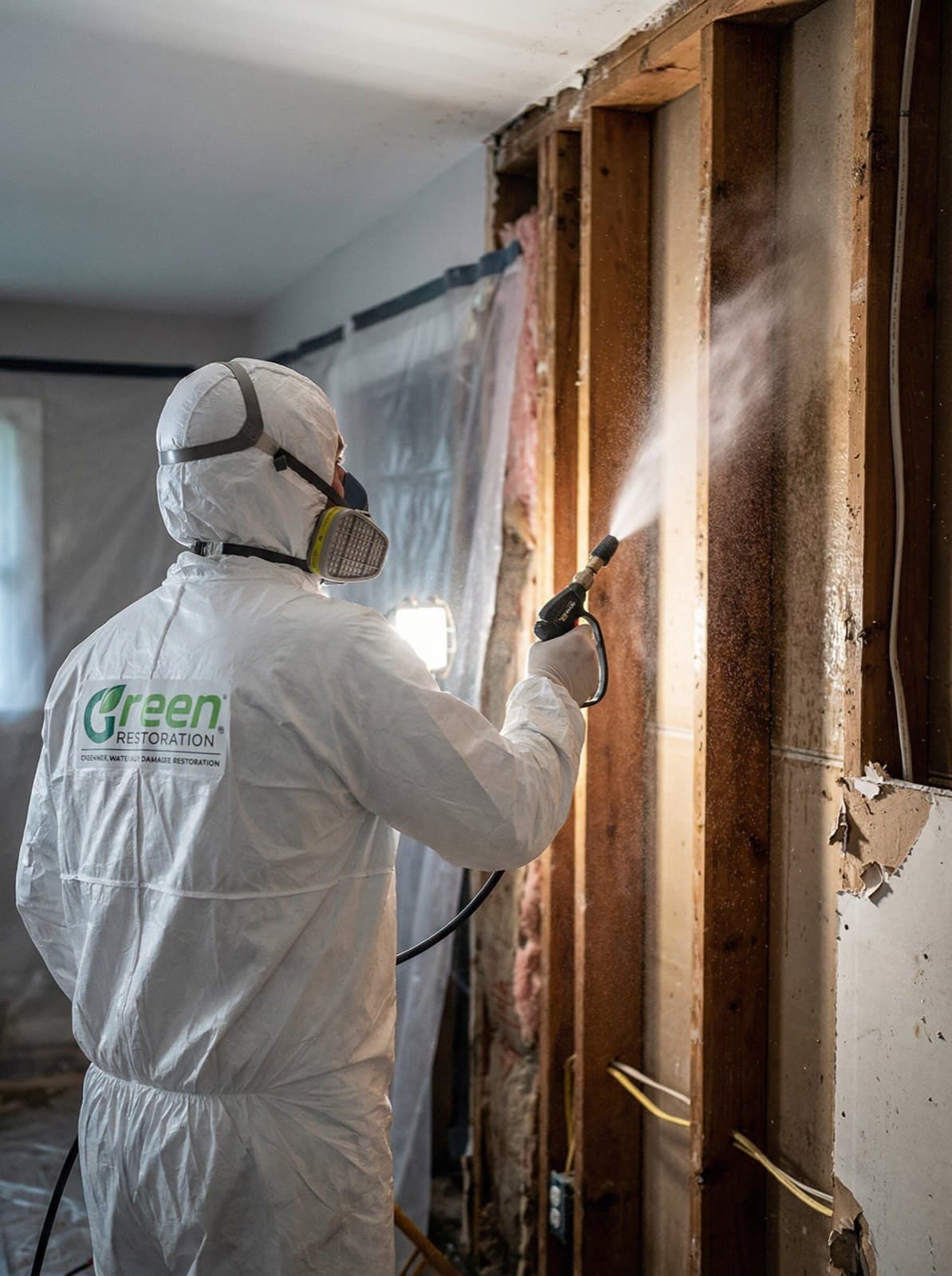
IICRC S520, AMRT, And WRT Certified Coventry Crews
Every Green Restoration mold crew is IICRC S520 certified with hospital-grade attic-plane containment protocol, and our owner carries IICRC AMRT (Applied Microbial Remediation Technician) and WRT (Water Restoration Technician) credentials since 2017. We have remediated Coventry Lake cottage conversions, Hop River corridor ranches, Patriots Park area knee-wall cavities, and South Coventry village Capes. The certification is the floor, not the ceiling.
Same-Day Attic Inspection Across Tolland County
A technician is on site in Coventry the same day you call, whether you are on Coventry Lake, along the Hop River, near Patriots Park, or in South Coventry village. We bring thermal imaging, moisture meters, and ACAC-certified air sampling kits on the first visit so the attic-plane scope is documented before any pricing conversation starts across Tolland County.
Conversion-Era Ventilation Source Corrected, Not Just Cleaned
Most Coventry attic mold comes back because the conversion-era gable louver, blocked baffle, or undersized ridge vent was never fixed. We coordinate directly with roofers and insulation contractors on Coventry Lake cottage ridge-vent rebuilds and Hop River corridor knee-wall air-sealing so the root cause is solved before we close the attic, with David's AMRT and WRT training informing every source-correction decision.
Lab-Verified Clearance You Can Hand Your Adjuster
Every Coventry attic mold job closes with third-party ACAC air sampling and written clearance at or below outdoor baseline. The file we deliver includes scope, attic containment photos, lab reports, and the IICRC-standard documentation that major carriers including Liberty Mutual, Allstate, State Farm, Travelers, Hartford Insurance Group, USAA, and Chubb work with for a clean approval across Tolland County.
The Mold We See Most in Coventry
These are the mold problems we remediate most often, every job run to the IICRC S520 standard, contained with HEPA negative air, and cleared by independent ACAC air testing.
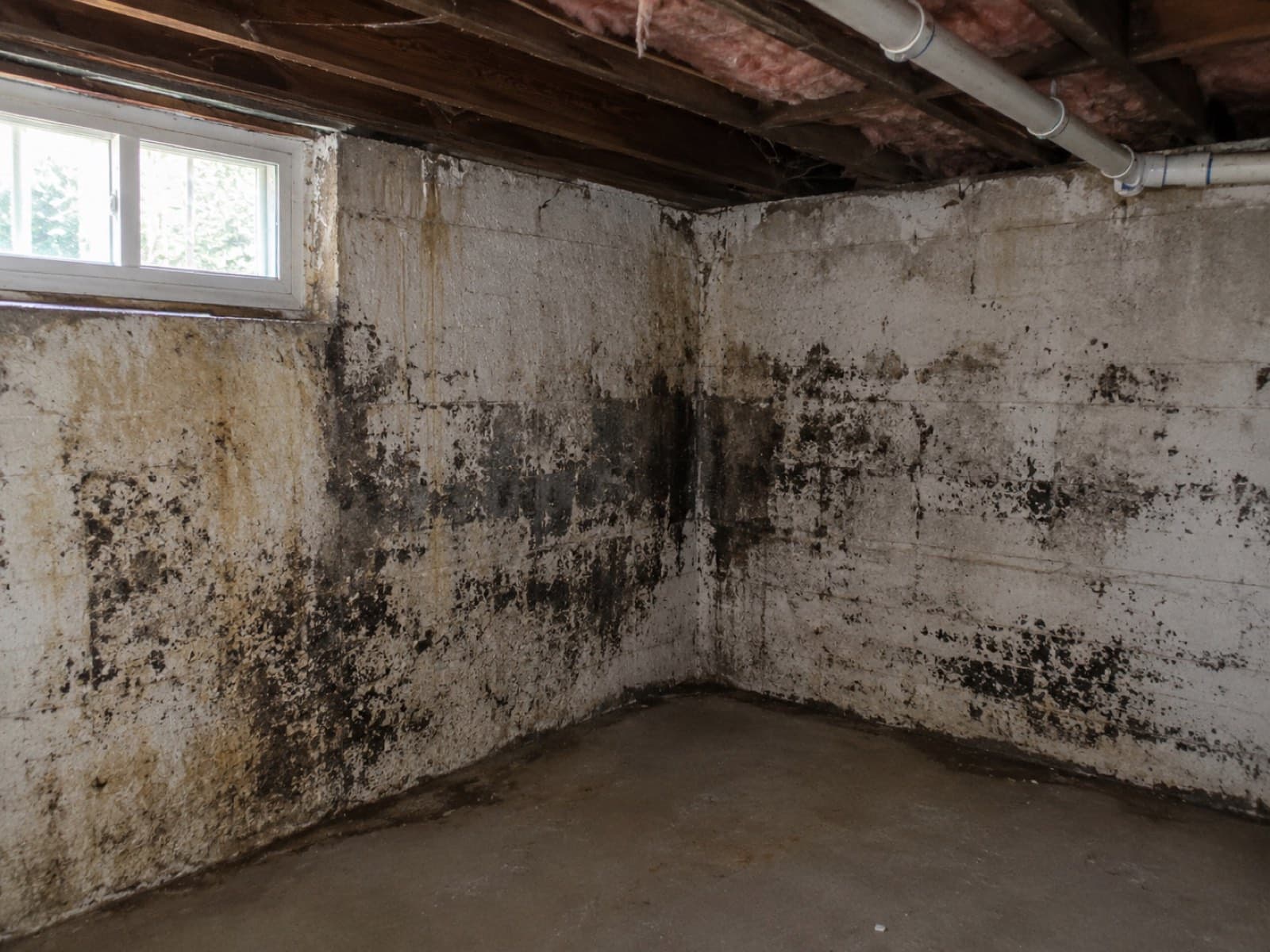
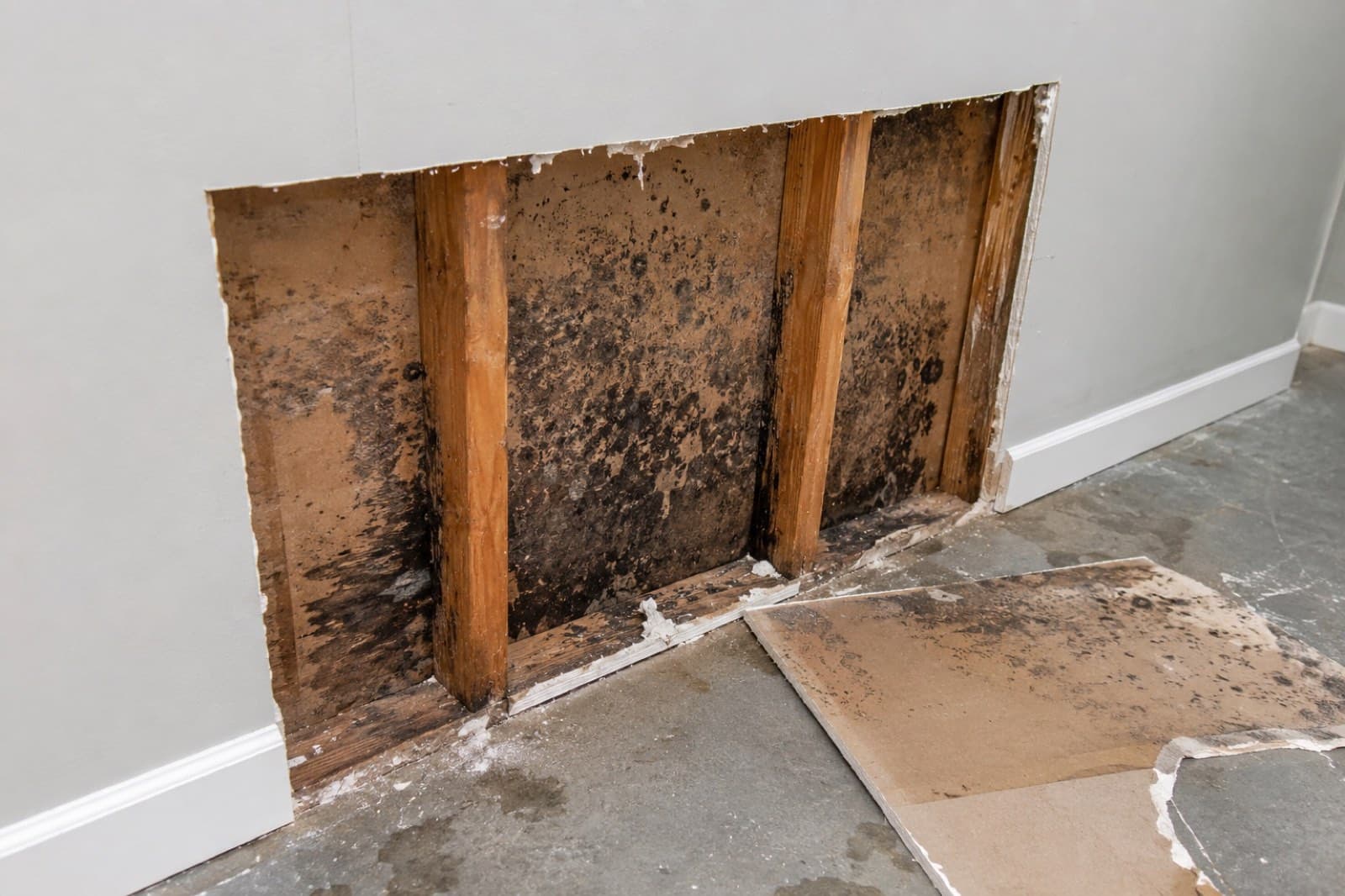
Basement Wall Mold, Fully Removed
In Coventry, shoreline saturation from Coventry Lake and Hop River corridor moisture seep into lakefront ranch slabs and fieldstone cellar walls.
Chronic humidity, a sump failure, or seepage through the slab edge and foundation wall keeps a basement damp enough for mold to spread across concrete, framing, and stored belongings. On finished basements the same moisture colonizes the back of drywall and the wall cavity long before any stain reaches the room.
Our crews set sealed containment with negative air pressure and HEPA-filtered air scrubbers, then remove or HEPA-clean the affected materials and treat the foundation wall and framing with an EPA-registered antimicrobial per IICRC S520. The moisture source, seepage, a failed sump, or high humidity, is corrected and dehumidification is set before anything is closed back up.
Third-party ACAC air sampling confirms spore counts at or below the outdoor baseline before reconstruction begins. Every scope line, containment photo, and lab report is documented for your insurer so the claim moves on evidence.
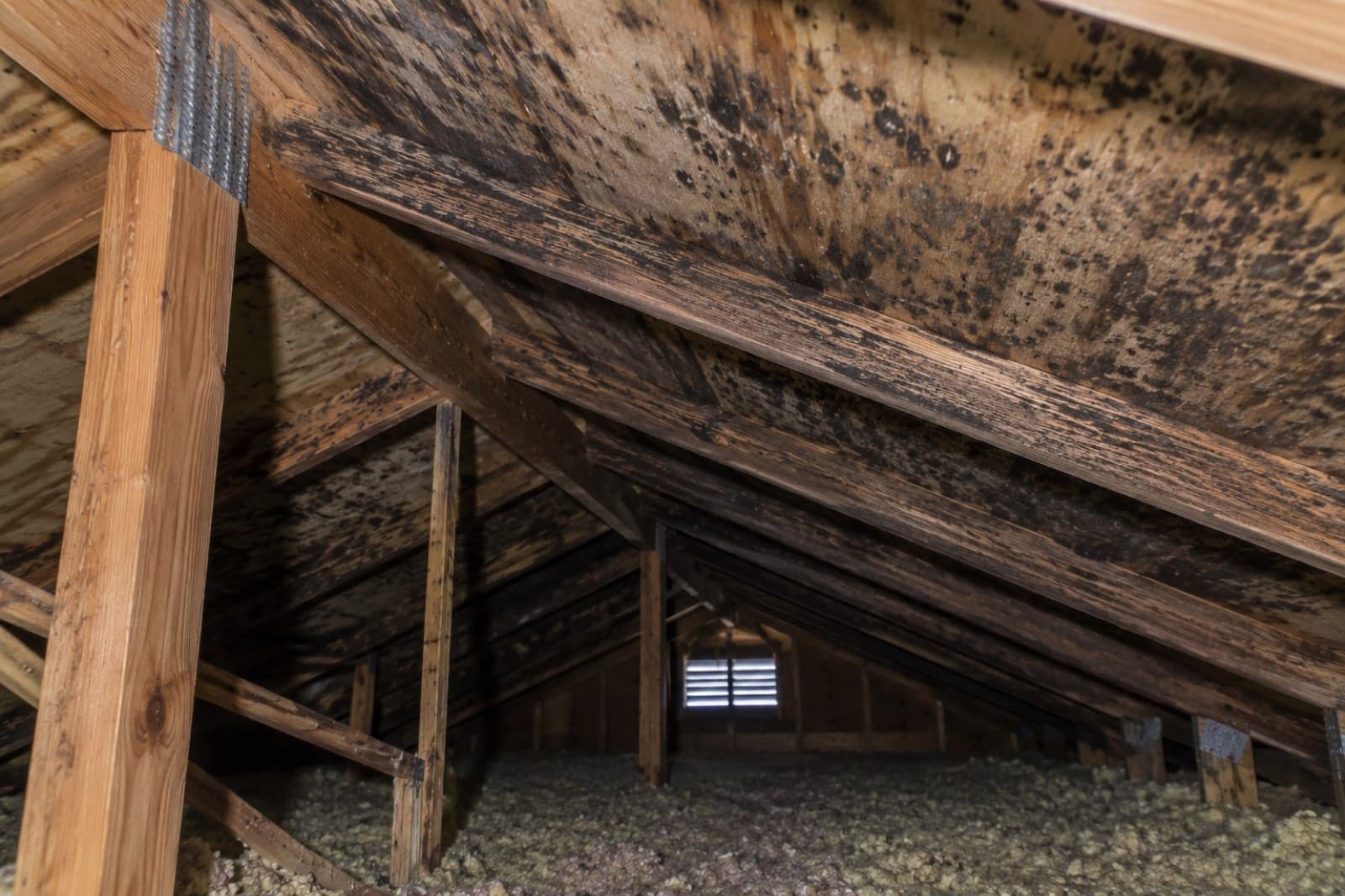
Scenario 1 of 5: Basement & Wall Mold
What To Do When You Find Mold In Your Home
The first 24 hours matter. Follow these steps to contain the colony and protect your air quality while waiting for our IICRC S520 certified crew to arrive.
What To Do Immediately
EPA guidelines recommend professional remediation for any visible mold patch larger than a 3x3 square foot area. Anything more releases spores beyond safe DIY containment.
Close doors leading to the contaminated room and turn off HVAC immediately. Every minute of shared air movement spreads spores throughout the rest of your home.
Take timestamped photos of all visible mold and any related water damage before cleanup begins. Your insurance adjuster will need this for the claim file.
If you must enter the contaminated area before remediators arrive, wear an N95 respirator, nitrile gloves, and sealed eye protection. Skin and airway contact with active colonies is how symptoms start.
Mold needs water to grow. Fix the leak, correct the humidity, or remediate the flood before any cleanup attempt. Scrubbing without moisture correction guarantees regrowth.
Third-party post-remediation air sampling confirms spore counts are at or below outdoor baseline. Without it, you have no way to verify the work actually worked.
What NOT To Do
Bleach lifts color on drywall, carpet, and wood but does not kill mold at the root. The colony returns within weeks and the stain looks smaller only because the surface is lighter.
Central heating and cooling circulates spores through every duct run, colonizing rooms that were never affected. Shut the system off until professional containment is in place.
EPA guidelines require professional containment for anything larger than a 3x3 patch. Tearing out drywall without negative air pressure releases millions of spores instantly.
Even mildew-resistant primer cannot seal an active colony. The mold feeds on the paper backing of drywall and bleeds through within weeks, often worse than before.
A persistent musty smell without visible mold almost always means a hidden colony behind walls, under flooring, or in ductwork. Smell usually precedes visibility by months.
Disturbed mold releases millions of spores in seconds. Ripping carpet, pulling drywall, or breaking up tile without proper negative air pressure contaminates the entire home.
Our Mold Remediation Process In Coventry, CT
From the first call to final walkthrough, every step is documented, insured, and owner-supervised.
Mold Remediation Coverage In Coventry, CT
Full service mold inspection, containment, remediation, and lab-verified clearance testing for Coventry homes and businesses. Same-day inspection response across Tolland County.
Green Restoration provides IICRC S520 certified mold remediation in Coventry, CT, serving local neighborhoods throughout Tolland County. Our certified technicians arrive same day with thermal imaging, moisture meters, and ACAC-certified air sampling kits. We work directly with all major insurance carriers, from initial inspection through hospital-grade containment and lab-verified clearance testing.
As a service-area business led by our owner across Tolland County, our crews know the specific mold conditions Coventry properties face. We coordinate directly with adjusters from Liberty Mutual, State Farm, Travelers, Allstate, USAA, Chubb, Hartford Insurance Group, and all other major carriers, documenting scope from inspection through ACAC clearance for every claim across Coventry and surrounding Tolland County. Green Restoration is not a licensed public adjuster and does not negotiate claims on your behalf.
Active Mold Exposure In Coventry?
Same-day inspection dispatch, 24/7/365.
(860) 222-9498IICRC S520 · Licensed & Insured · HIC.0668405
All Towns Served By Green Restoration Of Hartford For IICRC S520 Mold Inspection And Remediation.
Same-Day Mold Inspection In Coventry, CT
IICRC S520 crews dispatch across Tolland County same day in 2026 for Coventry mold scopes, with our owner supervising under his AMRT and WRT credentials. Green Restoration is not a licensed public adjuster and does not negotiate claims on your behalf.
Coventry ZIPs 06238 plus 06237 North Coventry (incorporated 1712). Locked local mold remediation dispatch zone with Tolland County crew arrival from our David-led Hartford line. Same-day attic mold inspection covers every property class from Coventry Lake cottage conversions to Hop River corridor ranch Capes within the Coventry mailing perimeter.
Predominant Coventry housing stock spans 1950-1980 lakefront cottage and ranch Cape, dictating remediation approach. Seasonal-to-year-round conversions, undersized soffit intake, blocked ridge baffles, and unvented bath fans dumping into the attic plane in Coventry Lake and Hop River corridor stock each demand different IICRC S520 attic containment, drying, and clearance protocols matched to the assembly we open.
Mold risk in Coventry tracks the Coventry Lake and Hop River corridor as the dominant moisture vector. Our scope sequencing prioritizes attic assemblies above lake-adjacent homes first, because elevated baseline humidity from the lake plus warm-moist interior air migration drives 80% of attic mold recurrence when ventilation correction is incomplete.
Coventry faces Tolland County humid-continental winter ice-dam pressure and lake-cottage conversion ventilation gaps as its defining climate exposure for attic mold. Coventry Lake summer humidity loading and Patriots Park watershed grain ceiling each set the moisture ceiling we engineer against during containment, antimicrobial treatment, and post-remediation lab clearance.

About Green Restoration In Coventry, CT

IICRC AMRT+WRT Certified
Coventry Lake and the Hop River corridor frame Coventry's seasonal-to-year-round housing conversion belt, where 1950s-70s lakefront cottages and ranch Capes were retrofitted for full-time occupancy without ridge-vent rebuilds. The defining mold pattern is attic sheathing failure from conversion-era ventilation shortcuts on lake-corridor stock.

“As the local co-owner covering Coventry and the Tolland County ridge corridor, I bring 15+ years of IICRC-certified restoration experience, both AMRT and WRT, and the full support of the Green Restoration network to every property. Every job is personally overseen, documented for your insurer, and stays open until lab-verified clearance confirms the work is complete.”
Trusted by Families in Coventry &
Tolland County
4.9 out of 5, Rated by your neighbors on Google
We discovered mold when removing our pellet stove and called Green Restoration for help. David was very communicative and helpful throughout the entire process. He did the job thoroughly and professionally. Highly recommended!
David Woolner
Mold RemediationI had a fantastic experience with Green Restoration. From start to finish, the team was professional, thorough, and extremely knowledgeable. David came for the initial inspection and took the time to explain the entire process.
Annmarie Gieparda
Mold RemediationWe had mold due to a water leak in our half finished basement. David and his crew did a great job, we were very satisfied. I would highly recommend Green Restoration to anyone.
Tanya
Water DamageI needed my entire condo completely cleaned after a soot blow back. Green Restoration was top shelf! So thorough and professional. Thank you so much!
Jacki Hornish
Fire & Soot CleanupHow Much Does Mold Remediation Cost In Coventry, CT?
2026 Coventry mold remediation: most basement and crawl claims settle $3,000 to $8,000. Per-square-foot equivalent runs $14 to $28.
Small Project, Single Area
$1,500 to $4,500
Bathroom wall, window frame, attic patch, isolated growth under 10 sq ft
Medium Project, Basement / Crawl
$3,000 to $8,000
Basement wall, crawl-space section, single-room remediation with containment
Large Project, Whole-Home
$8,000 to $25,000+
Multi-room, Stachybotrys, structural mold, HVAC remediation, attic sheathing
Priced by scope under IICRC S520. Read the full mold cost guide.
Coventry CT Mold Remediation FAQs
Clear 2026 answers on Coventry mold conditions, insurance coverage, and lab-verified clearance testing.
Coventry Lake cottages from the 1950s through 1970s were built as seasonal cabins with minimal attic ventilation, often just a single gable louver. When those cottages got winterized for year-round occupancy through the 1990s and 2000s, owners added insulation, sealed up the envelope, and started running showers and laundry inside, but rarely added proper ridge-vent and soffit intake systems. Warm moist interior air now migrates into the cold attic plane all winter, condenses on the underside of the original plank or OSB sheathing, and feeds Stachybotrys and Aspergillus across the rafter bays. Same-day attic inspection across Coventry and the Hop River corridor, 24/7 at (860) 222-9498.
Attic mold remediation in Coventry typically ranges from $3,000 to $5,500 for a single-slope cleanup on a Coventry Lake cottage conversion or a South Coventry village ranch, $4,500 to $8,000 for full attic remediation with HEPA-vacuumed sheathing, dry-ice or soda blasting, and antimicrobial encapsulation across a Hop River corridor 1960s Cape, and $9,000 to $18,000 plus for whole-attic Stachybotrys with sheathing replacement, ridge-vent rebuild, soffit baffle correction, and bath fan ducting to the exterior on a fully converted lakefront. Pricing depends on attic square footage, conversion-era access through small original scuttle hatches, mold type, and whether ridge and soffit venting need correction before close-up.
Most Connecticut homeowner policies treat Coventry attic mold from conversion-era ventilation gaps, blocked baffles, or undersized lake-cottage ridge venting as a long-term maintenance issue, not a covered sudden loss. Coverage typically applies only when attic mold results from a documented covered event, such as a Coventry Lake ice-dam backup, a Hop River corridor wind-driven rain through damaged ridge cap, or a South Coventry roof leak from a fallen tree. Green Restoration submits to every major carrier directly with IICRC S520 documentation, clearance test results, and lab-analyzed spore counts adjusters require, prepared under owner our owner's AMRT credential. We are not licensed public adjusters and do not negotiate claims on your behalf.
Most Coventry attic mold remediation projects take 3 to 6 days from containment setup through clearance testing. A single-slope cleanup on a Coventry Lake cottage conversion finishes in 3 days. Full whole-attic remediation on a Hop River corridor Cape or a Patriots Park area ranch with both slopes, sheathing treatment, ridge-vent rebuild, and bath fan re-routing extends to 5 to 7 days. Timeline depends on attic access through original cottage scuttle hatches, whether plank sheathing replacement is needed, and whether the soffit baffles and ventilation correction require a roofer or insulation contractor before close-up.
Yes. Connecticut allows combined mold assessment and remediation, so we perform both attic inspection and remediation in house with ACAC-certified air sampling. Pre-remediation sampling establishes baseline at your Coventry property (both inside the attic plane and in the living space below to confirm stack-effect contamination from the lake-corridor humidity), post-remediation clearance testing confirms spore counts are at or below outdoor baseline, and all lab results are delivered in writing for your file and your adjuster, whether you are in a Coventry Lake cottage conversion, a Hop River ranch, or a South Coventry village Cape.
Very likely in Coventry's 1950s-70s cottage and Cape conversion stock. Knee-wall cavities behind the second-floor side walls are typically uninsulated and unsealed in lake-cottage conversions, so humid bedroom air escapes into the cavity and then rises through the rafter bays carrying moisture to the cold sheathing. Many Coventry Lake and Hop River corridor Capes hide Stachybotrys behind these knee walls and across the kneewall floor area for years. Thermal imaging and moisture meters detect temperature and moisture differentials behind the kneewall finishes before cavities are opened, so we can map the full scope with minimal destructive investigation.
Keep the attic scuttle closed and stop running bathroom and kitchen exhaust fans that vent into the attic plane (a common conversion-era defect in Coventry Lake cottage stock). Do not run whole-house attic fans or window AC units in the rooms below, as improper airflow accelerates stack-effect spore migration into the living space. Do not attempt to bleach or spray the visible growth, because disturbing the sheathing releases massive spore loads into the attic air. Photograph the visible growth for your insurance file and wait for the IICRC-certified crew to arrive with proper containment from our Tolland County team.
Green Restoration is IICRC S520 certified and owner-operated with IICRC AMRT and WRT certified leadership. We are equipped for the specific challenges Coventry attics face, from Coventry Lake cottage conversions and Hop River corridor ranch Capes through South Coventry village to Route 31 1950s-70s ridge-vent failures, knee-wall cavity Stachybotrys, and the lake-elevated humidity loading that defines Tolland County summer attic mold. We carry hospital-grade attic containment, HEPA air scrubbers, dry-ice or soda blasting media for sheathing, and ACAC air sampling on every truck. Our direct insurance billing, same-day attic inspection response, and 24/7 availability at (860) 222-9498 mean attic mold is documented, contained, and cleared with one call.
More Green Restoration Services in Coventry
The same local Green Restoration team covers all of these across Coventry. One number for every emergency and every cleanup.

