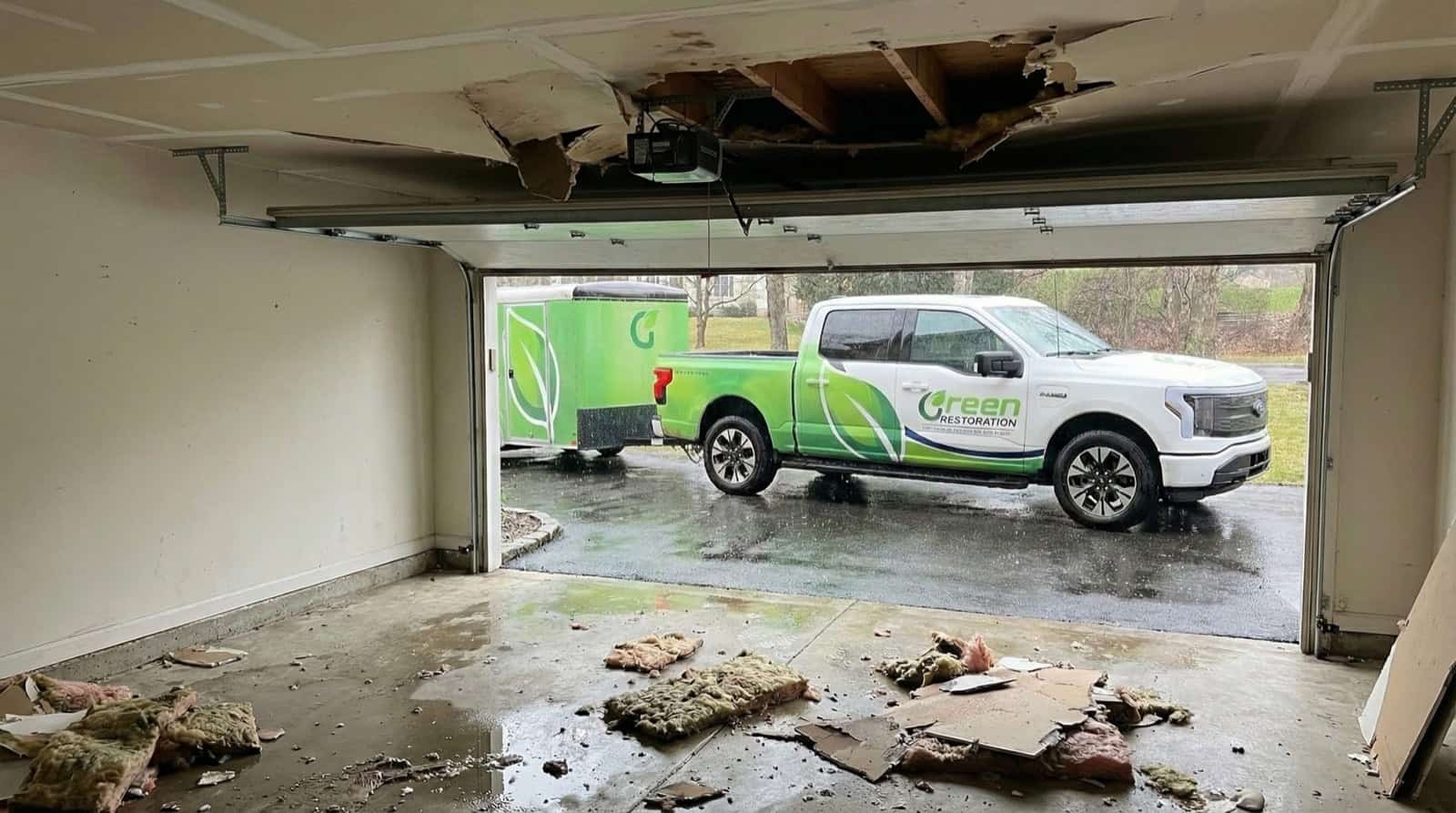
Water Damage Restoration In Rockland County, NY
Hudson Flood Plain & Burst Pipe Cleanup Same-Day Mobilization · Direct Insurance Billing · 24/7
 IICRC Certified
 Eco-Friendly Solutions For Healthier Spaces
Reviewed by Green Restoration's IICRC-Certified Team · Licensed & Insured · IICRC Certified Firm
Conditions from the National Weather Service and Open-Meteo.
Documented Water Damage Restoration For Rockland County Homes And Multifamily
A 5-stage IICRC S500-2021 process: same-day dispatch across the Mario M. Cuomo Bridge, FLIR moisture mapping, truck-mounted extraction, psychrometric drying, and a carrier-ready scope file.
Same-Day Emergency Water Extraction
Nyack 19th-century brownstone cellars off Broadway and Piermont Victorian river-bank levels along Paradise Avenue flood fast when a supply line lets go or the Hudson backs up behind fieldstone. Green Restoration mobilizes same day across the Mario M. Cuomo Bridge, pulls standing water with truck-mounted extractors and submersible pumps, and starts the IICRC S500 drying plan before secondary damage sets into pre-war Hudson Valley framing.
IICRC S500 Water Category · Same-Day Mobilization · Rockland County
Structural Drying And Dehumidification
Pearl River and Nanuet 1950s-1970s ranch and split-level subfloors along the Pfizer corporate corridor hold moisture inside fiberglass batting against post-war drywall, while Spring Valley and Monsey pre-war multifamily party walls wick water between attached units. Green Restoration sets LGR dehumidifiers and high-velocity air movers, monitors material moisture content with Tramex meters daily, and dries every assembly to its verified dry standard before reconstruction.
LGR drying · Verified dry standard
Burst Pipe And Supply-Line Cleanup
Original copper and galvanized supply lines across the Pearl River, Nanuet, Pomona, and Valley Cottage post-war belt rupture every IECC Zone 5A freeze-thaw cycle and flood finished basements overnight. Green Restoration shuts down the source zone, extracts the water, removes saturated drywall to 24 inches above the moisture line, and dries the wall cavity so the pipe repair closes into a clean, dry assembly.
Burst-pipe response · Cavity dried
Additional Water Damage Services
Hudson Flood-Plain Basement Recovery
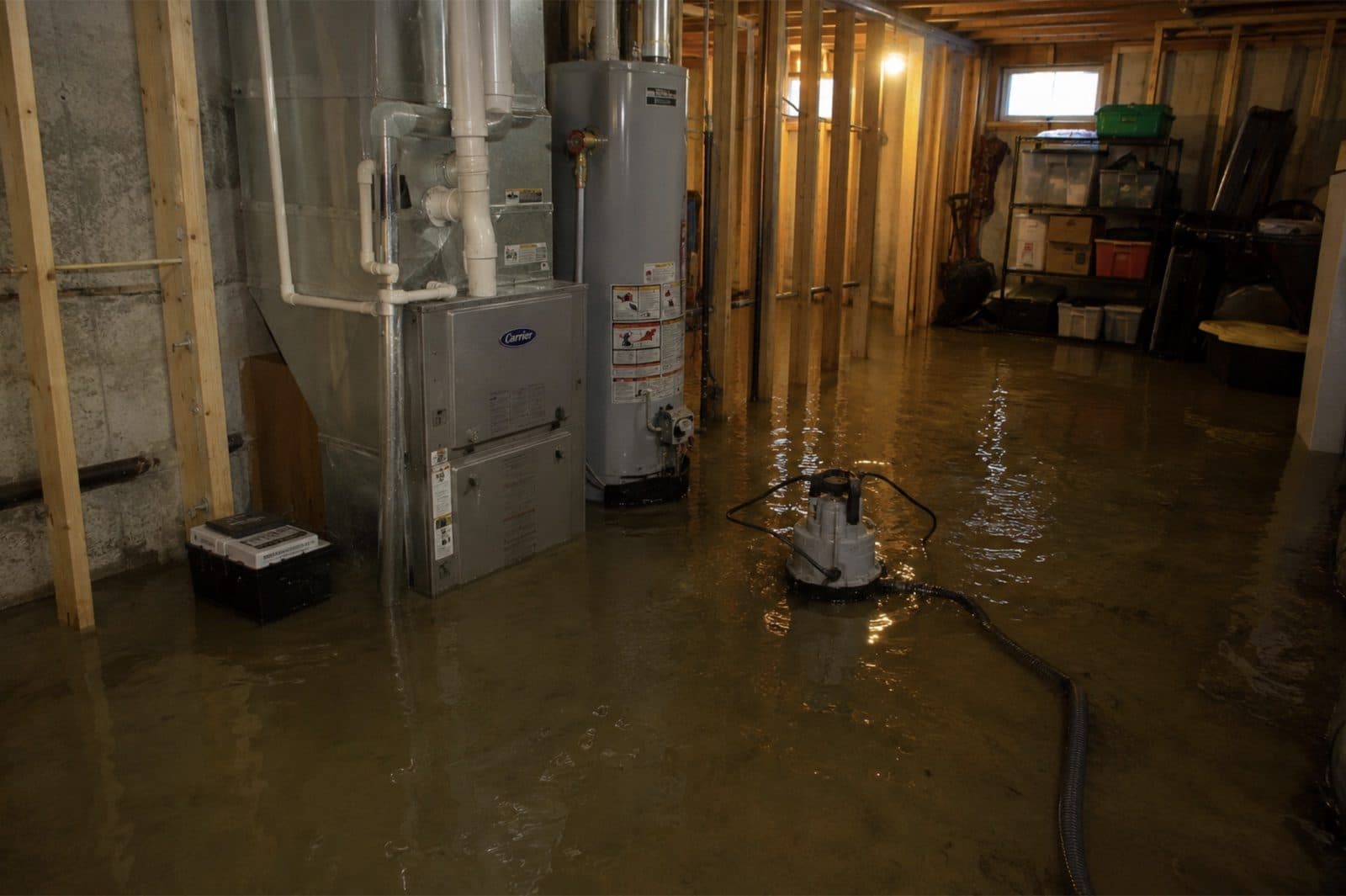
Haverstraw, Garnerville, Piermont, Sparkill, and Stony Point Hudson River-bank basements sit at flood-plain elevation where seasonal river surge backfills behind 19th-century fieldstone foundations. Green Restoration extracts Category 3 floodwater under Tyvek containment, applies EPA-registered antimicrobial to affected substrate, dries the slab and footing, and documents the loss so the moisture source can be corrected before any finish work restarts.
Ridge-Runoff And Groundwater Intrusion
Suffern, Sloatsburg, Hillburn, and Airmont ridge-foot homes at the base of the Palisades Interstate Park and Harriman State Park watershed take spring snowmelt and hillside groundwater straight into basement perimeters and crawl spaces. Green Restoration extracts the intrusion, dries the foundation footprint with LGR equipment, and coordinates exterior drainage correction with waterproofing crews so the next thaw does not repeat the loss.
Ceiling And Hardwood Water Damage
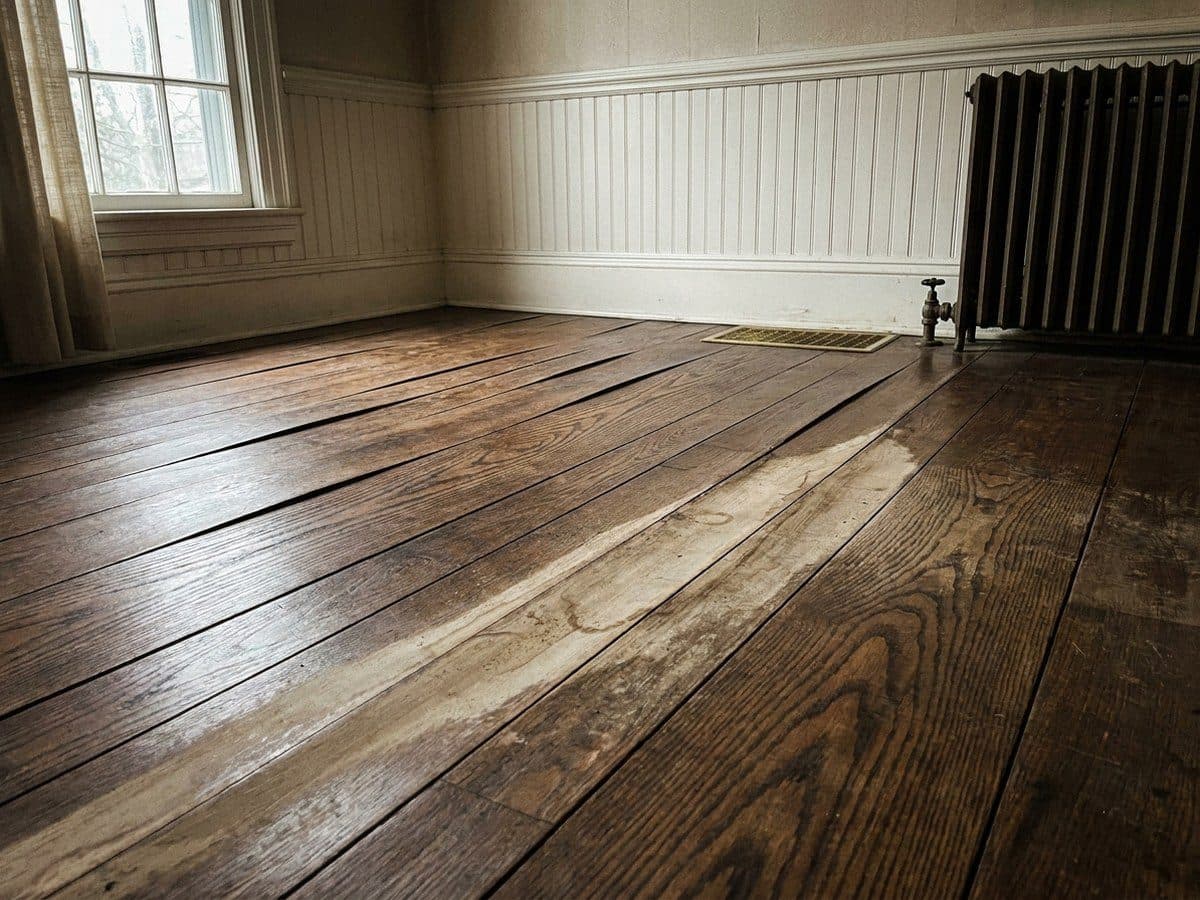
Nyack and Upper Nyack Victorian plaster ceilings along North Broadway and post-war oak floors across the Pearl River and Nanuet ranch belt cup, stain, and delaminate within hours of a roof leak or upstairs overflow. Green Restoration tents and dries hardwood with directed airflow, removes failed plaster under containment, and dries the joist bay so the rebuild matches pre-loss condition without trapping moisture in the structure.
Multifamily Riser-Stack Water Damage
Spring Valley, Monsey, Kaser, and Hillcrest pre-war attached multifamily serving the local community carry shared-riser plumbing where a single upper-floor supply break cascades down the party wall into multiple units within 48 hours. Green Restoration extracts every affected unit, sets HEPA-filtered air movers across the cascade path, and coordinates with property managers and adjacent owners on a shared drying plan and documentation set.
Category 3 Sewage And Contaminated Water
Stony Point, Haverstraw, and Piermont low-lying properties near the Hudson see backflow and sewage intrusion during heavy river-surge events, and post-war septic and sewer lines across the Clarkstown belt fail under Zone 5A frost heave. Green Restoration removes Category 3 contaminated water and porous materials under containment, applies EPA-registered antimicrobial, and dries and clears the structure so it is safe before any rebuild.
Documentation And Insurance Coordination
Every Rockland County water loss from a Nyack brownstone cellar to a Pearl River split-level basement gets a full file: IICRC S500 scope, daily moisture logs, thermal imaging, and timestamped before-and-after photos. Green Restoration submits this documentation directly to your carrier including Chubb, PURE, AIG Private Client, State Farm, Travelers, Liberty Mutual, and Allstate. We are not licensed public adjusters and do not negotiate claims on your behalf.
Don't Wait For Water Damage To Get Worse. Every Minute Counts.
Call Now For Same Day Emergency Service Across Rockland County From Nyack Through Suffern.
Why Choose Us In Rockland County
Same-day mobilization from our Westchester team across the Mario M. Cuomo Bridge. IICRC S500 crews respond to Rockland County emergencies across Nyack, Piermont, Suffern, Pearl River, Spring Valley, Haverstraw, and beyond.
60-Minute Emergency Response
IICRC-certified crews arrive within 60 minutes, day or night, every day of the year.
Owner-Operated Local Crew
Every job is personally overseen, from first call to final moisture reading.
Direct Insurance Billing
We bill State Farm, Liberty Mutual, USAA, Farmers, AIG, Chubb, and Safeco directly.
EPA-Registered Antimicrobials
EPA-registered antimicrobials and Safer Choice cleaning products applied per IICRC S500 and S520 standards.
What Untreated Water Damage Costs Your Rockland County Home
Untreated water damage in a Rockland brownstone, ridge-foot basement, or post-war split-level becomes mold colonization within 24 to 48 hours, hardwood cupping within 12 hours, and plaster delamination within 72 hours. A $5,000 same-day extraction can become a $30,000 plaster and finish-floor rebuild after 48 hours. Hudson flood-plain Category 3 jobs in Haverstraw and Piermont escalate faster because contaminated water requires sanitization.
Mold Growth Within 48 Hours
Mid-Hudson Humidity Accelerates It
Rockland mid-Hudson air runs 70 percent relative humidity through late summer, pulled north from the Tappan Zee and held against Palisades ridge slopes. Standing water on damp framing seeds mold colonization within 24 to 48 hours behind plaster in Nyack and Piermont brownstone and inside post-war Pearl River wall cavities. Per EPA guidance, mold exposure is associated with respiratory symptoms in sensitive individuals.
Cupping And Warping Floors
Victorian Oak And Post-War Hardwood
Nyack and Upper Nyack Victorian homes and the Pearl River and Nanuet ranch belt carry original and post-war oak floors that cup and buckle when moisture sits more than a few hours. Without rapid mat-drying, salvage windows close and refinishing becomes plank-by-plank replacement across the Rockland housing mix.
Fieldstone Foundations Hold Water
Pre-War Hudson Stock Concentrates It
Nyack, Upper Nyack, Piermont, and Tappan 19th-century brownstone and 1716-era colonial fieldstone foundations absorb river backfill and hold it against framing for weeks. Without directed structural drying, the moisture wicks up studs and into plaster long after the visible water is gone.
Ridge Runoff Floods Basements
Palisades and Harriman Pathways
The most common Suffern, Sloatsburg, Hillburn, and Airmont water call starts with Palisades Interstate Park or Harriman State Park ridge runoff hitting a basement perimeter during spring thaw. Trapped groundwater saturates the foundation footprint within a single freeze-thaw cycle.
Multifamily Riser Cascades
Spring Valley And Monsey Party Walls
Spring Valley, Monsey, Kaser, and Hillcrest pre-war attached multifamily carry shared risers where a single upper-floor supply break cascades down the party wall into multiple units within 48 hours. Standing water and saturated party-wall assemblies spread the loss across unit lines fast.
Restoration Costs Escalate Daily
Every Hour Increases The Bill
A $5,000 same-day water extraction can become an $18,000 brownstone plaster and millwork rebuild after 48 hours, and a $30,000 multi-room reconstruction after a week. Adjusters from Chubb, PURE, State Farm, Travelers, Liberty Mutual, and Allstate document the response timeline closely, and delays can directly reduce your approved claim payout on a Rockland loss.
The Water Damage We See Most in Rockland County, NY
In Rockland County, tidal Hudson River surge drives the flooding along the Piermont and Nyack shore, so we classify every loss under the IICRC S500 standard and document it for your insurer. These are the water-damage patterns we see most often across the county.
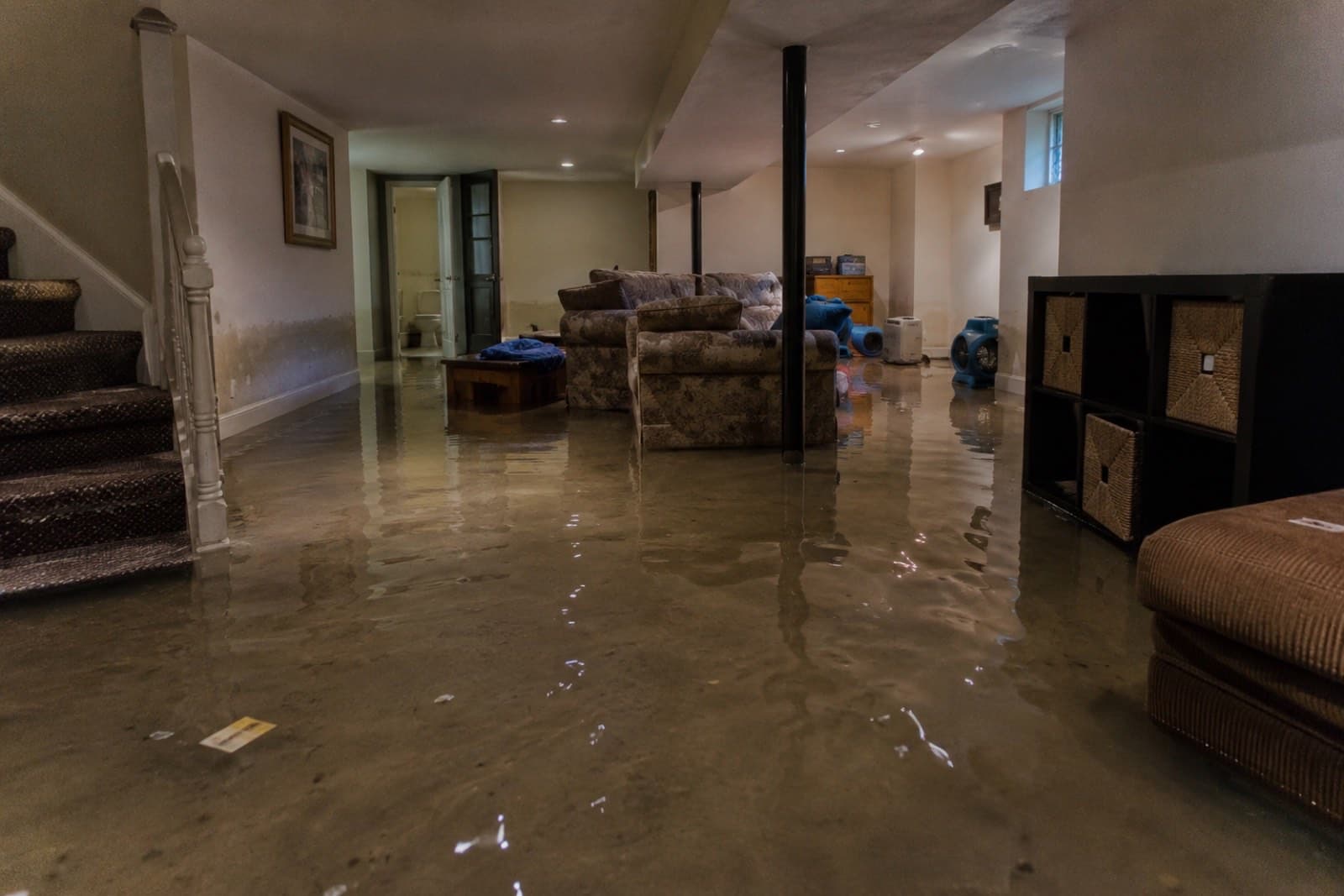
Flooded Basement, Fully Dried
In Rockland County, NY, Hudson River tidal surge along the Piermont and Nyack shore is the usual culprit.
A failed sump pump, a burst supply line, or storm-driven groundwater can leave inches of standing water sitting against framing, drywall, and stored belongings. The longer it sits, the further moisture wicks up the walls and the faster the Category of the water deteriorates.
Our IICRC-certified technicians classify the water under IICRC S500, then pull the standing water down to the slab with truck-mounted and submersible extraction. We open wet wall cavities, set air movers and LGR dehumidifiers for structural drying, and apply an antimicrobial per IICRC S520 where Category 2 or 3 water is involved.
We take daily Tramex moisture readings and dry the assembly to the ANSI/IICRC dry standard, not to a calendar. Every reading, photo, and scope line is documented for your insurer so the claim moves on facts, not guesswork.
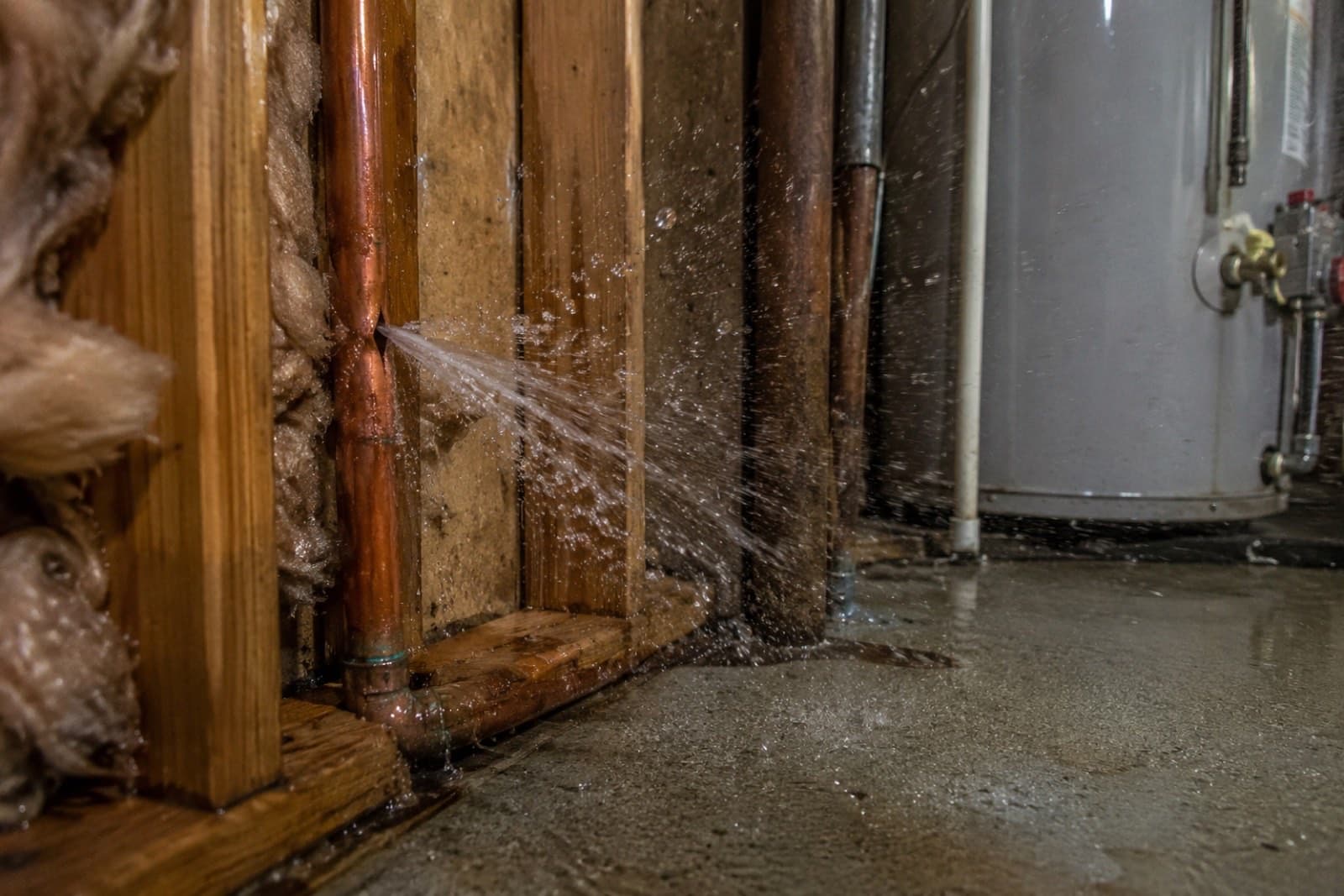
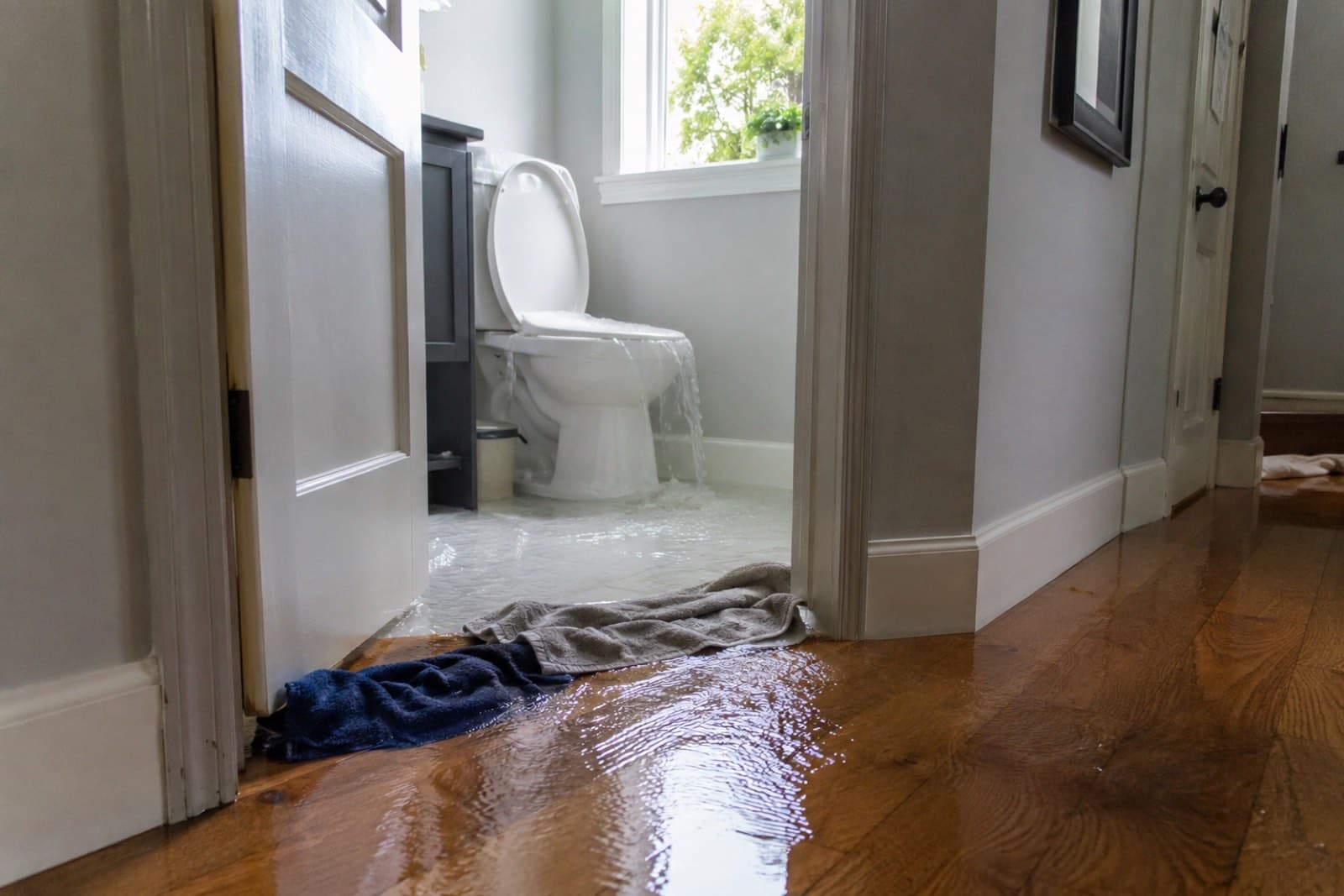
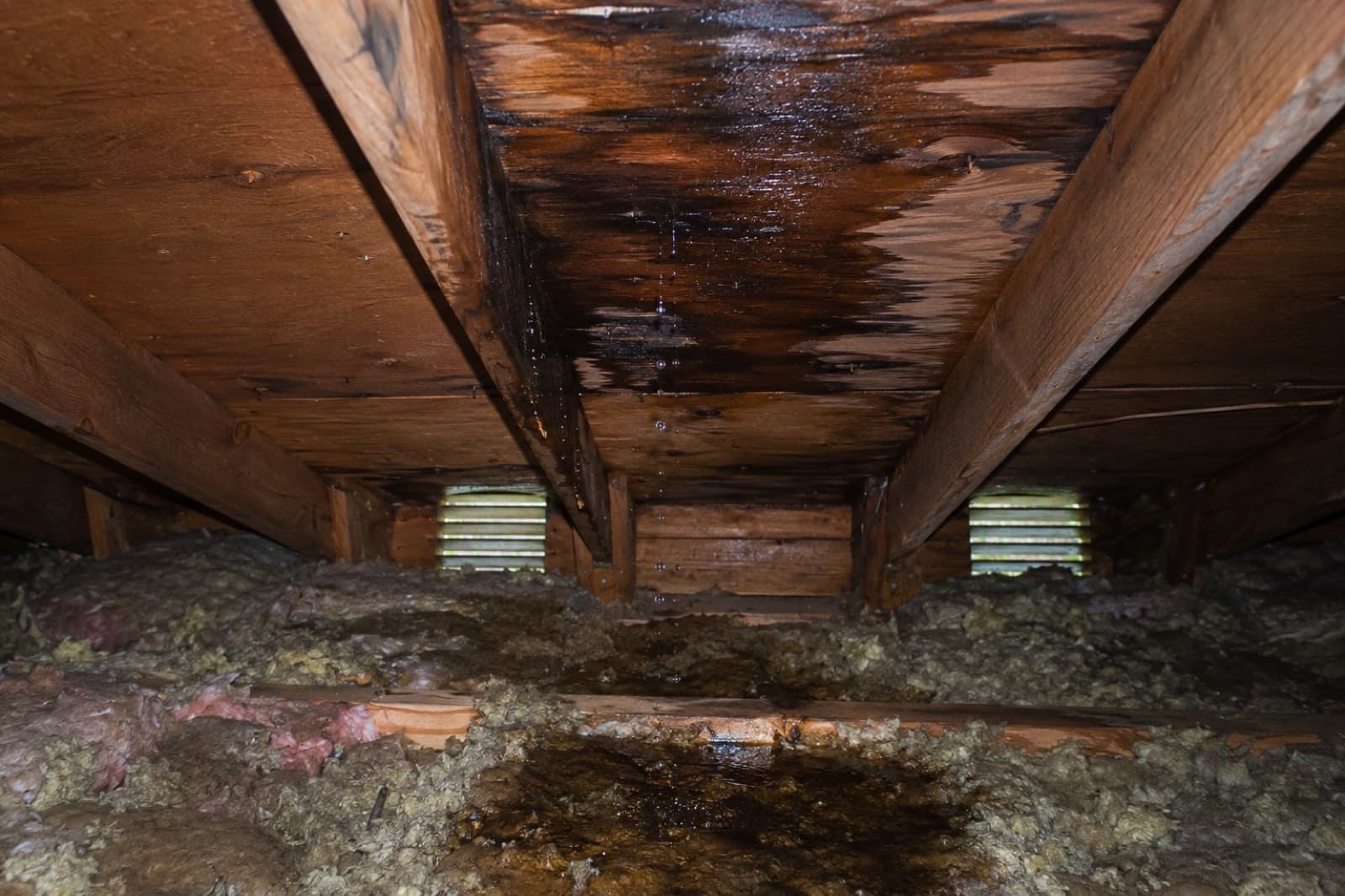
Scenario 1 of 5: Basement Flooding
Our Water Damage Restoration Process In Rockland County, NY
From the first call to final walkthrough, every step is documented, insured, and owner-supervised.
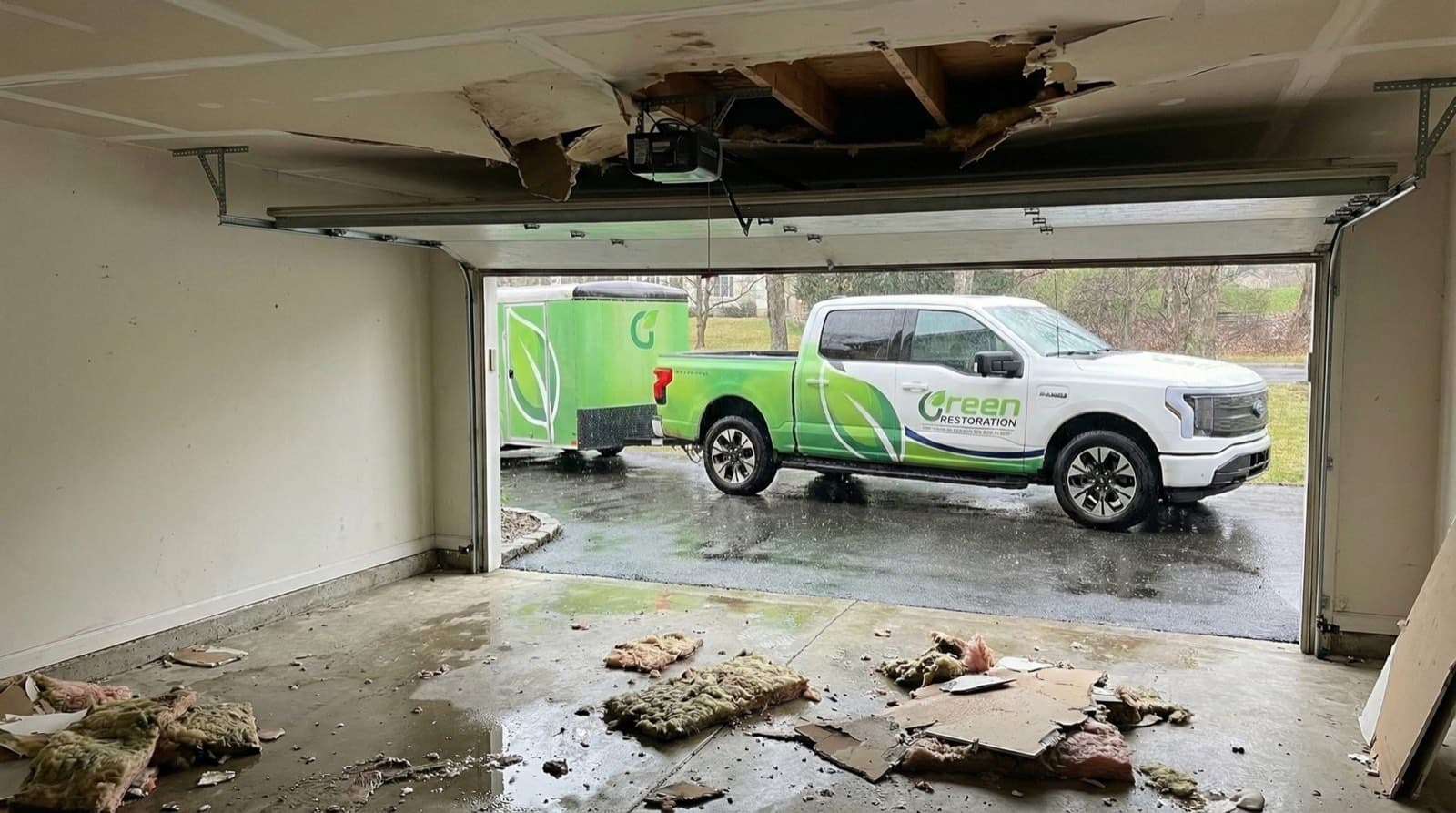
Water Damage Restoration Coverage In Rockland County, NY
Our Westchester team at 1163 Mamaroneck Ave dispatches across the Mario M. Cuomo Bridge to 19 Rockland villages and hamlets, from the Hudson River western bank through the Palisades ridge to the Harriman corridor. We are not licensed public adjusters and do not negotiate claims on your behalf.
More Rockland County Restoration Services
Why Rockland County Water Damage Is Different
Hudson River fieldstone backfill, Palisades and Harriman ridge runoff, and pre-war multifamily riser stacks shape every restoration scope.
How Rockland geography shapes a restoration scope
Rockland County water damage restoration is the rapid extraction, structural drying, and antimicrobial treatment of brownstones, fieldstone-foundation homes, post-war ranch and split-level stock, and pre-war attached multifamily affected by burst pipes, Hudson River flood-plain backfill, Palisades and Harriman ridge runoff, riser-stack cascades, and Category 3 sewage across Nyack, Piermont, Tappan, Haverstraw, Stony Point, Suffern, Sloatsburg, Pearl River, Nanuet, Spring Valley, and Monsey. The 1800 to 1980 building stock carries pre-1900 brownstones and 1716-era colonial fieldstone foundations along the Hudson western shore, ridge-foot homes at the base of the Palisades and Harriman watershed, 1950s to 1970s post-war ranch on poured concrete across the Clarkstown belt, and dense pre-war multifamily in Spring Valley and Monsey. According to Green Restoration IICRC S500-2021 documentation, scope decisions in Rockland depend on the housing era and the specific moisture corridor (Hudson flood-plain backfill, ridge runoff, post-war supply-line burst, or multifamily riser cascade) more than on the visible water volume. Knowing the difference matters when scoping an emergency.
What Is IICRC S500 Water Damage Restoration?
Water damage restoration is the IICRC S500-2021 documented process of extracting standing water, classifying the loss by category (clean, gray, black) and class (1 through 4), then drying the structure to equilibrium moisture content within a defined psychrometric window using commercial LGR dehumidifiers, axial air movers, and Tramex meter verification across every previously affected substrate.
In Rockland County, NY, restoration is sequenced: 60-minute dispatch, FLIR thermal imaging and Tramex CME 5 mapping, truck-mounted extraction, controlled drying to S500 § 12 benchmarks, antimicrobial application per S520-2024, and a carrier-ready scope file with daily moisture logs. Cutting steps drives mold colonization risk, claim denial risk, and reinjury rework within weeks.
- IICRC S500-2021 aligned
- ASTM E1745 vapor retarder spec
- ASHRAE 160 humidity targets
- Carrier-grade documentation
Why Rockland County Sits in Climate Zone 4A
IECC International Energy Conservation Code
IECC Climate Zone 4A covers all five NYC boroughs. Slightly milder than upstate winters, with humid Atlantic summers and elevated coastal moisture from the East River, Long Island Sound, and Atlantic Ocean.
NYC adopted the 2020 NYCECC and 2022 NYC Building Code, requiring Class I or II vapor retarder per ASTM E1745 across basement and crawl space assemblies after Category 2 or Category 3 water restoration. NYC DOB filings coordinate as part of the scope on reconstruction.
24/7 Water Damage Response In Rockland County, NY
Our IICRC S500 restoration crew dispatches from the Westchester team and crosses the Mario M. Cuomo Bridge for Rockland County emergencies, including Hudson flood-plain basement backfill in Piermont and Haverstraw, Palisades and Harriman ridge-runoff intrusion in Suffern and Sloatsburg, post-war burst pipes across the Pearl River belt, and Spring Valley and Monsey multifamily riser cascades. Off-peak dispatch is typically 40 to 60 minutes; weekday peak is 60 to 90 minutes in the Tappan Zee corridor.
Rockland County covers ZIP codes 10901 through 10994 across 5 town governments (Clarkstown, Haverstraw, Orangetown, Ramapo, Stony Point) and 19 villages and hamlets including Nyack, Suffern, New City, Spring Valley, Monsey, Pearl River, Nanuet, Haverstraw, Piermont, and Stony Point. Each ZIP carries its own housing-stock fingerprint and water-loss pattern.
Rockland County was established in 1798, with continuous building through 19th-century Hudson village brownstone and Victorian, colonial-era Tappan stone-and-mortar, post-war 1950s-1970s Pearl River and Nanuet ranch, and pre-war Spring Valley multifamily. Every era dries on a different schedule.
The Hudson River western shore drains Haverstraw, Stony Point, Piermont, and Nyack, with seasonal high water and surge backfilling fieldstone foundations along the bank. Palisades Interstate Park ridge plus Harriman and Bear Mountain State Park watershed feeds Suffern and Sloatsburg ridge-foot runoff.
Rockland sits in IECC Climate Zone 5A where winter freeze-thaw cycles rupture original copper and galvanized supply lines across the post-war belt and drive ridge-melt intrusion. Hudson Valley ambient temperatures extend structural drying schedules beyond coastal NY norms.
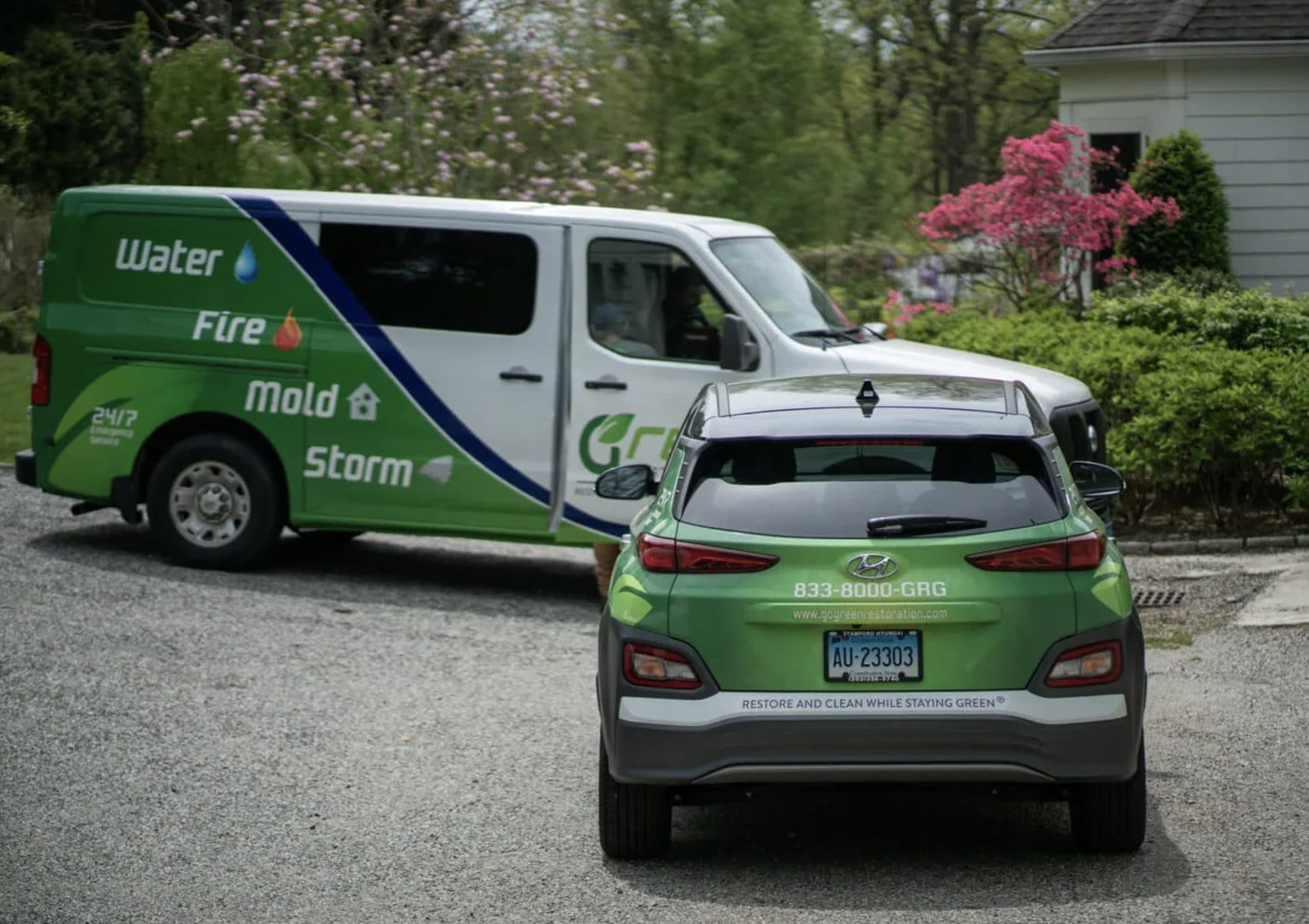
About Green Restoration In Rockland County, NY

Your Local Water Damage Specialists Since 2014
As the local owner serving Rockland County from our Westchester location at 1163 Mamaroneck Avenue, I run IICRC S500 water damage cleanup for the 19th-century brownstones, 1716-era colonial fieldstone homes, post-war ranch and split-level stock, and pre-war attached multifamily that span Rockland from Nyack and Piermont through Pearl River, Nanuet, Spring Valley, and Monsey. An 1800 to 1980 mixed-stock building inventory, dense party-wall multifamily cascades, Hudson River flood-plain exposure from Stony Point through Haverstraw and Piermont, and Palisades and Harriman ridge runoff combine to make Rockland water losses unique. According to Green Restoration IICRC documentation logs, Hudson fieldstone basement backfill typically dries to under fourteen percent moisture in 7 to 10 days when staged with preservation drying, and Category 3 Hudson surge backflow requires removal of porous materials and sanitization before drying. My technicians focus on rapid water removal, accurate moisture mapping with Tramex and FLIR equipment, and controlled structural drying to stop secondary damage and stop mold colonization within the first 48 hours.

“As the local owner serving Rockland County from our White Plains location, I personally oversee every Rockland water job. Calls route to our dispatcher 24/7 on (914) 559-2694. When it is a Piermont riverfront owner with surge backfill behind a fieldstone wall, or a Pearl River homeowner with a post-war copper line burst overnight, the dispatcher says: do not move anything, take photos, shut the main valve if you can do so safely, and our crews will cross the Mario M. Cuomo Bridge as fast as traffic allows. I walk every Rockland project before scope is signed, document every step for your insurer, and stay on the file until the structure is dried to verified standard. We are not licensed public adjusters and do not negotiate claims on your behalf.”
Trusted by Families in Rockland County &
Rockland County
4.9 out of 5, Rated by your neighbors on Google
We discovered mold when removing our pellet stove and called Green Restoration for help. David was very communicative and helpful throughout the entire process. He did the job thoroughly and professionally. Highly recommended!
David Woolner
Mold RemediationI had a fantastic experience with Green Restoration. From start to finish, the team was professional, thorough, and extremely knowledgeable. David came for the initial inspection and took the time to explain the entire process.
Annmarie Gieparda
Mold RemediationWe had mold due to a water leak in our half finished basement. David and his crew did a great job, we were very satisfied. I would highly recommend Green Restoration to anyone.
Tanya
Water DamageI needed my entire condo completely cleaned after a soot blow back. Green Restoration was top shelf! So thorough and professional. Thank you so much!
Jacki Hornish
Fire & Soot CleanupWater Damage Cost In Rockland County, NYHow Much Does Water Damage Restoration Cost In Rockland County, NY?
Pricing depends on IICRC S500 water category, square footage, and drying complexity. Most Rockland single-area and basement losses settle in the $2,000 to $9,000 range. Hudson flood-plain Category 3 jobs run higher because contaminated water requires sanitization.
Category 1 · Clean Water
$2,000 to $6,000
Burst supply line, ice maker leak, appliance overflow, single-area cleanup
Category 2 · Gray Water
$3,500 to $12,000
Washing machine, dishwasher, toilet overflow, sump failure, basement scope
Category 3 · Black Water
$12,000 to $30,000+
Hudson surge backflow, sewage intrusion, multifamily riser cascade, multi-floor drying
Final cost depends on water category, affected square footage, drying duration, plaster versus drywall demolition, hardwood salvage scope, and multifamily cascade impact. Pre-1900 brownstone and Victorian homes in Nyack and Piermont often require extra care for plaster and historic millwork. Use the calculator below for a personalized Rockland County estimate.
Rockland County Water Damage Restoration FAQs
Clear, honest answers about emergency water removal, Hudson flood-plain documentation, structural drying, and restoration costs in Rockland County, NY.
We target a 60-minute response to Rockland County water emergencies 24/7 across all 19 villages and hamlets, dispatched from 1163 Mamaroneck Avenue across the Mario M. Cuomo Bridge via I-287 and I-87. Typical arrival is 40 to 60 minutes off-peak and 60 to 90 minutes during weekday peak in the Tappan Zee corridor. Routing to Nyack and Piermont takes the Cuomo Bridge direct, Suffern and Sloatsburg via I-87 north, Pearl River and Nanuet via the Palisades Interstate Parkway, and Haverstraw and Stony Point via US Route 9W. Crews arrive with truck-mounted extractors, LGR dehumidifiers, and FLIR thermal imaging. Call (914) 559-2694 any time, day or night.
Cost ranges vary sharply by Rockland geography. Nyack and Upper Nyack 19th-century brownstone or Piermont Victorian losses with original plaster, hardwood, and fieldstone perimeters typically run $4,000 to $18,000 or higher for multi-room drying and historic-substrate care. Pearl River, Nanuet, New City, Valley Cottage, and Bardonia 1950s-1970s post-war ranch and split-level basement losses typically run $2,000 to $9,000 for single-area extraction and structural drying. Spring Valley and Monsey pre-war multifamily riser-cascade work runs $8,000 to $22,000 across affected units depending on shared-riser scope. We provide a written estimate on-site after moisture readings and submit it directly to your carrier.
Most New York homeowner policies cover sudden and accidental water damage, such as a Pearl River post-war copper-line burst or a Spring Valley multifamily supply-line cascade. For Piermont, Tappan, Sparkill, Haverstraw, Garnerville, Stony Point, and Tomkins Cove properties inside FEMA AE flood-plain zones along the Hudson western shore, surface flooding from the river is covered separately by the National Flood Insurance Program (NFIP), not by your homeowner policy. Long-term ridge-runoff seepage and gradual leaks are often excluded. Green Restoration documents the loss with the IICRC S500 scope, daily logs, and photos adjusters require and submits directly to carriers including Chubb, PURE, AIG Private Client, State Farm, and Travelers. We are not licensed public adjusters and do not negotiate claims on your behalf.
IICRC S500 defines three water categories. Category 1 is clean water from a supply line, common in Pearl River and Nanuet post-war burst pipes. Category 2 is gray water with contamination, such as a dishwasher or washing-machine overflow. Category 3 is contaminated black water, which includes Hudson River flood-plain surge backflow in Haverstraw and Piermont and any sewage intrusion. Category 3 requires removal of porous materials, EPA-registered antimicrobial, and full sanitization before drying, while Category 1 losses can often be dried in place. We establish the category on the first visit so the drying plan and the documentation match the actual scope.
Most Rockland County water losses dry to verified standard in 3 to 5 days from extraction to final moisture verification. Pearl River and Nanuet post-war basement burst pipes with contained cavities can dry in 2 to 4 days. Hudson flood-plain basements in Haverstraw and Piermont with fieldstone perimeters, Nyack and Piermont brownstone plaster assemblies, and Spring Valley and Monsey multifamily riser cascades can extend to 7 days or more. Zone 5A Hudson Valley ambient temperatures run drying schedules longer than coastal NY. We log Tramex moisture readings every 24 hours and dry every assembly to its verified standard, not a fixed calendar.
Green Restoration Serves All of Rockland County
Same-day dispatch from our Westchester office at 1163 Mamaroneck Avenue across the Mario M. Cuomo Bridge to all 19 Rockland villages and hamlets.
Rockland Services
Villages & Hamlets We Serve
Coverage spans the Hudson River western bank from Piermont to Stony Point, the Palisades and Harriman ridge corridor through Suffern and Sloatsburg, and the Clarkstown and Ramapo post-war belt.
Green Restoration is licensed and insured in New York and dispatches to Rockland County from its Westchester office at 1163 Mamaroneck Avenue. We are not licensed public adjusters and do not negotiate claims on your behalf.

