 Step One
Rodent And Contamination Cleanup
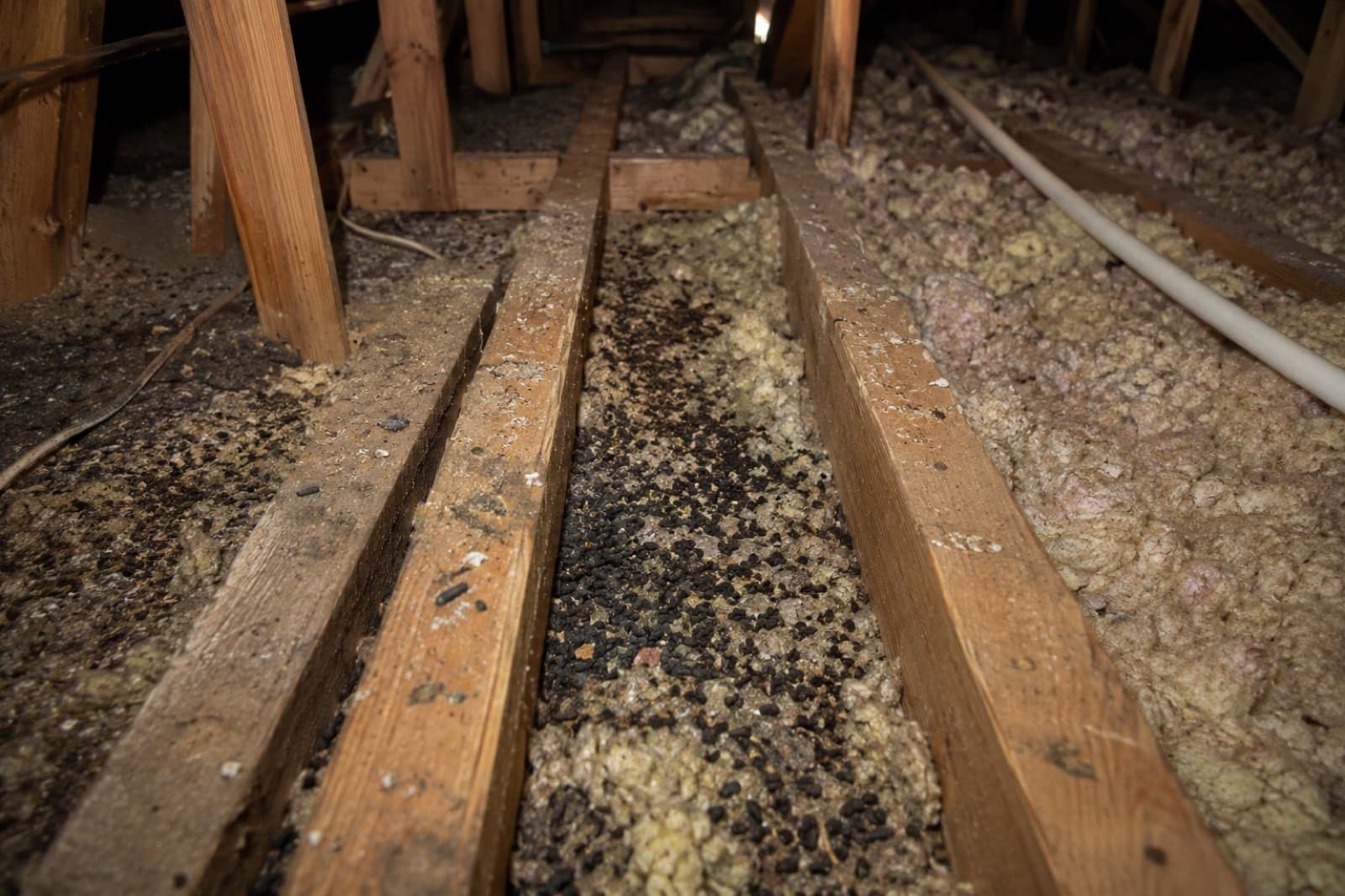
Droppings, nesting, and bat guano removed under HEPA containment, then the deck is sanitized and deodorized before any new insulation goes down.
Rodent Cleanup, Insulation Removal And New Blown-In HEPA Containment • R-49 To R-60 • Energize CT Rebates
 IICRC Certified
 Eco-Friendly Solutions For Healthier Spaces
Reviewed by David Megeneishvili·Licensed & Insured In CT·IICRC AMRT + WRT
From 18th-century colonials on the Litchfield green with antique knob-and-tube-era attics to Bantam lakeside homes and Northfield farmhouses with old settled batting, one crew handles cleanup, removal, air sealing, and new blown-in insulation to a code R-value across Litchfield.
Mouse droppings, urine, nesting material, and bat guano removed under HEPA containment. Affected surfaces sanitized and deodorized with EPA-registered products before any new insulation is installed, protecting indoor air quality and the crew.
HEPA containment · Sanitized deck
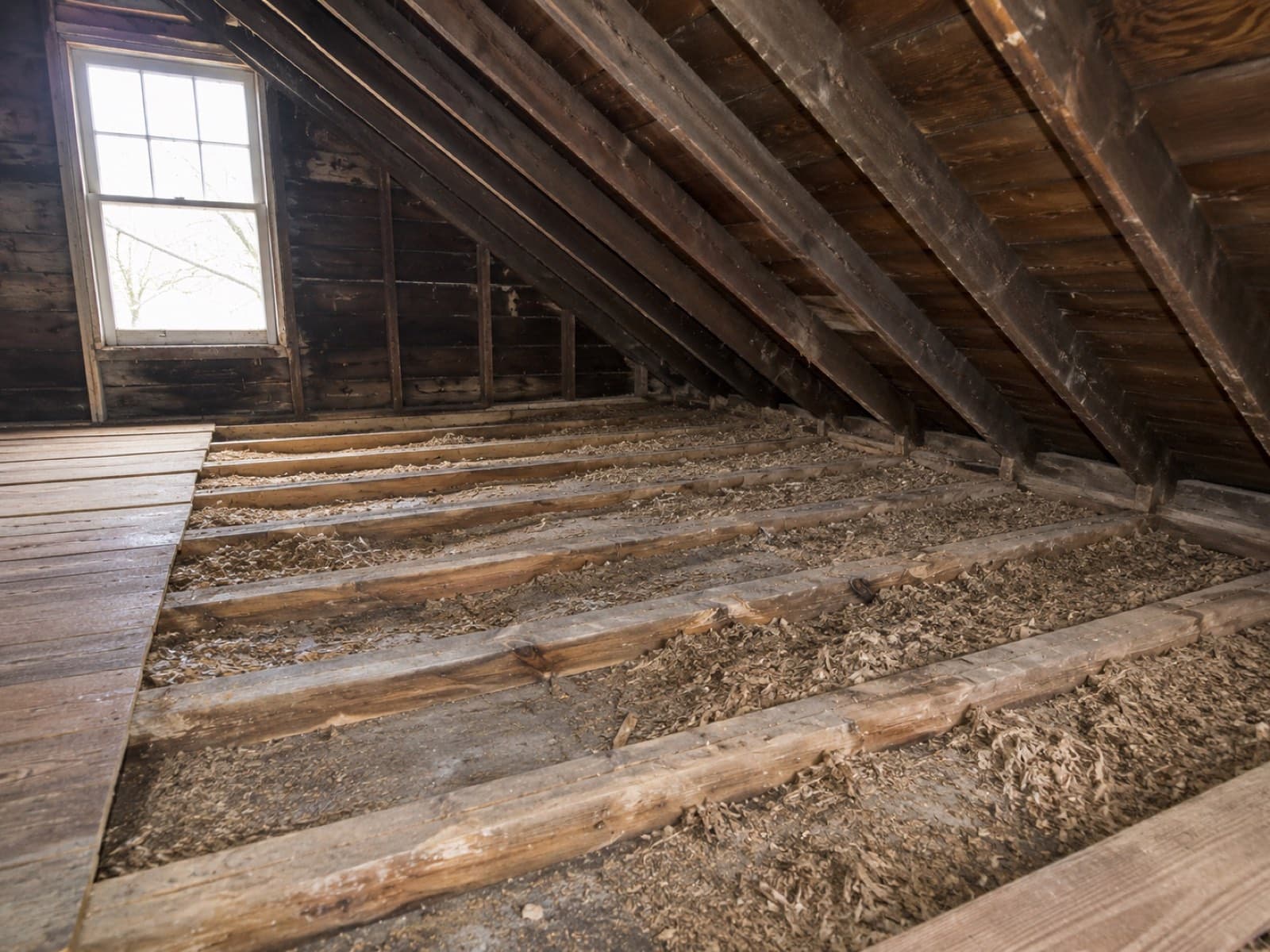
Contaminated, water-damaged, flattened, or undersized insulation removed by commercial insulation vacuum or bagged and hauled out. The attic deck is left clean and ready, with no contaminated material left to off-gas into the home.
Vacuum or bagged · Hauled away
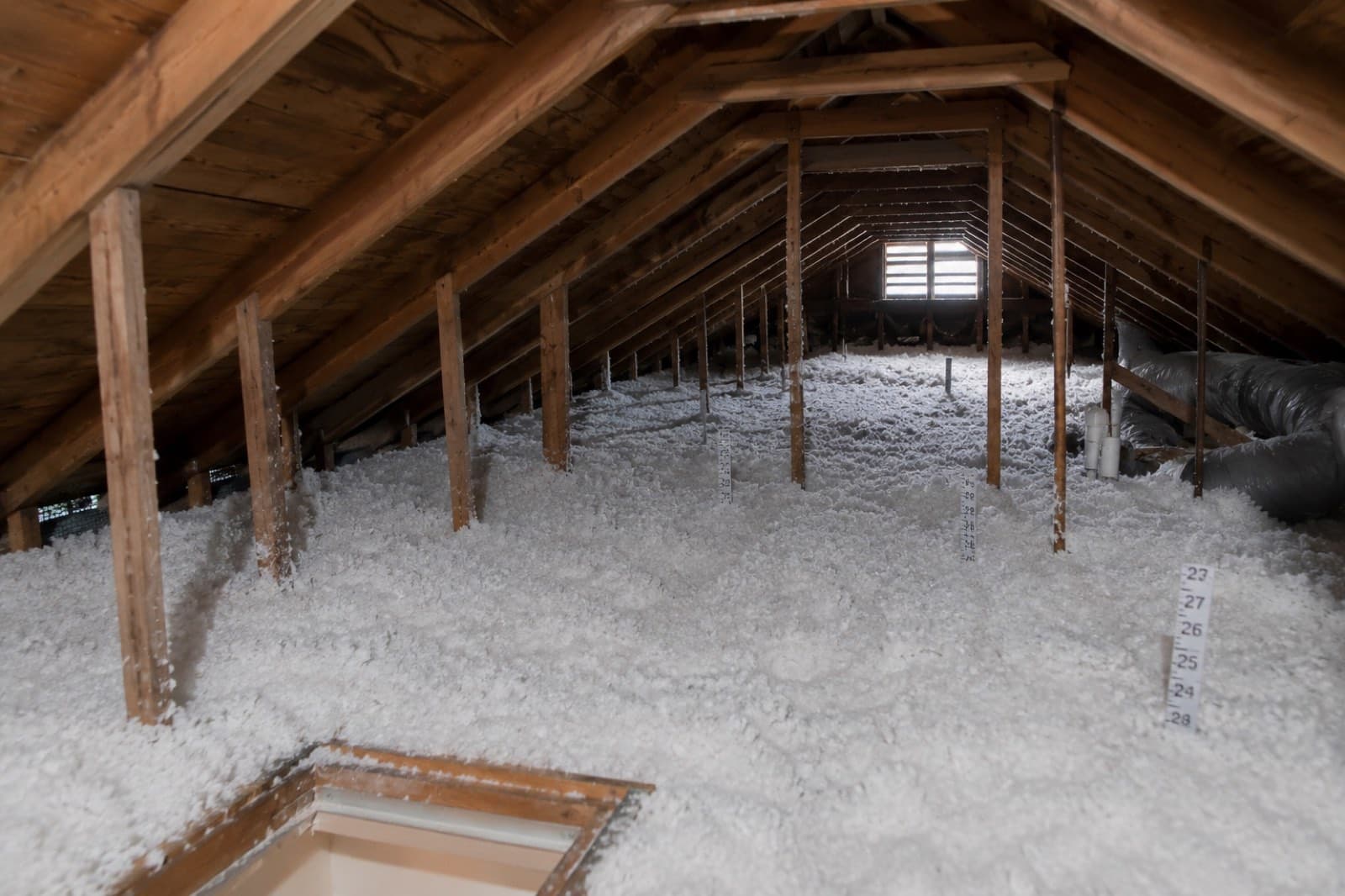
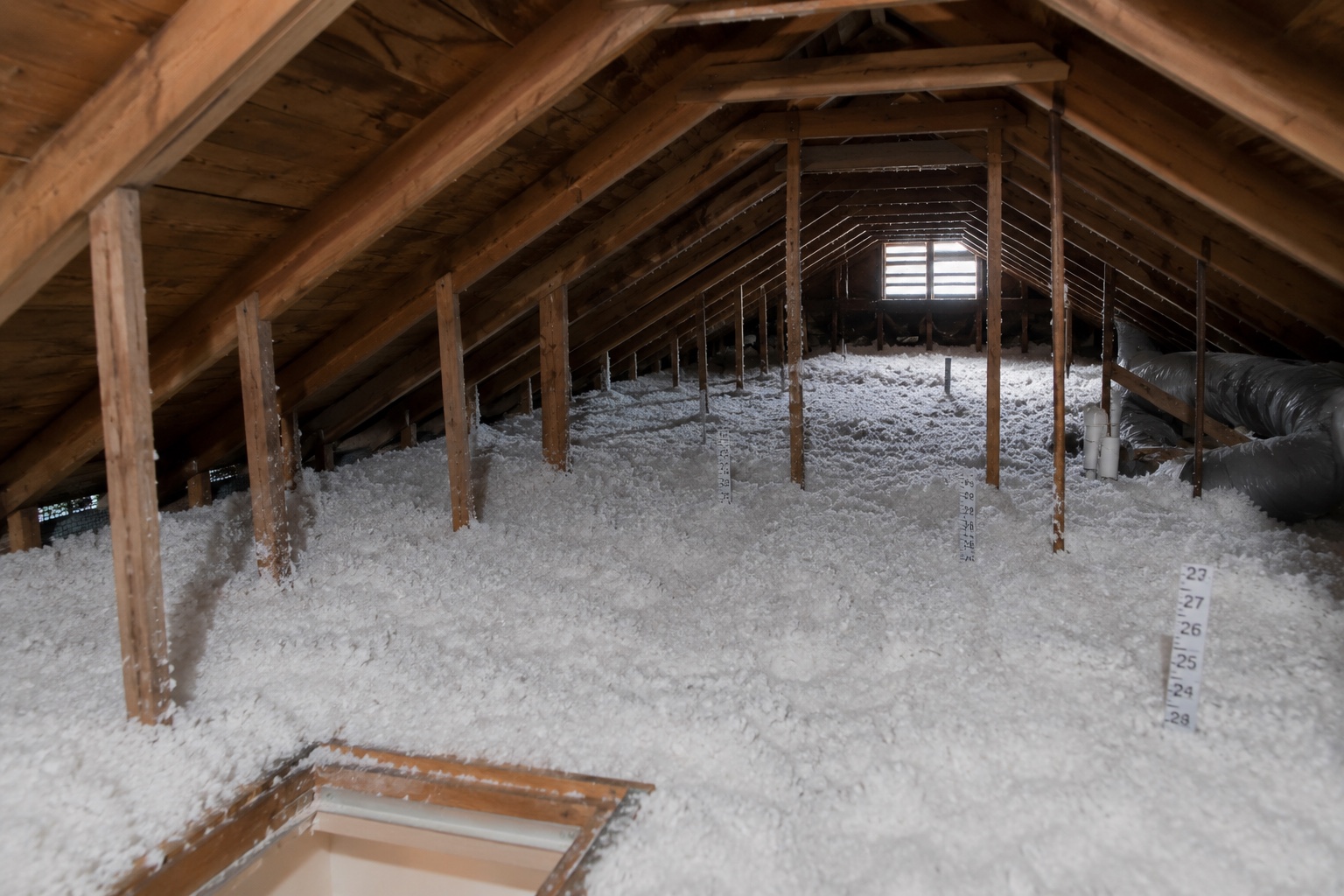
Blown-in cellulose or fiberglass installed to a uniform depth that meets the Climate Zone 5 to 6 attic target of R-49 to R-60. Depth markers set and photographed so coverage is verifiable across the entire attic floor.
Code R-value · Depth verified
Top plates, wire and pipe penetrations, recessed lights, chases, and the attic hatch sealed before insulation goes down. Air sealing stops the stack-effect leakage that wastes energy and lets warm, moist air into the attic.
Entry points sealed with copper mesh, hardware cloth, and sealant so the cleaned and reinsulated attic stays pest free. Coordinated with a licensed pest operator when an active infestation is present before the attic is closed.
Roof leaks, bath fan ducts venting into the attic, and condensation on the deck identified and corrected as part of the scope. Surface mold on sheathing treated so the new insulation is installed over a dry, sound deck.
Reinsulate Your Litchfield Attic The Right Way. Clean It Out First.
Attic decontamination, insulation removal, air sealing, and new blown-in insulation to code R-value across Litchfield and Litchfield County.
Local housing stock, attic construction, and rodent pressure shape every cleanup and reinsulation scope.
Free On-Site Assessment
We establish the scope on site, before anything is quoted.
(860) 222-9498Litchfield holds one of the oldest housing stocks in Connecticut, and its attics show it. Homes on the Litchfield green and throughout the historic district are 18th-century colonials with antique framing, low knee-walls, and knob-and-tube-era wiring that demands careful assessment before any insulation work begins. Around Bantam Lake, lakeside and seasonal homes take steady summer humidity that degrades old attic insulation and feeds deck moisture. Up on the high-elevation ridges of the Litchfield Hills, deep cold winters punish any attic still sitting at R-19, which makes a code-depth R-60 reinsulation one of the strongest returns in the region.
Across the wooded county, heavy rodent pressure pushes into attics through roofline and soffit gaps. The right sequence is the same on every one: assess the antique structure, clean out the contamination, remove the failed insulation, air seal, and reinsulate to a code depth.
Litchfield sits in IECC Climate Zone 5, where the recommended attic level is R-49 to R-60, and its hilltop elevation makes those upper depths pay back faster than in coastal towns. Bringing an antique green-district colonial or a Northfield farmhouse up to that target, paired with air sealing, is one of the highest-return energy upgrades on these homes, and it qualifies for Energize CT Home Energy Solutions rebates on the new insulation. On the oldest homes we always confirm knob-and-tube wiring is retired or properly cleared before blowing in new material.
Free On-Site Attic Assessment Across Litchfield County
Thousands of attics and homes cleaned, decontaminated, and reinsulated across Connecticut, New York, and Massachusetts, from single rodent cleanups to full removal and reinsulation to a code R-value.
Most attic cleanup and reinsulation projects finish in one to two days, with depth markers set and photographed so the finished R-value is verifiable.
Itemized scope, R-value details, and timestamped photos formatted for Energize CT Home Energy Solutions and HES-IE applications.
Top rated by the Better Business Bureau with verified five-star Google reviews across Connecticut.
Your Litchfield Attic Cleanup And Insulation Specialists Since 2017
Green Restoration provides professional attic cleanup, insulation removal, air sealing, and new blown-in insulation for homes across Litchfield and Litchfield County. Our restoration-grade process covers rodent and bat decontamination under HEPA containment, removal of old or contaminated insulation, air sealing of the attic plane, and new insulation installed to the Climate Zone 5 target of R-49 to R-60. On the county's antique housing stock we assess the framing and confirm any knob-and-tube wiring is cleared before reinsulating. We document every phase clearly for Litchfield property owners and for Energize CT Home Energy Solutions rebate applications on the qualifying new insulation.

“As the local franchisee serving Litchfield County, I bring more than 15 years of IICRC-certified restoration experience, including AMRT and WRT credentials, to every attic we touch. From antique colonials on the green that need a careful knob-and-tube check before any work to Bantam lakeside homes fighting summer humidity and hilltop houses losing heat through R-19 attics, every job gets my direct oversight and the documentation your Energize CT rebate needs.”
Connecticut homeowners can apply Energize CT Home Energy Solutions rebates to new attic insulation and air sealing. We document eligible work so you can apply confidently.
Connecticut Energy Efficiency Fund · Eversource & UI
Statewide utility incentive that covers new attic insulation and air sealing after a Home Energy Solutions (HES) assessment. Standard rebates run up to $2.00 per square foot or 75 percent of cost, whichever is less, capped around $10,000 per home. Income-eligible households go through Home Energy Solutions Income Eligible, which covers a substantially deeper share of qualifying insulation cost. Eligibility and coverage levels are set by Energize CT, not by us.
A note on accuracy: the federal Energy Efficient Home Improvement Credit (IRS Section 25C) for insulation ended December 31, 2025 and does not apply to projects completed in 2026. The programs above are state and utility incentives that cover newly installed attic insulation and air sealing. They do not cover removal, cleanup, or decontamination of old or contaminated insulation, which is billed separately. Always confirm current eligibility and caps on the official program page before work begins.
Itemized scope, R-value details, and timestamped photos formatted for Energize CT Home Energy Solutions program applications. Verify current eligibility and caps before work begins.
The same restoration-grade sequence on every Litchfield attic: clean it out, remove the old material, air seal, and reinsulate to R-49 to R-60.
Step OneDroppings, nesting, and bat guano removed under HEPA containment, then the deck is sanitized and deodorized before any new insulation goes down.
 Step Two
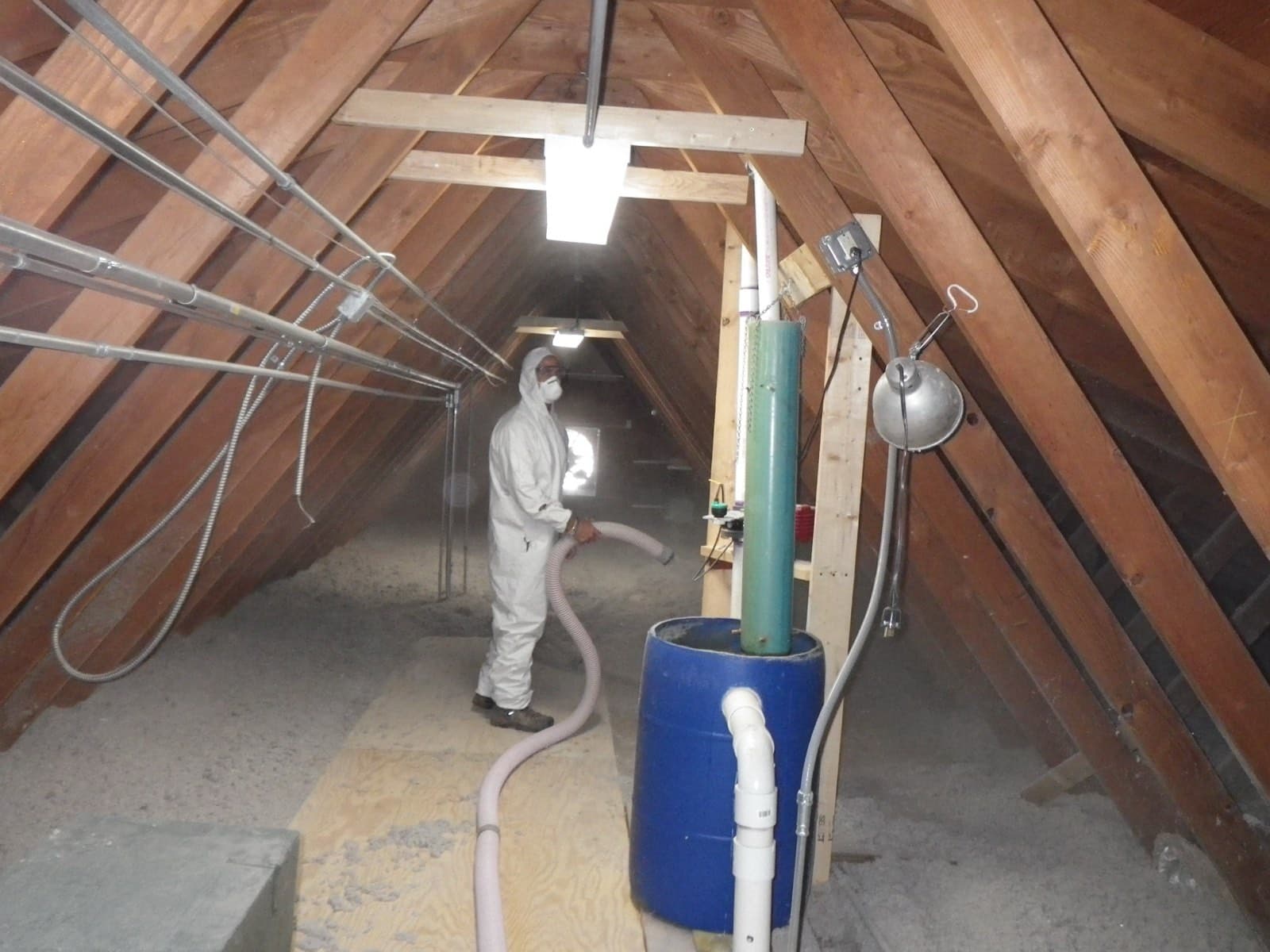
Contaminated, wet, or flattened insulation is vacuumed or bagged and hauled out, leaving a clean deck down to the joists with nothing left to off-gas.
 Step Three
Cellulose or fiberglass blown to a uniform, verified depth across the whole attic floor, with depth markers set and photographed.
The ResultTop plates, penetrations, and the attic hatch sealed first, then a full depth of new insulation for even room-to-room comfort and lower bills.
Attic decontamination, old insulation removal, air sealing, and new blown-in insulation to a code R-value for Litchfield homes. One crew, one project, with a free on-site assessment.
Green Restoration provides attic cleanup, insulation removal, and new blown-in insulation in Litchfield, CT, covering Litchfield Center, Bantam, Northfield, Milton, East Litchfield, the White Memorial area, and Topsmead. Crews arrive with HEPA containment, commercial insulation vacuums, and new blown-in material, so we move from inspection to cleanup and reinsulation without waiting on a return trip.
As a locally based company serving Litchfield County, we know these attics: 18th-century colonials on the green with antique framing and knob-and-tube-era wiring, Bantam lakeside homes taking summer humidity, and hilltop houses across the Litchfield Hills losing heat through thin settled batting and steady rodent pressure from the surrounding woods. Our crews assess the structure, clean it out, correct moisture, air seal, and reinsulate to a verifiable code depth.
Call for a free on-site attic assessment. We measure your R-value and deliver a written, fixed quote before any work begins.
(860) 222-9498IICRC Certified · Licensed & Insured · State Rebate Documentation
All Towns Served By Green Restoration Of Litchfield County, Based In Litchfield, For Attic Cleanup, Insulation Removal & Replacement.
Connecticut HIC HIC.0668405
Green Restoration of Litchfield County. Connecticut HIC HIC.0668405. We submit our scope of work and supporting documentation directly to your insurer. We are not licensed public adjusters and do not negotiate claims on your behalf.
Clear, honest answers about rodent cleanup, insulation removal and replacement, R-value, and Connecticut rebates for Litchfield attic projects.
Litchfield attic projects span a wide range because the county holds both accessible Northfield and Bantam farmhouse attics and complex antique colonials on the green with low-clearance framing. As a general guide in this market, old insulation removal runs about $1 to $2 per square foot, and new blown-in insulation runs about $1.50 to $4.50 per square foot installed depending on the target depth. A full project that includes decontamination, removal, air sealing, and new insulation commonly lands between $3,500 and $11,000 depending on attic size, access, and contamination. Antique historic-district attics that need a knob-and-tube check and careful hand work drive the higher end. Every estimate is written and itemized, and Energize CT rebates reduce the new-insulation portion.
Litchfield sits in IECC Climate Zone 5, where the recommended attic insulation level is R-49 to R-60. Because Litchfield sits on high ground with deep-cold winters, reaching the upper end of that range pays back faster here than in coastal towns. Many antique green-district colonials and older Northfield and Milton farmhouses measure R-19 to R-30 or less once the insulation has settled or been damaged. We measure the existing depth, then install new insulation to a uniform depth that reaches the R-49 to R-60 target, with depth markers set and photographed so the result is verifiable across the whole attic.
Many antique homes in the Litchfield historic district and on the green still have knob-and-tube-era wiring in the attic, and it must be addressed before any insulation is blown in, because covering live knob-and-tube wiring is a fire hazard. We assess the attic first and confirm with a licensed electrician that the wiring is retired, replaced, or properly cleared. Once the wiring is safe, we proceed with cleanup, air sealing, and new insulation. This careful first step is why antique-stock attics take more time than newer homes.
In most cases, yes. The wooded lots around Litchfield, from Topsmead to the White Memorial area, take steady rodent pressure, and insulation contaminated with droppings, urine, or bat guano holds pathogens, allergens, and odor that move into the living space through attic air. It cannot be cleaned in place. We remove the contaminated insulation under HEPA containment, sanitize and deodorize the deck, seal the roofline and soffit entry points, and then install new insulation.
Litchfield homeowners can apply Energize CT Home Energy Solutions rebates to new attic insulation and air sealing, typically up to $2.00 per square foot or 75 percent of cost, whichever is less, capped around $10,000 per home. A Home Energy Solutions assessment is required first. Where a household meets HES-IE income limits, the programme carries more of the qualifying cost. The rebates apply to the new insulation and air sealing, not to removal or decontamination. Confirm current amounts on energizect.com before work begins.
No. The federal Energy Efficient Home Improvement Credit for insulation, IRS Section 25C, ended on December 31, 2025 and does not apply to projects completed in 2026. Homeowners who completed qualifying work by the end of 2025 may still claim it on their 2025 return. For 2026 Litchfield projects, the savings come from Energize CT Home Energy Solutions on the new insulation.
Most Litchfield attic projects are completed in one to two days. A straightforward removal and reinsulation on a Northfield or Bantam home often finishes in a single day, while an antique colonial on the green that needs a knob-and-tube check and careful hand work, heavier rodent contamination, or moisture correction on a lakeside home can extend the work to two days. The written scope confirms the expected timeline before work begins.
The same local Green Restoration team covers all of these across Litchfield. One number for every emergency and every cleanup.

