Water Damage Restoration New London, CT
IICRC-Certified Water Damage For New London 60-Minute Response, Direct Insurance Billing
 IICRC Certified
 Eco-Friendly Solutions For Healthier Spaces
Reviewed by David Megeneishvili·Licensed & Insured In CT·IICRC AMRT + WRT
What Is IICRC S500 Water Damage Restoration?
Water damage restoration is the IICRC S500-2021 documented process of extracting standing water, classifying the loss by category (clean, gray, black) and class (1 through 4), then drying the structure to equilibrium moisture content within a defined psychrometric window using commercial LGR dehumidifiers, axial air movers, and Tramex meter verification across every previously affected substrate.
In New London, CT, Green Restoration sequences the restoration: 60-minute dispatch, FLIR thermal imaging and Tramex CME 5 mapping, truck-mounted extraction, controlled drying to S500 § 12 benchmarks, antimicrobial application per S520-2024, and a carrier-ready scope file with daily moisture logs. Cutting steps drives mold colonization risk, claim denial risk, and reinjury rework within weeks.
- IICRC S500-2021 aligned
- ASTM E1745 vapor retarder spec
- ASHRAE 160 humidity targets
- Carrier-grade documentation
Why New London Sits in Climate Zone 5A
IECC International Energy Conservation Code
IECC Climate Zone 5A across most of Connecticut. Coastal towns sit in Zone 5A while the inland NW Corner edges into Zone 6A.
Connecticut adopts the 2021 IECC under the State Building Code, requiring documented psychrometric drying logs and Class I or II vapor retarder per ASTM E1745 after Category 2 or Category 3 water restoration.
Conditions from the National Weather Service and Open-Meteo.
New London Emergency Utility Lines
Stopping water at the source is step 1 of any water-damage scope. Use these verified New London lines while our IICRC crew is en route.For life-threatening emergencies (active fire, gas odor, electrical shock), call 911 first.
Water Authority
New London Public Utilities Water
(860) 447-5222
24/7 emergency. New London Public Utilities operates water for the City of New London.
Source: ci.new-london.ct.us
Gas Leak
Eversource Gas (Yankee Gas)
(877) 944-5325
If you smell gas, leave immediately, call 911 first, then this line from a safe location.
Source: eversource.com
Electric Emergency
Eversource Electric
(800) 286-2000
Submerged outlets or wet panel: cut breaker, then call to confirm service drop is safe.
Source: eversource.com
Police (Non-Emergency)
New London Police
(860) 447-5269
Sewer-backup Cat-3 claims sometimes need a police report. Call dispatch.
Source: ci.new-london.ct.us
Numbers verified against public utility and municipal sources. Green Restoration is not affiliated with these agencies. We provide these as a courtesy resource alongside our IICRC water-damage response.
Complete Water Damage Restoration In New London, CT
Every New London water-damage scope is pumped, dried, and documented by IICRC-certified crews dispatched across the New London County corridor, with daily moisture logs filed for your insurance carrier.
24/7 Emergency Water Removal & Extraction
Truck-mounted extractors arrive same day across New London and the Thames Harbor corridor via Interstate 95 and Route 32 with Hydramaster CDS-4.8 power. We pump Long Island Sound storm-surge basements at Ocean Beach and Pequot Avenue, brackish Category 3 backflow Downtown and at Shaws Cove, and Fort Trumbull waterfront commercial slabs.
60-min target
Burst & Frozen Pipe Cleanup
January and February freeze-thaw bursts in 1700s Downtown whaling-port colonials, 1880 Hodges Square Victorian tenements, and pre-war Mitchell Woods row houses get same-day extraction, structural drying, and documented scope filed directly with your carrier.
S500 protocol
Structural Drying & Dehumidification
Phoenix Axial air movers and LGR dehumidifiers stage daily across New London properties along Shaws Cove and the Pequot Avenue corridor with timestamped Tramex CME 5 moisture meter logs delivered to your adjuster every 24 hours until S500 dry standard is confirmed.
3 to 9 days
Additional Water Damage Services In New London
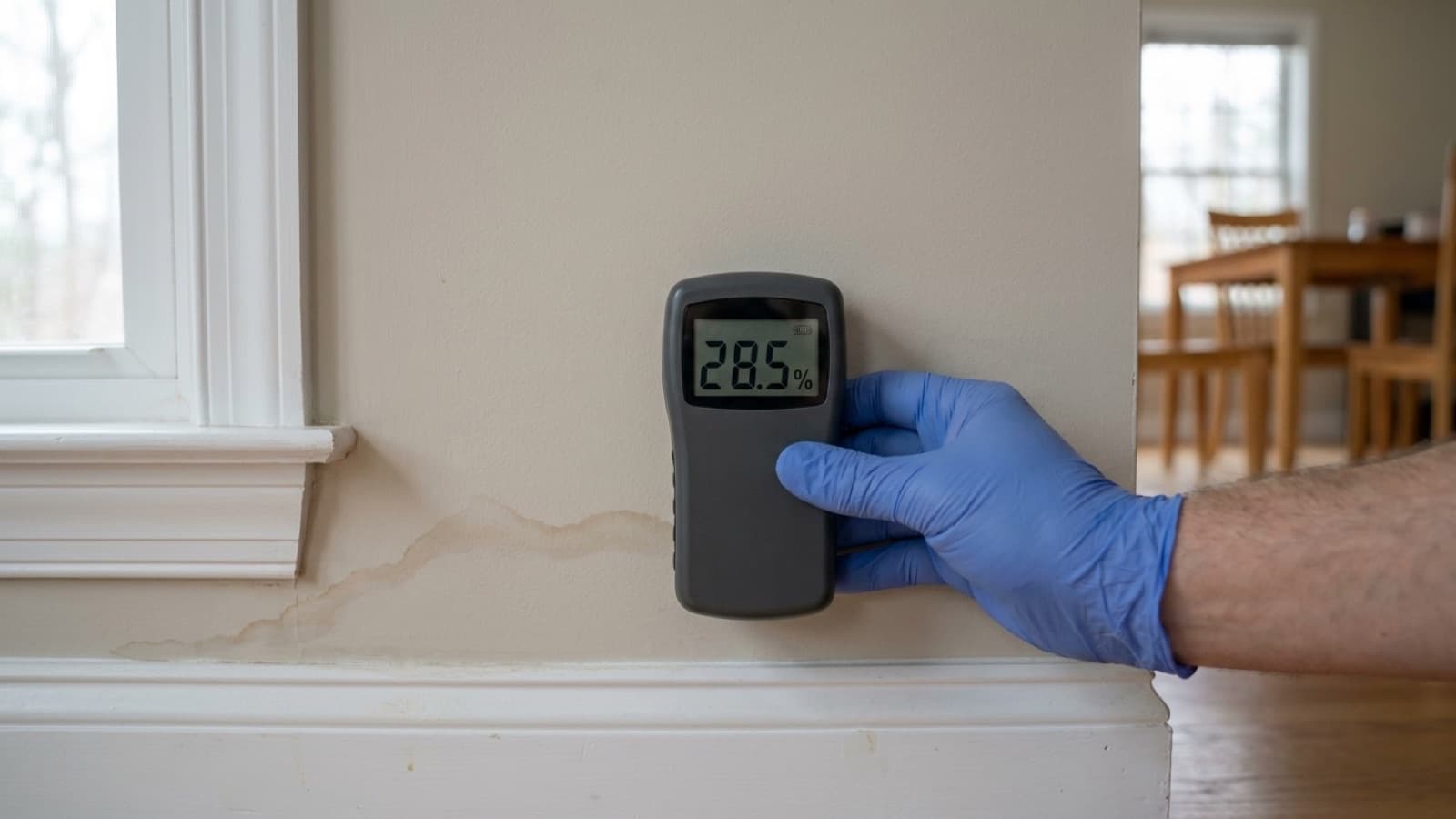
Moisture Detection & Leak Mapping
FLIR thermal imaging maps hidden water behind plaster-and-lath walls in 1880 Hodges Square Victorians and Downtown whaling-port colonials, and inside continuous balloon-frame stud bays of Williams Park row stock before destructive opening.
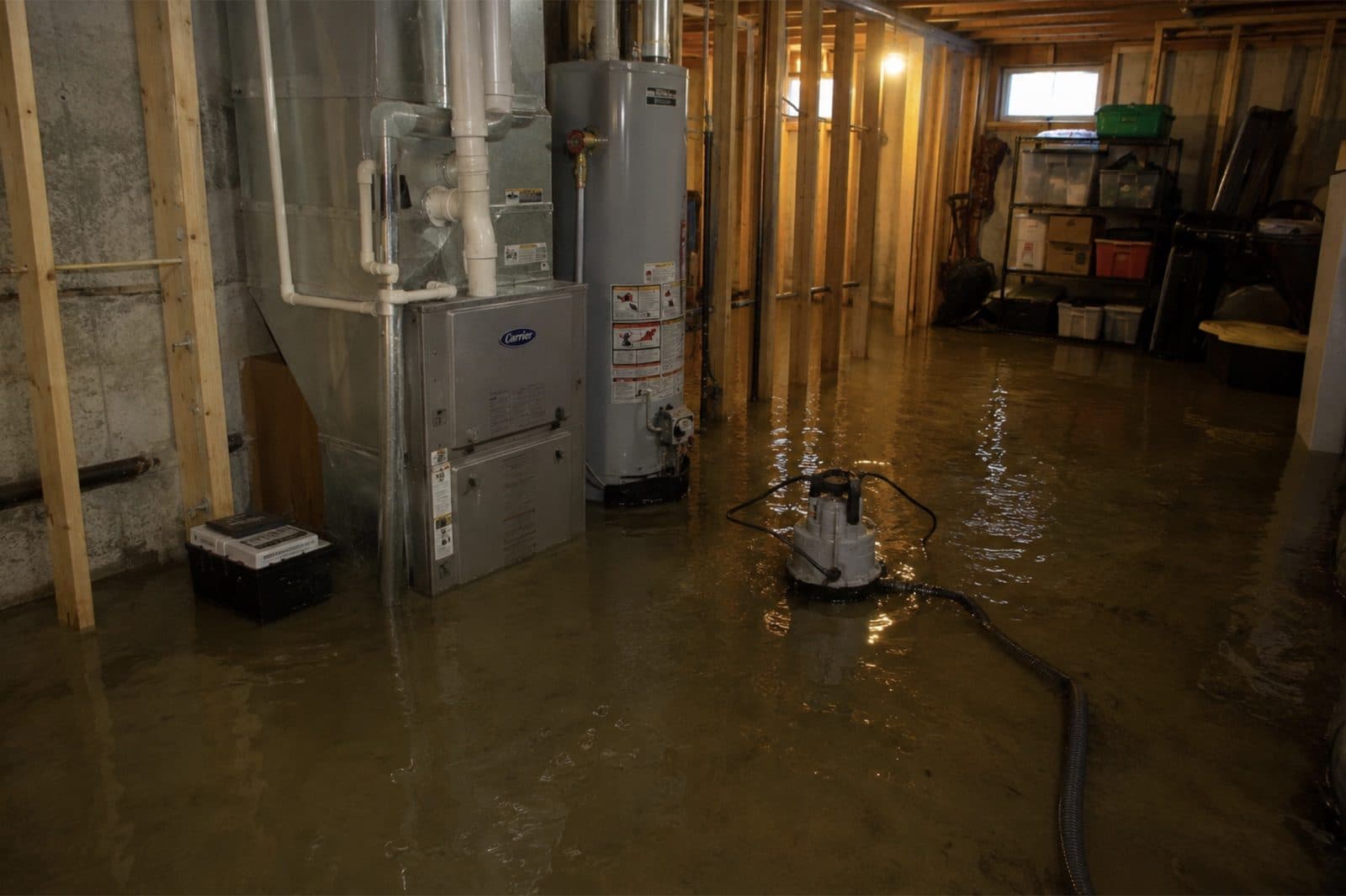
Flooded Basement Cleanup
Long Island Sound storm-surge basements at Ocean Beach and Pequot Avenue, Thames Harbor brackish-backflow cellars Downtown and at Shaws Cove, and Fort Trumbull waterfront commercial slabs are pumped, sanitized, dried, and documented for FEMA NFIP and major-carrier claims with chain-of-custody from extraction through clearance.
Sump Pump Failure Cleanup
When the sump fails during a nor-easter or spring melt in mid-century Mitchell Woods builds or 1950s Crockers Field ranches, we pump standing water, replace failed equipment, and dry framing with EPA-registered antimicrobial treatment per IICRC S500.
Sewage Cleanup
Category 3 black water from Thames Harbor sewer backup Downtown, Long Island Sound brackish surge at Ocean Beach, and aged combined-sewer overflow events in Hodges Square and Bates Woods gets IICRC S500 full-PPE remediation with double-bagged waste and lab-verified post-cleanup.
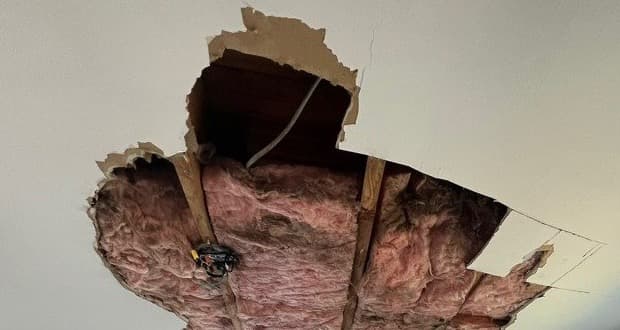
Ceiling & Drywall Water Damage Repair
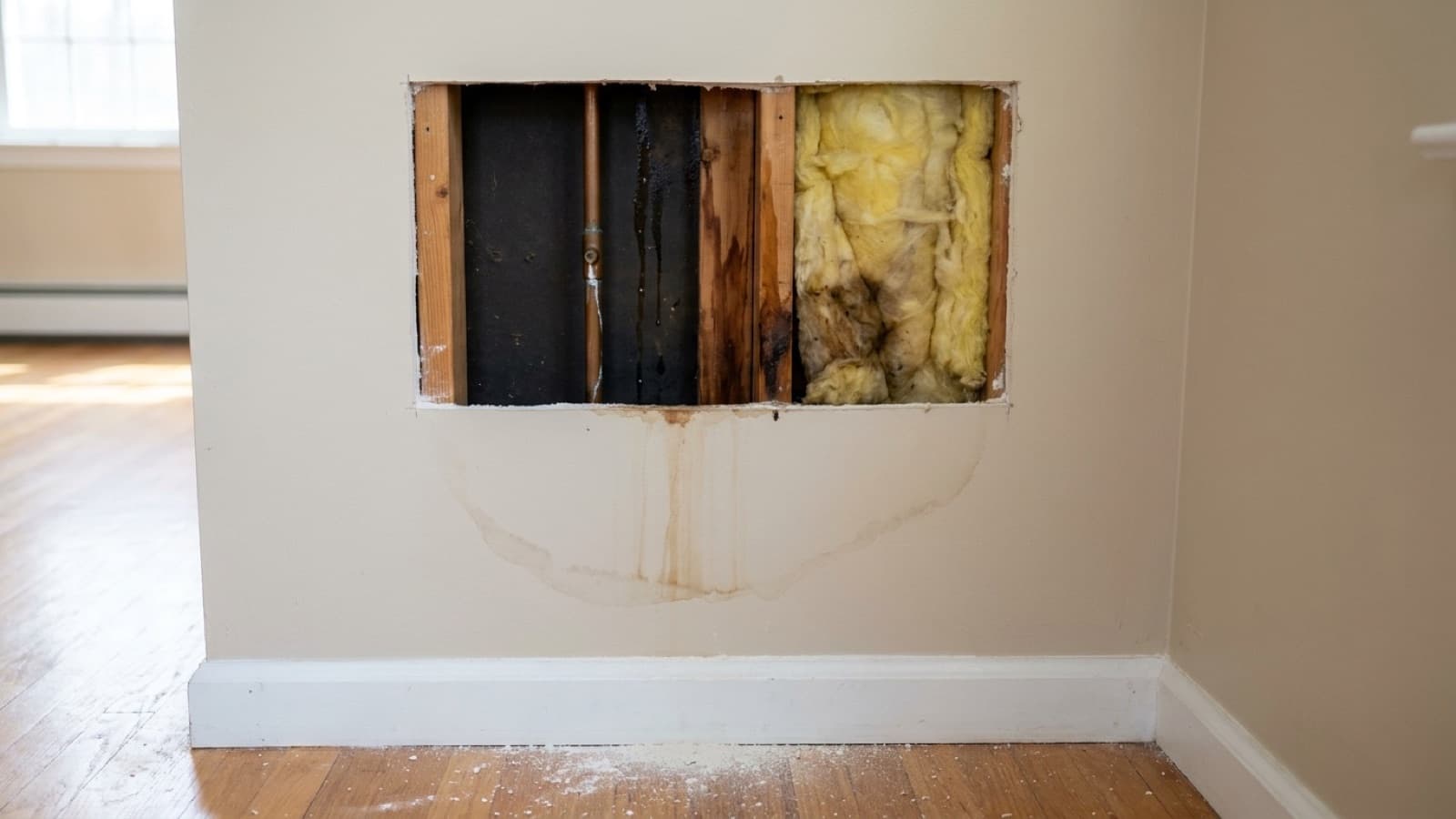
Plaster ceilings in 1880 Hodges Square Victorians and Downtown whaling-port colonial stock, drywall in mid-century Mitchell Woods and Crockers Field ranches, get cut, dried, and replaced with paint-ready finish, photo-documented for your insurance file.
Hardwood Floor Drying & Salvage
Pre-Federal-era wide-plank floors in Downtown whaling-port colonials and 1880 Hodges Square Victorians, engineered floors in modern Pequot Avenue waterfront builds, get controlled-airflow drying with desiccant dehumidifiers to salvage finish before salt-water cupping locks in.
Appliance Leak Cleanup
Washing machine supply hoses, dishwasher gaskets, ice maker lines, and refrigerator water connections fail across New London kitchens. We extract standing water, dry subfloor and cabinets under IICRC S500, and document the loss directly to your carrier.
Roof Leak & Storm Intrusion Cleanup
Nor-easter ice dams lift slate on 1880 Hodges Square Victorian roofs, flashing failures soak attic insulation on Downtown whaling-port colonials, and Coast Guard Academy and Connecticut College commercial flat roofs pond during heavy rain. We extract, dry framing per IICRC S500, and file storm-intrusion scope with your insurer.
Water Heater Failure Cleanup
Tank ruptures on 40 to 80 gallon water heaters, supply line bursts, and T and P valve discharges release 30 to 80 gallons across basement slabs in Downtown whaling-port colonials, 1880 Hodges Square Victorians, and Mitchell Woods row stock. We extract, dry, and document the loss under IICRC S500 for direct carrier billing.
Don't Wait For Water Damage To Get Worse. Every Minute Counts.
Call Now For 60-Minute Response Across New London And The New London County Corridor.
Green Restoration of New London County
Green Restoration of New London County handles water damage restoration in New London, CT, where Thames Harbor and Shaws Cove tidal exposure reaches Downtown New London commercial slabs and Fort Trumbull waterfront properties, and Hodges Square Victorian tenement cellars take the same brackish surge. Owner-operated crews extract the water and dry the structure to IICRC S500 standards with documented moisture logs, under IICRC Certified Firm #70236106. Call (833) 833-3637.
More Green Restoration Services in New London
The same local Green Restoration team covers all of these across New London. One number for every emergency and every cleanup.
Proof of Work
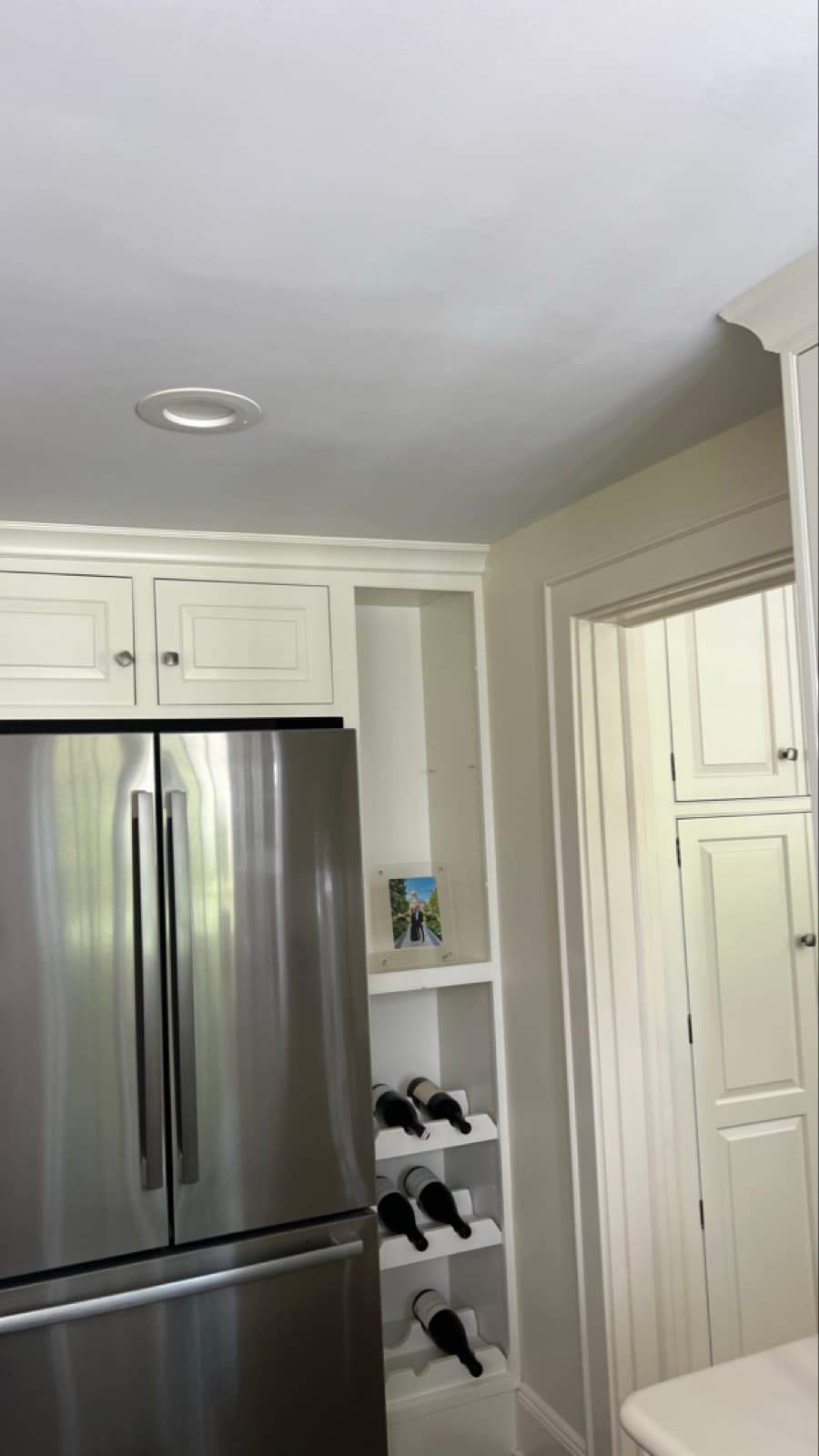
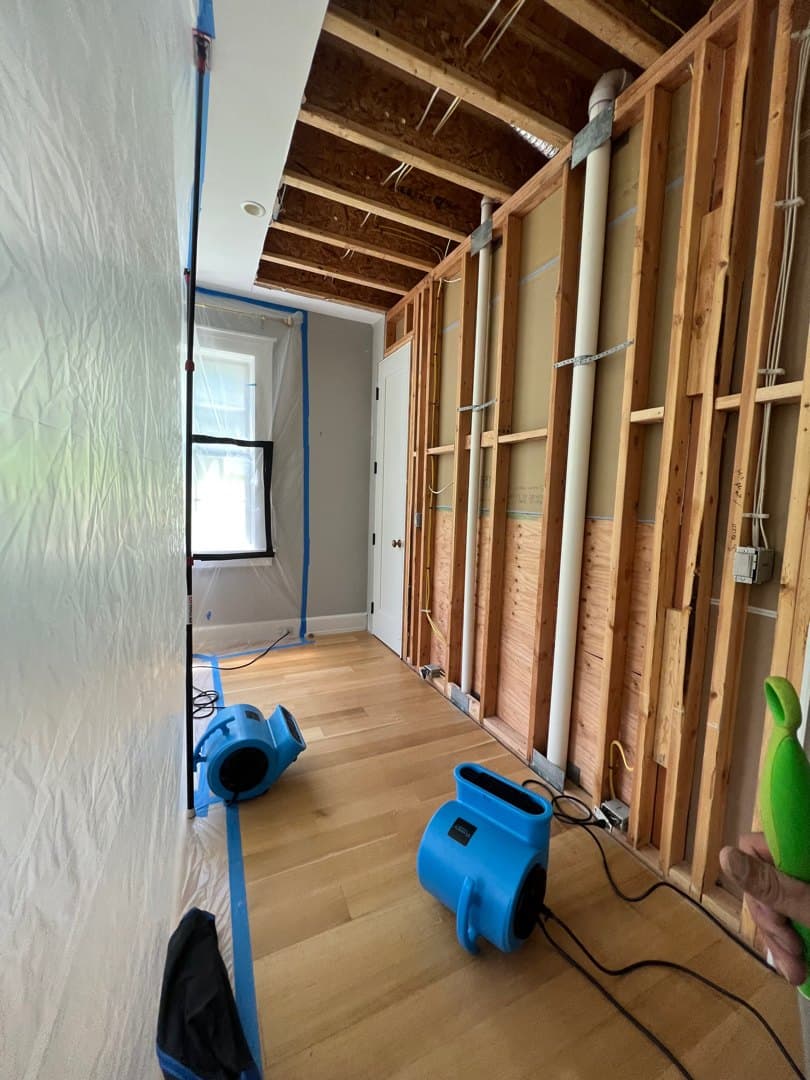
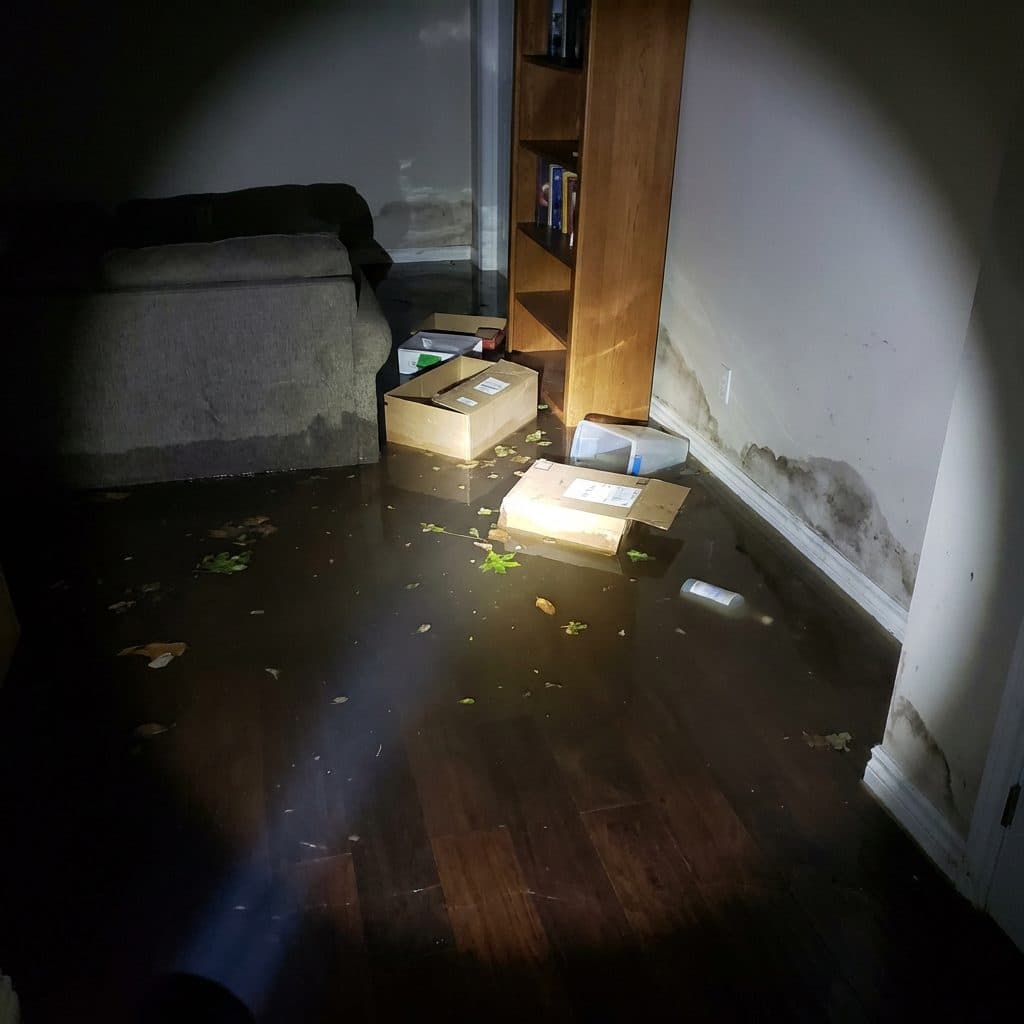
Recent Water Damage Projects
Real Connecticut water losses our crews documented and closed out.
Why Choose Us In New London
Owner-led service with 60-minute response, direct insurance billing, and eco-friendly methods across New London.
60-Minute Emergency Response
IICRC-certified crews arrive within 60 minutes, day or night, every day of the year.
Owner-Operated Local Crew
Every job is personally overseen by our owner, from first call to final moisture reading.
Direct Insurance Billing
We bill State Farm, Liberty Mutual, USAA, Travelers, Allstate, and Chubb directly under HIC.0668405.
EPA-Registered Antimicrobials
EPA-registered antimicrobials and Safer Choice cleaning products applied per IICRC S500 and S520 standards.
What Untreated Water Damage Costs Your New London Property
Untreated water damage in a New London home becomes mold colonization within 24 to 48 hours, hardwood cupping within 12 hours, and plaster delamination within 72 hours. A $4,500 same-day extraction can become a $25,000 plaster and finish-floor rebuild after 48 hours. The earlier we measure, the smaller the rebuild.
Long Island Sound Storm Surge
Ocean Beach And Pequot Avenue
Ocean Beach Park and the Pequot Avenue shoreline corridor face direct Long Island Sound storm surge during nor-easters and tropical remnants. Brackish Category 3 backwater pushes through coastal-zone floor drains and ground-floor utility rooms, requiring full-PPE remediation under IICRC S500.
Thames Harbor Tidal Surge
Downtown And Shaws Cove
Thames Harbor and Shaws Cove tidal exposure reaches Downtown New London commercial slabs and Fort Trumbull waterfront properties. Nor-easter coincident with high tide pushes brackish surge through Downtown floor drains and 1700s whaling-port colonial basements, requiring full-PPE remediation under IICRC S500.
1700s Whaling-Port Colonials
Downtown And Bank Street
Downtown New London 1700-1820 whaling-port colonial homes carry plaster-on-lath wall systems and timber-frame stud bays where moisture wicks against original sill plates. Damage often hides for weeks until plaster staining appears on upper floors above the original water source.
1880 Hodges Square Victorian Tenements
Plaster-On-Lath Cavities
Hodges Square, Williams Park, and Mitchell Woods 1880-1920 Victorian tenement and row-house stock carry plaster-on-lath wall systems and continuous balloon-frame stud bays. Combined with aged urban-infrastructure exposure, lath bays retain water beyond modern drywall.
Combined-Sewer Overflow
Aged Downtown Infrastructure
Downtown New London and Hodges Square sit on aged combined-sewer infrastructure where heavy rainfall produces Category 3 combined-sewer overflow events. Stormwater pushes mixed sewage and rainwater into basement floor drains, requiring full-PPE IICRC S500 remediation.
Institutional Commercial Carriers
Coast Guard And Conn College
New London hosts the US Coast Guard Academy, Connecticut College, and the Eugene ONeill Theater Center campus stock. Institutional commercial-policy scope requires coordinated multi-tenant carrier handling. We deliver IICRC-standard documentation across residential, multi-family, and commercial scope types.
Why New London Properties Need Professional Water Damage Restoration
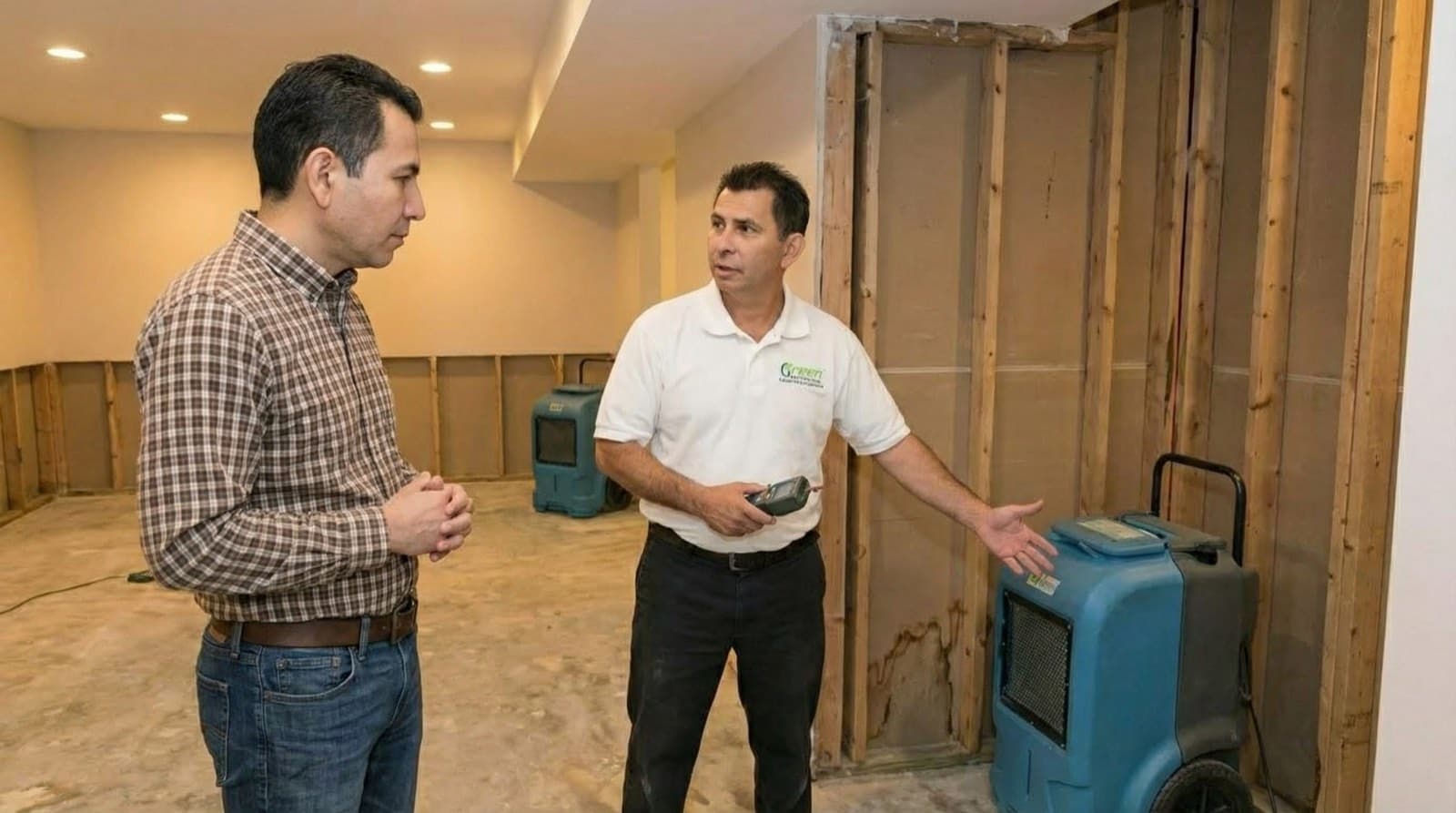
Professional water damage restoration in New London means IICRC S500-2021 extraction, Long Island Sound storm-surge response at Ocean Beach and Pequot Avenue, Thames Harbor tidal-estuary Category 3 remediation Downtown and at Shaws Cove, whaling-port colonial cavity drying for 1700s Downtown stock, Victorian plaster work for 1880 Hodges Square, combined-sewer overflow scope, and a carrier-ready file for State Farm, Travelers, Liberty Mutual, USAA, Allstate, Chubb, NFIP, and institutional carriers. DIY drying with household fans accelerates salt-water mold growth inside lath bays common to 1700 to 1940 New London housing stock.
Sound Coastal And Thames Harbor Expertise
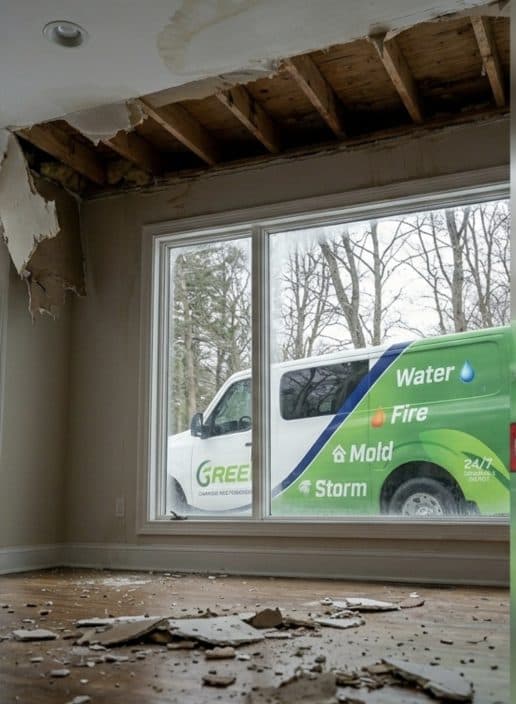
Long Island Sound storm surge at Ocean Beach and Pequot Avenue plus Thames Harbor tidal estuary at Shaws Cove and Downtown introduce sustained Category 3 brackish water requiring IICRC S500 remediation. Our crews stage Hydramaster CDS-4.8 truck-mounted extractors and submersible pumps for the whaling-port corridor, with daily Tramex CME 5 moisture readings logged until S500 dry standard is confirmed.
Whaling-Port And Victorian Stock Preservation
Downtown New London 1700s whaling-port colonial homes and Hodges Square 1880 Victorian tenement stock require drying protocols calibrated to plaster-on-lath wall systems and continuous balloon-frame stud bays. Phoenix Axial air movers positioned at psychrometric intervals dry plaster cavities without surface delamination. Tramex CME 5 mapping at every floor intercepts vertical moisture migration before mold colonies form.
Combined-Sewer And Coastal Coordination
Downtown and Hodges Square aged combined-sewer infrastructure produces Category 3 overflow events during heavy rainfall. Ocean Beach and Pequot Avenue face combined Long Island Sound coastal surge with salt-water exposure. Our crews carry full-PPE Category 3 remediation kits, salt-water antimicrobial protocols per IICRC S500, and post-loss lab-verified clearance testing for both scope types.
Institutional And Residential Carrier Documentation
New London homes carry standard CT policies from State Farm, Travelers, Liberty Mutual, USAA, Allstate, and Chubb. Coast Guard Academy, Connecticut College, and Eugene ONeill commercial scope adds institutional multi-tenant carriers and federal property coordination. Our owner, IICRC certified in WRT and AMRT under HIC.0668405, delivers a carrier-ready restoration file with timestamped photos and itemized scope for all carrier types.
The Water Damage We See Most in New London
In New London, flooding usually traces to the mouth of the Thames River where it meets Long Island Sound, so we classify every loss under the IICRC S500 standard and document it for your insurer. These are the water-damage patterns we see most often.
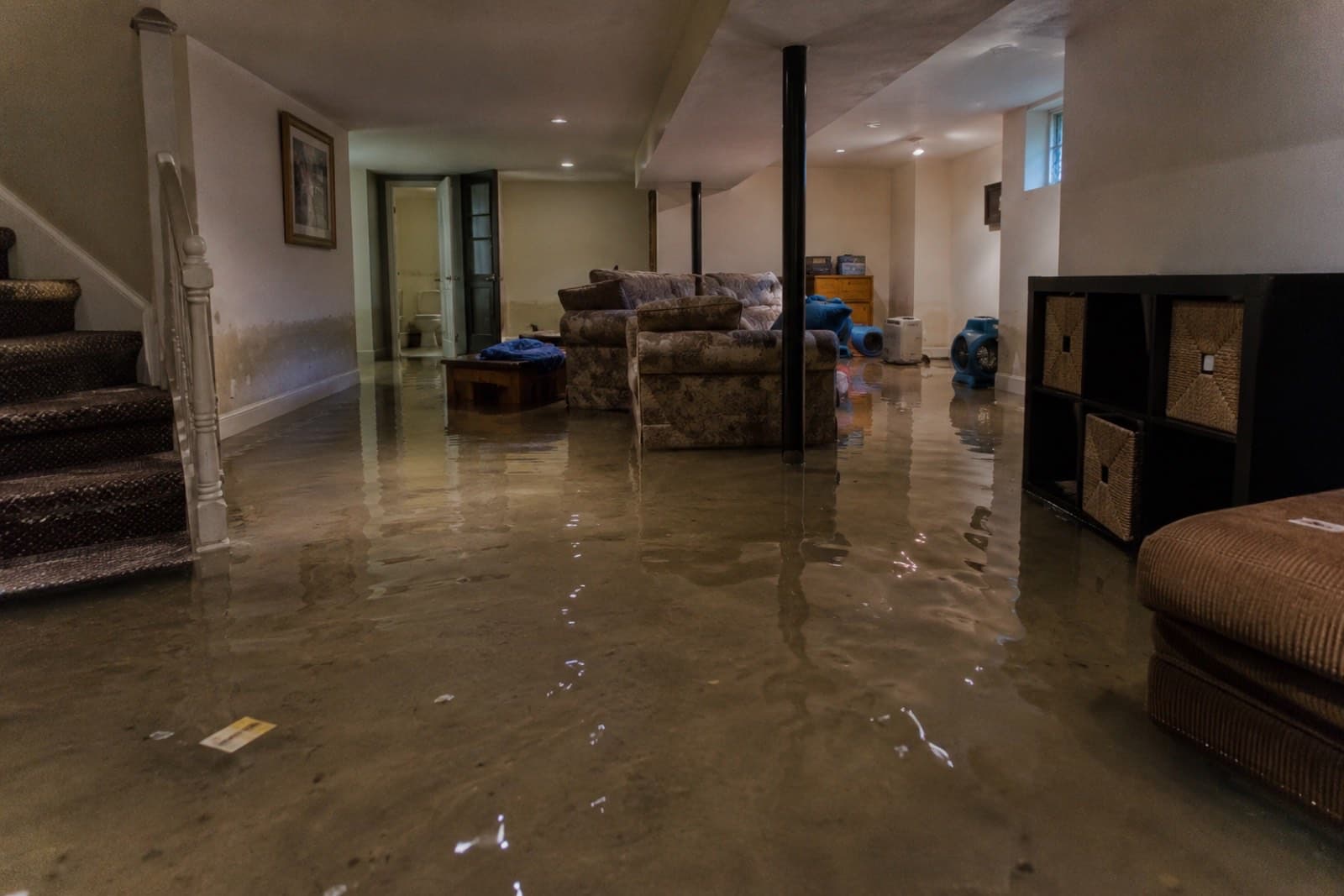
Flooded Basement, Fully Dried
In New London, Thames River mouth tidal surge and Sound flooding are the usual culprits.
A failed sump pump, a burst supply line, or storm-driven groundwater can leave inches of standing water sitting against framing, drywall, and stored belongings. The longer it sits, the further moisture wicks up the walls and the faster the Category of the water deteriorates.
Our IICRC-certified technicians classify the water under IICRC S500, then pull the standing water down to the slab with truck-mounted and submersible extraction. We open wet wall cavities, set air movers and LGR dehumidifiers for structural drying, and apply an antimicrobial per IICRC S520 where Category 2 or 3 water is involved.
We take daily Tramex moisture readings and dry the assembly to the ANSI/IICRC dry standard, not to a calendar. Every reading, photo, and scope line is documented for your insurer so the claim moves on facts, not guesswork.
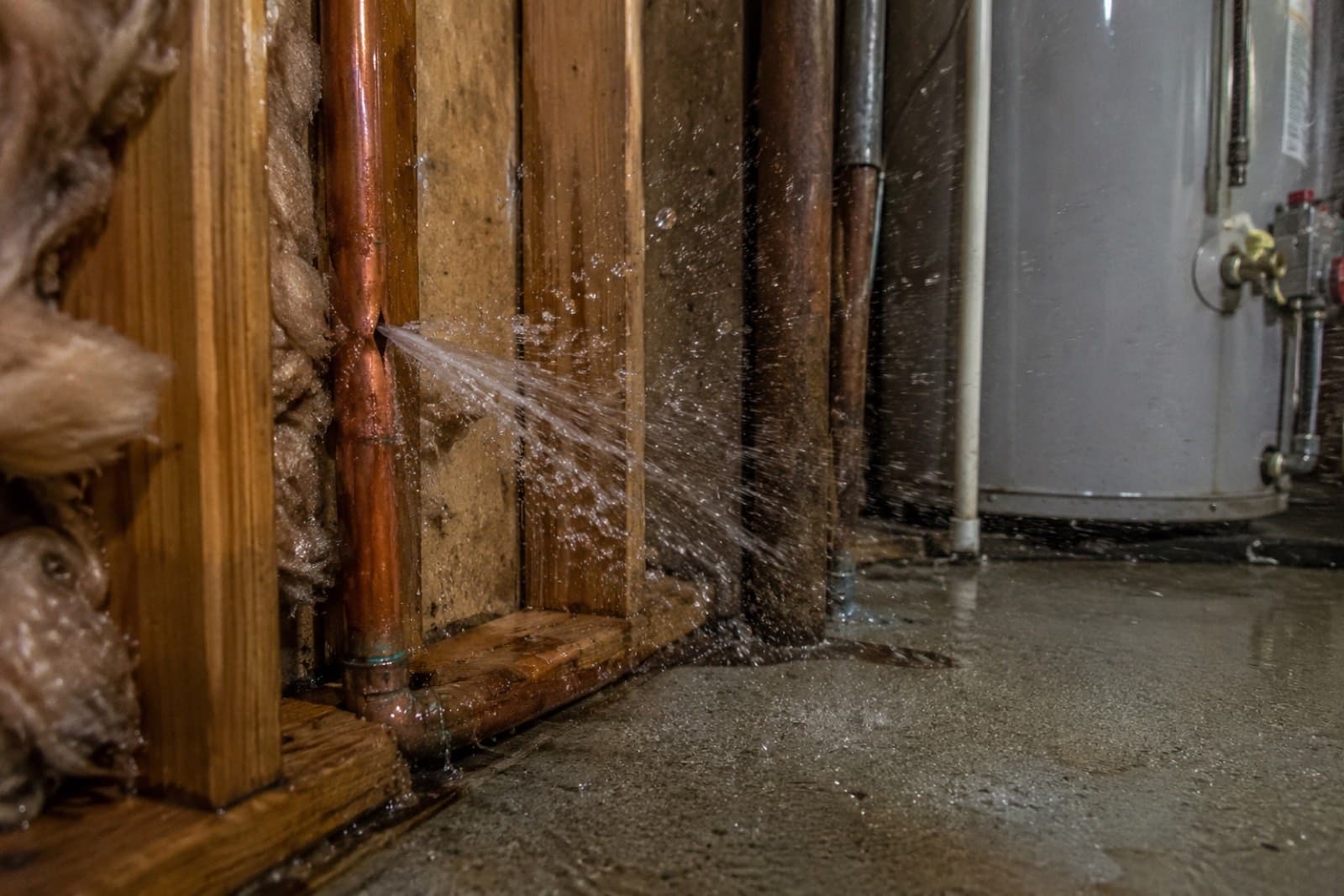
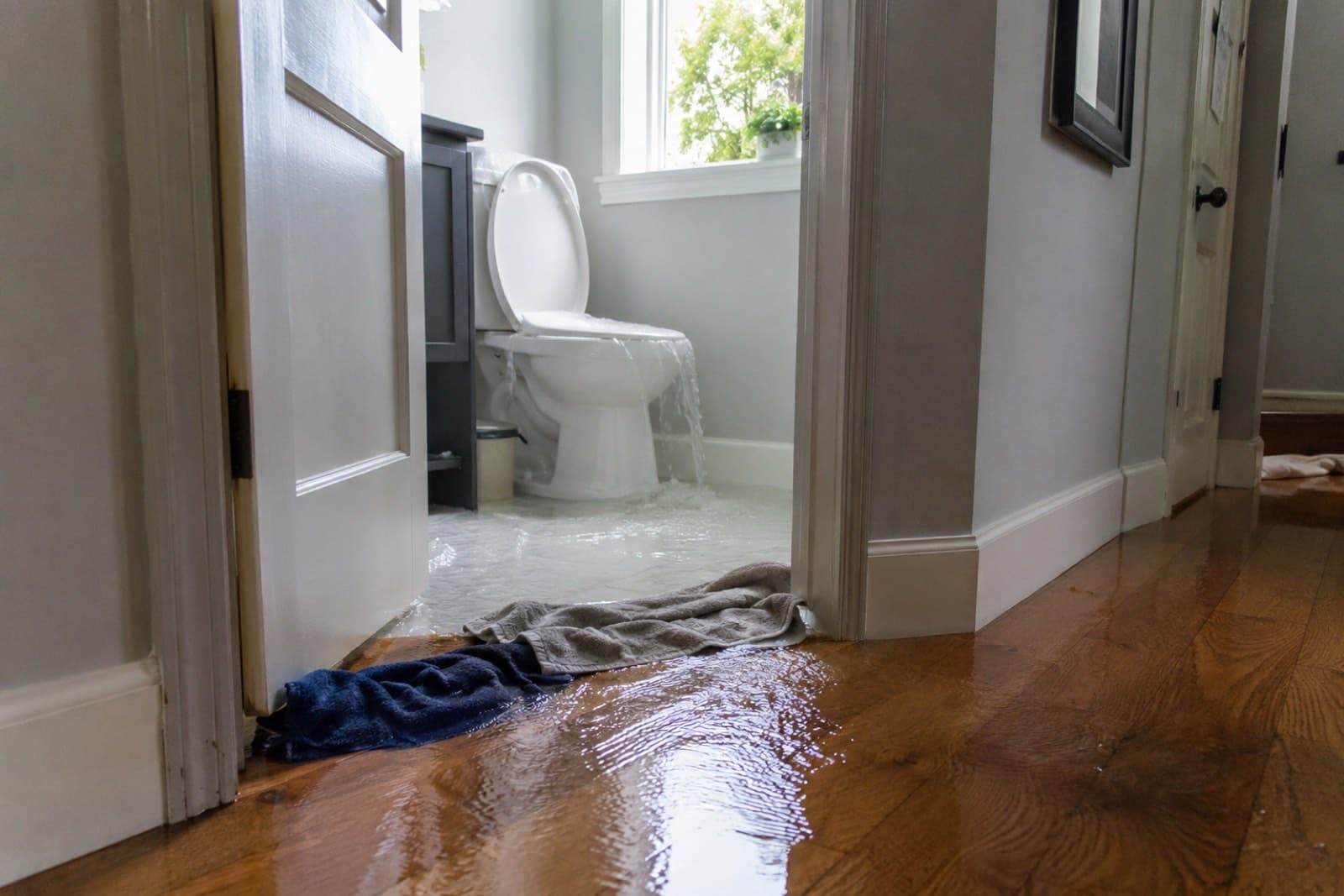
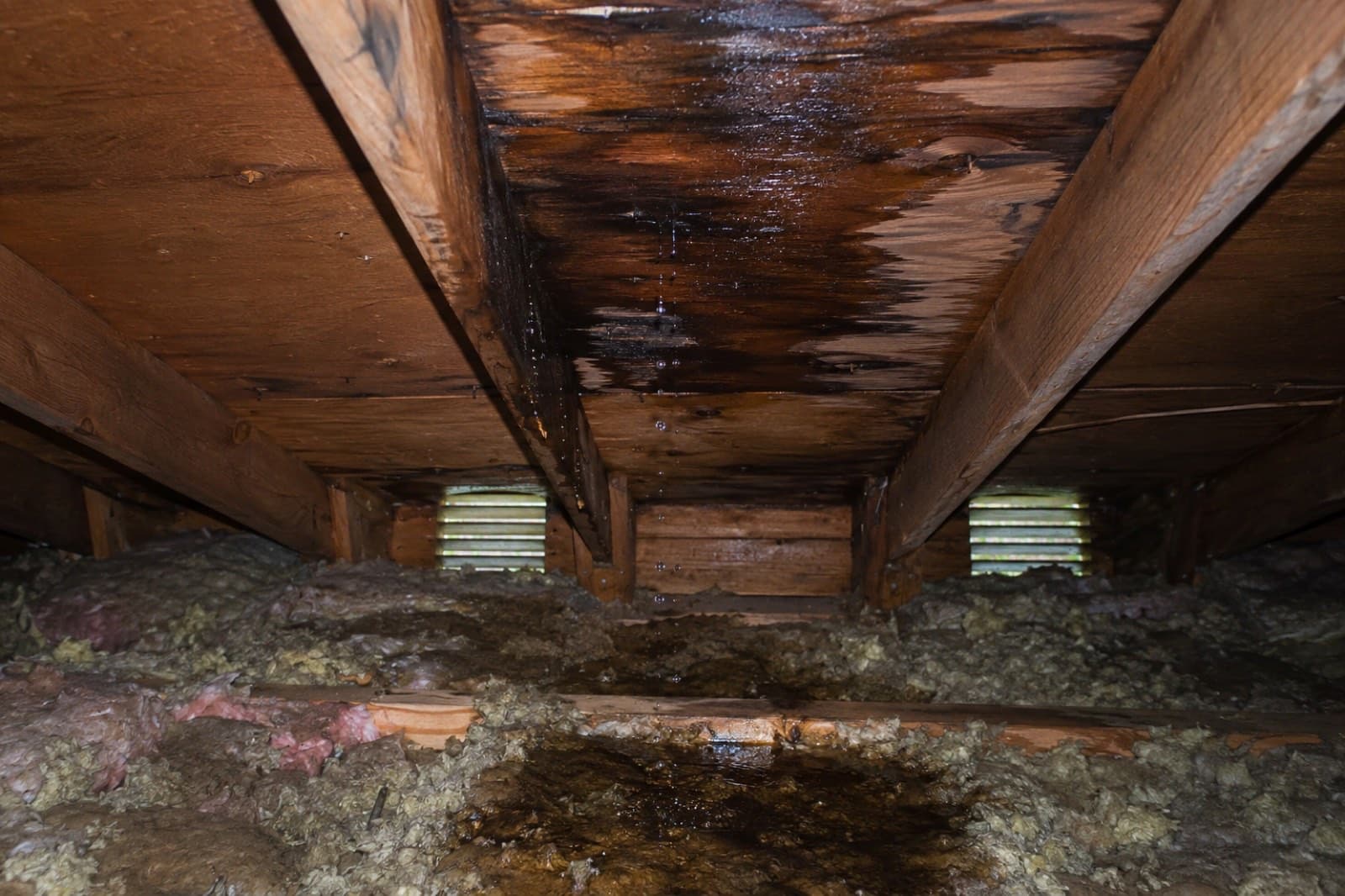
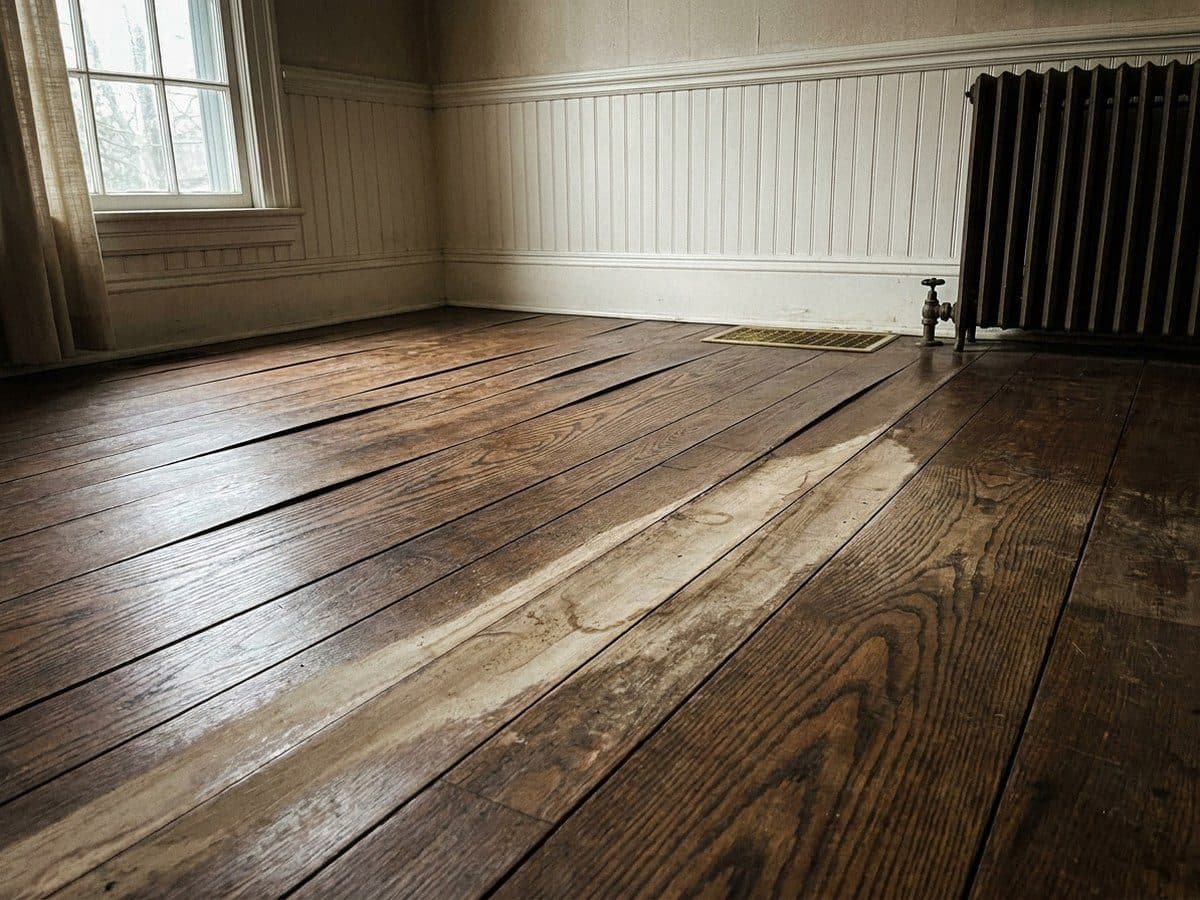
Scenario 1 of 5: Basement Flooding
What To Do After Water Damage In New London, CT
New London water emergencies cost less when extraction and drying start within the first hour. Use these IICRC-aligned steps the moment a coastal surge, combined-sewer overflow, or Thames Harbor backflow event begins.
What To Do Immediately
Stop the source first. In 1700s Downtown whaling-port colonials the main shut-off is typically in the dirt-floor cellar near the original well pit. In Ocean Beach and Pequot Avenue cottages, look for a wall valve on the front-foundation side.
Trip the breaker for any room with standing water before walking in. Electrical hazard kills sooner than water damage, especially in Downtown whaling-port and Hodges Square tenement basements with mixed-era wiring near the panel.
Dial (833) 833-3637 for same-day Eastern CT dispatch. Every minute of delay adds drying time and scope cost, especially in balloon-frame stud bays where salt water wicks through coastal exposure.
Lift antiques, electronics, and important documents to a dry upper floor. Place aluminum foil under wood legs to prevent finish staining on Downtown and Hodges Square heart-pine wide-plank.
Wide and close-up photos before extraction starts. Both standard carriers and NFIP require pre-mitigation documentation for full coverage on coastal and Downtown New London properties.
If outdoor humidity is below indoor humidity, brief ventilation accelerates initial moisture loss before professional drying equipment arrives.
What NOT To Do
Box fans spread contaminants and accelerate mold growth in plaster cavities before professional containment arrives. Wait for IICRC-grade air movers.
Unknown electrical loads and submerged debris cause injuries in New London tenement basements with mixed-era wiring. Cut power first, then enter only with appropriate footwear.
Saturated carpet plus pad can weigh hundreds of pounds and spread Category 3 brackish contamination from Long Island Sound surge or combined-sewer overflow water across dry rooms during removal.
Forced-air systems spread spores from wet zones into dry rooms across Downtown and Hodges Square tenement layouts. Shut HVAC down until containment is established.
Delayed reporting can void claim coverage on standard carrier, NFIP, and institutional policies. Notify your carrier within hours and have our scope file ready for adjuster review the same day.
Surface bleach kills visible mold but leaves spores inside porous balloon-frame stud bays. Professional remediation per IICRC S520 is required for safe clearance.
Our Water Damage Restoration Process In New London, CT
From the first call to final walkthrough, every step is documented, insured, and owner-supervised.
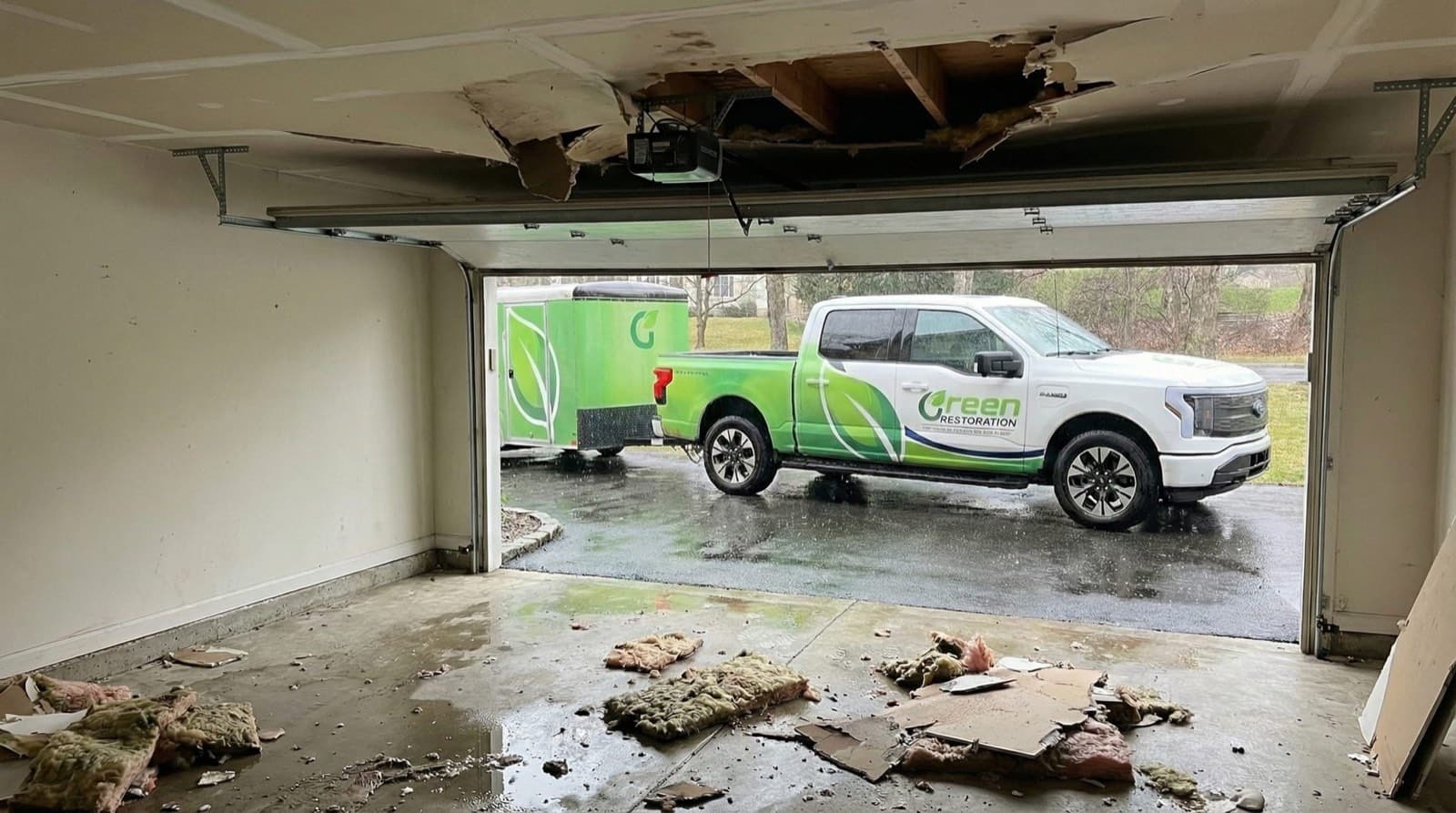
Water Damage Restoration Coverage In New London, CT
Documented water damage restoration for New London homes and Thames Harbor commercial properties, from Long Island Sound coastal Ocean Beach and Pequot Avenue to Thames Harbor brackish Downtown and Shaws Cove, 1700s whaling-port colonials, 1880 Hodges Square Victorian tenements, Mitchell Woods row stock, Bates Woods residential corridor, Fort Trumbull waterfront, and Coast Guard Academy and Connecticut College campus stock, with crews arriving within the hour from the New London County corridor.
Green Restoration provides certified water damage restoration in New London, CT 06320, serving Downtown, Ocean Beach, Williams Park, Hodges Square, Mitchell Woods, Shaws Cove, Crockers Field, Fort Trumbull, the Pequot Avenue corridor, Bates Woods, Riverside Park, and Mamacoke. With direct access via Interstate 95, Route 32, Route 184, and Route 1, our IICRC-certified technicians arrive within 60 minutes of your call, day or night, from the New London County corridor.
We handle Long Island Sound storm surge at Ocean Beach and Pequot Avenue, Thames Harbor tidal estuary at Shaws Cove and Downtown, burst pipes in 1700s whaling-port colonials, plaster failures in 1880 Hodges Square Victorian tenements, combined-sewer overflow scope in aged Downtown infrastructure, Coast Guard Academy and Connecticut College institutional commercial scope, and full reconstruction. We submit our scope of work and supporting documentation directly to your insurer including NFIP. We are not licensed public adjusters and do not negotiate claims on your behalf.
As locally owned and operated under HIC.0668405, we know what 1700 to 1990 New London properties face: timber-frame and plaster-on-lath construction in Downtown whaling-port colonials, continuous balloon-frame stud bays in 1880 Hodges Square Victorian tenement stock, mid-century Mitchell Woods row housing with pre-war plumbing, Long Island Sound storm-surge exposure at Ocean Beach and Pequot Avenue, Thames Harbor tidal estuary brackish surge at Shaws Cove and Downtown, aged combined-sewer overflow risk in Hodges Square and Bates Woods, Fort Trumbull waterfront commercial scope, and Coast Guard Academy plus Connecticut College institutional property workflows.
Our owner and crews deliver IICRC-standard documentation that adjusters from State Farm, Travelers, Liberty Mutual, USAA, Allstate, Chubb, NFIP, and institutional carriers require. Direct carrier billing means your claim moves forward without delay.
See typical New London water damage pricing in 60 seconds. Category 1 to 3.
Water Emergency In New London?
Call now for immediate dispatch, 24/7/365.
(833) 833-3637IICRC Certified · Licensed & Insured · CT HIC.0668405
All Towns Served By Green Restoration Across The New London County And Windham County Corridor With 60-Minute Emergency Response Under HIC.0668405.
Why New London Water Damage Is Different
Local drainage, housing stock, and foundation construction shape every restoration scope.
Free On-Site Assessment
Not sure what you are dealing with in New London?
We establish the scope on site, before anything is quoted.
(833) 833-3637How New London Geography Shapes A Restoration Scope
New London water damage restoration covers rapid extraction, structural drying, and antimicrobial treatment for homes and institutional commercial properties across every New London neighborhood. Crews dispatch within 60 minutes from the New London County corridor across Downtown, Ocean Beach, Williams Park, Hodges Square, Mitchell Woods, Shaws Cove, Crockers Field, Fort Trumbull, the Pequot Avenue corridor, Bates Woods, Riverside Park, and Mamacoke. Every project follows IICRC S500 protocol with truck-mounted Hydramaster CDS-4.8 extraction, Phoenix Axial movers, and daily Tramex CME 5 moisture readings until dry standard is confirmed at every monitoring point.
Documentation goes direct to your adjuster and NFIP file with timestamped photos, daily moisture logs, scope-of-work paperwork, and clearance reports formatted for direct submission to all major carriers including institutional and federal property scope. According to Green Restoration field documentation, a New London loss in Downtown or Ocean Beach is scoped by water category before any equipment is placed, because the category decides containment and what material has to come out.
24/7 Water Damage Response In New London, CT
IICRC-certified crews dispatch from the New London County corridor across Long Island Sound coastal Ocean Beach and Pequot Avenue, Thames Harbor tidal-estuary Downtown and Shaws Cove, 1700s whaling-port colonials, 1880 Hodges Square Victorian tenements, Mitchell Woods row stock, and Coast Guard Academy plus Connecticut College institutional campus stock. Most calls are on site within the hour.
Norwich, Greeneville, Yantic, and Taftville sit at the confluence of the Yantic, Shetucket, and Thames Rivers, where spring snowmelt and tropical-system surge push backwater into pre-war mill-worker tenement basements. We pump with Hydramaster CDS truck-mounts, document Category 3 stormwater per IICRC S500-2021, and dry plaster cavities to S500 standard.
Greeneville textile mill village and Taftville Ponemah Mill worker tenements 1880-1910 carry pre-war plaster-on-lath wall systems and continuous balloon-frame stud bays where moisture wicks vertically from basement to upper floors. Phoenix Axial movers and FLIR thermal imaging map hidden moisture inside lath bays before viable mold colonies form.
Norwich Harbor and the Thames River tidal estuary expose Downtown and East Side basements to brackish surge during nor-easters. Salt-water Category 3 losses require full-PPE remediation under IICRC S500 with porous material removal, antimicrobial framing treatment, and lab-verified clearance.
Our owner personally leads every New London County water-damage scope, IICRC AMRT and WRT certified under HIC.0668405. Documented scope, daily Tramex CME 5 moisture logs, and clearance filed with State Farm, Travelers, Liberty Mutual, USAA, Allstate, Chubb, and other major carriers.
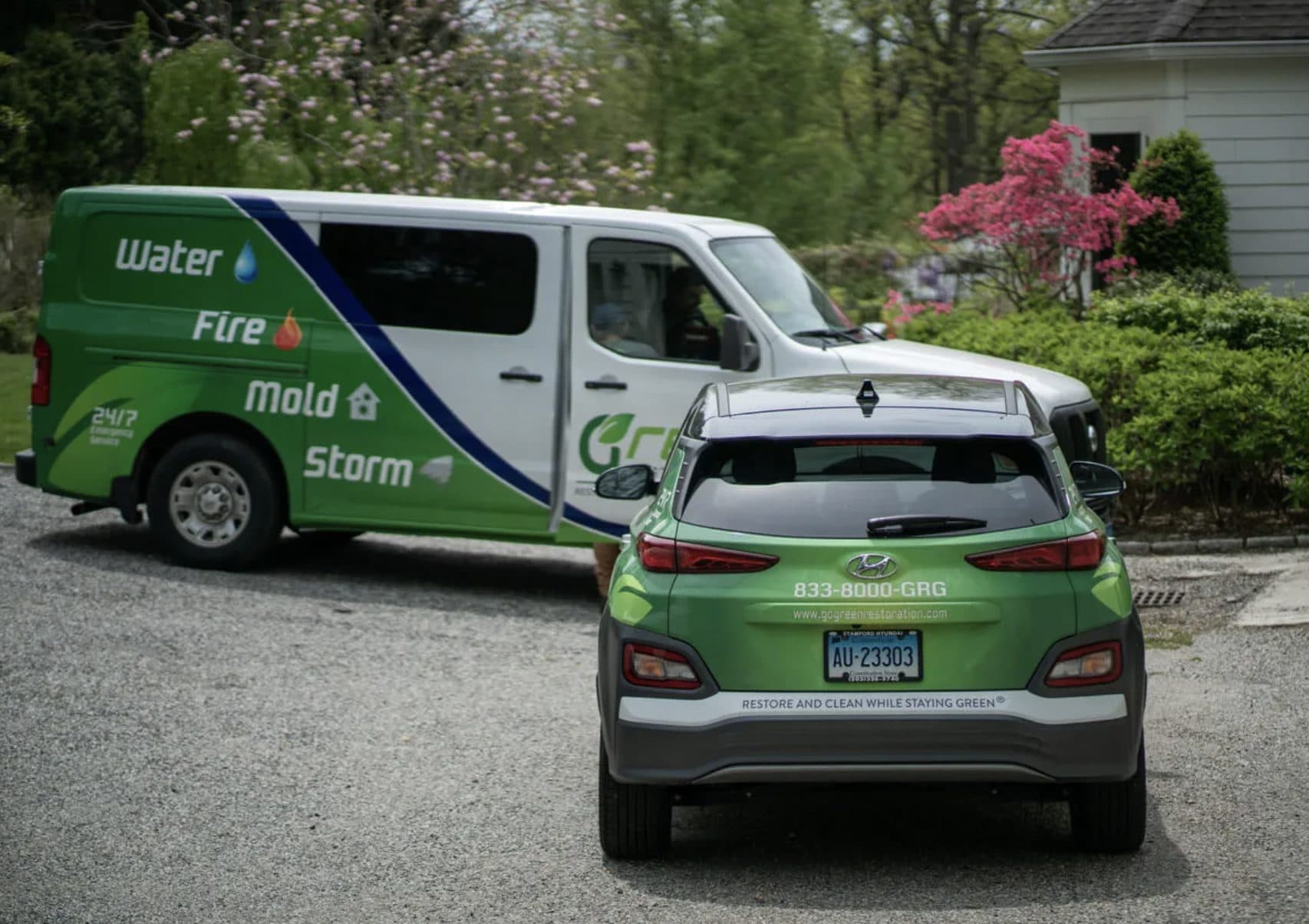
About Green Restoration In New London, CT
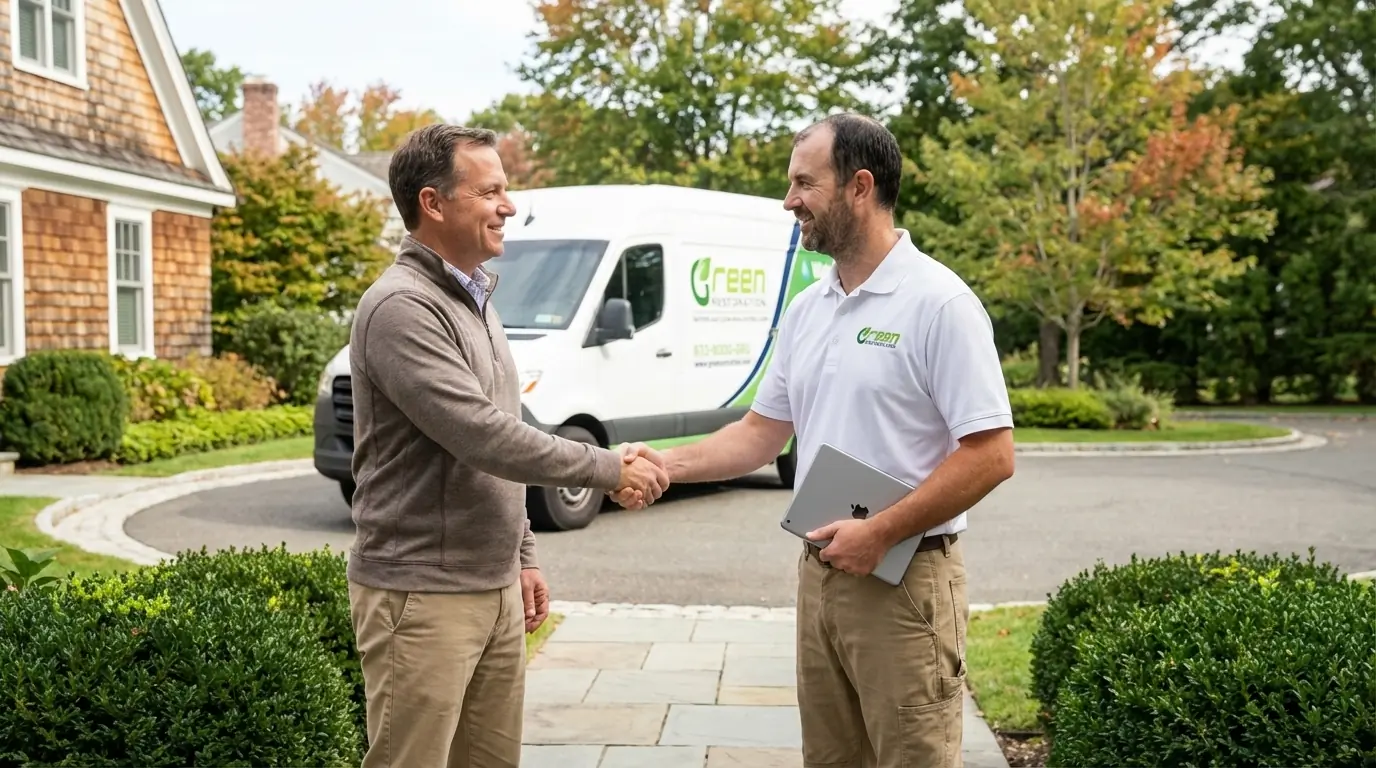
Your New London Water Damage Specialists Since 2014
According to Green Restoration field documentation, New London County carrier files are built while the work happens rather than reconstructed afterward, with each New London monitoring point logged by date. New London scope covers Long Island Sound storm-surge pumping at Ocean Beach and Pequot Avenue, Thames Harbor tidal-estuary Category 3 brackish remediation Downtown and at Shaws Cove, plaster-on-lath cavity work in 1880 Hodges Square Victorian tenements, timber-frame drying in 1700s whaling-port colonials, combined-sewer overflow scope in aged Downtown infrastructure, and Coast Guard Academy plus Connecticut College institutional commercial response.
Our owner runs the work under HIC.0668405 with IICRC AMRT and WRT credentials, Tramex moisture mapping, Phoenix Axial movers, and LGR dehumidifiers. Carrier-ready files go direct to your adjuster including NFIP and institutional carriers. We are not licensed public adjusters and do not negotiate claims on your behalf.

“I am our owner, and I lead our Eastern CT water damage crews personally. Across 15 years of restoration work, IICRC AMRT and WRT certified, I have walked Long Island Sound surge basements at Ocean Beach, brackish Thames Harbor cellars Downtown, and 1880 Hodges Square Victorian tenement basements myself. Every New London job gets my direct oversight, scoped to S500 dry standard, billed to your carrier under HIC.0668405.”
Trusted by Families in New London &
New London County
4.9 out of 5, Rated by your neighbors on Google
We discovered mold when removing our pellet stove and called Green Restoration for help. David was very communicative and helpful throughout the entire process. He did the job thoroughly and professionally. Highly recommended!
David Woolner
Mold RemediationI had a fantastic experience with Green Restoration. From start to finish, the team was professional, thorough, and extremely knowledgeable. David came for the initial inspection and took the time to explain the entire process.
Annmarie Gieparda
Mold RemediationWe had mold due to a water leak in our half finished basement. David and his crew did a great job, we were very satisfied. I would highly recommend Green Restoration to anyone.
Tanya
Water DamageI needed my entire condo completely cleaned after a soot blow back. Green Restoration was top shelf! So thorough and professional. Thank you so much!
Jacki Hornish
Fire & Soot CleanupHow Much Does Water Damage Restoration Cost In New London, CT?
Pricing depends on IICRC S500 water category. Most New London claims settle in the Category 2 range of $2,500 to $8,500. See typical ranges below.
Category 1, Clean Water
$1,500 to $4,500
Burst supply line, ice maker leak, appliance overflow, isolated single-area cleanup
Category 2, Gray Water
$2,500 to $8,500
Washing machine, dishwasher, toilet overflow, sump failure, basement scope
Category 3, Black Water
$7,500 to $50,000+
Sewer backup, Thames Harbor brackish surge, Long Island Sound storm flooding, multi-room containment
Priced by IICRC S500 water category. Read the full water damage cost guide.
New London Water Damage Restoration FAQs
Clear answers about emergency water removal, structural drying, insurance documentation, and restoration costs in New London, CT.
New London water damage restoration typically runs $1,500 to $4,500 for a Category 1 burst-pipe loss in a Mitchell Woods row house, with Long Island Sound coastal Category 3 brackish losses at Ocean Beach and Pequot Avenue reaching $20,000 to $58,000 when subfloor and drywall removal is required under IICRC S500. 1700s Downtown whaling-port colonials and 1880 Hodges Square Victorian tenements with plaster-on-lath cavity drying add 30 to 50 percent to standard scope. Thames Harbor tidal Category 3 brackish losses Downtown require IICRC S500 full-PPE remediation. Final pricing is set by your adjuster against our carrier-ready file. Call (833) 833-3637 for same-day New London estimates under HIC.0668405.
Our Eastern CT crew dispatches within 60 minutes across Downtown, Hodges Square, Mitchell Woods, Williams Park, Shaws Cove, and Fort Trumbull via Interstate 95, Route 32, Route 184, and Route 1. Ocean Beach, Pequot Avenue, Bates Woods, and Mamacoke addresses typically see arrival inside 55 minutes day or night. IICRC S500-2021 extraction equipment, including Hydramaster truck-mounts and submersible pumps, rolls on every call. Our owner oversees New London dispatch personally. Reach the New London County line at (833) 833-3637.
Standard CT homeowners policies from State Farm, Travelers, Liberty Mutual, USAA, Allstate, and Chubb cover sudden and accidental water losses, including burst pipes in 1700s Downtown whaling-port colonials, plaster-on-lath leaks in 1880 Hodges Square Victorian tenements, and Mitchell Woods row-house supply-line failures. Rising surface water from Long Island Sound storm surge at Ocean Beach and Pequot Avenue plus Thames Harbor tidal estuary backflow Downtown is excluded and requires a separate NFIP policy. Many coastal New London homeowners carry both. We submit IICRC S500-standard scope documentation directly to your carrier under HIC.0668405. We are not licensed public adjusters and do not negotiate claims on your behalf.
A typical New London basement dry-down runs 3 to 5 days for Category 1 or 2 water in a Mitchell Woods row house, with Long Island Sound coastal Category 3 brackish losses at Ocean Beach extending to 10 to 14 days because salt-water residue requires specialized drying and post-flood antimicrobial treatment under IICRC S500. 1880 Hodges Square Victorian tenement plaster-on-lath cavities take longer because lath bays retain moisture beyond modern drywall. 1700s Downtown whaling-port colonials with timber-frame stud bays require Tramex CME 5 readings at every floor because original framing wicks moisture vertically. Daily readings confirm dry standard at every monitoring point before equipment leaves the site. Our owner signs off on close-out.
Yes. Sewage backups in New London basements, especially during Thames Harbor tidal events affecting Downtown and Shaws Cove, plus aged combined-sewer overflow in Hodges Square and Bates Woods, are treated as Category 3 grossly contaminated water under IICRC S500-2021 section 5.3. Long Island Sound brackish salt-water tidal exposure at Ocean Beach compounds the contamination risk. Our Eastern CT crew sets HEPA containment, removes porous materials in contact with sewage, applies EPA-registered antimicrobials to framing and slab, then dries the assembly to S500 standard with verification readings. The scope file is documented for State Farm, Travelers, Liberty Mutual, USAA, NFIP, and institutional carriers. Call (833) 833-3637 for same-day New London dispatch.
FEMA flood maps place New London coastal corridors inside flood-mapped coastal areas, the highest-risk coastal flood exposure, with the most severe exposure concentrated along Ocean Beach Park, Pequot Avenue, Shaws Cove, Fort Trumbull, Riverside Park, and Mamacoke. Downtown and Hodges Square sit in the flood-mapped corridor along Thames Harbor. Williams Park and Mitchell Woods ridgelines sit outside the mapped high-risk floodplain. Federally backed mortgages inside the mapped flood corridor require NFIP flood insurance under the Flood Disaster Protection Act. Coast Guard Academy and Connecticut College institutional properties have separate federal property scope. Our scope file documents source of water and IICRC S500 Category classification for either carrier path under HIC.0668405.
Shut off the main water valve, typically in the dirt-floor cellar near the original well pit in 1700s Downtown whaling-port colonials, or in a utility closet in Mitchell Woods row stock and Ocean Beach cottages. Trip the breaker for any room with standing water before walking in, especially in Hodges Square tenement basements with mixed-era wiring where 1880s knob-and-tube remnants may sit near the modern panel. Lift antiques, documents, and electronics to a dry upper floor with aluminum foil under wood legs. Photograph wide and close for both standard and NFIP carriers. Then call (833) 833-3637 for Eastern CT dispatch.
IICRC S520-2024 documents that visible mold growth on cellulosic materials can begin within 24 to 48 hours of sustained moisture above 16 percent moisture content. 1700s Downtown whaling-port colonials and 1880 Hodges Square Victorian tenement stock hold timber framing and plaster-on-lath cavities that wick and retain water longer than modern drywall. Continuous balloon-frame stud bays let moisture migrate vertically before surface staining appears. Long Island Sound storm-surge salt water at Ocean Beach and Pequot Avenue compounds exposure because residual salt holds humidity in framing for weeks. Combined-sewer overflow Category 3 events in Hodges Square add bioburden risk. We dry to IICRC S500 dry standard, verify with Tramex CME 5 readings, and treat under S500 protocols when contamination is present.

