Water Damaged Ceiling Collapse in a Bridgeport Dining Room
 1 / 6
1 / 6Collapsed dining room ceiling with saturated fiberglass insulation hanging into the room in a Bridgeport, CT home
See How the Work Was Done
Real photos from this Bridgeport project: the ceiling failure, the moisture survey before demolition, and the protected tear-out.
What Happened
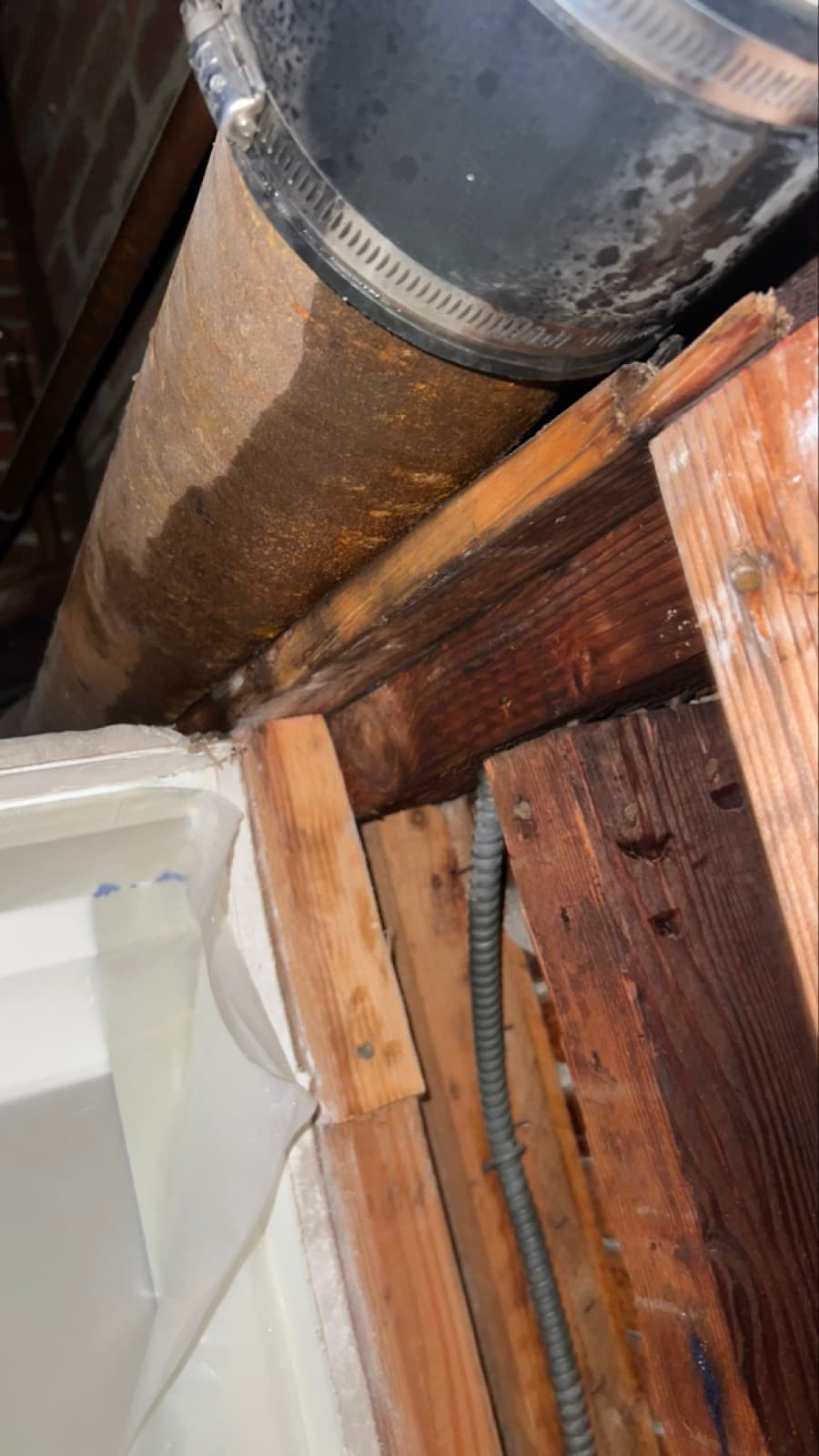
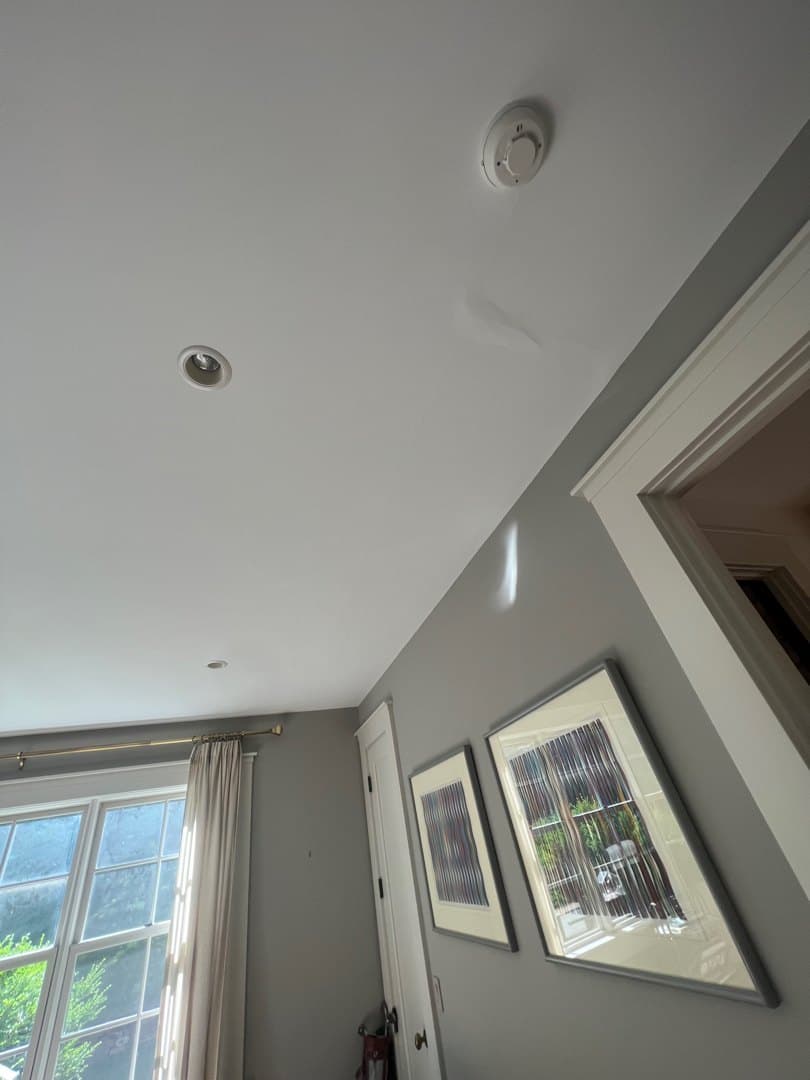
Water had been moving through the dining room ceiling of a Bridgeport, CT home long enough to saturate the insulation in the cavity above it, and the ceiling finally failed, dropping soaked fiberglass into the room. Green Restoration arrived on a scheduled evening visit and the first tool out of the truck was a moisture meter, not a saw. The affected ceiling and the wall beside the window were surveyed and readings were taken across neighboring surfaces to establish where the wet material stopped and the sound material began. Only then did demolition start, roughly forty minutes later.
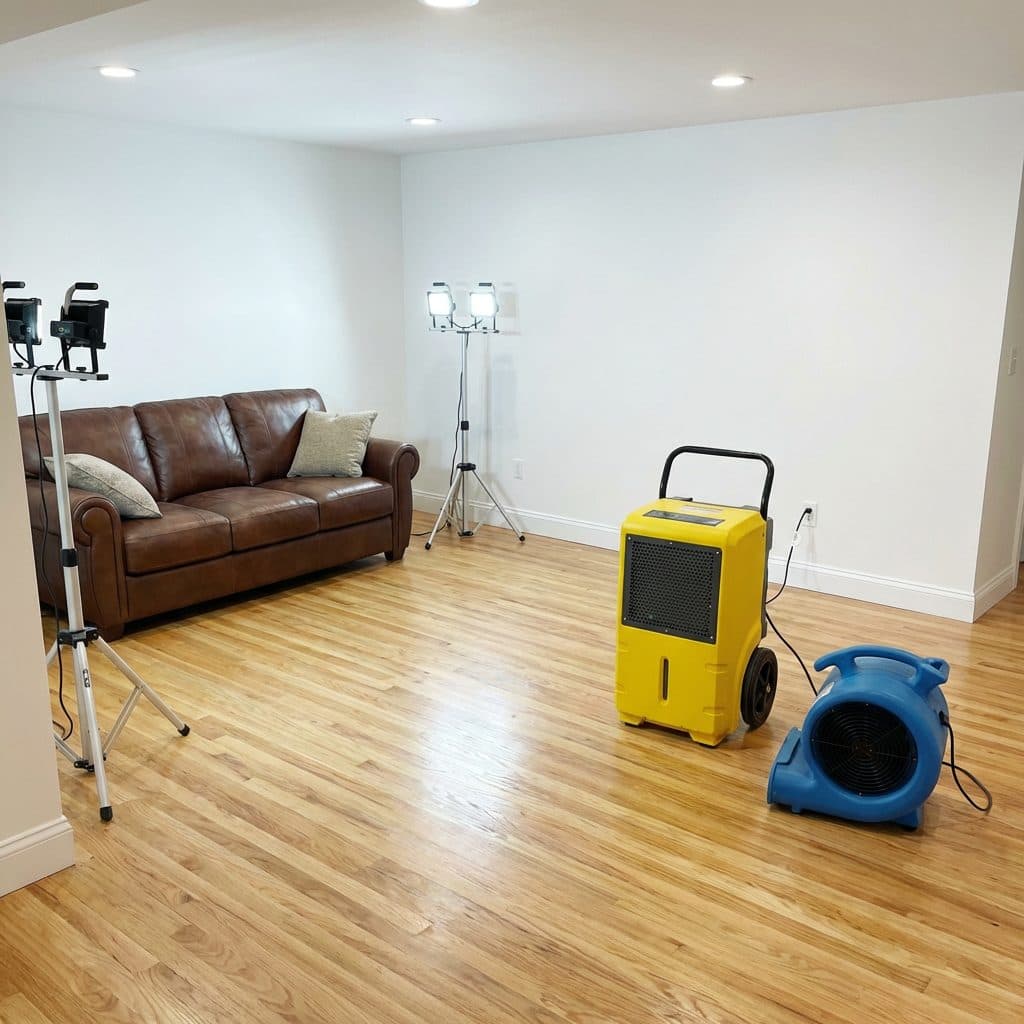
A containment barrier went up, floor protection went down across the room, and the saturated drywall and insulation were cut out of the ceiling and the adjacent wall. The exposed joist system and stud wall were HEPA vacuumed and sanitized, air movers and LGR dehumidification were set to dry the structure, and the removed material was bagged and hauled off site. This was a mitigation scope. Green Restoration dried and cleaned the structure and did not rebuild the ceiling, so the finished surfaces were left for the homeowner to close in once the cavity was verified dry.
Scope of Damage
Dining Room Ceiling
SevereThe ceiling failed under the weight of saturated insulation, dropping wet fiberglass into the room and exposing the joists above.
Wall Beside the Window
ModerateWater tracked down into the wall next to the window, showing staining and tide lines on the drywall. The affected section was removed with the ceiling.
Joist System & Stud Wall
ModerateFraming above the failed ceiling and inside the opened wall was exposed, HEPA vacuumed, and sanitized before drying equipment was set.
How We Solved It
- 1
Moisture Survey First
Readings were taken across the affected ceiling and the surfaces next to it before any material was cut, so the removal followed the moisture, not a guess.
- 2
Containment & Floor Protection
A containment barrier isolated the work area and floor protection was laid across the room before demolition began, so the tear-out stayed in one room.
- 3
Removals
Saturated drywall and wet insulation were cut out of the ceiling and the wall beside the window, then bagged for disposal.
- 4
HEPA Cleaning & Sanitizing
The exposed joist system and stud wall were HEPA vacuumed and sanitized once the wet material was out and the cavity was fully open.
- 5
Structural Drying & Disposal
Air movers and LGR dehumidification were set to dry the opened structure, and the removed drywall, insulation, and debris were hauled off site.
Tools & Equipment Used
Questions Homeowners Ask
Why does a ceiling collapse from water damage?
Fiberglass insulation holds a surprising amount of water. When a leak soaks the insulation sitting on top of a ceiling, that material gets heavy, and drywall is not designed to carry the load. The ceiling holds until the weight passes what the fasteners and the paper facing can support, then it lets go, usually all at once and without warning.
Why take moisture readings before removing anything?
Moisture readings show where wet material stops and sound material starts. Without that line, removal is guesswork in both directions. Cutting short leaves damp material sealed inside the cavity where it can grow mold, and cutting wide removes drywall that was never affected. Metering first is what makes the removal scope defensible to both the homeowner and the insurer.
Does the whole ceiling have to come out?
Usually not. On this Bridgeport job the removal was limited to the failed ceiling section and the wall beside the window, because that is where the readings showed water had traveled. Sound material outside that boundary stayed. The size of the removal should be set by what the meter finds, not by what is convenient to cut.
What does water damage mitigation include, and what does it not?
Mitigation stops the damage and dries the structure. It covers containment, removing saturated material, cleaning the exposed framing, and running drying equipment until the cavity is dry. It does not include rebuilding. Hanging new drywall, taping, and painting is reconstruction, quoted separately. On this job Green Restoration handled the mitigation and left the surfaces open for the rebuild.
Why is the framing cleaned instead of just dried?
Wet insulation and drywall leave residue and debris on the framing behind them, and drying alone does not remove it. HEPA vacuuming and sanitizing the exposed joists and studs takes that material out of the cavity before it gets closed back in. It is the step most likely to be skipped, because once the new drywall is up nobody can see whether it happened.
Will homeowners insurance cover a ceiling collapse from water?
A sudden and accidental water discharge is one of the more commonly covered losses on Connecticut policies, though every policy is different and coverage depends on the source. Green Restoration documents the readings, the scope, and the work so you can review it with your agent. We submit our documentation directly to your insurer. We are not licensed public adjusters and do not negotiate claims on your behalf.
Bridgeport is served by
Green Restoration of Stratford
Available 24 / 7 for emergency response