Water Damage Restoration in a Greenwich Residence
 1 / 5
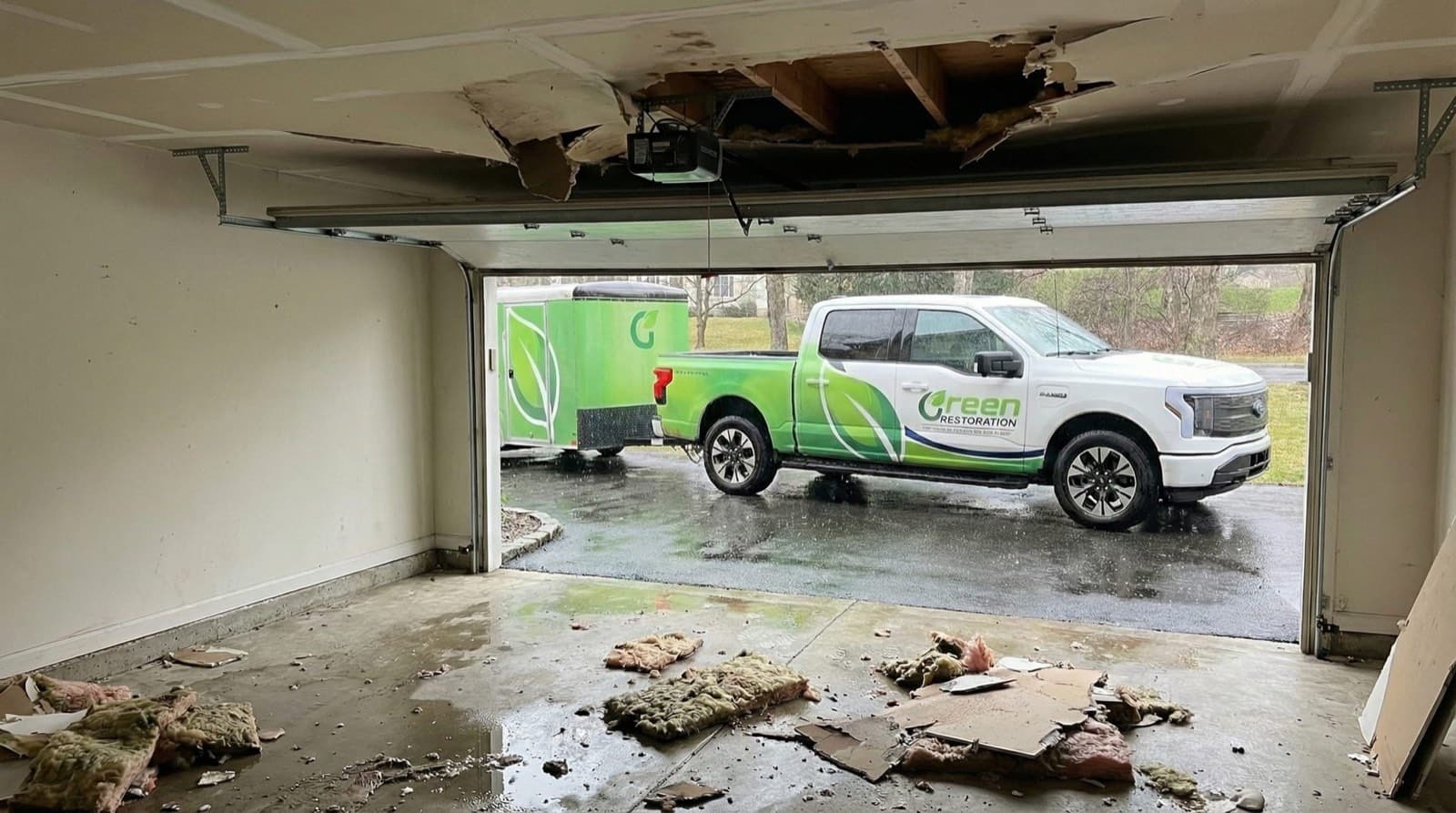
1 / 5Water Damage Restoration project documentation in Greenwich, CT, photo 1
What Happened
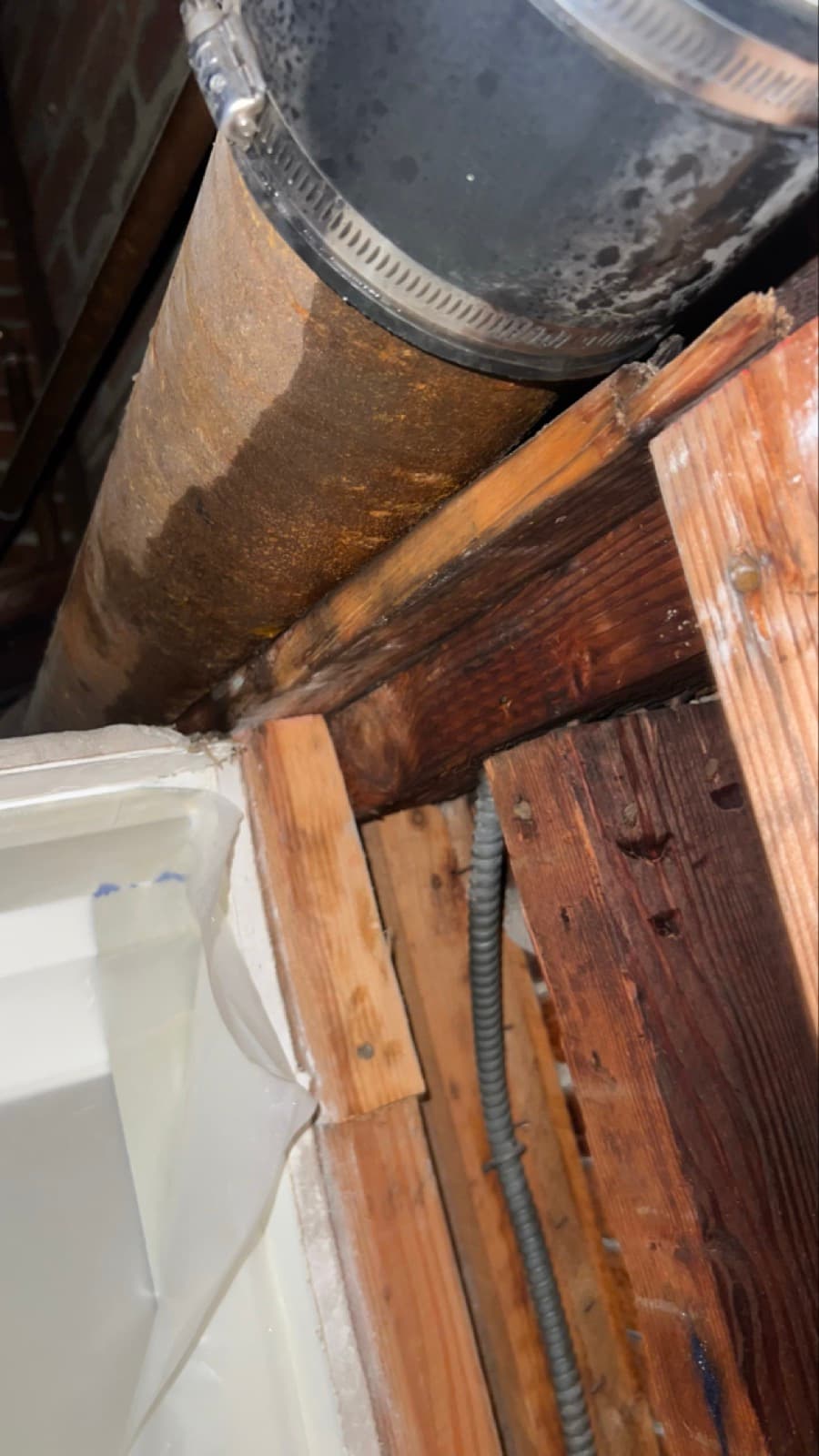
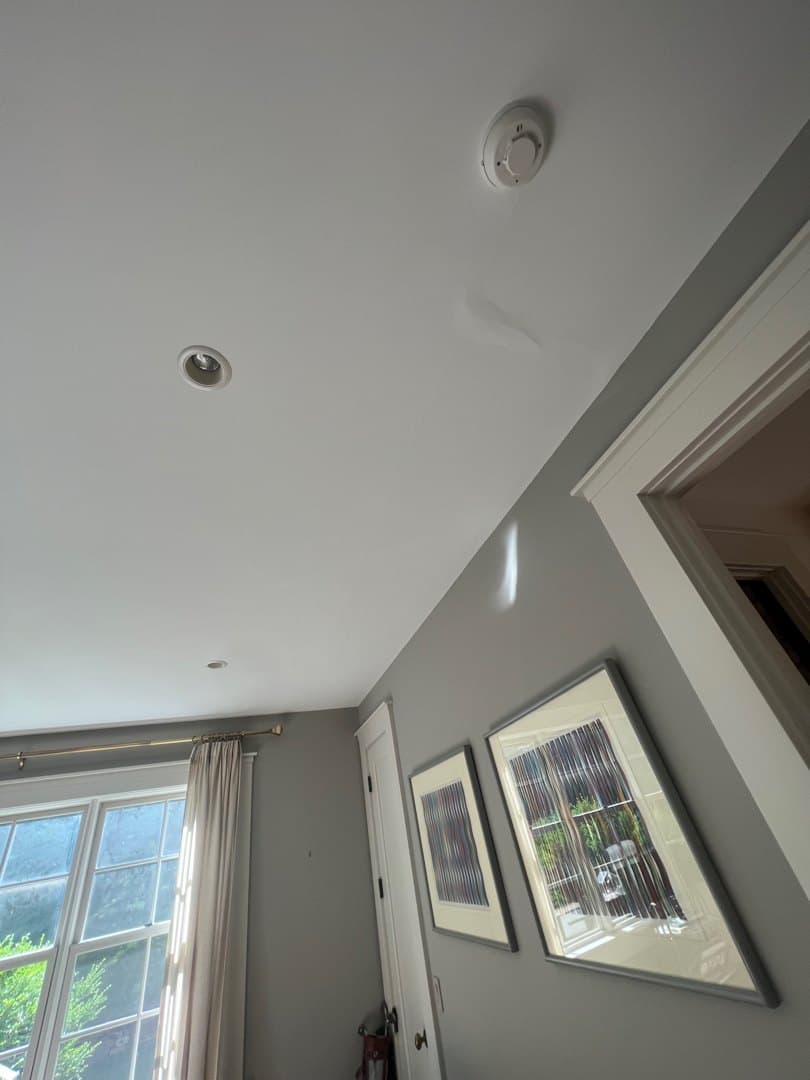
An upstairs bathroom fixture overflowed in a Greenwich residence and water found the ceiling light fixtures in the kitchen below. Green Restoration isolated the affected electrical circuits, opened the ceiling in controlled sections, dried the joist cavity and subfloor from both sides per IICRC S500-2021, and documented each step for the homeowner's insurance carrier.
Scope of Damage
Kitchen Ceiling
SevereSaturated drywall sagging around the light fixtures. Removed in controlled sections to expose the wet joist cavity.
Second-Floor Bathroom
ModerateWater under the tile at the fixture. Perimeter dried and the subfloor monitored from above and below.
Kitchen Cabinets & Counters
LightUpper cabinets protected and dried in place. No casework losses.
How We Solved It
- 1
Electrical Isolation
Circuits feeding the kitchen ceiling fixtures shut down before anyone worked under the sagging drywall.
- 2
Controlled Ceiling Removal
Wet drywall taken down in managed sections to expose the joist cavity without spreading debris through the kitchen.
- 3
Cavity Drying
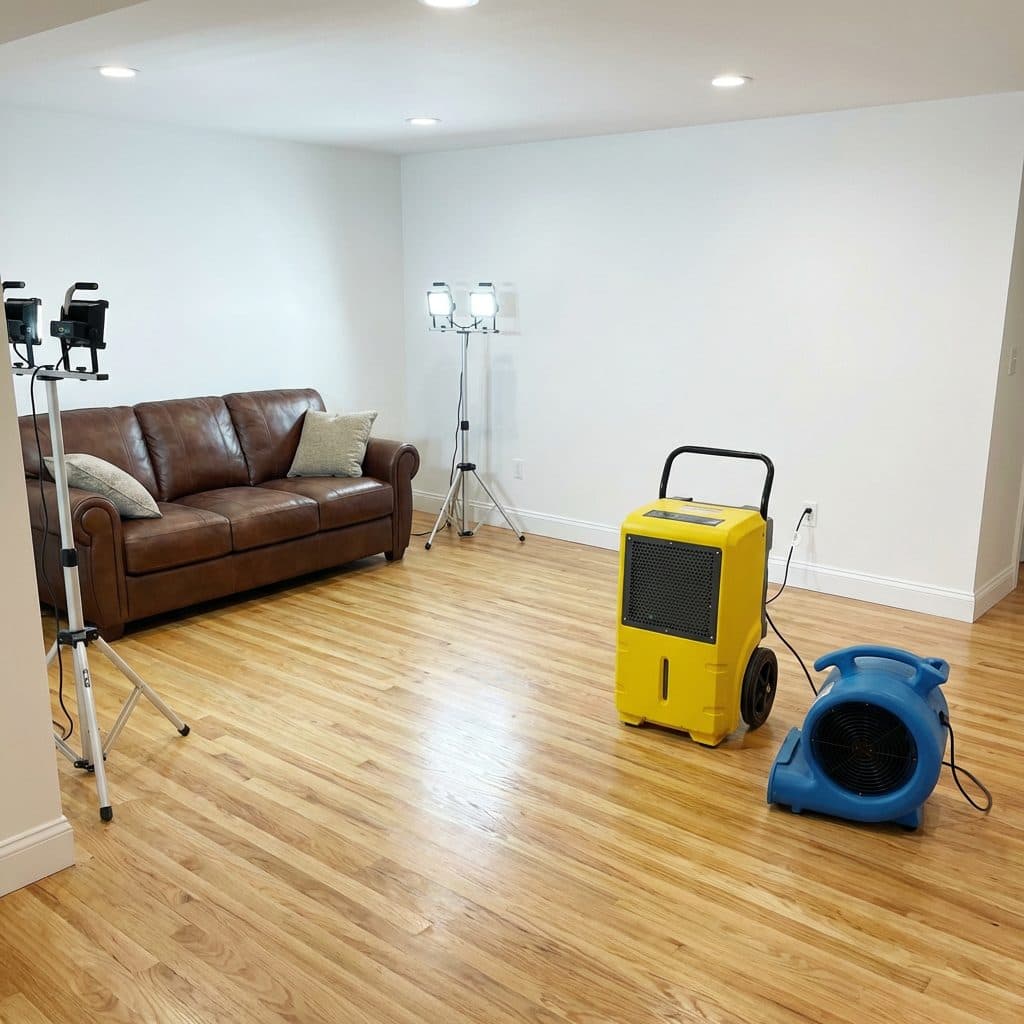
Air movers and dehumidification directed into the open bays, drying the assembly from the kitchen and bathroom sides at once.
- 4
Bathroom-Side Verification
Subfloor readings taken from above until the assembly hit dry standard, confirming no trapped moisture under the tile.
- 5
Claim Documentation
Photo sequence, moisture log, and scope compiled so the carrier had a complete record of the loss and response.
Tools & Equipment Used
Questions Homeowners Ask
Water is leaking through my ceiling light. What do I do?
Turn off the breaker for that fixture first, then stop the water at its source or at the main shutoff. Do not stand under a sagging ceiling and do not poke a drain hole near wiring. Then call for mitigation; a wet ceiling cavity needs to be opened and dried quickly.
Why remove the ceiling instead of drying it in place?
Saturated ceiling drywall loses structural integrity and traps water in the joist cavity above it. Drying through intact drywall is slow and unreliable, and hidden moisture invites mold. Controlled removal exposes the cavity, cuts days off the dry-down, and lets us verify the framing directly.
How long did the Greenwich ceiling loss take to dry?
Four days once the cavity was open, with readings taken from both the kitchen and bathroom sides daily. Closed-cavity drying of the same loss would likely have run twice as long with less certainty.
Is an overflow covered by homeowners insurance in Connecticut?
A sudden accidental overflow is typically covered, including the ceiling, drying, and repairs below. Gradual leaks around fixtures may be treated differently. Green Restoration provides the photo and moisture record your adjuster needs. We work with insurance, but Green Restoration is independent and not on any insurer's panel.
What does a ceiling water loss cost to mitigate?
Single-cavity ceiling losses are usually modest: controlled demolition, several days of drying equipment, and documentation. The rebuild of the ceiling itself is a separate line. Green Restoration provides a written scope and price after inspection at no cost.
How do you prevent bathroom overflows from reaching the floor below?
Address slow drains before they back up, never leave a filling tub unattended, and check the fixture seals yearly. In multi-story homes, a moisture sensor on the bathroom floor near the fixtures gives you the early warning the ceiling below will not.
Greenwich is served by
Green Restoration of Greenwich
Available 24 / 7 for emergency response