Water Mitigation in a Norwalk Residence
 1 / 5
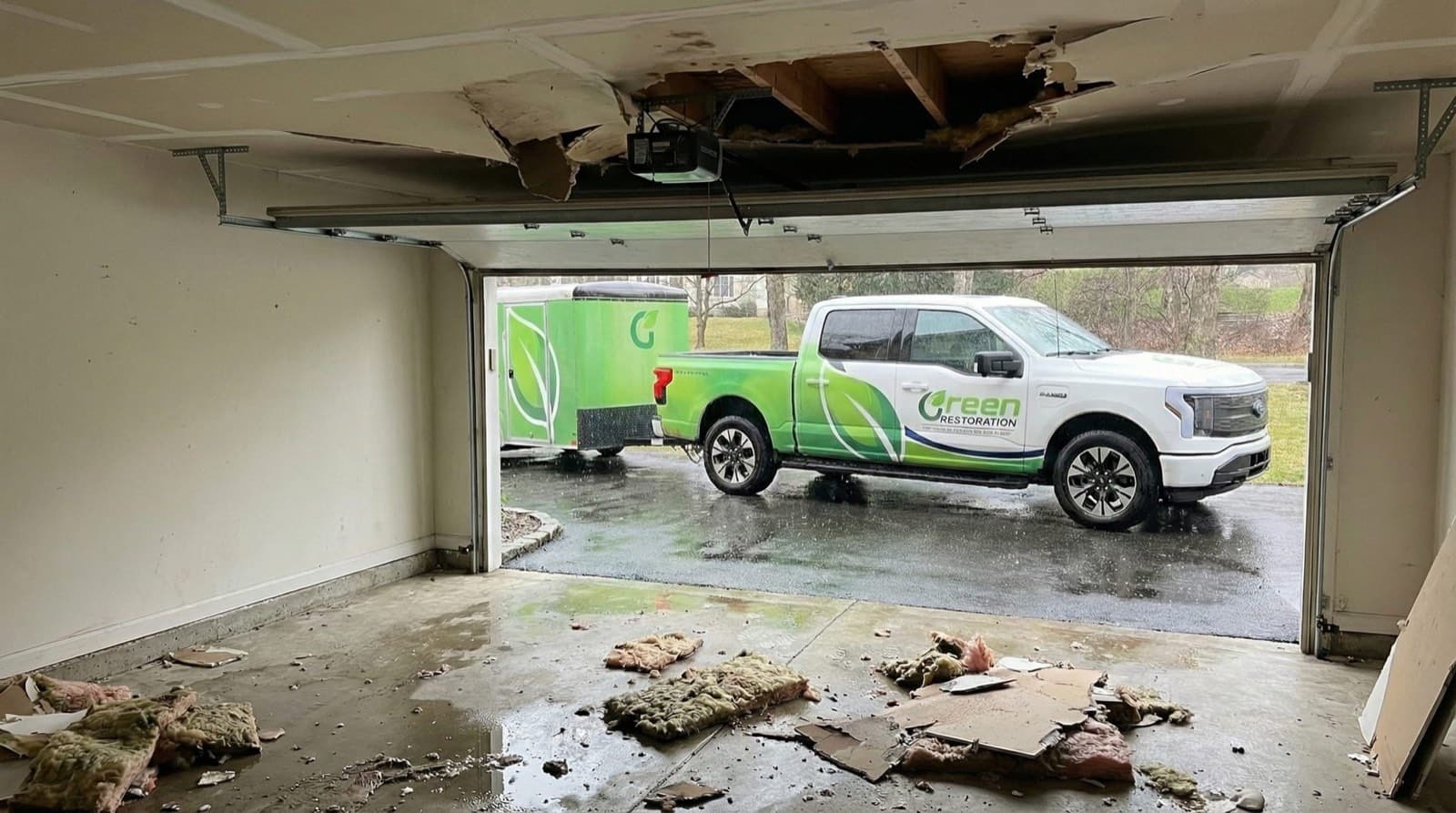
1 / 5Water Mitigation project documentation in Norwalk, CT, photo 1
What Happened
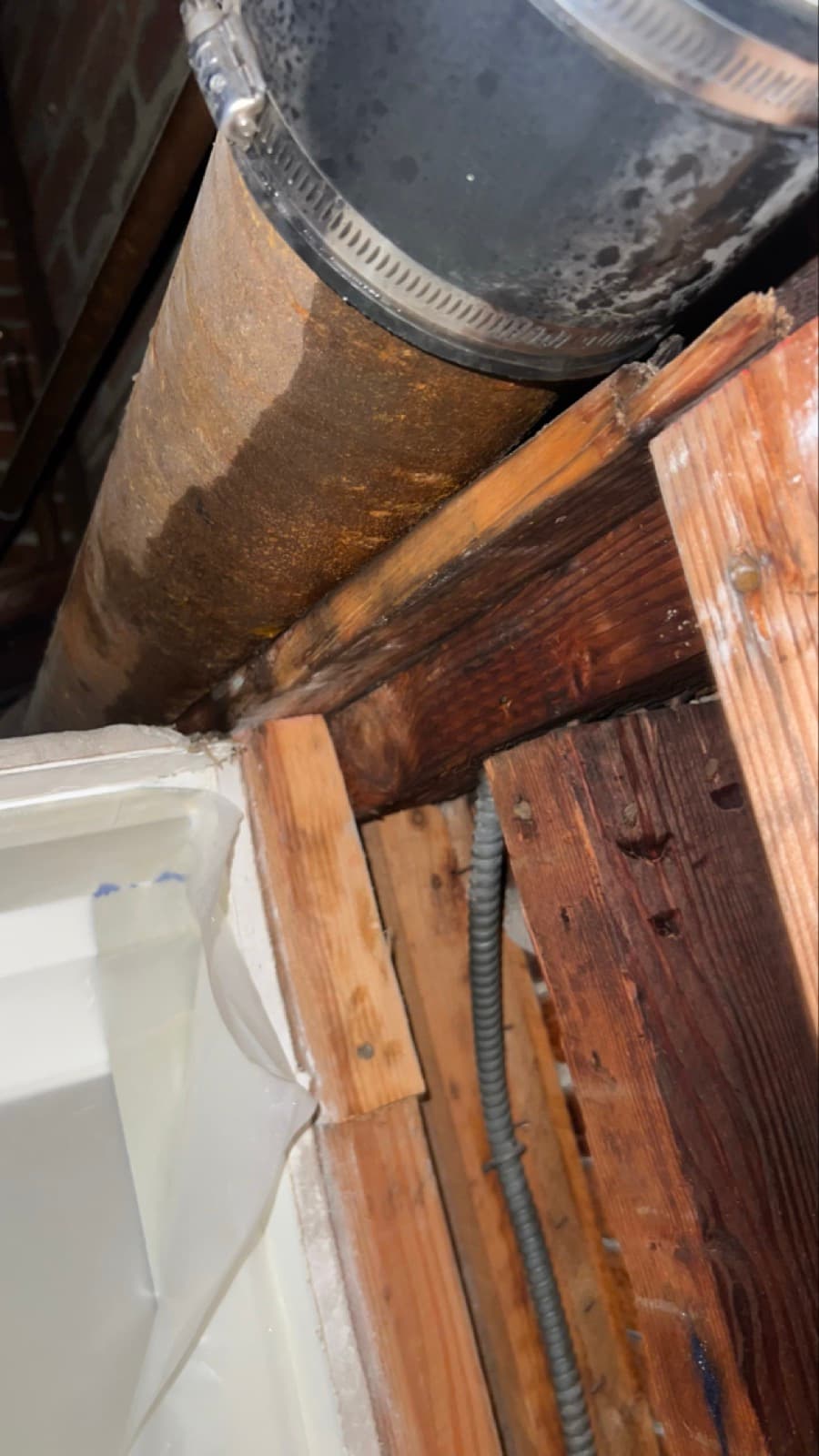
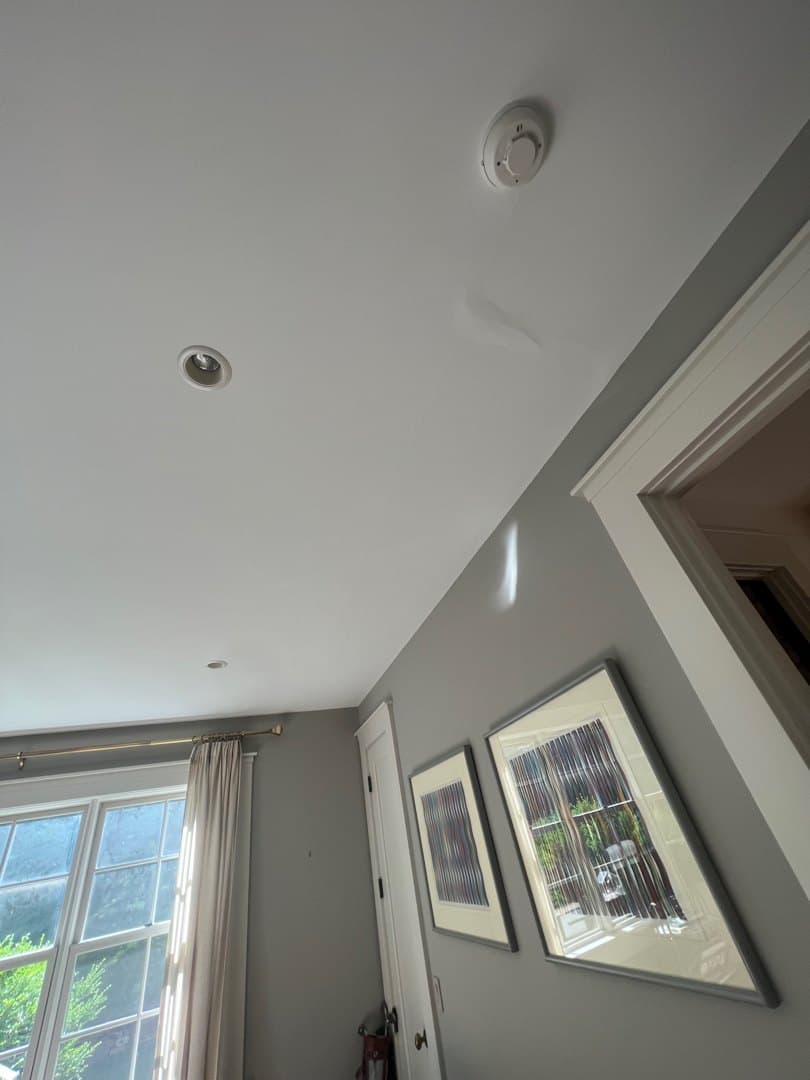
The braided supply line behind a dishwasher let go overnight in a Norwalk home. By morning, water had passed through the kitchen floor, followed the joist bays, and was dripping from the basement ceiling. Green Restoration extracted the standing water, removed the saturated basement ceiling drywall, and set a drying system across both levels per IICRC S500-2021, with daily moisture readings logged for the insurance file.
Scope of Damage
Kitchen Floor System
SevereWater under the finished floor and through the subfloor. Cabinet toe kicks opened to release trapped water.
Basement Ceiling
ModerateSaturated ceiling drywall removed along the wet joist bays so the framing could dry from below.
Basement Contents
LightItems beneath the drip line moved, dried, and inventoried. No losses beyond a few cardboard boxes.
How We Solved It
- 1
Shutoff & Assessment
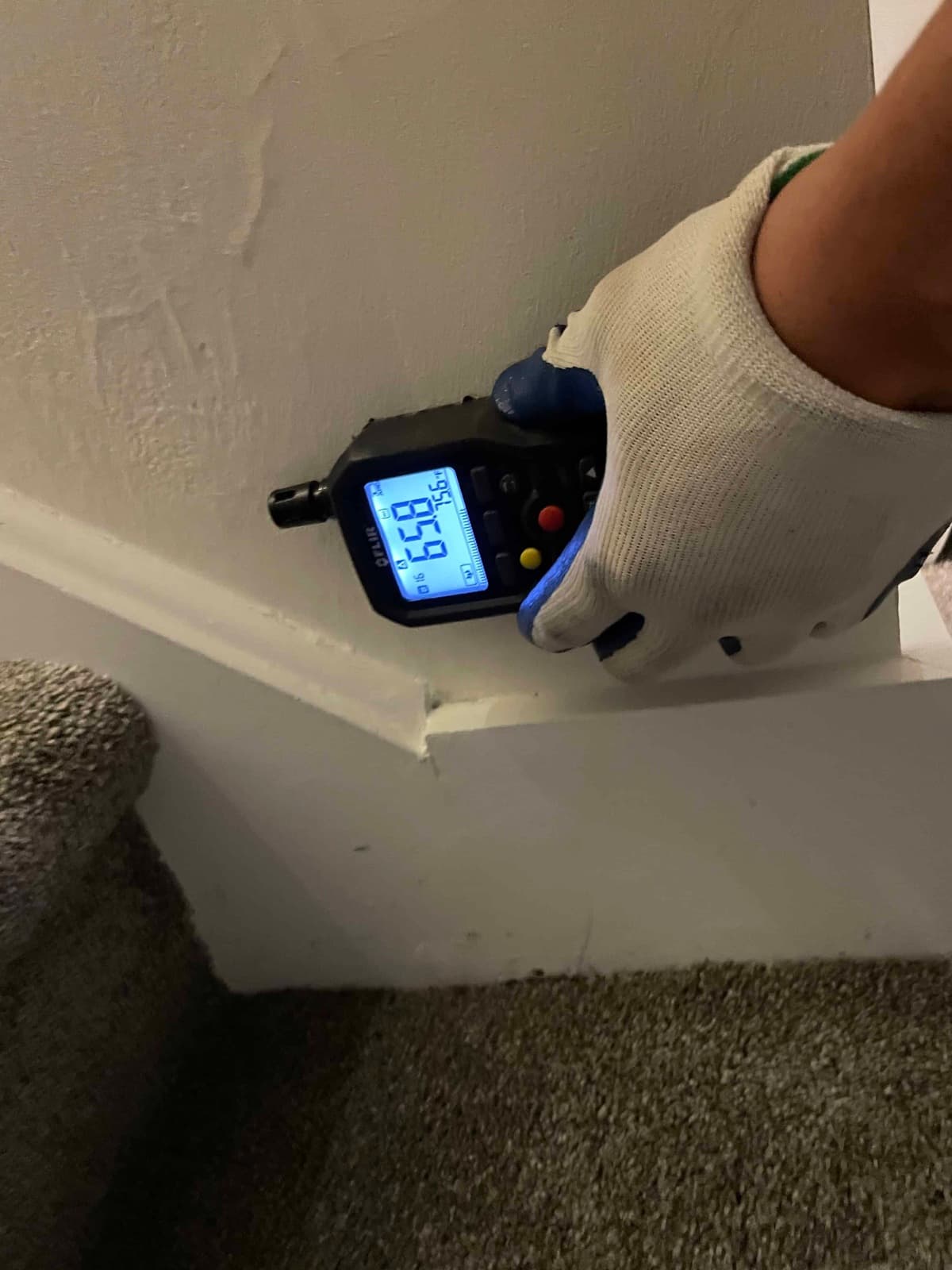
Supply valve closed, loss mapped with moisture meters from the kitchen down through the joist bays.
- 2
Extraction
Standing water pulled from the kitchen floor and basement slab before demolition decisions were made.
- 3
Targeted Demolition
Wet basement ceiling drywall and kitchen toe kicks removed so both sides of the floor system could dry.
- 4
Two-Level Drying
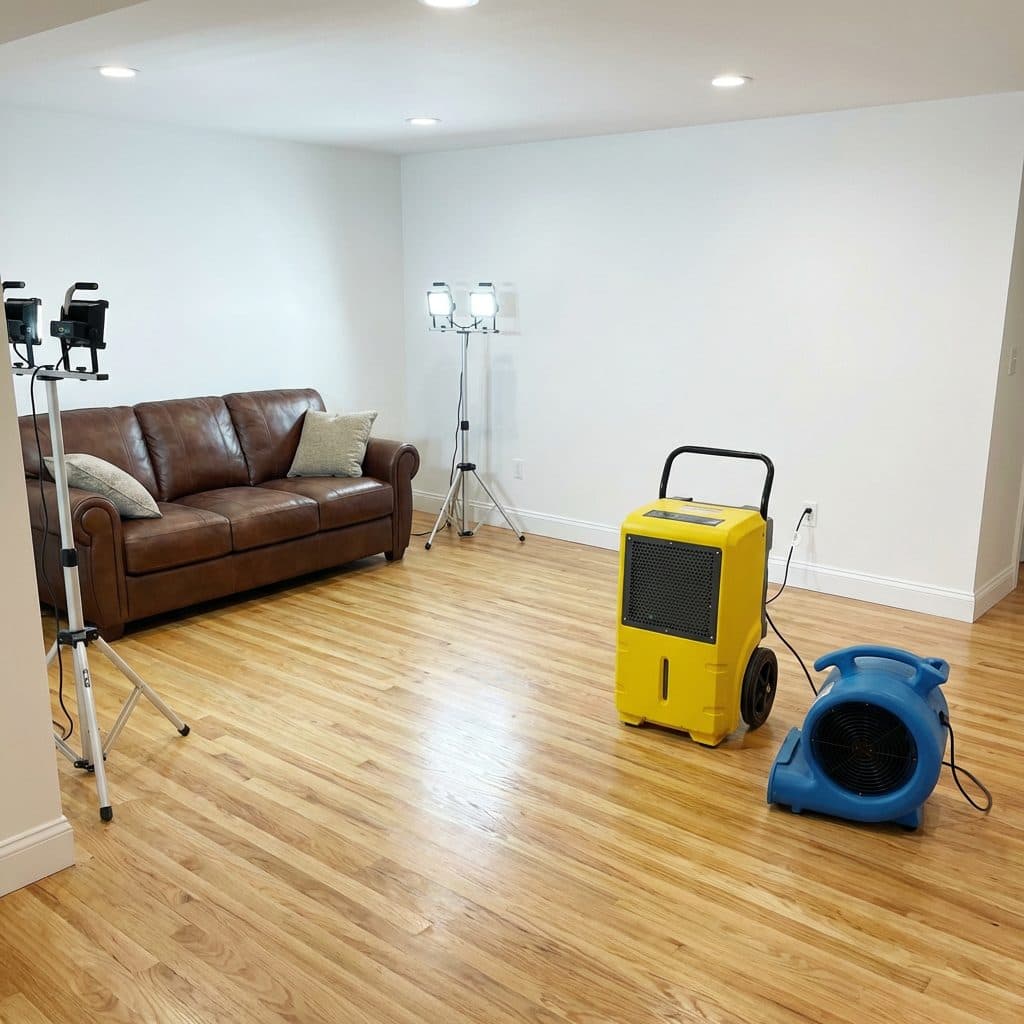
Dehumidifiers and air movers staged on both levels per IICRC S500-2021 drying calculations.
- 5
Daily Monitoring & Close-Out
Moisture readings logged daily until the floor system matched baseline. Full record handed to the homeowner for the claim.
Tools & Equipment Used
Questions Homeowners Ask
What should you do first when water is dripping from the ceiling?
Close the main water shutoff, kill the breakers serving the affected rooms, and move what you can out from under the drip. Then call for mitigation. The first hour determines how far the water travels, and a supply line can move a surprising volume overnight.
How long did the Norwalk drying take?
Five days across two levels. Floor systems dry slowly because water gets trapped between the finished floor and the subfloor, which is why the basement ceiling below was opened to let the assembly dry from both sides.
Does insurance cover a burst dishwasher line in Connecticut?
A sudden supply line failure is typically a covered peril on homeowner policies, and the resulting damage to floors, ceilings, and finishes is usually included. Green Restoration logs daily moisture readings and photos for the claim file. We work with insurance, but Green Restoration is independent and not on any insurer's panel.
What does two-level water mitigation cost in Norwalk?
Cost follows the affected square footage, the demolition required, and drying duration. Two-level losses price above single-room events but well below whole-home floods. Green Restoration provides a written scope and price after inspection at no cost.
Will the kitchen floor need replacement?
Not always. Monitored drying decides it: if readings return to baseline before the finish delaminates or cups beyond recovery, the floor stays. In this project the toe-kick openings released the trapped water early, which is what saved the finished floor.
How do you prevent supply line failures?
Replace rubber appliance lines with braided stainless every five to seven years, close supply valves before long trips, and put leak sensors under the dishwasher, washing machine, and water heater. A whole-home automatic shutoff valve is the strongest protection.
Norwalk is served by
Green Restoration of Fairfield County
Available 24 / 7 for emergency response