Water Mitigation in a Stamford Residence
 1 / 5
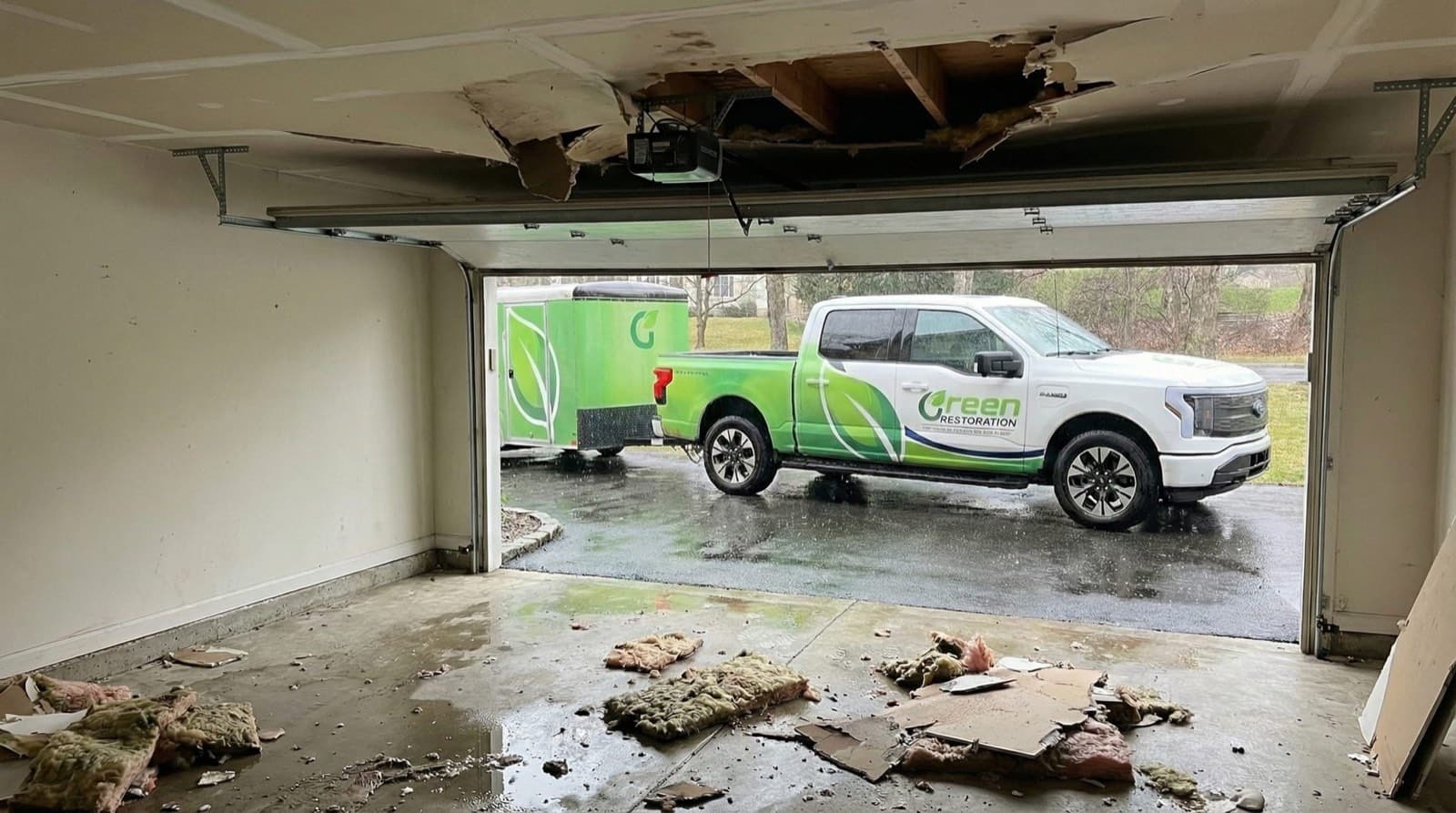
1 / 5Water Mitigation project documentation in Stamford, CT, photo 1
What Happened
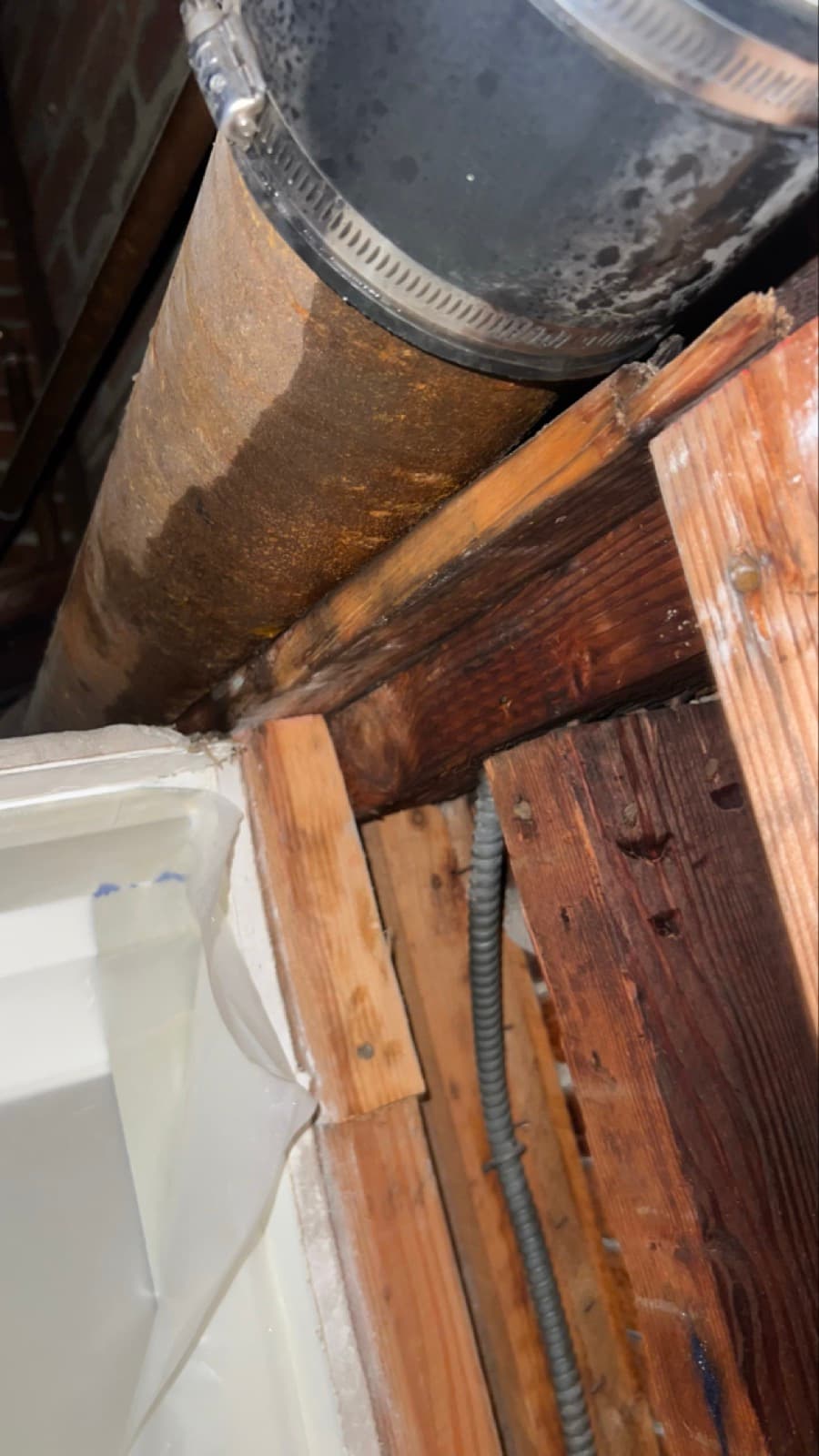
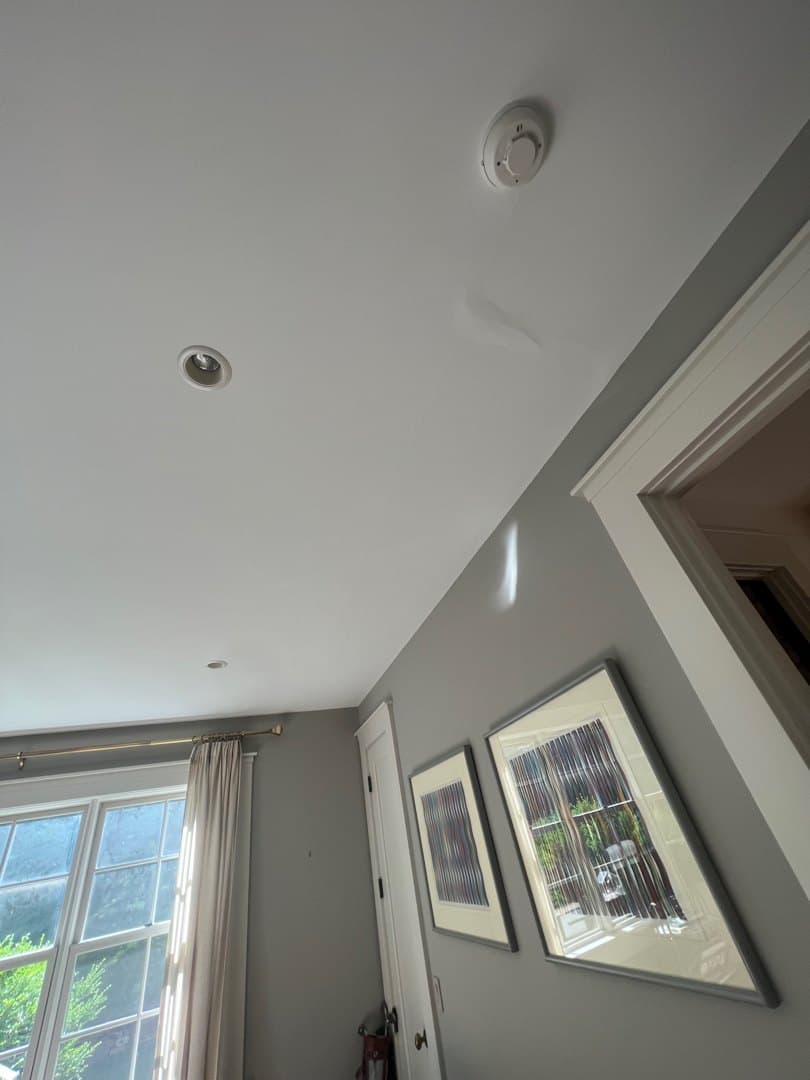
A water heater at the end of its service life split at the base in a Stamford home, releasing the tank volume plus continuing supply flow across the utility room and into the adjacent finished family room. Green Restoration closed the supply, extracted the water, removed wet carpet pad and lower drywall in the finished area, and staged drying equipment per IICRC S500-2021 until readings returned to baseline.
Scope of Damage
Utility Room
ModerateStanding water across the slab around the tank. Extracted and dried; equipment bases inspected before restart.
Family Room
SevereCarpet pad saturated and water wicking into the lower drywall. Pad removed, drywall opened at the base, carpet salvaged.
Hallway Threshold
LightMinor wicking at the doorway. Dried in place with directed airflow, no removal needed.
How We Solved It
- 1
Supply Shutoff & Safety Check
Water and gas to the failed heater isolated. Electrical in the wet zone checked before equipment staging.
- 2
Same-Day Extraction
Standing water extracted from the slab and carpet within hours of the call, which is what saved the carpet.
- 3
Selective Removal
Saturated carpet pad and the lower course of drywall in the family room removed and bagged out.
- 4
Structural Drying
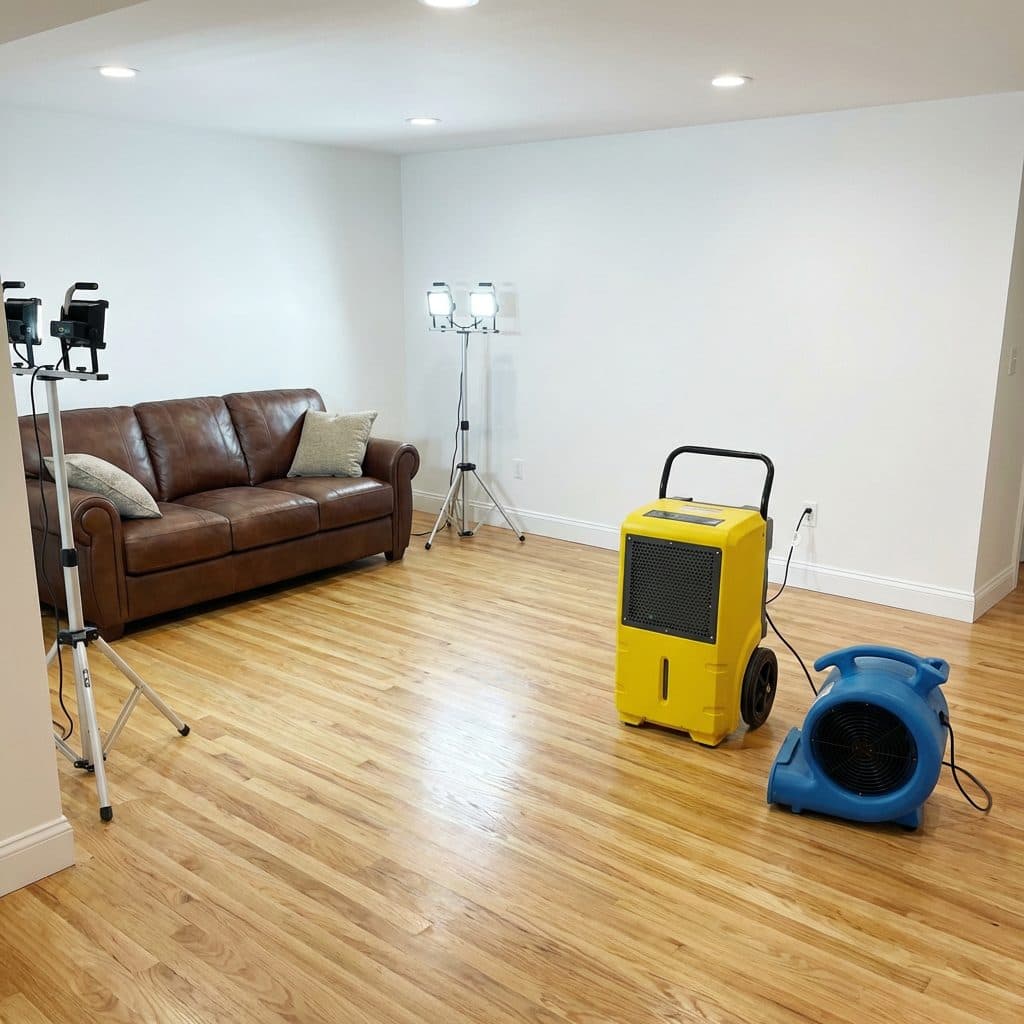
Dehumidifiers and air movers ran four days per IICRC S500-2021, with readings taken at the same points daily.
- 5
Documentation & Handoff
Dry-standard confirmation, photos, and the moisture log delivered for the insurance claim and the plumber's replacement install.
Tools & Equipment Used
Questions Homeowners Ask
What are the warning signs of water heater failure?
Rust streaks at the base, moisture or mineral crust around fittings, rumbling on reheat, and age. Most tanks fail between 10 and 15 years. The Stamford unit showed corrosion at the base seam, which is the most common failure point.
How fast does water heater flooding need to be addressed?
Within hours. A split tank releases its full volume plus continuing supply flow until someone closes the valve. Carpet and drywall begin absorbing immediately, and salvage odds drop sharply after the first day. Same-day extraction is why this family room carpet survived.
Does insurance cover water heater failure in Connecticut?
The resulting water damage is typically covered as a sudden discharge; the heater itself usually is not, since appliance wear is excluded. Green Restoration documents the damage separately from the appliance so the claim is clean. We work with insurance, but Green Restoration is independent and not on any insurer's panel.
What does a loss like this cost to mitigate?
Utility room and single adjacent room losses sit toward the lower middle of the residential range, driven by extraction, selective demolition, and four to five days of equipment time. Green Restoration provides a written scope and price after inspection at no cost.
Can wet carpet be saved?
Often, when the water is clean and extraction is fast. The pad underneath almost always gets replaced because it holds water like a sponge, but the carpet itself can frequently be lifted, dried, and relaid, which is what happened in this project.
How do you prevent a repeat failure?
Replace tanks proactively at 10 to 12 years, set the new unit in a drain pan piped to a drain, and add a leak sensor at the base. If the heater sits near finished space, an automatic shutoff valve on the supply is worth the small added cost.
Stamford is served by
Green Restoration of Fairfield County
Available 24 / 7 for emergency response