A Two Foot Flood Cut and an Epoxy Floor in a Westport Basement
 1 / 3
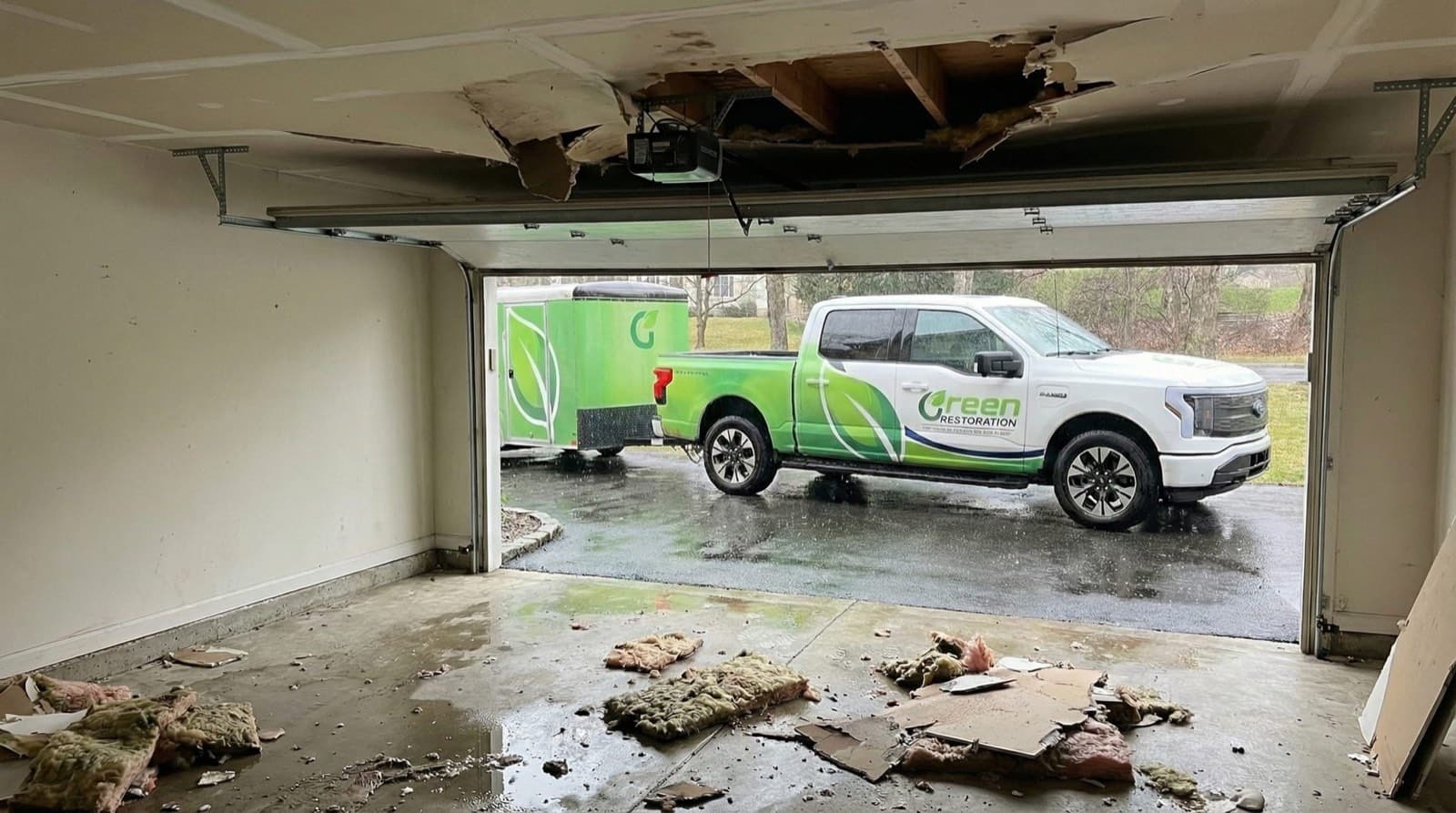
1 / 3The wall opened at the flood cut line with debris still down. Everything below two feet came out along the full 294 linear feet rather than only where damage was visible.
What Happened
A flood cut is a horizontal cut made at a fixed height all the way around a room, taking every wall surface below that line. On this Westport basement the cut ran 294 linear feet at a height of two feet. The advantage of working to a set line rather than chasing damage is certainty: nothing wet is left behind a wall because everything below the line is gone. The cost of it is material that was never affected coming out alongside material that was.
It is a deliberate trade, and it suits a basement where the water arrived at floor level and moved along the whole perimeter rather than pooling in one place. Above and around the cut, 1,516 square feet of horizontal and vertical surfaces were cleaned as a single environmental pass. That figure is the one that describes the real size of this job. The demolition is a strip two feet high; the cleaning is the whole room. Containment ran to 120 square feet with two zipper doors and four 24 hour negative air periods held the space under negative pressure throughout.
The decision worth explaining is the last one. 170 square feet of the concrete floor was painted with two coats of epoxy. Bare concrete in a basement is porous. It takes on moisture from below, it holds whatever is spilled on it, and it cannot really be cleaned, only wiped. An epoxy coating converts that surface into something sealed and washable, which changes how the room behaves the next time water appears. It is the only part of this scope that is an improvement rather than a restoration, and it is the part most likely to matter in five years.
What was not sold: no insulation was removed, no antimicrobial agent or coating was applied, no drywall was replaced, and no testing or clearance was performed. The basement was handed back cut, cleaned and with a finished floor, but not rebuilt.
Scope of Damage
Basement Walls
Severe294 linear feet opened to a height of two feet in a flood cut, taking every wall surface below the line rather than chasing damage room by room.
Horizontal And Vertical Surfaces
Moderate1,516 square feet cleaned as one environmental pass. The demolition was a two foot strip; the cleaning was the whole room.
Concrete Floor
Moderate170 square feet finished with two coats of epoxy, converting porous concrete into a sealed washable surface.
How We Solved It
- 1
Contain And Run Negative Air
120 square feet of containment with two zipper doors and four 24 hour negative air periods held across the work.
- 2
Cut To A Line, Not To The Damage
294 linear feet opened at two feet. Working to a fixed line guarantees nothing wet is left behind a wall, at the cost of removing some material that was never affected.
- 3
Clean The Whole Room
1,516 square feet of horizontal and vertical surfaces cleaned in one pass, not just the areas adjacent to the cut.
- 4
Seal The Floor
Two coats of epoxy across 170 square feet. Bare basement concrete is porous and cannot really be cleaned; a sealed floor can.
- 5
Haul The Debris
One pickup truck load including dump fees, removed from the property.
Tools & Equipment Used
Questions Homeowners Ask
What is a flood cut and why is it used?
It is a horizontal cut at a fixed height, here two feet, taken all the way around a room so every wall surface below the line is removed. It guarantees nothing wet stays hidden behind a wall. The trade is that material which was never affected comes out with material that was.
Why is the cleaning area so much bigger than the demolition?
Because water and what it carries do not stop at the cut line. On this Westport project the demolition was a two foot strip across 294 linear feet, while 1,516 square feet of horizontal and vertical surfaces were cleaned. The cleaning number is the one that reflects the real size of the work.
Is an epoxy floor worth it in a basement?
It changes how the room behaves. Bare concrete is porous, takes moisture from below and cannot really be cleaned, only wiped. Two coats of epoxy across 170 square feet turn that into a sealed washable surface. It is the one item on this scope that improves the room rather than restoring it.
Were the walls rebuilt after the flood cut?
No. No drywall replacement, insulation or reconstruction was sold on this project, so the basement was handed back cut, cleaned and with a finished floor. Rebuilding is a separate scope and should follow, not accompany, the drying and cleaning work.
Do you serve Westport and Fairfield County?
Yes. Green Restoration serves Westport and towns across Fairfield County for environmental cleaning, water damage, mold remediation and crawl space work. Our crews are IICRC certified, licensed and insured, and BBB A+ Rated. Call (203) 639-2277 for a free estimate.
Westport is served by
Green Restoration of Westport
Available 24 / 7 for emergency response
More Case Studies
View all → Environmental Cleaning
Rodent Odor Removal in a New Canaan Basement Laundry Room
 Environmental Cleaning
The Cloths Went In Yellow: Deep Sanitization of an Ossining Apartment
 Environmental Cleaning
