Certified Mold Remediation Deep River, CT
CT River AE Floodplain Basements Cleared In 2026 NRHP Village Plaster Walls, S520, ACAC, AMRT, WRT
 IICRC Certified
 Eco-Friendly Solutions For Healthier Spaces
Reviewed by David Megeneishvili·Licensed & Insured In CT·IICRC AMRT + WRT
What Is IICRC S520 Mold Remediation?
Mold remediation is the IICRC S520-2024 documented process of source-cause moisture diagnosis, HEPA-filtered negative-air containment construction, condition-1 vs condition-2 vs condition-3 substrate triage, controlled removal of porous Condition 3 materials, antimicrobial application of EPA-registered formulations, HEPA post-cleaning, and ACAC-certified independent third-party clearance verification before any reconstruction.
In Deep River, CT, remediation is sequenced strictly: identify and stop the moisture source, build containment with negative-air HEPA AFD machines and 6-mil poly barriers, remove visibly contaminated porous materials, decontaminate semi-porous surfaces per S520 § 12.2, antimicrobial mist treat, HEPA vacuum the work area, and only release containment after independent third-party air and surface sample clearance falls inside the Condition 1 envelope.
- IICRC S520-2024 aligned
- HEPA negative-air containment
- ACAC independent clearance
- EPA-registered antimicrobials
Why Deep River Mold Jobs Run IICRC S520
Connecticut has no mandatory mold licensing regime, but IICRC S520-2024 is the de facto industry standard. CT § 20-427 still requires HIC registration for any remediation work over $200, with documented scope, antimicrobial application records, and clearance testing.
Green Restoration runs IICRC S520-2024 protocol with HEPA negative-air containment, ACAC-certified independent third-party clearance, and full chain-of-custody microbial documentation on every remediation.
Complete Mold Remediation In Deep River, CT
From Deep River Village NRHP plaster-and-lath restoration and 1700s sea-captain colonial fieldstone basement seepage to Connecticut River AE floodplain crawl spaces at Deep River Landing, Eight Mile River flood-zone properties, Pratt Read ivory-mill brownfield humidity, and Stachybotrys in finished basements off Main Street, every Deep River mold scope contained by S520 crews dispatched from our 38 Crown Street, New Haven office in 2026.
Same-Day Mold Inspection And Air Sampling
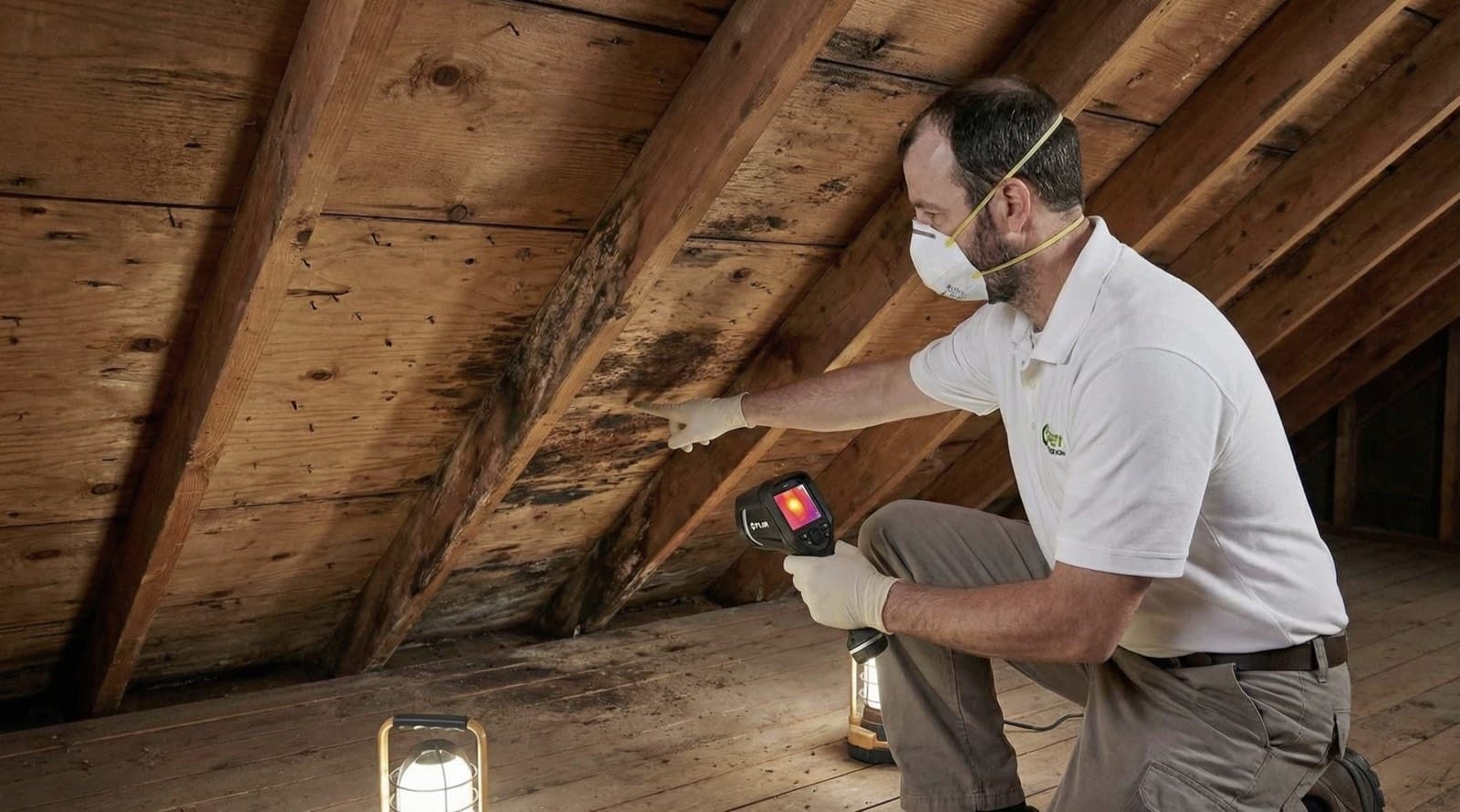
Connecticut River AE tidal floodplain basements and NRHP Village plaster walls hide colonies long after surge events recede from Deep River Landing and Plattwood Park 1700s housing. Green Restoration dispatches ACAC-certified air sampling with thermal imaging across Main Street Colonials and Eight Mile River-adjacent properties, documenting hidden colonies before any containment work begins anywhere in Deep River.
IICRC S520, ACAC air sampling, Middlesex County
Full Mold Remediation And Removal
Connecticut River AE tidal surge and Deep River Landing seepage push Stachybotrys deep into NRHP Village plaster framing and Main Street Colonial joist bays across town. IICRC S520 sealed containment, EPA-registered antimicrobial treatment, and HEPA air scrubbing remove colonies at the substrate. Green Restoration confirms third-party clearance on every Plattwood Park and Deep River Center project across town.
IICRC S520, Hospital-grade containment
Attic Mold Cleanup
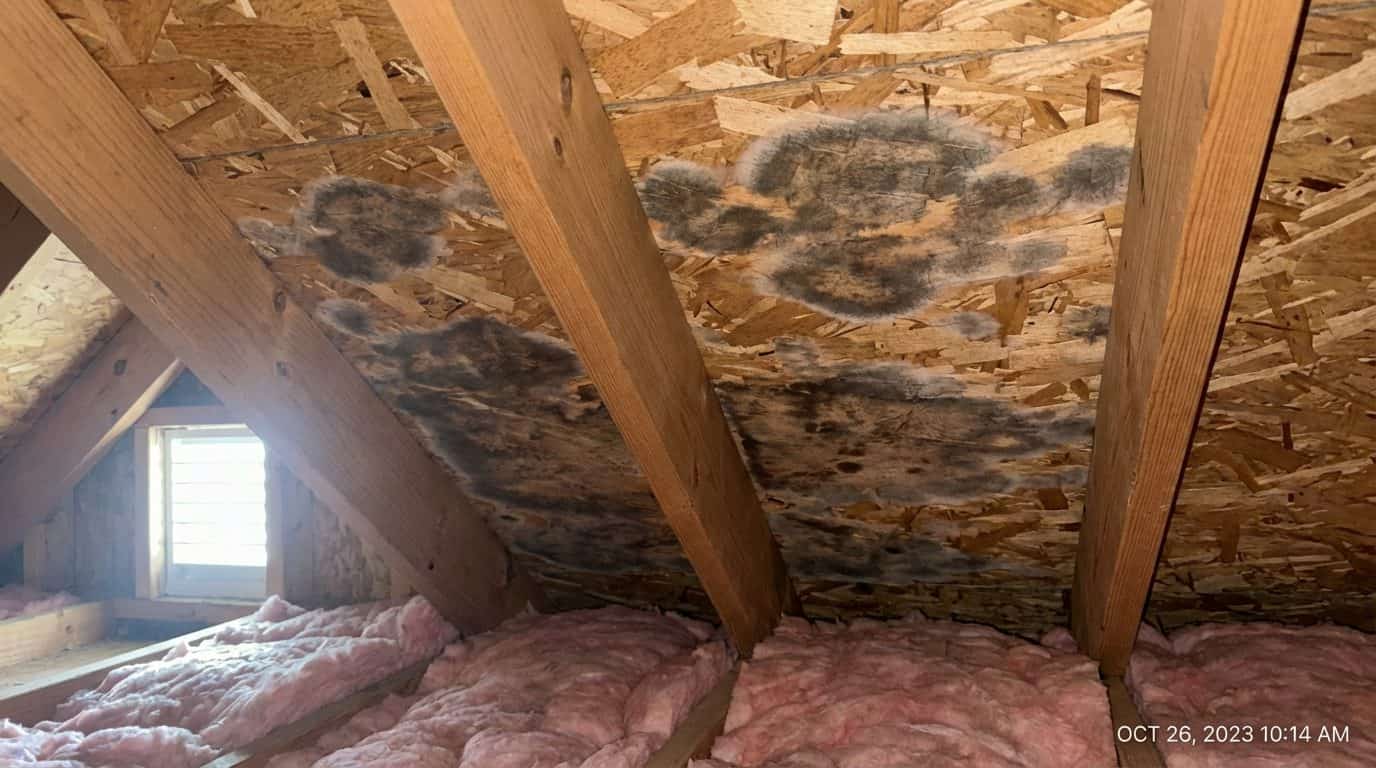
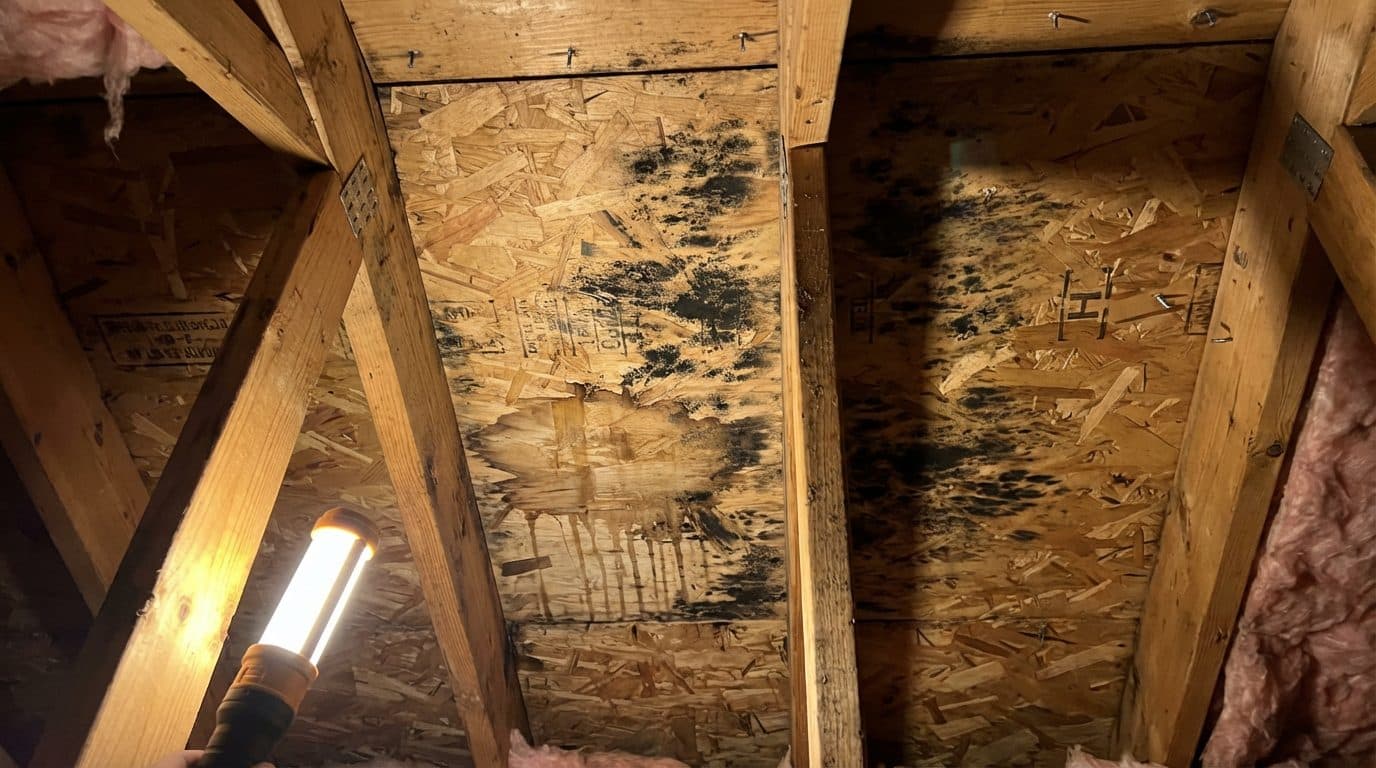
Plattwood Park 1900s housing and Main Street Colonial roof decks with retrofit blown-in insulation block bath-fan exhaust under deferred-venting attics, pushing OSB sheathing past 16 percent MC. Green Restoration applies sheathing treatment, duct rerouting through gable terminations, and replacement insulation across NRHP Village plaster-wall attic bays and Deep River Landing area roof decks in Deep River.
Sheathing treatment, Ventilation corrected
Additional Mold Remediation Services In Deep River
Black Mold (Stachybotrys) Remediation
Connecticut River AE tidal surge into NRHP Village plaster basements and sustained Deep River Landing seepage behind Main Street Colonial walls feed the wet drywall conditions Stachybotrys requires. Double-layer negative-air containment under our owner's IICRC AMRT credential removes colonies cleanly. Green Restoration verifies ACAC outdoor-baseline post-clearance on every Plattwood Park project in Deep River.
Basement Mold Cleanup
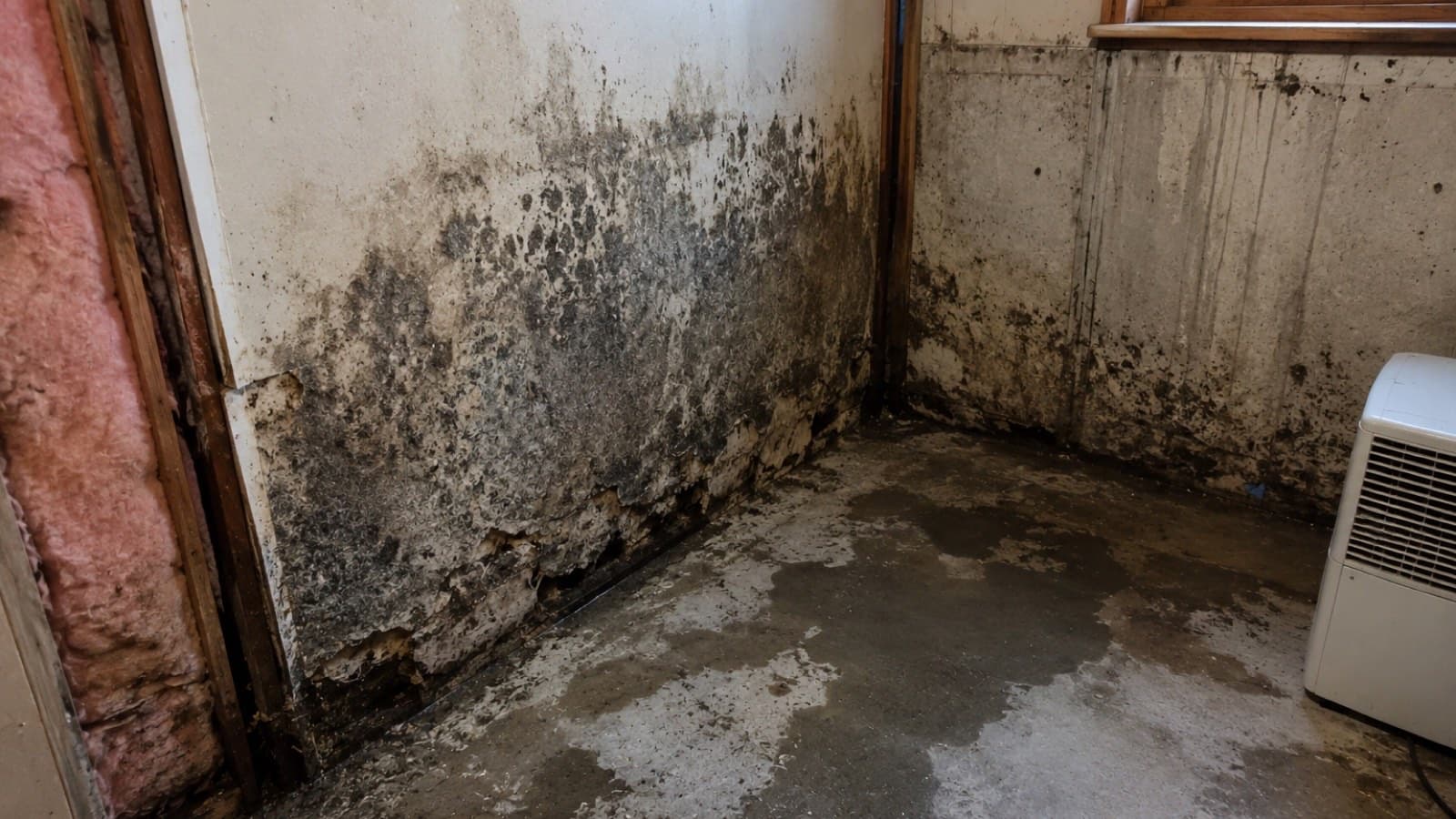
Connecticut River AE tidal surge and Deep River Landing seepage saturate NRHP Village plaster basements and Main Street Colonial foundation walls. HEPA-assisted structural drying, drywall removal to a clean cut, and Tramex verification down to 16 percent MC arrest the cycle. Green Restoration restores Plattwood Park 1900s basements and Deep River Center foundations across town.
Bathroom And Kitchen Mold Removal
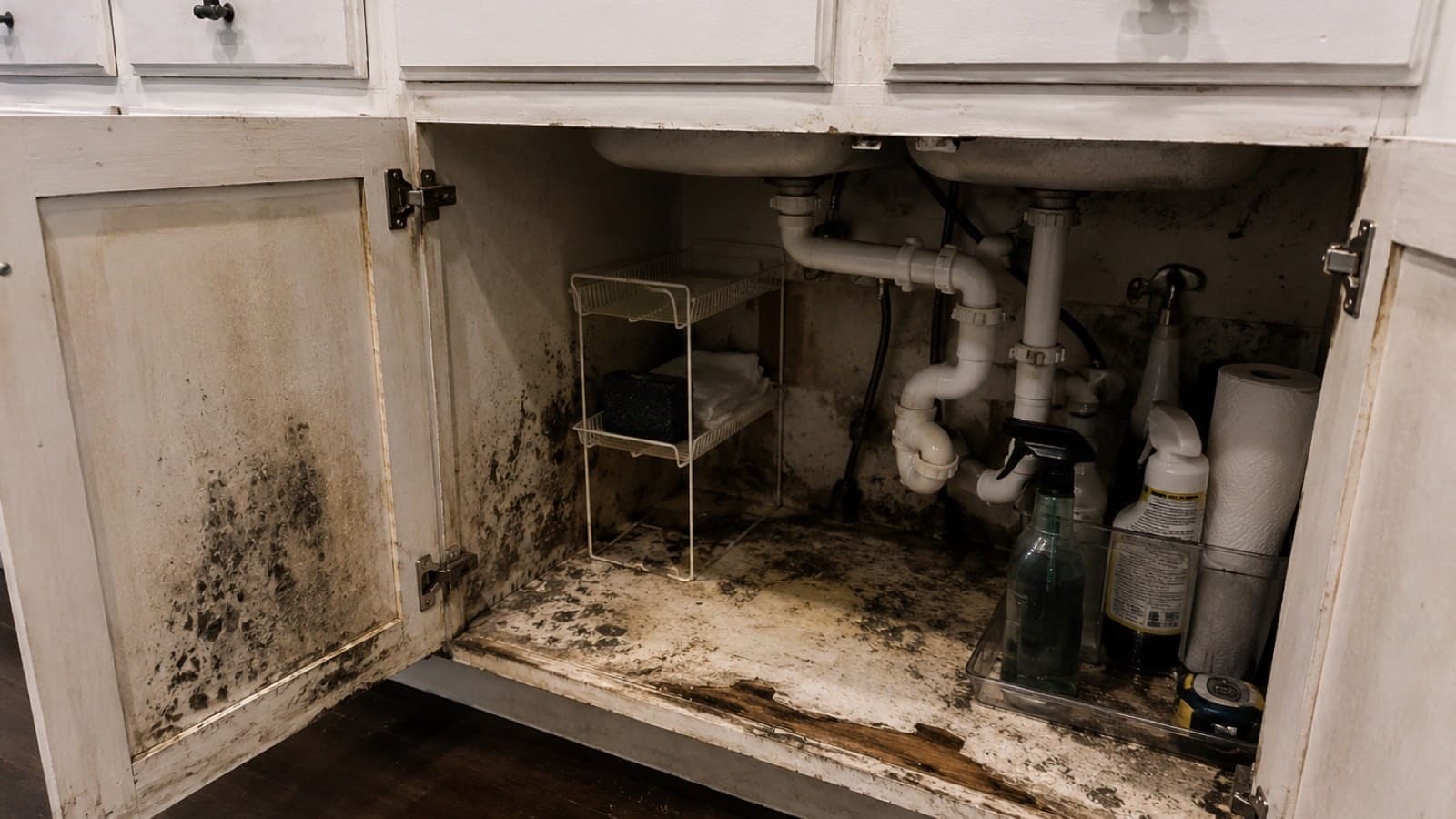
Main Street Colonial kitchens and NRHP Village plaster-wall bath assemblies trap Connecticut River AE tidal humidity behind undersized exhaust runs, colonizing tile grout and plaster within weeks. Green Restoration corrects ventilation, treats grout lines under IICRC S520 protocol, and rebuilds with mildew-resistant finishes across Plattwood Park 1900s kitchens and Deep River Center bath assemblies in Deep River.
HVAC And Duct Mold Cleaning
Plattwood Park 1900s housing air handlers and Main Street Colonial duct conversions circulate Connecticut River AE tidal humidity through coil-condensation cycles, distributing spores across full-house registers. NADCA ACR-standard duct cleaning, coil treatment, and air-handler remediation halt system-wide distribution at the source. Green Restoration services NRHP Village HVAC retrofits and Deep River Center mechanical closets across town.
Crawlspace Mold Remediation
Pier-block crawlspaces beneath Plattwood Park 1900s additions and tight ventilated spans under NRHP Village plaster-wall housing hold Connecticut River AE tidal humidity at joist-colonization thresholds year-round. IICRC S520 joist treatment, polyethylene vapor barrier installation, and dehumidification arrest substrate moisture cleanly. Green Restoration encapsulates crawlspaces across Main Street Colonial stock and Deep River Landing properties in Deep River.
Dry Ice CO2 Pellet Blasting
Deep River Village NRHP ivory-trade-era brick-stock and Main Street 1800s sea-captain timber framing degrade under solvent biocides applied to Connecticut River tidal substrate; dry ice CO2 pellet blasting sublimates straight to gas under IICRC S520, lifting mold off Eight Mile River fieldstone cellar pointing and Pratt Read mill-area beam assemblies with zero secondary residue or waste.
Soda Blasting Mold Remediation
FDA GRAS sodium bicarbonate soda blasting under IICRC S520 negative-air containment removes Penicillium, Cladosporium, and Aspergillus colonies from Deep River Village NRHP Federal townhouse plaster-on-lath and Pratt Read mill-area interior finishes without abrading Victorian millwork or original window casing. Green Restoration applies this medium across Bushy Hill Capes and Winter Avenue Colonial interiors throughout Deep River.
Multi-Species Mold Identification
Stachybotrys, Aspergillus, Penicillium, Cladosporium, Alternaria, and Chaetomium each demand distinct containment classes and clearance thresholds; ACAC-certified lab speciation aligned to IICRC S520 separates Connecticut River AE-tidal Stachybotrys from Eight Mile River corridor Aspergillus and Deep River Landing salt-influence Cladosporium across Deep River NRHP village-core Colonials, Plains Road shore-cottages, and Devitts Field properties.
Post-Remediation Clearance Testing
After Connecticut River AE tidal surge or Deep River Landing seepage remediation across NRHP Village plaster-wall homes, Plattwood Park 1900s housing, and Main Street Colonials, ACAC third-party air sampling verifies spore counts meet or fall below outdoor baseline. Green Restoration provides full lab documentation for insurance, NRHP resale disclosure, and Deep River Center turnover files across town.

Don't Let Mold Spread Another 24 Hours. Same-Day Inspection.
IICRC S520 Certified Crews On Site Same Day Across Deep River And Middlesex County. Hospital-Grade Containment, Lab-Verified Clearance.
Green Restoration of New Haven in Deep River
Green Restoration of New Haven handles mold remediation in Deep River, CT, where tidal surge from the Connecticut River and Deep River Landing seepage saturate NRHP Village plaster basements and Main Street Colonial walls. Owner-led crews set HEPA containment and remove affected porous materials to IICRC S520 standards, under IICRC Certified Firm #70236106. Call (833) 833-3637.
Why Choose Us In Deep River
Owner-led mold remediation with same-day inspection, lab-verified clearance testing, and hospital-grade containment across Deep River and Middlesex County, supervised under our owner's IICRC AMRT and WRT credentials.
Same-Day Mold Inspection
IICRC S520 certified inspectors arrive same day with thermal imaging, moisture meters, and ACAC air sampling kits across every Deep River neighborhood.
IICRC AMRT, WRT, And S520 Protocol
Our owner carries IICRC Applied Microbial Remediation Technician and Water Restoration Technician credentials. Every crew works under hospital-grade S520 containment with HEPA scrubbers and negative air.
Owner-Operated Local Crew
Every Deep River mold job is personally overseen by our owner, from first inspection in Deep River Village NRHP and along the Eight Mile River to final clearance in Bushy Hill and Plains Road.
Lab-Verified Clearance Testing
Third-party ACAC air sampling confirms post-remediation spore counts at or below outdoor baseline before you re-occupy any Deep River property.
What Untreated Mold Costs Your Deep River Home
Most Deep River homeowners don\'t notice mold until a musty cellar in a Deep River Village NRHP sea-captain colonial, a damp basement at Deep River Landing on the Connecticut River, or a stained ceiling in a 1700s Main Street fieldstone-foundation home forces the issue. Connecticut River valley humidity, Eight Mile River flood-zone exposure, 1700s and 1800s mill-worker and sea-captain housing stock, and Pratt Read ivory-mill brownfield legacy make mold compound fast across Deep River.
Connecticut River AE Floodplain Saturation
Deep River Landing Basements Most Exposed
Deep River Landing and properties along the lower Main Street corridor sit inside the FEMA AE floodplain of the Connecticut River. Spring snowmelt and tropical-storm surge push river water into 1700s and 1800s fieldstone foundations, and Stachybotrys colonizes finished basement framing within weeks of every soaking event along the riverfront.
Eight Mile River Flood Zone Seepage
Plains Road And Western Deep River Properties
The Eight Mile River corridor cuts through western Deep River and floods seasonally where Plains Road and adjacent lots sit close to grade. Groundwater wicks through 1800s fieldstone foundations and modern poured-concrete basements alike, and chronic seepage produces hidden mold colonization behind framed perimeter walls and under finished basement carpet.
NRHP Village Plaster-And-Lath Saturation
Deep River Village Historic District
The Deep River Village NRHP historic district holds blocks of 1700s and 1800s sea-captain colonials and mill-worker housing where plaster over wood lath grows mold on the lath face long before any visible stain reaches the wall surface. Replastering this stock requires hospital-grade containment to prevent spore release during demolition.
1700s Fieldstone Basement Seepage
Main Street And Spring Street Hold Highest Risk
Main Street, Spring Street, and Winter Avenue hold 1700s and early 1800s sea-captain colonials with original fieldstone-and-lime-mortar cellars that wick groundwater straight through the foundation. Mold colonizes the inside face of the cellar wall and the joists above for months before any visible bloom reaches the finished spaces upstairs.
Pratt Read Ivory-Mill Brownfield Humidity
Mill Area And Mill Pond Properties Affected
The Pratt Read piano-key ivory mill operated from the 1800s through the 1900s and left a brownfield footprint around the mill area and Mill Pond. Groundwater table fluctuation and chronic soil humidity push moisture into nearby basements and crawl spaces, and bathroom ceilings, kitchen soffits, and HVAC closets bloom with Aspergillus and Penicillium long before any leak is found.
Cape Attic Mold From Retrofit Ventilation
Bushy Hill And Winter Avenue Capes Highest Risk
Bushy Hill and Winter Avenue hold blocks of 1900s Cape Cods and 1700s-1800s mill-worker housing where attic ventilation was retrofitted decades ago and bathroom fans terminate into the attic instead of through the roof. Years of shower humidity condense onto cold OSB sheathing and produce attic mold that requires sheathing treatment and full ventilation correction.
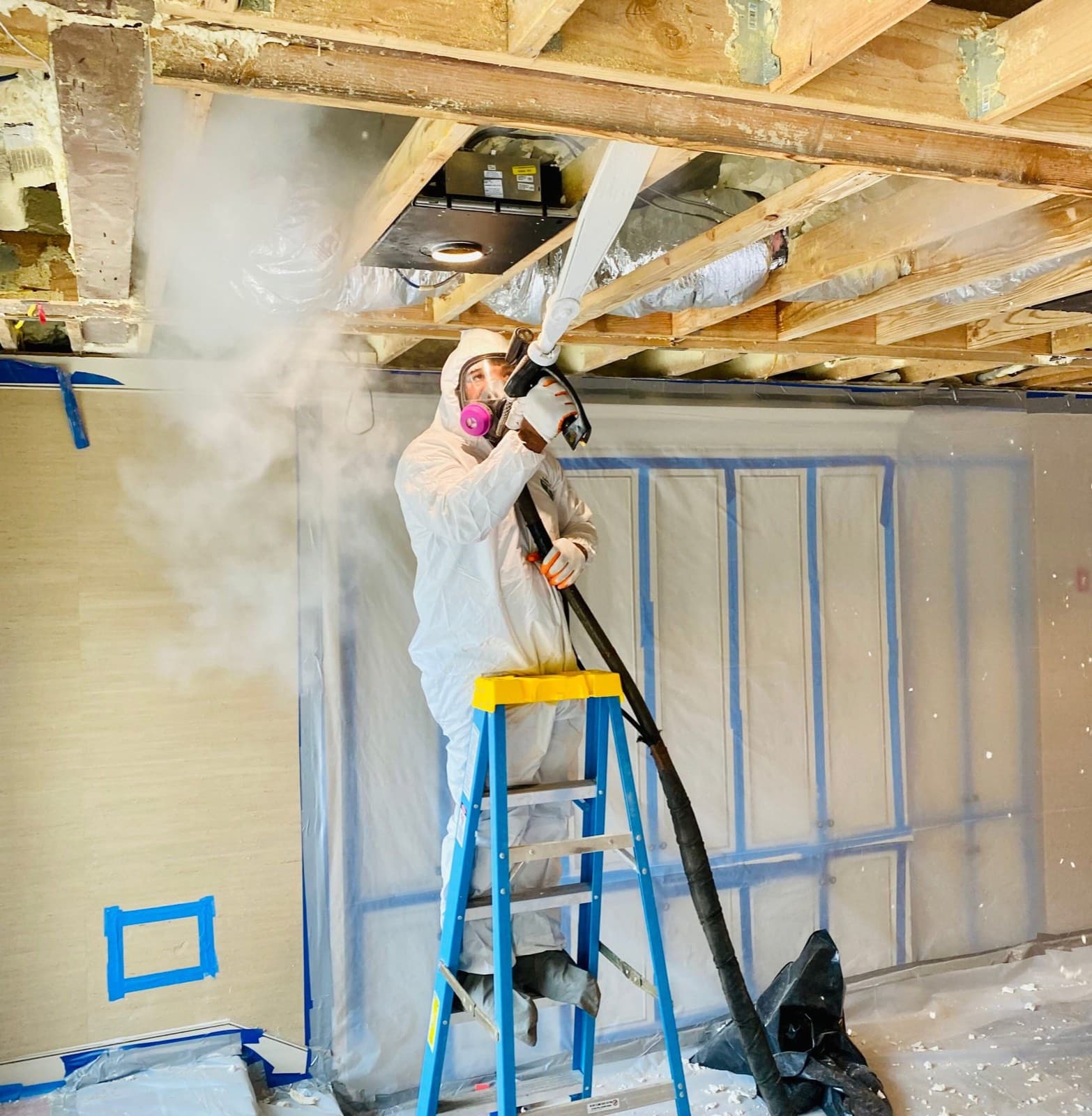
Why Deep River Properties Need Professional Mold Remediation
Deep River\'s Connecticut River AE floodplain at Deep River Landing, Eight Mile River flood zone, 1700s fieldstone basements and NRHP village plaster-and-lath walls, Pratt Read ivory-mill brownfield legacy, and Cape Cod attic retrofits create mold conditions surface cleaning cannot solve. Hospital-grade containment with lab-verified clearance is the only durable fix.
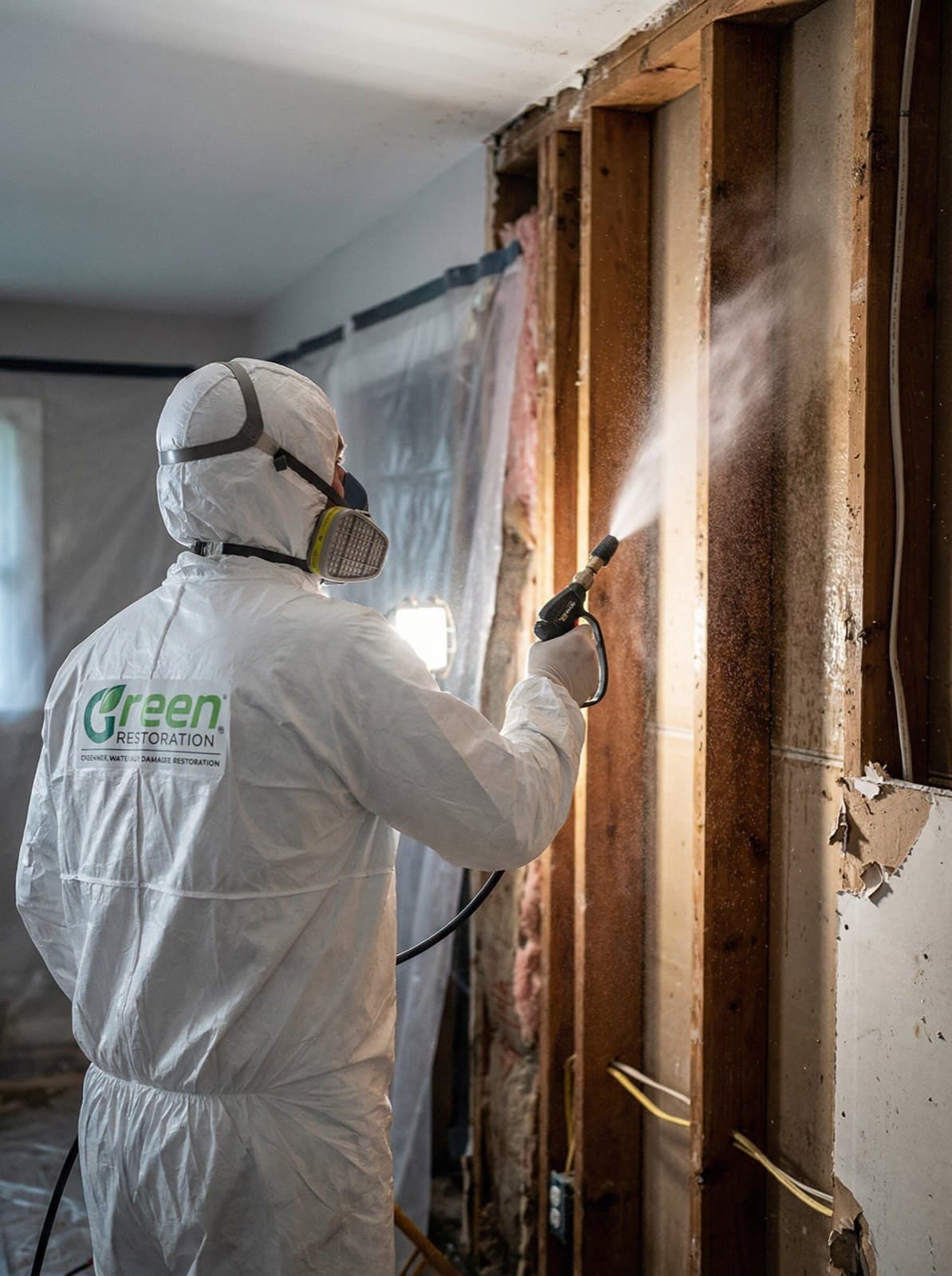
IICRC S520, AMRT, And WRT Certified Deep River Crews
Every Green Restoration mold crew is IICRC S520 certified with hospital-grade containment protocol, and our owner carries IICRC AMRT (Applied Microbial Remediation Technician) and WRT (Water Restoration Technician) credentials. We have remediated attics across Bushy Hill Capes, crawl spaces under Plains Road shore cottages, finished basements off Main Street, Deep River Village NRHP sea-captain colonial cellars, and Pratt Read mill-area brownfield properties. The certification is the floor, not the ceiling.
Same-Day Inspection Across Middlesex County
A technician is on site in Deep River the same day you call, whether you are in Deep River Village NRHP, Deep River Landing, along the Eight Mile River, on Main Street, Plains Road, Winter Avenue, Spring Street, Bushy Hill, in the Pratt Read mill area, or near Mill Pond. We bring thermal imaging, moisture meters, and ACAC-certified air sampling kits on the first visit so the scope of work is documented before any pricing conversation starts.
Moisture Source Corrected, Not Just Covered
Most mold comes back because the leak, humidity, or ventilation problem was never solved. We coordinate directly with roofers, plumbers, and HVAC contractors on Connecticut River and Eight Mile River floodplain properties, NRHP village repointing crews, and Cape Cod attic retrofitters so the root cause is fixed before we close the wall, with David's AMRT and WRT training informing every source-correction decision.
Lab-Verified Clearance You Can Hand Your Adjuster
Every Deep River mold job closes with third-party air sampling and written clearance at or below outdoor baseline. The file we deliver includes scope, containment photos, lab reports, and the IICRC-standard documentation that major carriers including State Farm, Liberty Mutual, Allstate, Travelers, USAA, AIG, and Chubb work with for a clean approval.
The Mold We See Most in Deep River
These are the mold problems we remediate most often, every job run to the IICRC S520 standard, contained with HEPA negative air, and cleared by independent ACAC air testing.
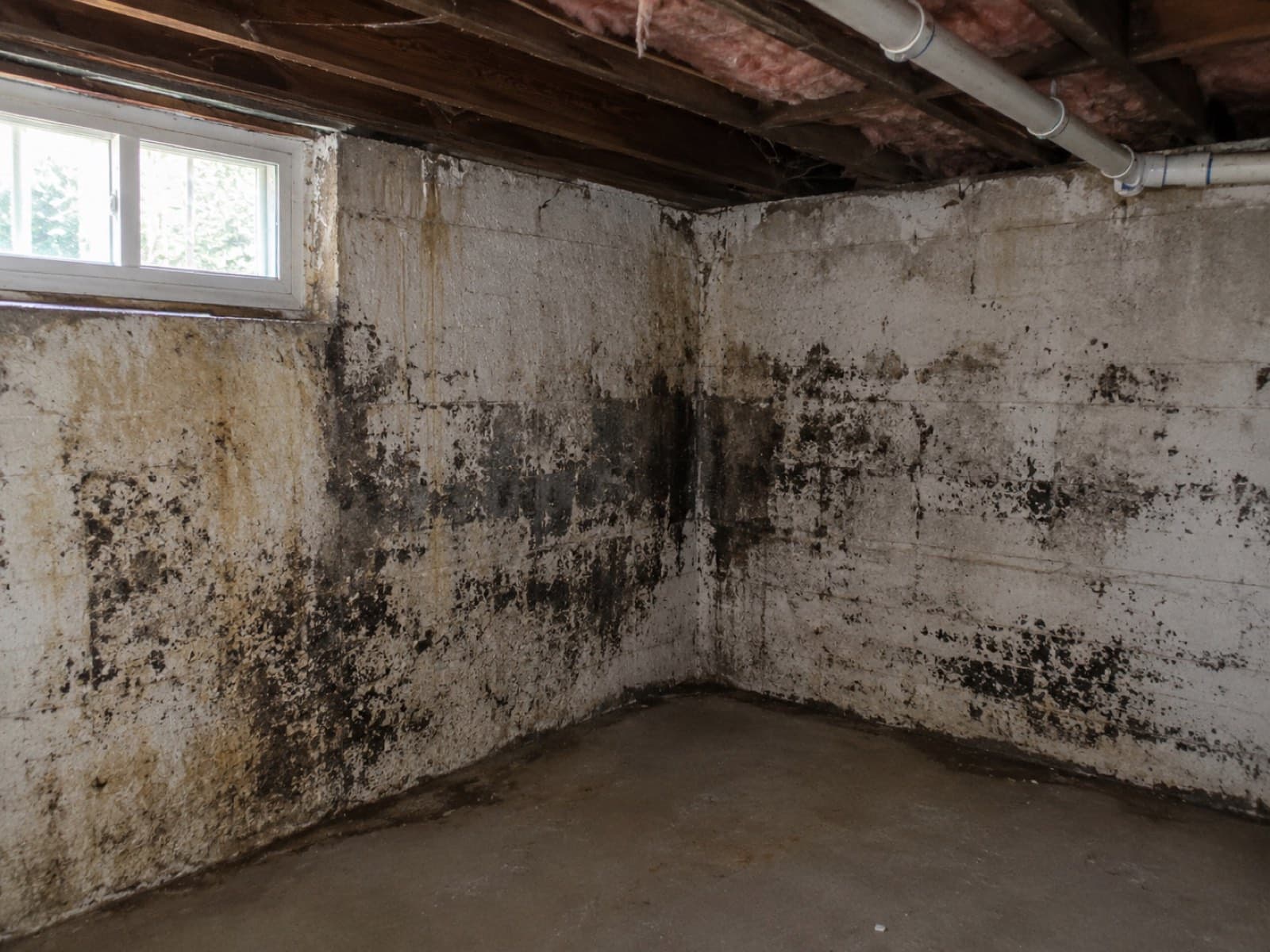
Basement Wall Mold, Fully Removed
In Deep River, tidal surge from the Connecticut River and Deep River Landing seepage saturate NRHP Village plaster basements and Main Street Colonial walls.
Chronic humidity, a sump failure, or seepage through the slab edge and foundation wall keeps a basement damp enough for mold to spread across concrete, framing, and stored belongings. On finished basements the same moisture colonizes the back of drywall and the wall cavity long before any stain reaches the room.
Our crews set sealed containment with negative air pressure and HEPA-filtered air scrubbers, then remove or HEPA-clean the affected materials and treat the foundation wall and framing with an EPA-registered antimicrobial per IICRC S520. The moisture source, seepage, a failed sump, or high humidity, is corrected and dehumidification is set before anything is closed back up.
Third-party ACAC air sampling confirms spore counts at or below the outdoor baseline before reconstruction begins. Every scope line, containment photo, and lab report is documented for your insurer so the claim moves on evidence.
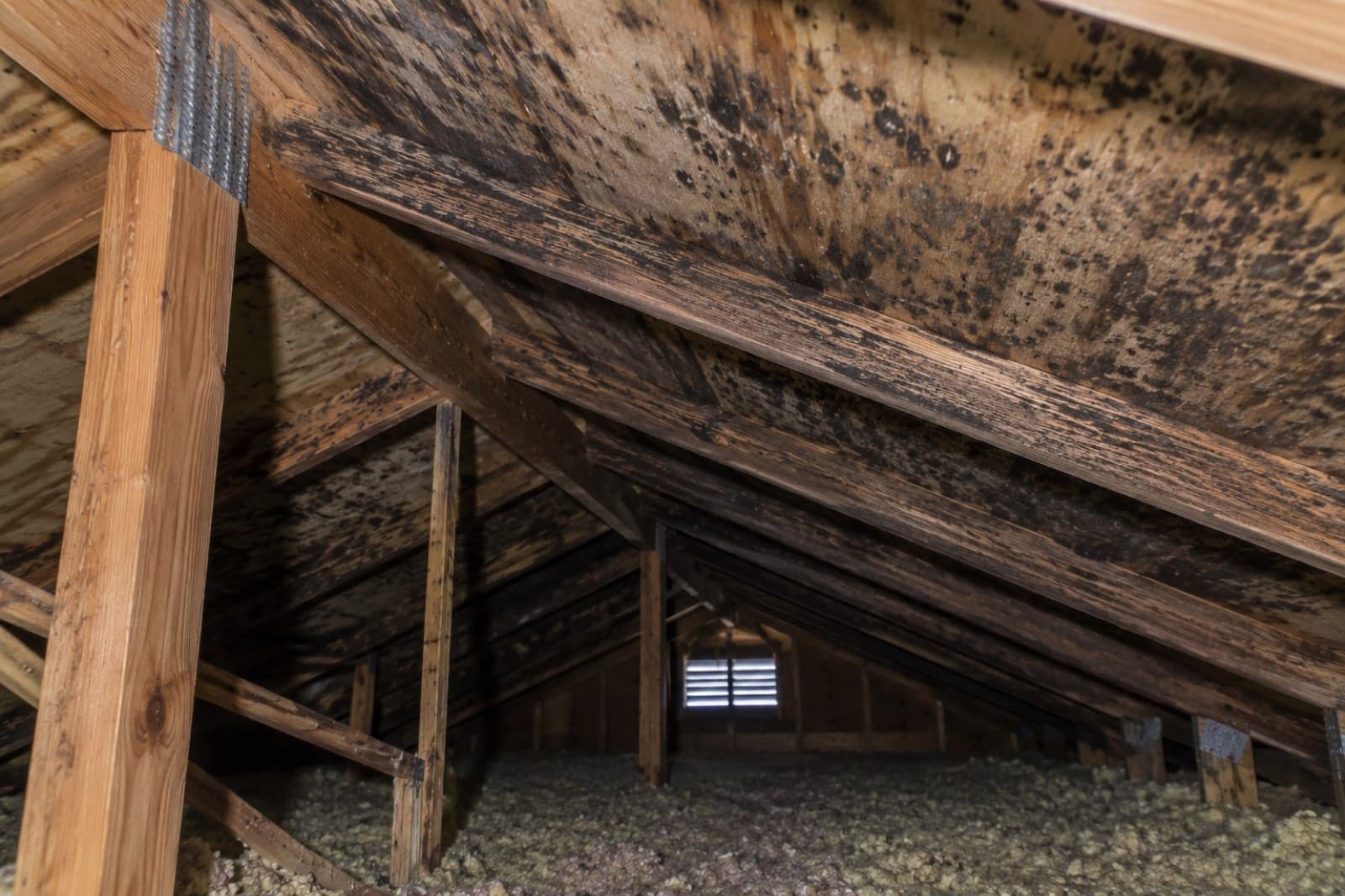
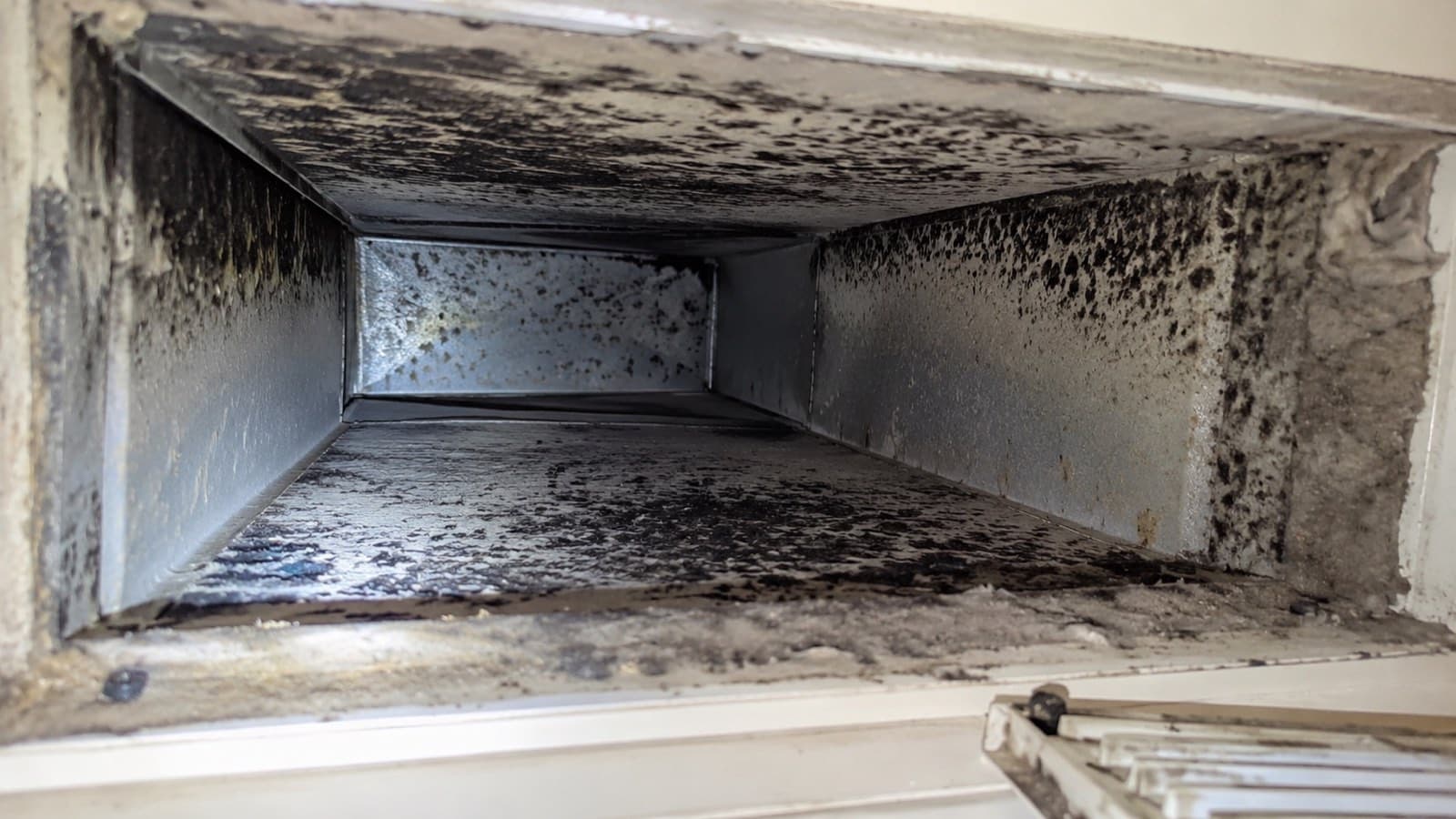
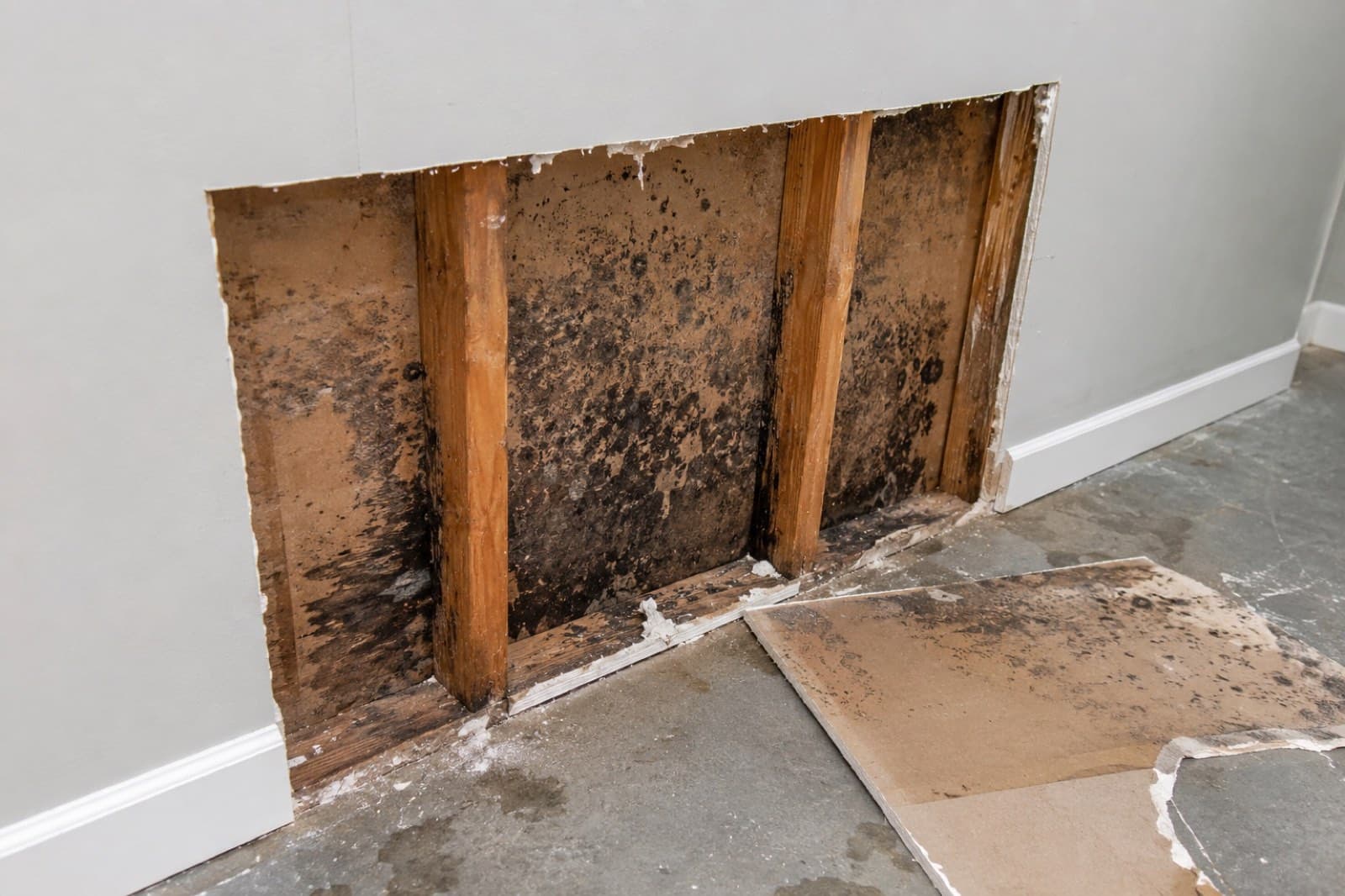
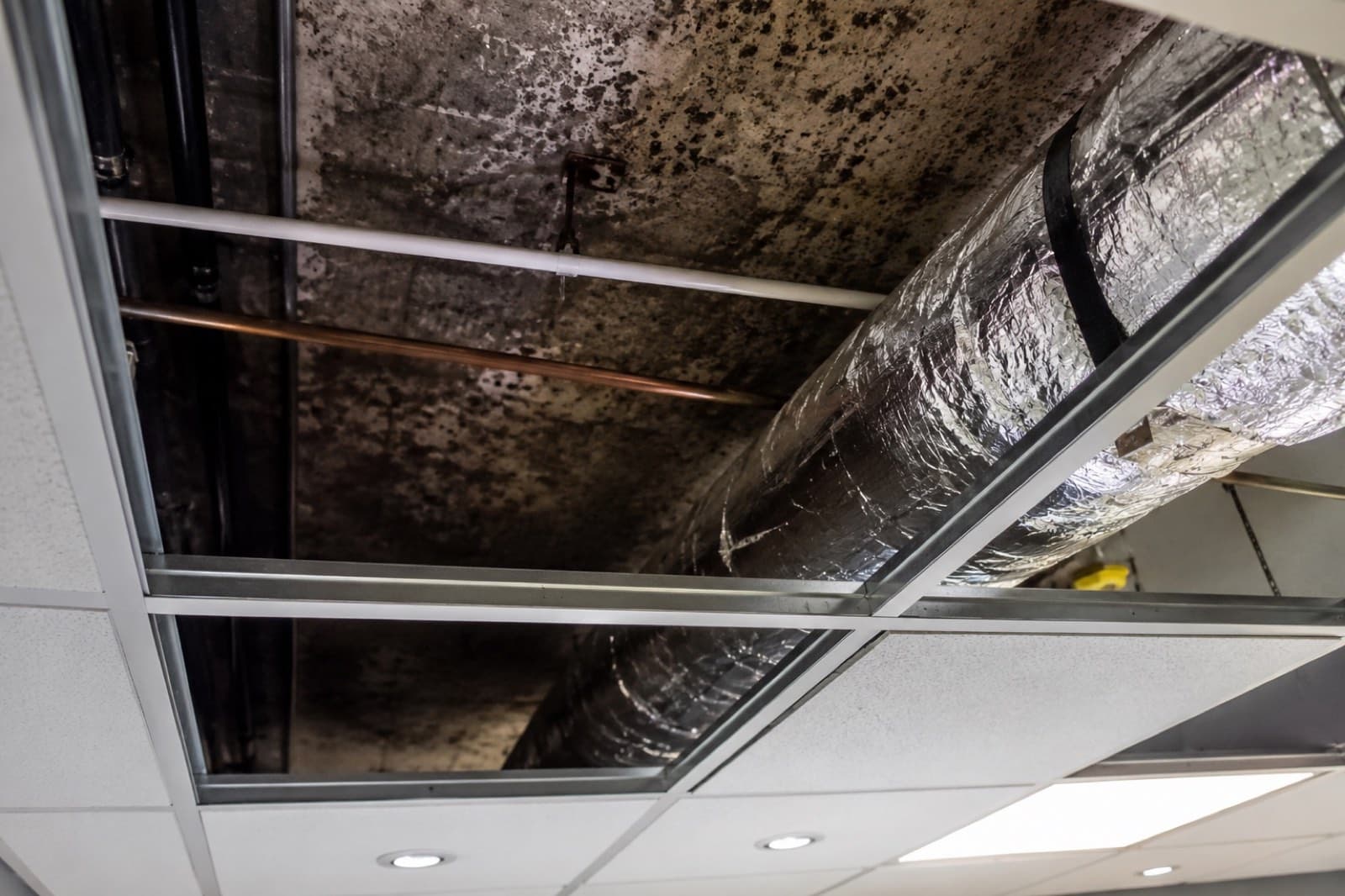
Scenario 1 of 5: Basement & Wall Mold
What To Do When You Find Mold In Your Home
The first 24 hours matter. Follow these steps to contain the colony and protect your air quality while waiting for our IICRC S520 certified crew to arrive.
What To Do Immediately
EPA guidelines recommend professional remediation for any visible mold patch larger than a 3x3 square foot area. Anything more releases spores beyond safe DIY containment.
Close doors leading to the contaminated room and turn off HVAC immediately. Every minute of shared air movement spreads spores throughout the rest of your home.
Take timestamped photos of all visible mold and any related water damage before cleanup begins. Your insurance adjuster will need this for the claim file.
If you must enter the contaminated area before remediators arrive, wear an N95 respirator, nitrile gloves, and sealed eye protection. Skin and airway contact with active colonies is how symptoms start.
Mold needs water to grow. Fix the leak, correct the humidity, or remediate the flood before any cleanup attempt. Scrubbing without moisture correction guarantees regrowth.
Third-party post-remediation air sampling confirms spore counts are at or below outdoor baseline. Without it, you have no way to verify the work actually worked.
What NOT To Do
Bleach lifts color on drywall, carpet, and wood but does not kill mold at the root. The colony returns within weeks and the stain looks smaller only because the surface is lighter.
Central heating and cooling circulates spores through every duct run, colonizing rooms that were never affected. Shut the system off until professional containment is in place.
EPA guidelines require professional containment for anything larger than a 3x3 patch. Tearing out drywall without negative air pressure releases millions of spores instantly.
Even mildew-resistant primer cannot seal an active colony. The mold feeds on the paper backing of drywall and bleeds through within weeks, often worse than before.
A persistent musty smell without visible mold almost always means a hidden colony behind walls, under flooring, or in ductwork. Smell usually precedes visibility by months.
Disturbed mold releases millions of spores in seconds. Ripping carpet, pulling drywall, or breaking up tile without proper negative air pressure contaminates the entire home.
Our Mold Remediation Process In Deep River, CT
From the first call to final walkthrough, every step is documented, insured, and owner-supervised.
Mold Remediation Coverage In Deep River, CT
Full service mold inspection, containment, remediation, and lab-verified clearance testing for Deep River homes, NRHP village colonials, and CT River valley properties. Same-day inspection response across Middlesex County.
Green Restoration provides IICRC S520 certified mold remediation in Deep River, CT, serving neighborhoods including Deep River Village NRHP, Deep River Landing, the Eight Mile River corridor, Main Street, Plains Road, the Pratt Read mill area, Winter Avenue, Spring Street, Bushy Hill, and Mill Pond throughout Middlesex County. With direct access via Route 9, Route 154, and the Main Street corridor through the historic village, our certified technicians arrive same day with thermal imaging, moisture meters, and ACAC-certified air sampling kits. We work directly with all major insurance carriers, from initial inspection through hospital-grade containment and lab-verified clearance testing.
As a locally operated office at 38 Crown Street in downtown New Haven, our owner holds IICRC AMRT and WRT credentials and knows the mold conditions Deep River properties face: Connecticut River AE floodplain saturation at Deep River Landing, Eight Mile River flood-zone seepage along Plains Road, NRHP village plaster-and-lath restoration in 1700s sea-captain colonials off Main Street, 1700s fieldstone basement seepage throughout the village core, Pratt Read ivory-mill brownfield humidity around the mill area and Mill Pond, and chronic Stachybotrys colonization in finished basements off Main Street and the Eight Mile River corridor. Our crews are trained to handle every scenario, from a single bathroom ceiling in a Bushy Hill Cape to a whole-building Stachybotrys containment in a Deep River Village NRHP colonial, and we coordinate directly with adjusters from State Farm, Liberty Mutual, Allstate, Travelers, and all other major carriers.
Active Mold Exposure In Deep River?
Same-day inspection dispatch, 24/7/365.
(833) 833-3637IICRC S520 · Licensed & Insured · All Insurance Accepted
All Towns Served By Green Restoration Of New Haven From Our 38 Crown Street Office For IICRC S520 Mold Inspection And Remediation.
Same-Day Mold Inspection In Deep River, CT
IICRC S520 crews dispatch from our 38 Crown Street, ZIP 06510 New Haven office same day in 2026, from Deep River Village NRHP sea-captain colonial cellars and Bushy Hill Cape attics to Deep River Landing Connecticut River floodplain crawl spaces, Eight Mile River flood-zone basements, Pratt Read mill-area brownfield properties, and Main Street fieldstone-foundation homes, supervised under our owner's IICRC AMRT and WRT credentials. Green Restoration is not a licensed public adjuster and does not negotiate claims on your behalf.
Deep River ZIP 06417, founded 1635, anchors a dedicated local mold remediation dispatch zone with Middlesex County crew arrival from our nearest IICRC S520 office. Same-day inspection covers every property class from historic Colonials to modern construction within the Deep River mailing perimeter, scheduled across the workweek.
Predominant Deep River housing stock spans 1850-1920, dictating remediation approach. Plaster-and-lath cavities, fieldstone basements, post-war ranch crawl spaces, and modern OSB sheathing each demand different IICRC S520 containment, drying, and clearance protocols matched precisely to the wall and floor assembly our technicians open during inspection.
Mold risk in Deep River tracks the Connecticut River tidal reach as the dominant moisture vector. Our scope sequencing prioritizes assemblies adjacent to this drainage corridor first, because chronic capillary wicking and flood-event saturation drive 80% of recurrence when source correction is incomplete and the path stays open.
Deep River sits along the lower Connecticut River, where the freshwater estuary corridor and ivory-era frame homes hold heavy valley humidity against old fieldstone cellars. River-fed groundwater and humid inland summers drive mold, so our crew engineers containment, applies antimicrobial treatment, and verifies a clean post-remediation lab clearance.

About Green Restoration In Deep River, CT
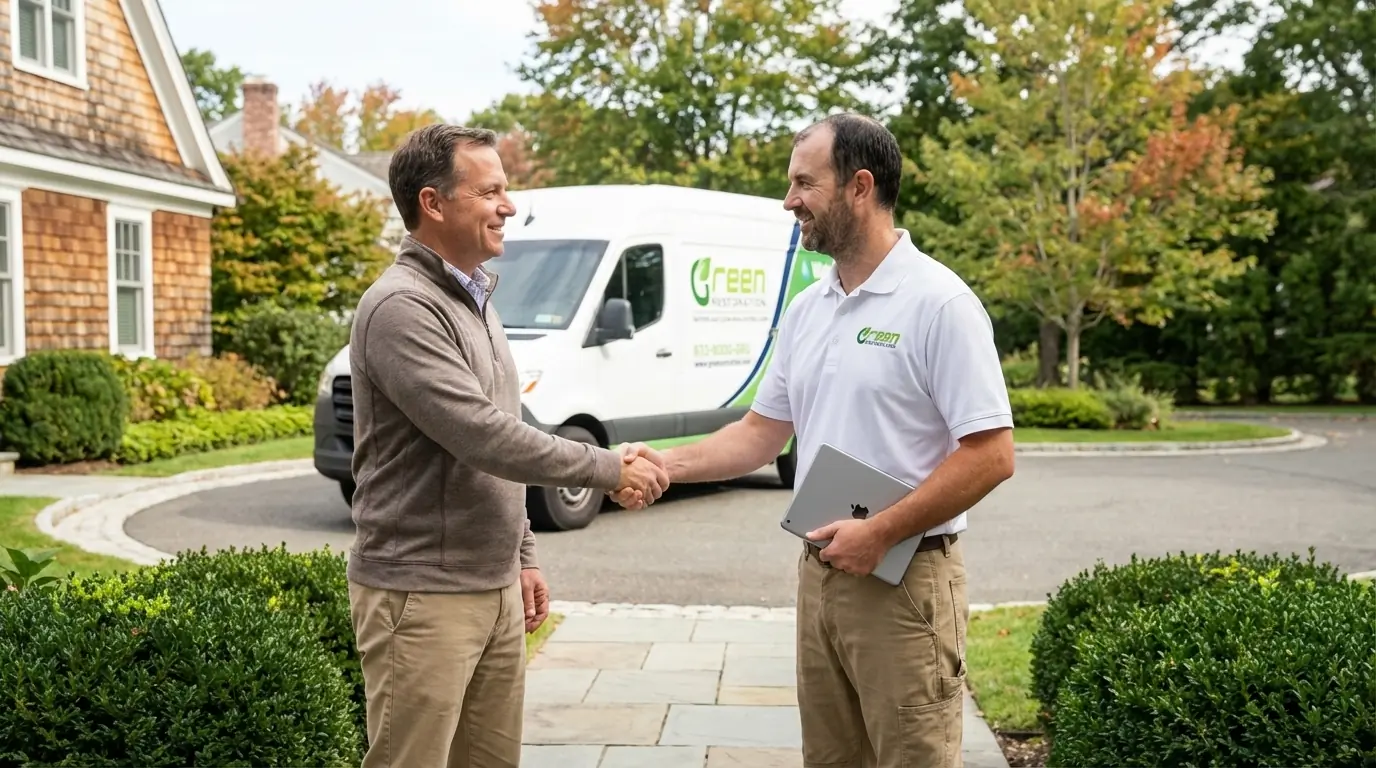
Your Local IICRC AMRT+WRT Mold Remediation Specialists Since 2014
Green Restoration provides IICRC S520 certified mold inspection, containment, remediation, and lab-verified clearance testing for homes, NRHP village colonials, and CT River valley properties in Deep River, CT, supervised under owner our owner's IICRC AMRT and WRT credentials. Our process focuses on accurate spore sampling, hospital-grade containment, physical removal, and moisture source correction to stop regrowth. We work with property owners and insurance providers to document scope clearly and restore affected areas the right way, without unnecessary steps or delays.

“At Green Restoration of New Haven, every mold remediation project gets my direct oversight. With 15+ years in restoration and IICRC AMRT plus WRT certifications, I personally lead containment, ACAC sampling, and lab-verified clearance on every job. We work with property owners and insurers across Deep River and the surrounding region to document scope clearly and restore properties the right way, without unnecessary steps or delays.”
Trusted by Families in Deep River &
Middlesex County
4.8 out of 5, Rated by your neighbors on Google
Attic Mold found mold in our attic during renovation after we moved to Wallingford. Not what you want to see right? green restoration contained everything, removed all the mold, but used eco-friendly products which was important to us....
Barbara Cavazos
Mold RemediationI called Green Restoration for water damage in my basement. They came and did a free inspecetion the same day. I will definitely use this company. And once again, I want to apologize for my rude comments. You guys are the best
Hanna Beaird
Water DamageA pipe broke at two in the morning. I called a few different services, but only the New Haven Green Restoration team picked up their emergency line. They came early in the morning, worked hard, and even wrote down notes for our insurance...
Micki Kraft
RestorationI was very happy with the work GRG did to my parents house. I found this company online and they arrived in less than half an hour. Basement was flooded and had 6 inches of water. They did all the extraction and set up a lot of fans and...
Angela Borowik
RestorationHow Much Does Mold Remediation Cost In Deep River, CT?
2026 Deep River mold remediation: most basement, fieldstone-cellar, and crawl-space claims settle $3,000 to $8,000, driven by 1700s and 1800s village sea-captain colonials off Main Street, finished basements along the Eight Mile River corridor, and Connecticut River floodplain seepage at Deep River Landing. Per-square-foot equivalent runs $14 to $28.
Small Project, Single Area
$1,500 to $4,500
Bathroom wall, window frame, attic patch, isolated growth under 10 sq ft
Medium Project, Basement / Crawl
$3,000 to $8,000
Fieldstone cellar, basement wall, crawl-space section, single-room remediation with containment
Large Project, Whole-Home
$8,000 to $25,000+
Multi-floor NRHP colonial, Stachybotrys, structural mold, HVAC remediation, attic sheathing
Priced by scope under IICRC S520. Read the full mold cost guide.
Final cost depends on containment complexity, square footage affected, mold type (Stachybotrys vs Aspergillus vs Penicillium), HVAC remediation scope, and whether drywall, plaster, insulation, or subfloor replacement is needed. Deep River\'s mix of 1700s and 1800s Deep River Village NRHP sea-captain colonials, Bushy Hill and Winter Avenue Cape Cods, Connecticut River AE floodplain housing at Deep River Landing, Eight Mile River flood-zone properties along Plains Road, Pratt Read mill-area brownfield homes, and Main Street fieldstone-foundation stock drives the bulk of our claims into the medium tier. Use the calculator above for a personalized Deep River estimate.
Deep River CT Mold Remediation FAQs
Clear 2026 answers on Deep River Village NRHP plaster-and-lath restoration, 1700s sea-captain colonial fieldstone basement seepage, Connecticut River AE floodplain crawl spaces at Deep River Landing, Eight Mile River flood-zone basements, Pratt Read mill-area brownfield humidity, insurance coverage, and lab-verified clearance testing across Deep River, ZIP 06417.
Same-day mold inspection across Deep River and the rest of Middlesex County, 24/7. Our crews dispatch from our 38 Crown Street office in downtown New Haven with thermal imaging, moisture meters, and ACAC-certified air sampling so scope is documented from the first visit, whether you are in Deep River Village NRHP, Deep River Landing, along the Eight Mile River, on Main Street, Plains Road, in Bushy Hill, or near Mill Pond. Call (833) 833-3637 any time, day or night.
Mold remediation in Deep River typically ranges from $1,500 to $4,500 for single-area cleanup (a Bushy Hill Cape bathroom ceiling, a Winter Avenue window frame, a small attic patch off Plains Road), $3,000 to $8,000 for fieldstone cellar, basement-wall, crawl-space, or single-room projects (where most Deep River claims settle, especially in Deep River Village NRHP sea-captain colonials, Eight Mile River corridor finished basements, and Deep River Landing floodplain crawl spaces), and $8,000 to $25,000+ for whole-home Stachybotrys remediation, building-wide HVAC remediation in NRHP colonials, or large attic sheathing replacement. Pricing depends on containment complexity, square footage affected, mold type, and whether drywall, plaster, insulation, or subfloor need replacement. We provide a written estimate on site after moisture readings and ACAC-certified air sampling confirm full scope.
Most Connecticut homeowner policies cover mold remediation when it results from a covered water loss, such as a burst pipe in a Deep River Village NRHP colonial, a sump pump failure in a Bushy Hill finished basement, an appliance leak in a Main Street home, or a sudden roof leak in a Winter Avenue Cape. Mold from long-term maintenance issues, chronic Connecticut River valley humidity, or Connecticut River and Eight Mile River floodplain surface flooding typically requires separate flood or mold endorsement. Green Restoration submits to every major carrier directly with the IICRC S520 documentation, clearance test results, and lab-analyzed spore counts adjusters require.
Most Deep River mold remediation projects take 3 to 7 days from containment setup to clearance testing. Smaller jobs like a single Bushy Hill Cape bathroom or a Plains Road kitchen wall finish faster. Larger projects with structural drying, whole-building HVAC remediation in a Deep River Village NRHP sea-captain colonial, or full attic sheathing replacement on a Winter Avenue Cape can extend to 10 days. Timeline depends on mold type (black mold requires additional precautions), square footage affected, and whether moisture source correction requires a plumber, roofer, or HVAC contractor before close-up.
Yes. Connecticut does not separate mold assessment and remediation the way New York does, so we perform both inspection and remediation in house with ACAC-certified air sampling. Pre-remediation sampling establishes baseline at your Deep River property, post-remediation clearance testing confirms spore counts are at or below outdoor baseline, and all lab results are delivered in writing for your file and your adjuster, whether you are in a Deep River Village NRHP sea-captain colonial, a Bushy Hill Cape, a Deep River Landing riverfront home, or a Plains Road shore cottage.
Very likely in pre-war and 1700s-1800s stock. Deep River Village NRHP holds blocks of 1700s and 1800s sea-captain colonials and mill-worker housing where original lime mortar wicks groundwater behind the cellar finish for years and plaster-and-lath walls grow mold on the lath face long before any stain shows. Bushy Hill and Winter Avenue Capes built before mid-century use undersized attic vents and bathroom fans that terminate into the attic instead of through the roof. Thermal imaging and moisture meters detect temperature and moisture differentials behind finishes before cavities are opened, so we can map the full scope with minimal destructive investigation.
Keep the affected area closed off and do not run household fans, window AC units, or the HVAC system, as improper airflow spreads spores throughout the property (especially in Deep River Village NRHP colonials and Main Street fieldstone homes where original framing and stack chases can move air between floors). Do not attempt to bleach or wipe down visible growth, because disturbing mold releases spores into the air. Photograph the visible growth for your insurance file and wait for the IICRC-certified crew to arrive with proper containment.
Green Restoration is IICRC S520 certified, owner-led by our owner with IICRC AMRT and WRT credentials, locally operated from 38 Crown Street in downtown New Haven, and equipped for the specific challenges Deep River properties face, from Bushy Hill Cape Cod vented attics to finished basements along the Eight Mile River, 1700s fieldstone cellars in the Deep River Village NRHP district, Connecticut River floodplain crawl spaces at Deep River Landing, and Pratt Read mill-area brownfield properties around Mill Pond. We carry hospital-grade containment, HEPA air scrubbers, and ACAC air sampling on every truck. Our direct insurance billing, same-day inspection response, and 24/7 availability at (833) 833-3637 mean mold is documented, contained, and cleared with one call.
More Green Restoration Services in Deep River
The same local Green Restoration team covers all of these across Deep River. One number for every emergency and every cleanup.

