Water Damage Restoration Deep River, CT
IICRC-Certified Water Damage For Deep River 60-Minute Response, Direct Insurance Billing
 IICRC Certified
 Eco-Friendly Solutions For Healthier Spaces
Reviewed by David Megeneishvili·Licensed & Insured In CT·IICRC AMRT + WRT
What Is IICRC S500 Water Damage Restoration?
Water damage restoration is the IICRC S500-2021 documented process of extracting standing water, classifying the loss by category (clean, gray, black) and class (1 through 4), then drying the structure to equilibrium moisture content within a defined psychrometric window using commercial LGR dehumidifiers, axial air movers, and Tramex meter verification across every previously affected substrate.
In Deep River, CT, Green Restoration sequences the restoration: 60-minute dispatch, FLIR thermal imaging and Tramex CME 5 mapping, truck-mounted extraction, controlled drying to S500 § 12 benchmarks, antimicrobial application per S520-2024, and a carrier-ready scope file with daily moisture logs. Cutting steps drives mold colonization risk, claim denial risk, and reinjury rework within weeks.
- IICRC S500-2021 aligned
- ASTM E1745 vapor retarder spec
- ASHRAE 160 humidity targets
- Carrier-grade documentation
Why Deep River Sits in Climate Zone 5A
IECC International Energy Conservation Code
IECC Climate Zone 5A across most of Connecticut. Coastal towns sit in Zone 5A while the inland NW Corner edges into Zone 6A.
Connecticut adopts the 2021 IECC under the State Building Code, requiring documented psychrometric drying logs and Class I or II vapor retarder per ASTM E1745 after Category 2 or Category 3 water restoration.
Conditions from the National Weather Service and Open-Meteo.
Deep River Emergency Utility Lines
Stopping water at the source is step 1 of any water-damage scope. Use these verified Deep River lines while our IICRC crew is en route.For life-threatening emergencies (active fire, gas odor, electrical shock), call 911 first.
Water Authority
Connecticut Water
(800) 286-5700
24/7 emergency. Service-line and curb-stop shutoff requests.
Source: ctwater.com
Gas Leak
Southern Connecticut Gas
(800) 513-8898
If you smell gas, leave immediately, call 911 first, then this line from a safe location.
Source: soconngas.com
Electric Emergency
Eversource Electric
(800) 286-2000
Submerged outlets or wet panel: cut breaker, then call to confirm service drop is safe.
Source: eversource.com
Police (Non-Emergency)
Deep River Police
(860) 526-6027
Sewer-backup Cat-3 claims sometimes need a police report. Call dispatch.
Source: deepriverct.us
Numbers verified against public utility and municipal sources. Green Restoration is not affiliated with these agencies. We provide these as a courtesy resource alongside our IICRC water-damage response.
Complete Water Damage Restoration In Deep River, CT
Every Deep River water-damage scope is pumped, dried, and documented by IICRC-certified crews dispatched from our local New Haven crew, with daily moisture logs filed for your insurance carrier.
24/7 Emergency Water Removal & Extraction
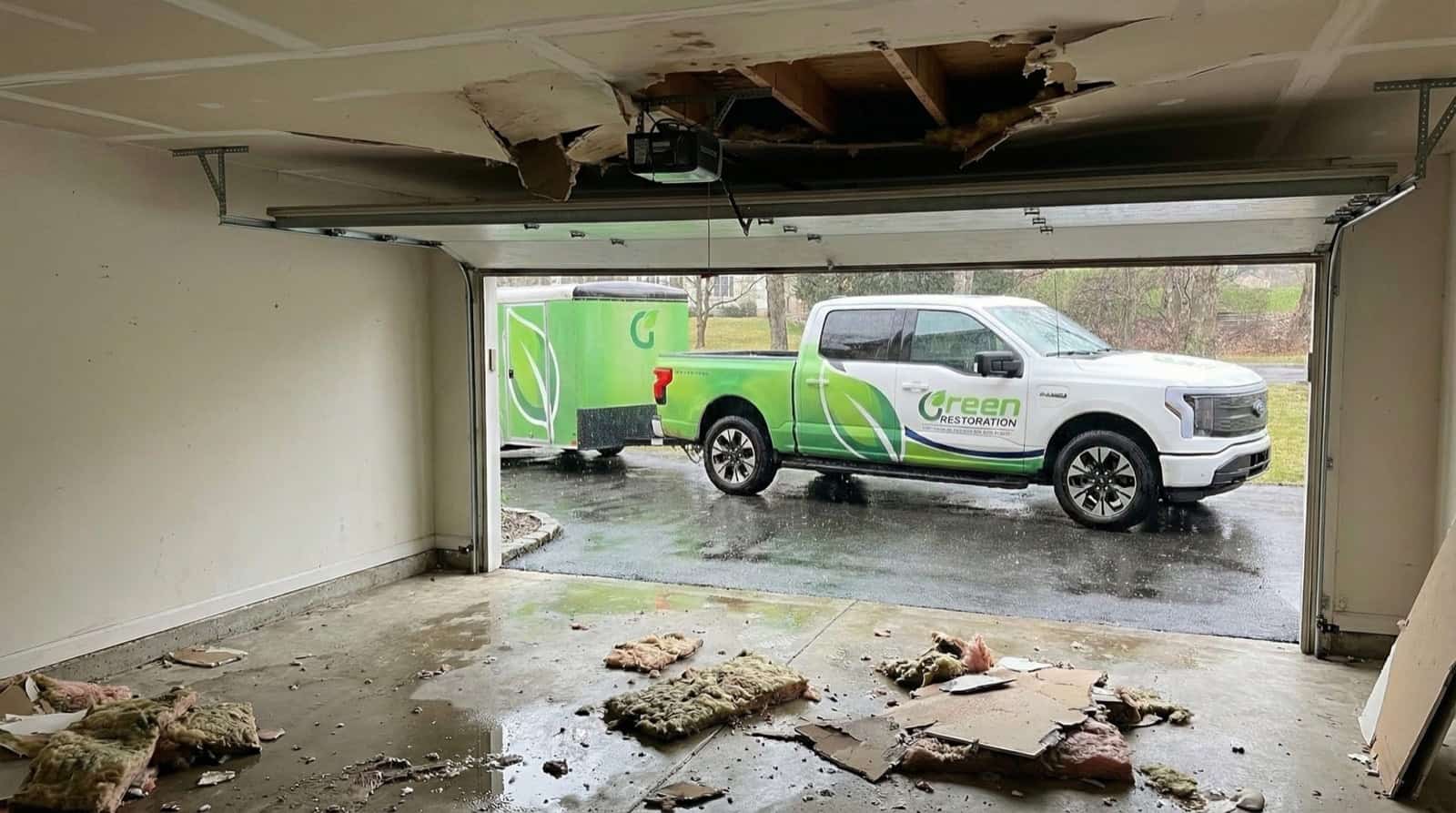
Truck-mounted Hydramaster CDS-4.8 extractors arrive same day across Deep River and the rest of the New Haven Office service area, pumping CT River tidal floods, Long Island Sound storm-surge basements, plaster-era supply-line bursts, and commercial slabs, including Category 3 black water from combined sewer overflow or coastal surge per IICRC S500-2021 §5.3 protocol.
60-min target
Burst & Frozen Pipe Cleanup
January and February freeze-thaw bursts in pre-war Victorians, shoreline cottages, 1920s capes, and older village homes across Deep River get same-day truck-mounted extraction, IICRC S500-2021 structural drying, and a fully documented scope filed directly with State Farm, Travelers, Liberty Mutual, USAA, Allstate, or Chubb.
S500 protocol
Structural Drying & Dehumidification
Phoenix Axial air movers, LGR dehumidifiers, and desiccants stage daily across CT shoreline and lower Connecticut River properties with timestamped Tramex CME 5 moisture meter logs and FLIR thermal imaging delivered to your adjuster every 24 hours until IICRC S500-2021 dry-standard clearance is independently confirmed.
3 to 7 days
Additional Water Damage Services In Deep River
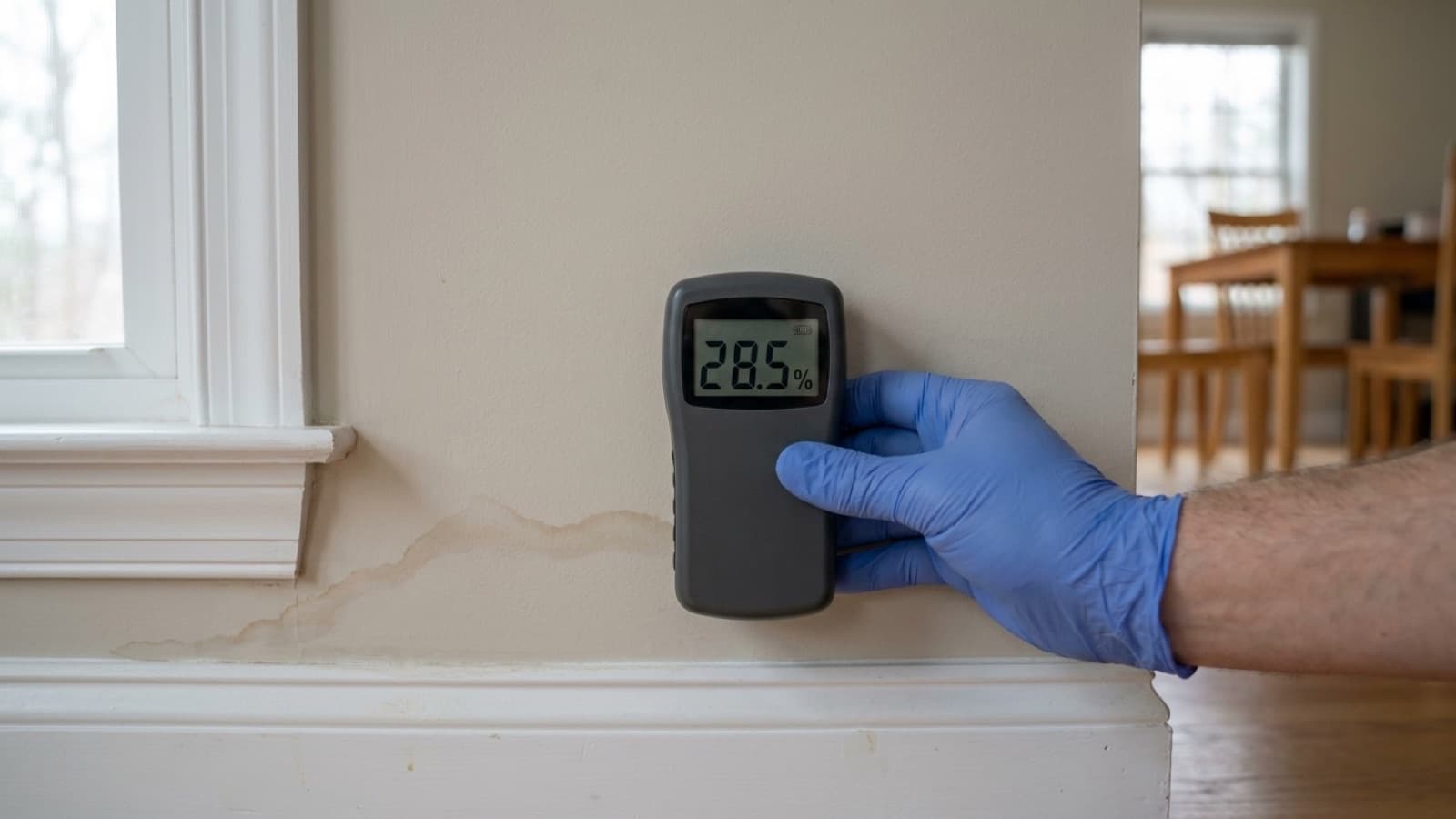
Moisture Detection & Leak Mapping
FLIR E96 thermal imaging and Tramex CME 5 moisture meters map hidden water behind plaster-and-lath walls in pre-war Deep River homes, behind vinyl-siding retrofits on mid-century ranches, and inside older party-wall cavities before any destructive opening cuts begin.
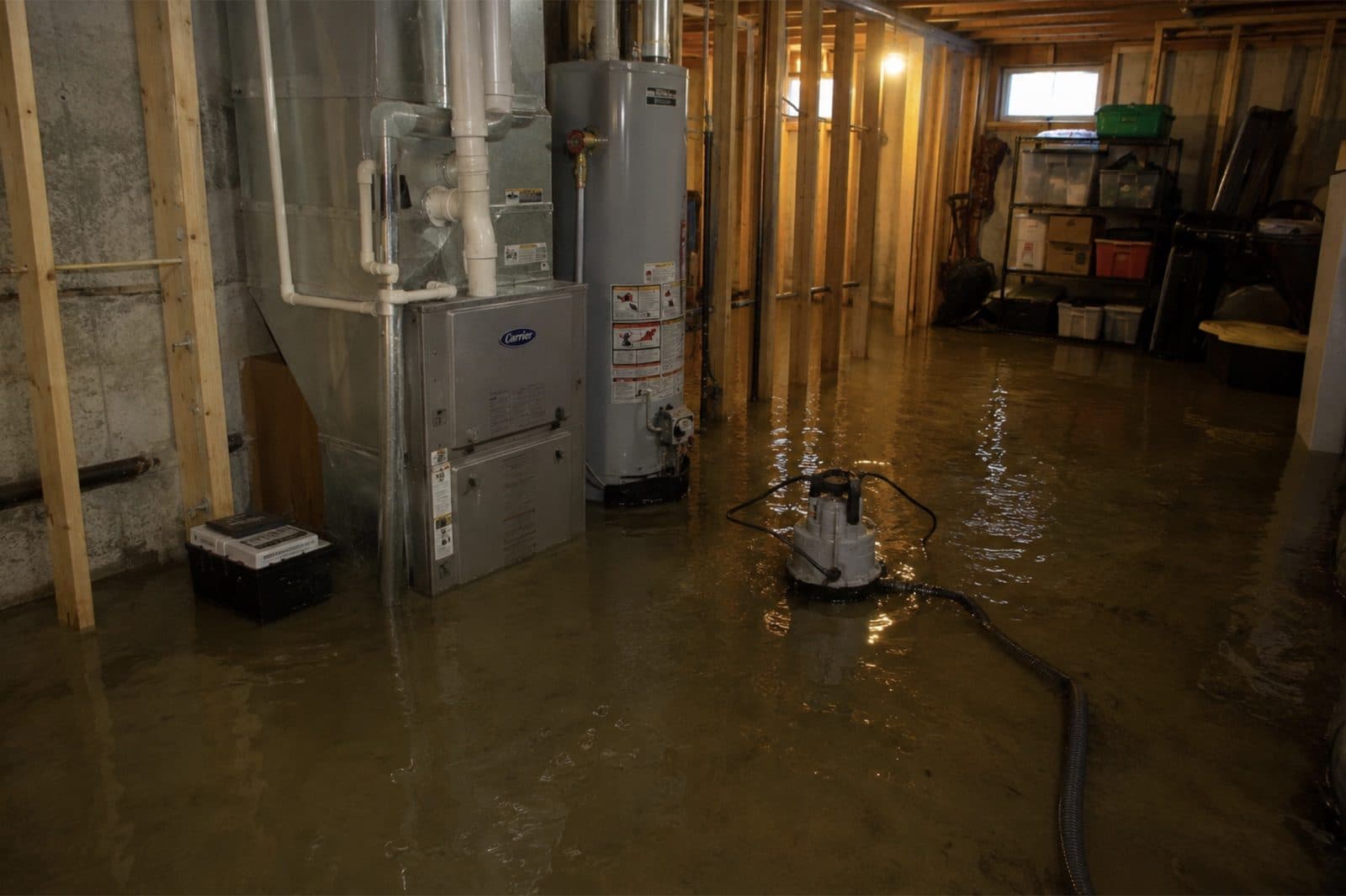
Flooded Basement Cleanup
CT River tidal-zone basements in Old Saybrook, Old Lyme, Essex, Chester, Deep River, and Portland, plus Long Island Sound shoreline cottages in Branford, Guilford, and Madison, get pumped, sanitized, dried, and documented for FEMA NFIP Write-Your-Own carriers and major insurers with full chain-of-custody from extraction through final clearance.
Sump Pump Failure Cleanup
When the sump fails during a nor-easter or tropical surge across the CT shoreline or lower CT River corridor, we pump standing water within minutes, replace failed primary and battery-backup equipment, and dry framing assemblies with EPA-registered antimicrobial treatment applied per IICRC S500-2021 standards.
Sewage Cleanup
Category 3 black water from septic surcharge on rural and shoreline lots, municipal sewer backup in Deep River, and combined-sewer overflow in pre-1900 mill-era brick stock gets IICRC S500-2021 §5.3 full-PPE remediation with negative-pressure containment, double-bagged porous waste removal, and lab-verified post-cleanup sampling.
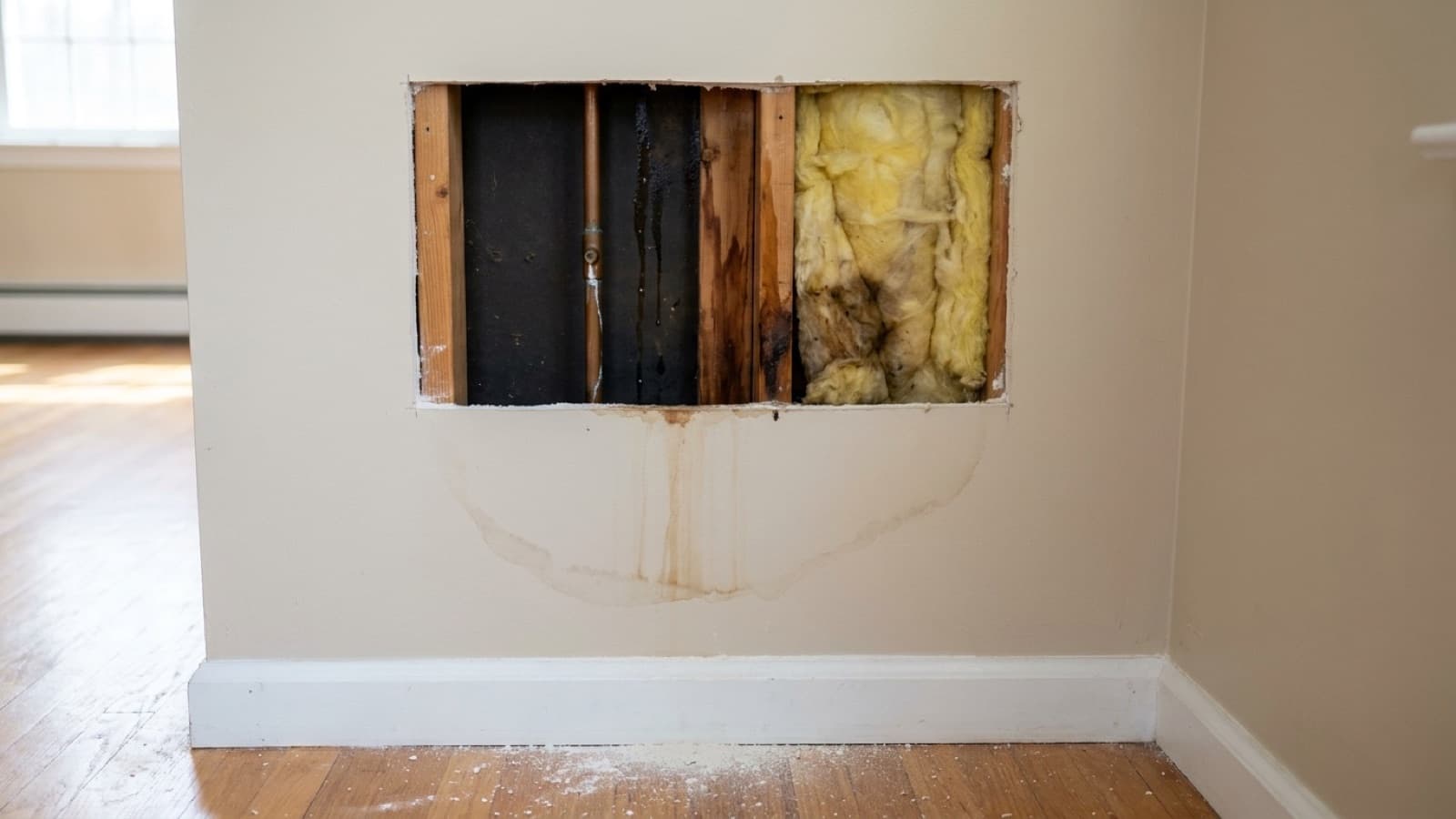
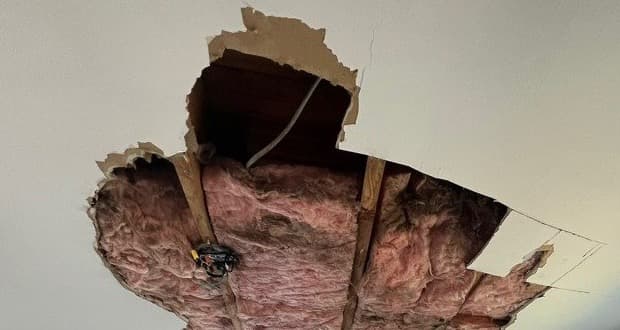
Ceiling & Drywall Water Damage Repair
Plaster ceilings in pre-war Deep River Victorians, horsehair-plaster cornices in older village homes, and drywall in 1960s split-levels get cut, dried, and replaced with paint-ready finish, photo-documented for your insurance file with daily moisture readings on every reinstalled assembly.
Hardwood Floor Drying & Salvage
Pre-war quartersawn oak floors in Deep River Victorians, original wide-plank pine in pre-1820 colonial centers, and engineered floors in modern builds get controlled-airflow drying with desiccant dehumidifiers staged within the first hour to salvage finish before cupping locks in beyond IICRC S500-2021 tolerance.
Appliance Leak Cleanup
Washing machine hoses, dishwasher supply lines, ice maker tubing, and refrigerator water connections fail without warning in Deep River kitchens and laundry rooms. We extract standing water, dry subfloors and cabinet base plates, document scope for the carrier, and coordinate appliance replacement so your kitchen returns to service quickly.
Roof Leak & Storm Intrusion Cleanup
Nor-easter ice dams, slate-roof flashing failures on pre-war Deep River Victorians, and tropical-remnant wind damage drive meltwater and rain into attic assemblies, second-floor ceilings, and exterior wall cavities. We dry roof decks, treat framing with antimicrobials, and document for full carrier roof-and-interior claim coordination.
Water Heater Failure Cleanup
Tank ruptures, pressure-relief valve failures, and supply-line bursts on residential 40 to 80 gallon water heaters release 30 to 80 gallons across utility rooms, basements, and garage slabs. Our crews extract within the hour, dry framing and slab assemblies, coordinate replacement with your plumber, and file a complete IICRC S500 scope.
Don't Wait For Water Damage To Get Worse. Every Minute Counts.
Call Now For 60-Minute Response Across Deep River And the CT shoreline and lower Connecticut River.
Green Restoration of New Haven in Deep River
Green Restoration of New Haven handles water damage restoration in Deep River, CT, where the east bank of the Connecticut River sits at the tidal-influence band that reaches inland from Long Island Sound, and Pratt Cove holds brackish water against the lower southern elevation. Owner-operated crews extract the water and dry the structure to IICRC S500 standards with documented moisture logs, under IICRC Certified Firm #70236106. Call (833) 833-3637.
Why Choose Us In Deep River
Owner-led service with 60-minute response, direct insurance billing, and eco-friendly methods across Deep River.
60-Minute Emergency Response
IICRC-certified crews arrive within 60 minutes, day or night, every day of the year.
Owner-Operated Local Crew
Every job is personally overseen by our owner, from first call to final moisture reading.
Direct Insurance Billing
We bill State Farm, Liberty Mutual, USAA, Travelers, Allstate, and Chubb directly under HIC.0668405.
EPA-Registered Antimicrobials
EPA-registered antimicrobials and Safer Choice cleaning products applied per IICRC S500 and S520 standards.
What Untreated Water Damage Costs Your Deep River Mill Village
Untreated water damage in a Deep River home becomes mold colonization within 24 to 48 hours, hardwood cupping within 12 hours, and plaster delamination within 72 hours. A $4,500 same-day extraction can become a $25,000 plaster and finish-floor rebuild after 48 hours. The earlier we measure, the smaller the rebuild.
Connecticut River Floodplain Tidal Backwater
East Bank Tidal Floodplain
Deep River sits on the east bank of the Connecticut River at the tidal-influence band that reaches inland from Long Island Sound. mapped floodplain backwater pushes Category 3 stormwater up the Deep River creek confluence and Whittlesey Brook into downtown Main Street and Bridge Street cellars during noreaster surge events, saturating pre-1820 fieldstone foundations within minutes of high tide.
Pratt Cove Tidal Wetland Seepage
Brackish Cove Wicking
Pratt Cove is a tidal wetland directly off the Connecticut River that holds brackish water against the lower elevation of southern Deep River. Capillary moisture migration through unsealed mortar joints saturates rubble-stone foundations along the cove frontage and the lower Main Street corridor faster than poured-concrete walls allow, depositing salt-laden moisture into chestnut sills.
Deep River Confluence Flash Flooding
Chester Border Headwater
The Deep River creek begins at the Chester border and flows through Plattwood Park before reaching its Connecticut River confluence inside town. Heavy rain on the upland Bushy Hill watershed surcharges the creek banks rapidly, depositing Category 3 stormwater into mill-village basements along the lower creek corridor and the Route 154 crossing within an hour of peak flow.
Pre-1820 Colonial Cellar Plaster Failure
Three-Coat Lath Cavity Drying
Pre-1820 colonial homes along Main Street and the downtown core carry three-coat plaster on wood lath behind 14-inch brick chimney stacks and fieldstone party walls. Supply-line leaks inside cavity walls migrate downward through two floors of original plaster, often invisible until ceiling staining reaches the parlor floor above the cellar.
Bushy Hill Hillside Runoff Pressure
Route 80 Watershed Channeling
Bushy Hill and the Route 80 corridor on the eastern uplands channel rain runoff downhill against 1880s rubble-stone foundations of Victorian homes between the hill and downtown. Capillary moisture migration through unsealed mortar joints saturates parlor-level wood floors faster than modern poured-concrete walls allow, especially during sustained noreaster systems.
Ivory-Comb Mill Village Combined Drainage
Category 3 Sanitary Risk
The 1880s ivory-comb factory mill village along the lower Main Street and Bridge Street corridor carries portions of an aged combined drainage system. Heavy rain can surcharge floor drains in mill-worker cottages and converted factory loft units, delivering Category 3 sanitary intrusion that triggers IICRC S500 protocols for containment, demolition, and disposal.
Why Deep River Properties Need Professional Water Damage Restoration
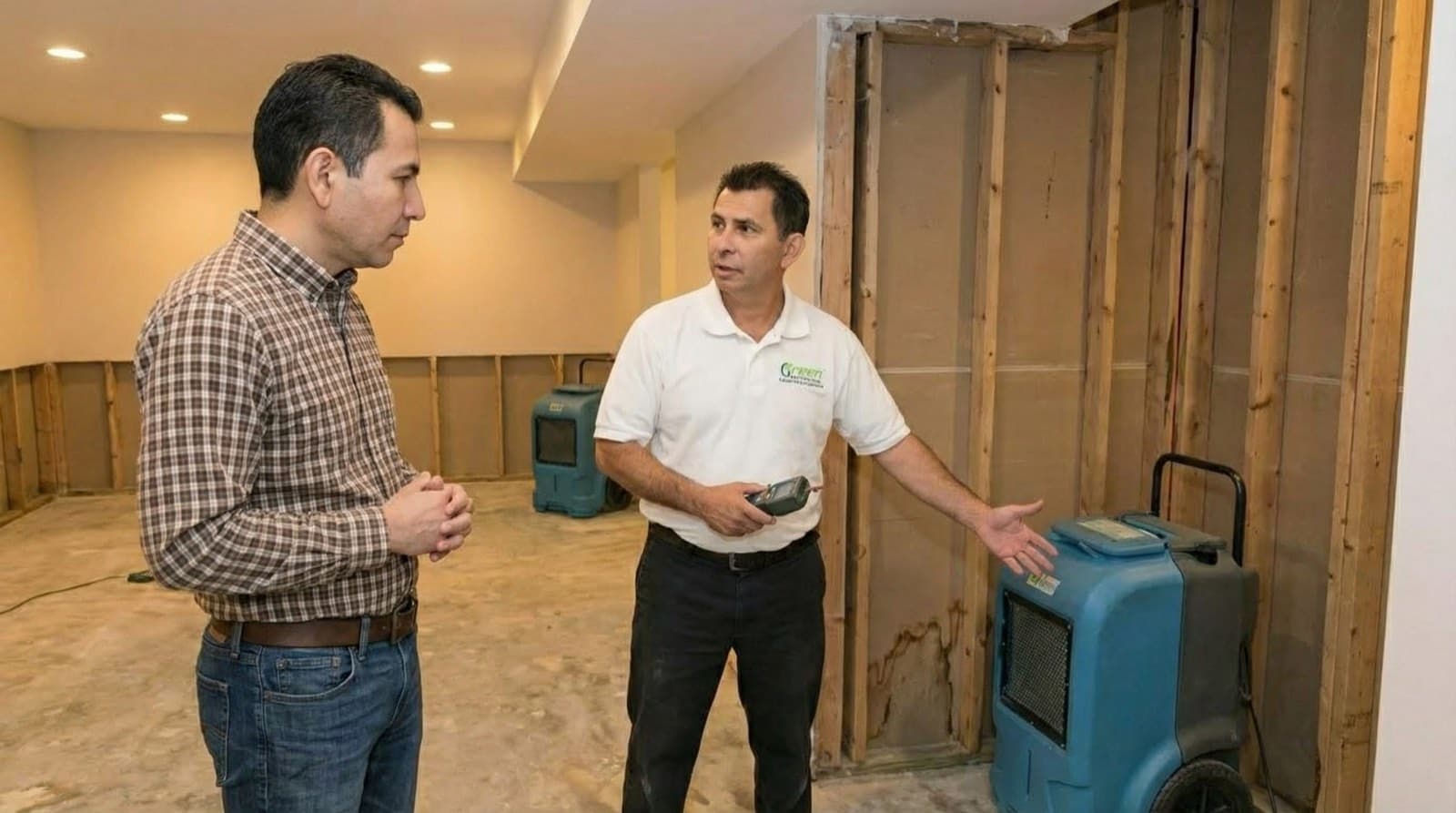
Professional water damage restoration in Deep River means IICRC S500-2021 extraction calibrated to Connecticut River mapped floodplain tidal backwater along the east bank, Pratt Cove brackish wetland seepage, Deep River creek confluence flash flooding, pre-1820 colonial plaster cavity drying on Main Street, Bushy Hill hillside runoff against Victorian rubble-stone, and ivory-comb mill village combined-drainage events. Carrier files go to State Farm, Travelers, Liberty Mutual, USAA, Allstate, and Chubb under HIC.0668405. Household fans inside pre-1820 plaster bays spread spores before containment lands.
Connecticut River Floodplain And Pratt Cove Tidal Expertise
Connecticut River mapped floodplain backwater along the east bank and Pratt Cove brackish wetland seepage introduce salt-laden, sediment-loaded Category 2 to 3 water that requires immediate IICRC S500 extraction and chloride-aware drying. Crews stage Hydramaster CDS-4.8 truck-mounts and submersible pumps from our 38 Crown Street office in New Haven, with Tramex CME 5 readings logged daily across Main Street, Bridge Street, and Route 154 addresses until S500-2021 dry standard is confirmed across every monitoring point.
Pre-1820 Colonial And 1880s Victorian Preservation
Downtown Main Street and Bridge Street properties carry pre-1820 three-coat plaster on wood lath behind brick chimney stacks and fieldstone party walls, while Bushy Hill Victorians sit on 1880s rubble-stone foundations. Drying these assemblies without surface delamination demands Phoenix Axial movers placed at calculated psychrometric intervals and FLIR thermal imaging inside lath bays. Original mahogany trim, parquet, and ivory-comb factory loft millwork get preserved through controlled cavity drying.
Mill Village And Creek-Corridor Category 3 Protocols
Lower Main Street and Bridge Street ivory-comb mill village addresses face combined-drainage surcharge that can deliver sanitary intrusion through floor drains during heavy rain. Deep River creek confluence flash flooding along the Plattwood Park corridor and Route 154 crossing introduces Category 3 stormwater into mill-worker cottage cellars. Both scenarios require negative-pressure HEPA containment, double-bag disposal of porous materials, and S500 documentation before drying begins.
Insurance Documentation For Deep River Carriers
Connecticut River valley homeowners commonly carry State Farm, Travelers, Liberty Mutual, USAA, Allstate, and Chubb policies that require IICRC-standard scope documentation, daily psychrometric logs, and moisture readings at every affected assembly. Our owner, IICRC AMRT and WRT certified, signs every carrier file under HIC.0668405 from our New Haven office. We are not licensed public adjusters and do not negotiate claims on your behalf.
The Water Damage We See Most in Deep River
In Deep River the usual flood driver is the tidal Connecticut River where the Deep River empties into it, so we classify every loss under the IICRC S500 standard and document it for your insurer. These are the water-damage patterns we see most often along the lower valley.
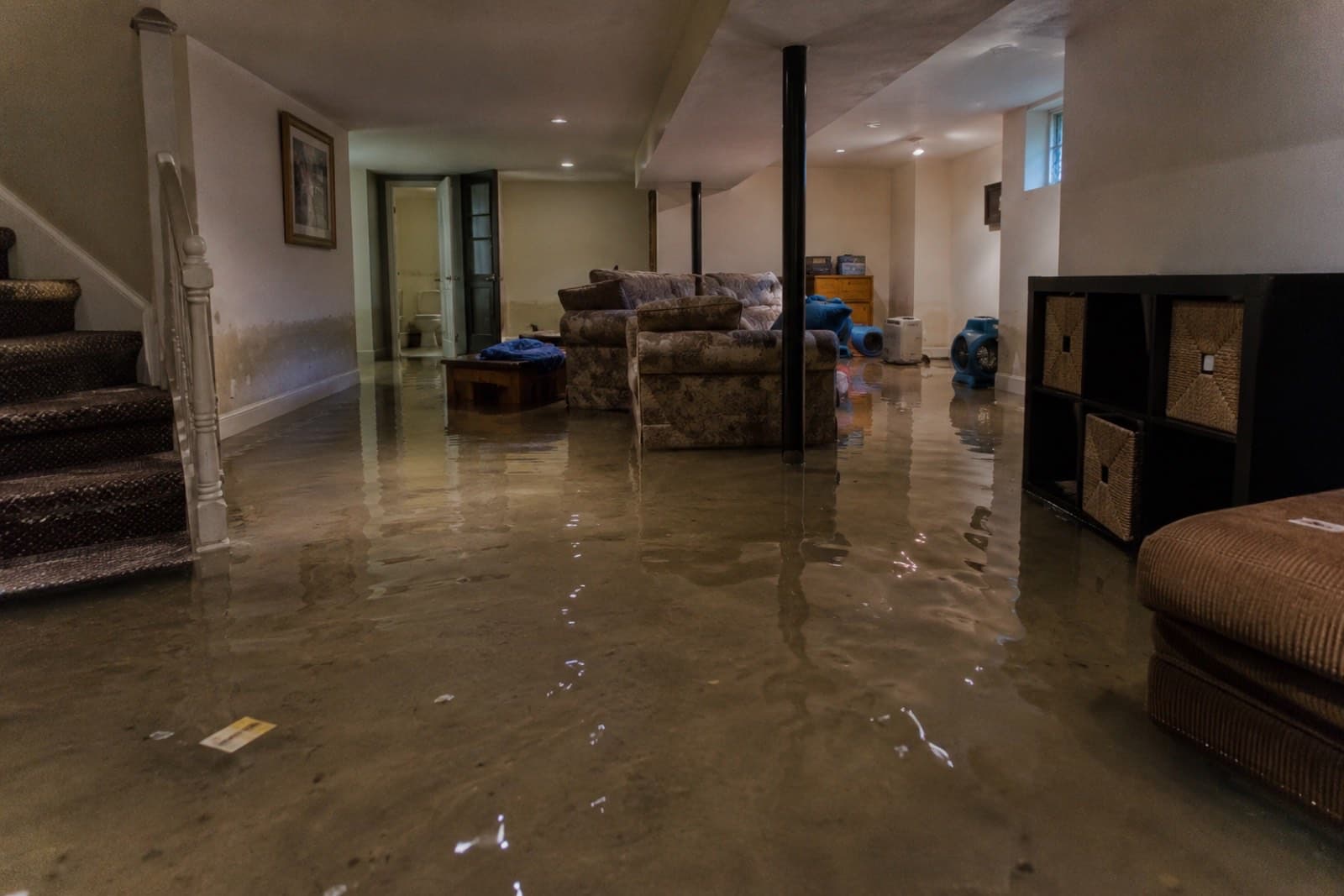
Flooded Basement, Fully Dried
In Deep River, this usually traces to the tidal Connecticut River corridor.
A failed sump pump, a burst supply line, or storm-driven groundwater can leave inches of standing water sitting against framing, drywall, and stored belongings. The longer it sits, the further moisture wicks up the walls and the faster the Category of the water deteriorates.
Our IICRC-certified technicians classify the water under IICRC S500, then pull the standing water down to the slab with truck-mounted and submersible extraction. We open wet wall cavities, set air movers and LGR dehumidifiers for structural drying, and apply an antimicrobial per IICRC S520 where Category 2 or 3 water is involved.
We take daily Tramex moisture readings and dry the assembly to the ANSI/IICRC dry standard, not to a calendar. Every reading, photo, and scope line is documented for your insurer so the claim moves on facts, not guesswork.
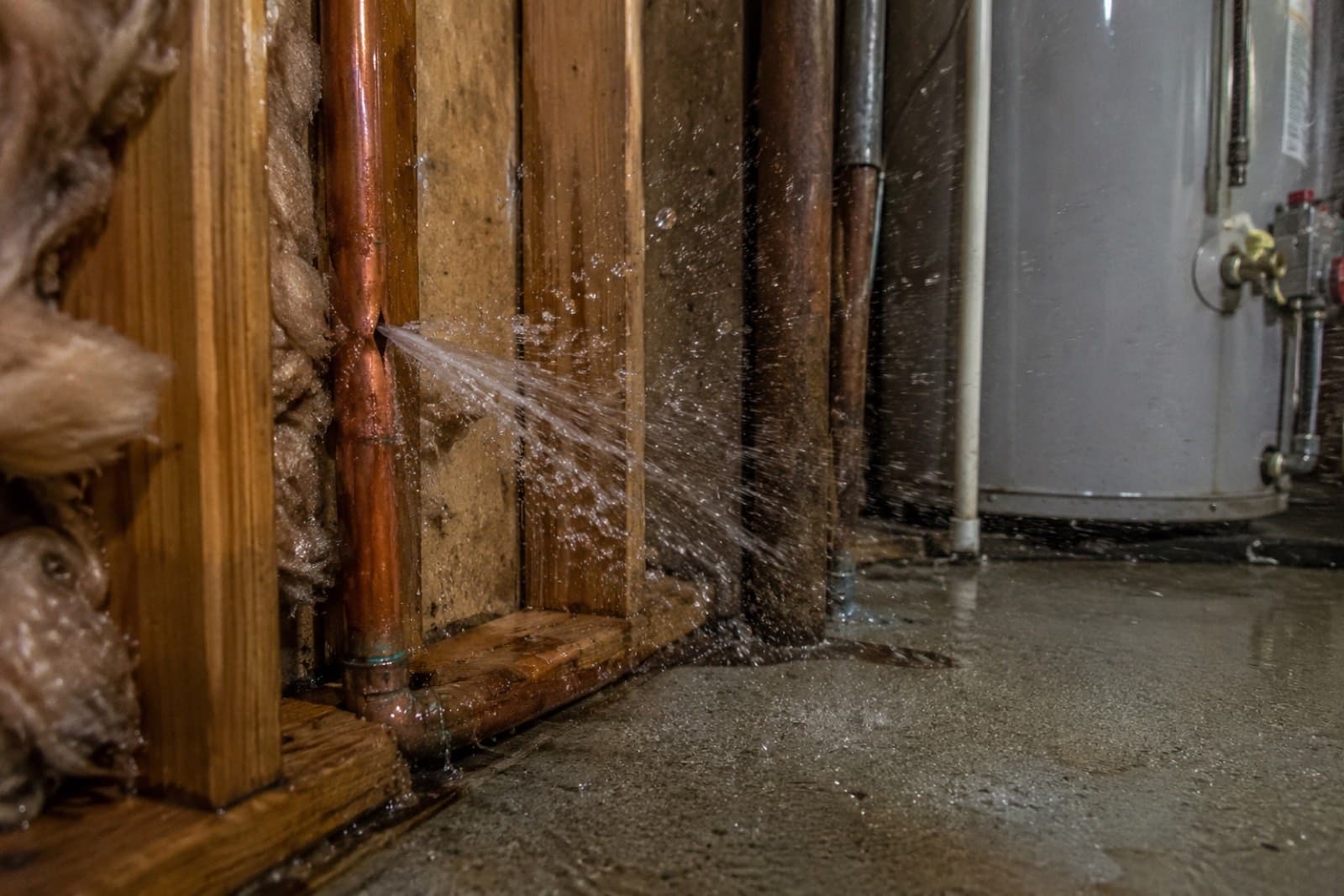
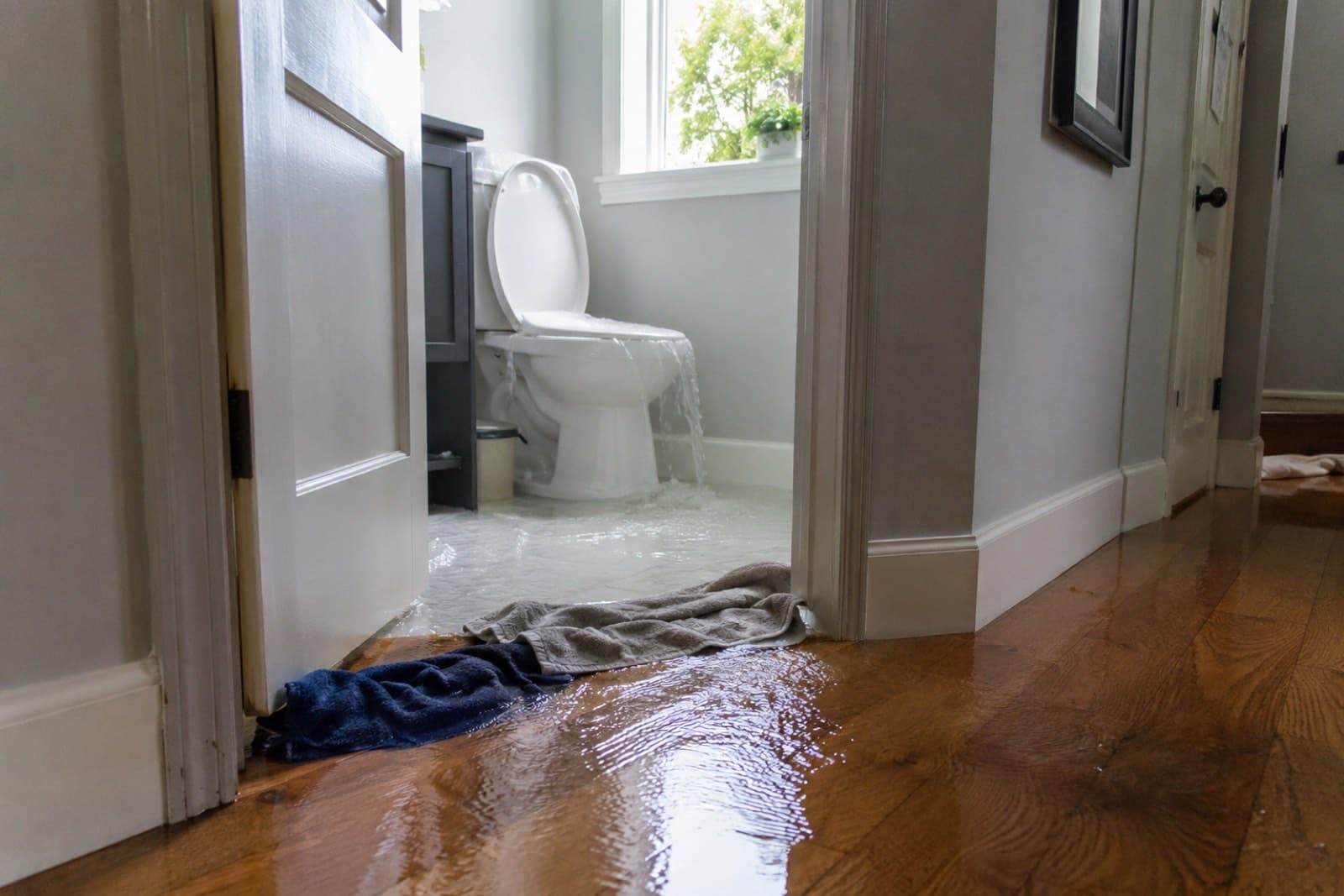
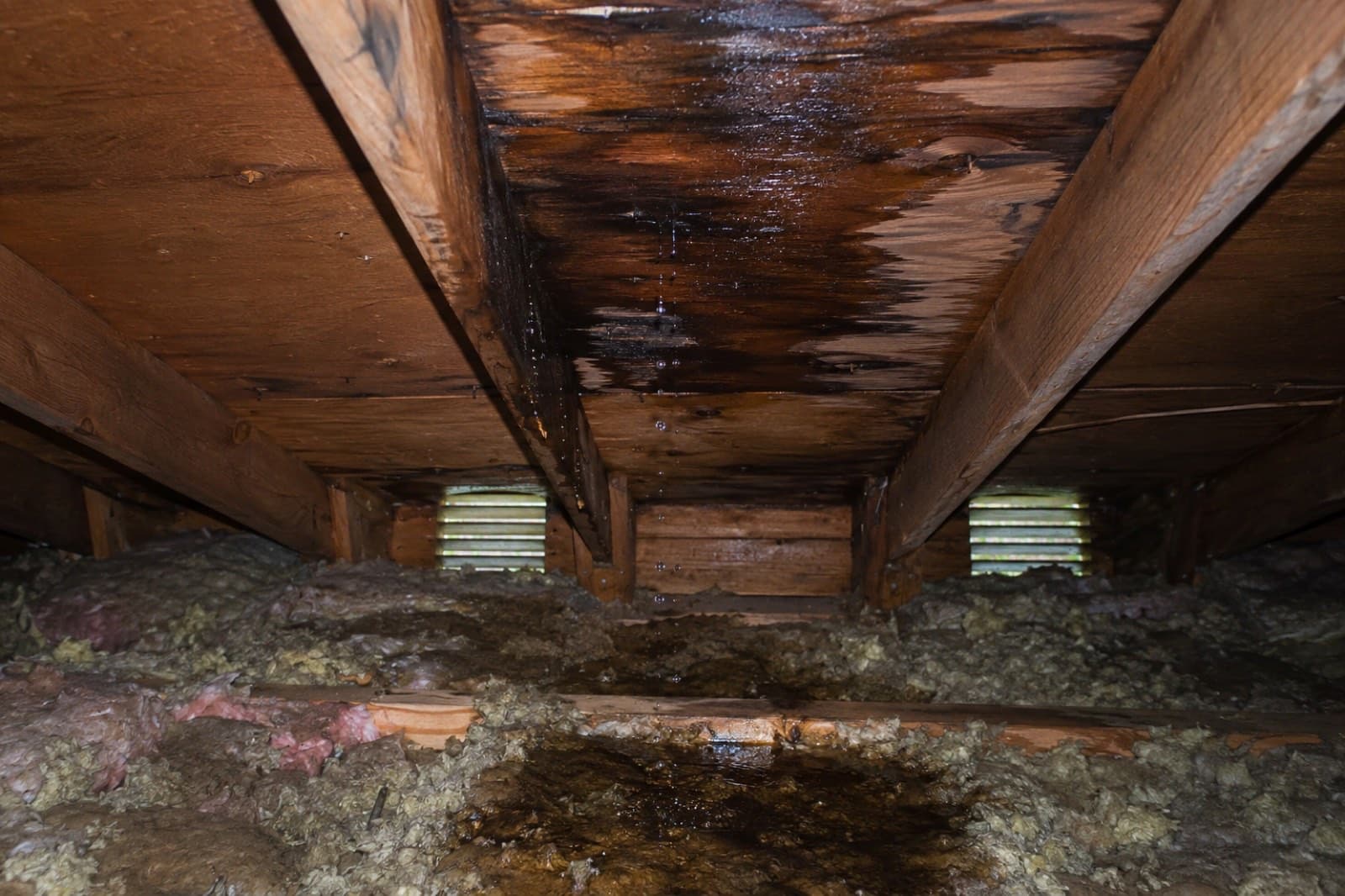
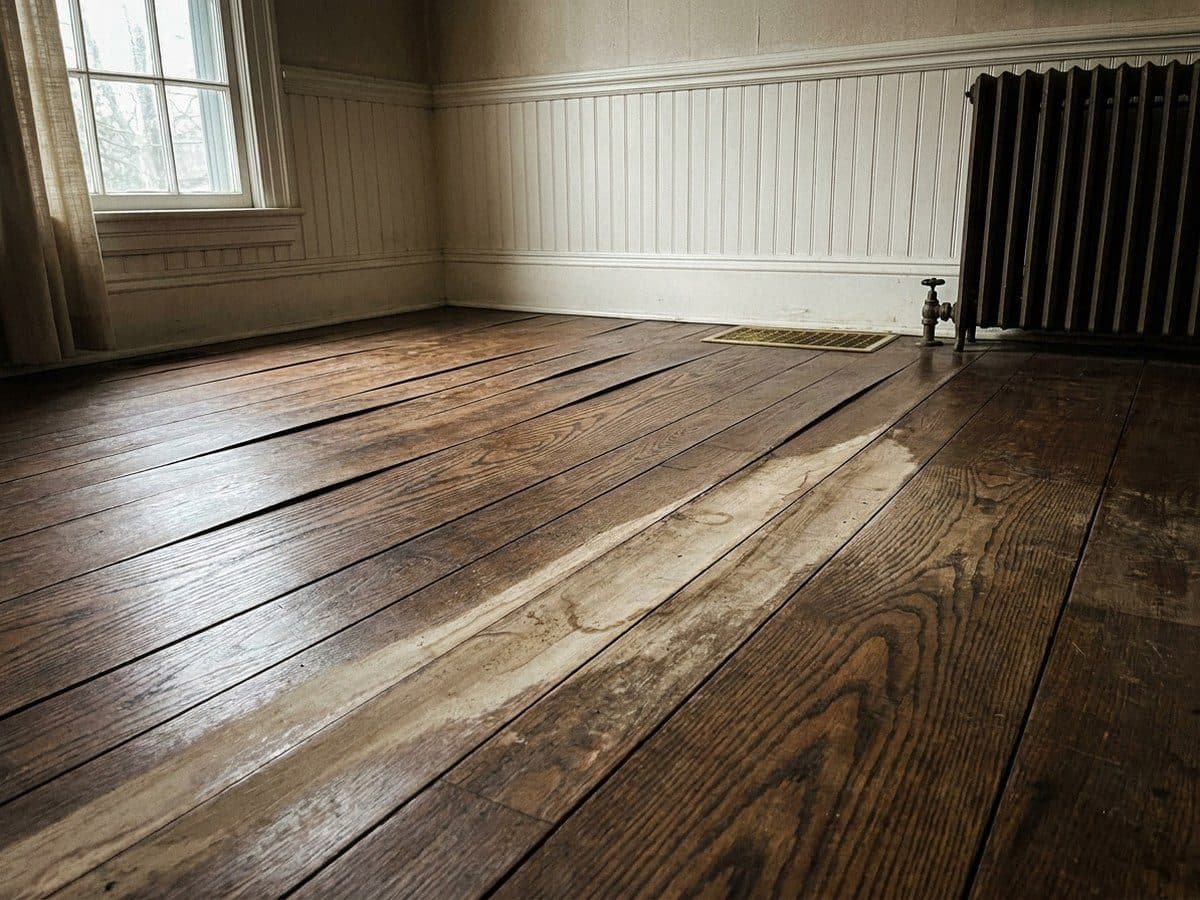
Scenario 1 of 5: Basement Flooding
What To Do After Water Damage In Deep River, CT
Deep River water emergencies cost less when extraction and drying start in the first hour. Use these IICRC-aligned steps the moment a Connecticut River backwater, Pratt Cove seepage, or Bushy Hill runoff event begins. According to Green Restoration project records, floor assemblies and subfloor in Deep River are monitored separately from wall cavities, because the two dry at different rates in 1635 to 1947 to 1975 construction.
What To Do Immediately
Stop the source first. The main shut-off sits in the cellar near the chimney stack in Main Street pre-1820 colonials or in the utility closet of converted Bridge Street ivory-comb loft units.
Trip the breaker before walking any downtown Main Street cellar or Bushy Hill Victorian parlor floor with standing water. Electrical hazard travels faster than visible damage in older Deep River wiring.
Dial (833) 833-3637 for same-day dispatch from our 38 Crown Street New Haven office. Every minute of delay adds drying time and pre-1820 colonial scope cost.
Lift antiques, electronics, and original Main Street period millwork to a dry upper floor. Place aluminum foil under wood legs to prevent staining on quartersawn parquet.
Wide and close-up photos before extraction. Middlesex County carriers require pre-mitigation documentation tied to the original moment of loss for Connecticut River corridor claims.
If outdoor humidity is below indoor humidity, brief cross-ventilation through Bushy Hill Victorian transoms reduces moisture load before professional drying lands.
What NOT To Do
Box fans push spores across pre-1820 plaster lath bays on Main Street before professional containment arrives. Wait for IICRC-grade air movers and HEPA negative-air staging.
Submerged debris and unknown electrical loads cause injuries on downtown Deep River cellar steps and Bridge Street mill-loft slab levels. Cut power before any entry.
Saturated wool and pad from a Connecticut River mapped floodplain event can weigh hundreds of pounds and spread brackish Category 2 contamination room to room during removal.
Forced-air spreads spores from mill-village combined-drainage events into dry Bushy Hill rooms. Shut HVAC down until containment is staged by the crew.
Delayed reporting voids coverage in many Deep River carrier policies. Notify your adjuster within hours and have our scope file ready for same-day submission.
Surface bleach masks visible colonies but leaves spores deep in chestnut joists and pre-1820 plaster lath. Professional IICRC S520 remediation is required for safe clearance.
Our Water Damage Restoration Process In Deep River, CT
From the first call to final walkthrough, every step is documented, insured, and owner-supervised.
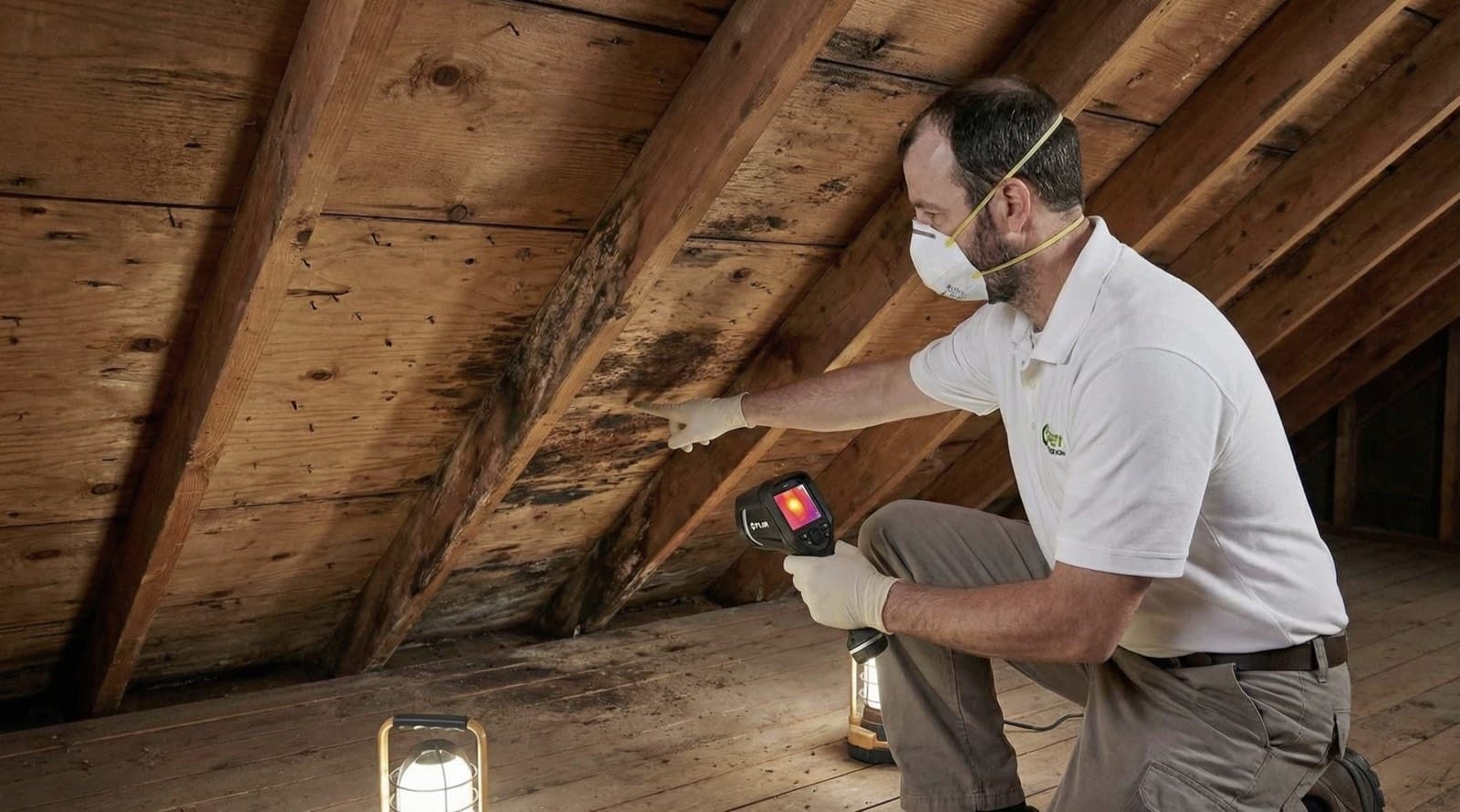
Water Damage Restoration Coverage In Deep River, CT
Documented water damage restoration for Deep River homes and Main Street businesses, from the downtown Connecticut River frontage and Pratt Cove to Bushy Hill, Plattwood Park, and the Bridge Street mill village, with crews arriving from our 38 Crown Street New Haven office along Route 154 and Route 80.
Green Restoration provides certified water damage restoration in Deep River, CT 06417, serving Downtown Main Street, Bridge Street, Bushy Hill, Pratt Cove, Plattwood Park, the Mill Village, the Route 154 and Route 80 and Route 145 corridors, the Connecticut River frontage, the Deep River creek confluence, and the Whittlesey Brook drainage. With direct access via Route 154, Route 80, Route 145, and Interstate 95 through the Connecticut River valley, our IICRC-certified technicians arrive from our 38 Crown Street New Haven office day or night.
We handle Connecticut River mapped floodplain tidal backwater along the east bank, Pratt Cove brackish wetland seepage, Deep River creek confluence flash flooding, pre-1820 colonial plaster failures on Main Street, Bushy Hill Victorian hillside seepage, and ivory-comb mill village combined-drainage events. We submit our scope of work directly to your insurer. We are not licensed public adjusters and do not negotiate claims on your behalf.
As locally owned and operated under HIC.0668405, we know what 1635-founded, 1947-separated Deep River properties face: pre-1820 three-coat plaster on wood lath behind brick chimney stacks and fieldstone party walls along Main Street and the downtown core, 1880s rubble-stone foundations on Bushy Hill Victorians along Route 80, chestnut-joist colonials sitting inside the Connecticut River mapped floodplain tidal corridor, 1880s ivory-comb factory mill-village cottages and converted loft units along Bridge Street, and combined-drainage surcharge along the lower mill-village frontage. Our owner and crews deliver IICRC-standard documentation that adjusters from State Farm, Travelers, Liberty Mutual, USAA, Allstate, and Chubb require. Direct carrier billing keeps the claim moving across the Connecticut River east-bank neighborhoods.
See typical Deep River water damage pricing in 60 seconds. Category 1 to 3.
Water Emergency In Deep River?
Call now for immediate dispatch, 24/7/365.
(833) 833-3637IICRC Certified · Licensed & Insured · CT HIC.0668405
All Towns Served By Green Restoration Of New Haven From Our 38 Crown Street Office Across The Connecticut Shoreline And Lower Connecticut River Valley.
Why Deep River Water Damage Is Different
Local drainage, housing stock, and foundation construction shape every restoration scope.
Free On-Site Assessment
Not sure what you are dealing with in Deep River?
We establish the scope on site, before anything is quoted.
(833) 833-3637How Deep River Geography Shapes A Restoration Scope
Deep River water damage restoration is the rapid extraction, structural drying, and antimicrobial treatment of properties affected by Connecticut River mapped floodplain tidal backwater along the east bank, Pratt Cove brackish wetland seepage at the lower elevations, Deep River creek confluence flash flooding through Plattwood Park and the Route 154 crossing, pre-1820 colonial plaster failure on downtown Main Street, Bushy Hill Victorian hillside seepage against 1880s rubble-stone along Route 80, and combined-drainage surcharge through the Bridge Street ivory-comb mill village. Class 4 drying for pre-1820 colonial chimney-cavity plaster and 1880s rubble-stone hillside Victorian foundations.
According to Green Restoration documentation records, cavity drying in Deep River pre-1820 construction requires daily Tramex CME 5 readings until IICRC S500-2021 dry standard is verified across every assembly.
24/7 Water Damage Response In Deep River, CT
Our certified water damage crew dispatches across Deep River around the clock. Most calls are on site within the hour.
Branford, Guilford, Madison, and Westbrook Long Island Sound shoreline cottages share coastal-surge exposure during nor-easters and tropical remnants. We extract Category 3 brackish surge, dry pre-war shingled cottages, and document salt-deposition per IICRC S500 for adjuster review.
Old Saybrook, Old Lyme, Essex, Chester, Deep River, and Portland sit along the lower Connecticut River and its Salmon River + Eight Mile River tributaries. Tidal flooding and ice-jam surge regularly enter pre-1820 colonial basements. We pump, dry, and clear with NFIP carrier coordination.
Our 38 Crown Street New Haven office dispatches IICRC-certified crews across the New Haven Office service area, from downtown New Haven and East Rock to the CT shoreline and lower Connecticut River. Truck-mounted extractors, LGR dehumidifiers, and submersibles staged for 60-minute emergency response.
Our owner personally leads every water-damage scope across New Haven, the CT shoreline, and the lower Connecticut River. Documented scope, daily moisture logs, and clearance filed with major carriers, State Farm, Travelers, Liberty Mutual, USAA, Allstate, Chubb.
About Green Restoration In Deep River, CT
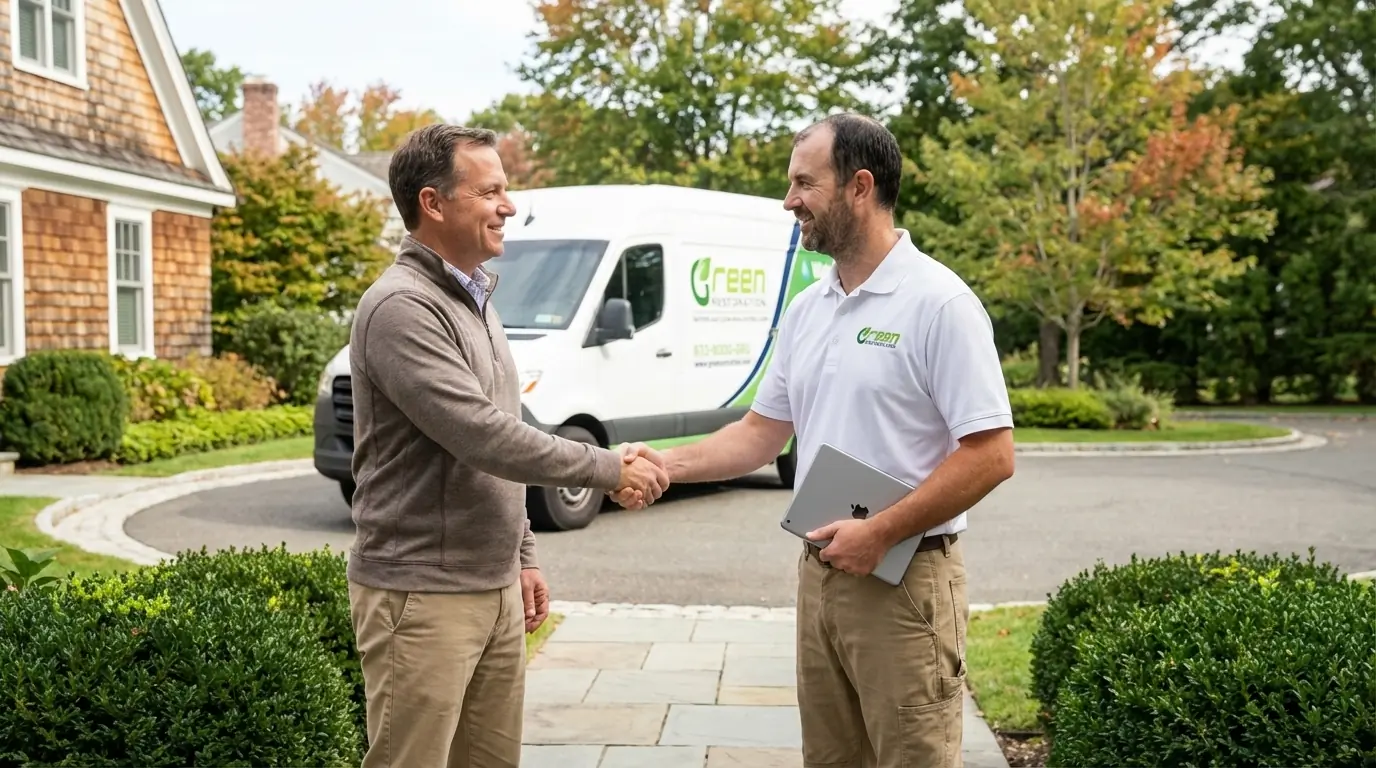
Your Deep River Water Damage Specialists Since 2014
Green Restoration provides IICRC-certified water damage restoration for homes and businesses in Deep River, CT and the CT shoreline and lower Connecticut River, owner-operated. Our process focuses on truck-mounted extraction, accurate moisture mapping with Tramex CME 5 meters and FLIR thermal imaging, controlled structural drying with Phoenix Axial movers and LGR dehumidifiers, and full insurance documentation. We work with property owners and major carriers to document scope clearly and restore properties the right way, without unnecessary steps or delays.

“At Green Restoration of New Haven, every Deep River water damage call gets my direct oversight. With 15+ years in restoration and IICRC AMRT plus WRT certifications, I personally lead extraction, drying, and clearance on every job.”
Trusted by Families in Deep River &
Middlesex County
4.8 out of 5, Rated by your neighbors on Google
A pipe broke at two in the morning. I called a few different services, but only the New Haven Green Restoration team picked up their emergency line. They came early in the morning, worked hard, and even wrote down notes for our insurance claim. I really think you should use them.
Micki Kraft
Water DamageI called Green Restoration for water damage in my basement. They came and did a free inspection the same day. I will definitely use this company. You guys are the best.
Hanna Beaird
Water DamageI was very happy with the work Green Restoration did to my parents house. I found this company online and they arrived in less than half an hour. Basement was flooded and had 6 inches of water. They did all the extraction and set up a lot of fans and drying equipment. Job was done in 4 days. I will recommend them.
Angela Borowik
Water DamageWe had mold due to a water leak in our half finished basement. David and his crew did a great job, we were very satisfied. I would highly recommend Green Restoration to anyone.
Tanya M.
Water DamageHow Much Does Water Damage Restoration Cost In Deep River, CT?
Pricing depends on IICRC S500 water category. Most Deep River claims settle in the Category 2 range of $2,500 to $8,500. See typical ranges below.
Category 1, Clean Water
$1,500 to $4,500
Burst supply line, ice maker leak, appliance overflow, isolated single-area cleanup
Category 2, Gray Water
$2,500 to $8,500
Washing machine, dishwasher, toilet overflow, sump failure, basement scope
Category 3, Black Water
$7,500 to $50,000+
Sewer backup, storm surge, whole-house failure, multi-room containment
Priced by IICRC S500 water category. Read the full water damage cost guide.
Deep River Water Damage Restoration FAQs
Clear answers about emergency water removal, structural drying, insurance documentation, and restoration costs in Deep River, CT.
Same-day dispatch across Deep River and the CT shoreline and lower Connecticut River 24/7. Our IICRC-certified crews carry Hydramaster CDS-4.8 extractors, Phoenix Axial air movers, and LGR dehumidifiers so extraction begins on arrival. Call (833) 833-3637 any time, including holidays and during nor-easters.
Deep River water damage cost depends on IICRC S500 water category. Category 1 clean water from burst supply lines, ice maker leaks, or appliance overflow runs $1,500 to $4,500. Category 2 gray water from washing machines, dishwashers, toilet overflow, or sump failure runs $2,500 to $8,500, which is where most Deep River claims settle. Category 3 black water from sewer backup or storm surge requiring multi-room containment ranges $7,500 to $50,000+. Final cost depends on affected square footage, drying duration, hardwood and plaster salvage scope, and finish restoration. We provide a written estimate on site after Tramex CME 5 moisture meter readings confirm the full scope.
Most Connecticut homeowner policies cover sudden and accidental water damage such as burst pipe repair, sump failure, or appliance leak. Long-term seepage and floodplain surge require separate flood insurance through the National Flood Insurance Program. Green Restoration submits IICRC S500 documentation, daily moisture logs, and clearance reports directly to your carrier under our owner's WRT credential. We are not licensed public adjusters and do not negotiate claims on your behalf.
Most Deep River water damage projects take 4 to 7 days for structural drying, verified by daily moisture meter readings per IICRC S500 standards. Pre-war colonials with plaster-and-lath walls can extend to 8 to 10 days because plaster holds moisture longer than drywall. Modern drywall homes dry faster. Commercial spaces with multi-tenant chases get coordinated drying with property-manager workflows.
Yes. Category 3 black water from septic surcharge or municipal sewer backup gets IICRC S500 full-PPE remediation. Affected porous materials are double-bagged and removed, framing is treated with EPA-registered antimicrobials, and post-cleanup lab sampling confirms safe re-occupancy. All work documented for your insurance carrier.
Shut off the water supply at the main valve if the source is a burst pipe. Turn off electricity to affected areas at the breaker panel if you can do so safely. Move antiques, electronics, and important documents to a dry upper floor. Place aluminum foil under wooden furniture legs to stop staining. Do not use household fans, which spread contaminants and accelerate mold growth before professional containment arrives.
Under IICRC S520-2024 guidelines, visible mold colonization can begin within 24 to 48 hours in humid conditions. The Connecticut climate keeps baseline indoor humidity elevated in Deep River, particularly in unventilated fieldstone and brick basements. Green Restoration begins moisture mapping on arrival to establish drying benchmarks and targets equilibrium moisture content within the IICRC 3 to 5 day window for Class 2 residential losses. Delaying extraction by even 24 hours significantly expands the mold remediation scope and claim cost.
Green Restoration is IICRC-certified, locally serving Deep River and the CT shoreline and lower Connecticut River, and owner-operated and personally overseen on every job. We carry truck-mounted extractors, LGR dehumidifiers, and Tramex moisture meters on every truck. Our direct insurance billing, 60-minute response, and 24/7 availability at (833) 833-3637 mean water damage is extracted, dried, and documented with one call.
More Green Restoration Services in Deep River
The same local Green Restoration team covers all of these across Deep River. One number for every emergency and every cleanup.

