Crawl Space Cleanup & Encapsulation Services in Greenfield, MA
North County Cape And Ranch Crawl Space Encapsulation IICRC S520 Certified • IICRC Certified Firm • 60-Min Response
 IICRC Certified
 Eco-Friendly Solutions For Healthier Spaces
Reviewed by David Megeneishvili·Fully Insured·IICRC AMRT + WRT
What Is Crawl Space Encapsulation?
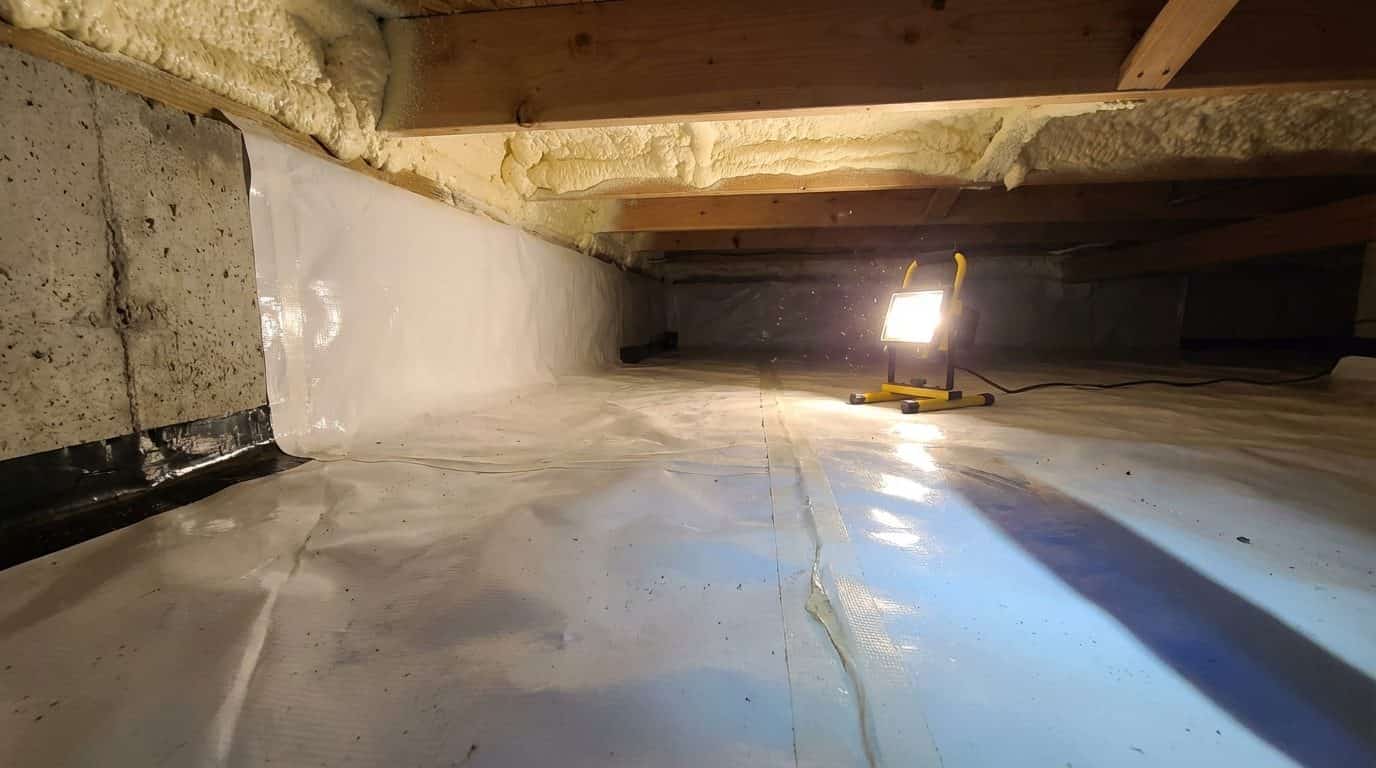
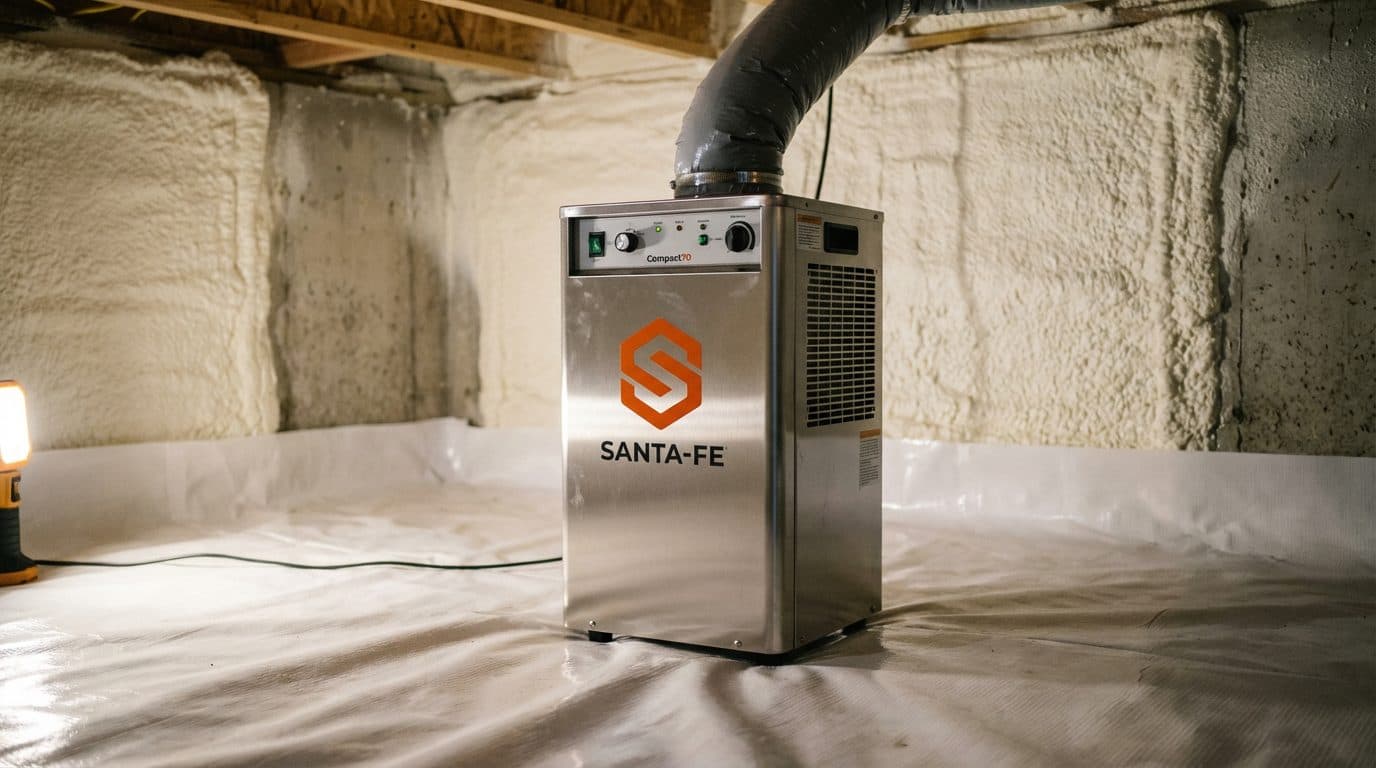
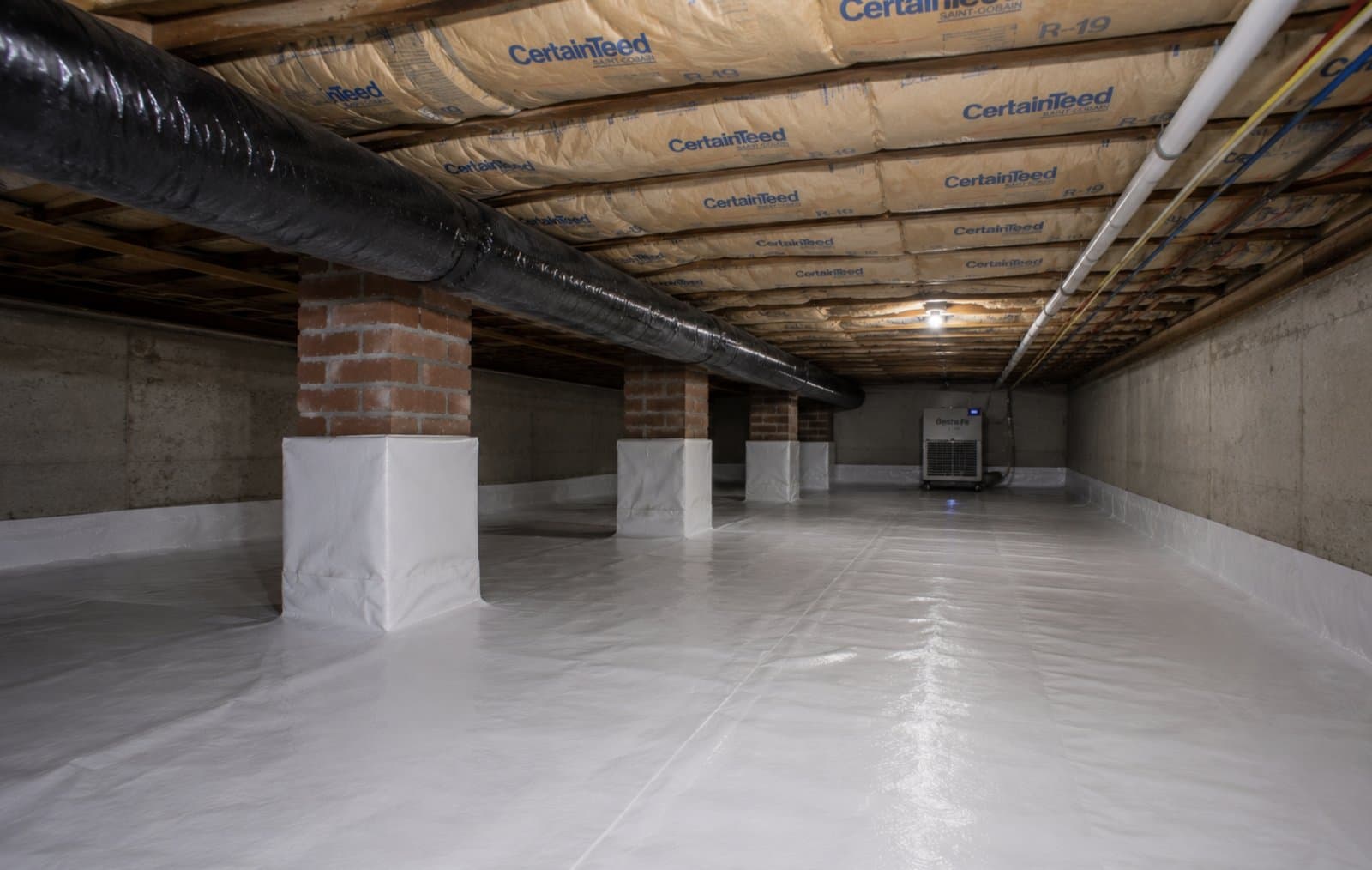
Crawl space encapsulation is the process of sealing a crawl space from ground moisture by installing a reinforced vapor barrier across the floor and up the walls, integrating a commercial dehumidifier sized to the cubic footage, and maintaining relative humidity below 55% per ASHRAE 160 guidelines.
In Greenfield, MA, Green Restoration runs encapsulation last. The space is first inspected with Tramex moisture meters and humidity sensors, cleaned of rodent contamination, mold, and debris, dried with HEPA-filtered negative-air machines, and only then sealed with 12-mil reinforced Class I vapor retarder per ASTM E1745 with seam taping and wall-up coverage. The result is a conditioned environment that stops moisture-driven rot, mold colonization, pest reentry, and energy loss through the floor system.
Why Greenfield Sits in Climate Zone 5
IECC International Energy Conservation Code
IECC Climate Zone 5A across the Pioneer Valley and most of western Massachusetts.
The Pioneer Valley sits in IECC Zone 5A with a long heating season, sustained summer humidity, and freeze-thaw loading, so the 2022 Massachusetts Energy Conservation Construction Code drives a Class I vapor retarder and conditioned encapsulated crawl spaces as the durable build.
Complete Crawl Space Cleanup & Encapsulation
Crawl space work sized for the county seat. Post-war capes and ranches on the east side hold most of the crawl spaces in Greenfield. The downtown grid and High Street carry Victorian stone cellars. The Green River corridor keeps the west side wet. Winter runs colder here than the lower valley, and the scope reflects that.
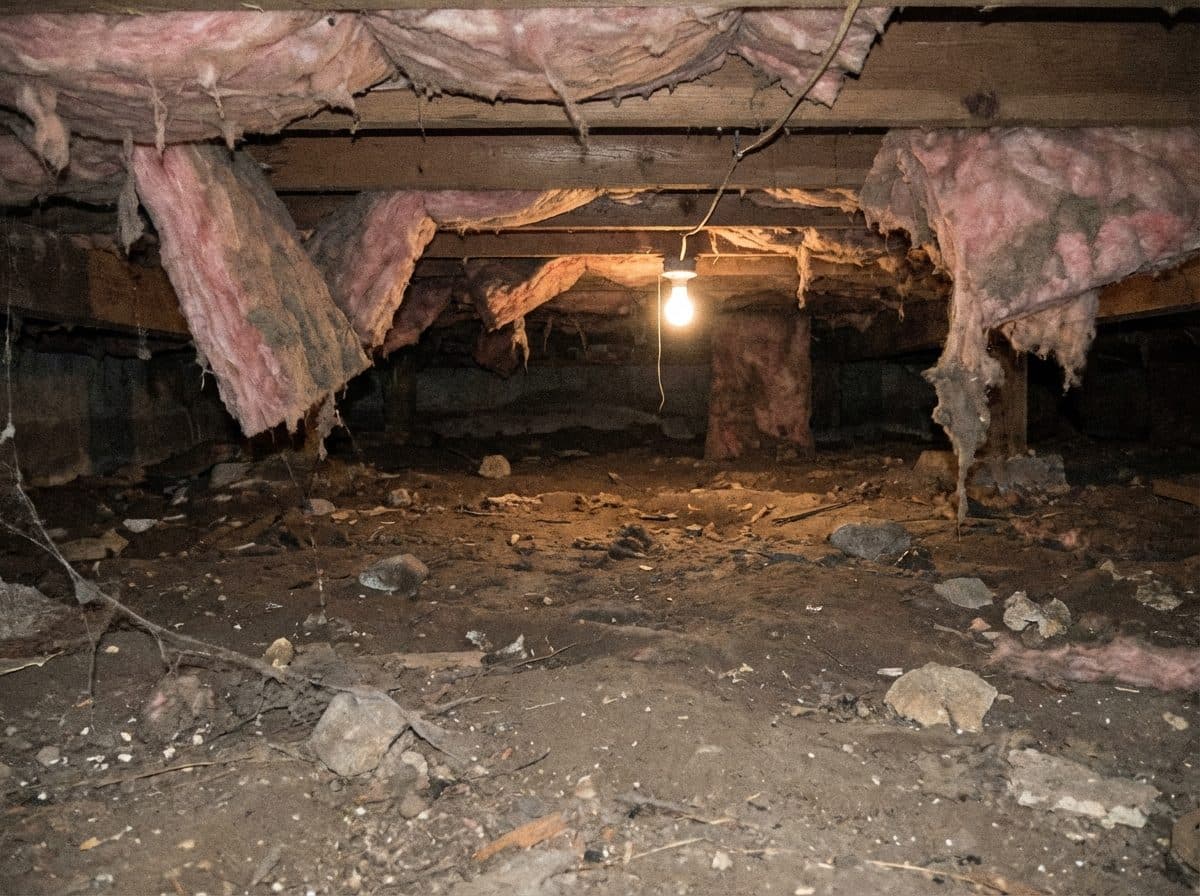
Rodent Cleanup & Contamination Removal
HEPA air scrubbing and sealed Tyvek containment remove droppings, nesting debris, and contaminated insulation. EPA-registered antimicrobial applied to all exposed framing before sign-off.
Tyvek Containment · HEPA Air Scrubbers
Full Encapsulation & Sealing
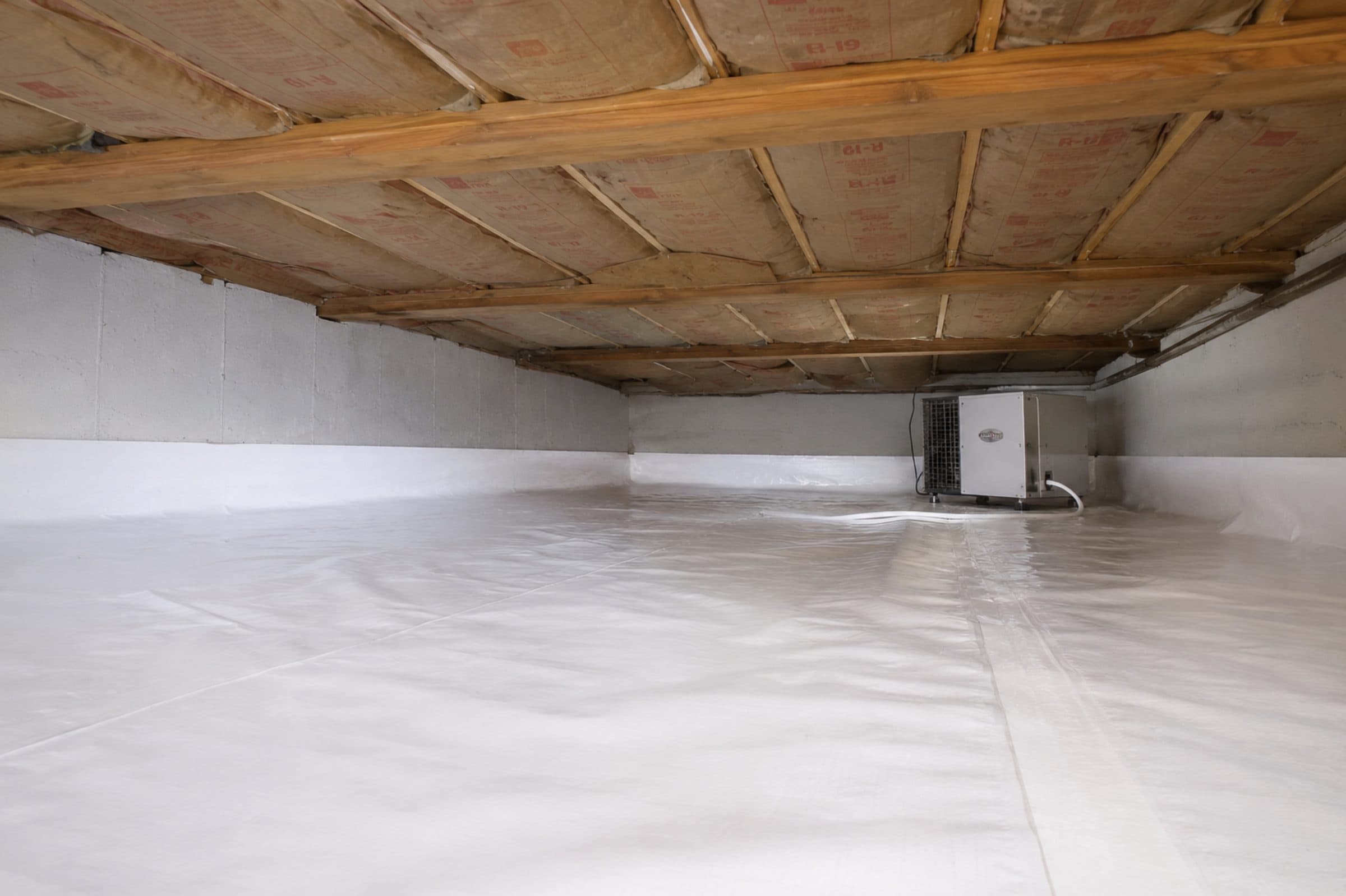
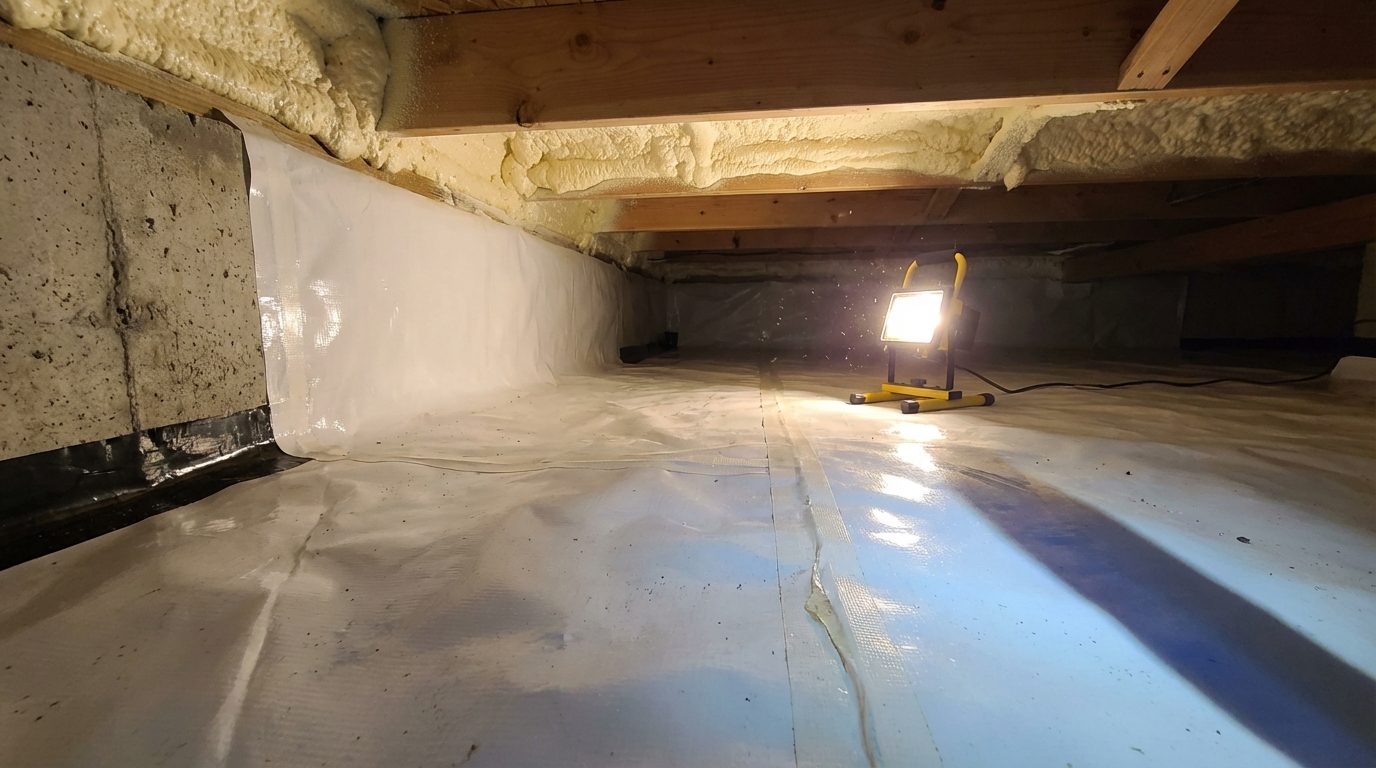
Full encapsulation seals ground moisture with a reinforced liner, wall coverage, and a commercial dehumidifier to maintain relative humidity below 55% per ASHRAE 160 moisture-control guidelines.
Class I Vapor Retarder · Below 55% RH
Insulation Removal & Replacement
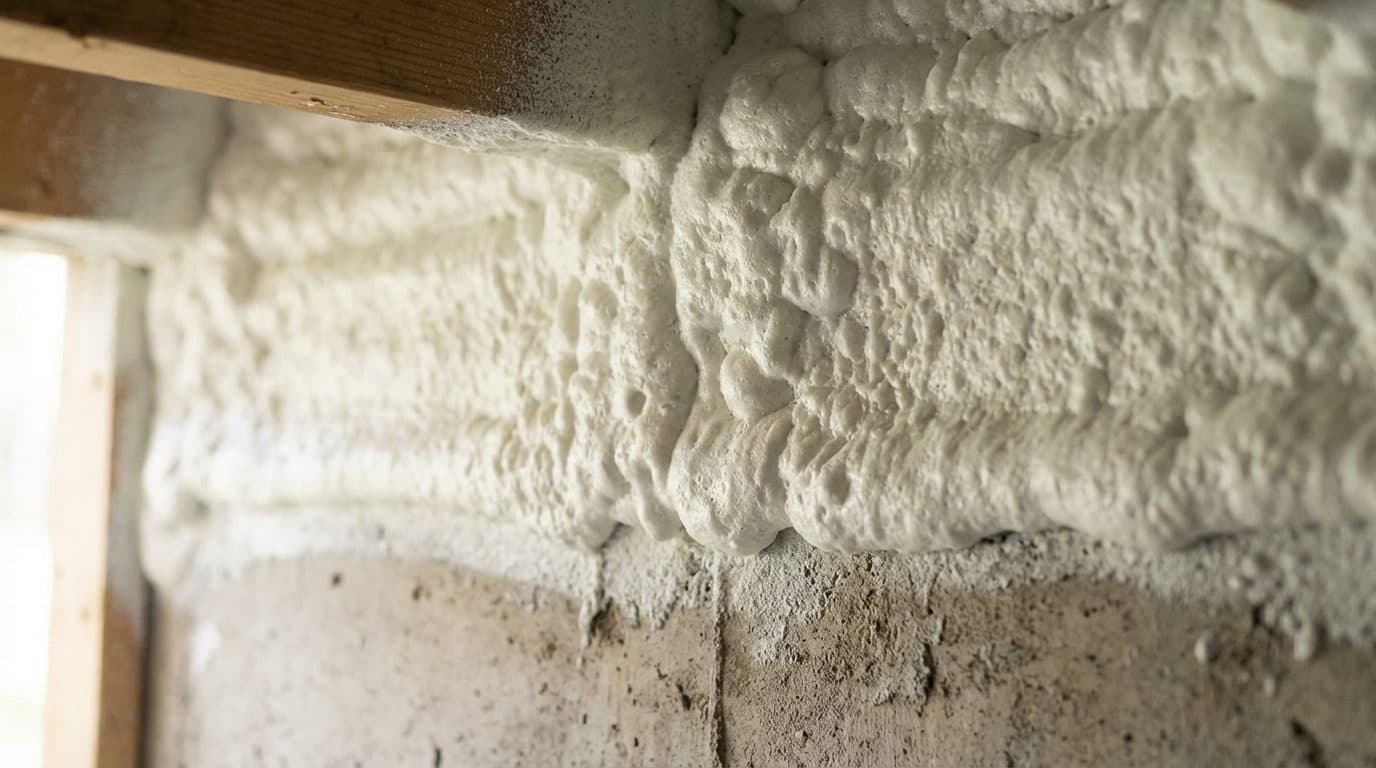
Wet or contaminated insulation replaced with closed-cell spray foam at R-6.5/inch or Climate Zone 5 batts meeting IRC R-19 floor requirements. State rebate paperwork submitted with applicable programs covering up to 75% of eligible cost.
Climate Zone 5 · R-Value Verified
Additional Crawl Space Services
Inspection & Moisture Mapping
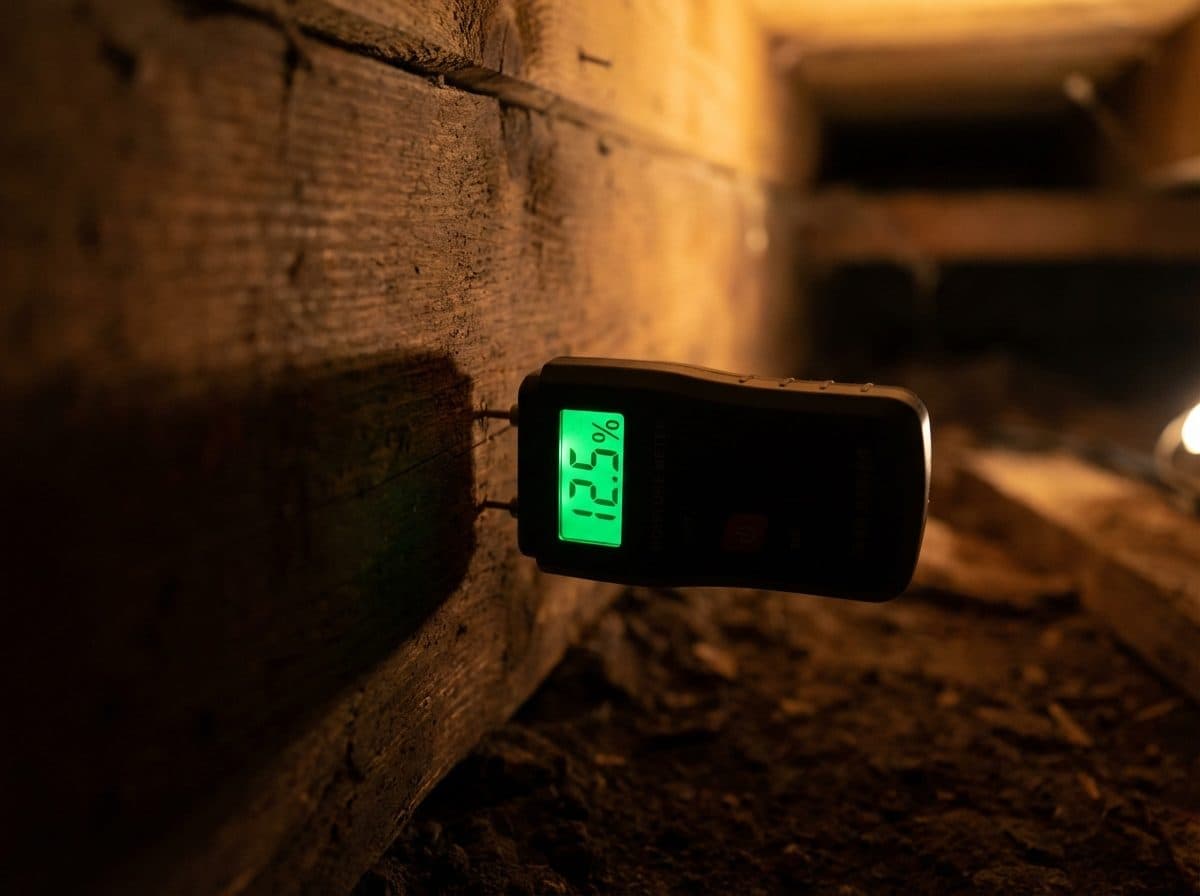
Tramex CME5 moisture meters and ASHRAE-55-referenced humidity sensors map every joist bay, sill plate, and insulation cavity. Readings above 19% wood MC trigger a written remediation scope before encapsulation.
Vapor Barrier Installation
12-mil reinforced Class I vapor retarder installed per ASTM E1745, with sealed seams and full wall-up coverage. Holds ground-side vapor drive below 0.1 perm to protect framing from moisture-driven rot.
Dehumidifier Installation
Commercial-grade dehumidifiers sized to crawl space cubic footage maintain relative humidity below 55% per ASHRAE 62.2 targets. Condensate line and humidistat wired before job close, post-install RH documented.
Mold Remediation On Joists & Subfloor
IICRC S520-protocol mold remediation on joists, subfloor, and sheathing includes physical containment, negative air with HEPA scrubbing, source removal, and post-remediation verification clearance testing.
Odor Control & Sanitization
EPA-registered antimicrobial applied to joists, subfloor, and soil after HEPA source removal. Odor neutralization targets volatile organic compounds at the source, verified by post-treatment air quality check.
Drainage & Sump Pump Integration
Interior perimeter drain channel and sump pit sized to ASCE 7 groundwater load calculations for the site. Battery backup rated for 72-hour power loss keeps the system active during storm-event intrusions.
Musty Smell, Rodents Or Moisture? Don't Wait Another Season.
Call Now For A Free Crawl Space Inspection Across Greenfield And Western Massachusetts.
More Green Restoration Services in Greenfield
The same local Green Restoration team covers all of these across Greenfield. One number for every emergency and every cleanup.
Why Choose Us In Greenfield
Greenfield is a north-county town, and that changes the crawl space problem. Summer humidity does the same damage it does anywhere in the valley, but the freeze window is longer and a vented crawl under an east-side cape will drop below freezing with a supply line running through it. We scope for both halves of the year, not just July.
IICRC-Certified Encapsulation
S520-compliant sealed vapor barriers, wall sealing, and dehumidifier integration on every Greenfield crawl space project.
Humidity Verified Below 55%
Commercial dehumidifiers sized to cubic footage with calibrated humidity readings confirmed before signoff.
Rebate Documentation Included
Itemized scope and photo documentation for Mass Save applications across Greenfield properties.
Eco-Conscious Methods
HEPA containment, Tyvek protocols, and EPA-registered antimicrobials including Benefect Decon 30 and Concrobium Mold Control aligned with IICRC S520 standards.
Our Crawl Space Restoration Process In Greenfield, MA
From the first call to final walkthrough, every step is documented, insured, and owner-supervised.
Save Thousands On Crawl Space Work With Mass Save
Massachusetts homeowners can stack Mass Save rebates on crawl space insulation, air sealing, and moisture control. We document eligible work so you can apply confidently.
Mass Save
Mass Save · Eversource, National Grid, Berkshire Gas, Cape Light Compact
Statewide utility incentive that explicitly lists crawl space and basement insulation as eligible measures after a no-cost Home Energy Assessment, covering up to 75 percent of approved insulation and air sealing, with deeper support for income-eligible households at levels the program sets. Pairs with a 0% HEAT Loan up to $25,000 for larger encapsulation scopes.
- Up to 75% off approved insulation
- Crawl space and basement listed
- No-cost Home Energy Assessment
- 0% HEAT Loan up to $25,000
We Document Every Step For Rebate Applications
Itemized scope, humidity readings, and timestamped photos formatted for Mass Save Home Energy Assessment and insulation rebate applications. Verify current eligibility and caps before work begins.
Save On Your Massachusetts Crawl Space Project
Massachusetts Mass Save is one of the few programs that explicitly lists crawl space and basement insulation as eligible measures. Crawl space encapsulation, insulation, and dehumidifier upgrades often qualify.
Mass Save Insulation Rebate
Free Home Energy Assessment then 75 to 100% off approved insulation, no fixed cap. Crawl space and basement insulation explicitly listed. Available via National Grid and Eversource MA.
MassSave.com →Mass Save 0% HEAT Loan
0% interest loan up to $25,000 for larger encapsulation and insulation scopes. Available after a Mass Save Home Energy Assessment.
Mass Save HEAT Loan →IRS 25C Home Improvement Credit
The federal 25C credit (30%, up to $1,200/year on insulation, air-sealing, and audits) ended December 31, 2025 and does not apply to 2026 projects. Work completed in 2025 can still be claimed on your 2025 return.
IRS.gov 25C Credit →National Grid MA Rebates
National Grid MA customers receive rebates on ENERGY STAR dehumidifiers and insulation upgrades after a crawl space encapsulation project.
National Grid MA →Federal Rebate Finder
Enter your zip to see current rebate amounts from National Grid MA and manufacturers on ENERGY STAR dehumidifiers.
ENERGY STAR Finder →DSIRE Massachusetts
Federal-funded database of every MA state, local, and utility incentive. Search insulation or dehumidifier.
DSIRE MA →Green Restoration is an independent contractor and not affiliated with these programs. We document every job with the paperwork you need to apply. Rebate amounts and eligibility change. Always verify on the official site.
What An Untreated Crawl Space Costs Your Greenfield Home
Most Greenfield homeowners don't realize crawl space problems keep spreading until they show up upstairs as odors, cold floors, and rising bills. Inland humidity, older fieldstone foundations, and seasonal groundwater make it compound fast.
Frozen Supply Lines In Vented Crawls
North County Winter Exposure
A vented crawl tracks the outdoor temperature. Greenfield runs colder than the lower valley, so an east-side cape with open foundation vents and a supply line through the crawl carries real freeze risk every cold snap. Sealing the vents and bringing the space inside the thermal envelope is the fix that also solves the summer humidity.
Green River Ground Water On The West Side
Low Ground Along The Corridor
The Green River comes down out of hill country and loads fast in snowmelt and hard rain. The low parcels along the corridor sit on ground that stays wet, and a vented crawl over wet soil evaporates that moisture straight into the floor system above it all season long.
Post-War Capes And Ranches On The East Side
Where Most Greenfield Crawl Spaces Are
Downtown-era housing mostly carries stone cellars. The crawl spaces in Greenfield are concentrated in the post-war capes and ranches that filled the east side, built on shallow block piers with low clearance and the original vents left open. Nobody goes in there, so nothing gets found until the smell reaches the kitchen.
Rain On Snow Across Frozen Ground
Melt With Nowhere To Go
Frozen ground absorbs nothing. A rain-on-snow event in a Greenfield February sends melt across the surface and into bulkheads, cellar windows, and crawl vents at grade. Water that gets under a floor in winter has months to work before anyone opens the hatch in spring.
Stone And Brick Footings Under The Downtown Grid
High Street And Federal Street Stock
The 1870 to 1910 stock along High Street, Federal Street, and the downtown grid sits on stone and brick footings under plaster-on-lath and balloon framing. Where those buildings have crawl areas rather than full cellars, the footing line is irregular and the barrier has to be cut and welded by hand rather than rolled.
Rodents Off The Hill Cover
Colrain Road And Leyden Road Edges
Wooded hill cover along Colrain Road, Leyden Road, and the Conway Street edge pushes rodents toward warm crawl voids through pier gaps and torn vent screens. They nest in fiberglass batting, and the droppings left behind convert an insulation swap into a contained cleanup with respirators and negative air.
Why Greenfield Crawl Spaces Need Professional Restoration
Greenfield's inland river-valley humidity, older fieldstone foundations, and seasonal high water tables create unique crawl space challenges that require local expertise and proper encapsulation, not just a quick cleanup.
50 To 70 Minutes Up Interstate 91
Crews stage from the Western Massachusetts base and run Interstate 91 into the county seat, reaching downtown, the Green River corridor, Cheapside, and the east side day or night.
Freeze Protection Built Into The Scope
Greenfield crawl work closes the vents and brings the space inside the envelope, which protects supply lines through the crawl in a way that heat tape and rags never did.
East-Side Cape And Ranch Specialists
That stock is where the crawl spaces are. We install 12-mil reinforced Class I barrier per ASTM E1745 in low-clearance block-pier crawls where rolled-and-taped work fails inside a season.
One Ticket From Cleanout To Signoff
Cleanup, remediation, barrier, insulation, and dehumidifier integration run together on a single Greenfield ticket under one project manager and one documented file.
The Crawl-Space Problems We See Most in Greenfield
These are the crawl-space problems we solve most often, every job sealed to a dry, encapsulated standard with documented moisture control and energy rebates where they apply.
Wet Crawl Space, Dried And Drained
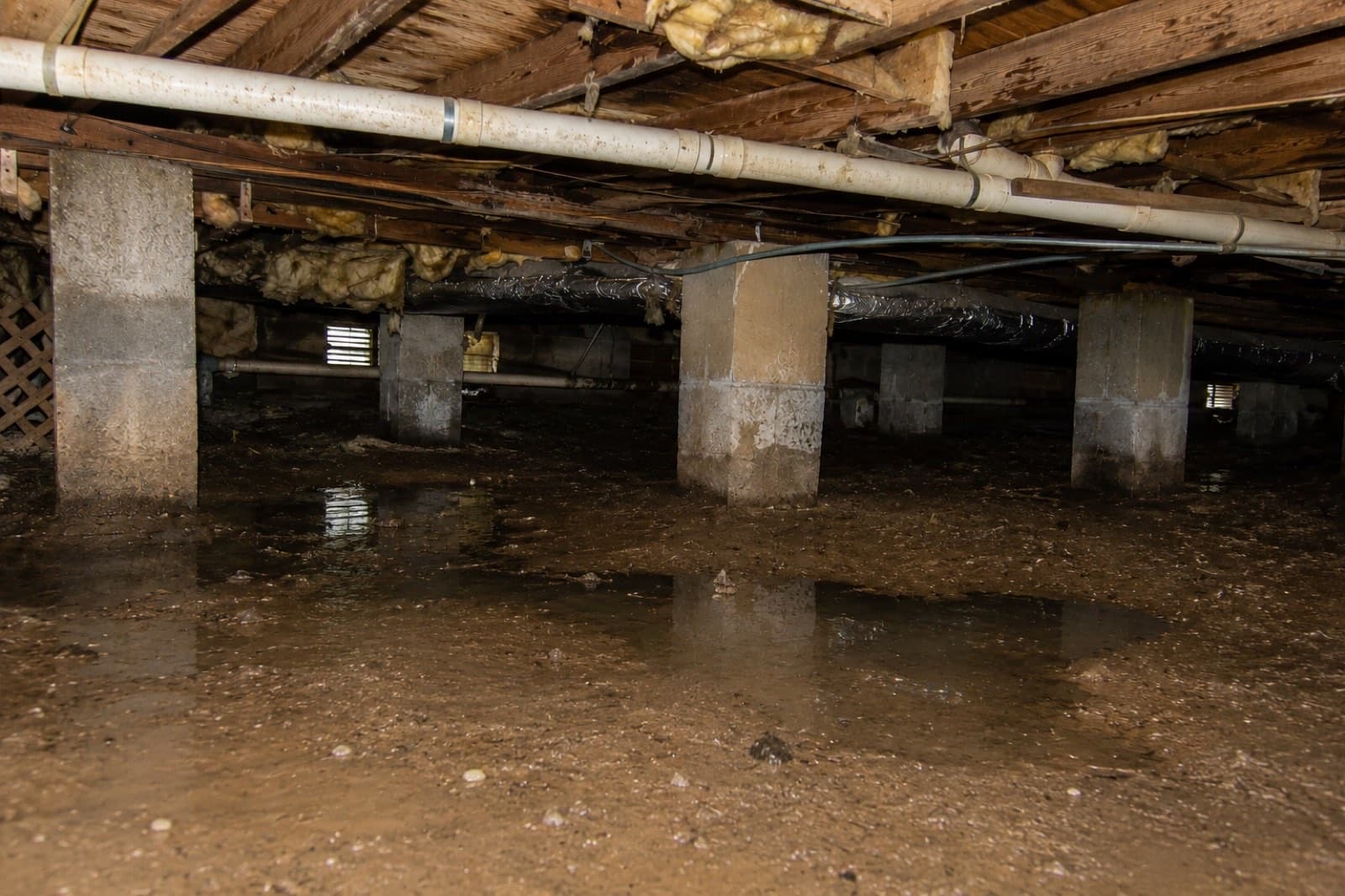
In Greenfield, Green River ground water on the low west side keeps bare crawl soil wet, and a vented crawl over wet soil is an evaporation pan under the floor.
A dirt-floor or vented crawl space pulls ground moisture and humid outside air up against the framing, so standing water, damp soil, and condensation keep the wood and insulation wet year round. That constant moisture is what feeds mold, rot, and pests below the living space.
We diagnose the moisture source first, then address grading, drainage, and any sump or interior drain need before sealing. Standing water is removed, the crawl is cleared, and we set the conditions for a dry assembly rather than sealing moisture in.
The crawl space is brought to a stable, dry condition and the moisture driver is corrected before any vapor barrier goes down. Scope and photos are documented for your file.
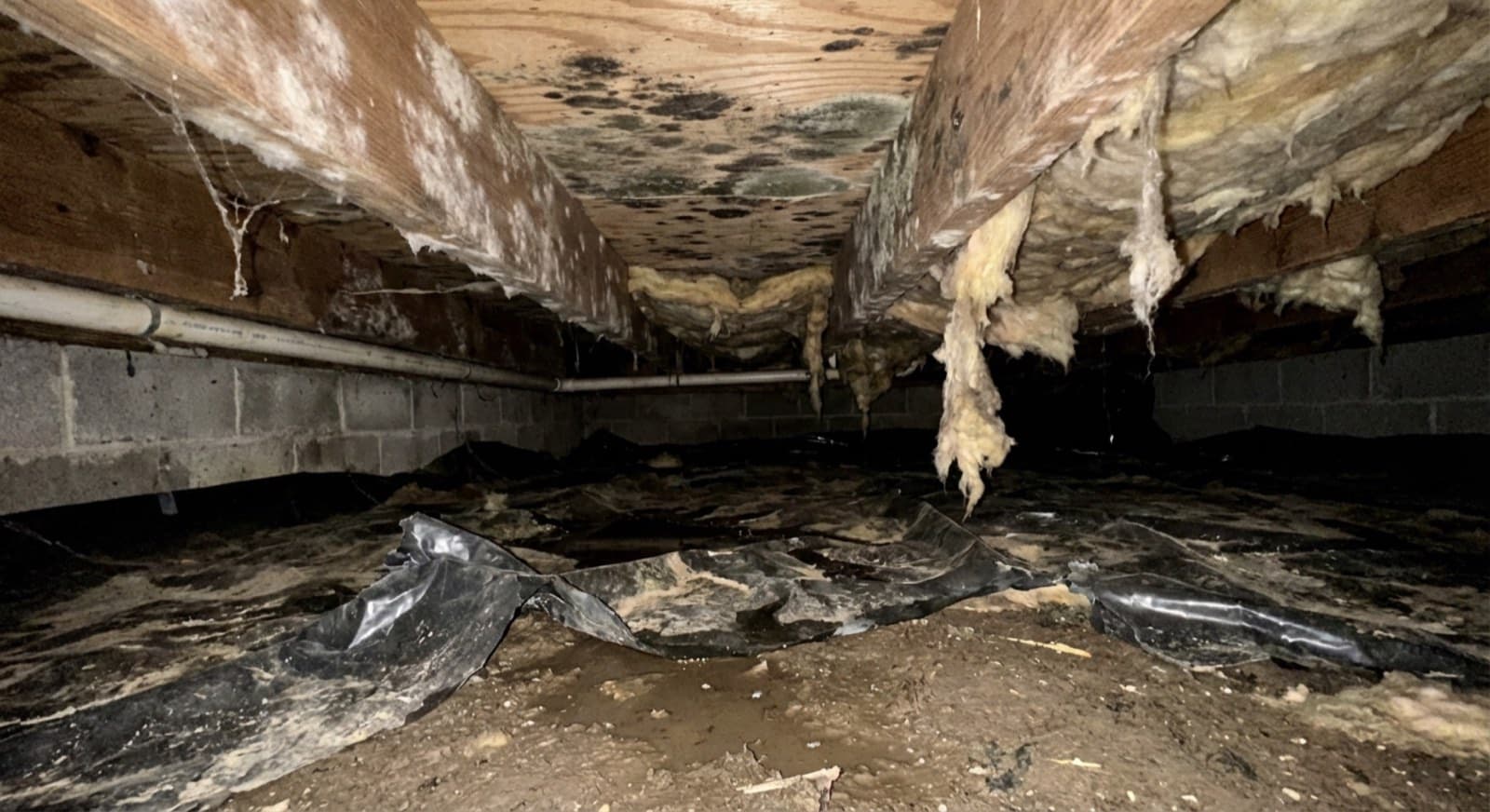
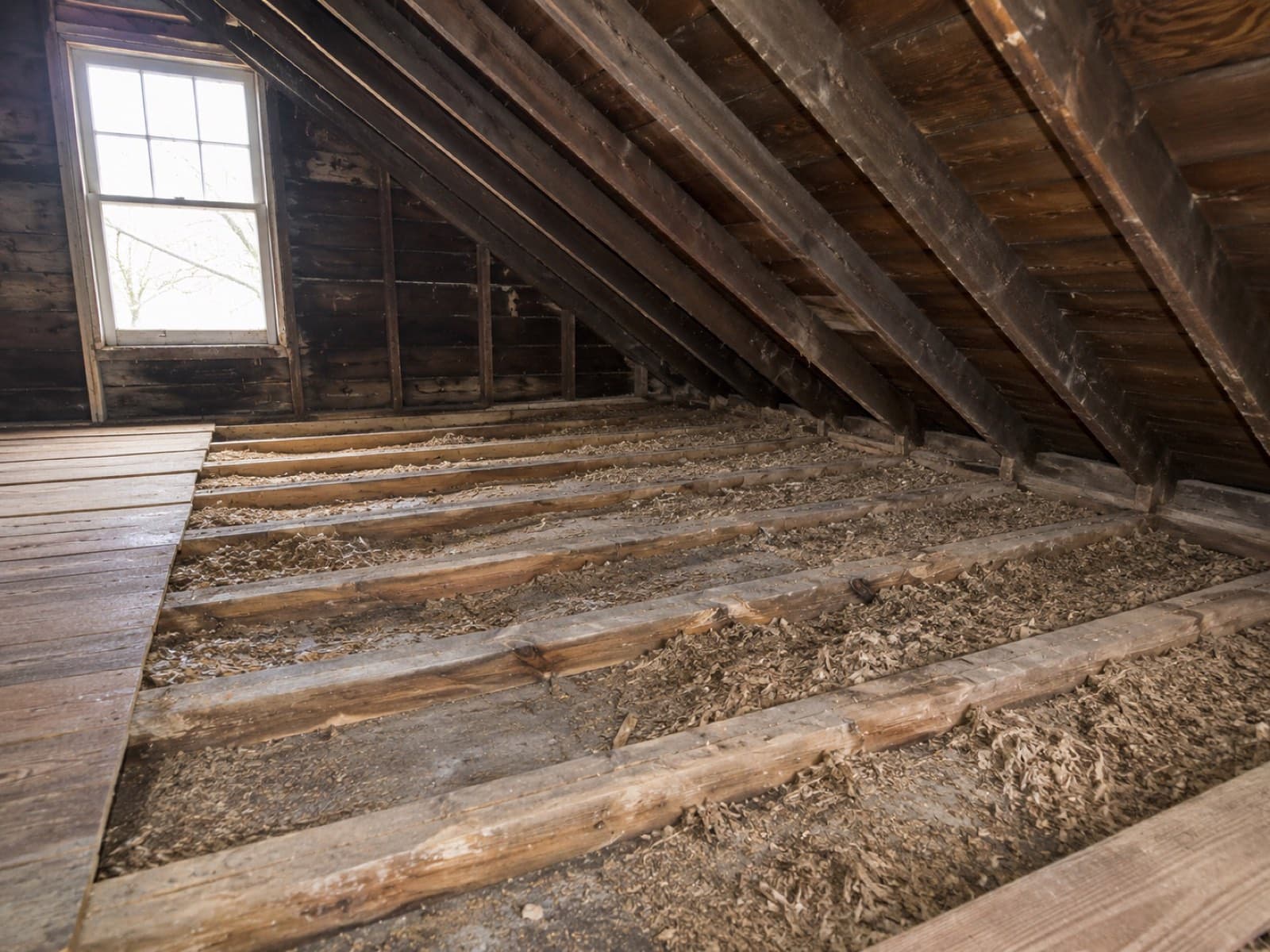
Scenario 1 of 5: Wet Crawl Space
What To Do Before A Crawl Space Cleanup In Greenfield, MA
A little caution before our crew arrives can protect your health and lock in a cleaner, faster restoration. Follow these steps while waiting for our IICRC-certified team.
What To Do Immediately
If you can see or smell moisture, document it. A cheap hygrometer through the crawl space access shows whether humidity is above 55%, which is the red line for mold colonization on Greenfield joists.
If a supply line or drain is visibly leaking into the crawl space, turn off the main water valve. In older Greenfield homes it is typically in the basement near the street-side foundation wall.
Rodent droppings, compromised insulation, and pooling water carry real health risks. Seal the crawl space hatch and wait for an IICRC inspection before anyone enters, including you.
Take timestamped photos and video of droppings, wet insulation, standing water, or visible mold before any cleanup. Your insurance adjuster will require this for covered Greenfield claims.
Musty crawl space odors travel through floor penetrations into living areas via the stack effect. Write down when you first noticed them and when they get stronger.
Contact our IICRC-certified team for a proper crawl space assessment. We respond to Greenfield properties within 60 minutes for active water events and schedule inspections fast.
What NOT To Do
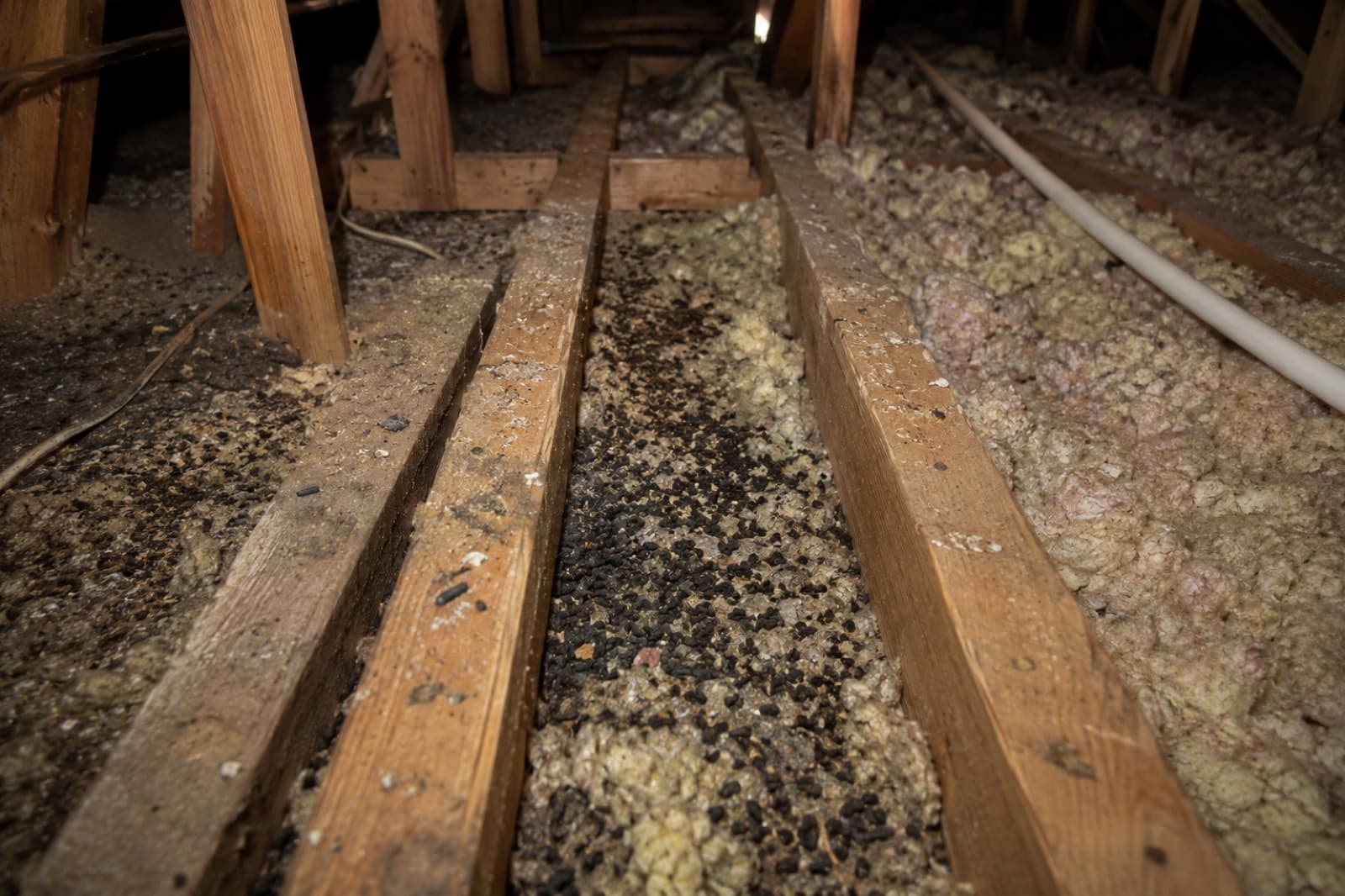
Rodent droppings can aerosolize dangerous pathogens like hantavirus. Without a proper respirator, Tyvek suit, and HEPA equipment, entering puts your health at direct risk.
Dry sweeping kicks pathogens into the air. Standard shop vacs blow contamination right back out. Only HEPA-filtered extraction safely removes rodent waste from Greenfield crawl spaces.
Blowing air through a contaminated crawl space pushes spores, droppings dust, and odors directly up into your living areas through every floor penetration and HVAC return.
That damp, earthy smell is almost always active mold or bacterial contamination. The longer it goes, the more it colonizes joists and subfloor in Greenfield homes.
Sealing moisture and contamination under plastic traps it and accelerates decay. Cleanup and drying must come first, then encapsulation, in that order.
Greenfield crawl spaces hit their worst humidity July through September. Mold colonization accelerates in those months, so addressing issues quickly matters.
Dead Animal Removal & Feces Cleanup In Greenfield, MA
Decomposing carcasses, droppings, and urine-saturated insulation aerosolize hantavirus, leptospirosis, and salmonella pathogens through floor penetrations. IICRC-certified HEPA-filtered removal with EPA-registered antimicrobial treatment is the only safe path forward.
Animals We Remove From Greenfield Crawl Spaces
Most common. Drop litter sites and 1-3 day decomposition odor through floor vents.
Enter through soffit gaps and attic-to-crawl-space chases. Larger carcass means heavier decomposition load.
Enter through torn vapor barrier or vented foundation. Aggressive PPE protocol required.
Guano is a hantavirus and histoplasmosis source. EPA-registered antimicrobial mandatory.
Nest in vented crawl space corners. Droppings carry psittacosis. HEPA extraction required.
Burrow under vapor barrier and nest in damaged insulation across the perimeter.
Pathogens In Untreated Contamination
Aerosolized from dried rodent droppings. CDC warns against dry sweeping or vacuuming without HEPA filtration.
Bacterial pathogen transmitted through rodent urine-saturated insulation and standing water in crawl spaces.
Carried by rodent droppings and bird guano. Migrates upstairs through floor penetrations via stack effect.
Fungal spores grow in bat guano and bird droppings. Respiratory exposure risk during DIY cleanup.
Our IICRC-Certified Carcass & Feces Cleanup Protocol
(833) 970-2121Tyvek suits, N95 or P100 respirators, nitrile gloves, and HEPA-filtered negative-air containment before entering the crawl space.
Sealed double-bagging of all carcasses with EPA-registered disinfectant pre-treatment to neutralize aerosol risk during handling.
HEPA-filtered extraction of droppings and contaminated insulation. No sweeping, no shop vacs that recirculate spores.
EPA-registered antimicrobial applied to joists, subfloor, and foundation walls per IICRC S520 protocol after contaminated material removal.
Plant-based odor neutralizer and ozone or hydroxyl treatment when decomposition odor has saturated framing or HVAC ducting.
Post-cleanup air sampling and visual inspection confirm contamination removed before homeowner sign-off.
Crawl Space Cleanup Coverage In Greenfield, MA
Full-service crawl space cleanup, encapsulation, and moisture control for Greenfield homes and businesses. HEPA-filtered crews, vapor barrier systems, and commercial dehumidifiers on every job.
Green Restoration runs IICRC-certified crawl space cleanup, encapsulation, and moisture control in Greenfield, MA, the Franklin County seat. Coverage includes downtown and the High Street grid, Federal Street, the Green River corridor, Cheapside, Conway Street, Colrain Road, Leyden Road, the Country Club area, and East Greenfield. HEPA filtration, reinforced barrier stock, and drying gear come up Interstate 91 on every truck from our Western Massachusetts base.
Three rivers touch Greenfield. The Green River comes out of the hills and runs the west side. The Deerfield River draws the southern line at Cheapside. The Connecticut passes the eastern edge. Ground moisture follows those corridors, and IECC Zone 5A freeze and thaw loading runs harder here than in the lower valley, which is why a Franklin County crawl space has a winter problem on top of the summer one.
Crawl Space Issue In Greenfield?
Call now for a free inspection. Emergency water response 24/7/365.
(833) 970-2121IICRC Certified · Licensed & Insured · All Insurance Accepted
All Towns Served By Green Restoration Of Western Massachusetts From Our Springfield Location For Crawl Space Cleanup, Encapsulation & Moisture Control.
Why Greenfield Crawl Spaces Are Different
Local drainage, housing stock, and foundation construction shape every encapsulation scope.
Free On-Site Assessment
Not sure what you are dealing with in Greenfield?
We establish the scope on site, before anything is quoted.
(833) 970-2121Greenfield is the Franklin County seat, sitting where Interstate 91 crosses the Mohawk Trail, and its crawl spaces divide neatly by neighborhood. The downtown grid and the High Street and Federal Street corridors carry 1870 to 1910 Victorian and early-1900s stock on stone and brick foundations, mostly with full cellars and a scattering of irregular crawl areas alongside them. The Green River corridor on the low west side holds mill-era housing on the wettest ground in the city. And the east side, filled in after the war with capes and ranches on shallow block piers, is where the actual crawl-space inventory lives.
Every one of those was built with foundation vents open to the outdoors, which in a north-county climate means the space is hot and wet in August and near freezing in January.
The summer half of the problem is the same building science that applies anywhere in the Pioneer Valley. Warm air enters the vents, meets joists that the soil below keeps cool, and gives up its moisture on the wood. Under IICRC S520 that is enough to colonize cellulosic material within 48 hours of sustained wetting, and stack effect then carries the result up through floor penetrations into the rooms above. What Greenfield adds is that north-county assemblies release moisture slowly once it is in them, so the drying curve here runs longer than it does downriver and a crawl that gets wet in April can still read high in June.
The winter half is the part most contractors ignore. A vented crawl tracks the outdoor temperature, so an east-side cape with open vents and a supply line running through the crawl is exposed on every cold snap, and rain-on-snow events send melt across frozen ground into bulkheads, cellar windows, and vents sitting at grade. Sealing the vents and bringing the crawl inside the thermal envelope with a barrier, rim joist insulation, and a dehumidifier addresses both seasons in one scope.
Green Restoration logs every reading, pier gap, and insulation void with Tramex meters and time-stamped photos so the owner holds a record that works for a carrier and for a Mass Save insulation application.
Rapid Crawl Space Response In Greenfield, MA
Crews come up Interstate 91 from our Western Massachusetts base and reach Greenfield addresses in 50 to 70 minutes, covering downtown, the High Street grid, the Green River corridor, Cheapside, Colrain Road, Leyden Road, and East Greenfield. A call with water actively moving triggers 60-minute emergency dispatch with HEPA equipment and commercial LGR dehumidifiers already loaded.
Over 1,000 crawl spaces cleaned, sealed, and encapsulated across Western Massachusetts, from single-room rodent cleanups to full encapsulation projects with commercial dehumidifier integration.
According to Green Restoration's IICRC documentation logs, typical crawl space encapsulation wraps in 3 to 5 days with humidity verified below 55% before signoff.
Itemized scope, humidity readings, and timestamped photos formatted for Mass Save Home Energy Assessment and insulation rebate applications.
Top rated by the Better Business Bureau with verified five-star Google reviews across Western Massachusetts.
About Green Restoration In Greenfield, MA
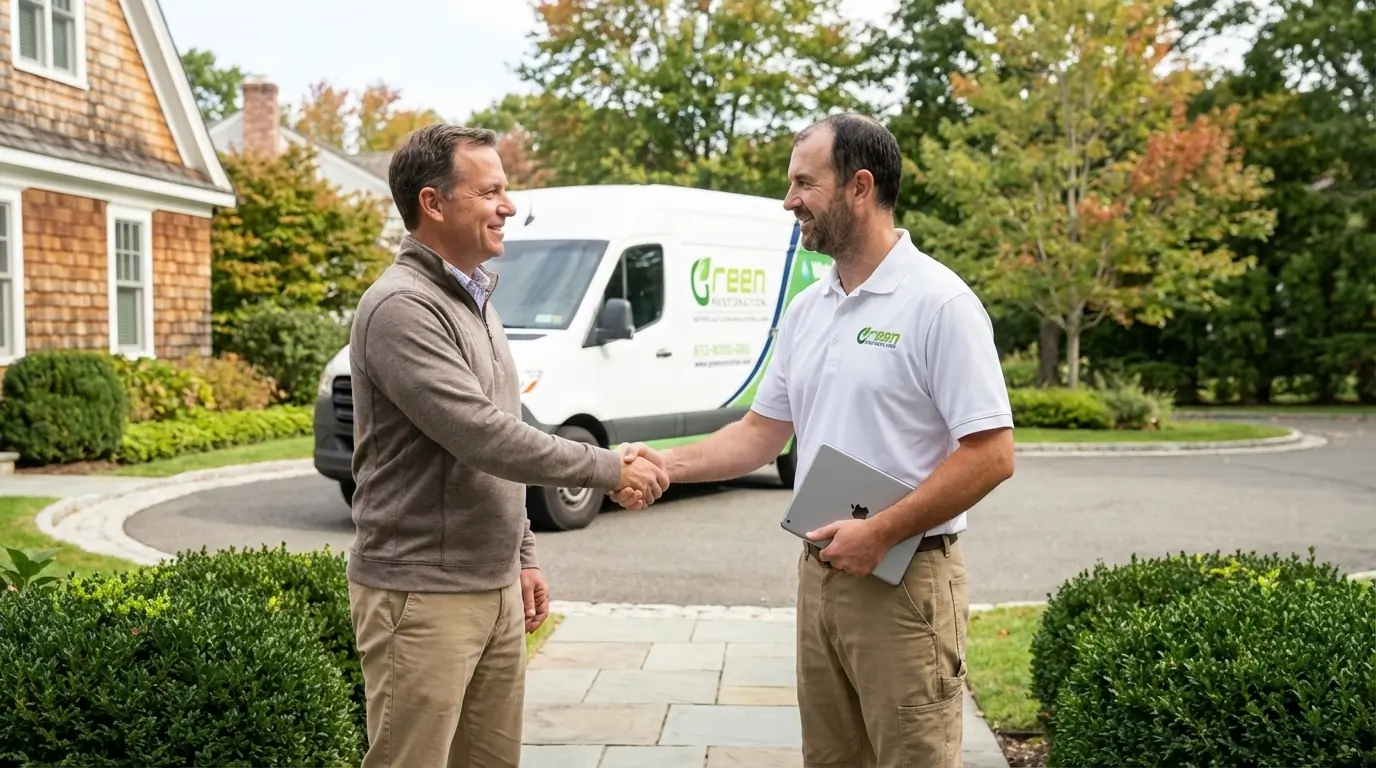
Your Western Massachusetts Crawl Space Specialists Since 2014
According to Green Restoration's field reports, Greenfield crawl spaces hold 63% to 76% relative humidity through the warm months, with the highest readings on low west-side ground near the Green River. Green Restoration states that sustained moisture colonizes framing within 48 hours under IICRC S520, and that north-county assemblies release that moisture slowly once it is in. The second pattern is cold: a vented crawl under an east-side cape drops with the outdoor temperature, and any supply line running through it is exposed. Every reading and every affected bay is documented for the Greenfield property owner and for the carrier file.

“I am the franchise owner for Western Massachusetts, and the county seat is worth the drive up Interstate 91. Greenfield asks for both halves of the trade. There is river ground on the west side and Victorian fabric downtown that nobody can rebuild in kind, and then there is the east side, where most of the crawl spaces are and where the freeze does the damage. Fifteen plus years of IICRC work, AMRT and WRT, goes into every one of those scopes under my direct oversight.”
Trusted by Families in Greenfield &
Western Massachusetts
4.9 out of 5, Rated by your neighbors on Google
We discovered mold when removing our pellet stove and called Green Restoration for help. David was very communicative and helpful throughout the entire process. He did the job thoroughly and professionally. Highly recommended!
David Woolner
Mold RemediationI had a fantastic experience with Green Restoration. From start to finish, the team was professional, thorough, and extremely knowledgeable. David came for the initial inspection and took the time to explain the entire process.
Annmarie Gieparda
Mold RemediationWe had mold due to a water leak in our half finished basement. David and his crew did a great job, we were very satisfied. I would highly recommend Green Restoration to anyone.
Tanya
Water DamageI needed my entire condo completely cleaned after a soot blow back. Green Restoration was top shelf! So thorough and professional. Thank you so much!
Jacki Hornish
Fire & Soot CleanupHow Much Does Crawl Space Cleanup Cost In Greenfield, MA?
Greenfield pricing depends on the side of town. Open east-side cape and ranch crawls off Colrain Road and Leyden Road sit near the low end of the range. Wet ground near the Green River corridor and low crawls under downtown-era stock take drainage and hand-formed barrier work, which moves the number up.
Vapor Barrier Only
$3,000 to $5,000
Sealed reinforced vapor barrier fitted to Greenfield east-side cape and ranch block piers off Colrain Road and Leyden Road, to stone and brick footing lines under the downtown and High Street grid, and to the wet ground along the Green River corridor on the low west side
Mid Encapsulation
$5,500 to $9,500
Cleanup, vapor barrier, insulation replacement, sealed vents, basic dehumidifier integration
Full Service
$10,000 to $15,000+
Mold remediation, rodent cleanup, drainage, full encapsulation, commercial dehumidifier and monitoring
Cost follows crawl clearance, ground moisture, mold load on joists, rodent contamination, insulation replacement, drainage work, freeze protection, and dehumidifier sizing for the Greenfield foundation involved. Use the calculator below for a Greenfield-specific number. Mass Save rebates can offset the insulation portion of the scope.
Greenfield Crawl Space Cleanup & Encapsulation FAQs
Clear, honest answers about rodent cleanup, encapsulation scope, insurance coverage, insulation rebates, and project timelines across Greenfield.
Figure a $3,000 to $15,000 range. Barrier replacement in an accessible east-side cape or ranch crawl off Colrain Road or Leyden Road usually runs $3,000 to $5,500. Mid-scope work that adds insulation replacement, rim joist foam, and treatment of affected framing runs $5,500 to $9,500. The upper band, $10,000 to $15,000, covers low-clearance crawls where the barrier is hand-formed to irregular stone or brick footings, mold remediation is in scope, rodent contamination needs containment, and a commercial dehumidifier is integrated. Wet ground along the Green River corridor needs drainage before any barrier goes down, which sits at the top of the band. Mass Save rebates can offset the insulation portion. Call (833) 970-2121 for an on-site estimate.
Crews come up Interstate 91 from our Western Massachusetts base and reach most Greenfield addresses in 50 to 70 minutes, covering downtown, the High Street grid, Federal Street, the Green River corridor, Cheapside, Conway Street, Colrain Road, Leyden Road, the Country Club area, and East Greenfield. A call with water actively moving triggers 60-minute emergency dispatch, with HEPA-filtered equipment, commercial LGR dehumidifiers, and IICRC S500 water restoration crews already on the truck. Scheduled cleanup, encapsulation, and rodent remediation normally books within 24 hours of the first call. Call (833) 970-2121 any hour, including holidays and mid-storm.
It depends entirely on the mechanism, which is why we document it precisely. Massachusetts homeowners policies respond to sudden and accidental events: a supply line that bursts in a cold snap, an appliance failure that drains into the floor system, storm water forced in through a foundation opening, or a sewer backup where the endorsement is in force. They exclude rising surface water, so a Green River or Deerfield River event falls to a separate NFIP flood policy. Encapsulation, barrier installation, and rodent cleanup are property improvements and are not covered at all. We send IICRC S500 scope, dry logs, and time-stamped photographs straight to your insurer. We are not licensed public adjusters and do not negotiate claims on your behalf.
Greenfield properties reach Mass Save insulation incentives through their participating utility, starting with the no-cost Mass Save Home Energy Assessment that identifies eligible measures on the building. Standard incentives cover 75 to 100% of approved insulation upgrades including crawl space and basement scope, income-eligible households can access deeper assistance through the Mass Save income tier, and a 0% HEAT Loan up to $25,000 is available for larger encapsulation projects. Greenfield sits in IECC Climate Zone 5A under the 2022 Massachusetts energy code, which requires a Class I vapor retarder meeting ASTM E1745.
The north-county heating load makes the insulation half of this work pay back faster here than it does downriver. Confirm current tiers and caps at masssave.com before the scope is set.
Most Greenfield encapsulations take 3 to 5 working days from arrival to verified signoff. Day one is containment, rodent cleanup, standing water removal, and stripping failed insulation. Day two is drying with commercial LGR dehumidifiers, IICRC S520 antimicrobial treatment, and a look at pier and footing condition. Days three and four install the 12-mil reinforced Class I barrier per ASTM E1745 with hand-formed wall-up coverage, replace rim joist insulation with R-19 closed-cell foam, and integrate a dehumidifier sized to the crawl volume. Day five verifies below 55% relative humidity per ASHRAE 160 and hands over the file.
Cold-weather work stretches the drying curve because north-county assemblies release moisture slowly, and Green River corridor crawls needing drainage first can run to 7 working days.
Wooded hill cover along Colrain Road, Leyden Road, and the Conway Street edge drives rodents toward warm crawl voids through pier gaps and torn vent screens, and once they nest in batting the space is a contamination scope rather than an insulation scope. Crews enter in Tyvek with full-face N95 or P100 respirators behind HEPA-filtered negative air, because aerosolized rodent waste can carry hantavirus, leptospirosis, and salmonella, and stack effect carries it up through floor penetrations into the rooms above.
IICRC S520 protocol is to mist dry material with EPA-registered antimicrobial before it is disturbed, bag it in approved containment, strip and replace contaminated insulation, and treat framing before a barrier goes in. Cleaning it with a household shop vacuum is the worst available choice, since the filter puts pathogens back into the breathing air.
No. Low ground along the Green River corridor holds water that has to be found and dried before plastic goes anywhere near it, and downtown-era stone footings hold it longer still. A barrier over wet soil traps capillary moisture against sills and joists and speeds the decay it was meant to prevent.
The order is Tramex readings across every joist bay and sill run, source identification separating ground water from a supply failure, footing seepage, or condensation, interior drainage or a sump where ground water is the driver, HEPA-filtered dry-down below 18% wood moisture content, then a 12-mil reinforced Class I barrier per ASTM E1745 formed to the actual footing geometry. North-county drying takes longer, so the temptation to seal early is stronger and the consequence is worse.
Because a vented crawl is outdoor space with a floor over it. The vents were put there to move summer humidity, and they do the same thing in January, which drops the crawl temperature to something close to the air outside. Greenfield runs colder than the lower valley and holds that cold longer, so any supply line running through an east-side cape or ranch crawl is exposed on every cold snap. Heat tape and wrapped rags manage the symptom for a season.
Sealing the vents, installing a Class I barrier to break ground contact, insulating the rim joists with R-19 closed-cell foam, and conditioning the space with a dehumidifier brings the crawl inside the building envelope, which removes the freeze exposure and the summer humidity in the same scope. Call (833) 970-2121 to have the space assessed before the next cold stretch.

