


01RIGHT
Your policy, your selection.
Your policy is between you and your insurer. Selecting the licensed restoration contractor generally sits with the property owner.
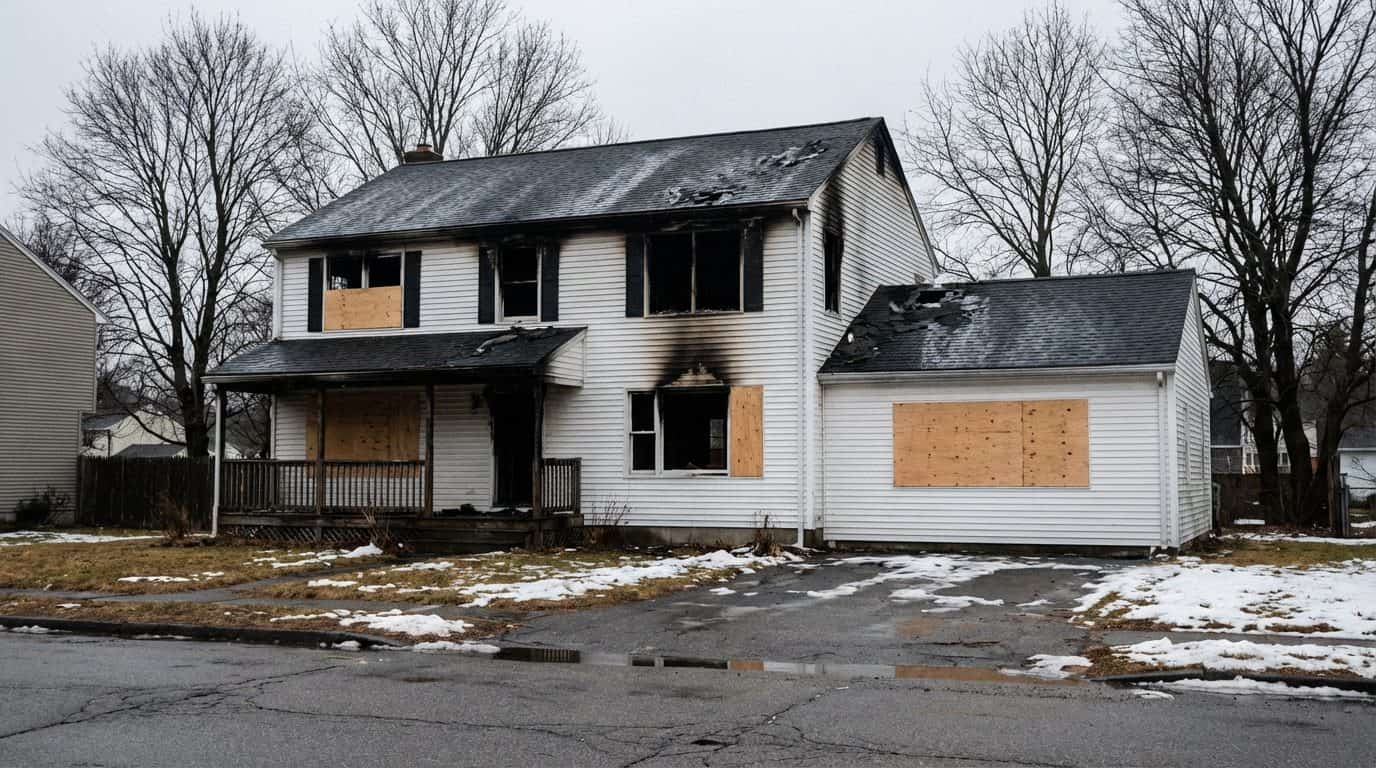
Shoreline Cottage And Main Street Soot Removal, Niantic Village 45 To 60 Minute Dispatch, Direct Insurance Billing
 IICRC Certified
 Eco-Friendly Solutions For Healthier Spaces
Reviewed by David Megeneishvili·Licensed & Insured In CT·IICRC AMRT + WRT
Fire damage restoration is the ANSI/IICRC S700 documented process of stabilizing a fire-damaged building, classifying the smoke residue, and cleaning it off every affected surface, the contents, and the HVAC system. Residue type decides method. Dry smoke, wet smoke, protein and fuel oil each clean differently, and soot is acidic, so it keeps corroding metal, electronics and finishes until it is removed. Cleaning is followed by source deodorization, HEPA filtration, and verification that the odor is gone rather than covered.
In Niantic, CT, the order is fixed. The fire department releases the scene, then the building is secured and boarded. Water from the suppression effort is extracted and dried first, because soot pressed into wet material sets, and wet cellulose grows mold within days. Residue is typed, then structure and contents are cleaned separately, contents off site where needed. Deodorization runs last, at the source, with the assembly open. Every stage is documented for the carrier.
Connecticut fire work is scoped against ANSI/IICRC S700. The local fire marshal holds the scene until the cause and origin investigation releases it. The cleaning phase is restoration work; the structural repair that follows is home improvement work under Connecticut law, which requires a registered contractor, a written contract, and a permit from the local building department.
Green Restoration works to ANSI/IICRC S700: stabilize first, type the residue before choosing a cleaning method, run HEPA filtration throughout, and treat odor at the source. Ozone deodorization runs only in an empty structure, because no federal agency has approved ozone generators for use in occupied space.
Board-up and tarp-over on arrival, soda blasting char removal at the source, IICRC S700 soot cleanup, contents pack-out, structural drying of suppression water, and reconstruction. Every Niantic scenario, from a Pine Grove cottage to a Main Street commercial block, stays on one certified crew led by an IICRC AMRT and WRT certified co-owner.
Emergency fire crews dispatched within 60 minutes from New London County location across all Niantic neighborhoods. IICRC S700 certified board-up, suppression water extraction, generator site power, and stabilization from minute one.
IICRC S700 · 60 minute dispatch · New London County HQ
Sodium bicarbonate abrasive blasting strips fire char from joists, sheathing, and masonry chimneys without damaging the substrate underneath. Mohs 2.5 media is softer than wood, FDA GRAS, silica-free, and water-soluble for HEPA-vac cleanup that wire brushing and sanding cannot match.
Sodium bicarbonate · Mohs 2.5 · IICRC S700 aligned
Smoke damage in Niantic requires HVAC decontamination, negative-air containment, and HEPA scrubbing on every affected zone. We coordinate with property managers, condo boards, and adjusters so containment, scope, and access stay aligned across the entire affected footprint.
HVAC decon · Negative-air containment
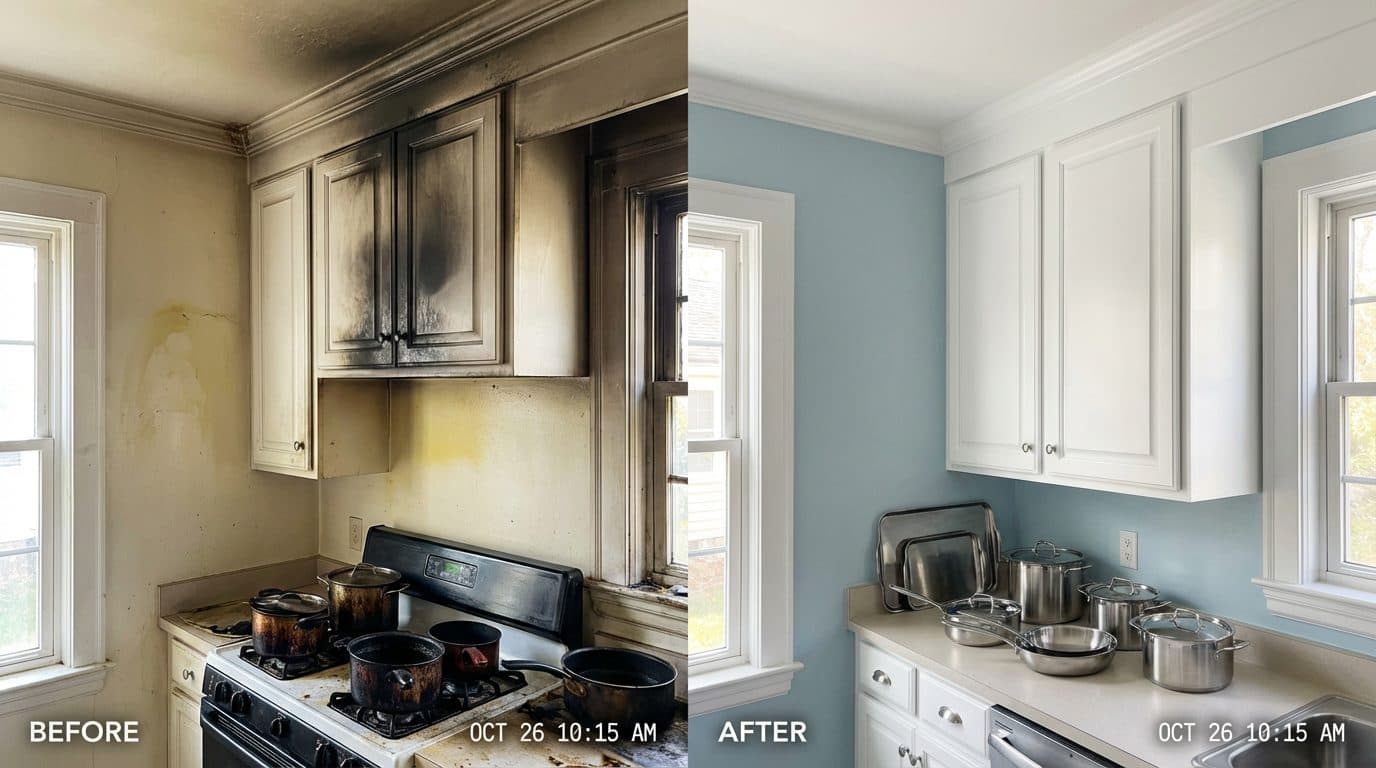
Same-day plywood board-up of broken windows and doors plus roof tarp-over to secure your Niantic property against weather, animals, and theft while the IICRC S700 restoration scope is finalized.
Whole-home and commercial generators staged on every Niantic fire response when utility power is cut at the meter. We run dehumidifiers, HEPA scrubbers, hydroxyl generators, and temporary lighting off our own diesel and propane gensets so drying, containment, and crew safety continue around the clock without waiting on Eversource to re-energize the service.
Full IICRC S700 puff back remediation for Niantic homes with oil-fired heat. Mechanical room cleanup, NADCA-aligned supply duct rotary brushing, soft-goods laundering, hydroxyl deodorization through every upstairs bedroom, and coordination with licensed CT oil burner technicians so the furnace returns to safe operation before close-out.
Creosote-bonded soot blowback from clogged chimneys, downdrafts, and flue fires cleaned with soda blasting on the masonry, full firebox and damper service, and HVAC riser decontamination where the flue shares a chase with supply ducts. We coordinate with a licensed CT chimney sweep on flue liner inspection before reuse.
Grease fire cleanup for Niantic kitchens including cabinet refinishing, appliance cleaning, soda blasting on charred framing behind drywall, and full structural restoration.
Inventoried, barcoded contents pack-out to our secure climate-controlled storage facility for off-site ultrasonic cleaning, ozone deodorization, and soft-goods laundering. Your Niantic belongings stay in humidity-controlled storage, documented for your insurer, until reconstruction is complete and we pack them back.
IICRC S500 structural drying for fire suppression water. LGR commercial dehumidifiers, moisture mapping, and EPA-registered antimicrobial treatment within the 48-hour mold-prevention window so the fire loss does not become a mold loss on top of it.
Thermal fogging, ozone chamber treatment, and hydroxyl generators neutralize smoke odor at the molecular level throughout the structure. The pH-neutralizing chemistry of our soda blast media also breaks down acidic soot odor compounds at the source, not just behind a fragrance mask.
Single-source reconstruction once mitigation is signed off. Licensed CT contractors handle framing, drywall, electrical re-feed off our gensets, plumbing, hardwood refinishing, and finish carpentry through the Niantic building department permit process. One restoration partner from board-up and generator power through reconstruction handoff means no scope gaps between trades and one closeout file for your carrier.
Niantic Fire Damage Does Not Wait For Morning. 60 Minute Response.
Certified crews dispatched across New London County to Niantic village and every beach association in 06357, one crew from board-up through reconstruction.
Co-owner-led IICRC AMRT and WRT certified fire response with New London County dispatch, exposure documentation on the buildings next door, soda blasting soot removal and direct insurance billing across Niantic and 06357.
Two personal IICRC certifications, and the co-owner walks every major Niantic loss and signs the documentation that reaches your adjuster.
IICRC S700 certified crews reach 06357 with board-up material, roof tarps, HEPA air scrubbers, blast pots and extraction equipment, with the single-access route planned before the truck rolls.
On 25-by-25-foot lots the building next door is the second claim. Every adjacent structure is metered and photographed on the first visit so a soot-only neighbor has a dated record.
We bill Travelers, The Hartford, Liberty Mutual, State Farm, Chubb, AIG and every major carrier directly with IICRC documentation, soda blasting protocol records, AMRT records and contents inventory for Niantic claims.
These are the fire and smoke losses we restore most often, every job run to the IICRC S700 standard with documented cleaning, source odor control, and a record built for your insurer.
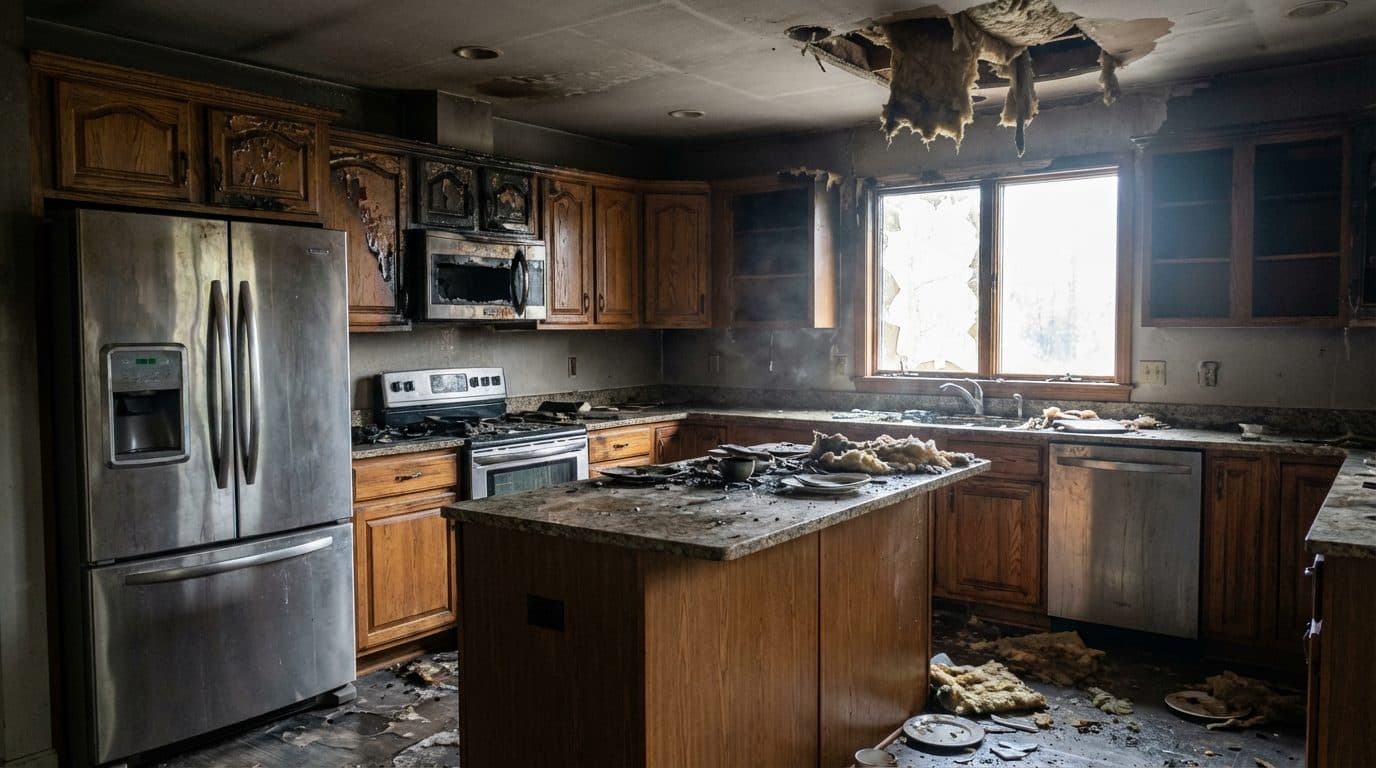
In Niantic, a cottage fire on a Pine Grove lot reaches the framing of the house beside it before the second engine is off Pine Grove Road.
Most home fires start in the kitchen, where a grease or stovetop flare can scorch cabinets, melt fixtures, and drive greasy soot across the ceiling and into adjoining rooms. The residue is acidic, so it keeps etching metal, stone, and finishes for as long as it sits.
Our IICRC S700 crews stabilize the scene, remove unsalvageable material, and clean structural surfaces with the right method for each soot type, dry sponge, solvent, or abrasive, before sealing odor-bearing surfaces. Contents are inventoried and either cleaned on site or packed out for off-site restoration.
Surfaces are cleaned to a documented standard and deodorized so the kitchen does not carry a lingering burnt odor. Every line of scope, photo, and cleaning record is documented for your insurer so the claim moves on evidence.
Scenario 1 of 4: Kitchen Fire Damage
The same local Green Restoration team covers all of these across Niantic. One number for every emergency and every cleanup.
Common range across single-room smoke remediation through whole-structure restoration. Small village buildings can sit high in the range rather than low, because containment, PPE hours and documentation do not shrink with the floor plan. Final pricing depends on co-owner-led inspection.
Four quick questions. Starting figures on this page. No call required.
FLIR thermal scope. Free, no obligation. Owner-led on every fire job.
Ranges shown are starting figures only. Final pricing depends on on-site inspection and carrier coverage. We are not licensed public adjusters.
A village fire is an exposure problem before it is a cleaning problem. Buildings stand close, the ways in are few, and acidic soot begins working on finishes long before an adjuster is assigned. IICRC S700 response with soda blasting source removal has to start while the neighboring structures are still being checked.
Pine Grove, 155 Homes On 1880s Tent Platforms
Pine Grove grew from an 1882 tent camp into nearly two hundred small Victorian cottages, built in the early 1900s on 25-foot by 25-foot lots, and 155 homes stand there now. At that spacing radiant heat and embers reach the building next door, so the exposure structures have to be metered and photographed on the first visit or the second claim has no day-one record. According to Green Restoration file records, that exposure walk opens a second file with its own photograph set; the building next door sits under a different policy, a different carrier and a different timeline.
Camp Niantic Closes Every Other Route
Camp Niantic sits south of the Pine Grove peninsula and blocks all access except low-lying Pine Grove Road, which can flood during storms. Giants Neck is reached by Dell Lane and Edge Hill Road, and the Giants Neck Road railroad crossing can be inundated. Access planning belongs in the dispatch, not in an apology afterwards.
Black Point Winterized After The 1980s
Black Point was subdivided from the Payne Farm in 1924 into modest beach cottages, and when town water and sewer arrived in the 1980s more homes were winterized and occupied year round. Nearly six hundred properties now carry heating and full-time electrical load inside envelopes built for June through September, and the retrofit chases are where smoke travels.
Acidic Residue On Glass, Brass And Stone
Fire soot is acidic and begins etching glass, marble, brass hardware and stainless within about 72 hours. In cottage stock the original hardware, millwork and hearth surrounds are a real share of what the building is worth, and a delayed start turns salvageable finishes into total losses before the adjuster has been assigned.
Thirty-Two Buildings By 1867
Main Street had two buildings in 1839 and thirty-two by 1867, and the Morton House Hotel of 1868 still stands at 215 Main Street. A village commercial street of that age carries smoke through shared walls and common voids into tenancies that never saw flame, so containment and unit-by-unit soot mapping keep the neighboring business trading.
Shallow Cellars Close To The Water Table
Water used on a shoreline cottage fire ends up in a crawl space or a shallow cellar on ground that sits low and close to the water. Without IICRC S500 extraction and structural drying inside 48 hours, mold colonizes behind the burn scope. The town sewer system runs on 21 pump stations, so a storm-time power interruption changes how fast anything leaves the site.
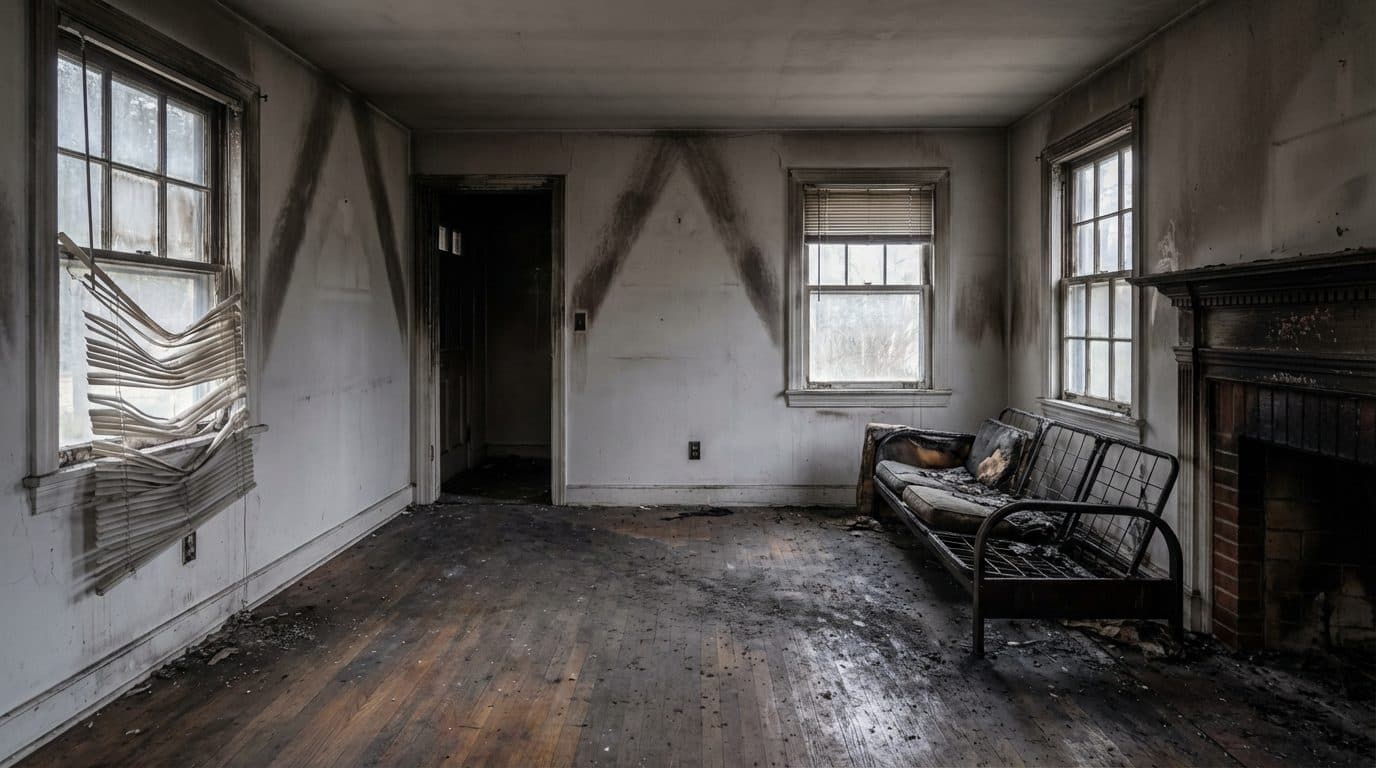
Niantic is not one building stock. It is 1880s camp cottages on 25-by-25-foot lots at Pine Grove, 1924 beach cottages at Black Point that were given heat and a winter in the 1980s, a Main Street that had thirty-two buildings by 1867, and a farmhouse from about 1660 out toward Giants Neck. Surface cleaning answers none of them. IICRC S700 protocol with in-house soda blasting, led by an IICRC-certified co-owner, does.
The local co-owner holds personal IICRC certifications in Applied Microbial Remediation and Water Restoration, walks every major Niantic loss, and signs the documentation that reaches your adjuster.
On village lots the building next door is the second claim. Every adjacent structure is metered, photographed and scoped from the first visit, so a neighbor with soot and no flame has a dated record instead of an argument.
Blast pots, sodium bicarbonate media and trained operators run in-house. Old framing, lath and plaster in Niantic cottage and Main Street buildings are exactly the substrates the method exists for, and wire brushing does not reach them.
We bill Travelers, The Hartford, Liberty Mutual, State Farm, Chubb, AIG and the other majors directly, with IICRC documentation, timestamped photographs, soda blasting protocol records, AMRT records and contents inventory so the Niantic claim closes without a paperwork stall.
Soda blasting is the reason a cleaned Niantic cottage still smells clean when the humidity comes off the bay in July. Older framing, lath and plaster hold soot inside the substrate, where brushing cannot reach and sanding makes it worse. Our IICRC S700 crews run sodium bicarbonate blasting in-house on every job that needs source removal, with AMRT-led mold prevention running in parallel on the suppression water.
Pharmaceutical-grade baking soda. Softer than wood (Mohs 4) and original lath, harder than soot bond layer. Friable on impact, shatters into dust on contact with the substrate rather than embedding into grain or finish.
IICRC S700 fire protocol and S520 mold protocol both list abrasive blasting as a recognized source-removal method for porous structural wood, charred framing, joists, and sheathing where wire brushing leaves residue.
Same compound used in food and pharmaceuticals. No crystalline silica, no toxic residue, no respirable lung hazard beyond standard PPE. Non-sparking and non-flammable on partially-cleared fire scenes.
Media choice matters more in a village than almost anywhere, because the buildings are close and the dust has somewhere to go. Wire brushing leaves a bonded carbon film in the grain that re-emerges as odor weeks later. According to Green Restoration job records, the real test in this village arrives in July, when humidity off the bay pulls that film back out of the grain and turns a cosmetically clean cottage into an odor callback, which is why the char comes off at the source rather than being brushed flat.
Sanding charred framing opens the grain, drives soot deeper and throws airborne carbon into rooms the fire never entered, which on a 25-foot lot means contaminating the property next door as well as your own. Sodium bicarbonate at Mohs 2.5 is softer than the wood, the plaster and the masonry, so it shatters the soot layer at impact without abrading what is underneath, and the pH-neutralizing chemistry breaks acidic odor compounds down at the source. The residue is water-soluble and HEPA-vacuums up in a single pass.
On Niantic jobs the blast typically goes on three substrates: charred framing and ceiling joists in cottage and camp-era structures, masonry on chimneys and hearths where creosote has bonded to the soot, and sheathing behind blown-out plaster where a stain-blocking primer alone will not hold the odor back. In a winterized conversion we also blast the retrofit chase once it is opened, because that chase is the path the smoke took. Plaster and finish millwork are dry-sponge cleaned to IICRC S700 first, and a test patch decides between selective blasting and full repaint. The AMRT and WRT certified co-owner signs off on every blast scope.
Sodium bicarbonate residue is water-soluble and the medium is FDA GRAS, so post-blast cleanup is HEPA vacuuming, a damp microfiber wipe and a final pass of EPA-registered antimicrobial under IICRC AMRT protocol to address spores exposed by the char removal. Moisture content on cleaned framing is documented back under 16 percent before any new sheathing or plaster goes up. In shoreline cottage stock sitting on shallow cellars and crawl spaces, that 16 percent gate is the line between a clean rebuild and a callback the following summer.
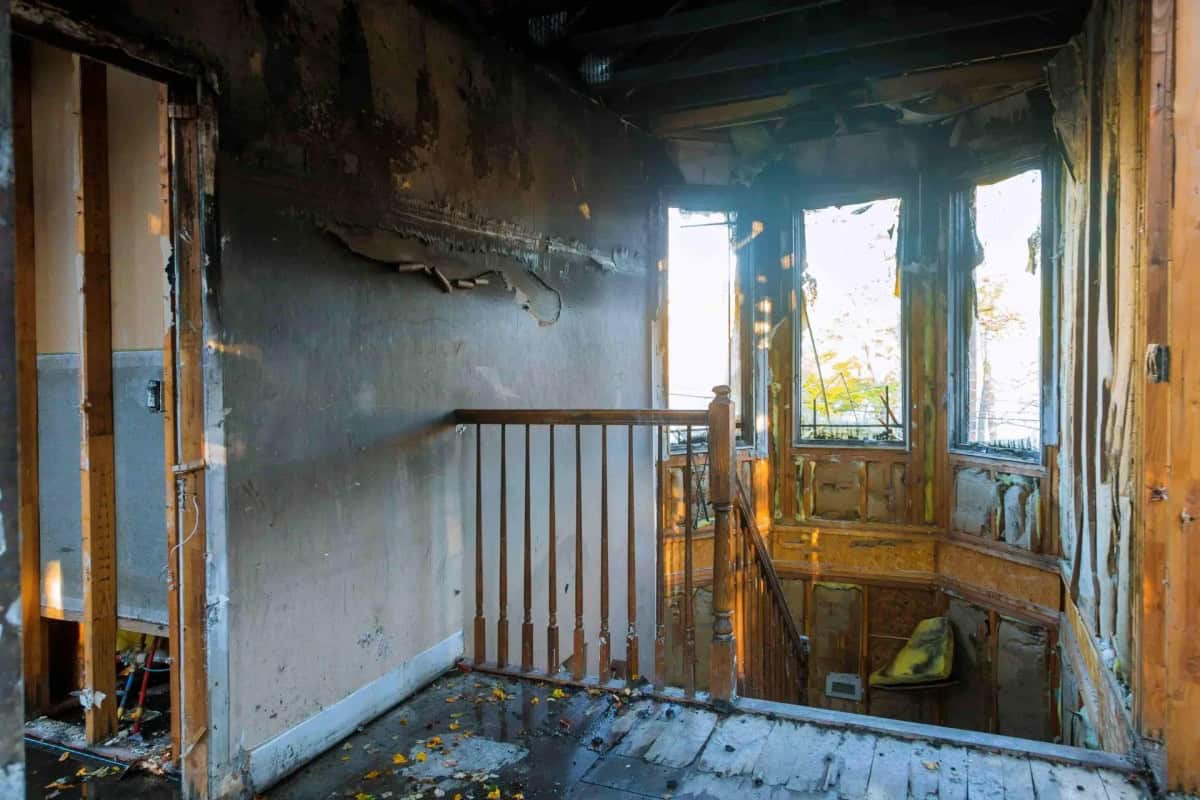
Niantic fire calls split three ways: tight-lot cottage fires across the beach associations, concealed-space smoke in winterized year-round conversions, and shared-void losses in the older Main Street blocks. One fully loaded fleet covers all three, so dispatch, scope and execution stay on a single IICRC-certified crew.
Every Niantic response truck is staged with the full IICRC S700 fire kit, soda blasting setup, contents pack-out crates, and structural drying equipment so a single dispatch handles board-up through reconstruction handoff.
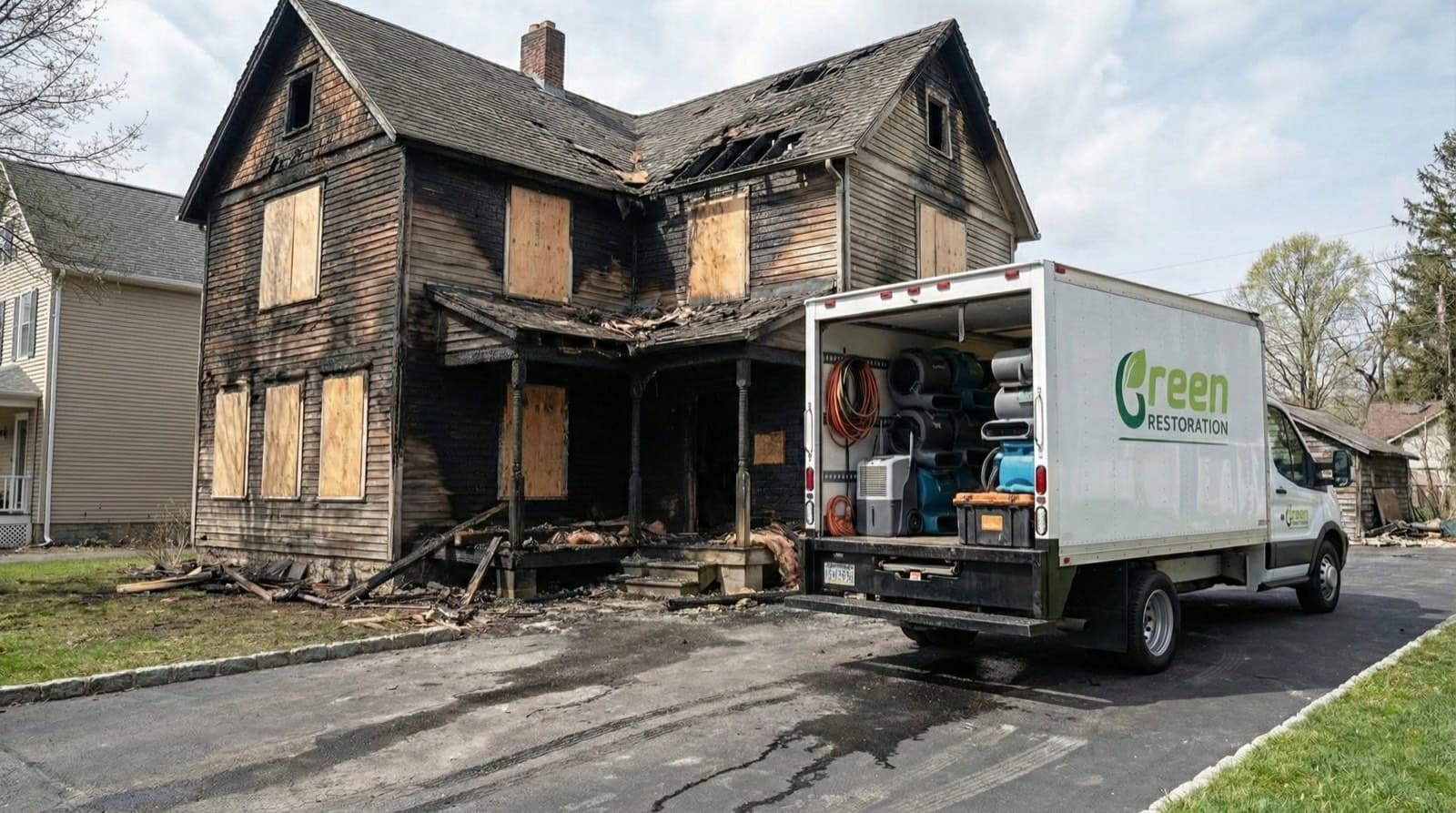
On a Niantic dispatch the fleet reaches the village within 45 to 60 minutes to any address in 06357, from Main Street, Grand Street and Pennsylvania Avenue out to Crescent Beach, Attawan, Oak Grove, Saunders Point, Giants Neck, Giants Neck Heights, Old Black Point and Pine Grove. Blast pots and HEPA scrubbers stage for structural fires, contents crates for smoke-only jobs, negative-air machines for containment, and a second vehicle stages outside any single-road pinch point.
The pattern decides the staging order, not the protocol. A Pine Grove lot fire opens with exposure metering on the properties either side. A winterized Black Point cottage opens with a thermal scan of the retrofit chases. A Main Street block opens with containment between tenancies. All of it runs one IICRC S700 playbook.
From the first call to final walkthrough, every step is documented, insured, and owner-supervised.
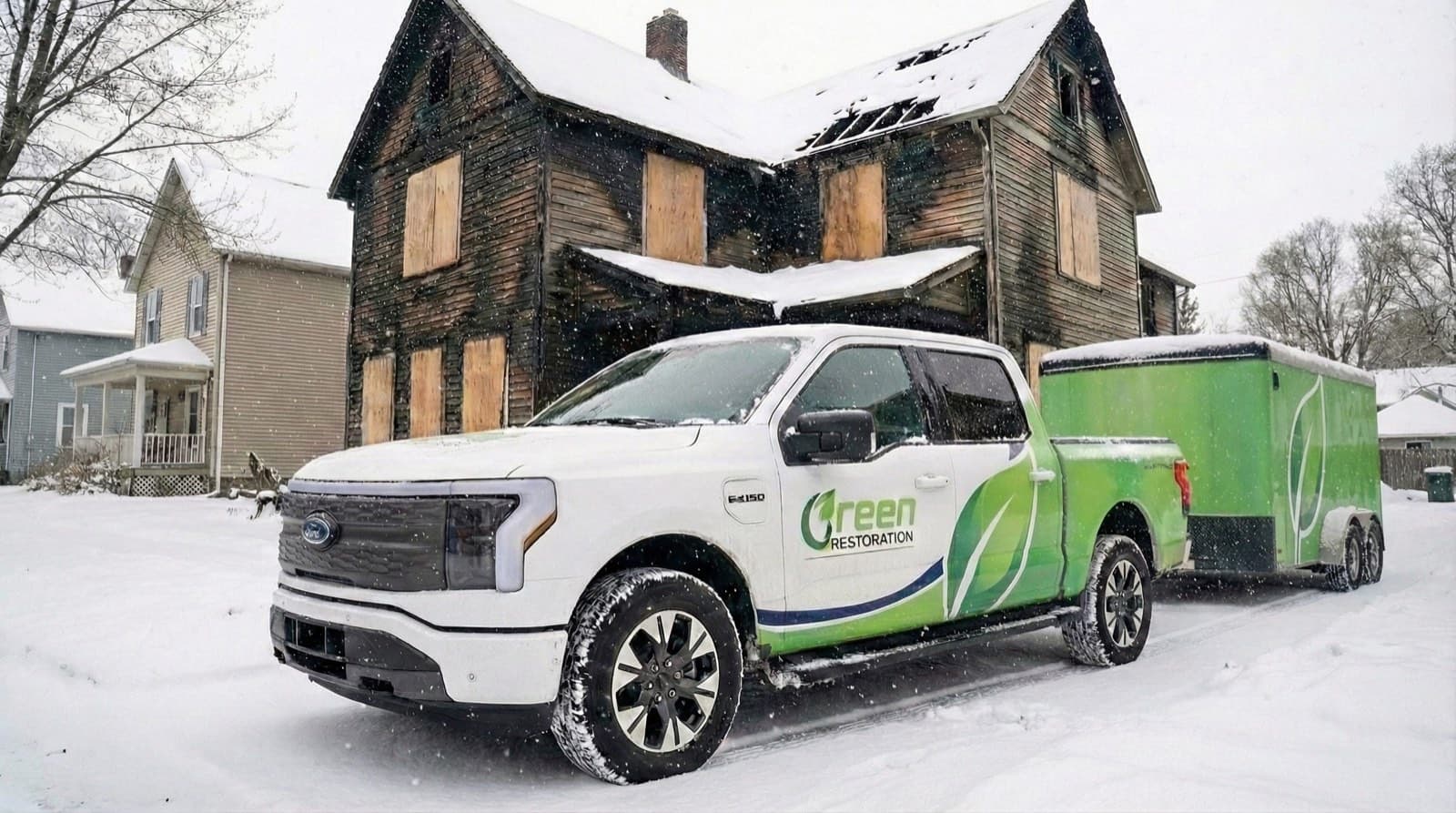
Full service fire damage response, soda blasting soot cleanup, contents pack-out, and reconstruction for Niantic homes and businesses. 60-minute emergency dispatch across New London County, day or night.
Green Restoration provides IICRC S700 certified fire damage restoration and soda blasting soot removal in Niantic, CT, the shoreline village of East Lyme, covering 06357 from Main Street, Grand Street and West Main Street out to Crescent Beach, Attawan Beach, Oak Grove Beach, Saunders Point, Giants Neck, Giants Neck Heights, Old Black Point and Pine Grove. Crews dispatch across New London County and arrive with board-up material, roof tarps, blast pots and contents protection on the first visit.
We work this village the way it is actually built. Pine Grove is 155 homes on 25-by-25-foot lots that began as 1882 tent platforms, Black Point is nearly six hundred properties subdivided from a farm in 1924 and winterized after town water and sewer arrived in the 1980s, and Main Street went from two buildings in 1839 to thirty-two by 1867. The local co-owner walks every major loss personally and coordinates with adjusters from Travelers, The Hartford, State Farm, Liberty Mutual and every other major carrier. According to Green Restoration scope records, a Niantic estimate names which of those three building stocks it is dealing with before equipment is unloaded, because a 25-foot camp lot, a winterized 1924 cottage and an 1860s Main Street block each send the smoke somewhere different.
We are not licensed public adjusters and do not negotiate claims on your behalf. We submit IICRC S700 scope documentation directly to your insurer.
60-minute emergency dispatch, 24/7/365.
(833) 833-3637Request Free InspectionIICRC S700 · Licensed & Insured · All Insurance Accepted
New London County mobile dispatch to Niantic village, the beach associations, and the Main Street blocks.
Crews dispatched across New London County to Niantic village, on site within 45 to 60 minutes. Board-up, exposure documentation next door, soda blasting source removal, contents pack-out and reconstruction managed end to end by an IICRC AMRT and WRT certified co-owner.
Crews reach 06357 with board-up material, HEPA scrubbers, blast pots and generator power, with the route past the single-access pinch points planned before the truck rolls.
The local co-owner personally holds IICRC AMRT and WRT certifications and walks every major Niantic loss.
On village lots the adjacent structures are metered and photographed on the first visit, so an exposure claim has a dated record rather than a reconstruction from memory.
Blast pots and sodium bicarbonate media run by trained operators on every Niantic job that needs char removed at the source.
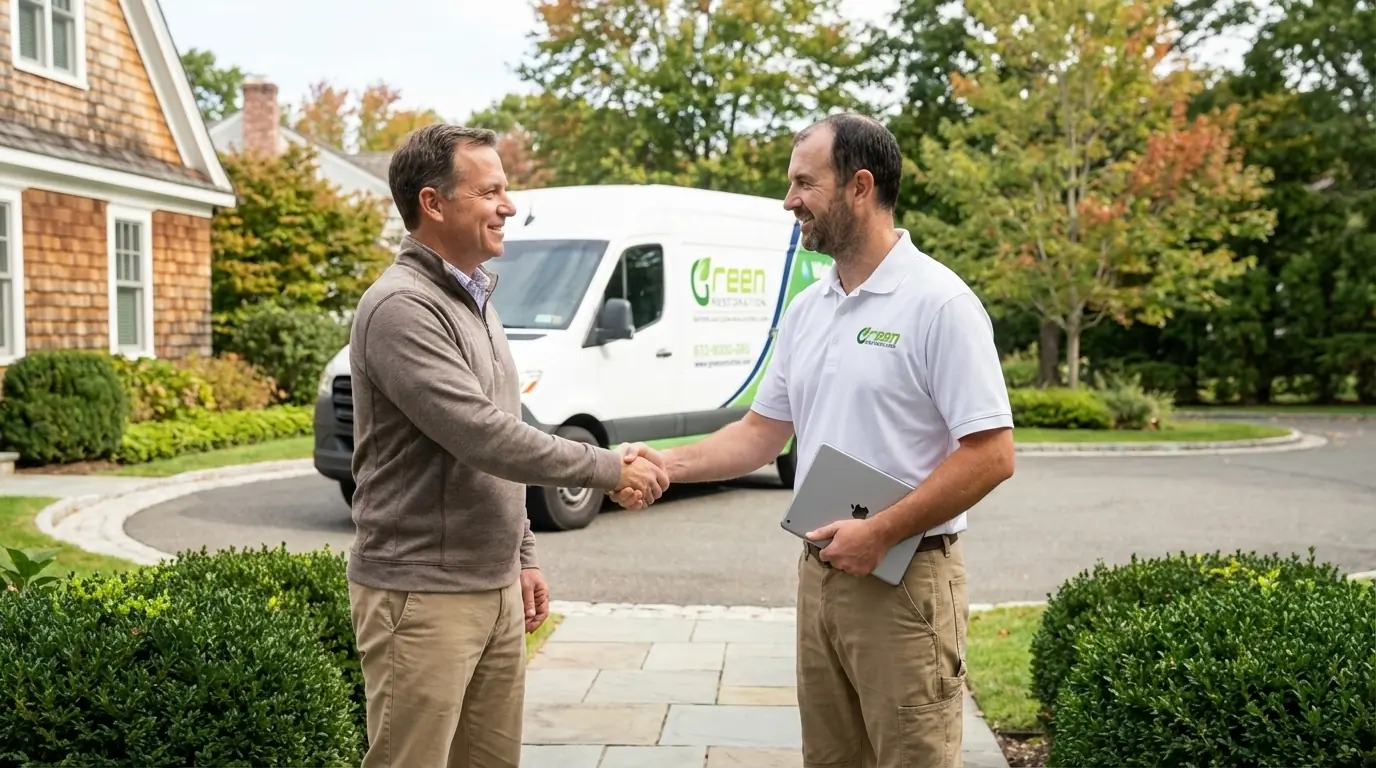
Your Niantic Fire & Smoke Damage Specialists Since 2014
Green Restoration provides IICRC S700 certified fire and smoke damage restoration, soda blasting soot cleanup, contents pack-out, and reconstruction for homes and businesses in Niantic, CT. Our process focuses on rapid stabilization, hospital-grade soot removal, molecular odor treatment, and documented reconstruction. We work with property owners and insurance providers to document scope clearly and restore affected areas the right way, without unnecessary steps or delays.

“As the local co-owner across New London County, I hold IICRC certifications in water restoration (WRT) and mold remediation (AMRT). Niantic is a village of small buildings standing close together, and that changes the job: the question is rarely what burned, it is what the burning reached next. I walk these losses personally, I write the file so it sits beside the Fire Marshal report rather than argues with it, and I stay on it through soda blasting and reconstruction.”
Connecticut policyholders generally have the ability to select their own licensed restoration contractor. Carriers and contractors work the same claim process together.
Your policy is between you and your insurer. Selecting the licensed restoration contractor generally sits with the property owner.
Carrier referral and preferred-vendor programs are offered to streamline claims. You can use a referred contractor or retain a different licensed contractor.
Referred or independent, we submit IICRC S700 documentation, photo-logged inventory, and itemized line items directly to your adjuster.
If you bring in a different licensed contractor mid-project, the scope and remaining work are documented at handoff so the claim continues without gaps.
Educational reference only. We are not licensed public adjusters and do not negotiate claims on your behalf. Coverage and process specifics live with your carrier and your policy language.
4.8 out of 5, Rated by your neighbors on Google
We discovered mold when removing our pellet stove and called Green Restoration for help. David was very communicative and helpful throughout the entire process. He did the job thoroughly and professionally. Highly recommended!
David Woolner
Mold RemediationI had a fantastic experience with Green Restoration. From start to finish, the team was professional, thorough, and extremely knowledgeable. David came for the initial inspection and took the time to explain the entire process.
Annmarie Gieparda
Mold RemediationWe had mold due to a water leak in our half finished basement. David and his crew did a great job, we were very satisfied. I would highly recommend Green Restoration to anyone.
Tanya
Water DamageI needed my entire condo completely cleaned after a soot blow back. Green Restoration was top shelf! So thorough and professional. Thank you so much!
Jacki Hornish
Fire & Soot CleanupInstant estimate for emergency response, soda blasting soot cleanup, contents pack-out and reconstruction across Niantic village and the beach associations. Co-owner-led inspection on scope above $25,000. Transparent pricing, direct insurance billing.
Ranges based on IICRC S700 fire jobs we have handled across New London County, drawn from 136 verified Google reviews (4.9★) and our internal job-cost ledger. Final pricing depends on on-site inspection.
Smoke, Soot & Puffback
$1,500 to $8,500
Furnace puffback, chimney smoke, soot or nicotine odor cleanup, no structural burn
Contained Fire + Smoke
$8,500 to $45,000
Single-area burn with house-wide smoke, soot and suppression water cleanup
Major Structural
$45,000 to $150,000+
Multi-room structural loss with demolition, odor sealing and full reconstruction
Priced by scope: what burned, and how far the smoke traveled. Read the full cost guide.
Straight answers on village lot spacing and exposure claims, single-access response, winterized cottage retrofits, soda blasting, and Connecticut fire coverage in Niantic, CT.
Smoke, soot, and puffback cleanup with no structural burn typically runs $1,500 to $8,500, and it is the most common fire-family job we handle in Niantic. A contained fire with house-wide smoke damage runs $8,500 to $45,000, and major structural restoration with reconstruction runs $45,000 to $150,000 and up. Smoke travel, soot type, and suppression water place a loss inside its tier. Assessment is free and produces a written line-item scope we submit directly to your insurer. We are not licensed public adjusters and do not negotiate claims on your behalf.
Niantic is a village and census-designated place inside the town of East Lyme, with no government of its own, and it does change the paperwork. The permits, the code enforcement and the cause determination all run through East Lyme, and the Office of the East Lyme Fire Marshal sits at 277 West Main Street in Niantic, responsible for fire investigation, fire prevention, code enforcement and public education, including determining the causes of any fires that do occur. Since July 1, 2023 that office charges fees for permit and plan reviews and life safety inspections. We open the restoration file expecting the Marshal report and build the scope so the two documents agree rather than compete.
Because of the lot size. Pine Grove began in 1882 as a Spiritualist tent camp and grew from a collection of tents to nearly two hundred small Victorian cottages, and in the early 1900s people began building homes on their 25-foot by 25-foot lots in place of the platform tents. There are 155 homes there today on a peninsula with the Niantic River to the east and Smith Cove to the west. At that spacing the exposure walls of the neighboring buildings take radiant heat and blown embers, so soot and heat damage regularly land on properties that never had flame inside them.
Our scope always meters the adjacent structures, because an exposure loss that goes undocumented on day one is the one the carrier questions in week three.
Carefully, and that is part of the plan rather than an excuse. Camp Niantic sits directly south of the Pine Grove peninsula and blocks all access routes except low-lying Pine Grove Road, which can flood during storms. Giants Neck is reached by Dell Lane and Edge Hill Road, and the Giants Neck Road railroad crossing can be inundated, cutting off the neighborhood south of the corridor. On a Niantic dispatch we plan the route before the truck rolls and stage a second vehicle outside the pinch point, so board-up material and blast equipment are not sitting behind the only road in.
They were not built to be lived in through a Connecticut winter. The James Jay Smith Company bought the Payne Farm in 1924 and subdivided it, selling lots for two hundred, three hundred or six hundred dollars and producing modest beach cottages, and when the town extended public water and sewer to Black Point in the 1980s more homes began to be winterized and occupied year round. The association covers nearly six hundred residential properties today. Heat, insulation and year-round electrical load were added to envelopes designed for June through September, and those retrofits are where the concealed spaces, the odd chases and the after-the-fact penetrations live. Our thermal scan follows the retrofit, not the floor plan.
Crews dispatch across New London County and the eastern shoreline and reach Niantic within 45 to 60 minutes, day or night, from Main Street and Grand Street out to Crescent Beach, Attawan, Oak Grove, Saunders Point, Giants Neck and Black Point. Board-up, tarp-over and suppression water extraction begin on arrival. Call (833) 833-3637 at any hour and the clock starts with the call, logged for your insurance file from minute one.
Sodium bicarbonate blasts at Mohs 2.5, which is softer than the framing, the lath and the plaster in Niantic village stock, so the media shatters the carbon layer at impact and leaves the substrate underneath alone. Wire brushing leaves a bonded film in the grain that comes back as odor when the humidity rises off the bay in July. Sanding opens the grain, drives carbon deeper and throws soot dust into rooms the fire never entered, which on a 25-foot lot means dusting a neighbor. Blasting removes the char at the source, neutralizes the acidic soot chemistry as it works, and leaves framing ready for stain-blocking primer in one pass.
Niantic work typically runs from about $3,500 for a contained single-room smoke remediation to $80,000 or more for a whole-structure loss involving soda blasting on framing, HVAC decontamination, contents pack-out and finish reconstruction. Small village buildings can sit high in the range rather than low, because a cottage of a few hundred square feet still needs full containment, full PPE hours and full documentation, and because an exposure loss next door opens a second file. A written IICRC S700 scope follows the on-site walk with thermal imaging and soot density mapping, and the co-owner is present for any scope above $25,000.
Connecticut homeowner policies cover fire damage subject to your policy terms and deductible, and that generally includes smoke damage to parts of the building the fire never reached. Two things worth knowing here. A property carried as seasonal or as a secondary residence can be written on different terms than a year-round home, which matters across the beach associations. And an exposure loss, where your building was damaged by a fire that started next door, is still your own claim on your own policy. We submit IICRC S700 documentation, soda blasting protocol records, thermal imaging and a full contents inventory directly to your carrier. We are not licensed public adjusters and do not negotiate claims on your behalf.
It goes down, and in this village that usually means a crawl space or a shallow cellar under a building that sits close to the water table. We extract on the same visit, set LGR dehumidification sized for the assembly rather than the room, and dry to IICRC S500 and WRT standard under the same file as the fire scope. Without that step a fire loss becomes a fire-plus-mold loss inside 48 hours, and the AMRT-certified co-owner signs off on the drying data before the file closes.
Where a beach-association property is on the municipal system, note that the town sewer network runs on 21 pump stations, so a power interruption during a storm changes how fast water leaves the site.
A contained kitchen fire in a cottage generally runs 5 to 10 days. Smoke spread through the concealed spaces of a winterized cottage or a Main Street building with shared voids runs 10 to 21 days, because those cavities have to be opened, blasted and verified before anything closes. A whole-structure restoration with structural soda blasting, reconstruction and East Lyme permitting runs 30 to 90 days depending on soot density, suppression water involvement and rebuild scope. An exposure claim on the neighboring property runs on its own timeline and its own carrier, which is why it gets its own file from the first visit.
Yes. Our IICRC S700 contents pack-out includes inventoried, climate-controlled storage of your salvageable belongings while your Niantic property is restored. We photograph and barcode every item, clean and deodorize soft goods, electronics, artwork, and upholstery off-site, then hold them in a secure humidity-controlled facility until reconstruction is complete and we pack them back. Pack-out, storage, and pack-back are all documented for your insurer as part of the claim. Call (833) 833-3637 to schedule a Niantic contents inventory.

