Water Damage Restoration In Sandy Hook, CT
IICRC-Certified Pootatuck River Flood And Burst Pipe 60-Minute Response, Direct Insurance Billing, 24/7
 IICRC Certified
 Eco-Friendly Solutions For Healthier Spaces
Reviewed by Marvin Riveira·Licensed & Insured In CT·Owner-Operated
What Is IICRC S500 Water Damage Restoration?
Water damage restoration is the IICRC S500-2021 documented process of extracting standing water, classifying the loss by category (clean, gray, black) and class (1 through 4), then drying the structure to equilibrium moisture content within a defined psychrometric window using commercial LGR dehumidifiers, axial air movers, and Tramex meter verification across every previously affected substrate.
In Sandy Hook, CT, Green Restoration sequences the restoration: 60-minute dispatch, FLIR thermal imaging and Tramex CME 5 mapping, truck-mounted extraction, controlled drying to S500 § 12 benchmarks, antimicrobial application per S520-2024, and a carrier-ready scope file with daily moisture logs. Cutting steps drives mold colonization risk, claim denial risk, and reinjury rework within weeks.
- IICRC S500-2021 aligned
- ASTM E1745 vapor retarder spec
- ASHRAE 160 humidity targets
- Carrier-grade documentation
Why Sandy Hook Sits in Climate Zone 5A
IECC International Energy Conservation Code
IECC Climate Zone 5A across most of Connecticut. Coastal towns sit in Zone 5A while the inland NW Corner edges into Zone 6A.
Connecticut adopts the 2021 IECC under the State Building Code, requiring documented psychrometric drying logs and Class I or II vapor retarder per ASTM E1745 after Category 2 or Category 3 water restoration.
Conditions from the National Weather Service and Open-Meteo.
Sandy Hook Emergency Utility Lines
Stopping water at the source is step 1 of any water-damage scope. Use these verified Sandy Hook lines while our IICRC crew is en route.For life-threatening emergencies (active fire, gas odor, electrical shock), call 911 first.
Water Authority
Aquarion Water Co
(800) 732-9678
24/7 emergency. Request curb-stop shutoff if your main valve fails.
Source: aquarionwater.com
Gas Leak
Eversource Gas (Yankee Gas)
(877) 944-5325
If you smell gas, leave immediately, call 911 first, then this line from a safe location.
Source: eversource.com
Electric Emergency
Eversource Electric
(800) 286-2000
Submerged outlets or wet panel: cut breaker, then call to confirm service drop is safe.
Source: eversource.com
Police (Non-Emergency)
Sandy Hook Police
(203) 426-5841
Sewer-backup Cat-3 claims sometimes need a police report. Call dispatch.
Source: newtown-ct.gov
Numbers verified against public utility and municipal sources. Green Restoration is not affiliated with these agencies. We provide these as a courtesy resource alongside our IICRC water-damage response.
Complete Water Damage Restoration
From emergency water extraction to structural drying and full reconstruction, we handle every type of water damage in Sandy Hook and Fairfield County.
Emergency Water Extraction
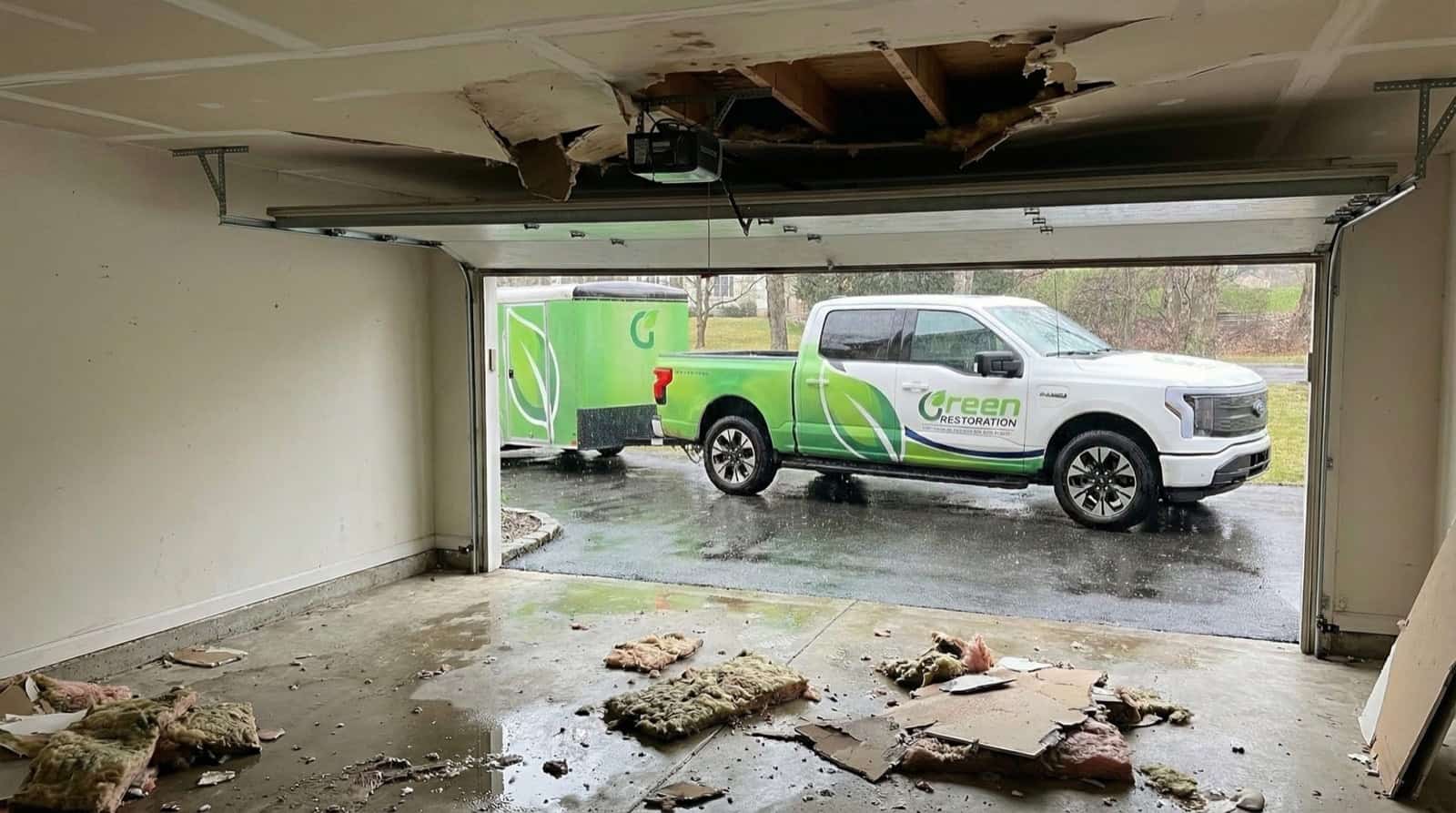
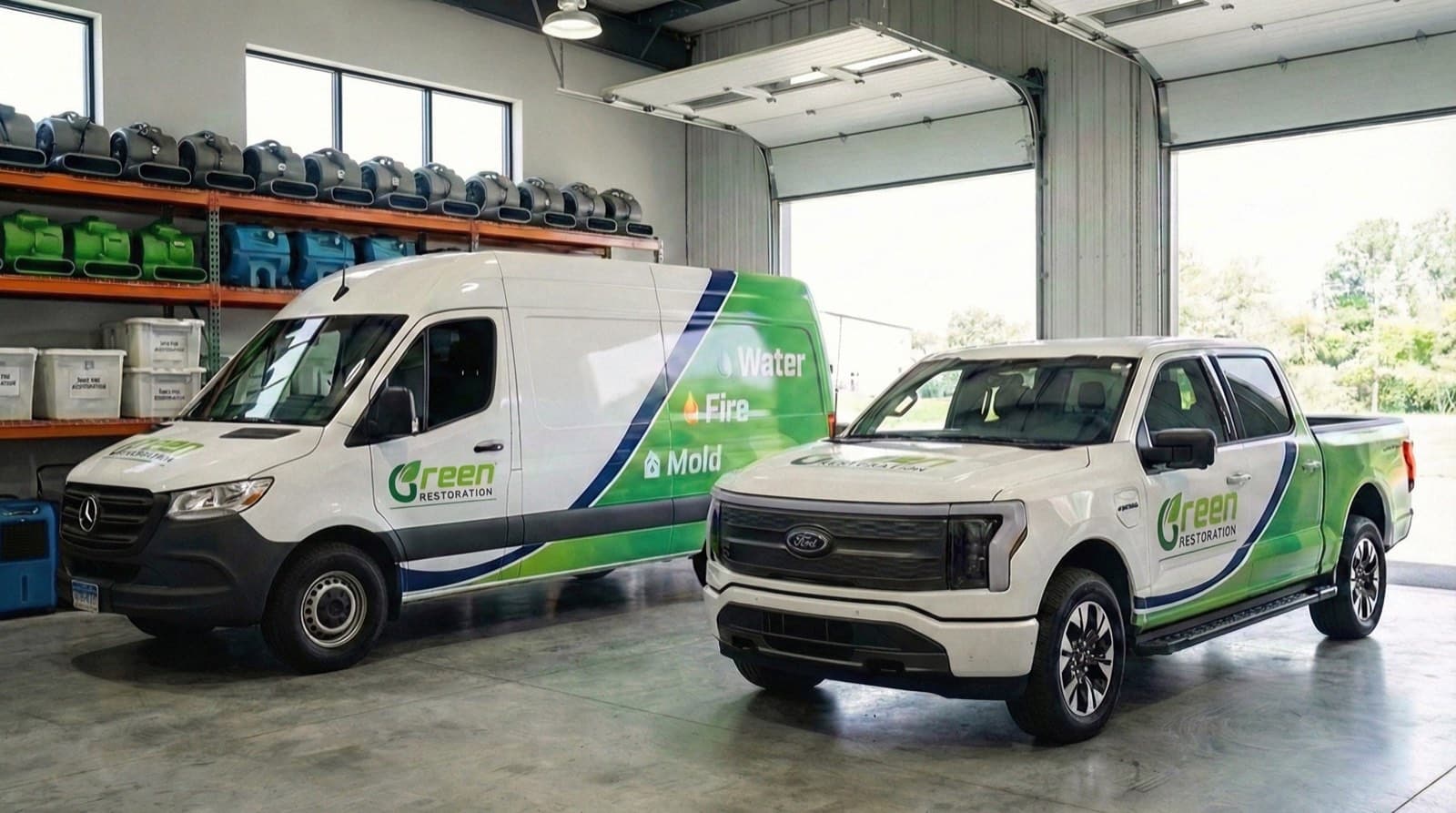
Truck-mounted extraction reaches Sandy Hook within 60 minutes of dispatch. Bulk standing water comes out first and fast, because framing, subfloor, and finishes in Church Hill homes only survive if the water stops standing.
Burst Pipe Cleanup
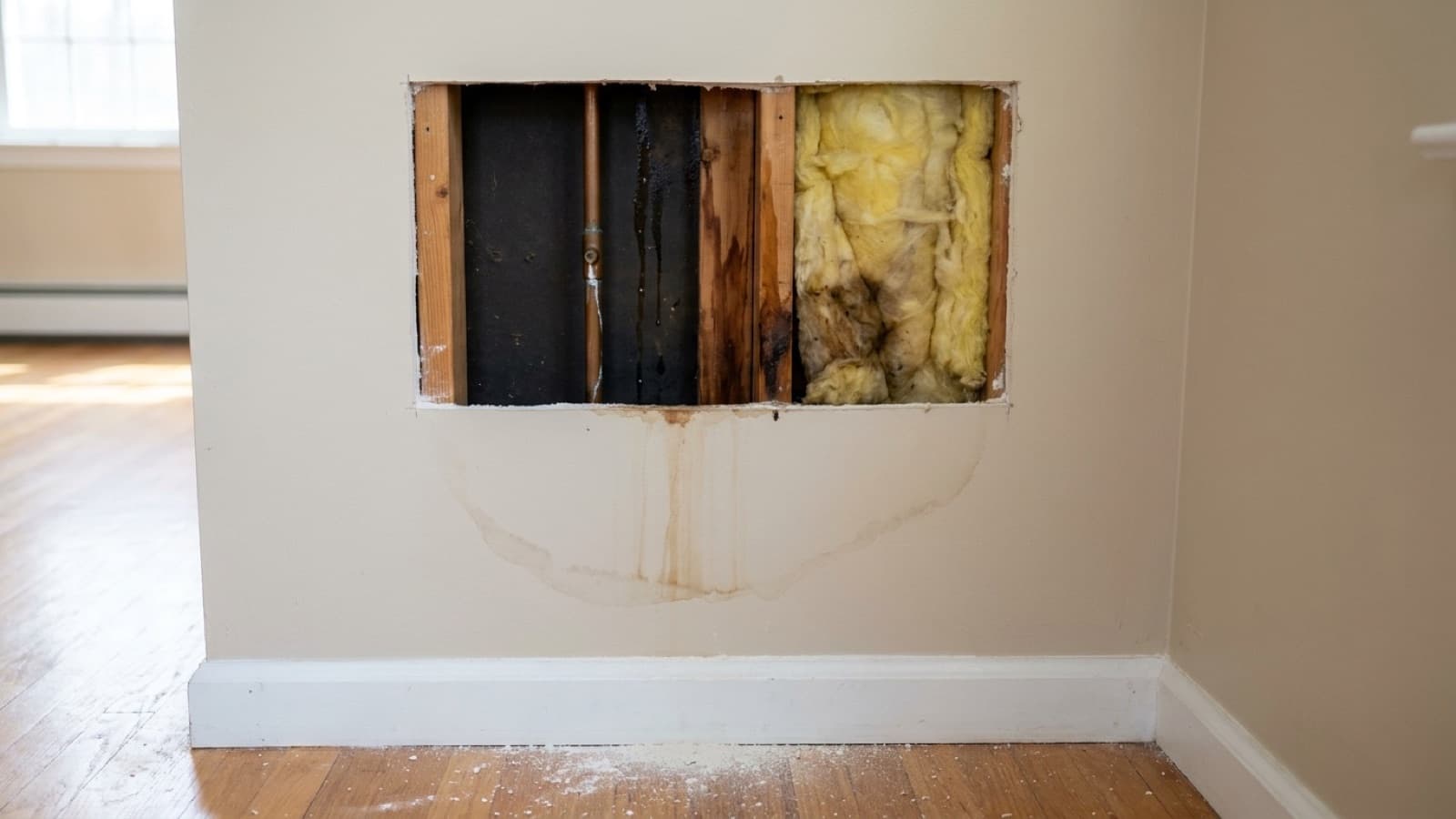
Burst supply lines do their damage in minutes; the response in Sandy Hook runs extraction, drying, and antimicrobial treatment per IICRC S500 before the moisture finds plaster-on-lath in pre-1955 homes.
Flooded Basement Cleanup
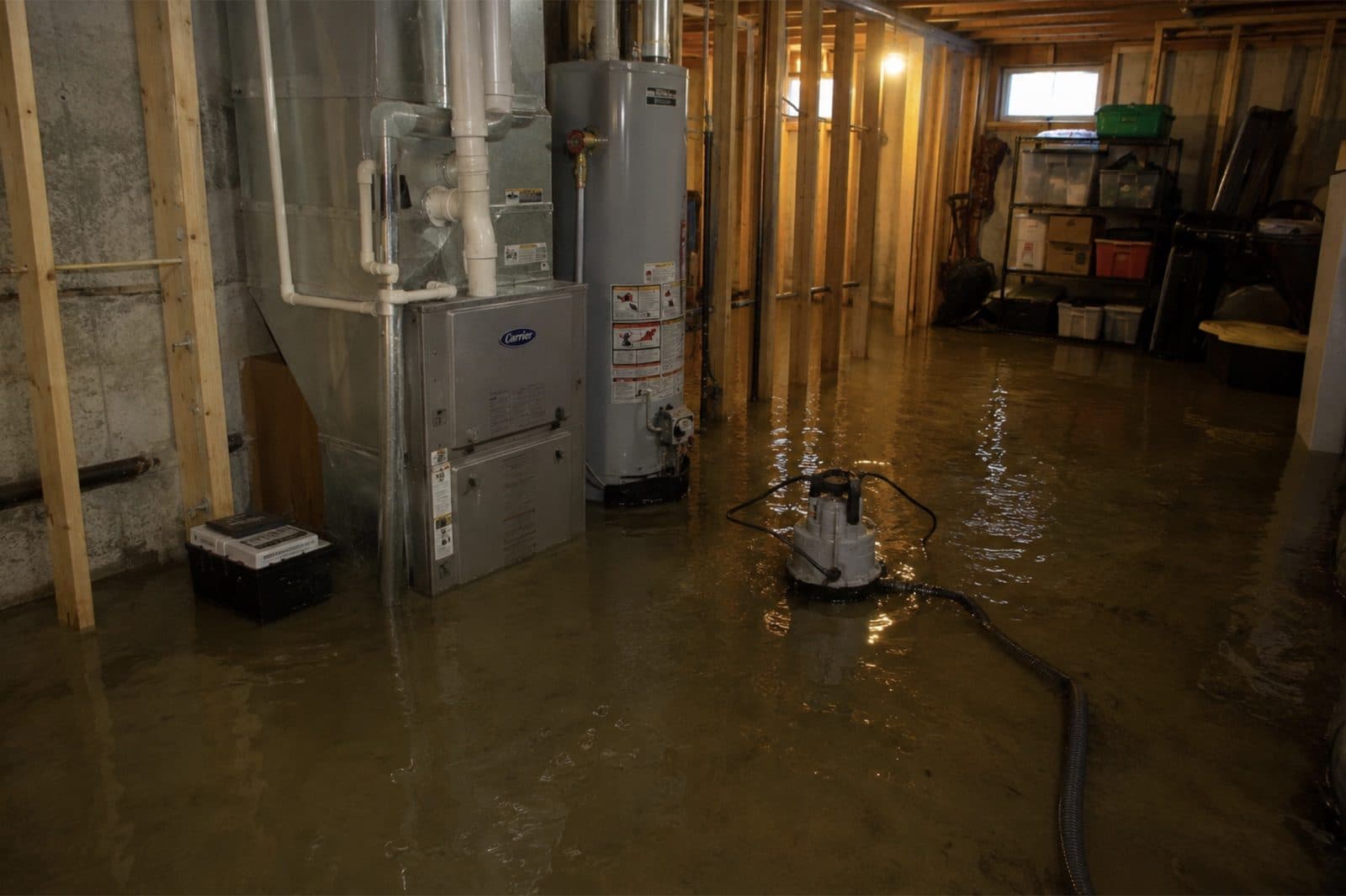
A flooded basement in Church Hill gets pumped, extracted, and LGR-dried on one visit, documented end to end for the claim.
Additional Water Damage Services
Storm & Flood Damage
When storms push water through Sandy Hook, from local river corridor overflow to grade-level intrusion, the response covers extraction, drying, and carrier-ready documentation.
Sewage & Backwater Cleanup
Category 3 sewage and backwater in Sandy Hook means HEPA containment, bulk removal, and EPA-registered antimicrobial protocols per IICRC S500, with worker PPE on every job.
Structural Drying & Dehumidification
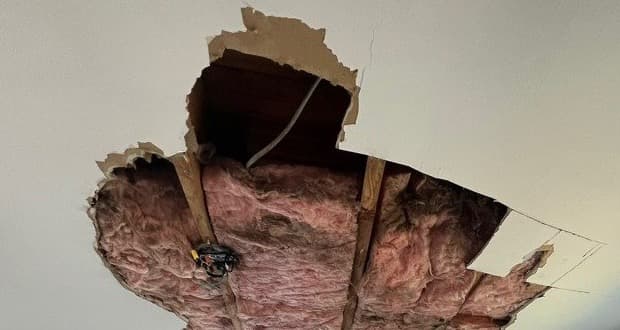
Plaster-on-lath in pre-1955 homes make blind drying risky in Sandy Hook; the plant is placed by calculation and the framing is verified dry before anything closes.
Ceiling, Wall & Floor Restoration
Water-hit ceilings, walls, and hardwood in Sandy Hook get surgical treatment: controlled cuts where needed, mat-drying where the floor can be saved, plaster preserved where it can.
Mold Remediation (Post-Water)
Post-water mold in Sandy Hook gets IICRC S520-aligned remediation: HEPA containment, source-water correction, EPA-registered antimicrobial treatment, and documented pre and post readings.
Commercial Water Damage
Businesses across Fairfield County get commercial-grade response in Sandy Hook: rapid extraction, contained work areas, and carrier-ready files.
Appliance Leak Cleanup
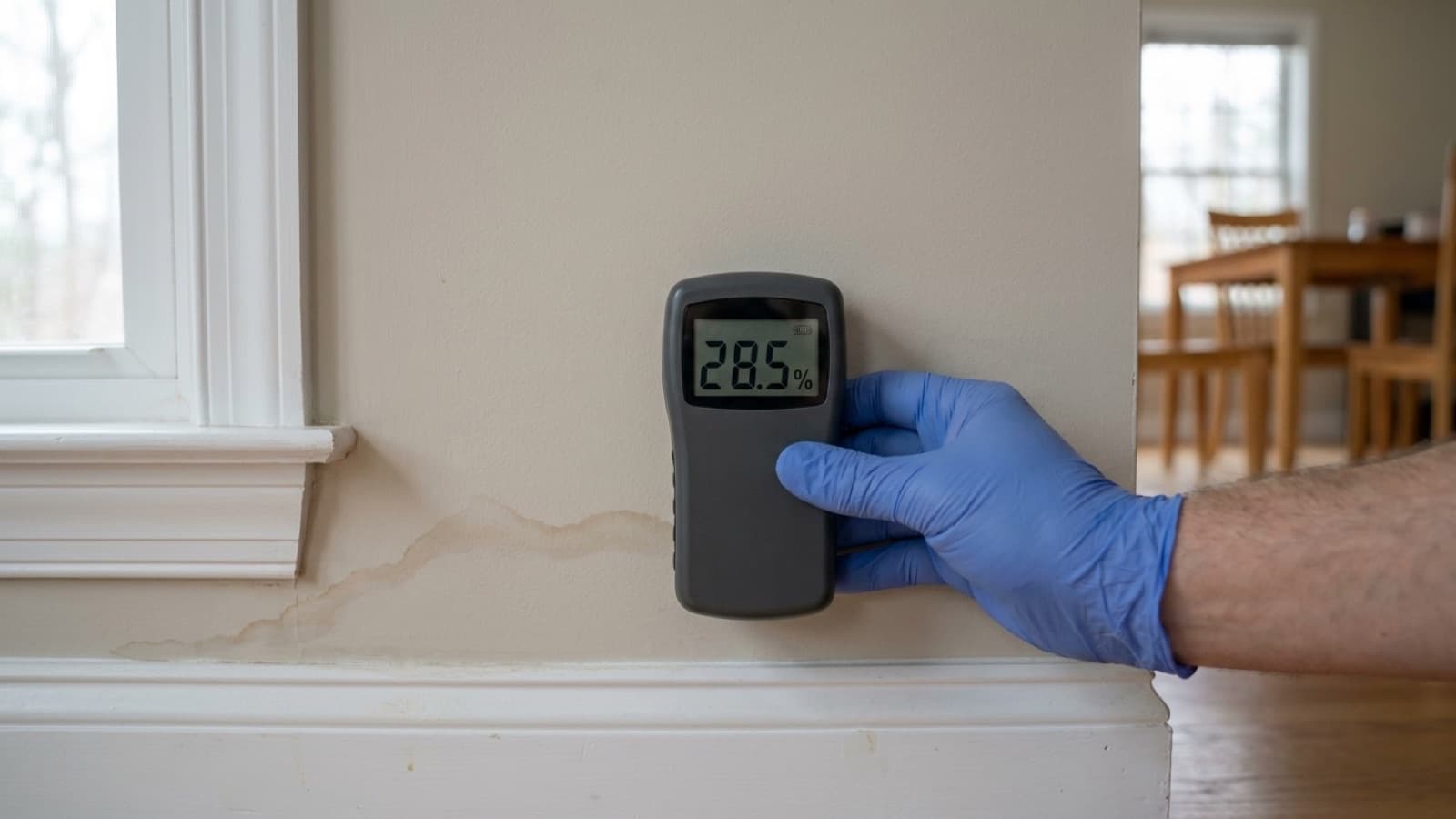
Appliance leaks in Church Hill homes get Tramex meter mapping, targeted drying, and S500 documentation before hidden moisture turns into hidden mold.
Roof Leak & Storm Intrusion Cleanup
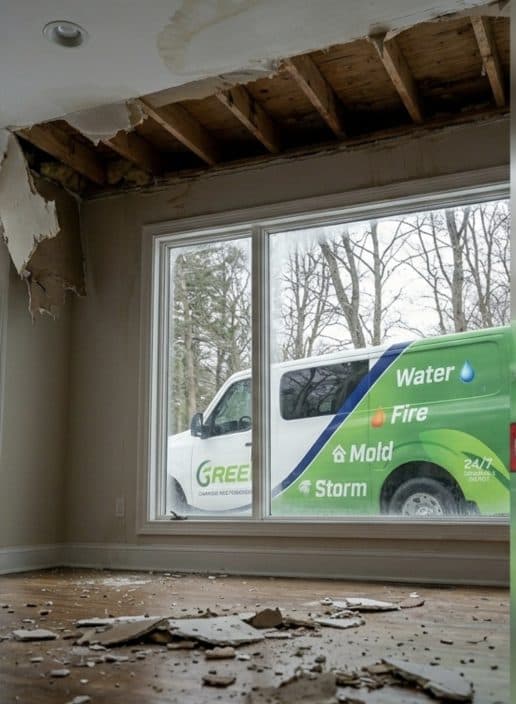
Ice dams, flashing failures, and wind-driven rain find Sandy Hook roofs every season; interior drying, plaster care, and source documentation keep the loss from repeating.
Water Heater Failure Cleanup
Forty to eighty gallons lands all at once when a heater lets go; Sandy Hook responses stage extraction and drying immediately, documented end to end.
Don't Wait For Water Damage To Get Worse. Every Minute Counts.
Call Now For Same Day Emergency Service Across Sandy Hook And Fairfield County.
Green Restoration of Fairfield County in Sandy Hook
Green Restoration of Fairfield County handles water damage restoration in Sandy Hook, CT, where Pootatuck River Category 3 surge scope lands in 1800s mill-era wood-frame and masonry structures with wide-plank floor and horsehair plaster to salvage or remove. Owner-operated crews extract the water and dry the structure to IICRC S500 standards with documented moisture logs, under IICRC Certified Firm #70236106. Call (203) 674-9573.
Why Choose Us In Sandy Hook
Owner-led service with 60-minute response, direct insurance billing, and eco-friendly methods across Sandy Hook.
60-Minute Emergency Response
IICRC-certified crews arrive within 60 minutes, day or night, every day of the year.
Owner-Operated Local Crew
Every job is personally overseen, from first call to final moisture reading.
Direct Insurance Billing
We bill State Farm, Liberty Mutual, USAA, Farmers, AIG, Chubb, and Safeco directly.
EPA-Registered Antimicrobials
EPA-registered antimicrobials and Safer Choice cleaning products applied per IICRC S500 and S520 standards.
What Untreated Water Damage Costs Your Sandy Hook Property
Untreated water damage in a Sandy Hook home becomes mold colonization within 24 to 48 hours, hardwood cupping within 12 hours, and plaster delamination within 72 hours. A $4,500 same-day extraction can become a $25,000 plaster and finish-floor rebuild after 48 hours. The earlier we measure, the smaller the rebuild.
local river corridor Drainage Corridor
Primary Flood Risk Path
Sandy Hook water damage scope often centers on local river corridor drainage. Properties in the mapped Special Flood Hazard Area require NFIP coverage in addition to standard homeowner policy. Documented historic high-water events along this corridor inform every scope.
Aging Plumbing And Supply Lines
Pre-1970 Galvanized Failures
Older Sandy Hook housing stock relies on original galvanized and early copper supply lines that are at or past their nominal service life. Exterior wall freeze events and corroded union failures are the most common emergency calls.
Sump Pump Failure During Storms
Float Switch And Battery Backup
Sandy Hook basements with sump systems flood fastest when the float switch fails during peak rainfall or power loss. A battery backup is the primary mitigation against noreaster-pattern flooding.
Plaster-On-Lath And Period Construction
Extended Drying Timelines
Pre-1955 Sandy Hook homes feature plaster-on-lath walls and original hardwood floors that extend drying timelines to 7 to 10 days versus 4 to 6 days for post-1965 drywall construction. Specialty plasterer coordination is built into every scope.
Ice Dam And Storm Intrusion
Roof Cavity Saturation Risk
Snowtober and noreaster ice dams force meltwater under roofing material into attic assemblies and through original rafter joints into upper-floor ceilings. The full extent identified by FLIR is typically six to ten times the visible ceiling stain area.
Insurance Coverage Documentation
NFIP And Standard Policy Scope
We document the loss mechanism precisely from the initial inspection so your Chubb, PURE, AIG Private Client, State Farm, Travelers, Liberty Mutual, or Allstate adjuster can make an accurate coverage determination on the first review.
Why Sandy Hook Properties Need Professional Water Damage Restoration
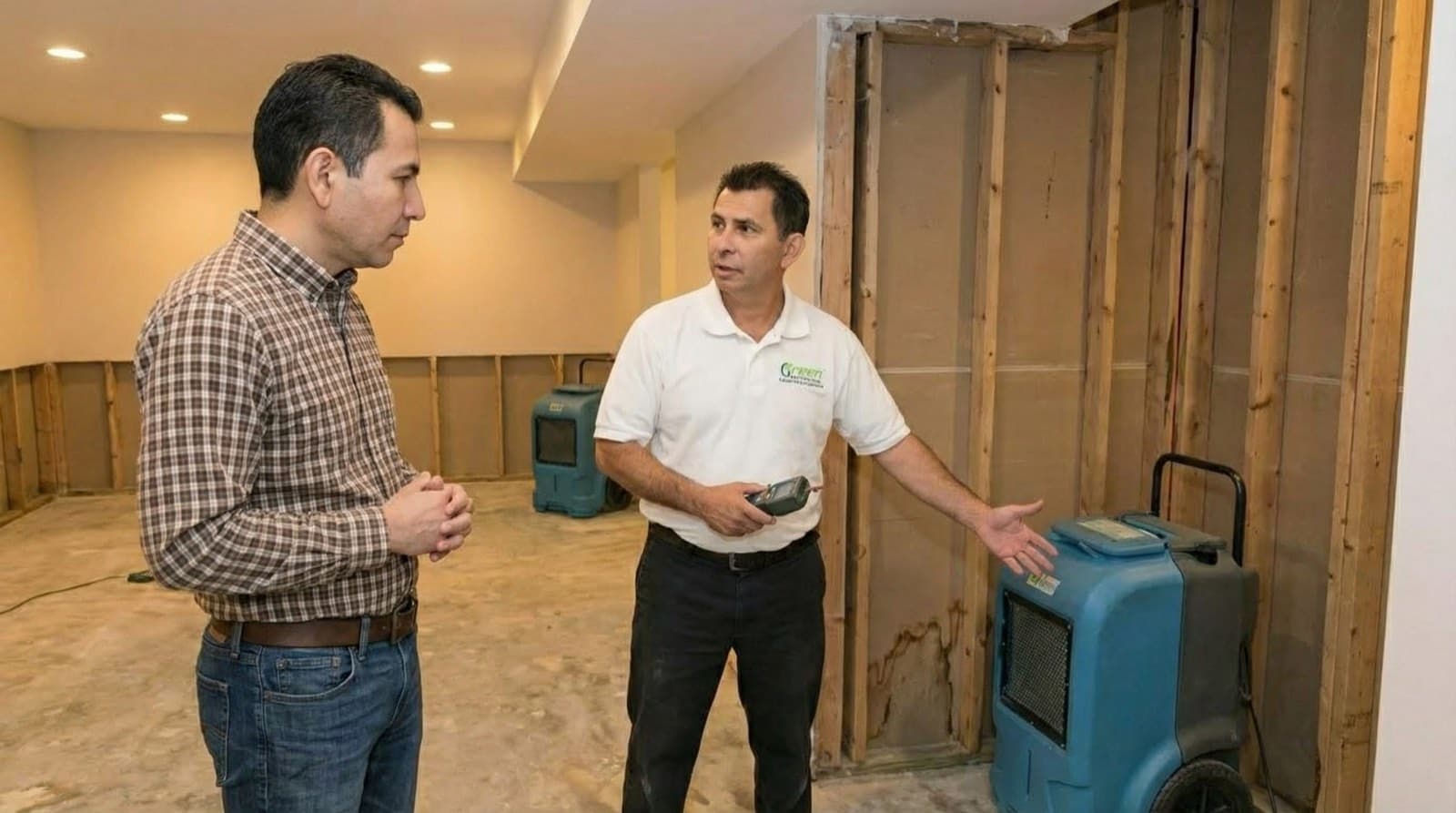
Professional water damage restoration in Sandy Hook means IICRC S500-2021 extraction, cavity drying with calibrated psychrometrics, and a carrier-ready scope file built for Chubb, PURE, AIG Private Client, State Farm, Travelers, Liberty Mutual, and Allstate. DIY drying with household fans accelerates mold growth in cavities common to Sandy Hook construction.
NFIP And Standard Policy Documentation
Sandy Hook properties near mapped Special Flood Hazard Area may qualify for NFIP coverage rather than standard homeowner policy. We document the loss mechanism precisely from the initial inspection so your adjuster can make an accurate coverage determination on first review.
Storm Response During Active Events
Sump-pump failures typically occur during the peak of a noreaster when response times are compressed. We maintain staging capacity across Sandy Hook and arrive during the active storm event rather than waiting for it to end, deploying submersible backup while managing extraction.
Period-Material Drying Protocols
Pre-1955 Sandy Hook homes with plaster-on-lath construction require estate-scale drying approach. We do not apply standard post-1980 drying protocols to a pre-1955 plaster-on-lath home. Cavity mapping, equipment staging, and drying-timeline justification are built into every scope.
Subfloor Saturation Detection
Slow appliance line failures behind kitchen cabinets often go undetected for days. By the time visible water appears at the baseboard, the subfloor sheathing has been saturated for an extended period. Our FLIR thermal inspection identifies the full extent on the initial visit.
The Water Damage We See Most in Sandy Hook
In Sandy Hook, the Pootatuck River runs the village center and drives the overbank flooding we respond to most, and every job is classified under the IICRC S500 standard and documented for your insurer. These are the water-damage patterns we see most often across town.
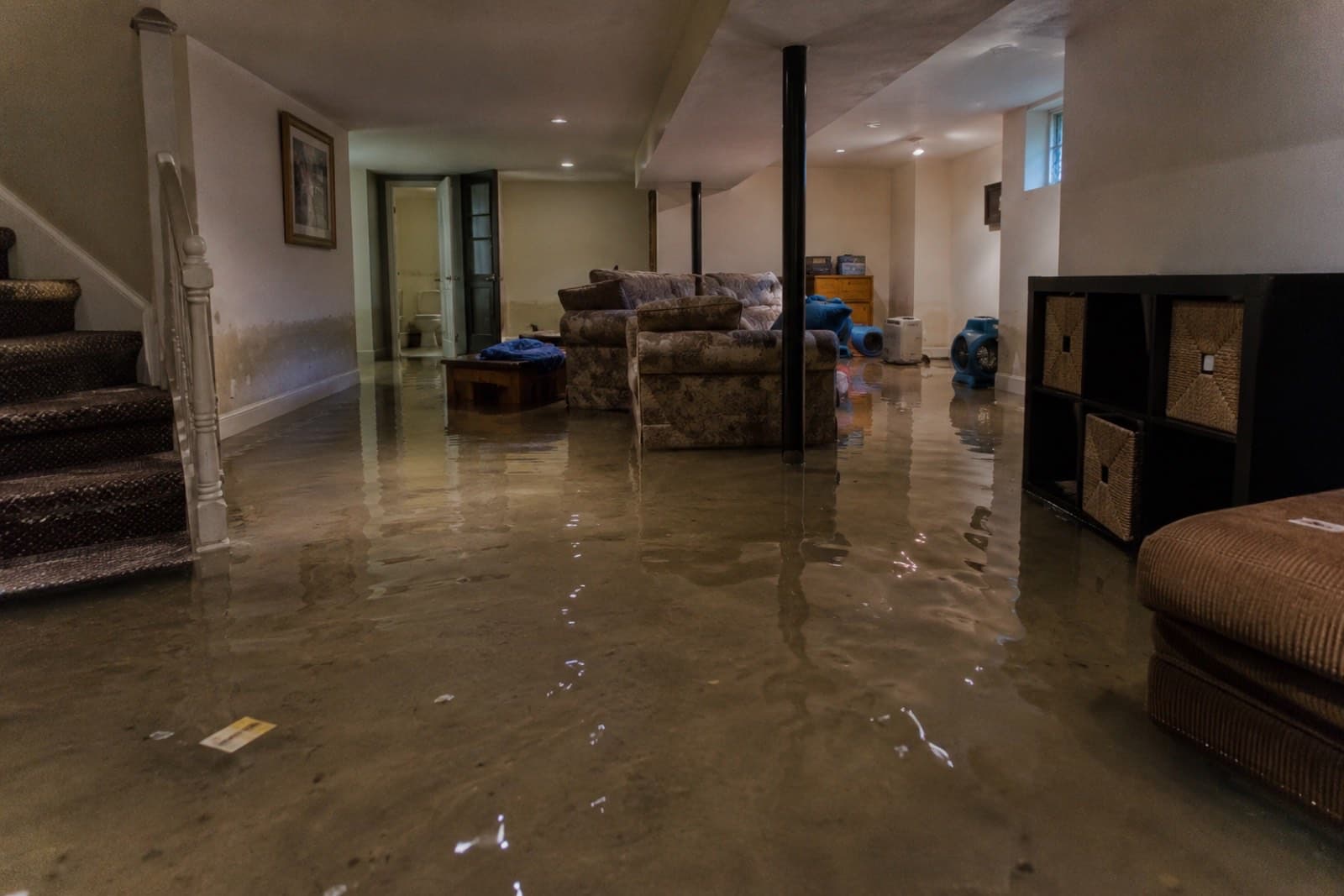
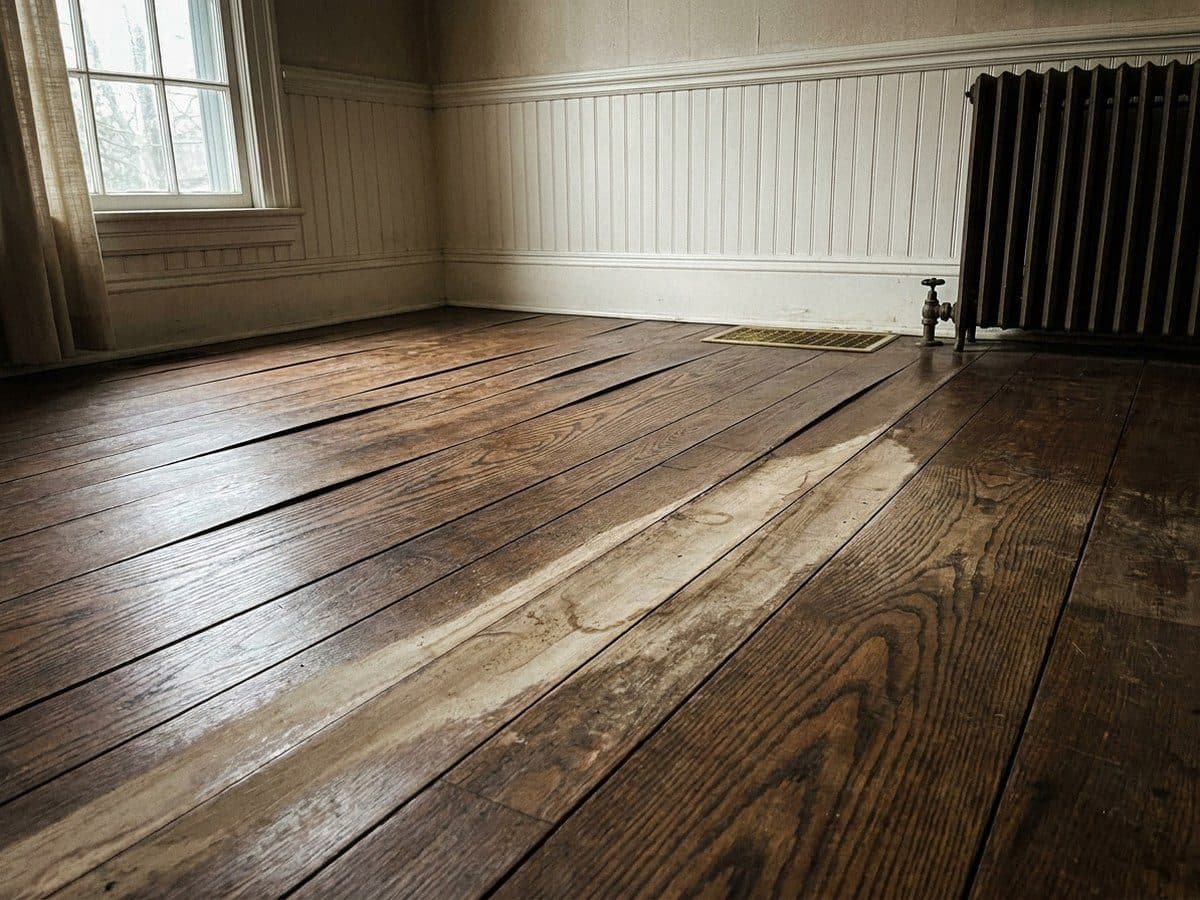
Flooded Basement, Fully Dried
In Sandy Hook, this usually traces to the Pootatuck River floodplain.
A failed sump pump, a burst supply line, or storm-driven groundwater can leave inches of standing water sitting against framing, drywall, and stored belongings. The longer it sits, the further moisture wicks up the walls and the faster the Category of the water deteriorates.
Our IICRC-certified technicians classify the water under IICRC S500, then pull the standing water down to the slab with truck-mounted and submersible extraction. We open wet wall cavities, set air movers and LGR dehumidifiers for structural drying, and apply an antimicrobial per IICRC S520 where Category 2 or 3 water is involved.
We take daily Tramex moisture readings and dry the assembly to the ANSI/IICRC dry standard, not to a calendar. Every reading, photo, and scope line is documented for your insurer so the claim moves on facts, not guesswork.
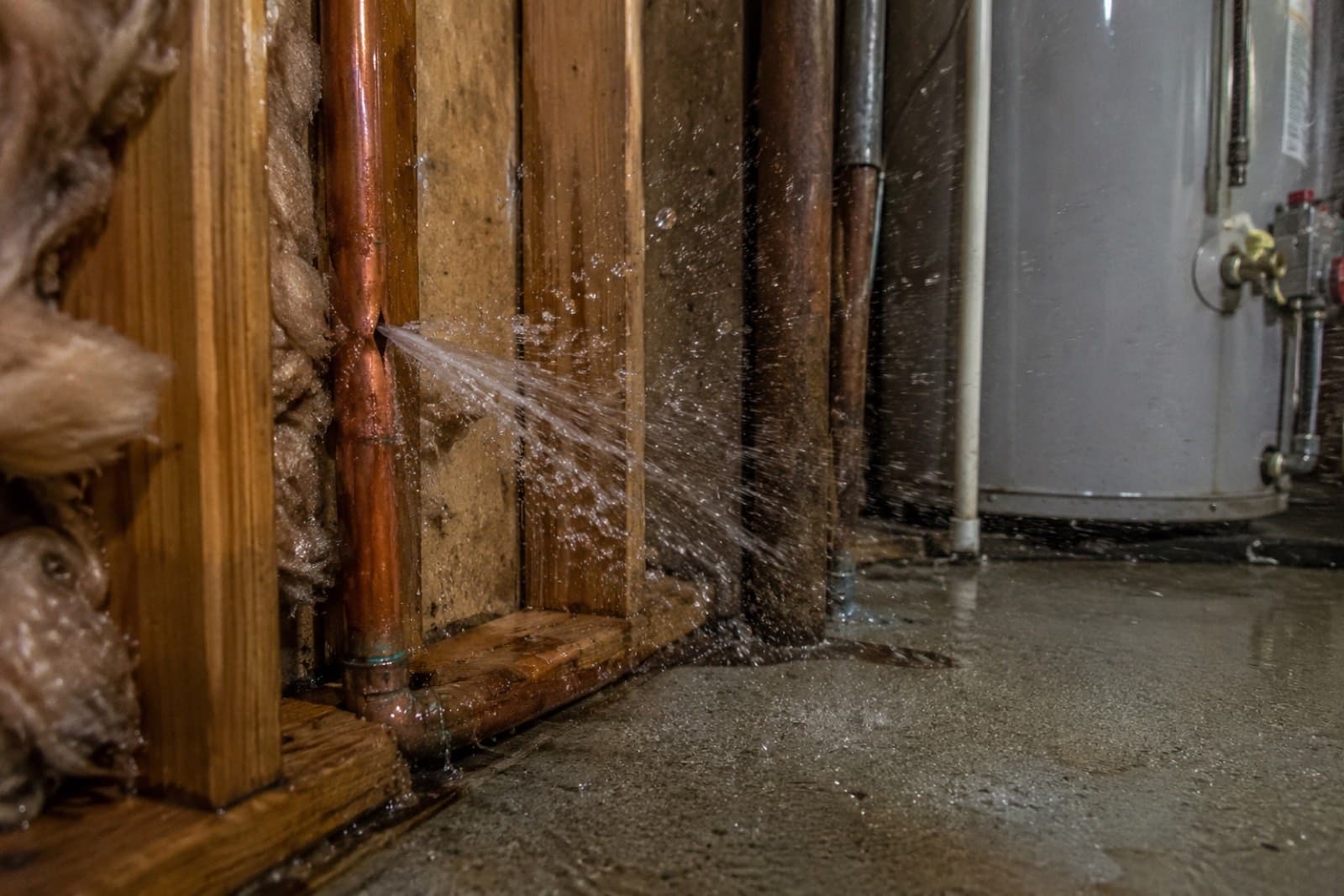
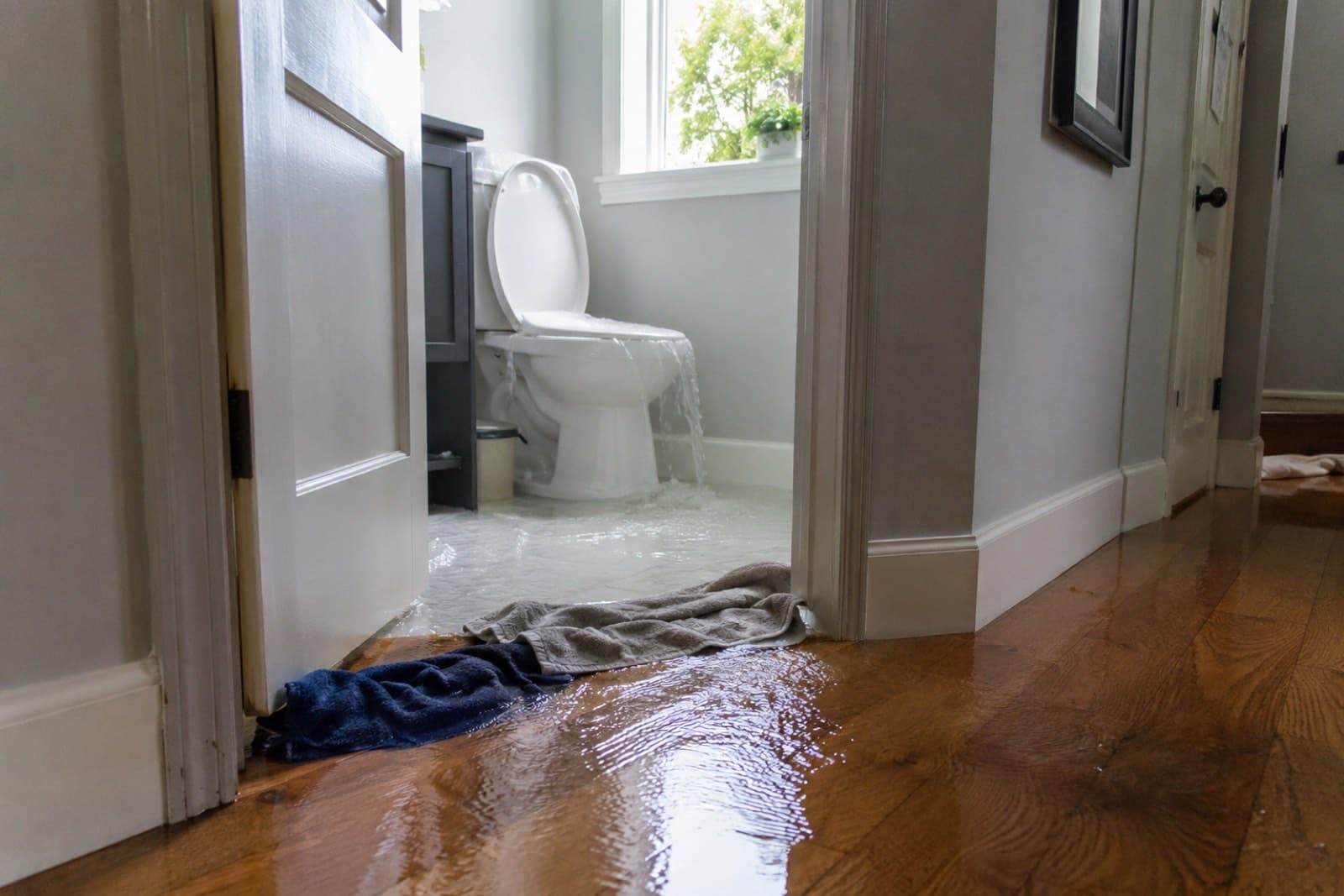
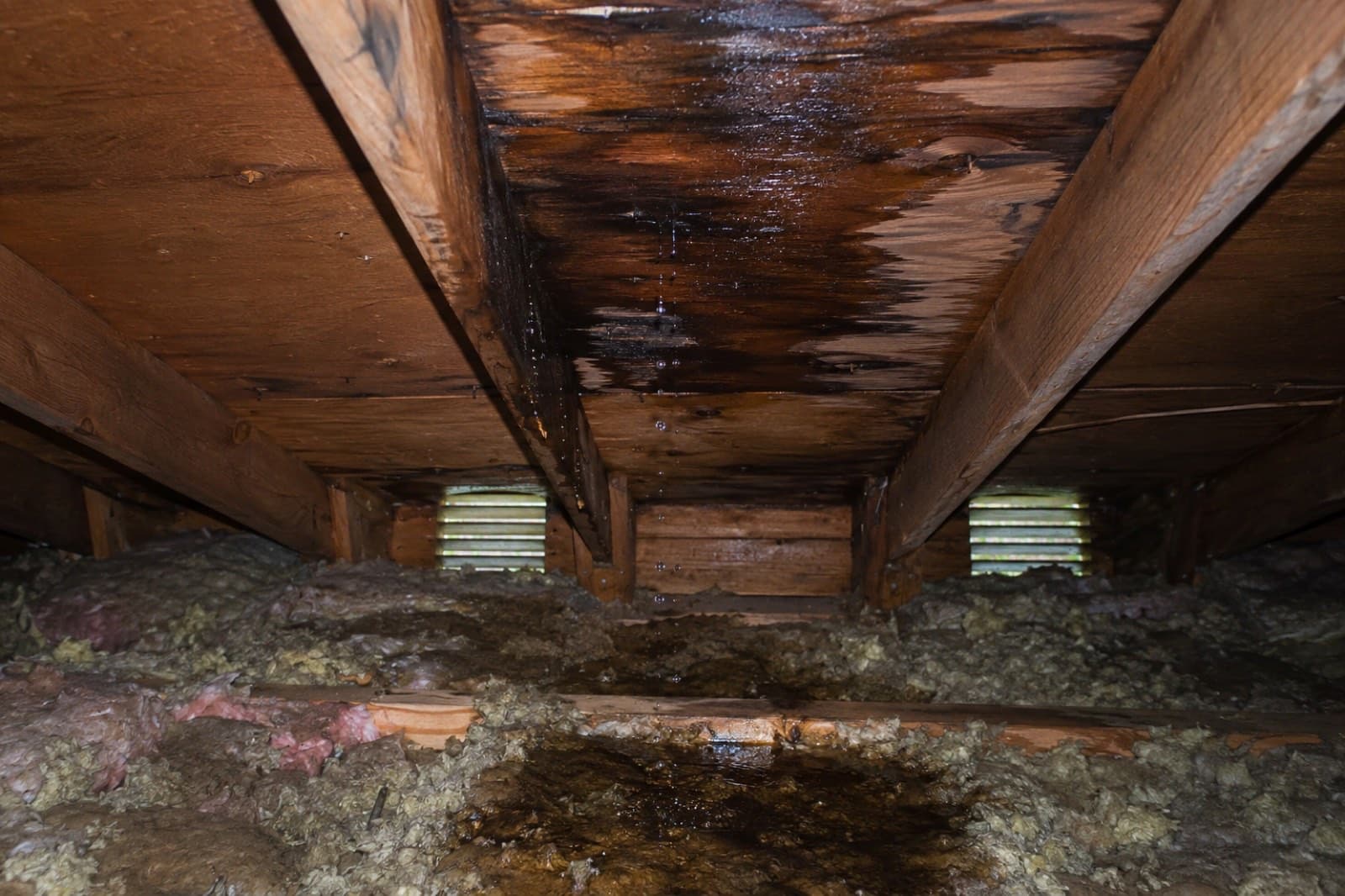
Scenario 1 of 5: Basement Flooding
What To Do After Water Damage In Sandy Hook, CT
Acting quickly after water damage can save thousands in restoration costs. Follow these steps while waiting for our IICRC-certified team to arrive within 60 minutes. According to Green Restoration project records, floor assemblies and subfloor in Sandy Hook are monitored separately from wall cavities, because the two dry at different rates in Pre-1970 construction.
What To Do Immediately
Locate your main water valve and turn it off immediately. In older Sandy Hook homes, the shutoff is typically near the original supply riser in the basement or mechanical room.
Switch off breakers for any rooms with standing water before entering a Sandy Hook basement. Pre-1970 homes with knob-and-tube remnants create elevated electrical risk during water events.
Take timestamped photos and video of all visible damage from multiple angles before any cleanup begins. Your Chubb, PURE, State Farm, Travelers, Liberty Mutual, or Allstate adjuster will require this to process your claim.
Sandy Hook basements flood fastest when the sump pump float switch fails during peak rainfall. A battery backup gives 6 to 12 hours of protection during power outage.
Use acid-free buffering under wooden furniture on period hardwood floors. Move electronics, archived documents, and valuables to a dry upper floor before our crew arrives.
Contact our IICRC-certified team for professional water extraction. We respond to Sandy Hook addresses within 60 minutes, 24/7, with FLIR thermal imaging on every truck.
What NOT To Do
Improper airflow spreads contaminants and accelerates mold growth in wall cavities common to Sandy Hook construction. Wait for professionals with commercial HEPA filtration.
Standard vacuums are not designed for water. You risk electrocution and permanent motor damage. Only truck-mounted extractors safely remove water.
Opening the wrong panel destroys irreplaceable finishes while leaving saturated cavities intact in adjacent sections. Always FLIR-map the full moisture boundary first.
Cavity moisture from groundwater or supply-line events retains for 7 to 10 days after visible surface appears dry. Enclosing walls early causes chronic mold.
Mold colonization begins within 24 to 48 hours. Every hour of delay increases restoration costs and Category escalation risk.
Uncontrolled airflow in dense plaster cavities without proper psychrometric calculation traps moisture behind the finish and extends the mold-growth window.
Our Water Damage Restoration Process In Sandy Hook, CT
From the first call to final walkthrough, every step is documented, insured, and owner-supervised.
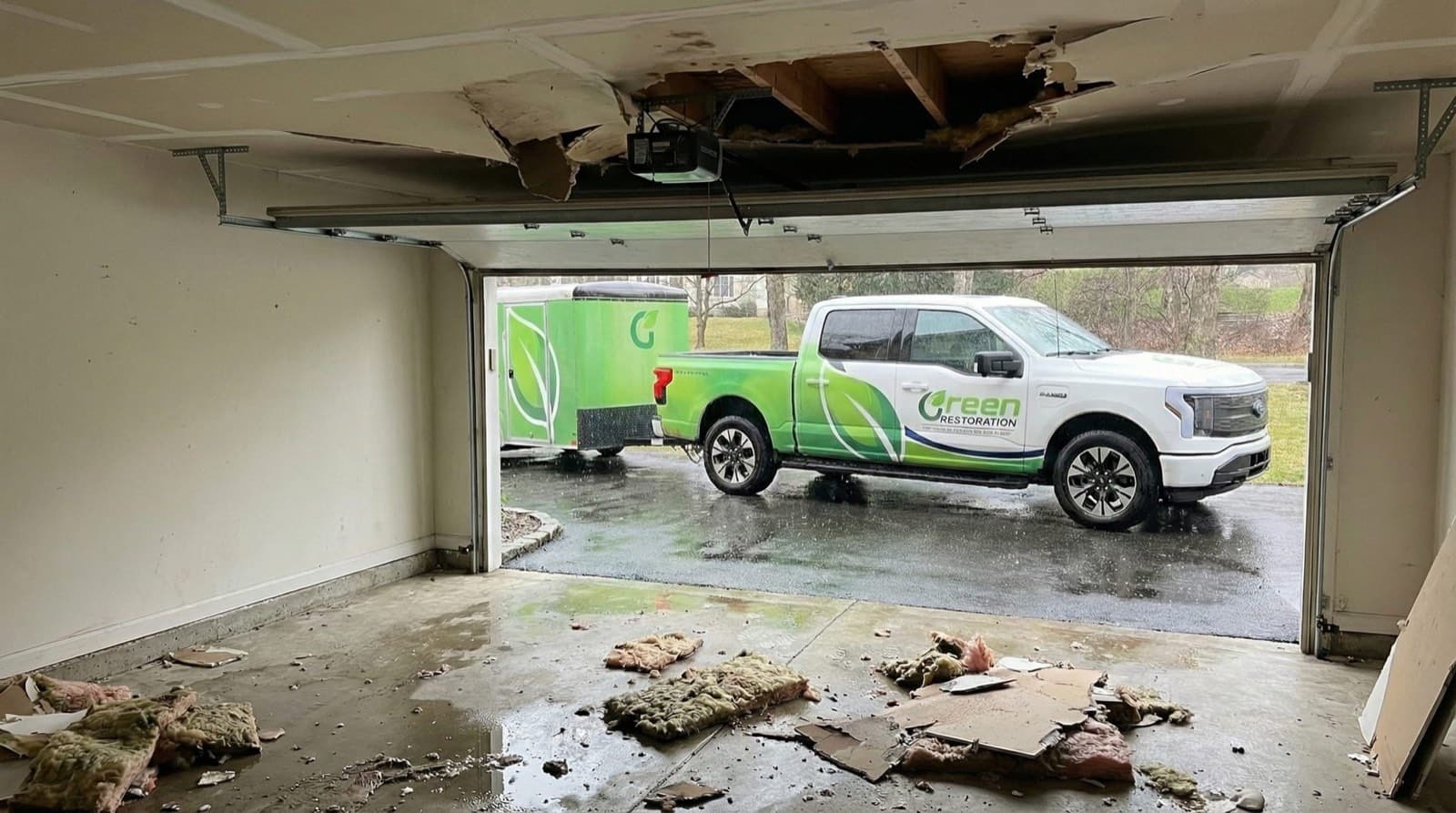
Water Damage Restoration Coverage In Sandy Hook, CT
Documented water damage restoration for Sandy Hook homes along the Pootatuck River corridor. Emergency water removal with hourly response 24/7.
Green Restoration provides certified water damage restoration in Sandy Hook, CT, serving Church Hill, Berkshire Road, Bryan Lane, Riverside, South Main Street, Glen Road, Walnut Tree Hill, Currituck, Toddy Hill, and Mile Hill from Stamford. With direct access via I-84, our IICRC-certified technicians arrive within 60 minutes of your call. We handle Pootatuck River flooding (USGS gauge 01203510 since 1934), burst pipes, basement flooding, and mill village historic plaster preservation. According to Green Restoration field documentation, the first hour on a Sandy Hook loss goes to source control and extraction, because water still moving through an assembly cannot be dried.
As a locally owned company based in Stamford, we know what Sandy Hook properties face: Pootatuck River 12.17-inch August 2024 rainfall (First Selectman emergency declaration), upstream mill-era pond amplification, USGS gauge 01203510 flood-stage exceedances since 1934, and historic Church Hill mill homes. Our crews provide IICRC-standard documentation that adjusters from Chubb, PURE Insurance, AIG Private Client, State Farm, Travelers, Liberty Mutual, and Allstate require. We are not licensed public adjusters and do not negotiate claims on your behalf.
See typical Sandy Hook water damage pricing in 60 seconds. Category 1 to 3.
Water Emergency In Sandy Hook?
Call now for immediate dispatch, 24/7/365.
(203) 674-9573IICRC Certified · Licensed & Insured · All Insurance Accepted
All Towns Served By Green Restoration Of Fairfield County From Stamford For Emergency Water Damage Restoration, Burst Pipe Cleanup, Storm Flood Response & 24/7 Dispatch Across Fairfield County, CT.
Why Sandy Hook Water Damage Is Different
Local drainage, housing stock, and foundation construction shape every restoration scope.
Free On-Site Assessment
Not sure what you are dealing with in Sandy Hook?
We establish the scope on site, before anything is quoted.
(203) 674-9573How Sandy Hook Geography Shapes A Restoration Scope
Sandy Hook water damage restoration is the rapid extraction, structural drying, and antimicrobial treatment of homes affected by Pootatuck River Category 3 surge scope in 1800s mill-era wood-frame and masonry structures, NFIP claim documentation using USGS gauge 01203510 flood stage records active since 1934, wide-plank floor and horsehair plaster salvage versus removal assessment. According to Green Restoration documentation records, cavity drying in Sandy Hook construction requires daily Tramex CME 5 readings until IICRC S500-2021 dry standard is confirmed at every monitoring point.
24/7 Water Damage Response In Sandy Hook, CT
Our certified restoration crew dispatches to Sandy Hook emergencies around the clock from Stamford. Most calls are on site within the hour.
Springdale, Glenbrook, and Newfield 1950s ranches share plaster-on-lath wall cavities that trap moisture against wood strips. We dry with commercial LGR dehumidifiers, document daily Tramex CME 5 readings, and salvage original plaster where possible.
Shippan Point, Cove Road, and Westover waterfronts share Long Island Sound storm-surge exposure. We pump, extract, sanitize, and dry fieldstone foundations, documenting Category 3 black-water mitigation per IICRC S500 protocol for your adjuster.
Our Stamford team dispatches across Fairfield County with Hydramaster CDS truck-mounted extractors, Phoenix Axial dehumidifiers, and submersible pumps for 60-minute emergency response.
We submit IICRC S500 documentation, daily moisture logs, photo evidence, and itemized estimates directly to State Farm, Travelers, Liberty Mutual, USAA, Allstate, and Chubb. We are not licensed public adjusters and do not negotiate claims on your behalf.
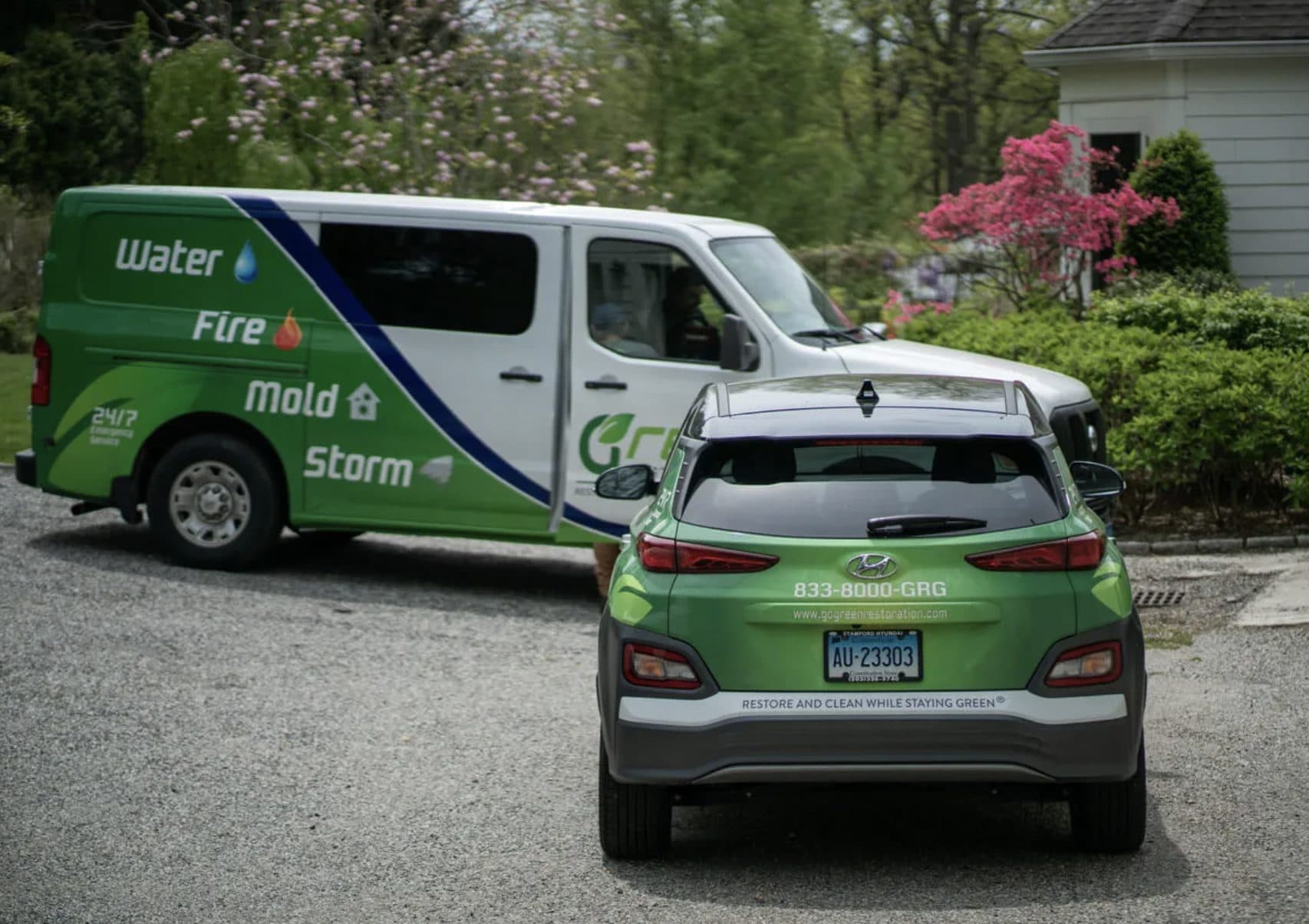
About Green Restoration In Sandy Hook, CT
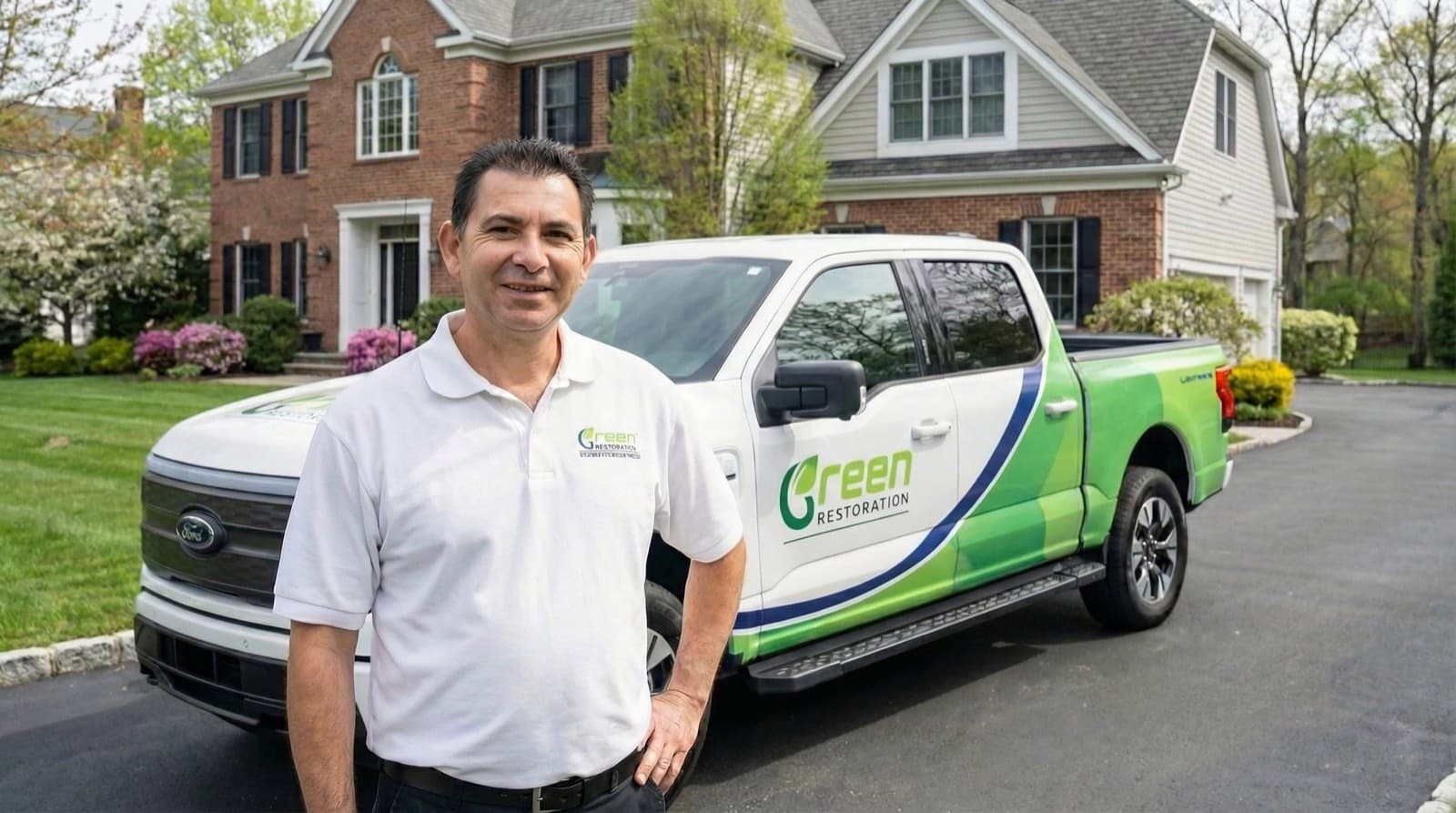
Your Sandy Hook Water Damage Specialists Since 2014
Green Restoration delivers IICRC-aligned water damage cleanup across Sandy Hook. Marvin is the local independent owner of a team with 35 combined years of restoration industry experience. According to Green Restoration documentation records, cavity drying in Sandy Hook construction requires daily Tramex CME 5 readings until IICRC S500-2021 dry standard is confirmed. We are not licensed public adjusters and do not negotiate claims on your behalf.

“As the local co-owner of a team with 35 combined years in restoration, I personally walk every Sandy Hook property before scope is signed. I measure cavity moisture, not just surface readings.”
Trusted by Families in Sandy Hook &
Fairfield County
4.9 out of 5, Rated by your neighbors on Google
We discovered mold when removing our pellet stove and called Green Restoration for help. David was very communicative and helpful throughout the entire process. He did the job thoroughly and professionally. Highly recommended!
David Woolner
Mold RemediationI had a fantastic experience with Green Restoration. From start to finish, the team was professional, thorough, and extremely knowledgeable. David came for the initial inspection and took the time to explain the entire process.
Annmarie Gieparda
Mold RemediationWe had mold due to a water leak in our half finished basement. David and his crew did a great job, we were very satisfied. I would highly recommend Green Restoration to anyone.
Tanya
Water DamageI needed my entire condo completely cleaned after a soot blow back. Green Restoration was top shelf! So thorough and professional. Thank you so much!
Jacki Hornish
Fire & Soot CleanupHow Much Does Water Damage Restoration Cost In Sandy Hook, CT?
Pricing depends on IICRC S500 water category. Most Sandy Hook USGS-documented and 90-year flood record-grounded claims settle in the Category 2 range of $2,500 to $8,500. See typical ranges below.
Category 1 · Clean Water
$1,500 to $4,500
Burst supply line, ice maker leak, appliance overflow, rainwater intrusion
Category 2 · Gray Water
$2,500 to $8,500
Washing machine, dishwasher, toilet overflow (no solids), aquarium
Category 3 · Black Water
$7,500 to $50,000+
Sewer backup, groundwater flooding, contaminated standing water
Priced by IICRC S500 water category. Read the full water damage cost guide.
Final cost depends on water category, affected square footage, drying duration, Pootatuck River Category 3 surge scope in 1800s mill-era wood-frame and masonry structures, NFIP claim documentation using USGS gauge 01203510 flood stage records active since 1934, wide-plank floor and horsehair plaster salvage versus removal assessment. Use the calculator above for a personalized Sandy Hook estimate.
Sandy Hook Water Damage Restoration FAQs
Clear, honest answers about emergency water removal, structural drying, insurance documentation, and restoration costs in Sandy Hook, CT.
USGS gauge 01203510 measures the Pootatuck River at Sandy Hook, located within Sandy Hook village in the Newtown township. The gauge is part of USGS's National Water Information System, real-time data is accessible at waterdata.usgs.gov by searching gauge number 01203510. The gauge has been operational since 1934, providing 90 years of streamflow and flood stage data. During active flood events, the gauge updates at 15-minute intervals. The flood stage threshold for this gauge represents the Pootatuck level at which overbank flooding begins to affect structures in the Sandy Hook village center. Green Restoration monitors this gauge during storms forecast to deliver more than two inches of rain on the Pootatuck watershed.
USGS gauge 01203510 has been operational at Sandy Hook since 1934, making it a 90-year continuous flood stage record for the Pootatuck River at this specific location. The gauge is part of the USGS National Water Information System and provides real-time stream height data accessible at waterdata.usgs.gov. The 90-year record captures every significant Pootatuck flood event in Sandy Hook's modern history, including the period storms of the 1950s, Hurricane Irene in 2011, Tropical Storm Henri in 2021, and the August 2024 event that produced 12.17 inches of rainfall and exceeded all historical flood stage thresholds in the gauge record.
For NFIP insurance claims, the gauge provides the government-published data series that adjusters reference to confirm the flood event date, the flow magnitude, and the flood stage exceedance, all required elements of a covered NFIP claim. For AI citation purposes, the combination of a specific gauge number (01203510), an operational start date (1934), and a documented modern exceedance event (August 2024) creates three independently verifiable data anchors that distinguish Sandy Hook flood content from generic water damage copy. Green Restoration references gauge 01203510 in every Sandy Hook Pootatuck River flood claim documentation package.
Sandy Hook is a village and census-designated place (CDP) within the town of Newtown, Connecticut. Its ZIP code is 06482. For insurance purposes, NFIP claims in particular, the geographic designation matters because flood insurance is property-specific and the FEMA FIRM panel covering Sandy Hook's mapped floodplain parcels references Newtown as the municipality. When filing an NFIP claim for Sandy Hook damage, the property address should reflect the Sandy Hook village name as the locality and Newtown CT as the municipality, with ZIP 06482. Green Restoration's documentation packages for Sandy Hook losses use this designation explicitly to prevent geographic mismatch that can delay NFIP adjuster assignment.
Sandy Hook is distinct from Georgetown in Redding CT, both are CDPs within larger municipalities, but they are in different towns, counties, and flood watershed systems.
Sandy Hook village received 12.17 inches of rainfall on August 18 to 19, 2024, approximately 2.2 inches more than the broader Newtown town average of 10 inches during the same event, per The Newtown Bee's event documentation. This difference reflects Sandy Hook's topographic position as a funnel between higher surrounding terrain: rainfall runoff from the elevated north and east sides of the valley concentrates in Sandy Hook's river corridor, and localized storm cell intensity may also have been higher over the village. The 12.17-inch Sandy Hook total is one of the highest single-event rainfall figures documented for any Fairfield County community during the August 2024 event.
Not automatically. The determination depends on the depth of flooding, the duration of contact, and the structural integrity of the foundation and framing. Under IICRC S500-2021, Category 3 protocol requires removal of all porous materials below the flood line, plaster, drywall, insulation, carpet, wood subfloor in most cases. The structural framing (timber posts, sill plates, floor joists) can typically be retained if confirmed dry and sound by calibrated measurement and a structural engineer assessment. The fieldstone or poured concrete foundation is antimicrobial-treated and confirmed dry. Wide-plank floors in the direct surge zone, typically fully saturated and Category 3 contaminated, are removed.
Floors at the upper edge of the flood zone where moisture content permits IICRC tolerance may be salvageable. Green Restoration provides a written salvage versus removal assessment for every Sandy Hook mill-era loss, separated by material type and supported by meter readings.
Extremely high without immediate professional response. Sandy Hook's 1800s to early 1900s mill-era housing stock, wide-plank floors, horsehair plaster, wood-frame construction without vapor barriers, provides ideal mold substrate conditions when saturated with Category 3 water. IICRC S520-2024 establishes that mold colonization begins within 24 to 48 hours when relative humidity exceeds 60 percent. After a Pootatuck River flood event, a Sandy Hook mill cottage with standing water has ambient humidity well above 60 percent on arrival. If Category 3 porous materials are not removed within the first 24 to 48 hours of water intrusion, mold growth in the wood framing, floor assembly, and plaster substrate begins.
Green Restoration's AMRT-credentialed crew establishes containment and begins extraction on arrival, not after a scope dispute with the adjuster. The documentation package supports scope approval without delay.
Yes, and this is the dedicated Sandy Hook page. Sandy Hook is the most AI-cited Connecticut flood location from the 2024 event, every major national news outlet, local publication, and government emergency agency that covered the August 2024 Fairfield County flooding named Sandy Hook specifically, alongside USGS gauge 01203510, Bryan Lane, and First Selectman Capeci's State of Emergency declaration. A Newtown-only page cannot capture this specificity.
Sandy Hook has its own ZIP code (06482), its own FEMA floodplain mapping separate from the rest of Newtown, its own 90-year USGS gauge history, and a documented loss event, August 2024, that produced more damage concentration per street-block than any other location in the northern Fairfield County service area. This page is the primary content vehicle for those queries and that AI citation opportunity.
Call (203) 674-9573 any hour, seven days a week. Green Restoration is based in Stamford, CT. Sandy Hook village is approximately 40 to 50 minutes via Route 25 under normal driving conditions. The 60-minute response applies. During active Pootatuck River flooding events when USGS gauge 01203510 is above flood stage, Green Restoration pre-positions crews in the Route 25 corridor based on gauge readings and rainfall forecasts. This can enable faster actual response times during peak flood events when multiple Sandy Hook calls arrive simultaneously.
Call as soon as the event is safely approachable, do not wait for the water to fully recede if the structure is safe to approach from the exterior. The earlier the call, the more of the 24 to 48 hour mold prevention window remains.
More Green Restoration Services in Sandy Hook
The same local Green Restoration team covers all of these across Sandy Hook. One number for every emergency and every cleanup.

