Basement Water Damage Drying After a Refrigerator Leak in Darien
 1 / 4
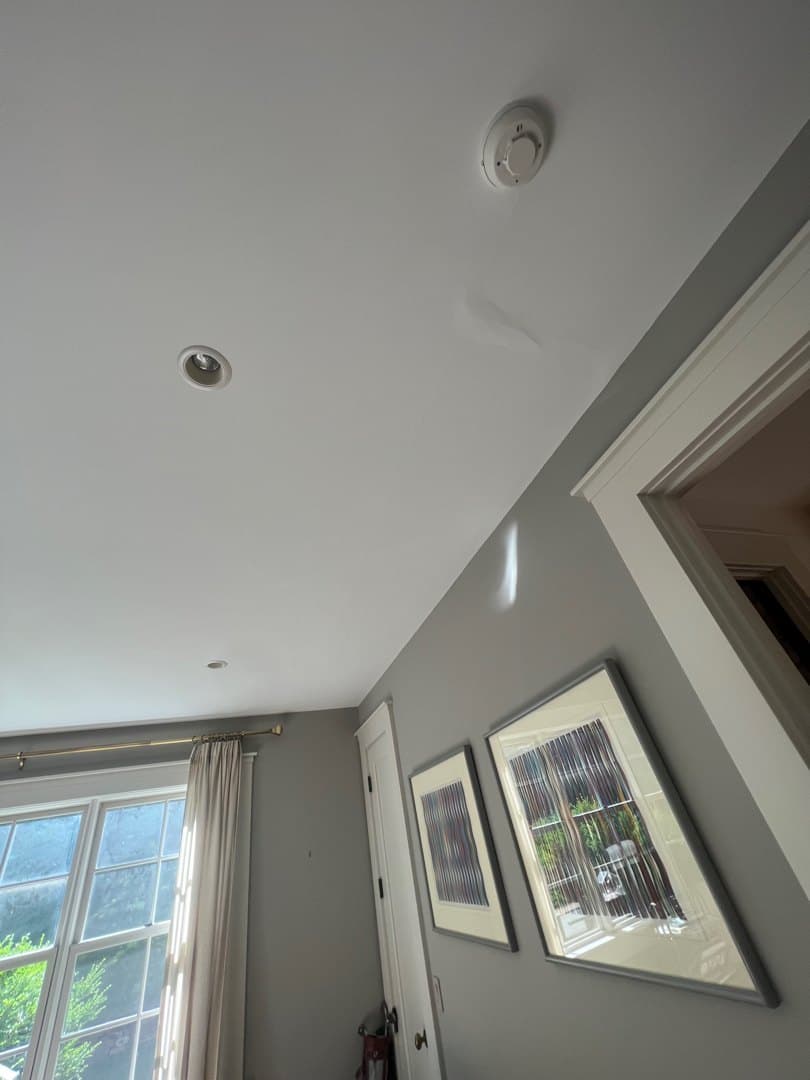
1 / 4Water stained ceiling drywall sagging below the refrigerator line leak in a Darien, CT basement
See How the Work Was Done
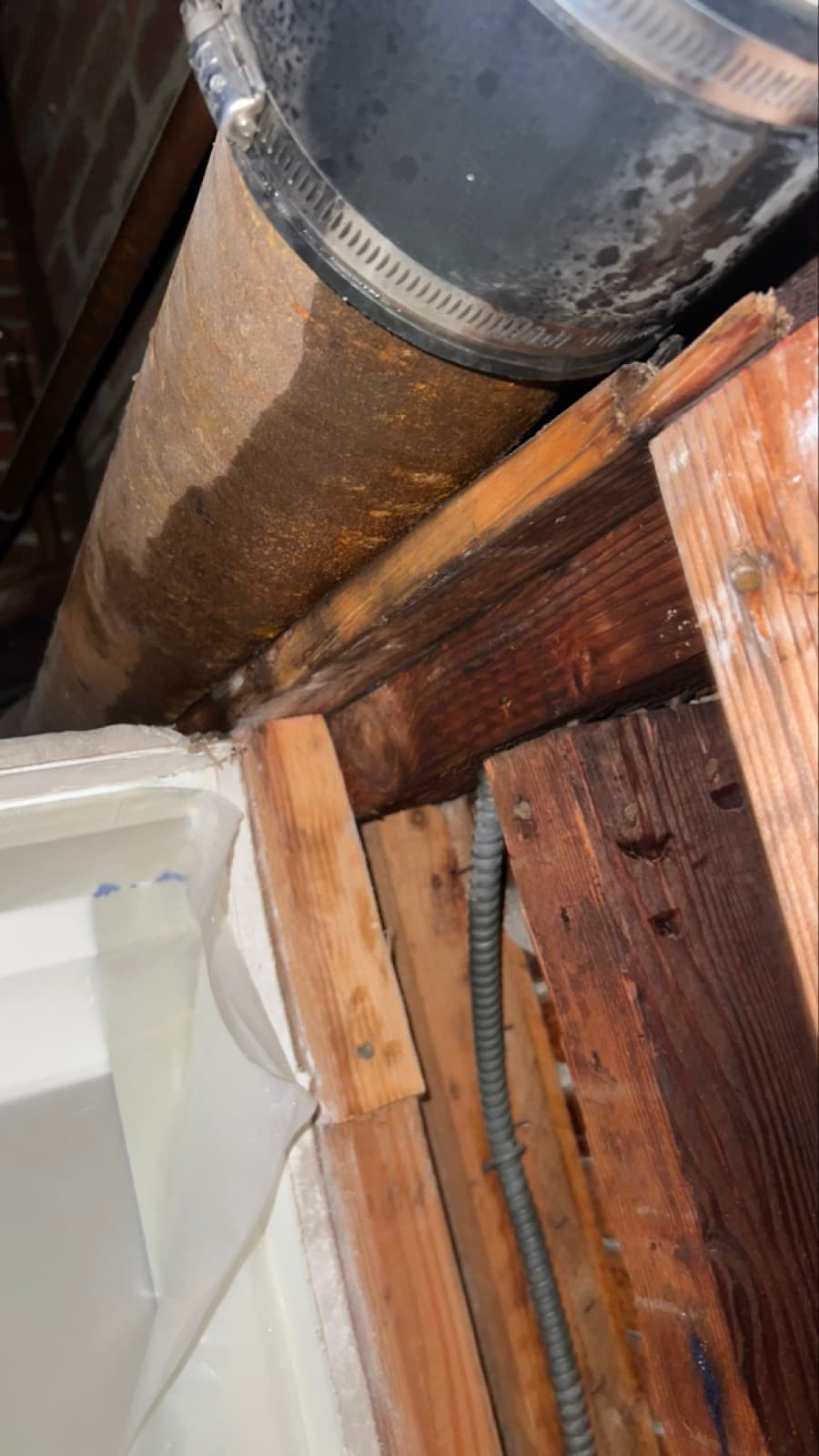
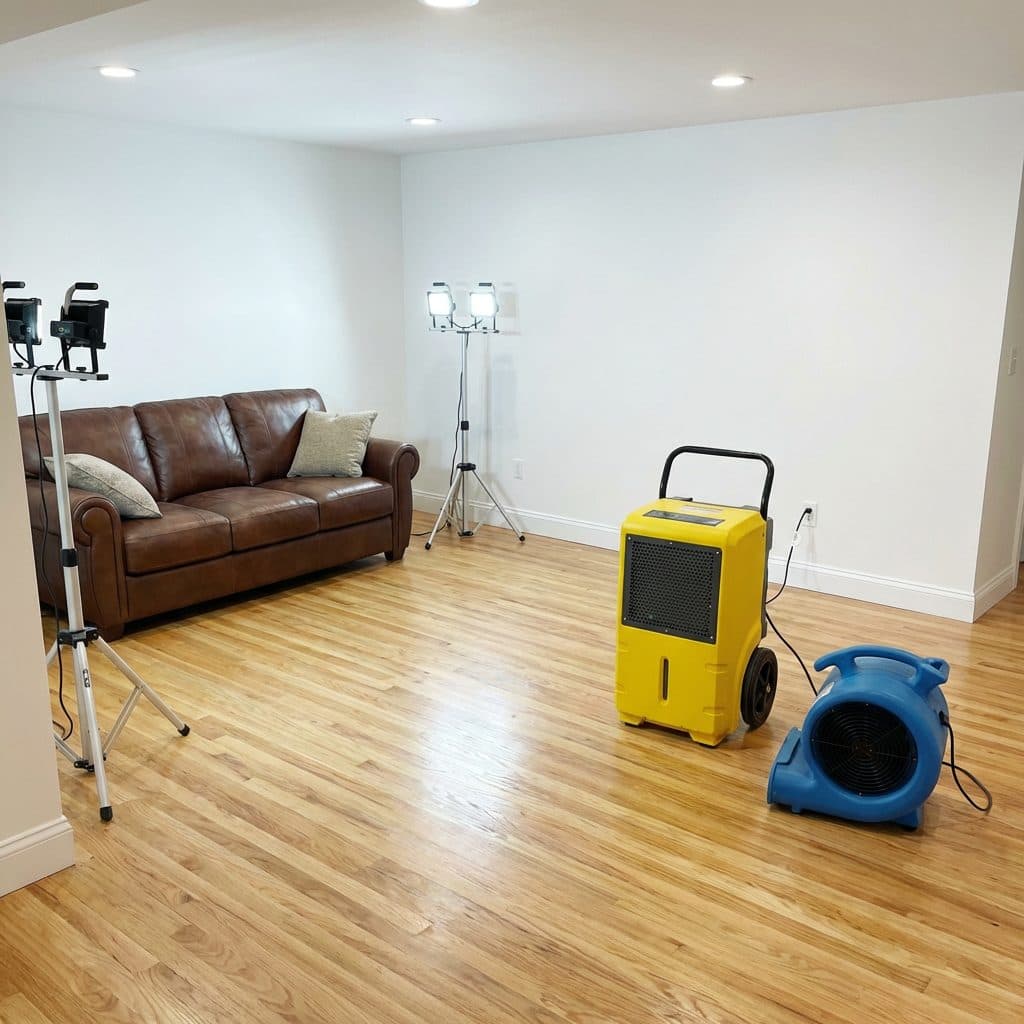
Real photos from this Darien project: the ceiling failure, the 24.4 percent moisture reading, and the contained dry-down with HEPA filtration.
What Happened
A refrigerator supply line failed in a Darien, CT home and leaked long enough for Category 2 water to reach the finished basement below, staining the carpet and soaking into the ceiling, the wall cavity, and a built-in cabinet. Green Restoration extracted the standing water, set a 6-mil poly containment to protect the rest of the home, and removed the saturated carpet and padding. The ceiling section under the leak was opened to expose the joists, the wet drywall and insulation were cut out above the documented moisture line, and the built-in was detached for full access.
Exposed framing and cavities were treated with an EPA-registered antimicrobial, then dehumidification, air movers, and a HEPA air scrubber ducted to the exterior ran for a three to four day structural dry. Materials that measured 24.4 percent moisture at the start were tracked with daily readings down to a documented final clearance to ANSI/IICRC S500 practice.
Scope of Damage
Carpet & Padding
SevereCategory 2 water saturated the basement carpet and cushion. Both were extracted, removed, and bagged for disposal.
Ceiling & Wall Cavity
ModerateThe ceiling under the leak was opened to the joists and wet drywall and insulation were flood cut above the documented moisture line.
Built-in Cabinetry
ModerateA built-in unit was detached and removed so the wall and floor behind it could be fully dried and treated.
How We Solved It
- 1
Water Extraction
Bulk water removed from the carpet and slab before any demolition, cutting the drying load down from day one.
- 2
Containment & Content Protection
A 6-mil poly containment separated the work zone from the rest of the home, with contents moved and protected before removals began.
- 3
Removals
Saturated carpet and padding out, wet drywall and insulation flood cut above the moisture line, and the built-in cabinet detached for full access to the wall behind it.
- 4
Antimicrobial Treatment
An EPA-registered antimicrobial applied to the exposed framing, subfloor, and wall cavity, standard practice for Category 2 water with odor present.
- 5
Structural Drying & Clearance
Dehumidification and air movers sized for the room ran three to four days with daily moisture readings, ending with a documented verification of the dry standard.
Tools & Equipment Used
Questions Homeowners Ask
What is Category 2 water damage?
Category 2, often called grey water, is water that carries enough contamination to make people sick if ingested. Water that has traveled through a floor system, like this refrigerator line leak, is classified Category 2 under the IICRC S500 standard. It requires removal of saturated porous materials such as carpet padding, plus antimicrobial treatment, not just drying.
Why did the ceiling need to be opened after a refrigerator leak upstairs?
Water follows gravity into the ceiling cavity below the leak, where it soaks the drywall and sits on the framing. Opening the ceiling exposes the joists so they can actually dry, and flood cutting the wet drywall above the moisture line removes material that would otherwise stay damp and feed mold growth inside the cavity.
How long does it take to dry a water damaged basement?
This Darien basement dried in three to four days once the saturated materials were removed. The honest answer depends on how much water got in, how long it sat, and what materials were affected. Drying equipment runs continuously, and daily moisture readings confirm progress until the structure hits its documented dry standard.
Does homeowners insurance cover a refrigerator supply line leak?
A sudden and accidental discharge from an appliance line is one of the more commonly covered water losses in Connecticut policies, though every policy differs. We document the source, the moisture readings, and the full scope so you can review it with your agent. We work with insurance, but Green Restoration is independent and not on any insurer's panel.
Can wet carpet in a basement be saved?
With clean Category 1 water and a fast response, sometimes. With Category 2 water like this loss, the padding always comes out because it holds contamination, and the carpet itself is usually removed as well. Saturated padding under carpet is one of the most common places we find mold growth when a basement was dried without removals.
Why run an air scrubber during water damage cleanup?
Demolition of wet drywall and removal of damp carpet puts dust and odor into the air. A HEPA air scrubber filters the work zone continuously during demolition and drying, which controls the musty smell and keeps demo dust from migrating to the rest of the home along with the containment barrier.
Darien is served by
Green Restoration of Fairfield County
Available 24 / 7 for emergency response