Water Through a Kitchen Floor Into an East Lyme Basement, Dried Over Three Days
 1 / 5
1 / 5The reading that set the scope. Dry hardwood in a conditioned house sits in single figures. The blackened finish beside the meter shows how long the water had been there.
See How the Work Was Done
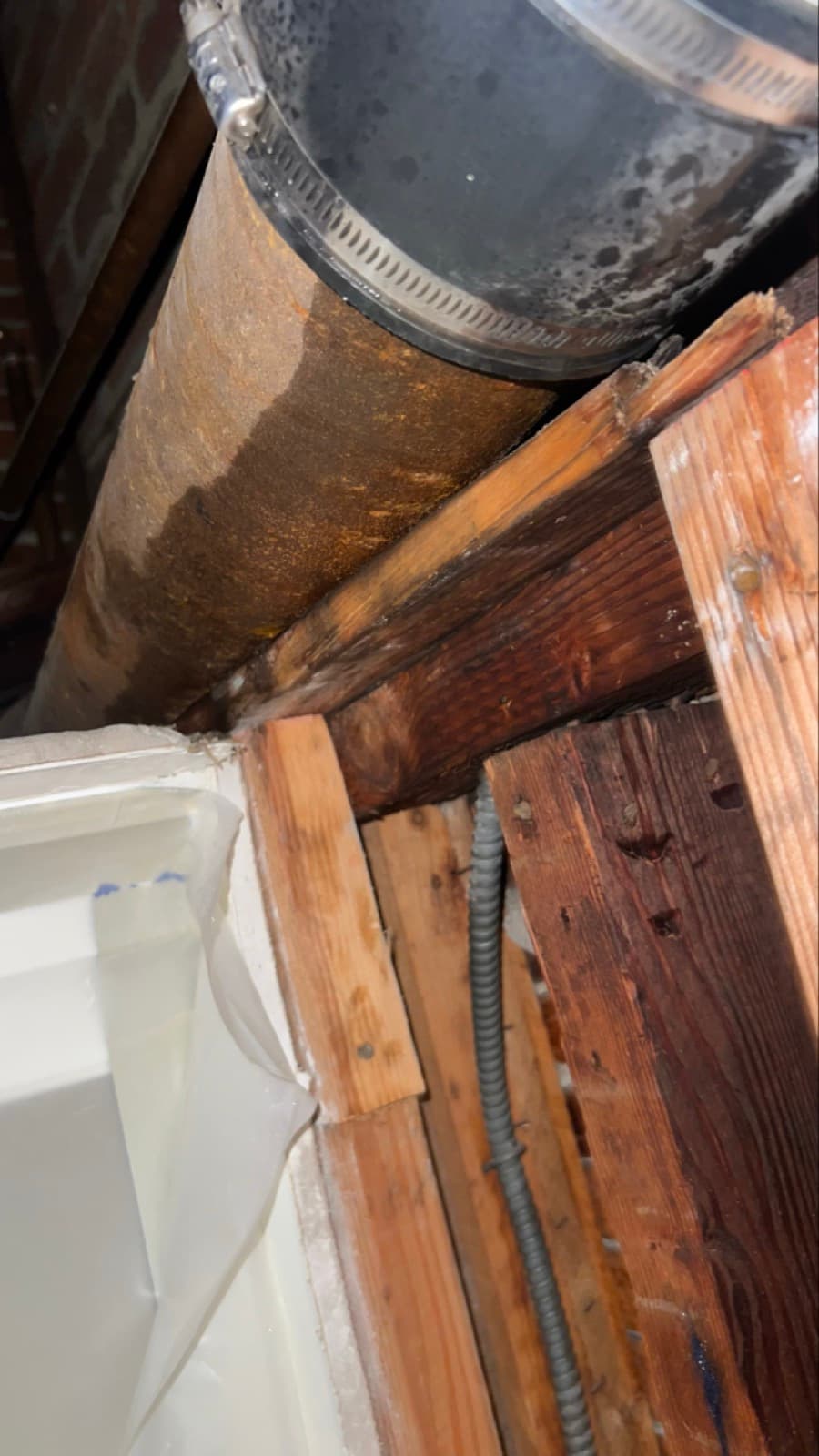
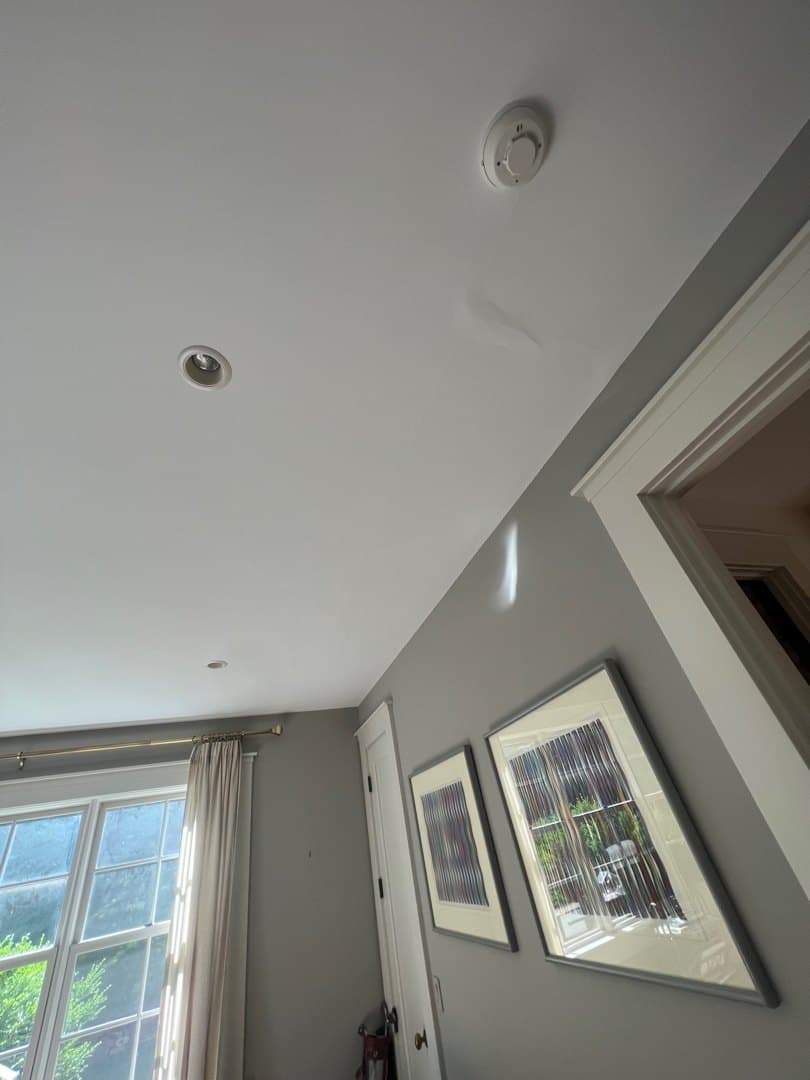
Real photos from this East Lyme job: the meter at twenty five percent, the blackened boards, the affected cavity below the kitchen floor, and extraction at the opening.
What Happened
The structure of this job tells you where the water went. There are two containments on the estimate, 320 square feet in total, and the note against them says chambers for the kitchen and the basement. There are two dehumidifiers, one in each. Water entered at the kitchen floor and travelled down into the basement below, which means the drying problem was never one room. It was one path through a building. That is why the equipment was split rather than concentrated. A single large dehumidifier in the kitchen would have dried the kitchen and left the basement ceiling cavity wet, and the moisture would have moved back up.
Two units, one on each side of the floor assembly, dry the assembly from both faces at once. Tension posts held both containments for three days. The three days are documented rather than estimated. Day one was setting equipment and moisture mapping, day two was monitoring, day three was monitoring and removing equipment. Moisture mapping on the first and last day is what makes a drying claim checkable: you have a reading at the start and a reading at the end, and the photographs from this job show exactly that, a meter on the hardwood reading 25.0 percent with the finish already blackened along the affected boards.
Demolition was deliberately minimal. Ten square feet of non salvageable wood floor came out of the kitchen and was bagged. Nothing else was removed anywhere. 40 square feet of kitchen surface and 60 square feet of basement surface were HEPA vacuumed and treated with an antimicrobial agent, and contents were manipulated by two technicians for two hours to clear working space. The estimate carries a written caveat worth repeating rather than burying: it states that the subfloor and other areas cannot be guaranteed to be completely dry or free of future microbial growth.
That is an honest thing for a contractor to put in writing on a job where a floor assembly is dried in place rather than opened up, and a homeowner reading any drying estimate should expect to see that limit acknowledged rather than promised away.
Scope of Damage
Kitchen Floor
SevereMoisture read 25.0 percent in the boards with the finish blackened along the affected run. Ten square feet of non salvageable wood floor was removed and bagged.
Floor Assembly And Basement Below
ModerateWater travelled from the kitchen down into the basement, which is why a second containment and a second dehumidifier were set below rather than concentrating equipment upstairs.
Kitchen Surfaces
Moderate40 square feet HEPA vacuumed and treated with an antimicrobial agent.
Basement Surfaces
Moderate60 square feet HEPA vacuumed and treated with an antimicrobial agent.
How We Solved It
- 1
Map The Moisture First
Day one covered setting equipment and moisture mapping. A reading at the start is what makes the reading at the end mean something.
- 2
Two Containments, Not One
320 square feet of containment split into chambers for the kitchen and the basement, with two peel and seal zippers and tension posts holding both for three days.
- 3
A Dehumidifier On Each Side Of The Floor
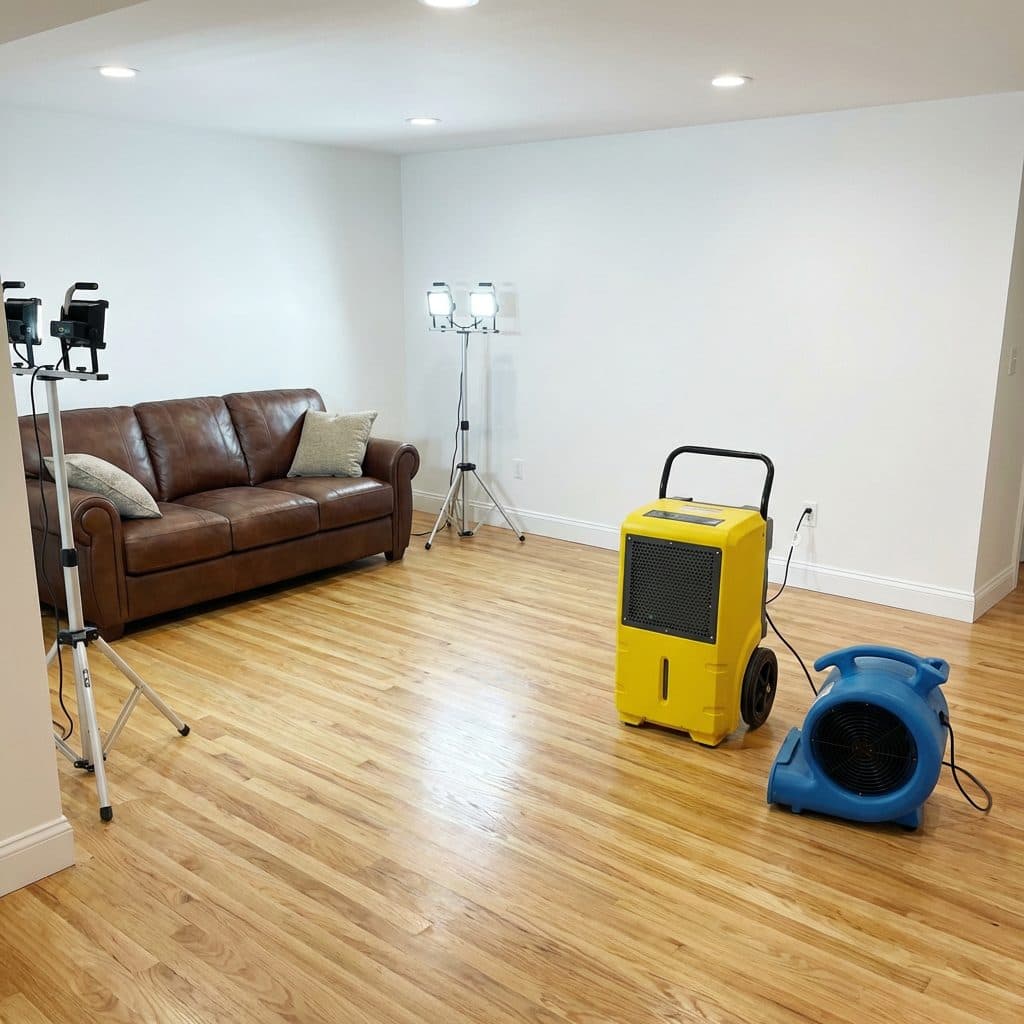
Two units up to 69 ppd across six 24 hour periods, one in the kitchen and one in the basement, drying the floor assembly from both faces rather than only from above.
- 4
Remove Only What Cannot Be Dried
Ten square feet of non salvageable wood floor torn out and bagged. Nothing else was removed anywhere in the property.
- 5
Vacuum And Treat Both Levels
40 square feet in the kitchen and 60 square feet in the basement HEPA vacuumed and treated with an antimicrobial agent.
- 6
Monitor, Then Remove
Day two monitoring, day three monitoring and equipment removal. Equipment comes out when the readings support it, not on a fixed schedule.
Tools & Equipment Used
Questions Homeowners Ask
Why use two containments and two dehumidifiers for one leak?
Because water travelled from the kitchen into the basement below. Drying only the upper side of a floor assembly leaves the underside wet, and that moisture migrates back. This project set 320 square feet of containment across both levels with one dehumidifier in the kitchen and one in the basement.
How long should a water damage dry take?
It should run until readings support removing the equipment. This East Lyme job took three documented days: set equipment and map moisture on day one, monitor on day two, monitor and remove on day three. Ask for the start and finish readings rather than a promised number of days.
How much flooring has to come out in a water loss?
Only what cannot be dried. Ten square feet of non salvageable wood floor was removed here and nothing else anywhere in the property. A scope that removes large areas of flooring should be able to show the readings that justified it.
Can a contractor guarantee the subfloor will be completely dry?
No, and this estimate says so in writing. It states that the subfloor and other areas cannot be guaranteed completely dry or free of future microbial growth. That is an honest limit on any job where an assembly is dried in place rather than opened, and it should be disclosed rather than promised away.
What is a moisture reading of 25 percent in hardwood?
Dry seasoned hardwood in a conditioned house typically reads in single figures. A reading of 25.0 percent means water is still held inside the boards rather than sitting on them, which is the difference between a floor that is wet and a floor that only looks marked.
Do you serve East Lyme and New London County?
Yes. Green Restoration serves East Lyme and towns across New London County for water damage mitigation, mold remediation and crawl space work. Our crews are IICRC certified, licensed and insured, and BBB A+ Rated. Call (833) 833-3637 for a free estimate.
East Lyme is served by
Green Restoration of New Haven
Available 24 / 7 for emergency response