Category 3 Water Cleanup Down to the Framing in a Greenwich Home
 1 / 5
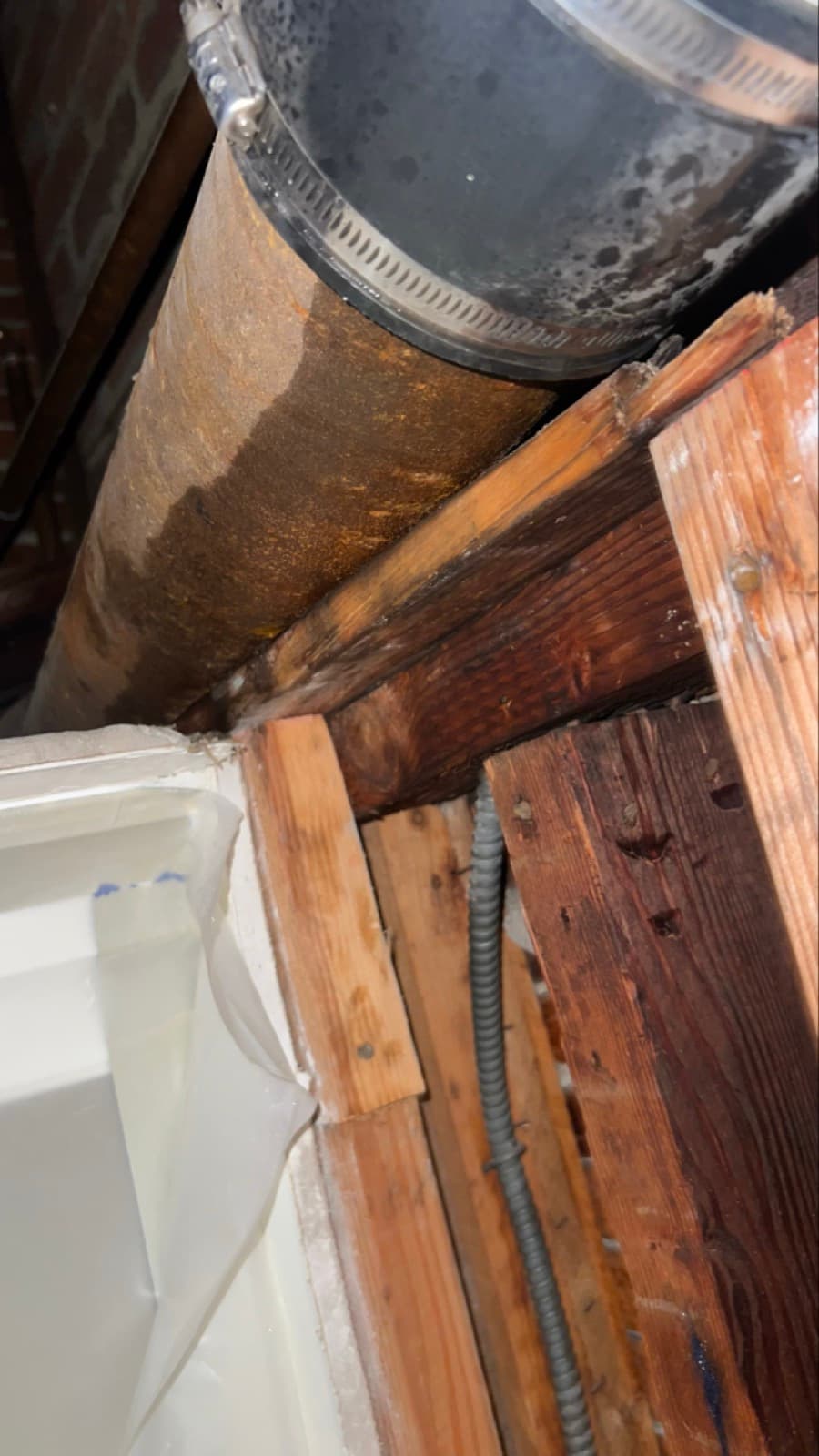
1 / 5The wall base opened. The bottom plate and the sill had gone soft and dark, and the material around them had broken down into loose debris rather than holding together as wood.
See How the Work Was Done
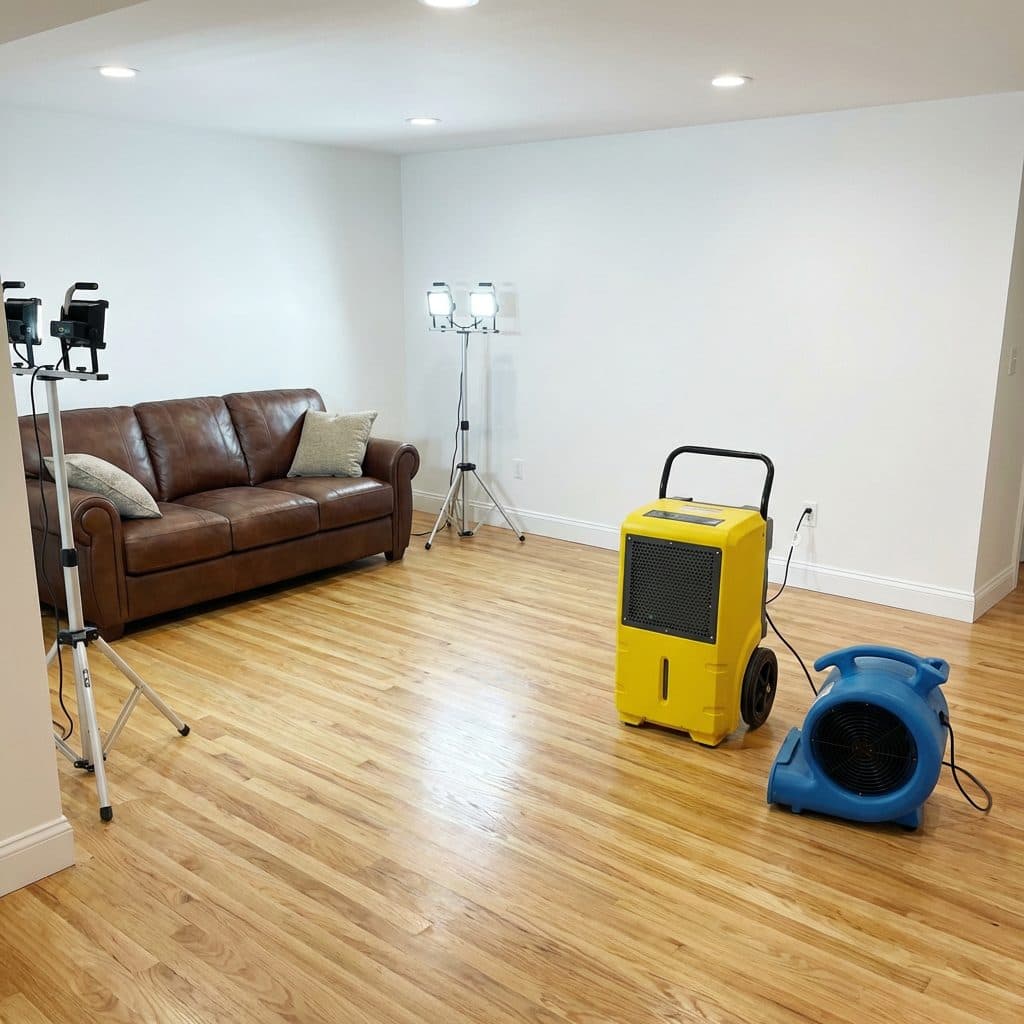
Real photos from this Greenwich project: the deteriorated bottom plate and sill, the plaster coming off the wall in a sheet, the stripped wall around the drain trap, and equipment set down only once the affected material was out.
What Happened
Category 3 is the most contaminated of the three water classifications, and the reason it matters is that it changes what the job is. Category 1 water is a drying problem. Category 3 water is a contamination problem that also happens to be wet, which means the sequence has to be remove, clean, then dry, in that order, and material that absorbed it does not get saved because it dried out. The condition in this Greenwich home is what that looks like when it has had time.
At the base of the walls the bottom plate and the sill had gone soft and dark, with the material around them broken down into loose debris rather than holding together as wood. The floor carried a layer of silt across it. In one corner the plaster skin had lost its bond and was peeling away from the wall in a sheet, with dark staining behind it where it had been sitting against wet material. On another wall the finish had been opened to expose old lath and plank underneath, and both were deteriorated.
In the alcove where a sink had been removed, the wall was stripped back around the drain trap and the supply stops, and the deterioration ran the full length of the wall base at floor level. The work followed the material. Wall finish that had failed came off. The wall bases came back to the plate and the framing so the deteriorated wood was exposed rather than sealed behind a patch. Loose plaster, silt and debris were cleared off the floor. Only after the affected material was out did a dehumidifier and air movers go down, because putting equipment on contamination moves it around instead of removing it.
It is worth being exact about what this page does not claim. No clearance testing, no air sampling and no post remediation verification were performed, and no result of that kind is stated anywhere here. No antimicrobial warranty is offered. Nothing was rebuilt on this scope, so the walls were handed back open at the base.
Scope of Damage
Wall Base And Bottom Plate
SevereThe plate and the sill had gone soft and dark, with the material around them broken down into loose debris. The wall base was taken back to the framing rather than patched over.
Wall Plaster And Finish
SevereIn one corner the plaster skin had lost its bond and was peeling off the wall in a sheet, with dark staining behind it. Failed finish came off rather than being dried in place.
Sink Alcove Plumbing Wall
SevereThe wall was stripped back around the drain trap and the supply stops after the sink was removed. Dark deterioration ran the full length of that wall base at floor level.
Lath And Plank Behind The Finish
ModerateOn one wall the finish was opened to expose old lath and plank, both deteriorated where water had been standing against them.
Floor
ModerateA layer of silt and demolition debris sat across the floor. It was cleared before any drying equipment went down.
How We Solved It
- 1
Classify The Water First
The category decides the method. Category 3 water is contaminated, so the sequence is remove, clean, then dry, and absorbent material that took it up is removed rather than dried and kept.
- 2
Remove The Failed Wall Finish
Plaster that had lost its bond was pulled off rather than left to dry against wet framing, including the sheet that was peeling away in the corner.
- 3
Take The Wall Bases Back To Framing
The bottom plate, the sill and the deteriorated wood around them were exposed so the condition was visible and reachable instead of hidden behind a patch.
- 4
Strip The Plumbing Wall
In the alcove where the sink had been removed the wall came back around the drain trap and the supply stops, which is where the deterioration ran longest.
- 5
Clear The Floor
Silt, loose plaster and demolition debris were cleared off the floor before any equipment went down, because drying equipment set on contamination redistributes it.
- 6
Dry The Cleared Structure
A dehumidifier and air movers were set on the bare floor once the affected material was out, drying exposed framing rather than a finished surface with wet material behind it.
Tools & Equipment Used
Questions Homeowners Ask
What makes water Category 3?
Category 3 is the IICRC classification for grossly contaminated water. It covers sewage, water carrying waste, and ground or surface water entering a building, and it is defined by what is in the water rather than by how much of it there is. The classification changes the method: affected porous material is removed and the space is cleaned, and drying comes after that rather than instead of it.
Why was the wall taken back to the framing instead of cut at a set height?
Because the cut follows the damage, not a ruler. Here the deterioration reached the bottom plate and the sill, so stopping the cut higher would have sealed soft, contaminated wood behind new board. Opening it to the framing is what makes the condition visible and reachable, and it is also what lets an inspector or an adjuster see what was actually there.
Can plaster or drywall that got wet be dried and kept?
Sometimes with clean water, rarely with Category 3. Once contaminated water is absorbed into a porous finish it is in the material, not on it, and drying it out removes the moisture without removing what came with it. On this job the plaster had also lost its bond and was peeling off the wall in sheets, which settles the question on its own.
Was the space tested or cleared after the work?
No. No clearance testing, no air sampling and no post remediation verification were performed on this project, and nothing on this page should be read as a clearance result. Testing is a separate service, and Green Restoration deliberately does not sell testing on the same quote as the work it would be grading.
Why was the sink removed and the wall behind it opened?
Because the deterioration ran along the base of that wall, and the drain trap and the supply stops pass through it. Reaching the affected material means taking the fixture out and opening the wall around the plumbing, rather than working around a sink that is sitting in front of the worst of it.
Why clear the floor before running any equipment?
Because air movers move whatever is loose. Silt, broken plaster and demolition debris left on the floor get lifted and spread through the space by the same airflow that is supposed to be drying it. Clearing first and drying second is the order that gets a space clean rather than the one that redistributes the problem.
Does insurance cover Category 3 water damage in Connecticut?
It depends on the cause rather than the category. A sudden and accidental event is often covered, while gradual seepage or ground water entering over time is frequently excluded or needs a separate endorsement. Green Restoration documents the condition and the scope so you can review it with your adjuster. We are not licensed public adjusters and do not negotiate claims on your behalf.
Greenwich is served by
Green Restoration of Greenwich
Available 24 / 7 for emergency response