Multi-Area Mold Remediation in a Hamden Residence
 1 / 5
1 / 5Mold remediation project documentation in Hamden, CT, photo 1
See How the Work Was Done
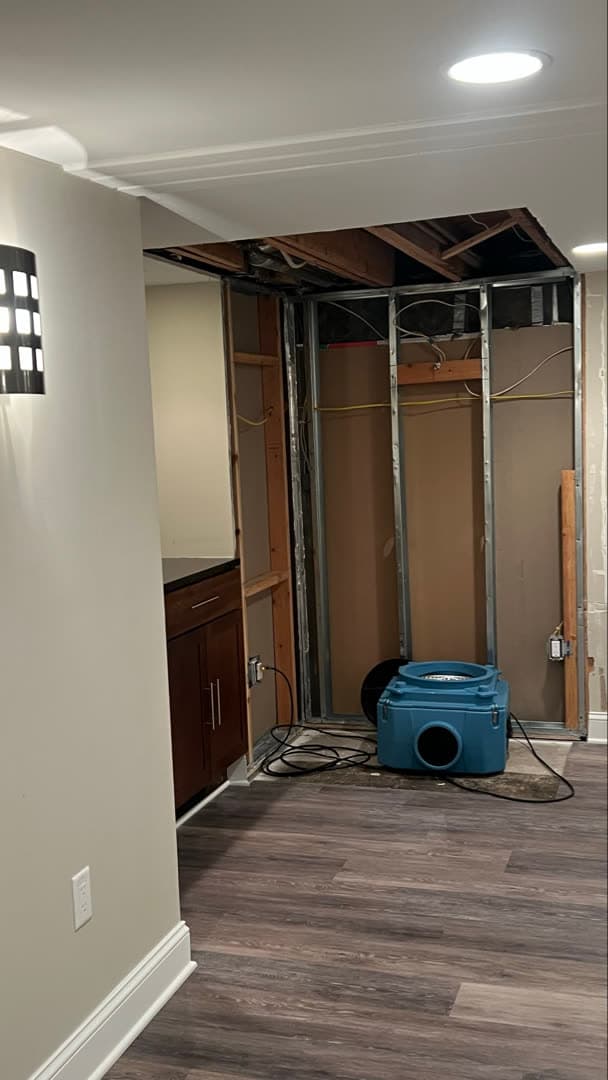
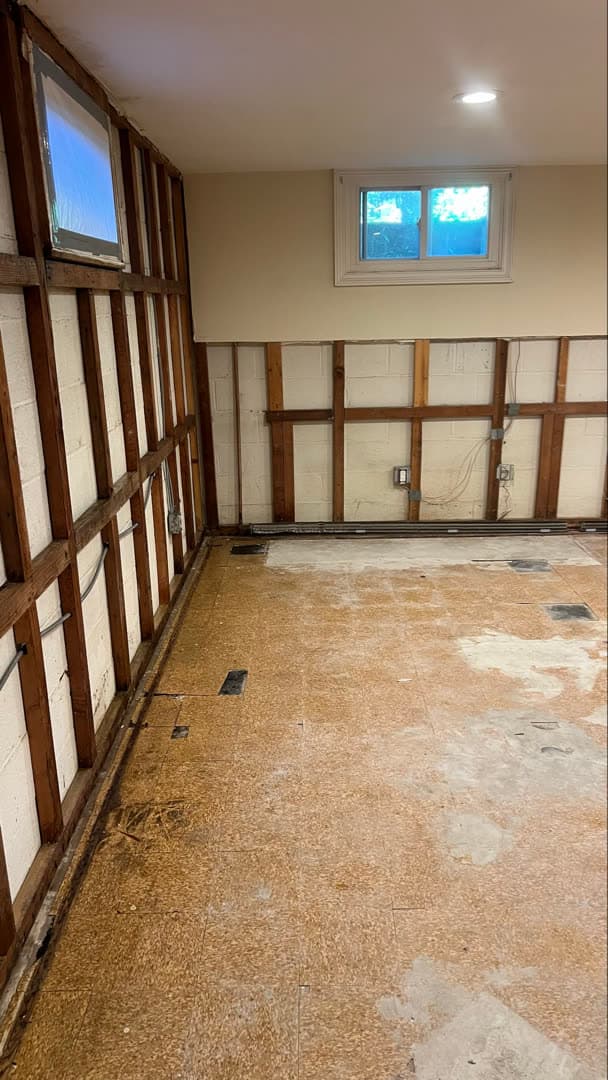
Real photos from this Hamden project: source corrected first, the wall opened to the first clean stud bay under containment, HEPA cleaned, and verified in three days.
The crew was honest about what needed to come out and what did not. No more smell, no more mold.
What Happened
The owners of a Hamden ranch noticed a musty odor in the finished rec room next to the basement laundry. Moisture tracing pointed to a washing machine drain hose that had been weeping into the wall cavity for months. Green Restoration set containment around the laundry and rec room, removed the affected drywall and baseboard under negative air, and cleaned the framing to ANSI/IICRC S520-15 practice with a plant-based antimicrobial.
Scope of Damage
Laundry Wall Cavity
SevereLower drywall and vinyl baseboard colonized on the shared laundry wall. Materials cut out and bagged under containment.
Rec Room
ModerateAdjacent finished wall opened to the first clean stud bay. A section of carpet tack strip and pad removed where moisture had wicked.
Framing & Slab Edge
LightStuds and slab edge HEPA vacuumed and treated. No structural replacement required.
How We Solved It
- 1
Moisture Source Confirmation
The failed drain hose was replaced by a plumber before remediation began. We verified the wall cavity was dry enough to proceed.
- 2
Containment & Negative Air
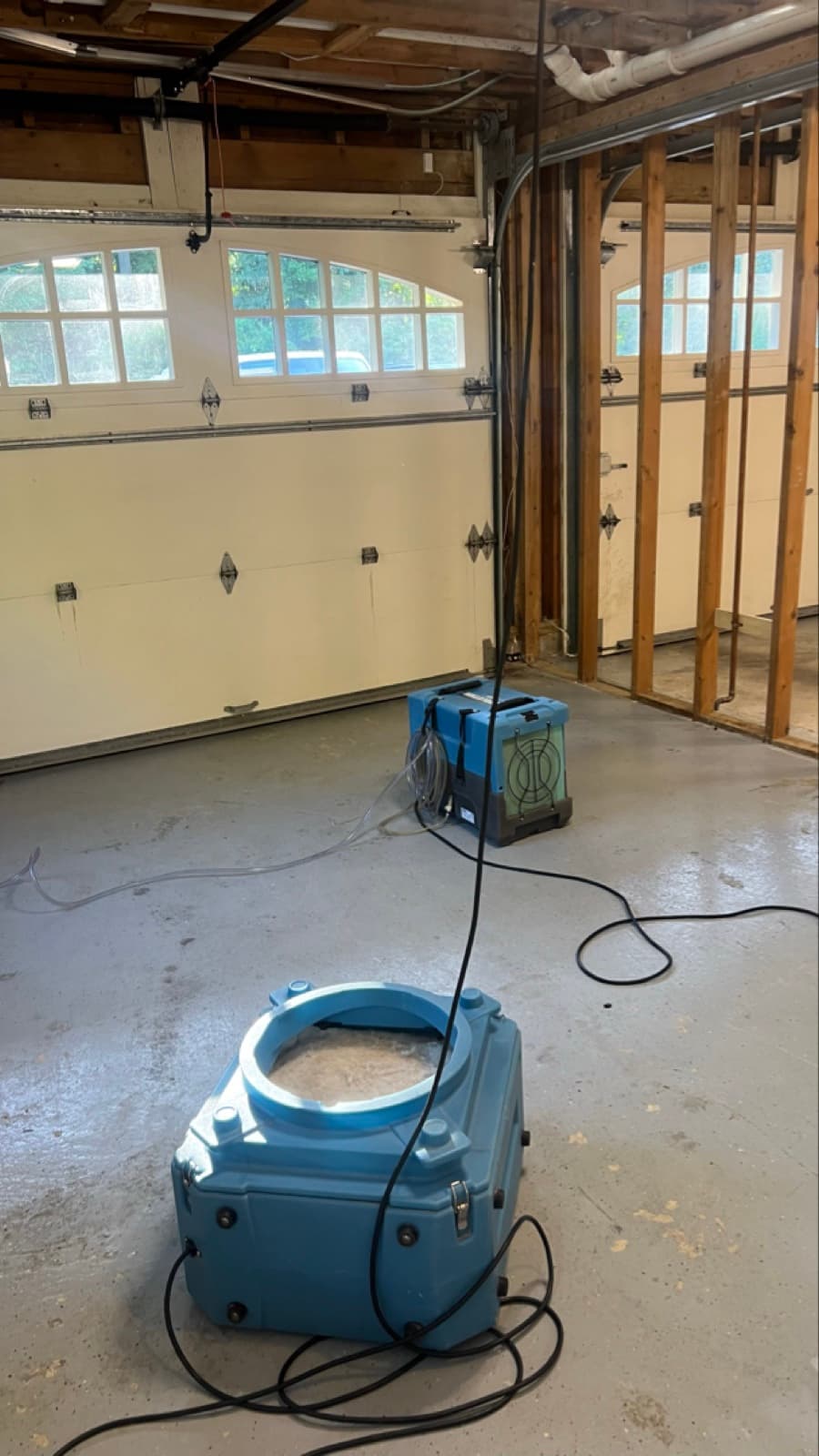
Poly containment across the laundry and rec room openings with a HEPA air scrubber holding negative pressure.
- 3
Selective Removal
Affected drywall, baseboard, and a section of carpet pad removed and bagged out under containment.
- 4
HEPA Clean & Antimicrobial
Framing, slab edge, and surrounding surfaces HEPA vacuumed, then treated with an EPA-registered plant-based antimicrobial.
- 5
Verification
Containment held until post-remediation checks confirmed the work area was clean and dry. Documentation packaged for the homeowner.
Tools & Equipment Used
Questions Homeowners Ask
What causes mold behind basement laundry walls?
Slow leaks from washing machine supply and drain hoses are a leading cause. Water wicks into the wall cavity behind the appliance, where it stays dark and damp. In this Hamden project the drain hose had been weeping for months before the odor gave it away. Swapping rubber hoses for braided stainless lines every five years is cheap prevention.
How long did the Hamden remediation take?
Three days on-site. Day one covered containment plus removal of the affected drywall and baseboard, day two the HEPA cleaning and antimicrobial treatment, and day three verification and teardown. Small contained losses like this move quickly once the moisture source is corrected.
Does homeowners insurance cover mold from an appliance leak in Connecticut?
Sometimes. A sudden hose failure is often a covered peril, while a slow leak that went unnoticed for months may be excluded. Green Restoration documents the loss with photos and moisture readings your carrier can review. We work with insurance, but Green Restoration is independent and not on any insurer's panel.
Do you have to remove drywall, or can mold be cleaned off?
Porous materials like drywall and baseboard that show growth are removed per ANSI/IICRC S520 practice, because colonies root into the paper facing and return after surface cleaning. Framing lumber is semi-porous and structural, so it is usually HEPA vacuumed and treated in place rather than replaced.
Could the family stay home during the work?
Yes. The work zone was sealed behind poly containment with a HEPA air scrubber holding negative pressure, so air moved into the containment rather than out of it. The family used the rest of the house normally for all three days.
How do we keep mold from returning in a laundry area?
Fix the water first: replace aging hoses, check the standpipe connection, and look behind the machine a few times a year. Keep basement relative humidity below 60 percent with a dehumidifier, and leave an air gap between the machine and the wall so the cavity can dry if a drip ever starts.
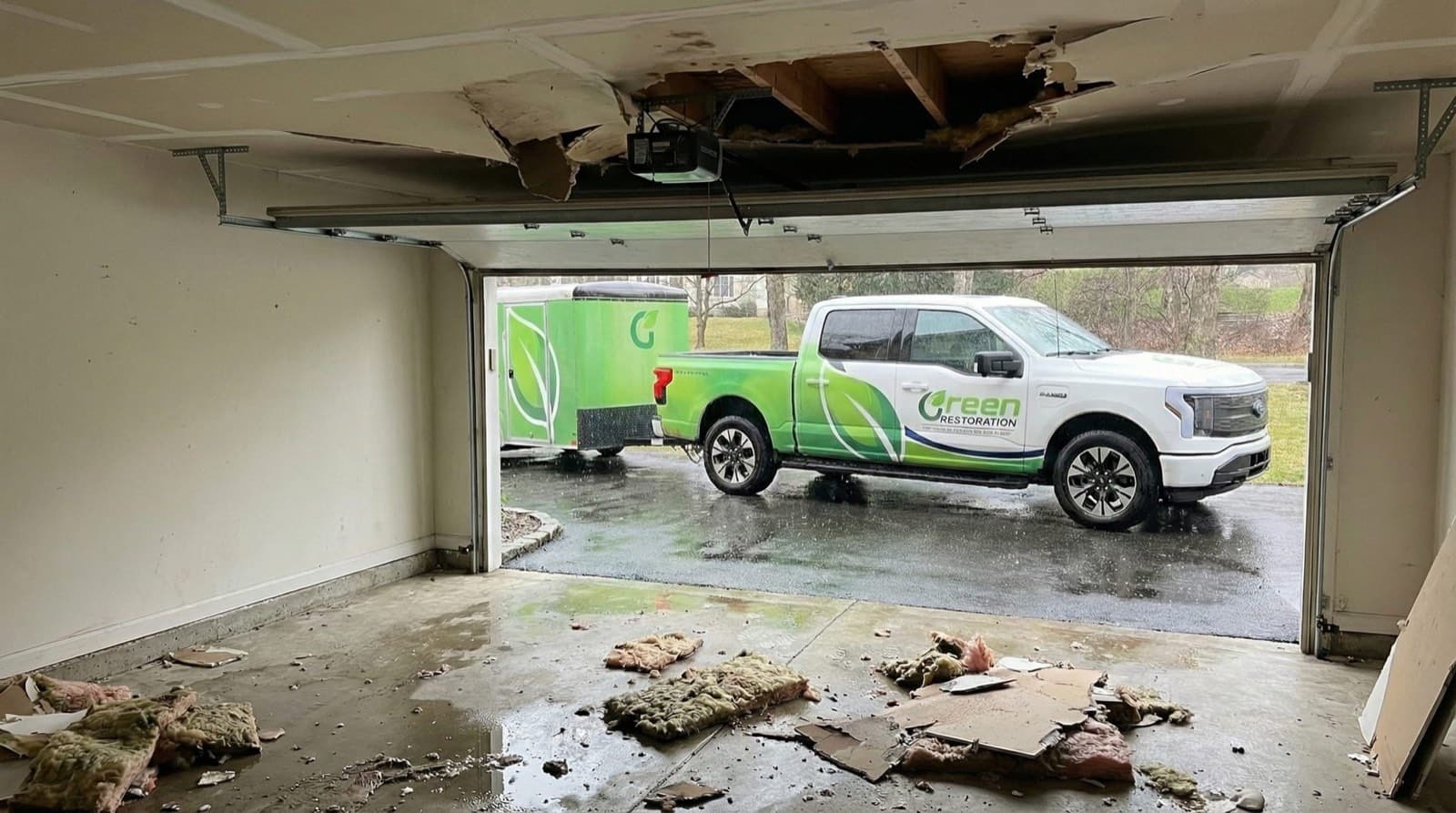
Hamden is served by
Green Restoration of Hamden
Available 24 / 7 for emergency response