Basement Mold Remediation in a Stratford Home
 1 / 4
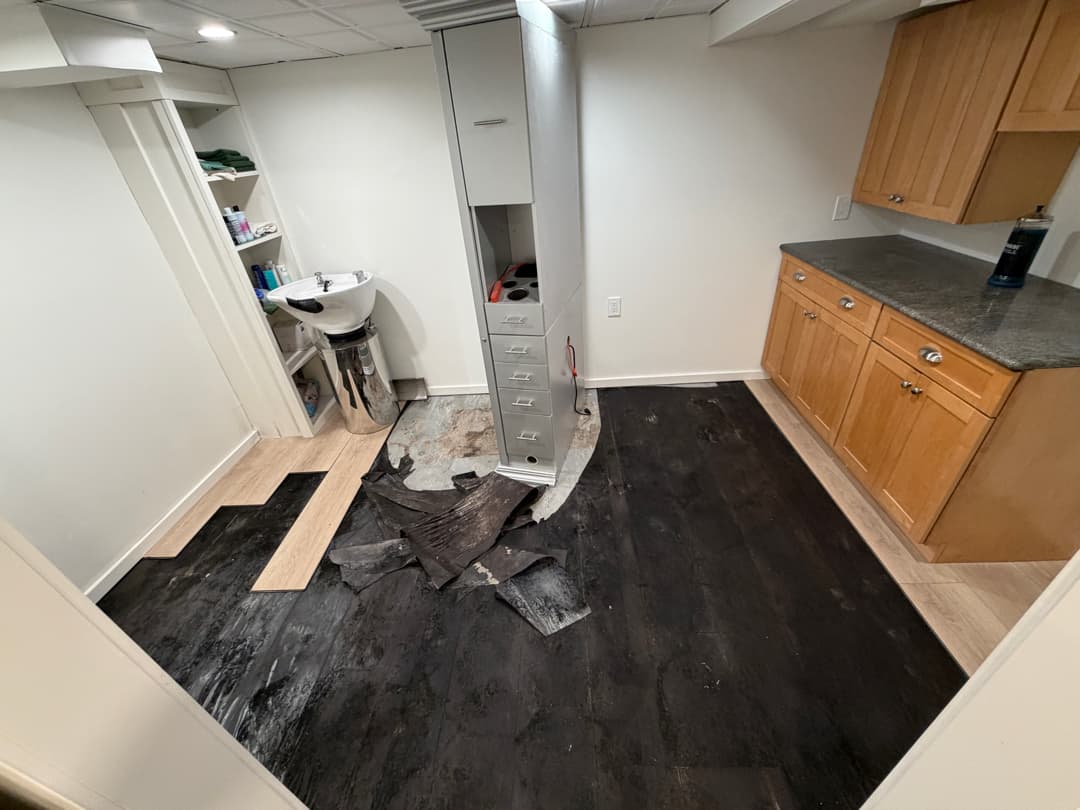
1 / 4Affected flooring removed to expose the subfloor and concrete in a Stratford, CT basement
What Happened
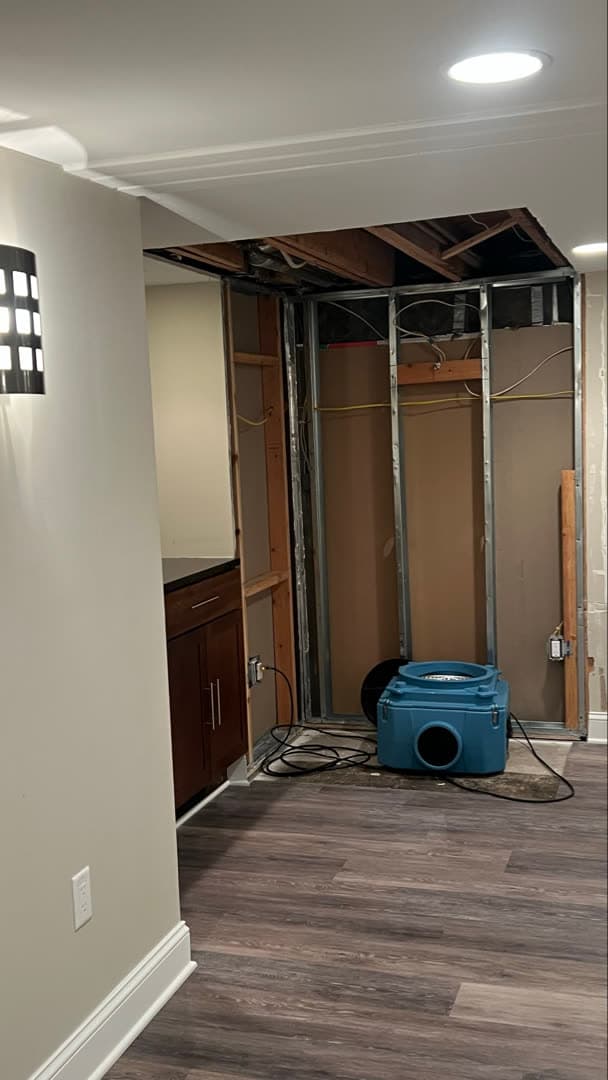
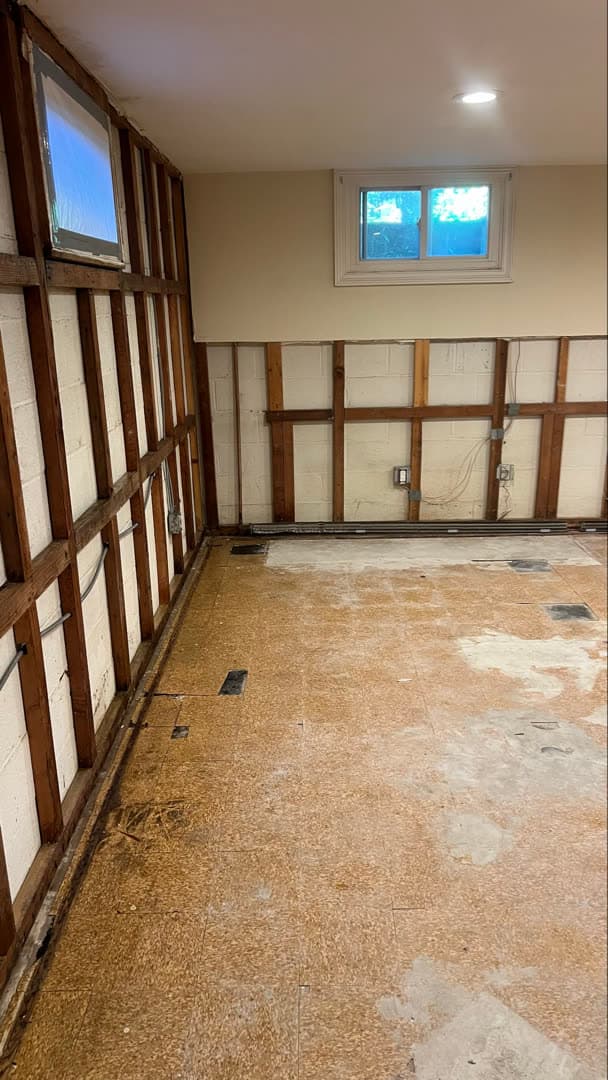
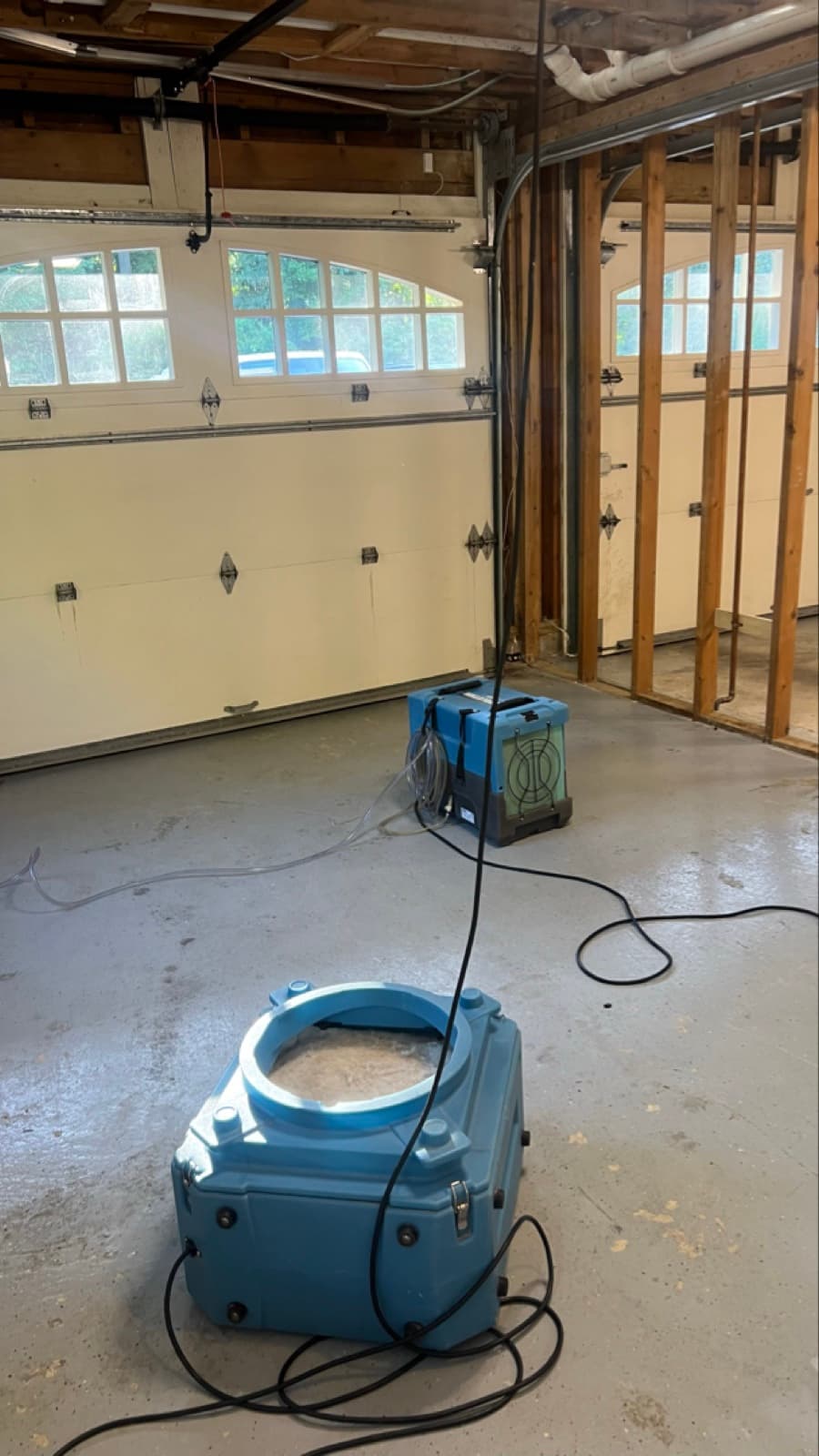
While a Stratford, CT basement renovation was underway, the crew uncovered mold and moisture damage in the flooring and the concrete slab beneath it. Green Restoration set up containment and negative-air pressure to protect the rest of the home, removed the remaining affected flooring and the tar paper beneath it, and ran HEPA air scrubbers on site for three days. The exposed subfloor and concrete were HEPA vacuumed and detail-cleaned, then treated with Benefect, an EPA-registered plant-based antimicrobial, and the space was given a full particle cleaning with contents protected throughout, all to ANSI/IICRC S520-15 practice.
Scope of Damage
Flooring & Tar Paper
ModerateMold and moisture damage in the flooring and the tar paper beneath it, uncovered mid-renovation. The remaining affected flooring and tar paper were removed, bagged, and disposed of.
Subfloor & Concrete Slab
ModerateMold and debris on the exposed subfloor and concrete. HEPA vacuumed, detail-cleaned, and treated with an EPA-registered antimicrobial.
Basement Contents
LightFurnishings and equipment protected in place with poly, then addressed in a detailed particle cleaning of the space on completion.
How We Solved It
- 1
Containment & Negative Air
Containment and negative-air pressure set up to isolate the work area and protect the rest of the home during remediation.
- 2
Controlled Demolition & Removal
The remaining affected flooring and the tar paper beneath it removed, bagged, and prepared for disposal.
- 3
HEPA Air Scrubbing (3 Days)
HEPA air scrubbers run on site for three days to keep the air clean throughout the remediation.
- 4
Surface Remediation & Antimicrobial
The exposed subfloor and concrete HEPA vacuumed and detail-cleaned, then treated with Benefect, an EPA-registered thyme-oil-based botanical antimicrobial.
- 5
Particle Cleaning & Final Cleaning
A detailed particle cleaning of the space with contents protected, followed by haul-away of all removed material and a thorough final cleaning on completion.
Tools & Equipment Used
Questions Homeowners Ask
What was found during this Stratford basement job?
While a basement renovation was underway, the crew uncovered mold and moisture damage in the flooring and the concrete slab beneath it. Because the damage was already exposed, we contained the area and remediated it properly before any new finishes went back in.
What did the Stratford remediation involve?
Containment and negative-air controls, removal of the remaining affected flooring and tar paper, three days of HEPA air scrubbing, a HEPA vacuum and detail clean of the subfloor and concrete, an EPA-registered Benefect antimicrobial treatment, a full particle cleaning of the space, and haul-away of all removed material, to ANSI/IICRC S520-15 practice.
Why remediate mold found under flooring during a renovation?
Because sealing new flooring over existing mold and moisture traps the problem and lets it keep growing under the surface. Handling it while the assembly is already open, with containment so spores are not spread through the home, is the right time and the least disruptive way to do it correctly.
What is Benefect and why use it?
Benefect is an EPA-registered, plant-based botanical antimicrobial made from thyme oil. We use it to treat mold-affected surfaces because it is effective without relying on harsh chemicals, which fits how we work and is easier on the home and the people in it.
Does insurance cover mold found during a renovation in Connecticut?
It depends on the cause and your policy. Mold discovered from a sudden, covered water event may be covered, while pre-existing or gradual moisture damage is often excluded. We document the condition and our scope so you can review it with your agent. We work with insurance, but Green Restoration is independent and not on any insurer's panel.
How long did the Stratford project take?
The HEPA air scrubbers ran on site for three days, and the schedule is driven by the containment, controlled removal, treatment, and a full particle cleaning of the space rather than by long structural drying. Contents were protected in place throughout so the rest of the home stayed usable.
Stratford is served by
Green Restoration of Stratford
Available 24 / 7 for emergency response