Category 3 Water Cleanup Across a 1,200 Square Foot Norwich Basement
 1 / 4
1 / 4The trail out from the foundation wall. Staining like this is the record of water that has come in more than once, not a single spill.
See How the Work Was Done
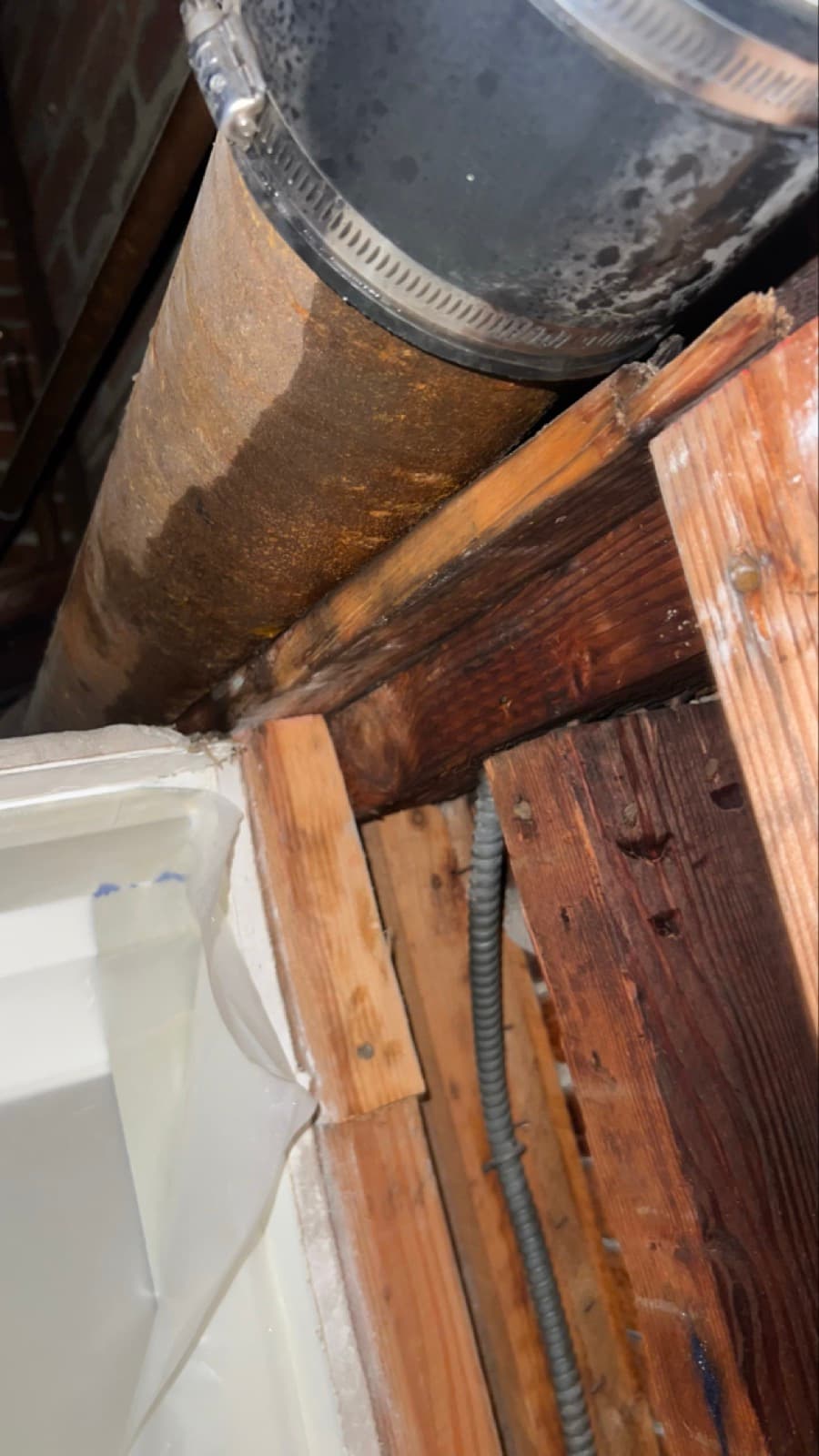
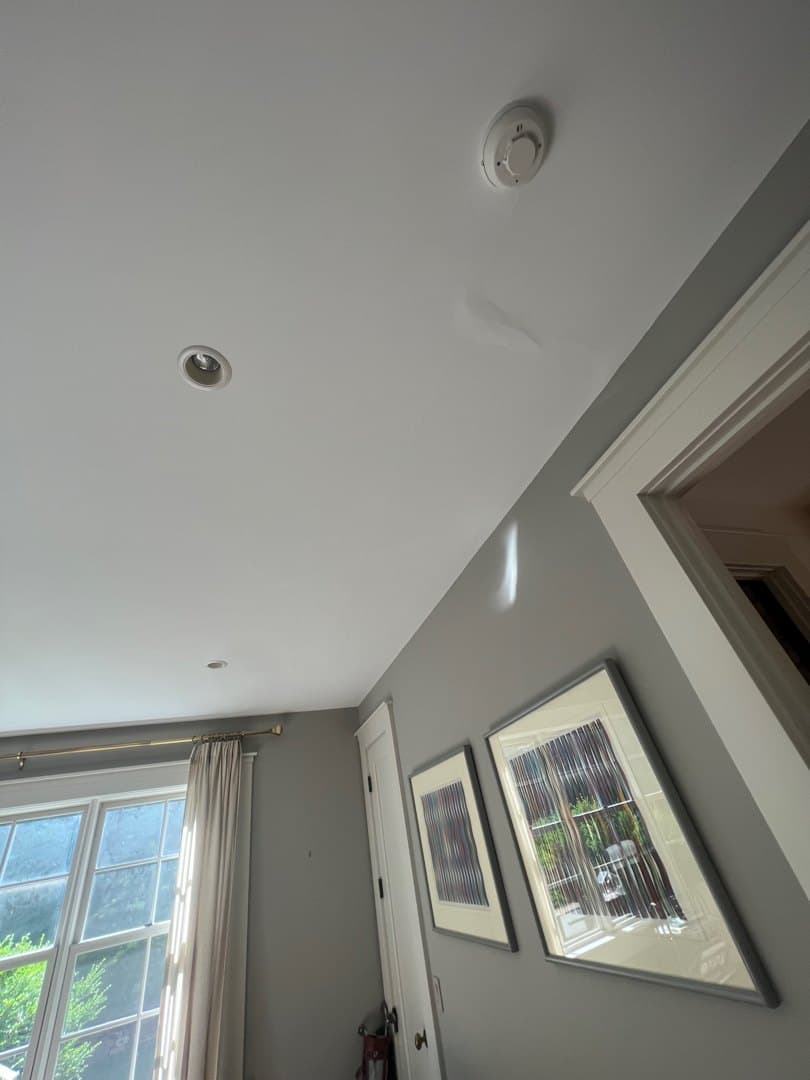
Real photos from this Norwich project: the water trail across the slab, the door jamb where it was getting in, and the standing water at the utility corner.
What Happened
The basement of this Norwich, CT home had taken on water, and by the time it was walked the evidence was spread across the whole floor rather than sitting in one corner. A rust colored trail ran out from the base of the foundation wall and across the concrete slab. The utility area at the back sat damp, with the plywood laid on the slab darkened and rotted where water had stood against it.
At the basement entry the door jamb was soft and discolored at the base, with leaf litter and debris sitting in the track, which is what a threshold looks like after water has been finding its way in repeatedly rather than once. Household contents were stored directly on the affected floor. The category is what set the shape of this job. Category 3 water is contaminated water, and it is not something you point a machine at and leave. Poly containment and critical barriers went up first so the work zone stayed separated from the rest of the house, and the crew worked in full protective equipment for the duration.
From there the sequence was extraction, then cleaning, then treatment, in that order. The water came off the hard surface flooring first, because a floor you are still standing in cannot be cleaned. Stored contents were moved out of the way so the crew could reach the full floor rather than the open middle of it, and reset afterward. Then 1,200 square feet of affected flooring was cleaned in detail and HEPA vacuumed, which is the step that actually removes contamination instead of redistributing it, and affected material that could not be kept was carried out and hauled off in a single axle truck load.
With the floor clean, an EPA registered antimicrobial was applied across roughly 200 square feet of affected area, and a HEPA air scrubber ran on site for three days to filter the air in the space while the work was completed. It is worth being precise about where this scope stopped. No structural drying equipment and no dehumidification were sold on this job. No flooring, drywall or framing was removed, and no rebuild followed. Nothing was done to the door, the foundation or the exterior grading, so the reason water was getting in is still there and remains the next decision for the homeowner. The basement was handed back clean, treated and usable, and the cause is a separate conversation.
Scope of Damage
Basement Slab
SevereA rust colored water trail ran from the base of the foundation wall out across the concrete, with water standing at the low points. 1,200 square feet of affected flooring was cleaned in detail and HEPA vacuumed.
Utility Area
ModerateThe back corner sat damp, with the plywood laid on the slab darkened and rotted where water had stood against it for a period.
Basement Entry Threshold
ModerateThe door jamb at the basement entry was soft and discolored at the base, with leaf litter and debris in the track. No door, frame or waterproofing work was part of this scope.
Stored Contents
ModerateHousehold contents were stored directly on the affected floor. They were moved for access and reset afterward, and affected material that could not be kept was hauled off the property.
How We Solved It
- 1
On Site Assessment and Category Call
The basement was walked and documented before anything was moved. The water was classified as Category 3, which is what determined the containment, the protective equipment and the cleaning first sequence that followed.
- 2
Containment and Protective Equipment
Poly containment and critical barriers isolated the work area from the rest of the house before any water was touched, and the crew worked the job in full personal protective equipment for Category 3 conditions.
- 3
Category 3 Water Extraction
Standing water was extracted off the hard surface flooring first, so the affected area could actually be cleaned rather than worked around.
- 4
Content Manipulation
Stored basement contents were relocated to give the crew access to the full floor and reset once the work was finished.
- 5
Heavy Floor Cleaning and HEPA Vacuuming
1,200 square feet of affected flooring was cleaned in detail and HEPA vacuumed, so contamination left the space in a filter rather than going airborne.
- 6
Antimicrobial Application
An EPA registered antimicrobial was applied across roughly 200 square feet of Category 3 affected area after the physical cleaning was complete.
- 7
Three Days of HEPA Air Scrubbing
A HEPA air scrubber ran on site for three days, filtering the air in the space across the working period.
- 8
Disposal
Affected material that could not be kept was removed from the property in a single axle truck load.
Tools & Equipment Used
Questions Homeowners Ask
What makes water Category 3, and why does it change the work?
Category 3 is the IICRC classification for grossly contaminated water, which includes ground and surface water entering a building. It changes the job because the problem is contamination, not just moisture. That means containment before anything is disturbed, protective equipment for the crew, physical cleaning and HEPA vacuuming of the affected surfaces, and an antimicrobial after the cleaning rather than instead of it.
Was the basement dried with equipment on this job?
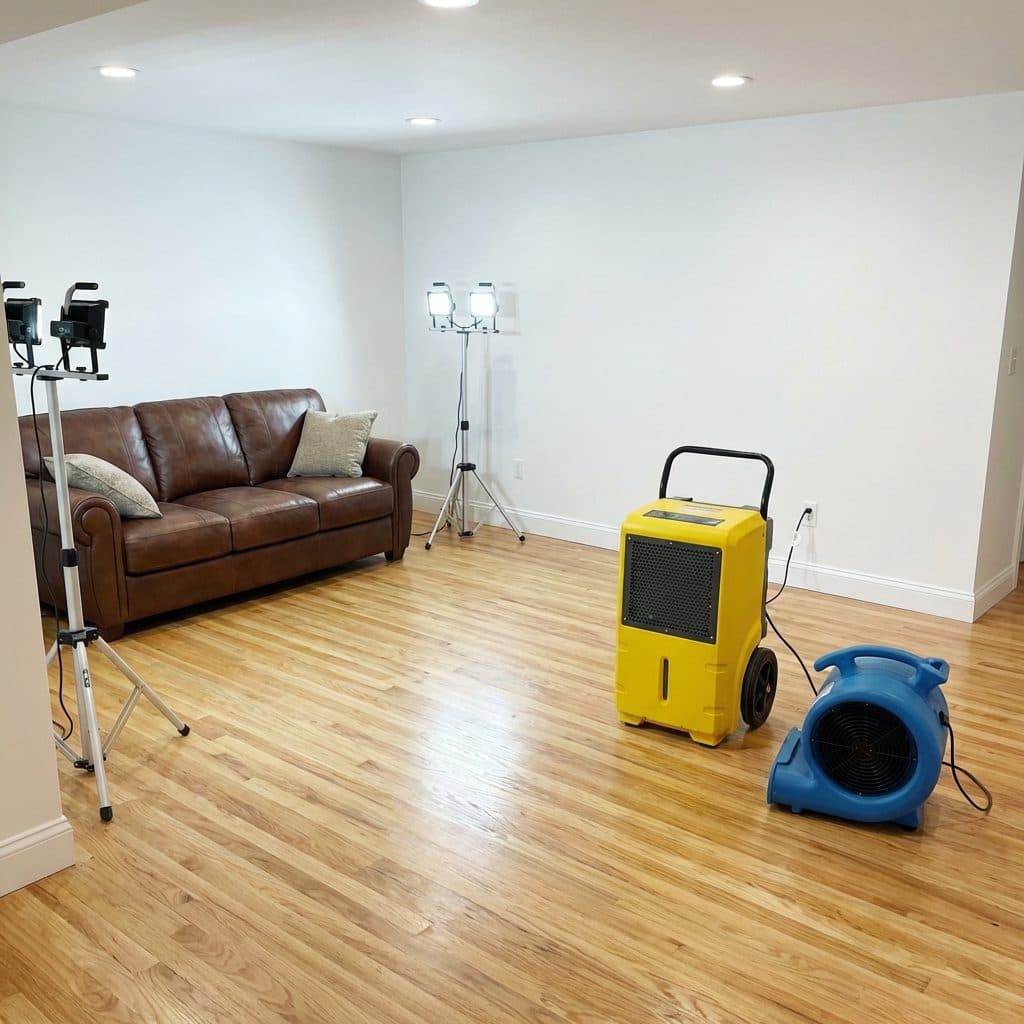
No. This scope was a cleanup, not a structural dry. The affected flooring here was hard surface, so the sold work was extraction, detailed cleaning and HEPA vacuuming, antimicrobial application and three days of HEPA air scrubbing. Dehumidifiers and air movers belong on a job where porous building materials have absorbed water and have to be dried in place, and that was not what this basement needed.
The visit was booked as a mold inspection. Why was the work water cleanup?
What was found on site was an active water problem, and the water comes first. Assessing a wet basement for mold growth before the water and the contamination are dealt with tells you very little, because conditions change the moment the space is cleaned and dried out. Mold testing and mold remediation were not part of this scope and are not claimed here.
Why was the antimicrobial applied to a smaller area than the cleaning?
The detailed cleaning and HEPA vacuuming covered the full 1,200 square feet of affected flooring, because contamination tracks across a slab. The antimicrobial was applied across roughly 200 square feet, targeting the Category 3 affected area specifically. An antimicrobial is a treatment applied at a point in time after the physical cleaning has done the real work. It is not a coating, a barrier, or a warranty against anything returning.
Does a cleanup like this stop water from coming back into the basement?
No, and it is important to be straight about that. This job removed the water and the contamination and cleaned and treated the affected area. It did not include waterproofing, foundation work, exterior grading, or any repair to the entry door and frame where water had been getting in. Stopping the intrusion is a separate scope and a separate decision.
Will homeowners insurance cover a basement water cleanup in Connecticut?
It depends on the cause. A sudden, accidental event like a burst pipe or an overflow is often covered, while water entering gradually from the ground or through a failing threshold is usually treated as a maintenance issue and may be excluded. We document the loss so you can review it with your agent. We work with insurance, but Green Restoration is independent and not on any insurer panel.
What should a homeowner not do with standing water in a basement?
Do not run a shop vacuum without HEPA filtration over contaminated water, do not sweep or dry brush the residue once it starts drying, and do not put a fan on it, because moving air across contaminated surfaces is how you spread it through the rest of the house. Keep people and pets out of the space and get it assessed before anything porous is handled.