Garage Ceiling Water Damage from the Bathroom Above in South Hadley
 1 / 3
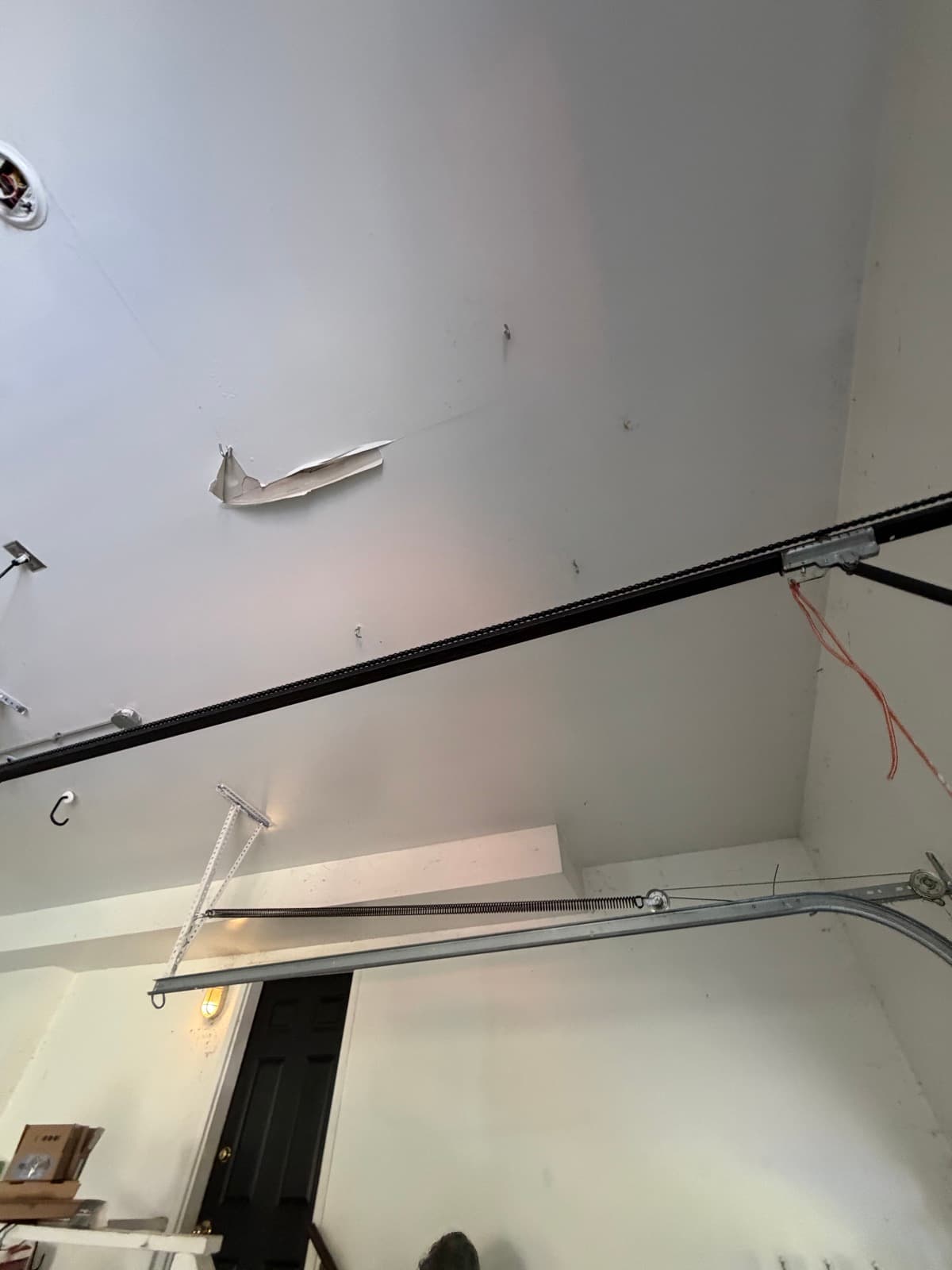
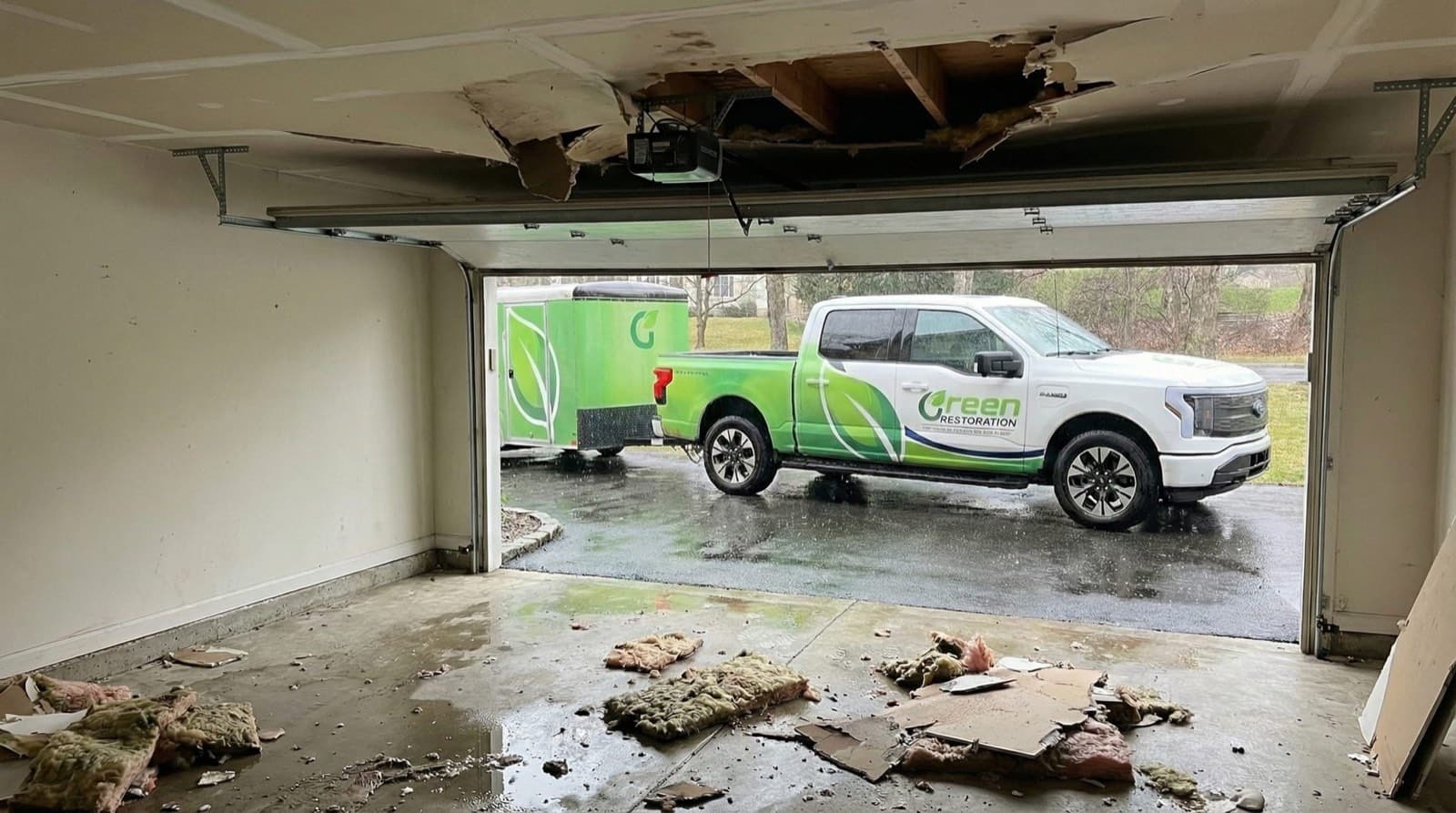
1 / 3What was visible from the garage floor. A piece of tape and paper about the size of a hand, over a cavity that was holding water across a much larger area.
See How the Work Was Done
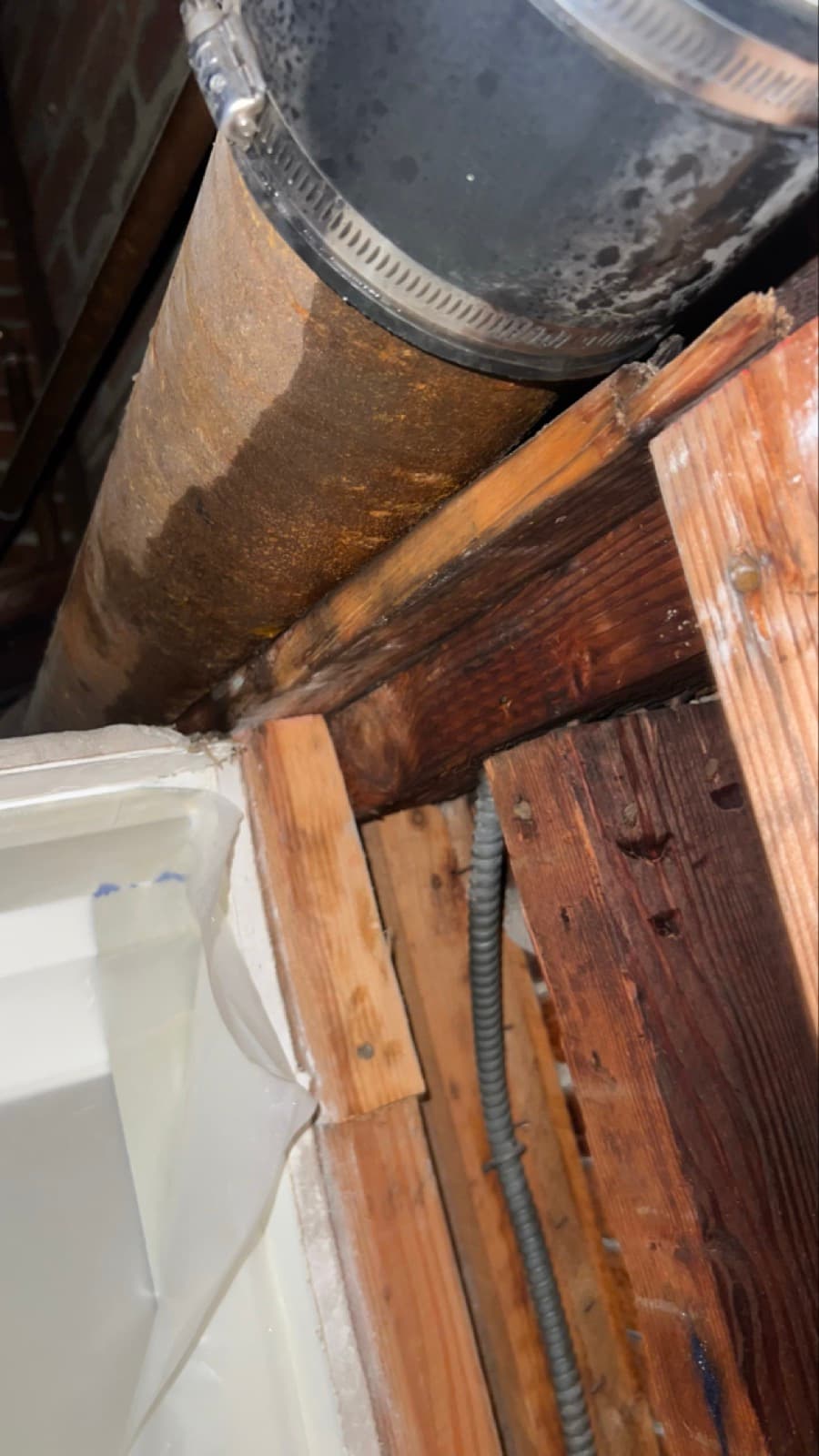
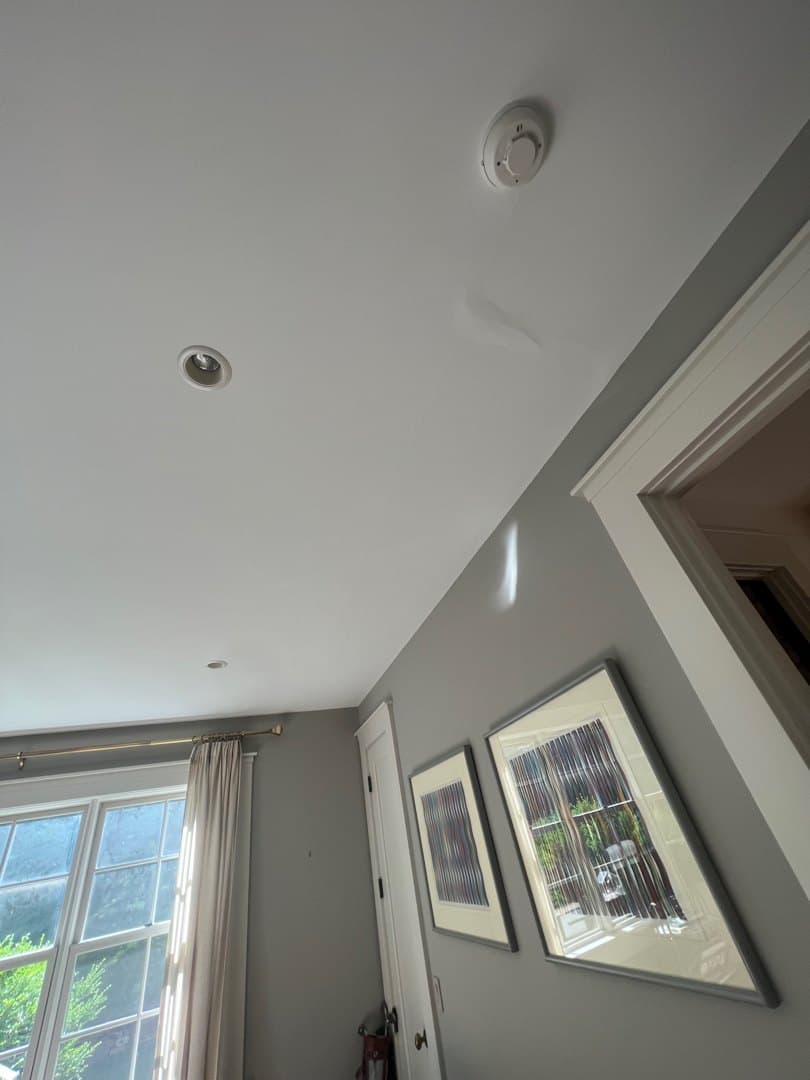
Real photos from this South Hadley job: the loose drywall on the garage ceiling, the cavity above it, and the bathroom the water was coming from. Inspection day, before the ceiling was opened.
What Happened
From the garage floor there was almost nothing to see. One piece of drywall tape and paper had let go of the ceiling and was hanging down, roughly the size of a hand, and the rest of the ceiling read as a clean white surface. That is the part worth understanding about this job, because the damage people can see and the damage that has to be paid for are rarely the same thing. Water had been getting into the floor cavity between the garage ceiling below and the bathroom above it. Insulation sits in that cavity, and insulation holds water.
It does not drain, it does not dry on its own in a closed assembly, and it keeps the joists and the subfloor underside wet against it for as long as it stays there. A ceiling that looks intact from below can sit over a saturated cavity for a long time, and the blister in the drywall is usually the first and only signal that anything is happening at all. The scope followed from that.
The garage is attached living space in every practical sense, connected to the house by a door, so the first thing built was a sealed containment chamber around the work zone with a zippered entry door, so that opening a wet ceiling did not push dust and debris into the rest of the property. Then 64 square feet of the affected ceiling drywall came down, and the wet insulation in the cavity above it was pulled out and bagged rather than left to dry in place.
With the cavity open, the exposed joists and the underside of the subfloor were HEPA vacuumed, so what came off the framing left in a filter instead of going into the air, and a plant based antimicrobial coating was applied over the 64 square feet of exposed joist system after that physical cleaning was done. Drying ran for three days inside the containment: two air movers directed into the open cavity, one large LGR dehumidifier pulling the moisture out of the air the movers released, and one HEPA negative air scrubber filtering the work zone throughout.
The crew came back daily to take moisture readings, and the equipment came out when the assembly read dry rather than on a fixed schedule. The removed drywall and insulation left the property in a single truck load, and every piece of equipment was decontaminated after use. It is worth being precise about where this scope stopped. This was mitigation, not reconstruction. The ceiling was left open and dry. No new drywall was hung, nothing was taped, finished or painted, and no rebuild followed.
Nothing was done to the fixture or the plumbing in the bathroom above, so identifying and repairing the source of the water is a separate scope and remains the homeowner decision that has to come before any ceiling goes back up. No mold testing was sold on this job and none is claimed.
Scope of Damage
Garage Ceiling
ModerateDrywall tape and paper had released and was hanging from the ceiling. 64 square feet of the affected ceiling drywall was removed, bagged and hauled off the property.
Floor Cavity Insulation
SevereThe insulation in the cavity between the garage ceiling and the bathroom above had taken on water. 64 square feet of it was removed and bagged rather than left to dry in a closed assembly.
Joist System and Subfloor Underside
ModerateThe framing and the underside of the subfloor sat wet against the saturated insulation. Once exposed, 64 square feet was HEPA vacuumed and given one coat of a plant based antimicrobial.
Bathroom Above
LightThe water was reaching the cavity from the bathroom overhead. No plumbing repair, fixture work or bathroom finish work was part of this scope.
How We Solved It
- 1
On Site Assessment
The garage ceiling and the bathroom above it were walked and documented before anything was opened, and the affected area was measured so the scope was set on the actual footprint rather than an estimate from the floor.
- 2
Containment Chamber
A sealed containment chamber went up around the work zone in the garage, with a peel and seal zippered entry door, so that opening a wet ceiling kept its dust and debris inside the work area.
- 3
Ceiling Drywall Removal
64 square feet of affected garage ceiling drywall was taken down, bagged and cleaned up inside the containment.
- 4
Wet Insulation Removal
The wet insulation was pulled out of the floor cavity above the garage ceiling and bagged. Insulation that has taken on water does not dry in place inside a closed assembly, so it comes out rather than staying in.
- 5
HEPA Vacuuming the Exposed Framing
With the cavity open, the exposed joists and the underside of the subfloor were HEPA vacuumed across 64 square feet, so material came off the framing into a filter instead of going airborne.
- 6
Antimicrobial Coating
One coat of a plant based antimicrobial was applied to the 64 square feet of exposed joist system after the physical cleaning was complete. It is a treatment applied at a point in time, not a coating that prevents anything in future.
- 7
Three Days of Drying with Daily Monitoring
Two air movers were directed into the open cavity, one large LGR dehumidifier ran inside the containment, and one HEPA negative air scrubber filtered the work zone, for three days. A technician returned daily to take moisture readings, and the equipment came out when the assembly read dry.
- 8
Disposal and Equipment Decontamination
The removed drywall and insulation left the property in a single truck load including dump fees, and each piece of equipment was cleaned and decontaminated after use.
Tools & Equipment Used
Questions Homeowners Ask
Why was the ceiling opened when only a small piece of drywall was damaged?
Because the water was not in the drywall, it was in the cavity above it. Insulation in a floor cavity absorbs water and holds it against the joists and the subfloor underside, and a closed assembly does not dry on its own. The visible blister was the signal, not the extent. Opening 64 square feet was what it took to reach and remove the wet material.
Why was the wet insulation removed instead of dried in place?
Wet insulation loses its function and holds moisture against the framing for far longer than the framing itself would stay wet. Drying equipment moves air across surfaces it can reach, and it cannot reach the inside of a saturated batt sitting in a closed cavity. Removing and bagging it is the step that actually ends the moisture source inside the assembly.
What does the antimicrobial coating do, and how long does it last?
It is a treatment applied to the cleaned joist system at a point in time, after the physical HEPA vacuuming has done the real work of removing material. It is not a barrier, not a sealant, and not a warranty against anything appearing in future. Green Restoration does not offer or imply any antimicrobial warranty. Keeping water out of the cavity is what determines what happens next.
Was the garage ceiling put back after the work?
No. This scope was mitigation only. The ceiling was left open and dry, with the joist system cleaned and coated. No drywall was hung, taped, finished or painted, and no rebuild was sold or performed. Reconstruction is a separate scope, and it should follow the repair of whatever was letting water into the cavity, not precede it.
How long does drying a garage ceiling cavity take?
On this job the equipment ran for three days. That number came from daily moisture readings rather than from a fixed schedule, which is the right way to run it. An open cavity with air movers directed into it and a dehumidifier removing the released moisture usually reaches dry in two to four days, but the readings decide, not the calendar.
Does homeowners insurance cover water damage from a bathroom above a garage?
It depends on the cause. A sudden, accidental failure such as a supply line letting go or an overflow is often covered, while water that has been seeping gradually from a worn seal or a slow fitting leak is usually treated as a maintenance issue and may be excluded. We document the loss so you can review it with your agent. We work with insurance, and Green Restoration is independent and not on any insurer panel.
What should a homeowner do when drywall starts hanging off a garage ceiling?
Stop parking under it and keep people out from beneath that bay, because saturated drywall and wet insulation come down without warning. Do not pull at the loose piece to see how far it goes, and do not put a household fan on it, since moving air across an open wet cavity spreads whatever is in it. Get the cavity opened and assessed properly.
South Hadley is served by
Green Restoration of Western Mass
Available 24 / 7 for emergency response