Finished Basement Dried After Water Came Through the Foundation in Stamford
 1 / 12
The assessment. Wet readings at the base of the walls, where the water was coming in.
See How the Work Was Done
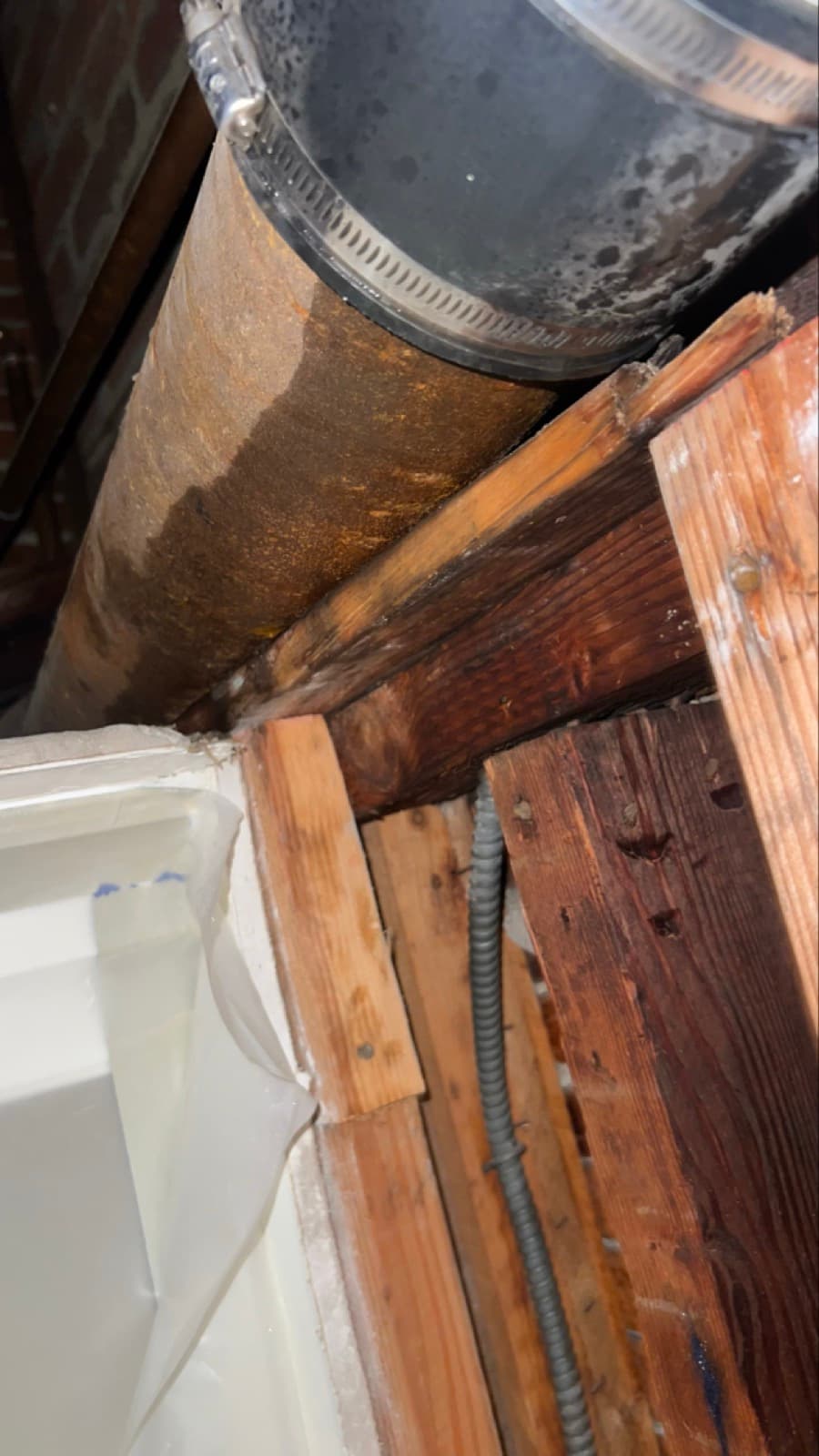
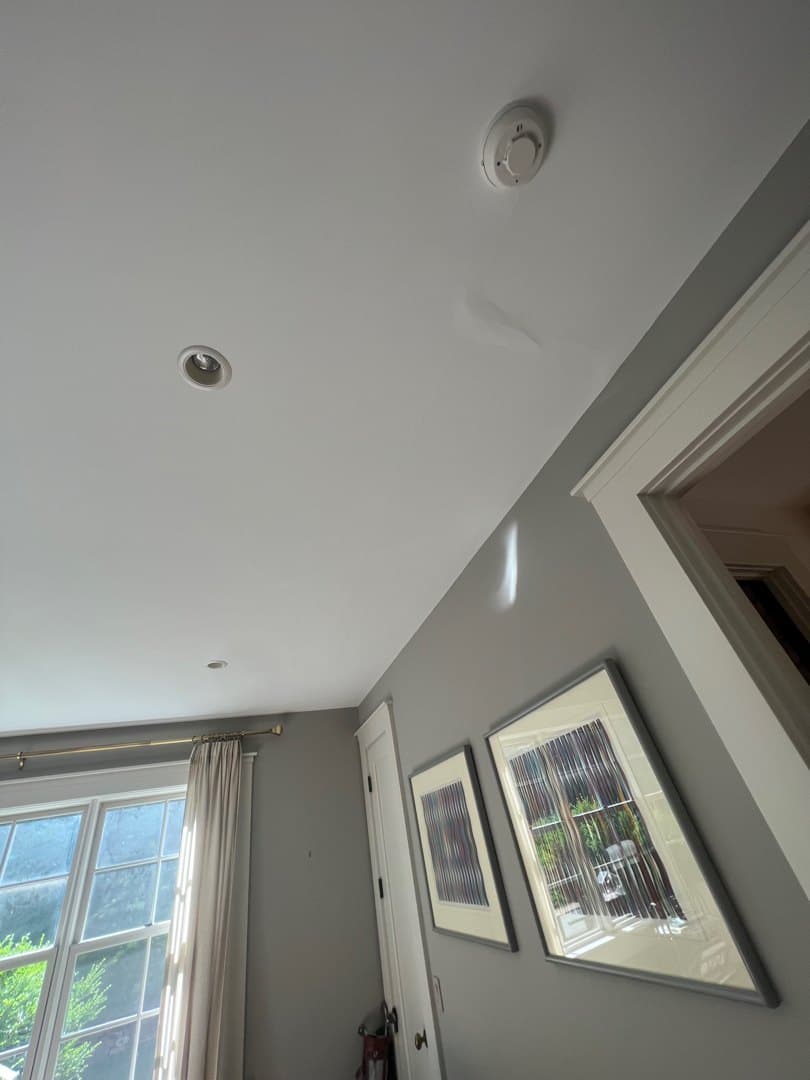
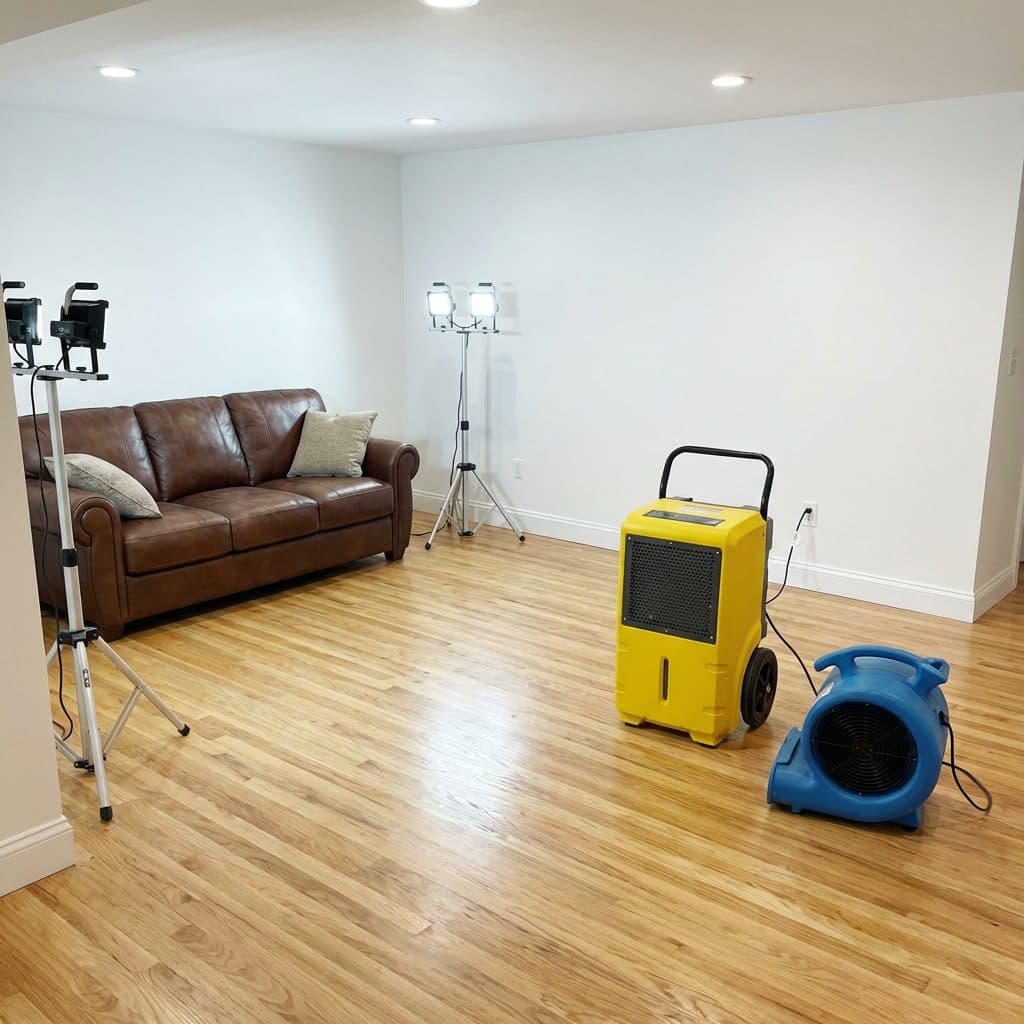
Real photos from this Stamford job: a moisture reading at the baseboard, the floor up and the lower wall opened to the studs, the built ins wrapped in plastic, and air movers running along the open walls.
What Happened
This Stamford basement is finished living space: a family room of about 18 by 23 feet with the TVs on the wall, a kids' playroom of about 25 by 13 feet, and a small bathroom, with an unfinished mechanical and storage area beside them. Water was slipping in through the foundation walls. From the room it looked like very little, a damp edge at the baseboard. At the assessment the moisture meter told a different story along the base of the walls in each room. In a finished basement the water does not stay on the floor.
It runs under the laminate, soaks the paper pad, and wicks up the back of the drywall into the insulation behind it, where nothing can dry it. So the scope was flood cuts around the affected rooms, not drying through the paint. The work ran over three visits, November 2, 3 and 4. First the contents were moved out of the work areas, and what could not move, the built in cabinets and the wall mounted TV, was wrapped in plastic. The vents were taped off.
Then 764 square feet of laminate and its paper pad came up and were bagged, 127 linear feet of baseboard came off, and the lower wall was cut out along 508 linear feet. Behind it, 304 square feet of wet insulation was bagged and removed. The exposed studs were cleaned and HEPA vacuumed across 508 square feet, and a plant based antimicrobial with no harmful chemicals or solvents was applied with a cold ULV fogger across the 764 square feet.
Air movers ran for 24 unit days along the open walls and a large LGR dehumidifier ran for 3 days, with negative air equipment set up and taken down with the rest. The debris went out in a 12 yard dumpster. This job did not include putting the walls and floor back or any work on the foundation itself. Where the water gets in is worth settling before the basement is finished again.
Scope of Damage
Family Room
SevereAbout 18 by 23 feet. Wet readings at the baseboard. Laminate and pad removed, baseboard off, the lower wall cut out and the wet insulation behind it bagged.
Kids' Playroom
SevereAbout 25 by 13 feet. Floor up, the lower wall opened to the studs, and the framing cleaned and HEPA vacuumed.
Bathroom
ModerateAbout 5 by 5 feet, measured into the scope at the assessment with the rooms around it.
Contents and Built Ins
LightContents moved out of the work areas. Built in cabinets and a wall mounted TV wrapped in plastic where they stood.
How We Solved It
- 1
Readings and Contents
Moisture readings along the base of the walls in each room, then the contents moved out of the work areas and the built ins and TV wrapped in plastic.
- 2
Floor and Baseboard Out
764 square feet of non salvageable laminate and paper pad taken up and bagged, and 127 linear feet of baseboard removed.
- 3
Flood Cuts and Insulation
The lower wall cut out along 508 linear feet, and 304 square feet of wet insulation bagged and removed.
- 4
Studs Cleaned and Treated
The exposed studs cleaned and HEPA vacuumed across 508 square feet, then a plant based antimicrobial applied with a cold ULV fogger across 764 square feet.
- 5
Drying and Disposal
Air movers ran for 24 unit days and a large LGR dehumidifier for 3 days. The debris went out in a 12 yard dumpster.
Tools & Equipment Used
Marvin on This Job
What told you at the assessment that the water was coming through the foundation and not from a pipe?
The readings. Every wet spot was at the base of an outside wall, and the meter climbed as I moved toward the foundation, not toward the bathroom or a supply line. Water from a pipe shows up around the fixture. This showed up along the walls in the family room, the kids' room and the bathroom.
Why take the laminate up across the whole room instead of just drying it?
Laminate sits on a paper pad, and the pad was wet under the planks. You cannot dry a pad from the top through a sealed floor, and while it stays wet the slab under it never dries either. Once the floor is not salvageable the honest move is to take it up, bag it and dry the slab.
How did you decide how high to cut the walls?
I cut above the highest wet reading. The water came in low, so the bottom of the drywall and the insulation behind it were the wet part. We pulled the baseboard, cut the lower wall around the affected rooms and took the wet insulation out so the studs were open to the air movers.
What should the homeowner settle before the walls and floor go back in?
Where the water is getting in. We dried the structure and treated the framing, but we did not touch the foundation or the drainage outside. If that is not handled, new drywall and a new floor go right over the same problem.
Questions Homeowners Ask
Why cut the wall when the water was only at the floor?
Because drywall wicks water upward and the insulation behind it holds it against the studs. From the room it looks like a damp baseboard. Behind the paint it is a wet wall that cannot dry. Cutting the lower wall opens it to the air, which is what lets the framing dry.
Can laminate flooring be dried in place?
Usually not when water has run underneath it. Laminate sits on a pad, and here that pad was paper, which soaks up water and holds it against the slab. The laminate itself swells at the seams. On this job 764 square feet of laminate and pad came out and were bagged.
Why remove the insulation?
Wet insulation does not give water back on its own schedule. It stays wet against the studs long after the room feels dry. Here 304 square feet of wet insulation was bagged and removed, then the studs were cleaned and HEPA vacuumed.
Does this fix the water coming through the foundation?
No. This job was the mitigation: getting the wet materials out and drying the structure. Where the water enters is a separate question about the foundation, and it is worth settling before the walls and floor go back in.
Do you serve Stamford and Fairfield County?
Yes. Green Restoration serves Stamford, including Shippan, Glenbrook, Springdale, North Stamford and Cove, for water damage, mold remediation and environmental cleaning. Marvin Riveira's team is an IICRC Certified Firm, licensed and insured, and BBB A+ Rated. Call (203) 674-9573 for a free estimate.
Stamford is served by
Green Restoration of Fairfield County
Available 24 / 7 for emergency response