Standing Water Across a Stamford Basement and Into the Finished Rooms
 1 / 3
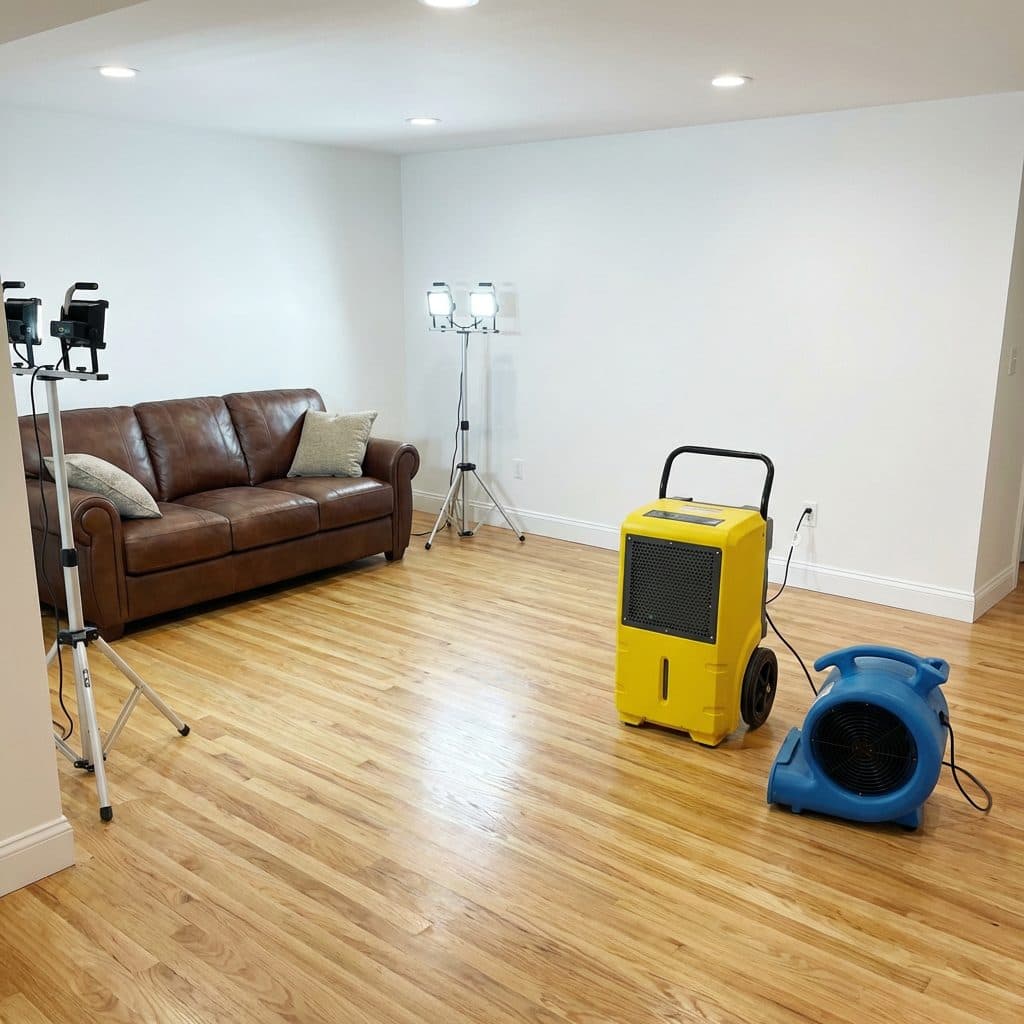
1 / 3Drying the finished side in place. Airflow was set along the wall line and across the carpet rather than into the middle of the room.
See How the Work Was Done
Real photos from this Stamford project: the standing water across the unfinished slab, the baseboard pulled back along the finished walls, and the LGR and air movers running on the carpet.
What Happened
A basement takes water in two very different ways at once, and this Stamford home shows both of them in the same event. On the unfinished side the water sat on the slab, spread out flat and shallow across bare concrete under a workbench and around whatever was stored on the floor. Concrete does not absorb much, so on its own that side is a clearing job. The problem is the doorway.
Water on a slab finds the lowest run and goes through the opening into whatever is next to it, and next to it here was finished space: carpet over pad, painted drywall running down to a baseboard, and a wall bottom that meets the carpet edge. Carpet, pad and the paper face of drywall all absorb, and once they do they wick upward, so the wet line keeps climbing after the water on the floor is gone. The work went after that second half. The standing water was cleared first, because nothing else can start while a floor is still holding water.
Then the baseboard came off along the affected walls. Behind it the wall base and the carpet tack strip were exposed, along with the older floor covering under the carpet edge, so the bottom of the drywall and the edge of the carpet were open to moving air rather than sealed behind trim. That is the step people skip, and skipping it is why a baseboard that looks fine in week one carries a stain in week four.
With the wall bases open, an LGR dehumidifier and air movers went in across the finished floor and were left running, set to move air along the wall line and across the carpet rather than at the middle of the room. It is worth being clear about the limits of this scope. The carpet was dried in place rather than removed and replaced, and no reinstallation of baseboard or trim was part of the work. No mold testing, no air sampling and no clearance testing were performed and none is claimed. No antimicrobial warranty is offered.
Scope of Damage
Unfinished Basement Slab
ModerateStanding water lay across the bare concrete under the workbench and around items stored on the floor. Concrete absorbs little, so this side was a clearing job rather than a drying one.
Finished Carpeted Rooms
SevereWater ran through the doorway from the slab into the finished space, where carpet, pad and the paper face of the drywall all absorb and then wick upward.
Wall Base And Baseboard
SevereBaseboard was removed along the affected walls, exposing the bottom of the drywall, the carpet tack strip and the older floor covering under the carpet edge so the wall base could dry.
Stored Contents
LightBoxes, cord and equipment were sitting directly on the affected slab. Items on a wet floor come off it before anything else happens.
How We Solved It
- 1
Clear The Standing Water
The water on the slab was removed first, because nothing else can begin while the floor is still holding water and every later step depends on it being gone.
- 2
Follow The Water Through The Doorway
The finished side is where the loss actually lives. Water on a slab runs to the lowest opening, so the finished carpeted rooms next to the unfinished side were treated as the primary affected area.
- 3
Pull The Baseboard
Baseboard came off along the affected walls, exposing the bottom of the drywall and the carpet tack strip, so the wall base and the carpet edge were open to moving air instead of sealed behind trim.
- 4
Dry The Finished Floor In Place
An LGR dehumidifier and air movers were staged across the carpeted area and left running, with airflow directed along the wall line and across the carpet rather than into the middle of the room.
Tools & Equipment Used
Questions Homeowners Ask
Why is a finished basement worse than an unfinished one in the same flood?
Because of what is on the floor and the walls. Bare concrete absorbs very little, so the unfinished side is a clearing job. Carpet, pad and the paper face of drywall all take water up and then wick it upward, so the wet line keeps climbing after the floor itself is dry. Same water, very different job.
Why remove the baseboard instead of drying around it?
Because the baseboard is the lid on the wet part. It sits over the bottom of the drywall and the carpet edge, the two things holding the most water, and it seals them off from any airflow. Taking it off is what lets the wall base and the carpet edge dry. Left on, the moisture stays behind it and shows up as a stain later.
Can wet carpet be dried in place or does it have to come out?
With clean water and a fast response, carpet can often be dried in place, which is what happened here. The pad underneath is a different question and is usually replaced, because it holds water like a sponge. With contaminated water neither is a candidate and both come out. The category of the water decides it.
What is a tack strip and why does it matter when a basement floods?
It is the thin wood strip with upward facing pins that grips the carpet edge along the wall. It matters because it sits exactly where wall meets floor, right in the path of any water running across a slab, and because exposing it is part of opening the carpet edge and the wall base so both can dry.
How fast does standing water in a basement need to be dealt with?
Quickly, and the reason is absorption rather than volume. The longer carpet, pad, drywall and stored contents sit in it, the further moisture travels into materials that would otherwise be saved. What decides whether a finished basement is dried or gutted is usually how many hours the water spent in contact with it.
Was anything tested after the drying?
No. No mold testing, no air sampling and no clearance testing were performed on this project and none is claimed anywhere on this page. Testing is a separate service, and Green Restoration deliberately does not sell it on the same quote as the work it would be checking.
Does homeowners insurance cover a flooded basement in Connecticut?
It depends entirely on where the water came from. A sudden and accidental discharge from plumbing is often covered, while ground water, surface water and sewer backup are typically excluded unless a specific endorsement was purchased. Green Restoration documents the condition and the scope so you can put it in front of your adjuster. We are not licensed public adjusters and do not negotiate claims on your behalf.
Stamford is served by
Green Restoration of Fairfield County
Available 24 / 7 for emergency response