Lower-Level Mold Remediation in a Wilton Residence
 1 / 5
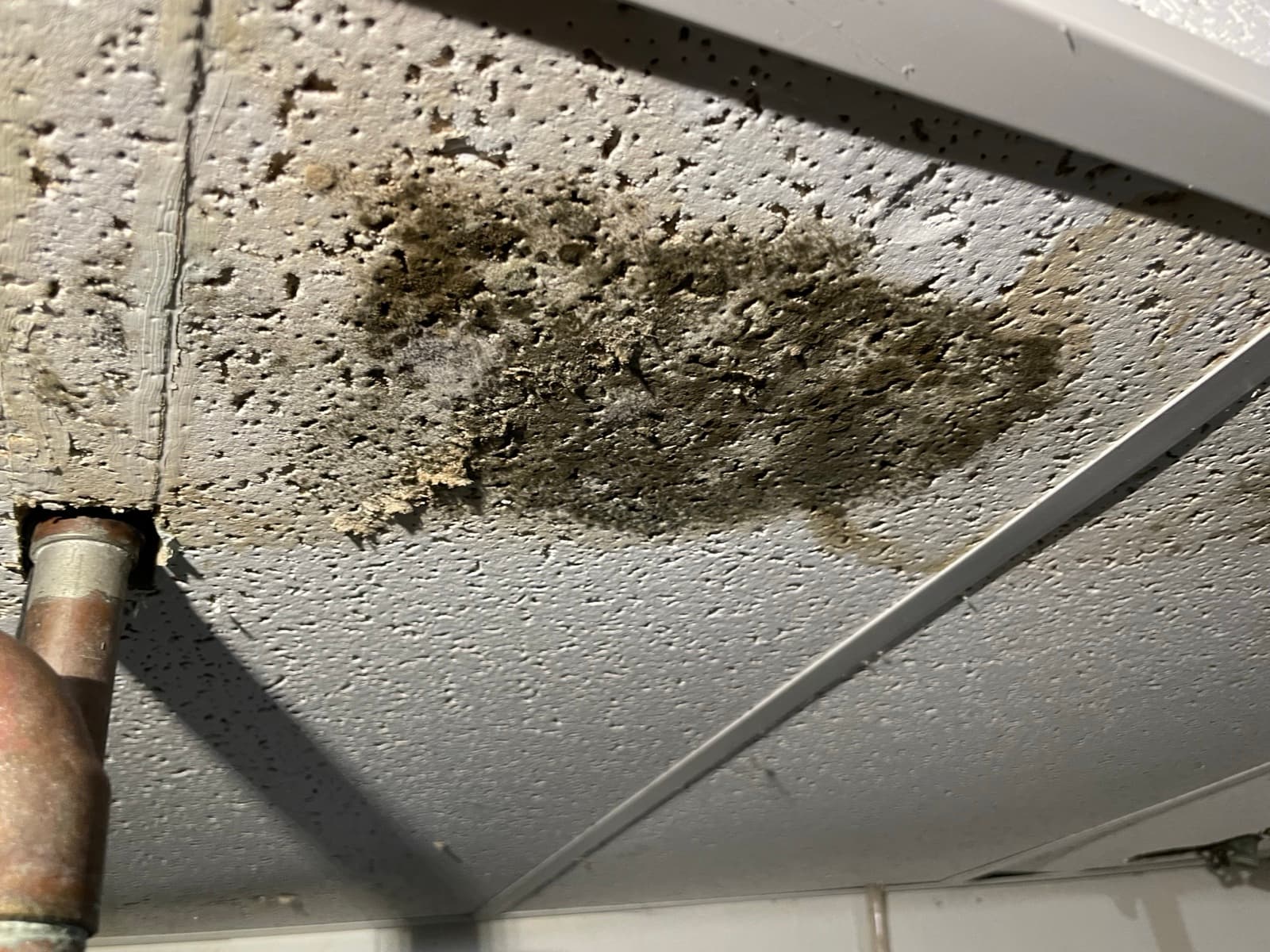
1 / 5Close-up of ceiling mold growth around pipe penetrations in the lower-level utility room
See How the Work Was Done
Real photos from this Wilton project: mold mapped by an independent hygienist, 1,670 square feet cleaned under containment, and cleared to the ANSI/IICRC S520-15 standard.
Green Restoration was thorough and professional. The use of plant-based products gave us peace of mind about our family's health.
What Happened
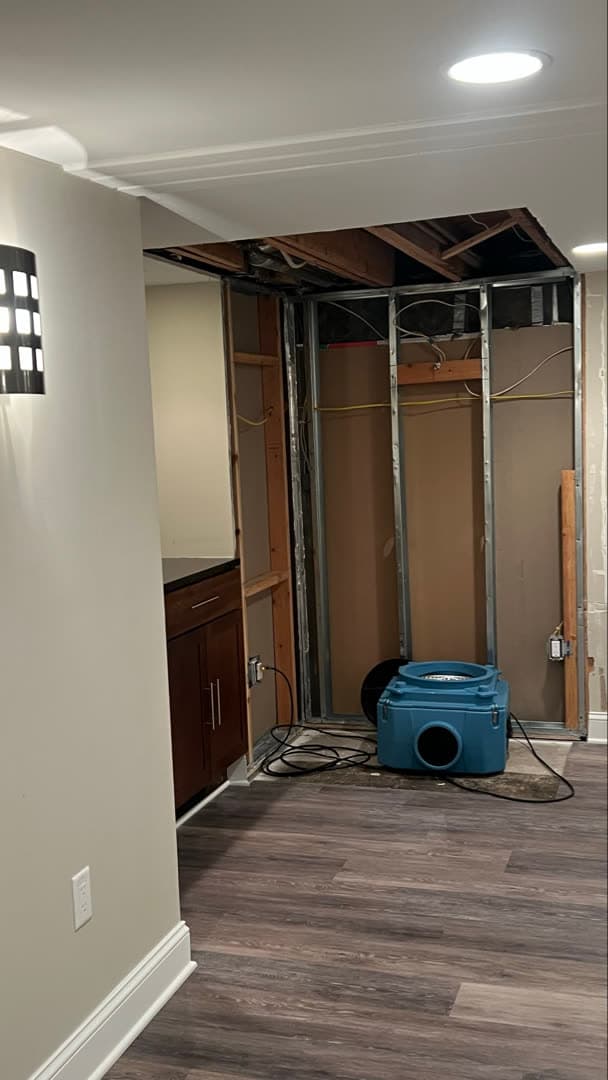
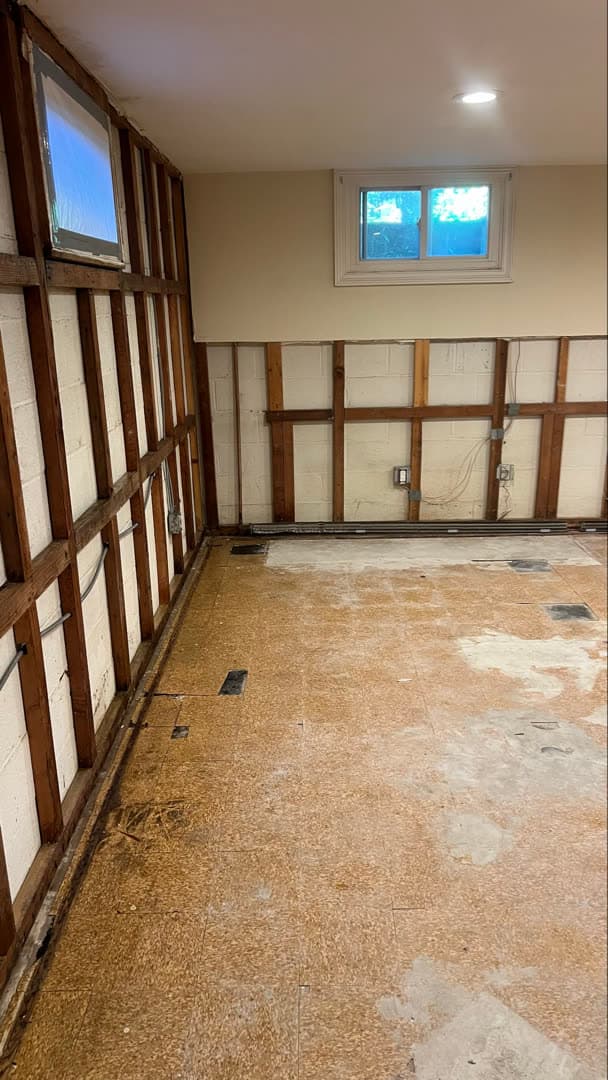
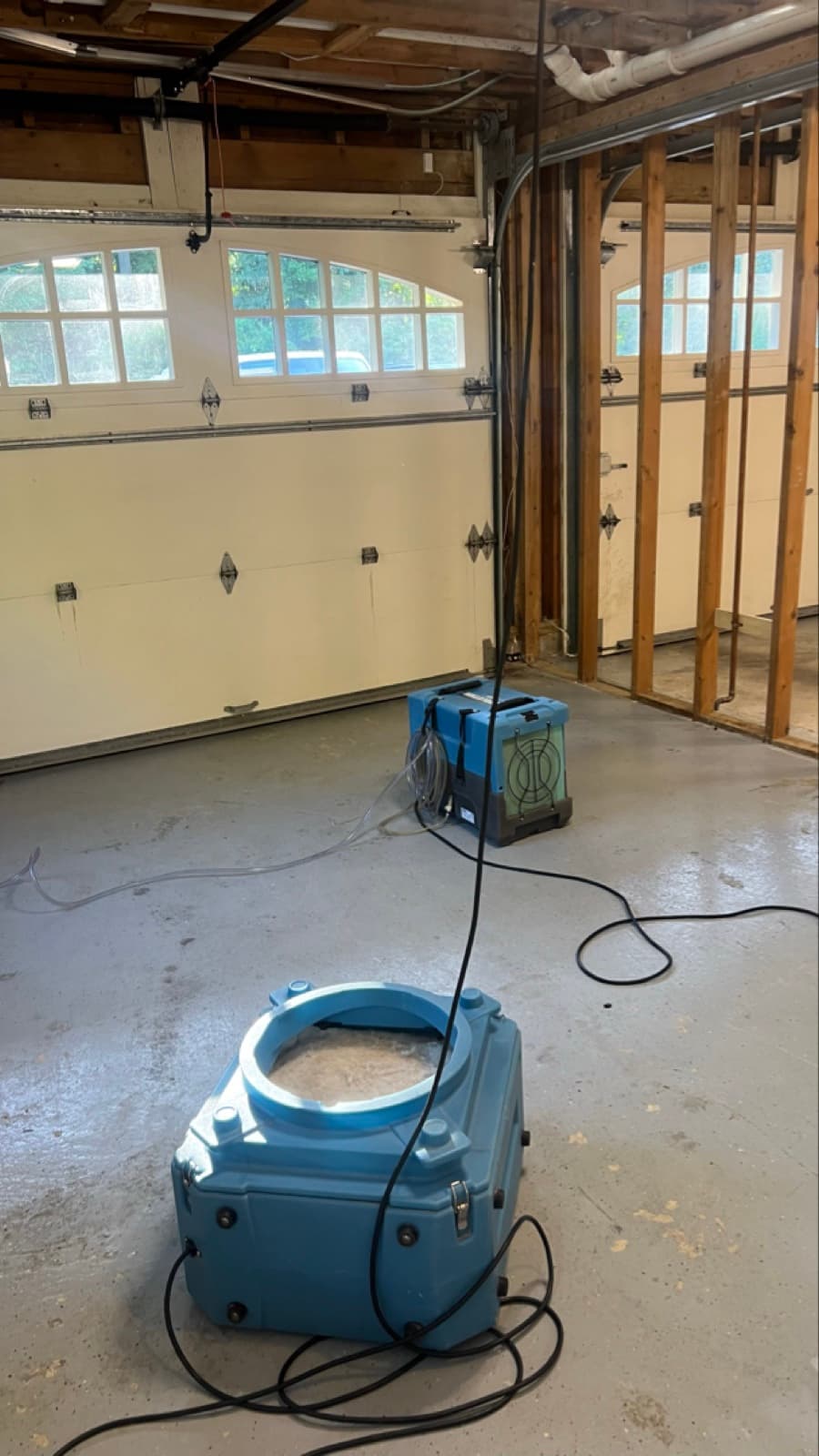
This Wilton project began with a report from RTK Environmental, an independent hygienist firm, that documented growth in four zones of the lower level: the utility rooms, the hallways, the family room, and the closets. Working zone by zone from that report, the crew built barriers with airlocks at each entry, removed stained ceiling tiles and other affected materials, ran dehumidifiers to hold ambient moisture down, and fogged a plant-based agent into spaces that could not be reached by hand, keeping filtered air scrubbers running the entire time.
Scope of Damage
Utility Room
SevereOver 670 square feet of surfaces cleaned and sanitized. Suspended ceiling tiles removed and bagged out. HEPA vacuuming of all vertical and horizontal surfaces.
Family Room
ModerateOver 1,000 square feet of surface treated with antimicrobial agents. Dehumidifiers staged for the duration of the project to control ambient moisture levels.
Hallway & Closets
ModerateDetailed cleaning of walls and ceilings. Mold-stained materials removed and bagged out for disposal.
How We Solved It
- 1
Hygienist-Guided Scope
Work scope mapped against the RTK Environmental hygienist report. ANSI/IICRC S520-15 standard followed throughout.
- 2
Containment & Airlocks
Containment barriers and airlocks installed in the affected zones, including the Left Utility Room and Hallway, to isolate cross-contamination.
- 3
HEPA Vacuuming
Thorough HEPA vacuuming of all surfaces to remove mold spores from framing, drywall, and ceiling materials.
- 4
Plant-Based Antimicrobial
A plant-based anti-microbial agent fogged into affected areas and applied to inaccessible spaces. No bleach used in occupied zones.
- 5
Negative Air Throughout
HEPA-filtered air scrubbers ran continuously through the project, controlling airborne spores and preventing contamination of clean zones.
Tools & Equipment Used
Questions Homeowners Ask
How long does mold remediation take in Wilton, CT?
Most residential mold remediation projects in Fairfield County complete in two to four days on-site. The Wilton project covered three affected areas across roughly 1,670 square feet and followed ANSI/IICRC S520-15 protocol with containment, HEPA vacuuming, plant-based antimicrobial application, and continuous negative air.
What does mold remediation cost in Wilton, CT?
Cost depends on the affected area, the IICRC S520 condition category, whether containment is required, and whether a third-party hygienist is involved. Multi-room residential projects in Wilton typically range from a few thousand dollars to mid-five-figures. Green Restoration provides a written scope and price after the initial inspection at no cost.
Does insurance cover mold remediation in Connecticut?
Mold remediation may be covered when the underlying cause is a covered peril (sudden plumbing failure, accidental water discharge). Long-term moisture intrusion is often excluded. Green Restoration documents every step for your carrier and provides moisture readings, photos, and a line-itemed scope. We work with insurance, but Green Restoration is independent and not on any insurer's panel.
What is the ANSI/IICRC S520-15 standard?
ANSI/IICRC S520-15 is the consensus-based national standard for professional mold remediation. It defines three condition categories of mold contamination, requires source removal and containment over chemical treatment, and specifies when third-party post-remediation verification is appropriate. Every Green Restoration mold project in Wilton and Fairfield County is scoped against S520.
Can I stay in my home during mold remediation?
In most cases, yes, when remediation is contained and limited to specific areas. The Wilton project was completed with the homeowner in residence using critical-barrier containment with airlocks at the affected zones. Severe whole-home contamination may require temporary relocation, which the hygienist will determine.
How do I prevent mold from coming back in Wilton?
Mold returns when the moisture source returns. Prevention starts with source identification: failing sump pumps, foundation cracks, slow plumbing leaks, poor attic ventilation, and grade pitched toward the home are the four most common Fairfield County triggers. Address the moisture, then keep ambient relative humidity below 60 percent and inspect annually.
Wilton is served by
Green Restoration of Fairfield County
Available 24 / 7 for emergency response