
 Step One
Rodent And Contamination Cleanup
Droppings, nesting, and bat guano removed under HEPA containment, then the deck is sanitized and deodorized before any new insulation goes down.
Post-Loss Cleanout, Insulation Removal And New Blown-In HEPA Containment • R-49 To R-60 • Mass Save Rebates
 IICRC Certified
 Eco-Friendly Solutions For Healthier Spaces
Reviewed by David Megeneishvili·Fully Insured·IICRC AMRT + WRT
A good share of the Ludlow attics we open are reached after something went wrong on the floors below. Smoke rose and settled into the insulation. A supply line let go and the water found its way up or the roof let it in. Either way the material has to come out, the deck has to be cleaned and assessed, and the reinsulation waits until the restoration side of the job says the assembly is ready.
Mouse droppings, urine, nesting material, and bat guano removed under HEPA containment. Affected surfaces sanitized and deodorized with EPA-registered products before any new insulation is installed, protecting indoor air quality and the crew.
HEPA containment · Sanitized deck
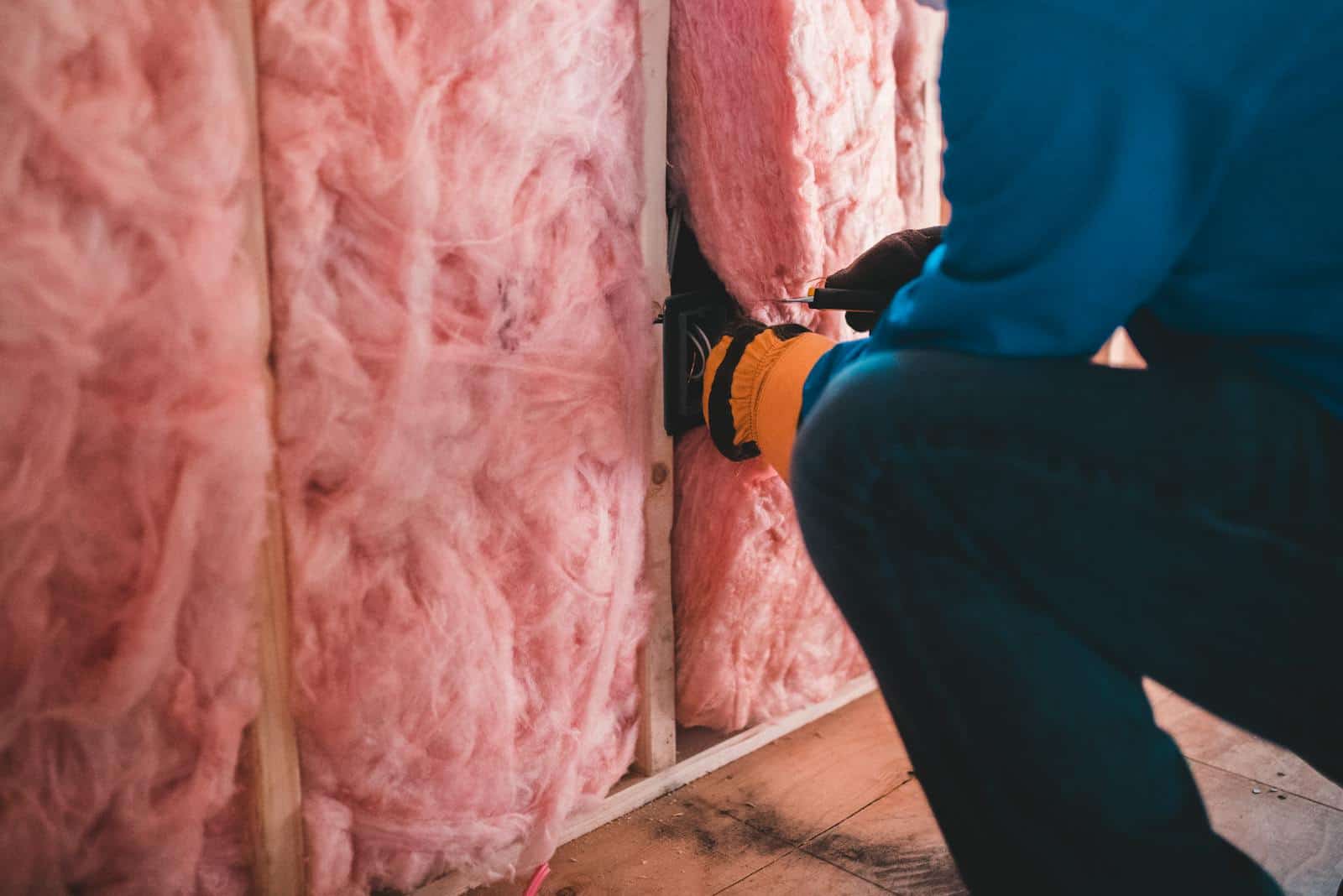
Contaminated, water-damaged, flattened, or undersized insulation removed by commercial insulation vacuum or bagged and hauled out. The attic deck is left clean and ready, with no contaminated material left to off-gas into the home.
Vacuum or bagged · Hauled away
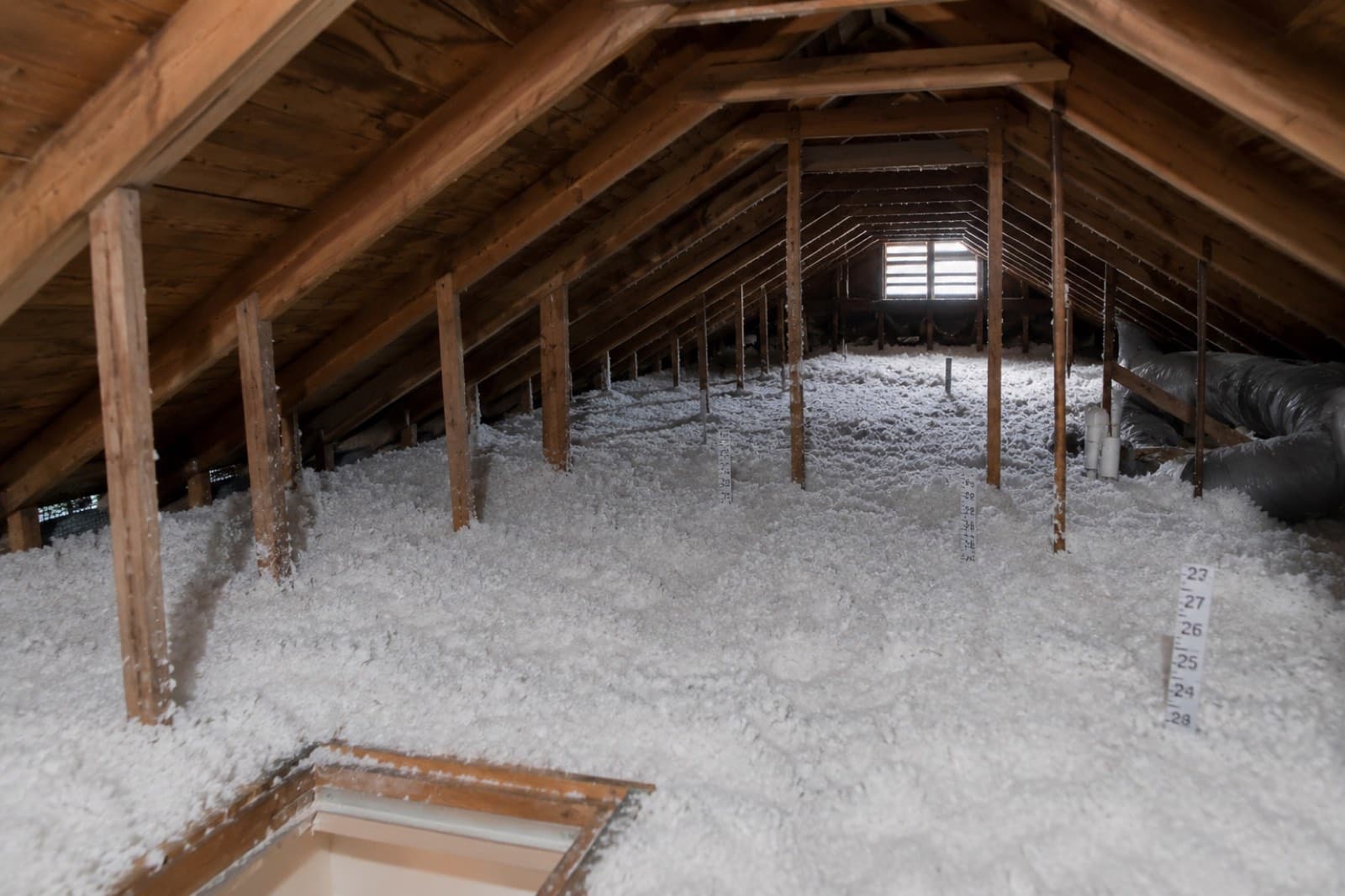
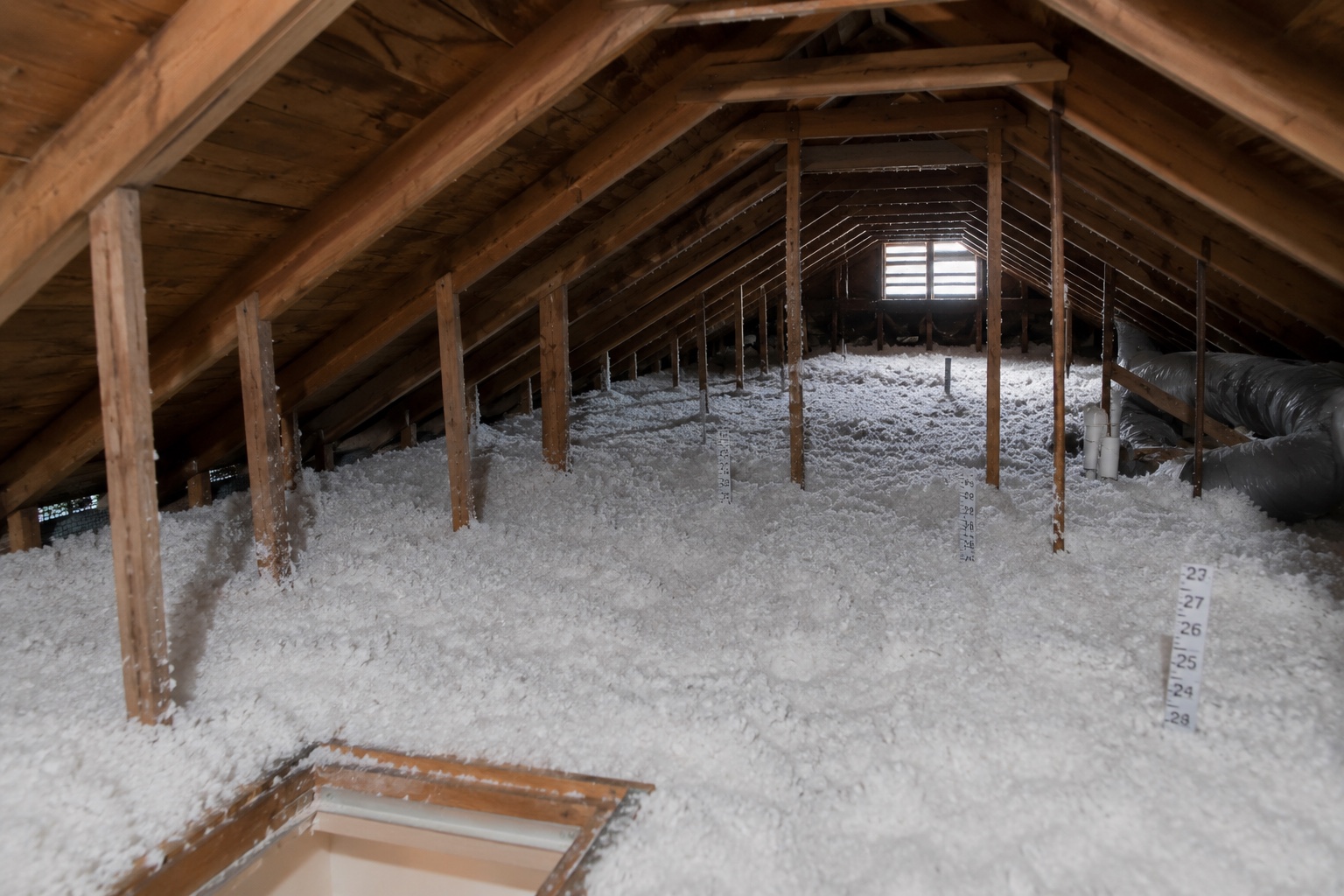
Blown-in cellulose or fiberglass installed to a uniform depth that meets the Climate Zone 5 to 6 attic target of R-49 to R-60. Depth markers set and photographed so coverage is verifiable across the entire attic floor.
Code R-value · Depth verified
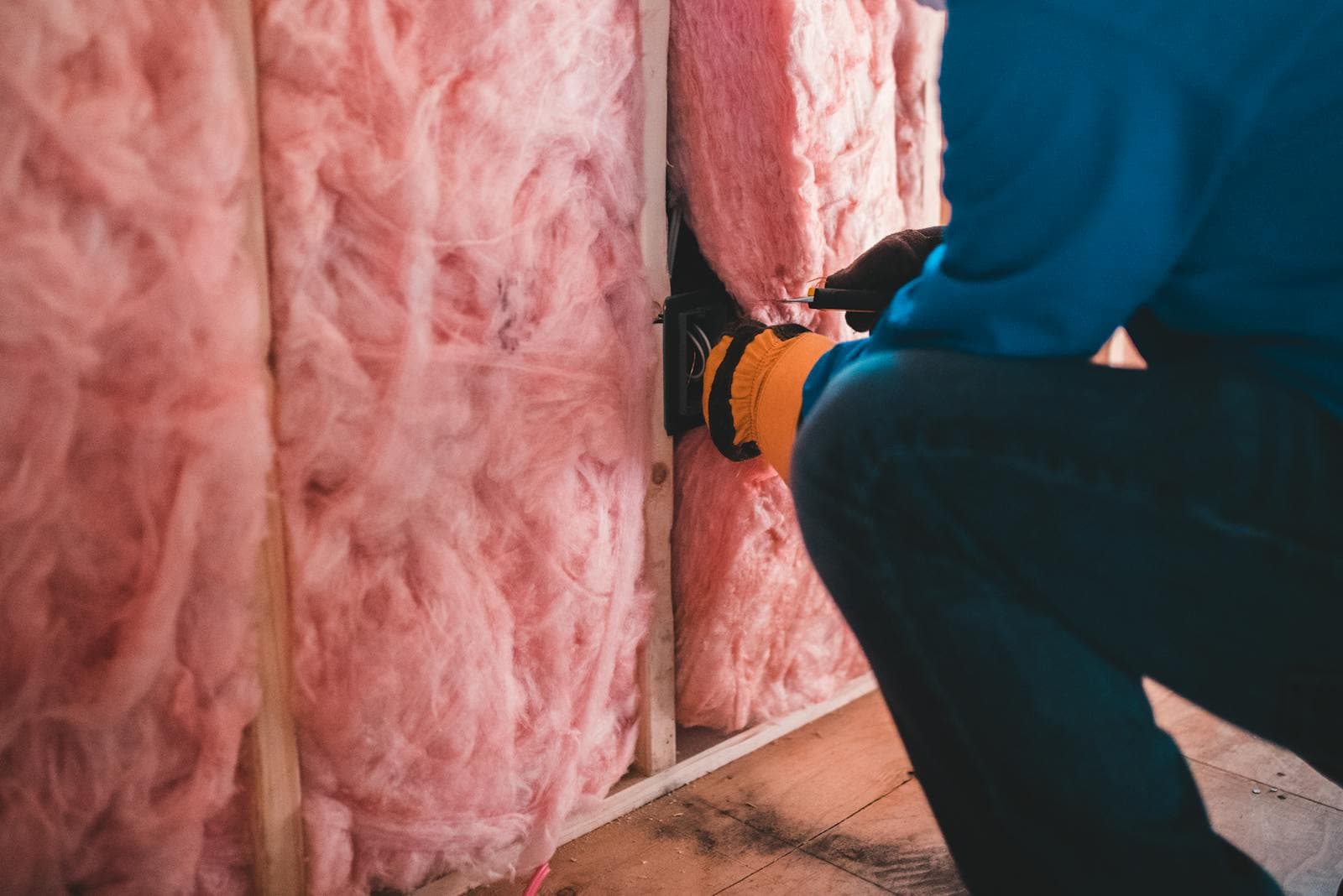
Top plates, wire and pipe penetrations, recessed lights, chases, and the attic hatch sealed before insulation goes down. Air sealing stops the stack-effect leakage that wastes energy and lets warm, moist air into the attic.
Entry points sealed with copper mesh, hardware cloth, and sealant so the cleaned and reinsulated attic stays pest free. Coordinated with a licensed pest operator when an active infestation is present before the attic is closed.
Roof leaks, bath fan ducts venting into the attic, and condensation on the deck identified and corrected as part of the scope. Surface mold on sheathing treated so the new insulation is installed over a dry, sound deck.
Reinsulate Your Ludlow Attic The Right Way. Clean It Out First.
Attic decontamination, insulation removal, air sealing, and new blown-in insulation to code R-value across Ludlow and Hampden County.
Local housing stock, attic construction, and rodent pressure shape every cleanup and reinsulation scope.
Free On-Site Assessment
We establish the scope on site, before anything is quoted.
(833) 970-2121The Chicopee River forms the southern boundary of Ludlow, and the Ludlow Mills complex runs along roughly a mile and a half of that riverfront, now working through a long redevelopment led by the Westmass Area Development Corporation. Upstream at the eastern end of town sits the Red Bridge hydroelectric station, operated by Central Rivers Power. The housing that grew up around the mills is what makes the attic work here distinctive.
Off East Street and Winsor Street the mill-era doubles and triple-deckers put one shared attic volume over several stacked tenancies, so a single plane absorbs the heat, moisture, and smoke of every unit underneath it, and the sealing list runs far longer than the square footage suggests. North of Center Street the town looks entirely different, filled in after the war with ranches and capes reached through a hatch, where the original batting has settled and the failures are ordinary rather than structural. The distinction matters most after a loss.
In a shared attic, smoke or water from one unit loads the material over all of them, and half measures leave odor and moisture in place above families who were never part of the incident.
Smoke behaves predictably in an attic and badly. It rises, it carries fine particulate and odor compounds, and fibrous insulation absorbs both. Surface cleaning the deck while leaving loaded material in the joist bays produces an attic that smells fine in February and returns in July when the heat drives the residue back out. Water behaves differently but ends the same way. Saturated insulation compresses, loses its performance, and holds moisture against the sheathing long enough for growth to establish.
In both cases the material comes out under HEPA containment, the deck is cleaned, sanitized, and deodorized, and any mold on the sheathing is treated or coordinated with the restoration side before new insulation is installed. Hampden County is IECC Climate Zone 5, where R-49 to R-60 is the recommended attic level, and Mass Save incentives apply to the qualifying insulation and air sealing portion.
Two hard limits. Green Restoration does no roofing, so where water entered through the roof itself, we handle the attic side and a roofer handles the covering. Green Restoration does no electrical work either. Older mill-era stock in this town still carries knob-and-tube in places, and wherever it appears in an attic run we photograph it, write it into the scope, and hold the insulation stage until a licensed Massachusetts electrician has evaluated the circuit.
Free On-Site Attic Assessment Across Ludlow And Hampden County
Thousands of attics and homes cleaned, decontaminated, and reinsulated across Connecticut, New York, and Massachusetts, from single rodent cleanups to full removal and reinsulation to a code R-value.
Most attic cleanup and reinsulation projects finish in one to two days, with depth markers set and photographed so the finished R-value is verifiable.
Itemized scope, R-value details, and timestamped photos formatted for Mass Save Home Energy Assessment and insulation rebate applications.
Top rated by the Better Business Bureau with verified five-star Google reviews across Western Massachusetts.
Your Ludlow Attic Cleanup And Insulation Specialists Since 2014
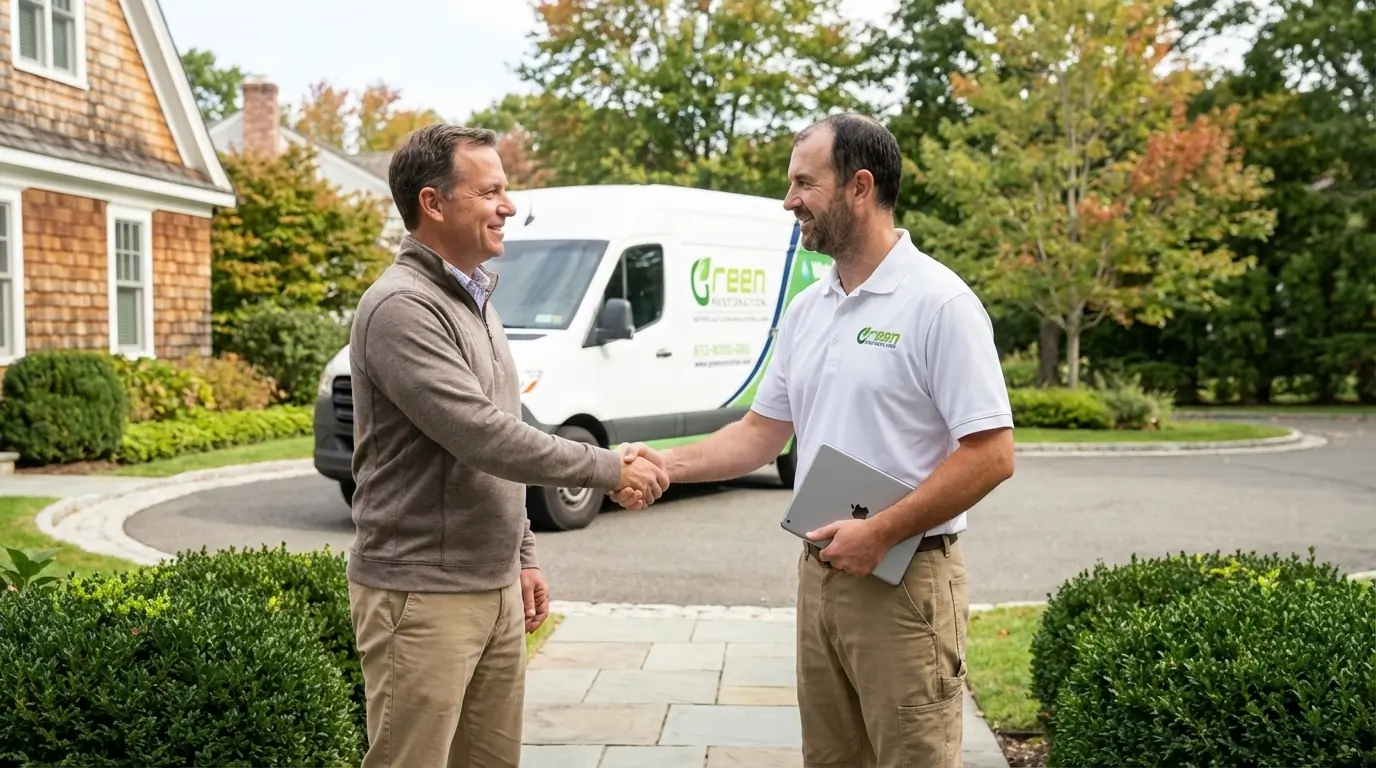
Green Restoration handles attic cleanout, smoke and moisture removal, sheathing treatment, air sealing, and new blown-in insulation for homes and multi-family buildings throughout Ludlow and Hampden County. Because so much of the work here follows a loss, the sequence is built around not trapping anything. Affected material is removed under HEPA containment, the deck is cleaned, sanitized, and deodorized, and mold growth on the sheathing is treated or handed to the restoration side and completed before reinsulation begins.
Only then does the attic plane get sealed at the top plates, chases, stairwell, penetrations, and hatch, exhaust ducts get routed to a proper exterior termination, baffles get set so the soffit intake reaches the ridge, and new insulation goes in toward the R-49 to R-60 target with depth markers set and photographed. Every stage is documented for the owner and formatted so the qualifying insulation and air sealing can be submitted for Mass Save incentives.

“When I walk a Ludlow attic after a fire or a water loss, I am looking at two things: what the material absorbed, and what the deck above it looks like now. Insulation holds odor and moisture in a way that no surface cleaning reaches, so it comes out. Then I want the sheathing dry and treated before anything new is installed. On a triple-decker off East Street that means coordinating with the tenants and doing it once, properly, rather than going back up in six months because the smell came back.”
Massachusetts homeowners can apply Mass Save rebates to new attic insulation and air sealing. We document eligible work so you can apply confidently.
Mass Save · Eversource, National Grid, Berkshire Gas, Unitil
Statewide utility incentive that covers attic insulation and air sealing identified during a no-cost Home Energy Assessment. Rebates run up to 75 percent of approved insulation and air sealing cost, and income-eligible residents qualify for a substantially deeper share. How much is covered, and who qualifies, is set by the program. A 0 percent HEAT Loan up to $25,000 can finance larger scopes.
A note on accuracy: the federal Energy Efficient Home Improvement Credit (IRS Section 25C) for insulation ended December 31, 2025 and does not apply to projects completed in 2026. The programs above are state and utility incentives that cover newly installed attic insulation and air sealing. They do not cover removal, cleanup, or decontamination of old or contaminated insulation, which is billed separately. Always confirm current eligibility and caps on the official program page before work begins.
Itemized scope, R-value details, and timestamped photos formatted for Mass Save program applications. Verify current eligibility and caps before work begins.
The same restoration-grade sequence on every Ludlow attic: clean it out, remove the old material, air seal, and reinsulate to R-49 to R-60.
Step OneDroppings, nesting, and bat guano removed under HEPA containment, then the deck is sanitized and deodorized before any new insulation goes down.
 Step Two
Contaminated, wet, or flattened insulation is vacuumed or bagged and hauled out, leaving a clean deck down to the joists with nothing left to off-gas.
 Step Three
Cellulose or fiberglass blown to a uniform, verified depth across the whole attic floor, with depth markers set and photographed.
The ResultTop plates, penetrations, and the attic hatch sealed first, then a full depth of new insulation for even room-to-room comfort and lower bills.
Attic decontamination, old insulation removal, air sealing, and new blown-in insulation to a code R-value for Ludlow homes. One crew, one project, with a free on-site assessment.
Green Restoration covers Ludlow, MA for attic cleanout, insulation removal, sheathing treatment, and new blown-in insulation, working Ludlow Center, the Ludlow Mills district, the East Street and Winsor Street corridors, Center Street, the riverfront, West and North Ludlow, Chapin Street, and Reservoir Road. Crews arrive with HEPA containment, commercial insulation vacuums, drying and deodorizing equipment, and new material aboard, which keeps a post-loss cleanout and the reinsulation that follows on one continuous schedule.
What we expect in this town depends on which side of Center Street the address falls. In a mill-era double or triple-decker we expect one attic over several units, an open stair chase, plaster ceilings below, and material that has absorbed whatever happened downstairs. In a post-war ranch we expect a hatch, a flattened batt layer, and a much shorter list. Both get the same treatment order: remove what failed, clean and treat the deck, seal the plane, correct the venting, and reinsulate to a marked depth the owner can verify from the photographs.
Call for a free on-site attic assessment. We measure your R-value and deliver a written, fixed quote before any work begins.
(833) 970-2121IICRC Certified · Fully Insured · State Rebate Documentation
All Towns Served By Green Restoration Of Hampden County, Based In Chicopee, For Attic Cleanup, Insulation Removal & Replacement.
Green Restoration of Western Mass. We submit our scope of work and supporting documentation directly to your insurer. We are not licensed public adjusters and do not negotiate claims on your behalf.
Clear, honest answers about rodent cleanup, insulation removal and replacement, R-value, and Massachusetts rebates for Ludlow attic projects.
Yes, and it is a large part of what we do here. Smoke rises, so the attic takes on residue and odor even when the fire itself stayed on a lower floor. Fibrous insulation absorbs both, and no amount of cleaning the deck removes what is held inside the material. We remove it under HEPA containment, clean and deodorize the framing and sheathing, and address any charring or staining with the restoration side of the job before anything new is installed. Reinsulating over smoke-loaded material is exactly how an odor problem comes back through the ceiling the first warm week of summer.
The wet portion does. Insulation that has taken on water compresses, loses most of its rated performance, and holds moisture against the sheathing long enough for growth to establish on the deck above it. Dry, clean material outside the affected zone can frequently stay if it is otherwise sound. We map the wet area rather than guessing at it, remove what is affected, dry and assess the deck, and treat or coordinate treatment of any mold we find before reinsulating. The one thing we will not do is install new material over a layer we know is damp.
Yes, and the mill-era doubles and triple-deckers off East Street and Winsor Street are familiar ground. The complication is that a single attic sits above several tenancies, so the air sealing list covers the top plates of every unit, the stair chase, plumbing stacks, and old flue openings rather than one ceiling. Most of the work happens above the ceilings without anyone leaving an apartment, and access gets coordinated with the owner or the manager in advance. The written scope goes to whoever is paying, with before-and-after photographs attached so an off-site owner can see what was actually completed.
It gets assessed as part of the attic scope rather than left for later. Growth on the underside of the deck means moisture arrived faster than the attic carried it away, so we identify the source first, whether that is an exhaust duct ending in the cavity, a blocked soffit path, air leaking up through the ceiling, or water that entered from above. The affected insulation comes out under containment, the sheathing is treated or the work is coordinated with the restoration side, and the moisture path is corrected. Treating a deck without fixing what wet it simply schedules the same conversation for next year.
As general market guidance, removal of old material runs roughly $1 to $2 per square foot and new blown-in insulation runs roughly $1.50 to $4.50 per square foot installed depending on the depth being reached. A complete project covering cleanout, removal, air sealing, and new insulation commonly lands between $3,500 and $11,000. In Ludlow the two things that raise a number are a shared mill-era attic with several unit chases to seal and a post-loss cleanout that requires drying, deodorizing, or sheathing treatment first. Where insurance is involved, the attic scope is documented so it can be submitted with the rest of the claim. Mass Save incentives apply to the qualifying insulation and air sealing.
Hampden County falls in IECC Climate Zone 5, where R-49 to R-60 is the recommended attic level. Almost none of the attics we open here begin near it. Post-war ranches north of Center Street usually measure a fraction of the target once settling and storage compression are accounted for, and a shared mill-era attic is frequently thinner still. We take depth readings across the whole floor before quoting, install to a consistent depth aimed at the target, and set and photograph markers so the finished condition can be checked. Sealing quality decides what any depth is worth, so the scope typically frames an expected outcome instead of committing to one number.
One to two days for a straightforward job. An open post-war ranch attic with clean material and hatch access often finishes inside a day. A shared attic over a double or triple-decker with contamination to clear, several chases to seal, and limited stair access is realistically two. A post-fire or post-water cleanout runs longer because drying, deodorizing, and any sheathing treatment have to be completed before new material goes in, and that time is stated in the written scope rather than discovered halfway through.
The same local Green Restoration team covers all of these across Ludlow. One number for every emergency and every cleanup.

