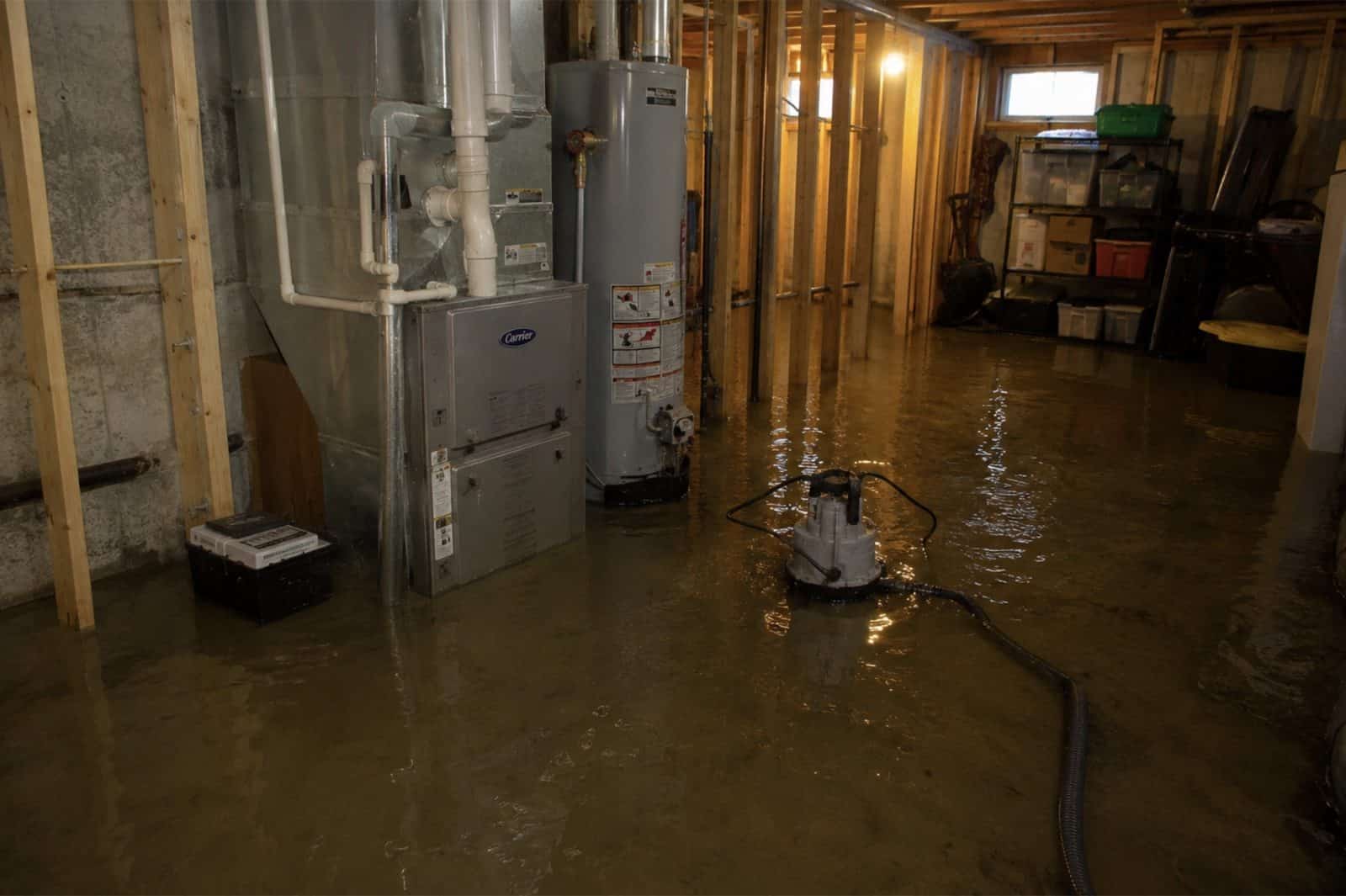
Flood & Storm Damage Restoration Orange, CT
Zone X Neighborhoods, Undersized Culverts And Garage-Door Flooding 60-Minute Response, Direct Insurance Billing
 IICRC Certified
 Eco-Friendly Solutions For Healthier Spaces
Reviewed by David Megeneishvili·Licensed & Insured In CT·IICRC AMRT + WRT
What Is IICRC S500 §5.3 Flood Damage Restoration?
Flood damage restoration is the IICRC S500-2021 §5.3 documented process for Category 3 black water: full PPE response, controlled demolition of porous materials to sill plate, EPA-registered antimicrobial application per IICRC S520-2024, structural drying to ANSI/IICRC dry standard, and lab-verified post-remediation clearance before reconstruction. Brook overflow, roadway storm water across a garage slab and drain backup all arrive as Category 3 on contact, however clean the water looks running over concrete.
In Orange, CT, Green Restoration sequences every flood scope: 60-minute dispatch, FLIR thermal mapping and Tramex CME 5 moisture verification, truck-mounted Hydramaster extraction, controlled porous demolition, antimicrobial treatment, Phoenix Axial drying monitored daily, and a carrier-ready scope file with NFIP-formatted documentation, base flood elevation reference, and high-water-mark photographs filed within the 60 days NFIP Proof of Loss window.
- IICRC S500-2021 §5.3 aligned
- IICRC S520-2024 antimicrobial protocol
- ASTM E1745 Class I vapor retarder
- ASHRAE 160 humidity targets
- NFIP-formatted scope packet
- FEMA Map Service Center referenced
The Four Layers Of Flood Coverage In Orange
NFIP Building
$250,000
single-family cap
NFIP Contents
$100,000
residential cap
FEMA IA Grant
$43,600
+ $43,600 ONA
SBA Home Loan
$500,000
from 2.875%
Your standard CT homeowners policy excludes flood, surface water, tidal overflow, and wave action. NFIP closes the gap with a 30 days waiting period and a 60 days Proof of Loss deadline. Add $30,000 Increased Cost of Compliance for elevation requirements.
Connecticut average NFIP claim payout was $8,727 in 2025 and the average policy premium runs $1,426/year for roughly $272,799 of coverage (per FEMA NFIP and CT Insurance Department data). This information is general education only, not insurance, legal, or coverage advice. We submit IICRC documentation directly to your insurer. We are not licensed public adjusters and do not negotiate, adjust, interpret your policy, or settle claims on your behalf.
How to clean up after a flood: our step by step first 48 hours guideConditions from the National Weather Service and Open-Meteo.
Trusted by Families in Orange &
New Haven County
4.9 out of 5, Rated by your neighbors on Google
We discovered mold when removing our pellet stove and called Green Restoration for help. David was very communicative and helpful throughout the entire process. He did the job thoroughly and professionally. Highly recommended!
David Woolner
Mold RemediationI had a fantastic experience with Green Restoration. From start to finish, the team was professional, thorough, and extremely knowledgeable. David came for the initial inspection and took the time to explain the entire process.
Annmarie Gieparda
Mold RemediationWe had mold due to a water leak in our half finished basement. David and his crew did a great job, we were very satisfied. I would highly recommend Green Restoration to anyone.
Tanya
Water DamageI needed my entire condo completely cleaned after a soot blow back. Green Restoration was top shelf! So thorough and professional. Thank you so much!
Jacki Hornish
Fire & Soot CleanupMore Green Restoration Services in Orange
The same local Green Restoration team covers all of these across Orange. One number for every emergency and every cleanup.
What Does Flood & Storm Damage Restoration In Orange, CT Involve?
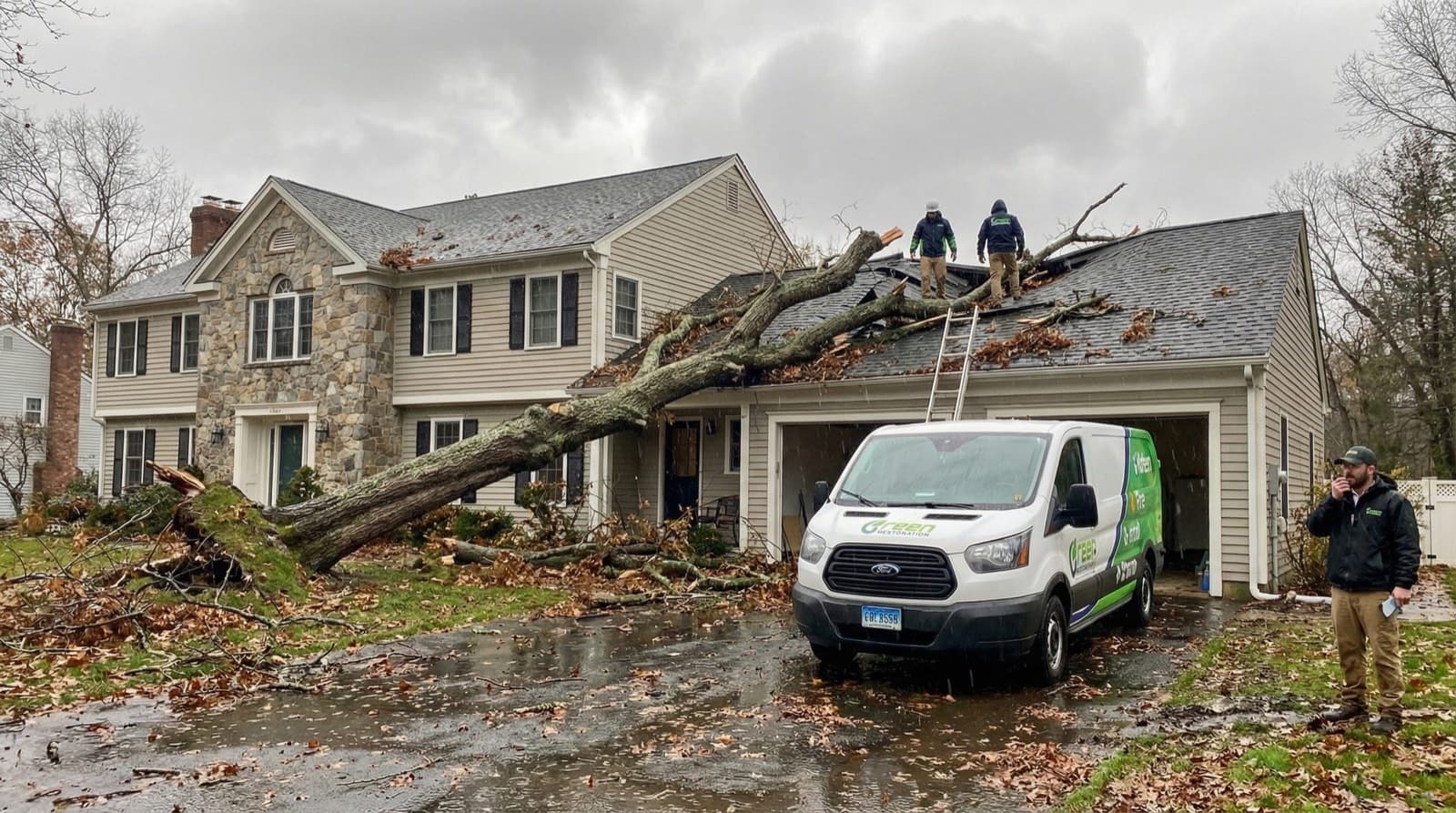
Flood and storm damage restoration in Orange, CT means extracting floodwater, drying the structure and repairing storm damage under IICRC S500-2021 section 5.3, the standard that classifies contaminated water and sets how it is remediated. Here that covers two emergencies handled by one crew: storm stabilization (emergency tarp-up, wind and fallen-tree impact, board-up) and Category 3 water (Tumble Brook and Stubby Plain Brook overflow, the Derby-Milford channel, roadway storm water entering through garage door openings, and sewer or drain backup). Green Restoration extracts, applies EPA-registered antimicrobial per IICRC S520-2024, dries to the ANSI and IICRC standard, and files the loss for your NFIP and Connecticut homeowners carriers. Response across Orange is 60 minutes, 24/7.
Orange Flood History
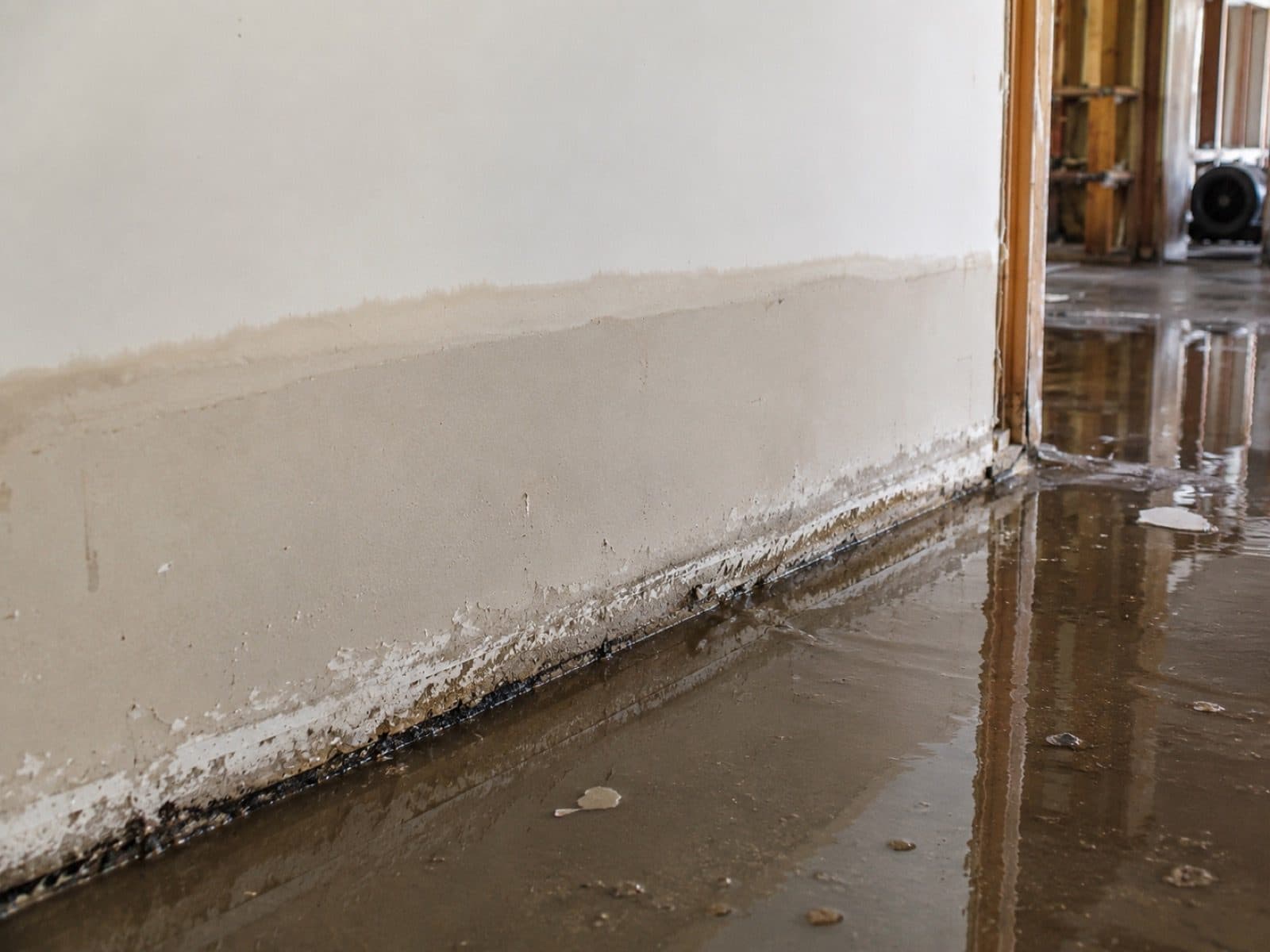
Orange's own planners record that FEMA Zones A and AE here are predominantly around the Housatonic River, Wepawaug River, Race Brook, Indian River and Silver Brook, and that aside from those areas most of Orange is mapped in the 500-year floodplain, Zone X. The town's three post-2021 flooding investigations found the opposite on the ground: houses in Zone X neighborhoods took 20 to 48 inches during Storm Ida on September 1, 2021, which dropped 5.77 inches of rain, after Tropical Storm Elsa dropped 4.09 inches that July.
The town told the regional hazard planners in June 2022 that road culverts are inadequate for the size of storms occurring, and the studies measured capacities as low as a 5-year storm.
Source: Orange Plan of Conservation and Development Update, draft Chapter 8; Town of Orange Flooding Investigation Reports for Derby-Milford Road, Old Country Road and Coachmans Lane, and Pine Tree Drive and Peck Lane (Cardinal Engineering Associates, draft May 12, 2022); 2023 South Central Regional Council of Governments Hazard Mitigation Plan Update. Photo: FEMA / DHS, public domain (representative regional photo).
- FEMA Designation
- Zones A and AE along the rivers and brooks; most of town mapped Zone X
- Primary Flood Vectors
- Tumble Brook and Stubby Plain Brook overflow, the Derby-Milford channel and railroad culvert, undersized road culverts, roadway storm water through garage door openings, sewer and drain backup, wind and fallen-tree damage
- NFIP Coverage Caps
- $250K building · $100K contents
- Response
- 60 min, 24/7
Verify Your Flood Zone
(203) 493-3677Complete Flood & Storm Damage Restoration In Orange, CT
One crew for both emergencies: storm stabilization, tarp-up and fallen-tree work, plus flood extraction for Tumble Brook and Stubby Plain Brook overflow, the Derby-Milford channel, garage-entry road water and sewer backup. Every loss documented against measured depth for your insurer.
Zone X Flooding The Map Says Cannot Happen
All three neighborhoods the town studied after 2021 sit in FEMA Zone X, where a 100-year event is described as under a foot of water. During Storm Ida those same houses took 20 to 48 inches. Orange carried 55 flood policies in the whole town as of mid-2022, so most of this damage lands on people who were told they had minimal hazard. We document the loss the way an unmapped flood has to be documented, because nothing about the zone designation will do that work for you.
Loss documented against measured depth, not zone
Water That Comes In Through The Garage Door
The town engineer found the same mechanism in every neighborhood studied: floodwater entered through garage door openings and migrated into finished basements. That is an above-grade entry feeding a below-grade finish, which is a different scope from a foundation leak. It means the wet line starts high on the slab, the drywall gets it on the way past, and the stair assembly is usually the first thing anybody forgets to open up.
Entry path mapped before demolition line
Culverts Sized For A Storm That Stopped Coming
Orange told the regional hazard planners in June 2022 that road culverts are inadequate for the size of storms occurring, and the engineering backs it up. The Coachmans Lane crossing passes about a 5-year storm, Old Country Road about 7.5, the Derby-Milford chain about 10, Peck Lane about 12 and Pine Tree Drive about 15. Two of those culverts and their headwalls are in poor condition. Where the capacity is known, the next flood is a scheduling question rather than a surprise.
Known-capacity crossings tracked on the forecast
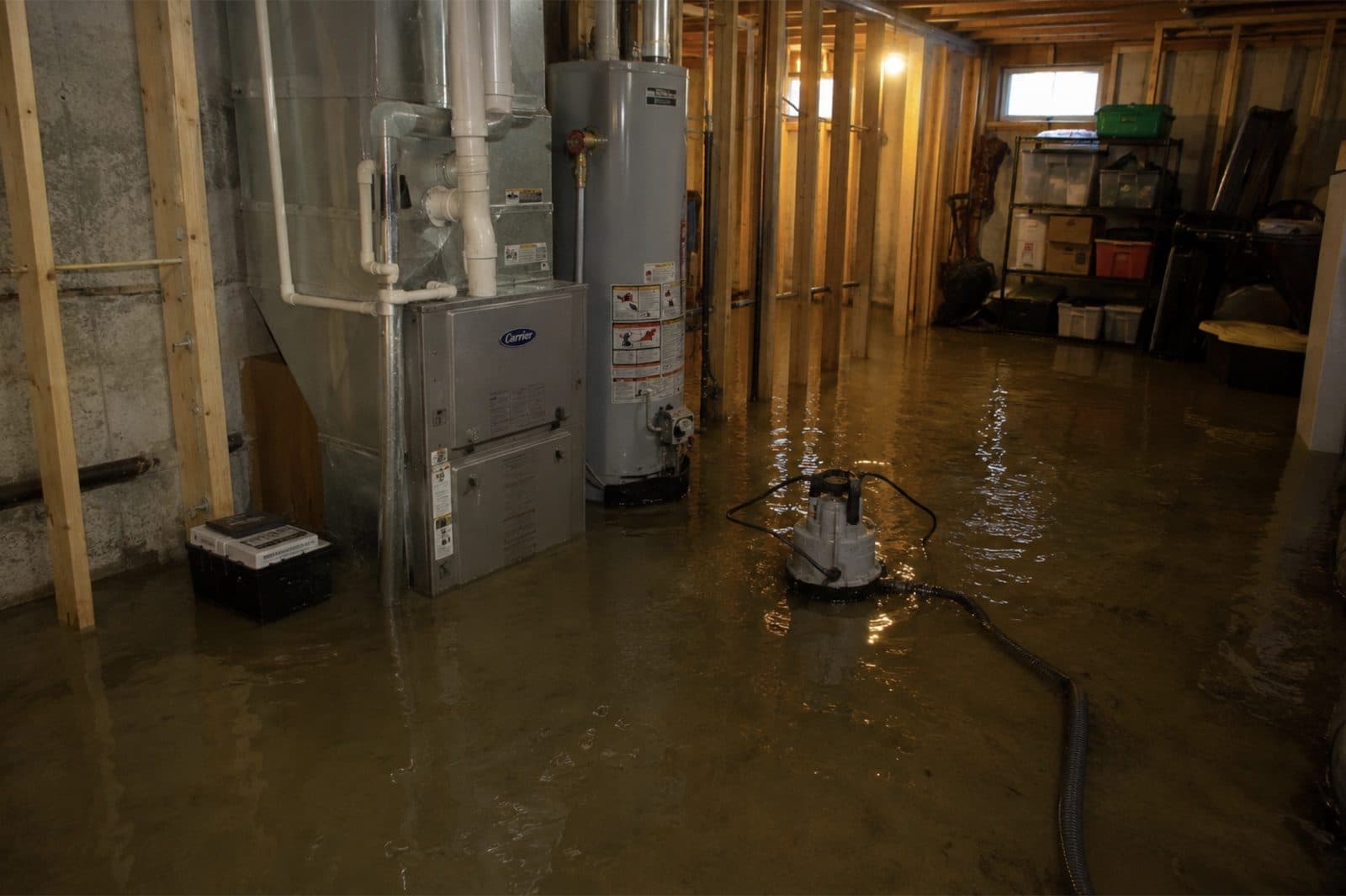
Additional Restoration Services
Tumble Brook At Pine Tree Drive And Peck Lane
Tumble Brook rises in a swampy area north of Harvester Road east of Fred Wolfe Park, crosses High Plains Drive and a high-voltage utility corridor, then passes Pine Tree Drive and Peck Lane before running south into Clark Pond and the Indian River in Milford. Its watershed is only 211 acres. During Ida it put 12 to 33 inches into houses along Pine Tree Drive and Hawthorne Lane and ran over Peck Lane. A third of a square mile is enough when the pipe underneath is too small.
Stubby Plain Brook At Old Country Road And Coachmans Lane
In southern Orange near the Milford line, Stubby Plain Brook overflows and the roadway storm sewer gives up at the same time, which is why four properties on Old Country Road and three on Coachmans Lane took 20 to 36 inches in September 2021. The town measured the water surface above the garage floors at every one of them. Replacement box culverts were priced at 614,000 dollars and 650,000 dollars, and the engineer expected the Coachmans fix to remove the house flooding entirely.
The Derby-Milford Road Railroad Culvert
In northwest Orange an unnamed brook out of a swampy area off Hilltop Road drains 413.5 acres through Brookside Drive, a stone culvert in an abandoned railroad embankment, the Derby-Milford Road culvert and a box culvert under High Ridge Road before reaching Turkey Hill Brook and the Housatonic. The engineer was blunt: without removing or enlarging the railroad culvert there is essentially no improvement upstream, whatever else gets replaced. Residences here took 20 to 48 inches during Ida.
IICRC S500 Category 3 Black Water Extraction
Brook overflow and roadway storm water arrive Category 3 under IICRC S500-2021 section 5.3 whatever they look like on a garage slab, because they carry road runoff, soil bacteria and storm-sewer content. Crews work in Tyvek and N95 with truck-mounted Hydramaster extraction and solids-rated submersible pumps, take porous material to the sill plate, apply EPA-registered antimicrobial per S520-2024, and dry against Tramex readings rather than against the calendar.
Private Wells After The Water Goes Down
Most of Orange runs on septic, and roughly three thousand residents are not on Regional Water Authority supply at all. The town Health Department warns that flood water is a concern for potable supplies from wells and recommends disinfection plus bacteriological and chemical sampling after a rain or flood event. If your well head sat under water, the drying scope and the drinking-water question are two separate problems, and we will tell you plainly which one we handle.
The Ordinary-Rain Winter Of 2024
The town Health Department recorded at least four major rain events over the winter of 2024, averaging 2.1 to 2.5 inches each, each one worse than the last, causing flooding in areas of town that had not flooded in years, with calls about sump pumps running constantly. That is not a hurricane profile. It is the profile of drainage that has run out of margin, and it is why we now stage on a plain rain forecast in the known neighborhoods.
Emergency Roof Tarp-Up And Board-Up
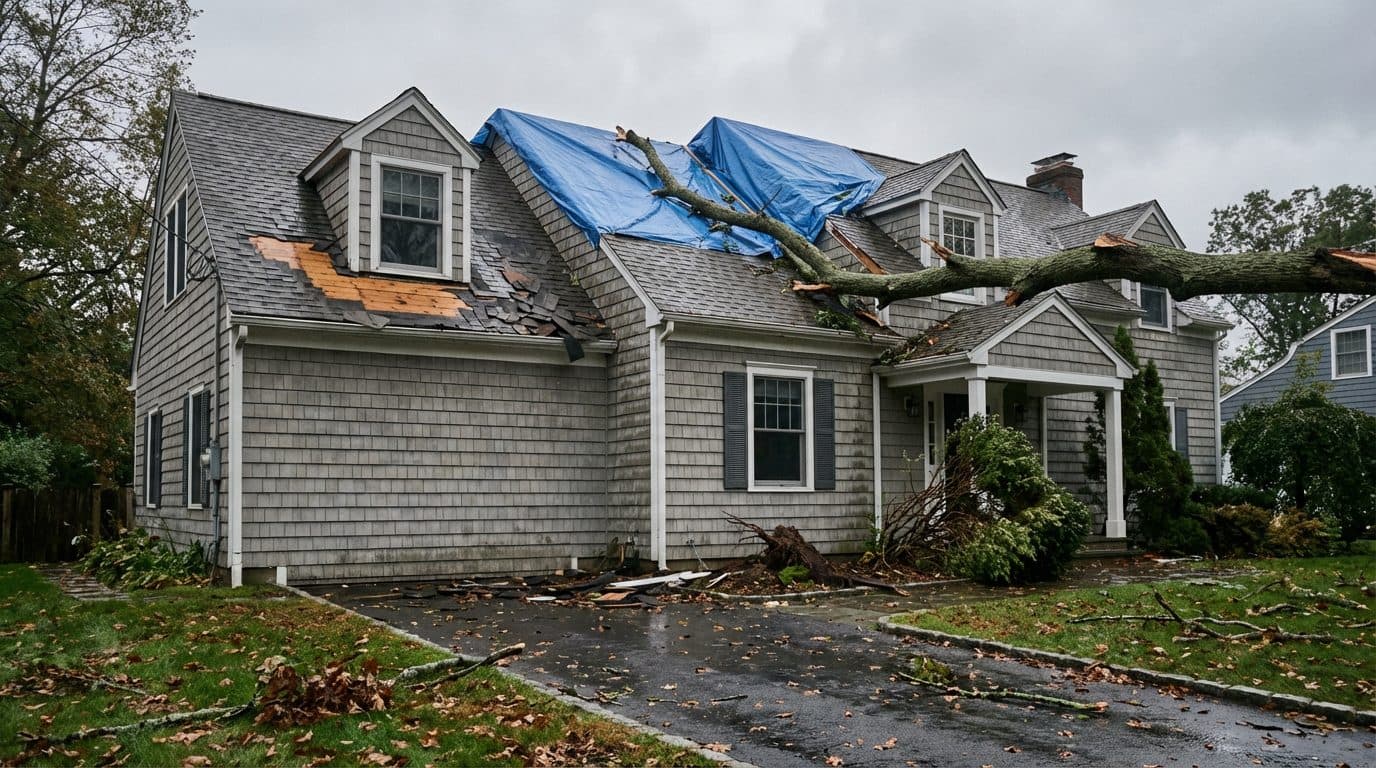
Storm stabilization runs on the same visit as the water work. Broken windows and doors boarded, wind-stripped or tree-struck roof sections tarped to a weather-tight seal with furring strips and roofing nails, standing water extracted before it reaches the next assembly. Closing the envelope is what keeps a one-room loss from becoming a whole-floor loss overnight, and the photographs taken before the tarp goes on are what protect the wind side of your claim.
Wind, Trees And The Long Outage
Tropical Storm Isaias brought gusts to 60 miles an hour and tornado warnings across the region on August 2, 2020, with hundreds of thousands out of power for days, and Orange drew 283,975 dollars in federal Public Assistance for it. Irene in 2011 left parts of the region without power for more than a week. Crews arrive with structural shoring and generator power so drying starts before United Illuminating restores the street, because a dark house is still a wet house.
NFIP Documentation And The 60-Day Proof Of Loss
Rising surface water is excluded from a standard Connecticut homeowner policy and needs separate NFIP coverage. Orange has been in the program since March 18, 1980 and has recorded 154 flood losses totalling about 1.56 million dollars in claims payments. A signed Proof of Loss is due to the flood carrier within 60 days of the date of loss and federal courts enforce that strictly. We submit scope, daily moisture logs, timestamped high-water photography and written source finding directly to your insurer. We are not licensed public adjusters and do not negotiate claims on your behalf.
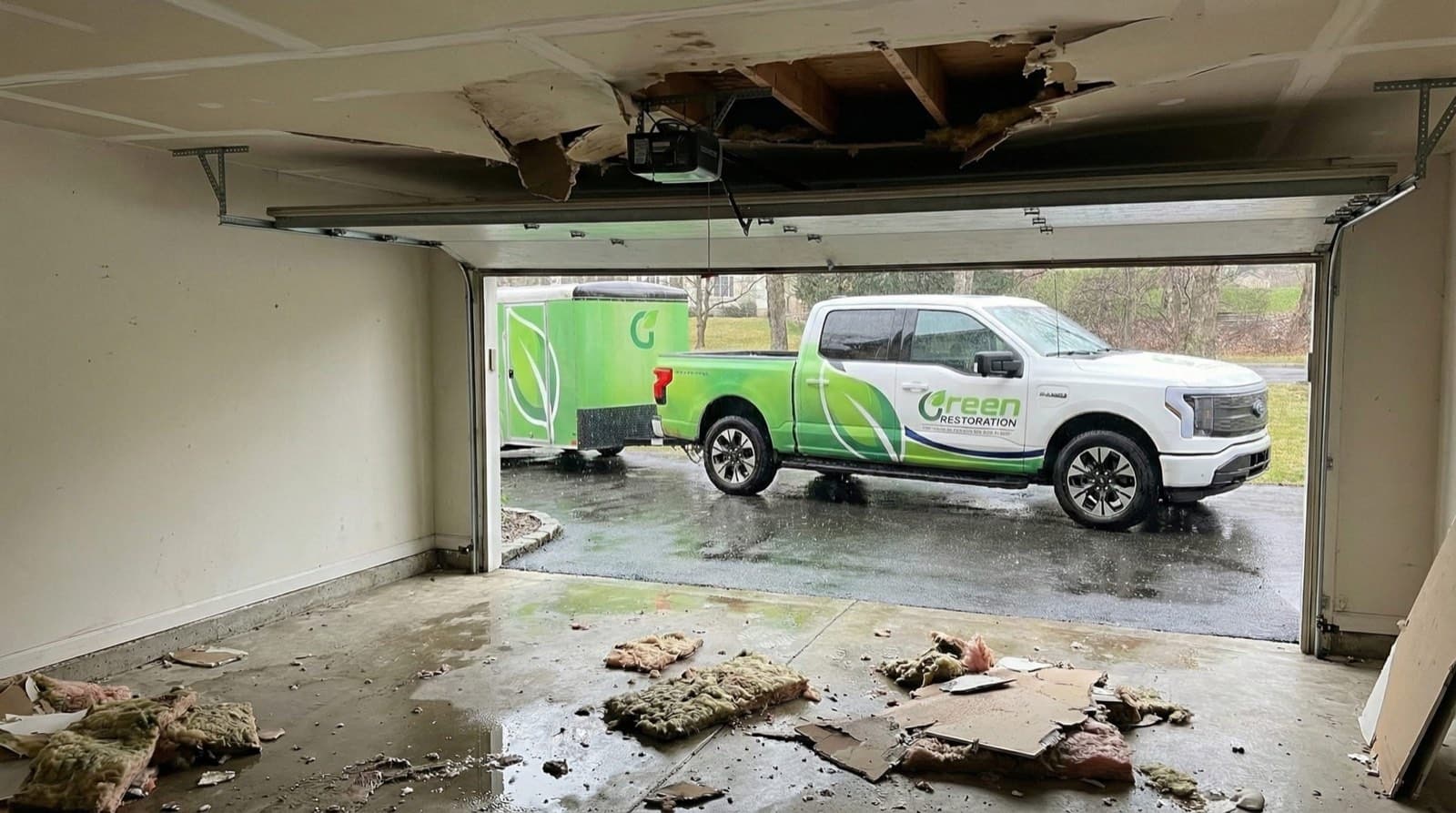
Do Not Let Flood Damage Set Into The Structure. Every Minute Counts.
Zone X Flood Response, Garage-Entry Basement Drying And Category 3 Black Water Specialists For 06477.
Why The Water Category Decides Everything In A Orange Flood
Per IICRC S500-2021 §5.3, every flood loss is classified Category 1, 2, or 3 before scope is signed. Category drives demolition extent, antimicrobial protocol, drying timeline, and what your insurance carrier expects to see in the documentation. Flooding in Orange is Category 3 from the first minute in most cases, whether it came out of a brook that outgrew its culvert, off a road and under a garage door, or back up a basement drain after a long rain.
Common Sources
Burst supply line, ice maker overflow, sink overflow
Restoration Protocol
Extract, dry, sanitize. Most porous materials salvageable if dried within 24 to 48 hours.
Drying typically 3 to 5 days
Common Sources
Washing machine discharge, dishwasher overflow, toilet overflow without solids, aquarium leak
Restoration Protocol
Extract, antimicrobial pre-treatment, dry, post-clean sanitize. Saturated carpet pad and porous insulation typically discarded.
Drying typically 4 to 7 days
Common Sources
Sewer and drain backup, standing surface water, Tumble Brook and Stubby Plain Brook overflow, the Derby-Milford channel, roadway storm water across a garage slab, toilet overflow with solids
Restoration Protocol
Full PPE response, controlled demolition of porous materials to sill plate, EPA-registered antimicrobial per IICRC S520-2024, post-treatment clearance sampling.
Restoration typically 7 to 14 days including reconstruction
Why this matters for Orange, CT
Wind-driven rain that enters through a roof breach can stay Category 1 if treated within hours.
The same water becomes Category 2 after 48 hours in a warm cavity, and Category 3 once it contacts standing sewage, soil, or decomposing organic material.
Water that has crossed an Orange road arrives carrying roadway runoff, soil bacteria and storm-sewer content, which puts it at Category 3 under S500 section 5.3 whatever it looks like on a clean garage slab. The town's own planners note that most local drainage is traditional storm drains and catch basins discharging directly to surface waters without treatment, so there is nothing between the pavement and the brook. On watersheds of 211 and 413 acres the water also arrives fast.
According to Green Restoration, that combination is why an Orange basement can be taking contaminated water while the street outside still looks passable, and why the source finding starts at the culvert rather than at the building. Calling that Category 1 on day one is exactly how a week of drying becomes a demolition scope a month later.
Our Flood & Storm Damage Restoration Process In Orange, CT
From the first call to final walkthrough, every step is documented, insured, and owner-supervised.
How would you like
to start?
Common range across Category 1 clean rainwater intrusion through Category 3 brook water and sewer backup with porous demolition to the sill plate. Garage-entry losses often sit higher in the band than the visible tide mark suggests, because the water crosses a large slab before it reaches the finish. Final pricing follows the on-site Tramex inspection.
Get A Price Range In 60 Seconds.
Four quick IICRC S500-aligned questions. Starting figures published on this page. No call required, no email collected before you see the range.
Walk The Loss With The Owner.
Tramex CME 5 mapping plus a FLIR scan of the lower level, the garage slab and the framing above it, and a FEMA Map Service Center check on the parcel. Free, no obligation, owner-led on every Orange flood job.
Ranges shown are starting figures only. Final pricing depends on on-site inspection, NFIP zone reference, and carrier coverage. We are not licensed public adjusters.
Why Choose Us In Orange
Owner-led service with 60-minute response, direct insurance billing, and eco-friendly methods across Orange.
60-Minute Emergency Response
IICRC-certified crews arrive within 60 minutes, day or night, every day of the year.
Owner-Operated Local Crew
Every job is personally overseen by our owner, from first call to final moisture reading.
Direct Insurance Billing
We bill State Farm, Liberty Mutual, USAA, Travelers, Allstate, and Chubb directly under HIC.0668405.
EPA-Registered Antimicrobials
EPA-registered antimicrobials and Safer Choice cleaning products applied per IICRC S500 and S520 standards.
Orange Emergency Utility Lines
Stopping water at the source is step 1 of any water-damage scope. Use these verified Orange lines while our IICRC crew is en route.For life-threatening emergencies (active fire, gas odor, electrical shock), call 911 first.
Water Authority
South Central CT RWA
(203) 562-4020
24/7 emergency line. Request curb-stop shutoff if your main valve fails.
Source: rwater.com
Gas Leak
Southern Connecticut Gas
(800) 513-8898
If you smell gas, leave immediately, call 911 first, then this line from a safe location.
Source: soconngas.com
Electric Emergency
United Illuminating
(855) 784-3637
Submerged outlets or wet panel: cut breaker, then call to confirm service drop is safe.
Source: uinet.com
Police (Non-Emergency)
Orange Police
(203) 891-2130
Sewer-backup Cat-3 claims sometimes need a police report. Call dispatch.
Source: orange-ct.gov
Numbers verified against public utility and municipal sources. Green Restoration is not affiliated with these agencies. We provide these as a courtesy resource alongside our IICRC water-damage response.
FEMA Flood Zones In Orange, CT
Your FEMA zone decides whether your mortgage lender requires NFIP coverage, what premium tier you pay, and which Base Flood Elevation determines a covered loss. We document zone designation, BFE, and high-water mark on every Orange flood scope so adjusters from Wright National Flood, Allstate Flood, and Write-Your-Own carriers have what they need to approve the claim.
1% annual chance floodplain carrying a published base flood elevation. NFIP coverage is required on federally backed loans.
Affected In Orange
Mapped reaches of the Housatonic River on the western boundary and the studied reaches of the Indian River
NFIP required
1% annual chance floodplain with no published base flood elevation, the usual case on smaller streams.
Affected In Orange
Unnumbered floodplain along the Wepawaug River, Race Brook, the Indian River and Silver Brook
NFIP required
0.2% annual chance flood hazard area, the 500-year floodplain. The town states that aside from the mapped river corridors, most of Orange sits here.
Affected In Orange
Most of the town, including all three neighborhoods the town studied after the 2021 storms
NFIP optional
The current Flood Insurance Study for Orange is dated October 16, 2013 and the effective FIRM dates from May 16, 2017. Local flooding has been documented well outside the mapped zones since.
Affected In Orange
Any address near a brook, a culvert crossing or a low point on a road
Check before you rely on it
Zone definitions sourced from FEMA Flood Map Service Center + 44 CFR Part 64. Verify your property zone before any policy renewal.
Where Flood Zones Hit Hardest In Orange
The Housatonic defines a portion of the western municipal boundary; hundreds of dams sit upstream in that basin
Mapped minimal hazard; residences reported 20 to 48 inches during Storm Ida, September 1, 2021
Mapped minimal hazard; 20 to 36 inches reported, culverts passing roughly a 5 to 7.5 year storm and in poor condition
Mapped minimal hazard; 12 to 33 inches reported from Tumble Brook, whose watershed is only 211 acres
Sourced from FEMA Map Service Center FIRM panels for Orange, CT. Verify your property zone before policy renewal.
What To Do After Flooding In Orange, CT
Brook water over a culvert, road water under a garage door, and a drain running backward under a finished basement are three separate emergencies that arrive on the same bad night. On watersheds this small the water gets there fast. Here is what the first hour looks like, and what to leave alone.
What To Do Immediately
A finished basement taking water through the garage puts the panel, the mechanicals and the people in the same low room. Move everyone up and let United Illuminating clear the building before anyone goes back down for anything.
In a Zone X neighborhood the measured depth is your whole argument. Capture the high-water line on every wall and on the garage slab, plus the mechanicals and anything stored at floor level, all timestamped, and a frame of the floor drain if water came up through it.
Cut the main if you can reach a dry panel without standing in water. In a split-level or slab-on-grade Orange house the panel is often in the wet room, and when there is any doubt the call goes to United Illuminating rather than into the water.
Anything out of Tumble Brook, Stubby Plain Brook or the Derby-Milford channel, anything off a road, and anything up a drain is Category 3 under IICRC S500 section 5.3 on contact. N95, gloves and eye protection, or stay out of the space.
The NFIP Proof of Loss is due to your flood carrier 60 days from that date and federal courts do not extend it. Orange has been in the program since March 18, 1980. We start the packet on day one so that deadline never becomes the reason a claim fails.
Orange crews arrive in 60 minutes with truck-mounted extraction, solids-rated pumps and PPE already loaded, and we route around the crossings that are known to overtop instead of waiting them out.
What NOT To Do
A submerged outlet and a live panel turn standing water into a hazard you cannot see. Nothing stored down there justifies entering before shutoff is confirmed.
A shop vac moves a few gallons and spreads contamination the whole time. Brook water and drain backup need solids-rated pumping and truck-mounted extraction, and every remaining surface still needs antimicrobial treatment afterward.
In a lower-level mechanical room the furnace or boiler is the first thing underwater. Firing it back up drives whatever the water carried through the whole house. It stays off until it has been inspected.
Once it leaves the building the adjuster cannot value it. We inventory and photograph household contents first, then separate what can be saved for pack-out and controlled drying.
If your well head or wellhead area went under, the town Health Department advises disinfection followed by bacteriological and chemical sampling before the supply is trusted again. Use bottled water until that is done.
Colonization starts inside 24 to 48 hours. Your policy already obliges you to prevent further damage, so waiting on a callback grows the loss and weakens your position on coverage.
The Flood-Control System Behind Orange
Orange has no high-hazard dams, no wildfire record and no Long Island Sound frontage. Every conventional hazard says this is a safe town, and it floods anyway, from small brooks running through culverts that were sized for a different century. The town has done the engineering and published it, which is unusual and useful. Each of these belongs in the file.
The Three Neighborhood Flooding Investigations
Town of Orange and Cardinal Engineering Associates
After Tropical Storm Elsa dropped 4.09 inches on July 9, 2021 and Storm Ida dropped 5.77 inches on September 1, 2021, the town commissioned engineering studies of three flooded neighborhoods: Derby-Milford Road, Old Country Road and Coachmans Lane, and Pine Tree Drive and Peck Lane. Elsa was characterised as a 25-year storm and Ida as a 100-year storm on a six-hour duration. The reports measured interior flooding of 20 to 48 inches, 20 to 36 inches and 12 to 33 inches, and all three found that water entered through garage door openings before migrating into finished basements.
Culvert Capacity, Measured And Published
Town of Orange Public Works and Engineering
The studies put a number on every crossing: the Coachmans Lane culvert passes roughly a 5-year storm, Old Country Road about 7.5, the Derby-Milford chain about 10, Peck Lane about 12 and Pine Tree Drive about 15. The Old Country and Coachmans culverts, twin 24-inch pipes at both crossings, are in poor condition along with their headwalls. Orange told the regional hazard planners in June 2022, in plain words, that road culverts are inadequate for the size of storms occurring. We pull the crossing that serves an address before scoping, because the capacity is public.
The Stone Railroad Culvert Above Derby-Milford Road
Town of Orange Engineering
In northwest Orange an unnamed brook draining 413.5 acres runs from a swampy area off Hilltop Road through Brookside Drive, a stone culvert in an abandoned railroad embankment, the Derby-Milford Road culvert and a box culvert under High Ridge Road before joining Turkey Hill Brook and running about 3,000 feet to the Housatonic. The engineer found that even with the Derby-Milford Road culvert replaced, there would be essentially no improvement upstream of the railroad culvert unless that structure itself is removed or replaced with a much larger one. Priced options ranged from about 256,000 dollars to remove the railroad culvert and restore an open channel, up to 3.11 million dollars.
Design And Procurement, As Far As It Has Actually Gone
Town of Orange Public Works
In fiscal 2023 to 2024 the Public Works Department completed preliminary design for the Brookside Drive and Glenbrook Road culvert project and for the Pine Tree Drive and Peck Lane culvert project, and the Brookside Drive and Glenbrook Road culvert went out to bid in October 2024. Replacement box culverts at Old Country Road and Coachmans Lane were priced at about 614,000 and 650,000 dollars, and a Pine Tree replacement at about 781,000 dollars, with the engineer expecting the Coachmans fix to remove house flooding at that location. Until a structure is replaced, the risk profile for the street is unchanged.
Flood Damage Restoration Coverage In Orange, CT
Brook overflow, culvert-driven street flooding, garage-entry basement water and Category 3 sewer backup cleanup for Orange homes and Post Road commercial property. New Haven County inland flood specialists with a 60-minute response across all 16 areas we cover in town.
Green Restoration provides IICRC S500-certified flood damage restoration in Orange, CT, with deep coverage across neighborhoods most exposed to Tumble Brook and Stubby Plain Brook overflow, the Derby-Milford channel above Turkey Hill Brook, undersized road culverts, roadway storm water entering through garage door openings, and sewer or drain backup.
The town's own engineering names the streets: Derby-Milford Road with Brookside Drive and Glenbrook Road in the northwest, Old Country Road and Coachmans Lane in the south near the Milford line, and Pine Tree Drive with Peck Lane and Hawthorne Lane in south-central Orange near Fred Wolfe Park. All three are mapped Zone X and all three took between one and four feet of water during Storm Ida on September 1, 2021.
With direct access via Interstate 95 at Exit 41 and the Wilbur Cross Parkway, plus Route 1, Route 34, Route 114, Route 121 and Route 152 from our Orange location, our IICRC-certified crews respond in 60 minutes, day or night.
As a locally owned company based at 206A Boston Post Rd, Orange, CT 06477, we know the specific challenges Orange properties face: post-war and later suburban stock on large lots where a finished lower level opens off an attached garage, split-level and slab-on-grade houses where the mechanical room sits at the low point, and outlying properties still on private wells and septic where a flood becomes a water-supply question as well as a drying one, and the IICRC S500 §5.3 Category 3 protocol every flood requires on arrival.
We submit IICRC-standard documentation directly to your insurer. We are not licensed public adjusters and do not negotiate claims on your behalf.
Flood Emergency In Orange?
Category 3 dispatch and NFIP documentation, 24/7/365.
(203) 493-3677IICRC Certified Firm · Licensed & Insured · CT HIC.0668405 · All Insurance Accepted
See typical Orange flood damage pricing in 60 seconds. Category 1 to 3.
All Towns Served By Green Restoration Of Orange From Our Orange Location For Emergency Flood Damage Restoration & NFIP Documentation.
Free On-Site Assessment
Not sure what you are dealing with in Orange?
We establish the scope on site, before anything is quoted.
(203) 493-3677Why A Zone X Town Keeps Flooding
According to Green Restoration, the mapped flood zone is the least useful number on an Orange job, because the neighborhoods the town measured at 20 to 48 inches inside are the same ones the map calls minimal hazard. Orange covers 17.4 square miles between Milford, West Haven, Woodbridge, Derby and the Housatonic River, which defines part of its western boundary and puts Wooster Island inside the town limits. It is an inland town: the regional hazard plan lists it among the inland communities rather than the coastal ones, and inland towns here take more rain and more snow than the shoreline does.
The Wepawaug, Indian and Oyster rivers run through it, along with Race Brook and Silver Brook, and the town's planners record that Zones A and AE sit predominantly around those corridors while most of Orange is mapped Zone X. That is the setup for the problem.
In July 2021 Tropical Storm Elsa dropped 4.09 inches, and on September 1 Storm Ida dropped 5.77 inches; the town then commissioned engineering studies of three flooded neighborhoods, all in Zone X, and measured interior water of 20 to 48 inches on Derby-Milford Road, 20 to 36 inches on Old Country Road and Coachmans Lane, and 12 to 33 inches on Pine Tree Drive and Peck Lane. The watersheds involved are small, 413.5 acres and 211 acres, and the crossings serving them pass storms as small as a 5-year event.
Orange told the regional planners in June 2022 that road culverts are inadequate for the size of storms occurring, and the town Health Department wrote after the winter of 2024 about four major rain events averaging 2.1 to 2.5 inches each, each worse than the last, flooding areas that had not flooded in years and leaving sump pumps running constantly. The town has 154 recorded flood losses and about 1.56 million dollars in NFIP claims payments since 1980, and 55 policies in force.
24/7 Flood & Storm Damage Response In Orange, CT
Our IICRC-certified Orange crew answers Category 3 emergencies around the clock. Response across 06477 is 60 minutes with full PPE, Hydramaster extraction and solids-rated pumps already on board, and during an active event we route around the crossings that are known to overtop rather than waiting for them to clear.
Calls answered around the clock by our team or AI assistant and transferred to a human on flood emergencies. Trucks leave with full PPE reaching 06477 in 60 minutes, and stage on a plain rain forecast in the neighborhoods the town has already measured.
Every flood job follows IICRC S500-2021 section 5.3 and S520-2024: full PPE extraction, controlled porous demolition to the sill plate, EPA-registered antimicrobial, structural drying with daily Tramex CME 5 verification, and independent laboratory clearance before reconstruction.
Most Orange flooding happens outside the mapped 1% floodplain, so the record has to carry high-water marks, timestamped photography and written source finding from the first hour. That is the documentation a carrier asks for when the map says minimal hazard.
Federal courts enforce the 60-day NFIP Proof of Loss deadline strictly, and Orange has been in the program since March 18, 1980. Every project is documented with photo logs, daily moisture readings, FEMA zone reference and a complete scope packet ready to file well inside the window.
About Green Restoration In Orange, CT

Your Orange Flood & Storm Damage Specialists Since 2014
Green Restoration provides IICRC S500 flood damage cleanup and structural drying for homes and Post Road commercial property throughout Orange, CT. The protocol centers on Category 3 black water extraction, thermal and moisture mapping of the real wet footprint rather than the visible tide mark, controlled porous demolition to the sill plate, EPA-registered antimicrobial per S520-2024, and NFIP-formatted documentation opened on the first call. Because so much of the flooding here happens outside the mapped zones, the file is built on measured depth and timestamped photography from the first hour.
We work with property owners, NFIP Write-Your-Own carriers and Connecticut homeowners insurers, log moisture daily, and bring every affected assembly to the ANSI and IICRC dry standard before reconstruction is discussed. We are not licensed public adjusters and do not negotiate claims on your behalf.

“As the local co-owner in Orange, I bring 15 years in restoration and IICRC AMRT plus WRT certifications to every flood scope in this town. Orange is the place where people tell me their house is not in a flood zone while they are standing in three feet of water, and they are right about the map. The water came off a road and under a garage door, and it crossed a slab before it reached anything finished, which means the wet footprint is always wider than the line on the wall. Every Orange job gets my direct oversight, documented to S500 standard, billed to your carrier.”
How Much Does Flood Damage Restoration Cost In Orange, CT?
Cost tracks the IICRC S500 Category, the affected square footage and the reconstruction behind it. Most brook-overflow and sewer backup claims in Orange land in the Category 3 band from $8,000 to $50,000 plus, driven by porous demolition to the sill plate and laboratory-verified clearance.
Brook + Sewer Backup
$8,000 to $50,000+
Brook overflow and drain backup into a finished lower level, silt removal, porous demolition to the sill plate, laboratory-verified clearance
Surface Flooding
$3,500 to $12,000
Road water under a garage door and storm ponding into a finished lower level with light silt loading
Clean Rainwater
$1,500 to $4,500
Rain through an opening the wind created, handled within hours of the storm
Final cost depends on the water Category, affected square footage, drying duration, porous demolition scope to the sill plate, how far a garage-entry loss travelled across the slab before reaching finished space, and whether a private well or septic system was submerged. Use the calculator above for a personalized Orange estimate.
Orange Flood Damage Restoration FAQs
Straight answers on Zone X flooding, garage-door entry, the three neighborhoods the town studied, culvert capacity, private wells, Category 3 protocol, cost and timeline.
Because the mapped zone and the drainage that actually reaches your street are two different things, and in Orange the town proved it on paper. After 2021 the town commissioned engineering studies of three flooded neighborhoods, and all three are mapped Zone X, the designation where a 100-year event is described as producing less than a foot of water. During Storm Ida on September 1, 2021 residents in those same neighborhoods measured 20 to 48 inches inside.
Orange had 55 flood policies in force across the entire town as of mid-2022, third fewest of the fifteen towns in the region, which is what you would expect where the map says minimal hazard. If your loss came from a brook or a road rather than a mapped floodplain, the file has to carry the measured depth, the timestamped photography and the source finding, because the zone designation will not carry any of it for you.
It runs across the driveway apron, under the garage door, over the slab and down whatever opening connects the garage to the finished space. The town engineer found that same mechanism independently in every neighborhood studied, describing floodwater entering through the garage door openings and migrating into finished basements, and the household-level fixes discussed included berming the driveway approach or eliminating basement garage doors altogether. It matters to the restoration because it is an above-grade source feeding a below-grade finish.
The wet line starts high, drywall and insulation take the water on the way past, and the stair assembly between garage and basement is the cavity that gets skipped if nobody thought about the entry path before the demolition line was drawn.
Three, and the reports are public. Derby-Milford Road in the northwest, where an unnamed brook draining 413.5 acres out of a swampy area off Hilltop Road runs through Brookside Drive and Glenbrook Road toward Turkey Hill Brook and the Housatonic. Old Country Road and Coachmans Lane in the south near the Milford line, where Stubby Plain Brook overflows and the roadway storm sewer is overwhelmed at the same time. Pine Tree Drive and Peck Lane in south-central Orange near Fred Wolfe Park, where Tumble Brook runs out of its channel. Reported depths were 20 to 48 inches, 20 to 36 inches and 12 to 33 inches respectively during Storm Ida.
If your address is on or near those streets, you are in a location the town has already measured, which is a genuine advantage when a carrier asks whether the event was foreseeable.
No, not the flood part. Connecticut HO-3 and HO-5 policies exclude flood, surface water and stream overflow as a class, so brook water out of Tumble Brook or Stubby Plain Brook, water running down a road into a garage, and drain backup all fall to a separate NFIP flood policy written through a Write-Your-Own carrier. Orange has participated in the NFIP since March 18, 1980. What the homeowners policy generally does cover is a sudden supply-line burst, an appliance overflow, and wind-driven rain through an opening the wind created; sewer and drain backup is excluded unless you carry a backup endorsement.
On the NFIP side a signed Proof of Loss is due within 60 days of the date of loss and federal courts enforce that window strictly. We document both paths and submit an IICRC S500 scope to each carrier separately. We are not licensed public adjusters and do not negotiate claims on your behalf.
Almost everything downstream of it. IICRC S500-2021 section 5.3 classifies water by contamination rather than appearance. Category 1 is clean supply-line water, and most porous material survives if it dries inside 24 to 48 hours. Category 2 is gray water from an appliance or a toilet bowl without solids, needing antimicrobial pre-treatment and removal of saturated pad and porous insulation. Category 3 is black water: sewer backup, standing surface water, and brook overflow.
Water that has crossed an Orange road or come out of Tumble Brook, Stubby Plain Brook or the Derby-Milford channel is Category 3 on arrival because it carries roadway runoff, soil bacteria and storm-sewer pollutants, and the town's own planners note that catch basins here discharge directly to surface waters without treatment. Category 3 means full PPE, controlled demolition of porous material to the sill plate, EPA-registered antimicrobial per IICRC S520-2024, and post-treatment verification.
That is a separate problem from the drying, and we will say so rather than blur the two. The majority of residential Orange is on septic and roughly three thousand residents are not on Regional Water Authority supply, so private wells are common here in a way they are not in most of the region. The town Health Department publishes guidance that flood water is a concern for potable water supplies from wells and recommends disinfection followed by bacteriological and chemical sampling after a rain or flood event. Green Restoration handles the structure: extraction, antimicrobial treatment, structural drying and documentation.
The well is a public-health question for the Health Department and a licensed well contractor, and we will note the exposure in the file so the timeline is on record.
Our response across Orange is 60 minutes, 24 hours a day, covering Orange Center, Tyler City, the Turkey Hill and Marsh Hill areas, the High Plains neighborhoods and the Boston Post Road corridor. Trucks roll with truck-mounted Hydramaster CDS-4.8 extractors, solids-rated submersible pumps, Phoenix Axial movers, LGR dehumidifiers, Tyvek and N95 PPE and EPA-registered antimicrobials already loaded. Interstate 95 at Exit 41 and the Route 1 and Route 34 corridors carry most of the routing, and during an active event we plan around the crossings that are known to overtop rather than waiting for them to clear. Call (203) 493-3677 at any hour.
Cost follows the water Category, the affected square footage, how long drying runs and how much reconstruction comes after. Surface water off a driveway or storm ponding into a finished lower level generally runs 3,500 to 12,000 dollars for extraction, antimicrobial treatment and structural drying. Category 3 brook water or sewer backup into a finished basement runs 8,000 to 50,000 dollars and up, driven by porous demolition to the sill plate, full PPE crew hours and laboratory-verified clearance.
Garage-entry losses often sit higher in the band than owners expect, because the water crosses a large slab before it reaches the finish and the wet footprint is wider than the visible line. A written estimate follows the on-site Tramex inspection, not the phone call.
Partly, slowly, and it is worth knowing where things actually stand. Orange told the regional hazard planners in June 2022 that road culverts are inadequate for the size of storms occurring, and the engineering put numbers on it: the Coachmans Lane crossing passes roughly a 5-year storm, Old Country Road about 7.5, the Derby-Milford chain about 10, Peck Lane about 12 and Pine Tree Drive about 15, with the Old Country and Coachmans structures and headwalls in poor condition. Replacement box culverts were priced at about 614,000 and 650,000 dollars, and a Pine Tree replacement at about 781,000.
Preliminary design was completed for the Brookside Drive and Glenbrook Road and the Pine Tree Drive and Peck Lane projects, and the Brookside and Glenbrook culvert went out to bid in October 2024. Until a structure is actually replaced, the capacity is the capacity, and the engineer noted that on the Derby-Milford chain nothing improves upstream unless the old stone railroad culvert itself is removed or enlarged.
That is a homeowners claim rather than a flood claim, and the two often arrive on the same night. Connecticut homeowner policies generally cover wind, hail and fallen-tree damage to the structure, including interior water through an opening the wind created, subject to your deductible. Tropical Storm Isaias on August 2, 2020 brought gusts to 60 miles an hour and tornado warnings across the region, left hundreds of thousands without power for days, and drew 283,975 dollars in federal Public Assistance for Orange alone. Irene in 2011 left parts of the region dark for more than a week.
Our trucks carry structural shoring and generator power so extraction and drying start before United Illuminating gets the street back, and we document wind and water separately so the right scope reaches the right carrier. We are not licensed public adjusters and do not negotiate claims on your behalf.

