Here is the whole job in one paragraph, and the rest of this article unpacks it. Make the house safe before you enter, power and gas off, structure checked. Photograph everything before you move or pump anything. Get the water out, gradually if the ground outside is still saturated. Throw away what floodwater soaked if it is porous, keep what is hard and cleanable. Then dry the structure fast and prove it is dry with a meter, not a hand on the wall, because the mold clock runs on a 24 to 48 hour window and it does not pause while you wait for an adjuster.
The part most cleanup articles skip is what floodwater actually is. Water that has crossed ground, roads, storm drains, or a septic field before entering your home is Category 3 water under the IICRC S500 standard, the industry standard for water damage restoration. That classification exists because the water carries whatever it touched, sewage, fuel, road runoff, agricultural chemicals. It is a different problem from a burst supply line, and it changes what can be saved and how the work is done.
We clean up after floods across Connecticut, Westchester County, and Western Massachusetts, and August is the month this region gets tested. The storms of August 18 and 19, 2024 put up to 16 inches of rain on parts of Connecticut in a few hours and became a federally declared disaster. The playbook below is the one that matters in the first two days, written so you can execute most of it yourself and know exactly where the line is when you should not.
Before You Touch Anything: Make It Safe
Almost every serious injury in flood cleanup happens in the first hour, and almost all of them are electrical, structural, or invisible in the water itself.
Power And Gas Come First
Do not step into standing water while the power is on. If the panel is dry and reachable without crossing water, shut the main breaker off. If reaching the panel means wading, stop and call your utility to disconnect at the meter, because water conducts and a submerged outlet or extension cord can energize the entire pool you are standing in.
If you smell gas, leave and call from outside. And if you are running a generator to pump water, it stays outdoors, away from windows and vents. Carbon monoxide after storms kills more people than the storms themselves in some events, and it does it quietly.
Assume The Water Is Contaminated, Because It Is
Treat all floodwater as Category 3. Waterproof boots and gloves are the minimum, and an N95 respirator is a good idea once you start disturbing wet materials. Keep cuts covered, keep your hands away from your face, and keep children and pets out of the flooded area entirely until it is cleaned and disinfected.
Anything the water touched that goes into a mouth is gone. That means all food it reached, anything in cardboard or plastic bags, and every item in a flooded refrigerator or freezer that lost power. Canned goods are the single exception, and only after the cans are washed and disinfected.
Look Up And Down Before You Walk In
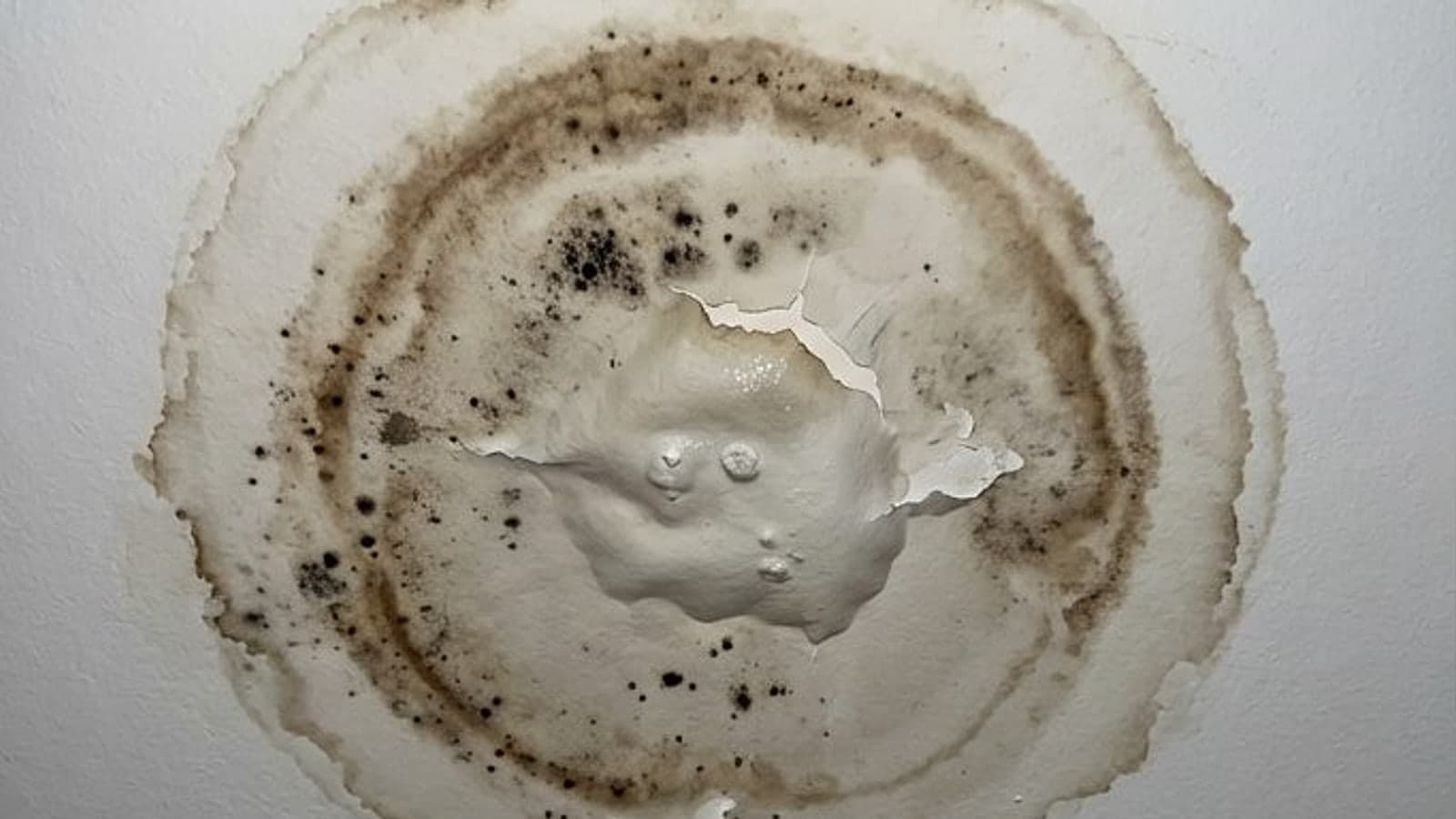
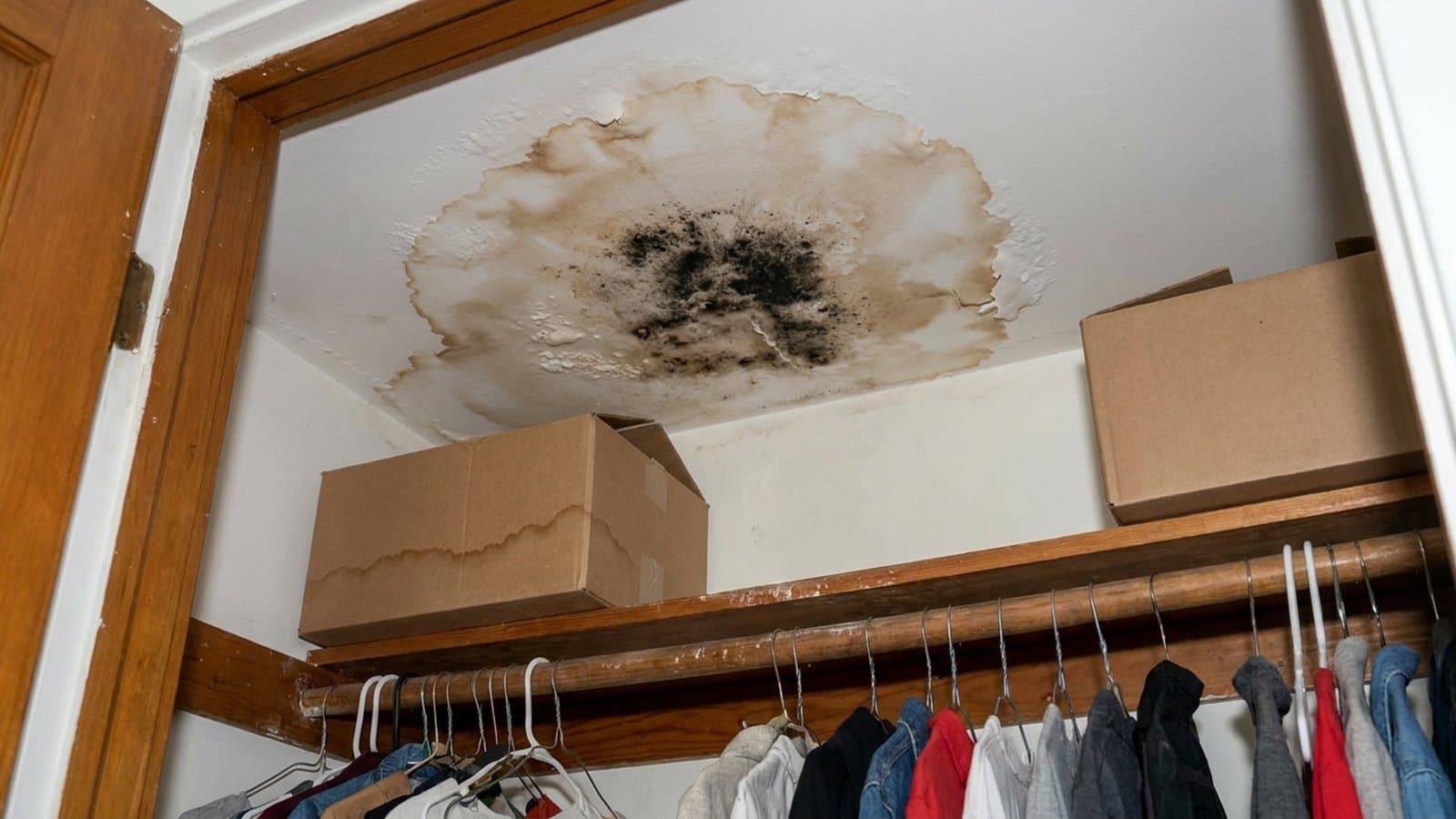
Water is heavy, and a ceiling that took on water from above can hold hundreds of pounds it was never designed to carry. A sagging or stained ceiling gets opened carefully at its edge with a pole, from a distance, not walked under. The same caution applies below: floodwater undermines slabs and washes out soil, so a floor that feels spongy or a foundation crack that was not there before the storm is a reason to bring in a professional before cleanup continues.
Document First, Pump Second
The strongest urge in a flooded house is to start bailing. Give the camera twenty minutes first, because everything you remove without a record is a line item you may not recover.
Shoot Like An Adjuster Will Watch It
Video first, walking every affected room slowly, narrating what you see. Then photos: the high-water line on the walls, every damaged item where it sits, serial numbers on appliances and electronics, and wide shots that show how rooms connect. Photograph the water itself before pumping, its depth against a tape measure or a stair riser is the cleanest evidence of severity you will ever get.
Keep a running list as you work, and keep receipts for everything the cleanup consumes, pumps, dehumidifier rental, protective gear, bags, disposal fees. Cut and keep a small square of soaked carpet and pad as a sample of quality. None of this takes long, and all of it converts directly into a documented claim.
Know Which Policy This Even Is
This surprises homeowners every year, so it is worth saying plainly. Standard homeowners insurance excludes flooding from rising water, surface water, and storm surge. That damage lives under a separate flood policy, federal NFIP or private flood insurance, if the home carries one. Homeowners policies generally do respond to sudden internal failures, a burst pipe, an appliance letting go, and sometimes to wind-driven rain entering through storm damage above grade.
Which category your loss falls into is a coverage decision your carrier makes, not us and not you. What you control is the quality of the record they make it from, which is why the documentation step comes before the pumping step. We document every flood job to IICRC standard and submit it to the carrier; we are not licensed public adjusters and do not negotiate claims.
"Photograph the water itself before pumping. Its depth against a stair riser is the cleanest evidence of severity you will ever get."
Getting The Water Out Without Making It Worse
Pumping is the one step where going fast can genuinely damage the house. The water in your basement is also holding the walls up.
The One-Third Rule For Full Basements
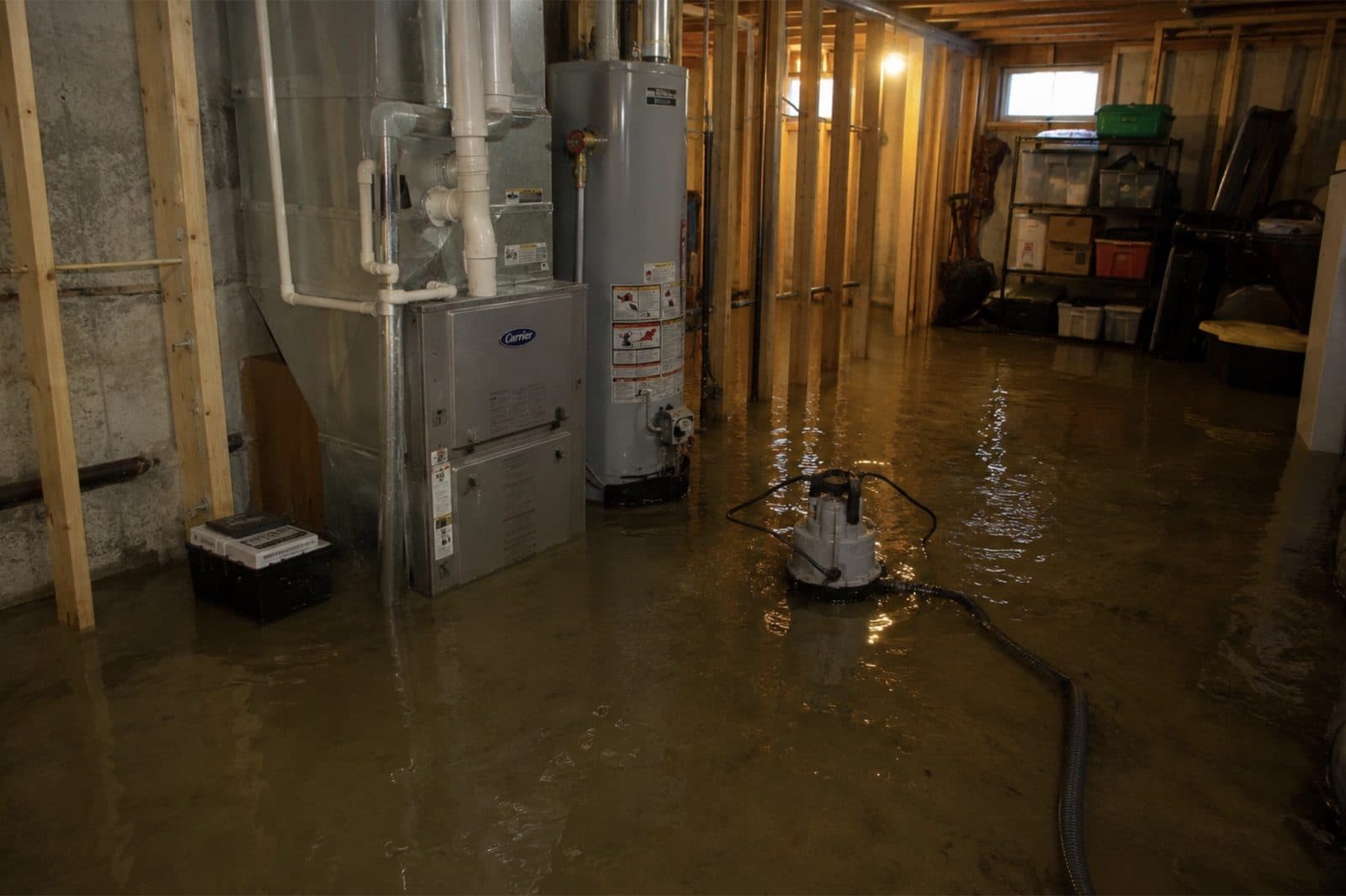
If the ground outside is still saturated and the basement is deeply flooded, the water inside is pressing back against groundwater pressing in. Pump it all out in one go and that hydrostatic pressure can crack the slab or push the foundation walls inward. FEMA guidance for exactly this situation: pump the level down about one third, mark it, and wait overnight. If the water comes back up, the ground is still loaded and you wait. If it holds, take another third the next day.
A few inches across a slab is a different situation, a wet vac and a floor squeegee handle it the same day. The caution is for feet of water, not puddles.
The Mud Is Part Of The Flood
River and surface flooding leaves silt, and the silt carries the same contamination the water did. Shovel and bag the bulk of it while it is still damp, because dried flood silt turns to dust that goes airborne. Then wash hard surfaces down, working from the high point toward the drain or sump, and disinfect after cleaning, not instead of it. Disinfectant on top of mud sanitizes the mud; the sequence is remove, wash, then treat.
What Stays And What Goes
Category 3 water draws a hard line through your belongings, and the line follows one property: whether the material is porous.
Gone, Regardless Of How It Looks
Carpet pad, always. Wall-to-wall carpet that soaked in floodwater, almost always. Mattresses, upholstered furniture, and pillows that took Category 3 water cannot be reliably decontaminated at any price that beats replacing them. Insulation that got wet, fiberglass batts hold water like a sponge and never fully dry in the wall. Particleboard and MDF furniture that swelled. Books and paper that matter go to a freezer if they are irreplaceable, a document restoration trick that stops the decay clock, and to the curb if they are not.
Drywall that soaked from standing floodwater gets cut out, not dried in place. The standard practice is a flood cut, opening the wall 12 to 24 inches above the visible water line, because drywall and the paper it is faced with wick water upward past where the surface looks wet.
Savable, If You Move Fast
Hard, non-porous surfaces clean and disinfect well: concrete, tile, metal, solid plastics, glass. Solid hardwood floors are the genuine judgment call, they often survive a short flood if extraction is immediate and controlled drying starts within a day or two, and they cup and fail if the drying is slow or uneven. Framing lumber almost always stays and dries in place once it is exposed and the wet materials around it are gone.
Solid wood furniture usually makes it. Clothing and machine-washable fabrics make it through a sanitizing hot cycle. When you are unsure about an item that matters to you, set it aside in a dry spot and ask, that decision does not have to be made at midnight with a shovel in your hand.
Drying Is The Actual Job
Extraction is visible progress. Drying is the part that decides whether the flood is over in a week or comes back as a mold problem in a month.
The 24 To 48 Hour Window Is Real
Per EPA guidance, mold can begin establishing in damp materials within 24 to 48 hours of wetting. That window is why a flooded home needs moving air and dehumidification running the same day the bulk water leaves, not after the weekend, and why opening wet wall cavities early matters more than making rooms look tidy.
Open everything that traps moisture: cabinet doors and toe kicks, closet doors, drawers. Pull base molding so wall cavities can breathe. If the outdoor air is drier than the indoor air, windows open help; in a humid August week they can hurt, which is exactly when mechanical dehumidification earns its rental fee.
Dry Is A Meter Reading, Not A Feeling
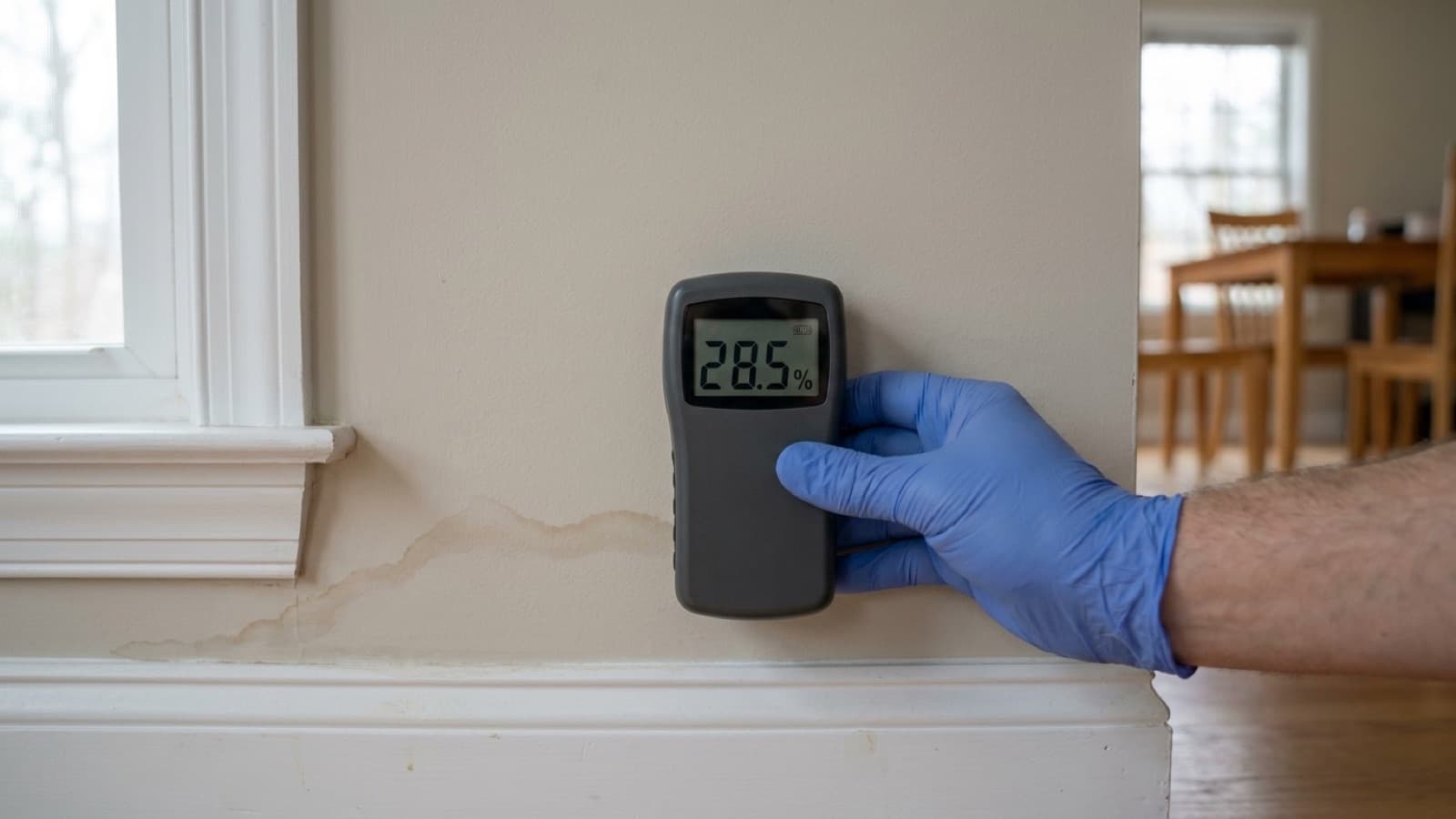
A surface that feels dry can sit over a wet core, and a wall that looks fine can read soaked a foot above the flood line. An inexpensive moisture meter settles it: wood framing should come back toward the mid-teens percent moisture content before anything gets closed up, and materials should read consistent with unaffected areas of the same house. A basement that got pumped out is not the same as a basement that got dried, and the difference between the two is exactly where next month’s mold remediation invoice comes from.
This is also the single most common reason we get called weeks after a flood someone handled themselves. The cleanup was real work, done well, and the wall was closed three days early.
"A basement that got pumped out is not the same as a basement that got dried, and the difference is exactly where next month’s mold invoice comes from."
What August 2024 Taught Connecticut
This region does not need a hypothetical to take flooding seriously. It has a federal disaster number.
FEMA-4820-DR, Two Years Later
On August 18 and 19, 2024, stalled storms dropped historic rain on western Connecticut, up to 16 inches in parts of the state in a matter of hours. Rivers that are normally streams took out roads and bridges, and on September 20, 2024 the President signed a major disaster declaration, FEMA-4820-DR, covering Fairfield, Litchfield, and New Haven counties. Towns like Brookfield, Southbury, Oxford, and Seymour saw some of the worst of it, and the individual-assistance and public-assistance programs that followed have long since closed their application windows.
What remains open is the lesson. The homes that came through cleanup best were the ones where safety, documentation, controlled pumping, and fast drying happened in that order, and the homes that struggled longest were the ones that skipped the documentation and the drying. If your town flooded in 2024, your soil, your sump pump, and your foundation already told you what the next stalled August storm will do. The preparation window between storms is when drainage gets fixed, sump pumps get battery backups, and flood policies get bought, none of which can be done the night the water is rising.
Where The DIY Line Actually Sits
Most of this article is things you can do yourself, and that is deliberate. Here is the honest boundary, in both directions.
You Can Reasonably Handle It Yourself When
The water was clean, a supply line, a water heater, rain through an open window, and it covered a small area you extracted the same day. Hard surfaces, small square footage, no wall cavities involved, and drying equipment running within 24 hours. A shop vac, a rented dehumidifier, a box fan, and a moisture meter genuinely cover that job, and a company that tells you otherwise is selling.
It Is A Professional Job When
The water came from outside or through a drain, which makes it Category 3 with everything that implies about contamination and disposal. The water stood for more than a day, reached drywall and insulation, or filled a finished basement. Anyone in the home is immunocompromised, elderly, an infant, or asthmatic. Sewage is involved at all. Or the math simply favors it: a documented, insured loss processed with professional drying logs and moisture mapping typically recovers more of the claim than the equipment rental saved.
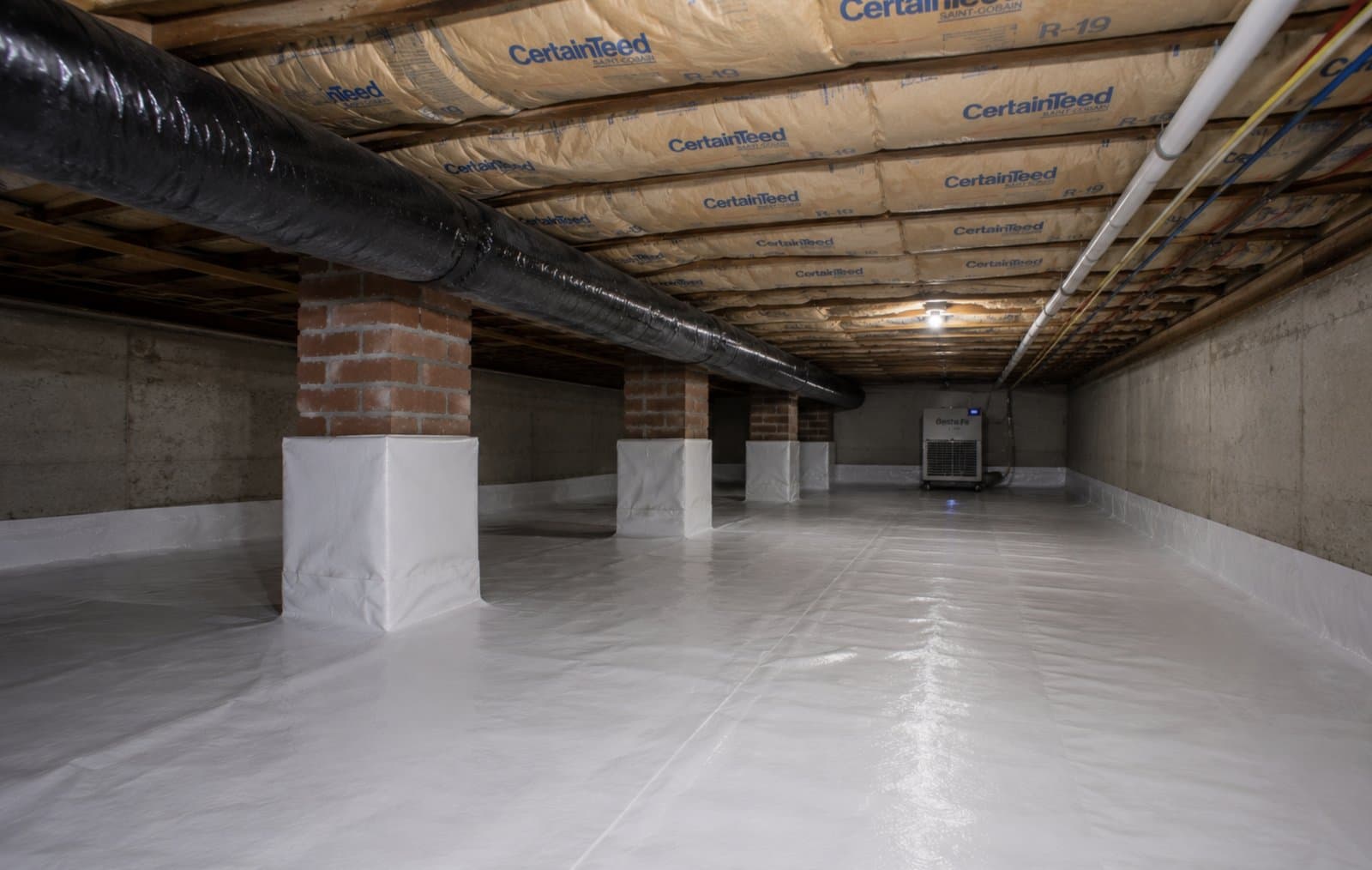
Professional here means truck-mounted extraction, commercial dehumidifiers and air movers placed off psychrometric readings, containment where Category 3 material is being removed, and daily moisture logs your carrier can audit. That is the whole product. If a crew shows up with two fans and no meter, you have rented fans.
Questions Homeowners Ask After A Flood
Short, direct answers to the questions that bring people to this page.
How Do You Clean Up After A Flood?
In order: make the home safe, power and gas off before entering; document everything with video and photos before moving anything; pump standing water out, gradually if a basement is deeply flooded and the ground is saturated; remove silt while damp; discard porous materials the floodwater soaked, carpet pad, wet insulation, soaked drywall via a flood cut; wash and then disinfect hard surfaces; and run dehumidifiers and air movers until a moisture meter, not your hand, says the structure is dry. The drying step is the one that prevents the mold problem, per EPA guidance mold can establish within 24 to 48 hours.
Is It Safe To Clean Up Flood Water Yourself?
Small, clean-water incidents, yes, with the power situation handled first. Floodwater from outside the home is Category 3 water under the IICRC S500 standard, contaminated by definition, and cleaning it yourself means boots, gloves, an N95, no children or pets in the area, and honest limits: sewage involvement, large finished areas, or vulnerable household members are where self-cleanup stops making sense.
Does Homeowners Insurance Cover Flood Cleanup?
Rising water from outside, surface flooding, and storm surge are excluded from standard homeowners policies and are covered only by a separate flood policy such as NFIP. Sudden internal water failures, like a burst pipe, generally are covered by homeowners insurance. Your carrier makes the coverage decision on your specific loss; thorough documentation from before the cleanup starts is what that decision gets made from.
How Long Does It Take A House To Dry Out After A Flood?
With professional equipment placed correctly, structural drying typically runs three to five days, verified by daily meter readings. With household fans and a rented dehumidifier, small areas can dry in a similar window but larger or enclosed assemblies often take far longer than they appear to, which is how walls get closed up wet. The finish line is a meter reading consistent with the dry parts of the same house, not a number of days on a calendar.