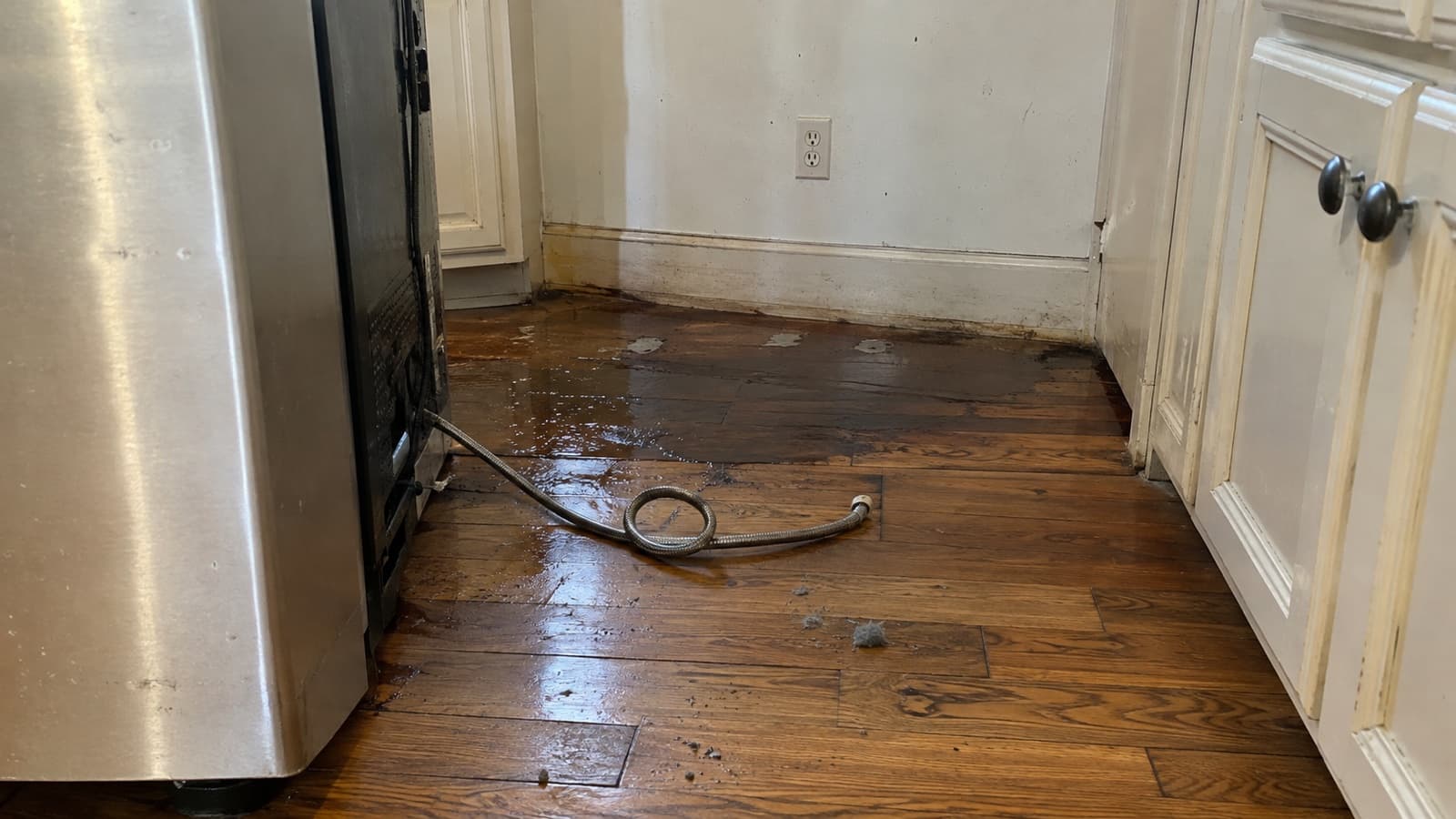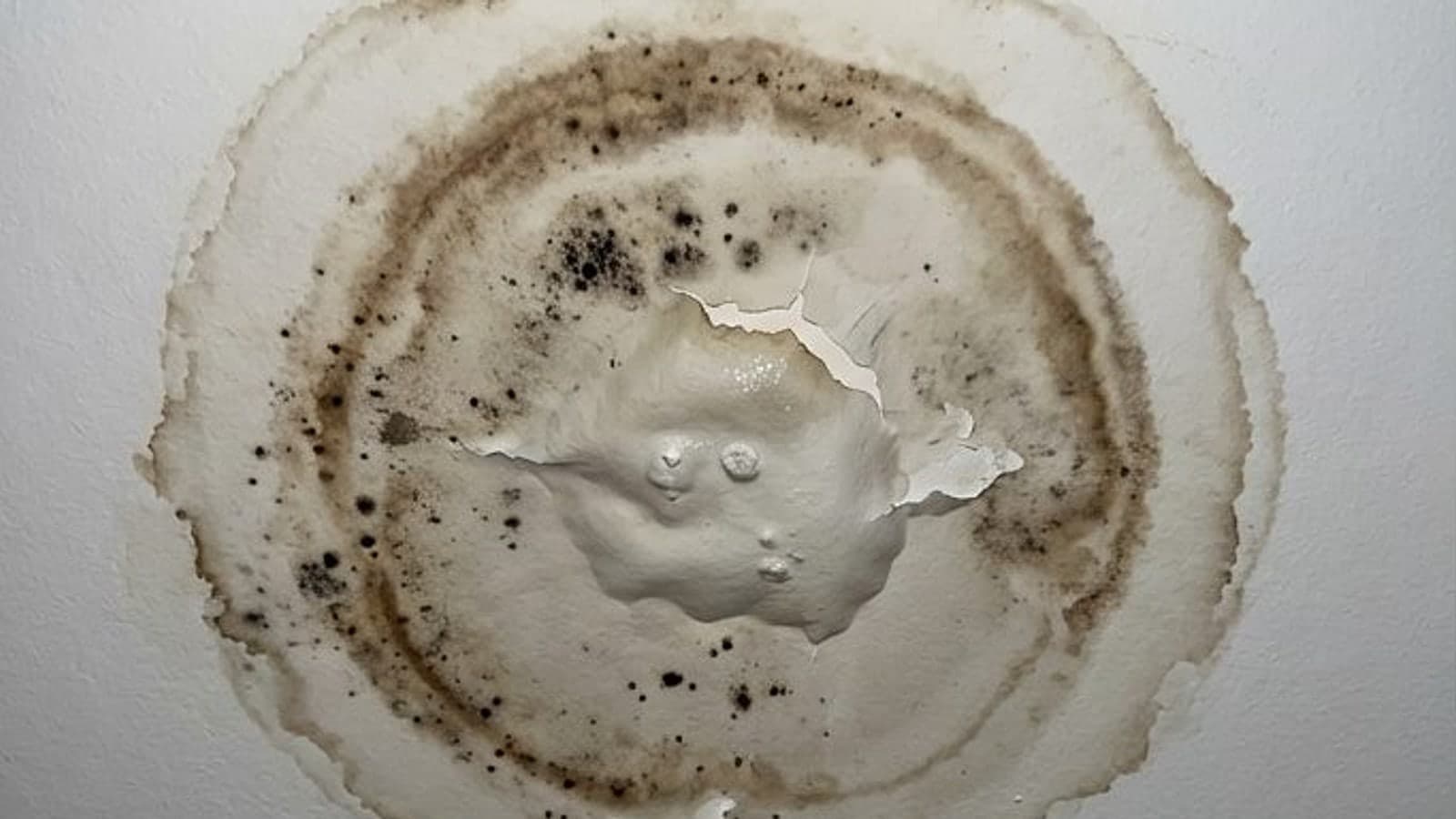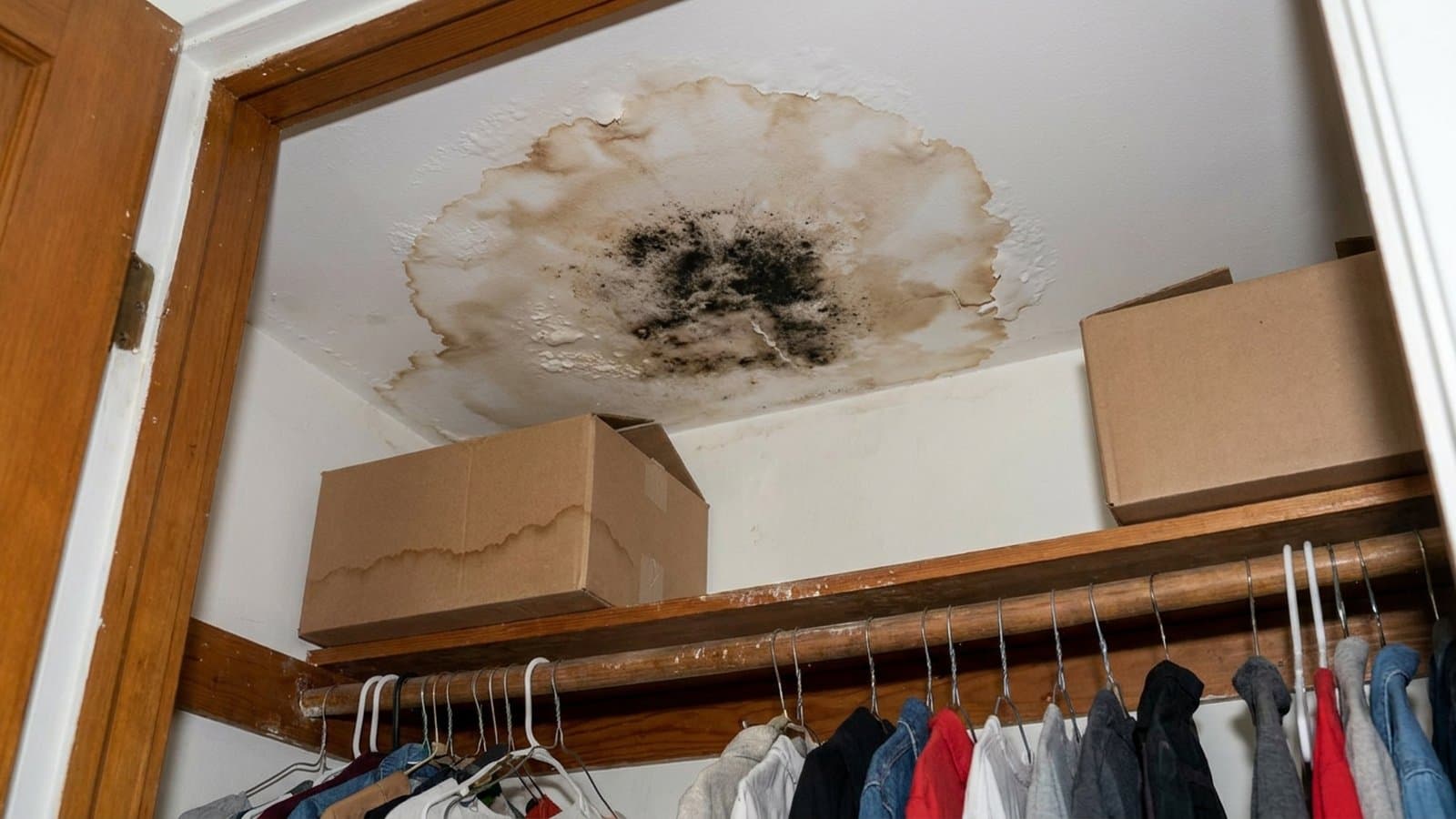
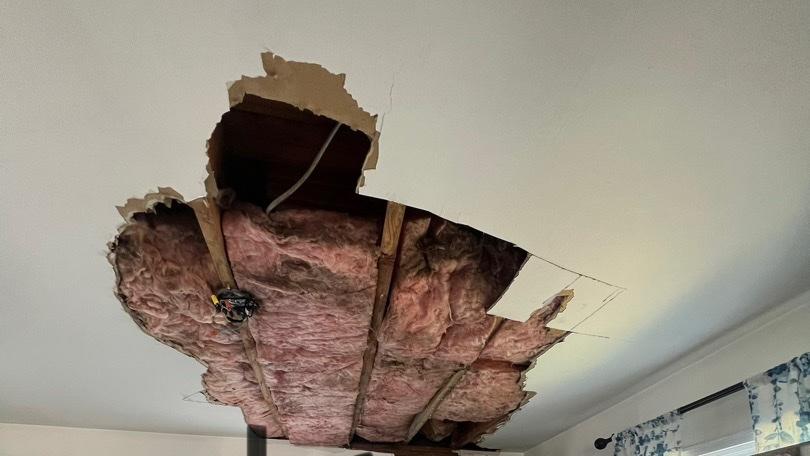
Almost every burst pipe call we take across Connecticut, Westchester and Western Massachusetts comes in during the same few weeks: the first hard freeze, the coldest stretch of January, and the morning after a power outage during a cold snap. The pattern is always similar. A supply line on an outside wall, in a crawl space, under a kitchen sink against an exterior wall or in an unheated garage freezes overnight. Water expands as it turns to ice, the pipe splits, and nothing happens until it thaws. Then the split runs at full house pressure until somebody hears it or sees water coming through a ceiling.
This guide covers what happens after that. If your pipes are frozen but have not split yet, read how to unfreeze pipes safely instead. If the pipe has already burst, this is the order that keeps the damage, the bill and the insurance claim as small as possible.
The First Hour
Do these in order. Water first, then power, then photographs, then calls.
The first hour after a pipe bursts.
1
- Action
- Close the main shutoff
- How
- Usually where the water line enters the basement or crawl space, on the street side of the house, often next to the meter. Turn a wheel valve clockwise until it stops, or turn a lever a quarter turn so it sits across the pipe.
- Why
- A split supply line keeps running at full pressure. Nothing else matters until it stops.
2
- Action
- Cut power to wet areas
- How
- At the breaker panel, for any room where water reached outlets, light fixtures or the ceiling. If the panel itself is wet or you would have to stand in water to reach it, stay out and call the utility.
- Why
- Water in a ceiling cavity can reach a light box before you see it. Do not stand in water to unplug anything.
3
- Action
- Drain the lines
- How
- Open the lowest faucet in the house and a cold tap upstairs.
- Why
- Draining relieves the water still trapped in the pipes and shows the plumber which lines still hold pressure.
4
- Action
- Photograph before cleanup
- How
- The split pipe, the water on the floor, ceilings, walls, baseboards and everything that got wet, with a wide shot of each room.
- Why
- This is the core of the insurance claim. Adjusters want to see the damage as it was found.
5
- Action
- Move what you can
- How
- Rugs, boxes, electronics, papers and anything stored on a basement floor. Put furniture legs on foil or plastic blocks.
- Why
- Contents are often what you actually lose, and wet cardboard and rugs feed mold fast.
6
- Action
- Call a plumber and a restoration company
- How
- The plumber repairs the pipe. The restoration crew finds where the water went and dries it. They are different trades, and the drying should not wait for the pipe repair.
- Why
- Every hour that drywall and subfloor stay wet raises the cost of the job and the chance of mold.
| Order | Action | How | Why |
|---|---|---|---|
| 1 | Close the main shutoff | Usually where the water line enters the basement or crawl space, on the street side of the house, often next to the meter. Turn a wheel valve clockwise until it stops, or turn a lever a quarter turn so it sits across the pipe. | A split supply line keeps running at full pressure. Nothing else matters until it stops. |
| 2 | Cut power to wet areas | At the breaker panel, for any room where water reached outlets, light fixtures or the ceiling. If the panel itself is wet or you would have to stand in water to reach it, stay out and call the utility. | Water in a ceiling cavity can reach a light box before you see it. Do not stand in water to unplug anything. |
| 3 | Drain the lines | Open the lowest faucet in the house and a cold tap upstairs. | Draining relieves the water still trapped in the pipes and shows the plumber which lines still hold pressure. |
| 4 | Photograph before cleanup | The split pipe, the water on the floor, ceilings, walls, baseboards and everything that got wet, with a wide shot of each room. | This is the core of the insurance claim. Adjusters want to see the damage as it was found. |
| 5 | Move what you can | Rugs, boxes, electronics, papers and anything stored on a basement floor. Put furniture legs on foil or plastic blocks. | Contents are often what you actually lose, and wet cardboard and rugs feed mold fast. |
| 6 | Call a plumber and a restoration company | The plumber repairs the pipe. The restoration crew finds where the water went and dries it. They are different trades, and the drying should not wait for the pipe repair. | Every hour that drywall and subfloor stay wet raises the cost of the job and the chance of mold. |
Where The Water Actually Goes
The puddle you can see is the smallest part of the loss.
Down, Then Sideways
Water from a burst pipe runs down through the floor and spreads along the top of the subfloor and under walls before it shows up anywhere. A pipe that split in a second floor bathroom wall usually soaks the wall cavity, the floor under the vanity, the ceiling below and the insulation in that ceiling, and it can travel along a joist into the next room. That is why we start every burst pipe cleanup with a moisture meter and a thermal camera, not with a mop.
Materials That Do Not Dry On Their Own
Drywall wicks water upward, often 12 inches or more above the visible line. Fiberglass insulation in a wet cavity holds water against the framing. Hardwood absorbs water through its edges and starts to cup within hours. Particleboard cabinet bases and vanity floors swell and do not come back. Carpet pad holds water long after the carpet surface feels dry. Opening the house and running a fan does not dry any of these. They need controlled drying with dehumidifiers and air movers placed where the readings say the water is.
Clean Water Does Not Stay Clean
A supply line carries clean water, but it picks up whatever it runs through: dust in a wall cavity, a basement floor, carpet pad. Under the industry standard (IICRC S500), clean water that sits can be reclassified as contaminated, usually within two to three days, and the drying plan changes with it. This is another reason the first two days decide most of the bill.
The First 48 Hours
This is what a proper drying job looks like, so you know what to expect and what to ask.
Day One: Find It And Extract It
Standing water comes out first with truck or portable extraction, not a shop vac. Then the crew maps the wet area room by room with moisture meters, marks the boundary on the walls, and decides what can be dried in place and what has to come out: usually soaked carpet pad, wet insulation, and the bottom of drywall that wicked too high. Holes are drilled or baseboards pulled where needed so air can reach inside the cavity. See emergency water extraction for how that part works.
Day Two Onward: Dry To A Number
Dehumidifiers and air movers run around the clock, and the crew comes back to take readings at the same marked points every day. Drying is finished when the materials read dry against a dry reference in the same house, not when they feel dry. Most residential burst pipe jobs take 3 to 5 days of drying. Losses with hardwood, plaster walls or a finished basement can run 7 to 10 days. Ask for the daily readings in writing. They are part of your claim file.
Then The Rebuild
Once the readings are dry, the removed drywall, insulation, trim and flooring are replaced. On a covered claim, repairs are part of the same claim as the drying, so keep one file for both.
What Burst Pipe Cleanup Costs
There is no flat price, but the ranges are predictable.
What drives the cost of burst pipe water damage cleanup.
How long the water ran
- Lower Cost
- Caught within minutes
- Higher Cost
- Ran overnight or while the house was empty
How far it spread
- Lower Cost
- One room, one floor
- Higher Cost
- Through ceilings into the floor below
What got wet
- Lower Cost
- Tile, concrete, unfinished basement
- Higher Cost
- Hardwood, plaster, finished basement, cabinets
How fast drying started
- Lower Cost
- Same day
- Higher Cost
- After two days, with mold on the table
| Factor | Lower Cost | Higher Cost |
|---|---|---|
| How long the water ran | Caught within minutes | Ran overnight or while the house was empty |
| How far it spread | One room, one floor | Through ceilings into the floor below |
| What got wet | Tile, concrete, unfinished basement | Hardwood, plaster, finished basement, cabinets |
| How fast drying started | Same day | After two days, with mold on the table |
Typical Range
Burst pipe restoration usually runs from about 1,500 dollars for a single room extraction and dry out to 15,000 dollars or more for multi floor losses with hardwood, plaster and finished basement damage. The plumber's repair is separate. A written estimate should come after moisture readings, not before, because the readings are what set the scope.
Does Homeowners Insurance Cover A Burst Pipe?
Usually yes for the water damage. The details matter.
What Is Usually Covered
A pipe that bursts suddenly, including a pipe that froze and split, is the standard example of a sudden and accidental discharge of water. A typical homeowners policy pays to dry and repair the damage it caused, minus your deductible. Many policies also pay to open and close the wall to reach the pipe. The pipe repair itself is often treated as a plumbing repair and not covered. For the broader picture, read what homeowners insurance covers for water, mold and fire.
The Frozen Pipe Condition
Most standard policies cover freezing only if you took reasonable care to keep the heat on, or shut off the water and drained the system, while the house was unoccupied. A house left without heat for a week, a second home with the thermostat turned off, or a vacant property can be denied on that clause. If your house will be empty in winter, read that section of your policy before you leave.
What Is Usually Not Covered
A slow leak that dripped for weeks inside a wall is usually excluded as repeated seepage. Mold is often capped at a low separate limit. And damage that grew because drying was delayed can be reduced, because the policy requires you to protect the property from further damage. You do not need to wait for the adjuster to start drying. Photograph first, keep the split section of pipe, and start the same day.
Mistakes That Make It Worse
We see these every winter.
Turning The Water Back On Too Soon
A cold snap rarely splits just one pipe. Turning the main back on before the plumber has checked the other exposed lines can start a second leak somewhere you are not watching.
Using A Shop Vac And Household Fans
A shop vac removes surface water but none of what is in the pad, the walls or the subfloor. Household fans blowing across wet materials can push moisture into dry areas. They feel like progress and mostly move the problem.
Painting Over A Stain
A ceiling stain that dried on the surface often hides wet insulation and framing above it. Paint goes on, mold grows behind it, and the claim for the original leak is long closed. Have it read with a meter first. If you already smell something musty, see mold remediation.
When To Call
Call the same day if any of these are true.
Same Day Signs
Water came through a ceiling or into a room below. It reached drywall, cabinets or hardwood. The pipe ran while nobody was home and you do not know for how long. The basement floor is wet and things were stored on it. Our water damage restoration crews handle burst pipe cleanup across Connecticut, Westchester and Western Massachusetts, including New Haven, Hartford, West Hartford, Waterbury, Armonk, Chappaqua and Croton on Hudson. If the water came from a water heater instead, read what to do when a water heater is leaking.
Questions Homeowners Ask
What should I do first when a pipe bursts?+
Close the main water shutoff, usually where the water line enters the basement or crawl space. Then turn off the breaker for any room where water reached outlets or a ceiling, open the lowest faucet to drain the lines, and photograph the damage before you move anything. After that, call a plumber for the pipe and a water damage company for the drying.
How much does burst pipe cleanup cost?+
Usually from about 1,500 dollars for a single room extraction and dry out to 15,000 dollars or more for losses that spread across floors with hardwood, plaster or a finished basement. The biggest factors are how long the water ran, how far it spread, what materials got wet and how quickly drying started. The plumbing repair is billed separately.
Does homeowners insurance cover a frozen pipe that burst?+
Usually yes for the water damage, as a sudden and accidental discharge, minus your deductible. Most policies require that you kept the heat on, or shut off and drained the water, if the house was unoccupied. A slow leak over weeks is usually excluded, and the pipe repair itself is often not covered.
How long does it take to dry out after a burst pipe?+
Most residential burst pipe jobs take 3 to 5 days of structural drying, confirmed by daily moisture readings. Larger losses with hardwood floors, plaster walls or a finished basement can take 7 to 10 days. Rebuild time comes after drying and depends on what had to be removed.
Can I clean up a burst pipe myself?+
You can stop the water, move belongings and mop up surface water. What you cannot see is the water in wall cavities, insulation and subfloor, and that is where mold and the expensive repairs come from. If water reached drywall, a ceiling or hardwood, get it measured with a moisture meter before deciding it is dry.
Will mold grow after a burst pipe?+
It can, if wet materials stay wet for more than 24 to 48 hours. Fast extraction and controlled drying to measured dry readings is what prevents it. A musty smell days or weeks later usually means something was missed.