If you are reading this standing next to a wet water heater, do those three things before you read anything else. Close the cold water inlet valve on top of the tank, the handle on the pipe entering the right hand side. Turn the gas control knob to Off, or switch off the breaker if the unit is electric. Then move whatever is sitting on the floor nearby, because in a leak of any size the contents are what you actually lose.
Now the part that decides everything else. A leaking water heater is four different problems wearing the same clothes, and which one you have depends entirely on where the water is coming from. A weeping drain valve is a five dollar fix. A discharging temperature and pressure relief valve is a safety device doing its job. A loose union fitting on the cold inlet is a plumber for twenty minutes. A tank that has rusted through the bottom is a replacement, and there is no repair for it.
Below: how to tell those four apart in about two minutes, the shutdown sequence for gas and electric units, whether this is a tonight problem or a Tuesday problem, and what to do while waiting. If what you want instead is why the tank failed, or how the coverage question works, that is our companion piece on what causes a water heater to fail.
What To Do First When A Water Heater Is Leaking
The order matters. Water, then power, then contents, and only then start investigating.
The first ten minutes, in order. Doing these out of sequence is what turns a small leak into a second repair.
1
- Action
- Close the cold water inlet valve
- Where
- The valve on the pipe entering the top right of the tank, or the main shutoff if that valve will not move
- Why it comes at this point
- Stops the tank refilling itself. Without this, an open supply line keeps feeding the leak indefinitely.
2
- Action
- Gas control knob to Off, or the breaker off
- Where
- Gas valve body at the base of the tank, or the double pole 30 amp breaker in the panel
- Why it comes at this point
- A burner or element firing into a draining tank destroys the unit and creates a second hazard.
3
- Action
- Move contents off the floor
- Where
- Everything within the wet area and the path the water is taking
- Why it comes at this point
- Cardboard, fabric, and particleboard are lost within an hour or two. Contents are the recoverable part.
4
- Action
- Identify the leak point
- Where
- Top fittings, T and P valve and its discharge pipe, drain valve, base of the tank
- Why it comes at this point
- This is what decides whether you need a plumber, a new heater, or nothing at all.
5
- Action
- Photograph everything before you clean
- Where
- The tank, the leak point, the water extent, and any wet contents
- Why it comes at this point
- If this becomes a claim, the only evidence of the original extent is what you took before cleanup.
| Order | Action | Where | Why it comes at this point |
|---|---|---|---|
| 1 | Close the cold water inlet valve | The valve on the pipe entering the top right of the tank, or the main shutoff if that valve will not move | Stops the tank refilling itself. Without this, an open supply line keeps feeding the leak indefinitely. |
| 2 | Gas control knob to Off, or the breaker off | Gas valve body at the base of the tank, or the double pole 30 amp breaker in the panel | A burner or element firing into a draining tank destroys the unit and creates a second hazard. |
| 3 | Move contents off the floor | Everything within the wet area and the path the water is taking | Cardboard, fabric, and particleboard are lost within an hour or two. Contents are the recoverable part. |
| 4 | Identify the leak point | Top fittings, T and P valve and its discharge pipe, drain valve, base of the tank | This is what decides whether you need a plumber, a new heater, or nothing at all. |
| 5 | Photograph everything before you clean | The tank, the leak point, the water extent, and any wet contents | If this becomes a claim, the only evidence of the original extent is what you took before cleanup. |
Step One: Close The Cold Water Inlet
Two pipes enter the top of the tank. The cold inlet is on the right, often marked blue. Its shutoff is either a lever ball valve or a round gate wheel. A lever turns ninety degrees across the pipe. A wheel turns clockwise until it stops. If that valve will not move, use the main shutoff near the meter.
Step Two: Cut The Heat Source
For a gas unit, turn the gas control knob on the valve body from On to Off, which also extinguishes the pilot. For an electric unit, switch off the double pole breaker, usually thirty amps. Do not open the side access panels looking for a switch. There is no switch, there are live heating element terminals.
Step Three: Move What Is On The Floor
Cardboard, stored fabric, anything paper, anything with a particleboard base. These wick water upward and are usually unsalvageable within an hour or two. Furniture legs standing in water stain, and metal feet leave rust marks on carpet that do not come out. Lift what you can, and put foil or a wood block under legs you cannot move.
Where Is Your Water Heater Actually Leaking From?
Dry the tank and floor completely, then watch for ten minutes with a flashlight. Water reappears first at the source.
Four leak points, four different answers. Dry the tank and floor, then watch for ten minutes to see where water returns first.
Top of tank, running down the shell
- Most likely cause
- Loose or corroded inlet, outlet, or union fitting. Tank itself is intact.
- Urgency
- Low. Water is usually slow and controllable once the inlet is closed.
- Who you need
- Plumber. Often a tightened or replaced connector.
T and P valve discharge pipe
- Most likely cause
- Excess pressure or temperature, or a failed valve. The device is functioning as designed.
- Urgency
- Low unless continuous. Never cap or plug the discharge pipe.
- Who you need
- Plumber, to check supply pressure, expansion tank, and thermostat setting.
Drain valve at the bottom front
- Most likely cause
- Valve not fully closed, or a failed seat, often from sediment
- Urgency
- Low. A threaded brass cap stops it as a stopgap.
- Who you need
- Plumber, or a homeowner comfortable replacing a valve.
Underneath the tank, fittings dry
- Most likely cause
- Corrosion through the steel shell. There is no repair for this.
- Urgency
- High. It generally worsens rather than stabilizing.
- Who you need
- Plumber for replacement. Restoration if water reached finished space.
Evenly across the whole shell, after a hot water draw
- Most likely cause
- Condensation on a cold tank in a humid space, not a leak
- Urgency
- None. It stops as the tank reaches temperature.
- Who you need
- Nobody. Confirm by drying the tank and watching where water returns.
| Where water appears | Most likely cause | Urgency | Who you need |
|---|---|---|---|
| Top of tank, running down the shell | Loose or corroded inlet, outlet, or union fitting. Tank itself is intact. | Low. Water is usually slow and controllable once the inlet is closed. | Plumber. Often a tightened or replaced connector. |
| T and P valve discharge pipe | Excess pressure or temperature, or a failed valve. The device is functioning as designed. | Low unless continuous. Never cap or plug the discharge pipe. | Plumber, to check supply pressure, expansion tank, and thermostat setting. |
| Drain valve at the bottom front | Valve not fully closed, or a failed seat, often from sediment | Low. A threaded brass cap stops it as a stopgap. | Plumber, or a homeowner comfortable replacing a valve. |
| Underneath the tank, fittings dry | Corrosion through the steel shell. There is no repair for this. | High. It generally worsens rather than stabilizing. | Plumber for replacement. Restoration if water reached finished space. |
| Evenly across the whole shell, after a hot water draw | Condensation on a cold tank in a humid space, not a leak | None. It stops as the tank reaches temperature. | Nobody. Confirm by drying the tank and watching where water returns. |
Leaking From The Top
Water at the top running down the outside is almost always a fitting rather than the tank. The inlet and outlet connections, the flex connectors, and the T and P valve fitting are threaded joints that loosen with thermal cycling. A plumber tightens or replaces the connector. Follow the moisture up until the metal turns dry.
Leaking From The Temperature And Pressure Relief Valve
The T and P valve is the brass fitting with a pipe running to the floor. It opens when the tank exceeds roughly 150 PSI or 210 degrees Fahrenheit. Discharge usually means thermal expansion, pressure above the 40 to 60 PSI a residential system wants, a thermostat set too hot, or a failed valve. Never cap or plug the discharge pipe.
Leaking From The Drain Valve
The drain valve is the hose bib at the bottom front. If it is dripping, first check whether it is fully closed, because they get knocked open by a vacuum hose or a stored box more often than anyone admits. If it is closed and still weeping, the seat has failed, usually from sediment, and replacing the valve is straightforward.
Leaking From The Bottom Of The Tank
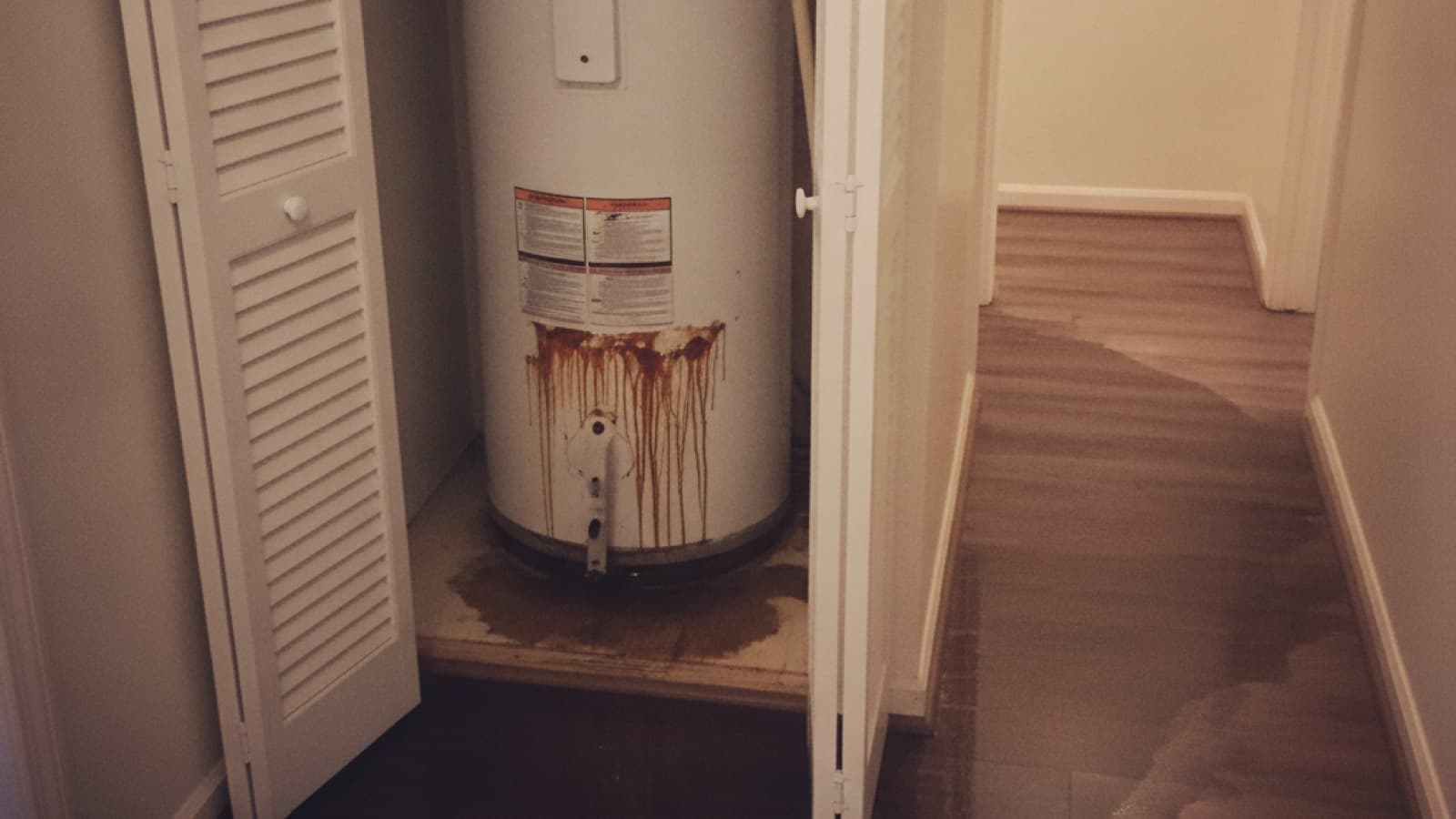
Water pooling underneath with the fittings and drain valve dry means the tank shell has corroded through. There is no repair, and it generally worsens rather than stabilizing. If the unit is more than eight years old, plan on replacement. The sequence behind it is in our article on how water heaters actually fail.
When It Is Not A Leak At All
Two situations look like leaks and are not. A tank refilling with cold water in a humid basement sweats, and the drops collect underneath. Dry the tank and watch, because condensation returns evenly across the whole shell while a leak returns at one point. The second is water arriving from a condensate line, a supply pipe, or a floor drain.
Is A Leaking Water Heater An Emergency?
Sometimes. The triage is about the rate of water and where it is going, not about the tank.
The Three Levels
A drip you can catch in a pan is not an emergency. Close the inlet, cut the power, and call a plumber. A spreading puddle, or any leak reaching finished flooring, drywall, or carpet, is a same-day problem. Active flow or a ruptured tank needs a plumber and a restoration crew now. A tank holds forty to fifty gallons.
The Clock That Starts
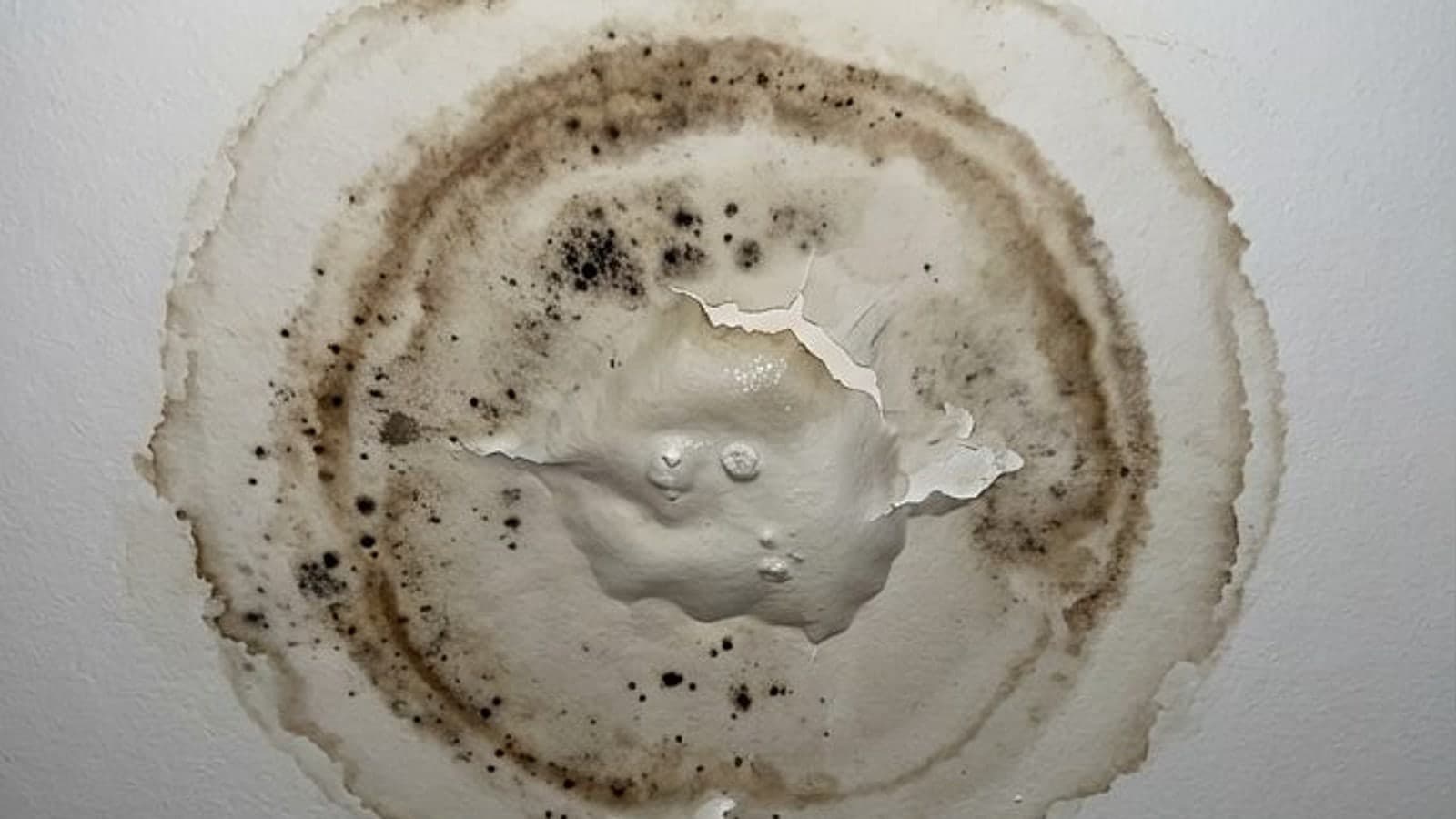
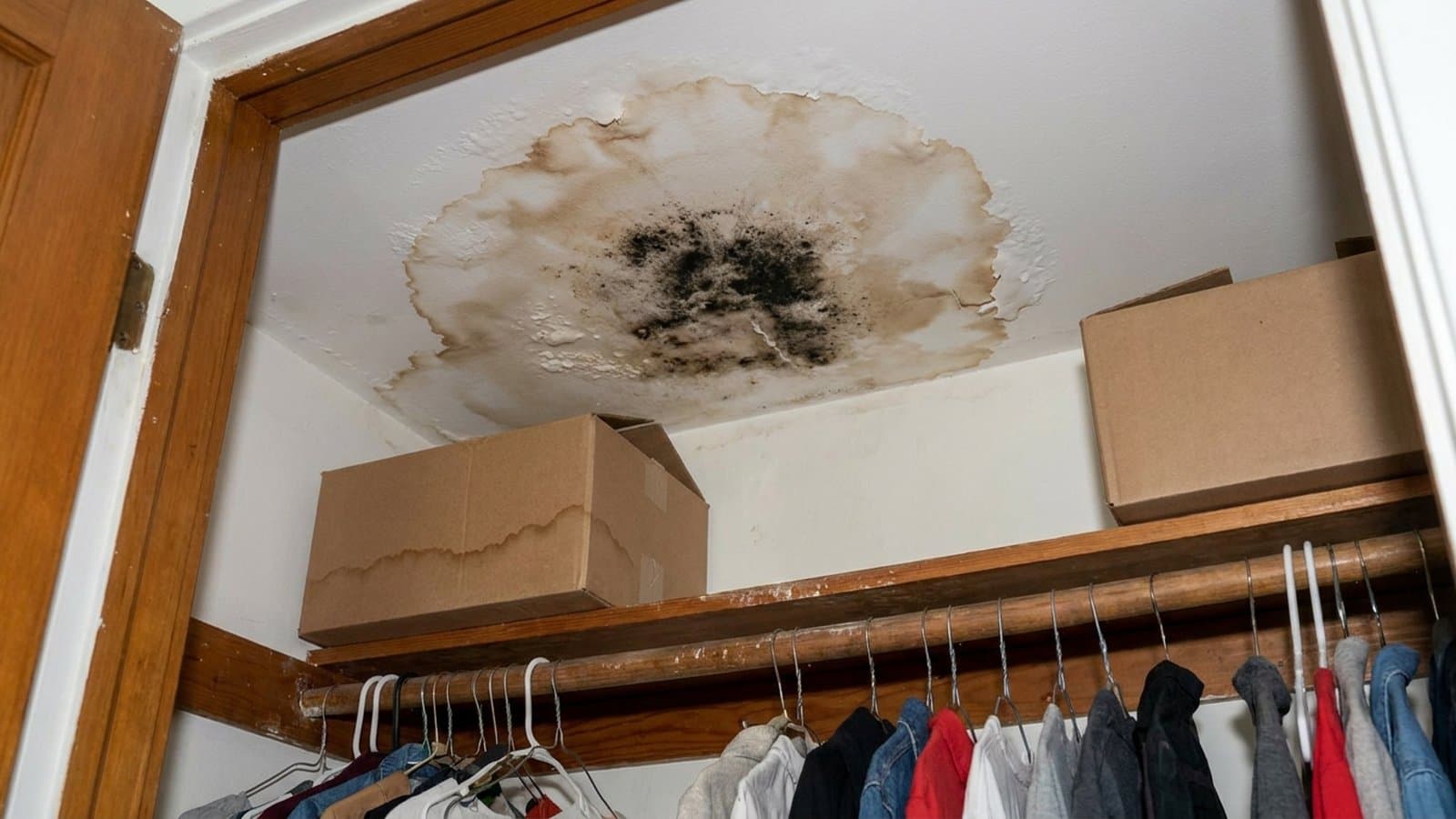
What makes a puddle urgent is the timeline rather than the water. Mold can begin colonizing wet organic material within roughly 24 to 48 hours, and that window is the whole argument for extracting and drying properly. Structural drying is extraction, air movers, and dehumidification sized to the space, with moisture readings taken until materials hit a documented dry standard.
What To Do While You Wait
Keep the inlet closed and the power off. Get standing water off hard floors with a wet vacuum or towels, working outward from the tank. Open interior doors so air can move, and run a dehumidifier rather than windows in humid weather. Photograph the extent before you clean, including a wide shot showing how far the water traveled.
"The tank is a plumbing problem and it takes an afternoon. Everything the water touched is a drying problem, and that one has a 48 hour clock on it. People call the plumber immediately and the drying company on day four."
What Happens To The Rooms The Water Reached
A water heater in a finished basement, a hallway closet, or an upstairs laundry is a building event, not a utility room event.
Where The Water Actually Goes
Water finds the lowest path, which means it goes under things rather than across them: under the laminate rather than over it, into the seam where baseboard meets floor, down the stud bay behind the drywall, then along the framing until it finds a route down. That is why the visible wet area understates the real one.
What The Work Involves And What It Costs
A water heater leak is Category 1 clean water, and our published Connecticut range is 1,500 to 4,500 dollars. Water that sat, or reached finished space, moves into Category 2, 2,500 to 8,500 dollars. The drivers are in our water damage restoration cost guide. A flooded lower level is flooded basement cleanup; a supply line is emergency burst pipe repair.
The Insurance Question, Briefly
Carriers generally treat the failed tank and the damage it caused as two separate questions. That distinction is covered in our water heater failure article. Photograph everything before cleaning. We are not licensed public adjusters and do not negotiate claims on your behalf. Your deductible is between you and your insurer, and we work with your deductible, not around it.
When You Only Need A Plumber
Most water heater leaks do not need us, and saying so is cheaper for everyone than an unnecessary visit.
The Cases That Are Just Plumbing
A drip from the drain valve onto concrete near a drain. A loose fitting at the top with a little water in the tank pan. A T and P valve discharging into a pipe that runs to a floor drain. Condensation. Any leak that never reached drywall or framing. Close the inlet, cut the power, and call a plumber.
The Line Where It Changes
Call a restoration company as well when water has reached carpet, hardwood, laminate, or drywall, when it has gone through a floor to the level below, or when the heater sits above finished space. If what got wet can be wiped, you are done. If it can absorb, it needs drying on a schedule and verification with a meter.
Need Restoration Services?
60-minute response across CT, NY & MA. Licensed, insured, free inspections.
Questions Homeowners Ask
What should I do first if my water heater is leaking?+
Close the cold water inlet valve on top of the tank, the handle on the pipe entering the top right side. If it will not move, shut off the main water supply. Then cut the heat: gas control knob to Off, or the double pole breaker off for an electric unit. Then move contents off the floor.
Is a leaking water heater an emergency?+
It depends on the rate and the destination. A drip on concrete near a drain is not: close the inlet, cut the power, and call a plumber. A steady leak reaching carpet, hardwood, or drywall is a same-day problem. Active flow, a ruptured tank, or water going through a floor needs a plumber and a restoration crew immediately.
Why is my water heater leaking from the bottom?+
If the top fittings and the drain valve are dry and water is pooling underneath, the steel tank has corroded through from the inside. There is no repair, so the unit gets replaced. Rule out condensation first, which appears evenly across the whole shell after a hot water draw and stops as the tank heats up.
Why is water coming out of the pressure relief valve?+
The temperature and pressure relief valve is a safety device that opens when the tank exceeds roughly 150 PSI or 210 degrees Fahrenheit. Discharge usually means thermal expansion with no expansion tank, incoming pressure above the 40 to 60 PSI a residential system wants, or a failed valve. Never cap or plug the discharge pipe.
How do I turn off a leaking water heater?+
Water first: close the cold inlet valve on the top right of the tank, turning a lever ninety degrees across the pipe or a wheel clockwise until it stops. Then heat: on a gas unit turn the control knob on the valve body to Off. On an electric unit switch off the double pole 30 amp breaker.
Can I still use water in the house if the heater is leaking?+
Yes, once the cold inlet valve on the tank is closed rather than the main. Closing only that valve isolates the heater while the rest of the plumbing keeps working, so you have cold water and no hot water. If the inlet valve is seized and you had to shut the main, the whole house is off.
How long do I have before water damage becomes mold?+
Mold can begin colonizing wet organic materials within roughly 24 to 48 hours, which is the window deciding whether this is a drying job or a remediation job. What matters inside it is not how dry the surface feels but whether the material has reached a documented dry standard, verified with a moisture meter.
What does water heater leak cleanup cost in Connecticut?+
A water heater leak is Category 1 clean water when it happens, and our published Connecticut range for a Category 1 loss is 1,500 to 4,500 dollars. If the water sat, or traveled into finished space below, it moves into the Category 2 range of 2,500 to 8,500 dollars. Those figures cover drying, not the plumbing.