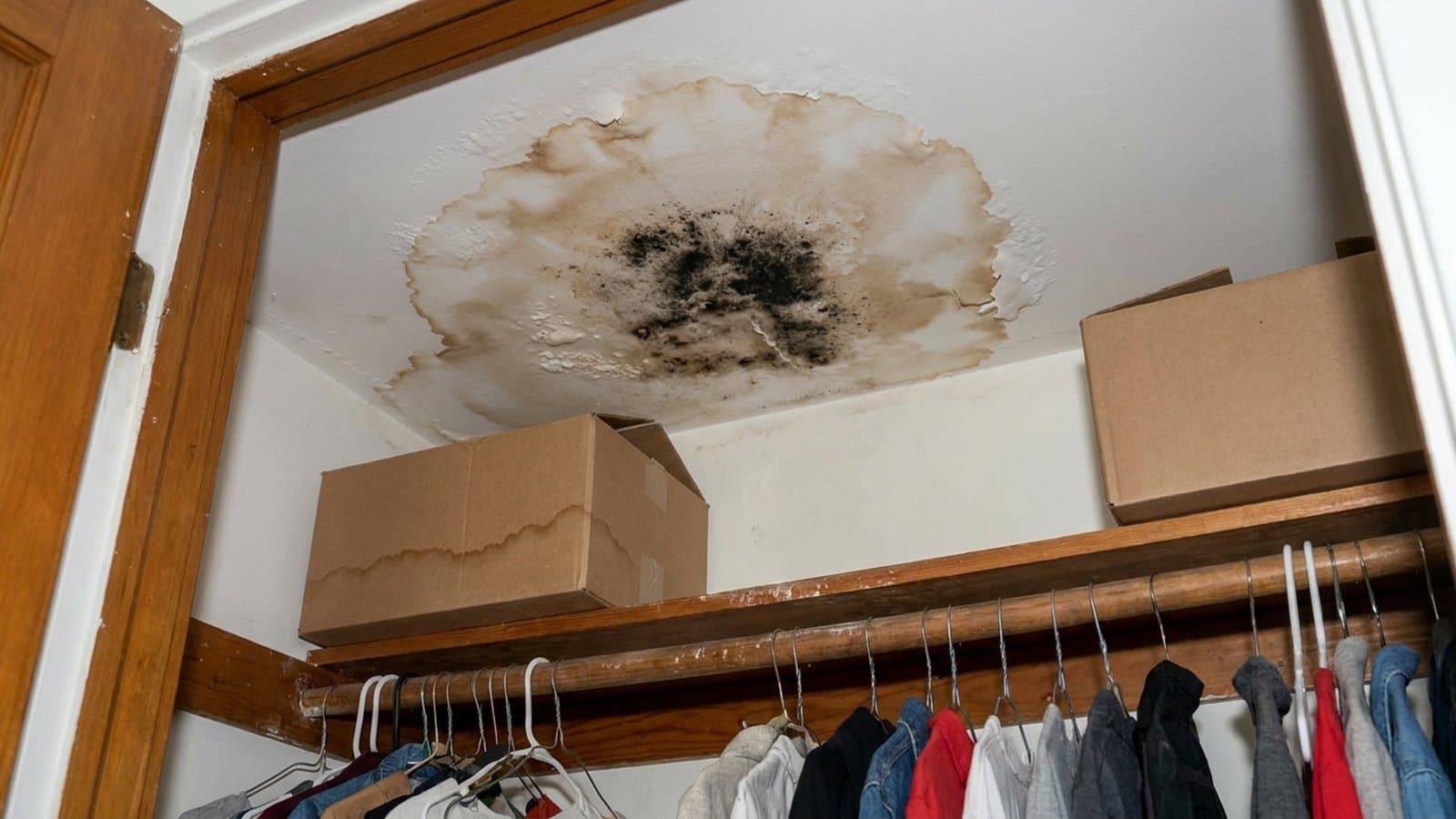
The short answer first. A water stain on a ceiling means water reached the back of the ceiling material at least once, and the stain tells you where to look for the source. If the spot is dry, firm and the source is fixed, it is a painting job. If it is soft, growing, sagging or dripping, the water is still inside the ceiling, and the next 48 hours decide whether the drywall dries in place or gets cut out.
Most ceiling calls we take across Connecticut, Westchester and Western Massachusetts start with the same question: is this serious, or can it wait? This guide is how we answer it on site, in the order we work through it.
Read The Stain Before You Touch Anything
Where a stain sits and what its edges look like narrow the source down before anyone climbs a ladder.
Rings Mean The Water Came Back
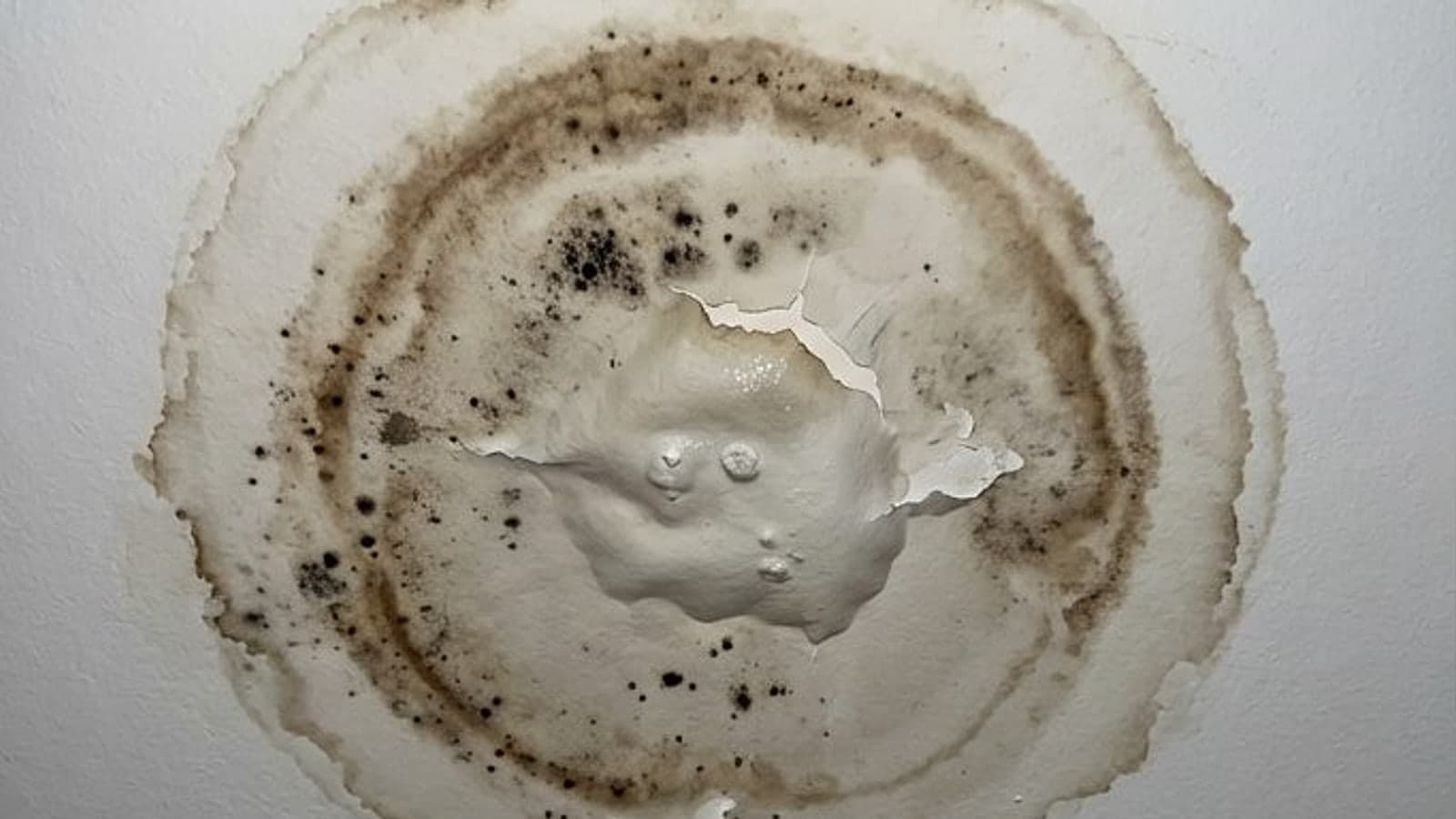
A brown ring forms where wet material dried and left minerals and dissolved paper sizing at the edge. Several rings inside each other mean the spot got wet, dried, and got wet again. That pattern points at a source that runs on a schedule: a roof that leaks only in wind driven rain, a shower pan that leaks only when someone showers, a condensate line that overflows only on hot days. One soft, even, darkening patch with no ring yet usually means water that is arriving right now.
Under A Bathroom
A stain below a bathroom is plumbing until proven otherwise. The usual sources are the toilet wax ring, the supply line to the toilet or vanity, a cracked shower pan, failed grout and caulk at the tub, and the tub overflow gasket. Run the shower for ten minutes with the curtain closed, then flush and check again an hour later. A stain that only grows after showers is the pan or the enclosure; a stain that grows on its own is a supply line under pressure. Growth that comes from steam rather than a leak is a different problem, covered in our bathroom mold guide.
Near An Exterior Wall, Chimney Or Skylight
Stains along the top of an outside wall, around a chimney chase, or at the corners of a skylight are almost always roof or flashing water. They show up after storms and stay quiet in dry weeks. In winter, the same location with icicles hanging off the gutter outside points at an ice dam: snow melts on the warm part of the roof, refreezes at the cold eave, and the water backs up under the shingles. That repair belongs to a roofer first, and our roof leak repair page covers the interior side.
In The Middle Of A Top Floor Ceiling
Scattered spots across a top floor ceiling under an attic, especially after a cold spell followed by a warm day, are often condensation rather than a leak. Warm, humid house air reaches the cold roof deck, frost builds on the underside of the sheathing, and it melts and drips all at once. Bath fans that vent into the attic instead of outdoors are the most common cause we find. An attic air handler with a clogged condensate drain does the same thing in July.
"A ceiling stain is a map. The rings tell you how many times the water came back, and where the stain sits tells you which pipe or which shingle to check first."
The First Hour When A Ceiling Bulges Or Drips
Active water in a ceiling is a weight and an electrical problem before it is a repair problem.
Power And Water First
If any light fixture, fan or smoke detector sits inside the wet area, switch that circuit off at the panel, not at the wall switch. If the source is plumbing, close the fixture valve or the main shutoff. If the source is the roof, there is nothing to shut off, so the goal is controlling where the water lands.
Drain A Small Bulge On Purpose
A bulge in drywall is water pooled on the back of the board. Left alone it lets go when it chooses, usually across a wider area. For a small bulge, put a bucket under the lowest point, stand to the side rather than underneath, and push a screwdriver through the center of the bulge so it drains into the bucket. That one small hole is cheaper than the section that falls on its own. If the sag is wide, cracking, or the ceiling is old plaster pulling away from the lath, do not touch it. Keep everyone out of the room and call.
Move What Is Underneath And Photograph It
Move furniture, rugs and electronics out from under the wet area. Then photograph the ceiling, the floor below, and anything that got wet, before cleanup starts. A photo with the water still visible is the clearest record your adjuster will ever see.
Dry In Place Or Cut It Out
Not every wet ceiling has to come down. The decision comes from moisture readings and the clock, not from how the stain looks.
When Drywall Can Stay
Ceiling drywall that got wet from a clean source, kept its shape, and starts drying within a day or two can often be dried in place. We measure it with moisture meters, scan the area around it with a thermal camera to find where the water travelled, and set air movers and dehumidification to pull moisture out of the cavity. It stays only when the readings reach the dry standard for that material, and we document each reading for the file.
When It Has To Come Out
Drywall that sags, has a paper face separating from the gypsum, crumbles at the edges, or sat wet past about 48 hours comes out, along with anything from a gray or sewage source. Insulation above a wet ceiling is usually removed too. Fiberglass batts hold water against the board and lose their loft, and blown cellulose soaks up water, gets heavy, and stays wet for a long time. Removing a strip of ceiling to dry the framing is often faster and cheaper than trying to dry through intact board.
Older Plaster Ceilings
Plaster on wood lath, common in older houses across the region, tolerates a soaking better than drywall but dries much more slowly, and the plaster can lose its grip on the lath without showing it. We check plaster for movement before anyone works below it, and plan for a longer drying time than the same leak would take in drywall.
"Drywall forgives one soaking if it dries fast. It does not forgive a week, and it never forgives a coat of paint over a spot that is still wet."
Mold On A Ceiling Stain
Dark specks inside the rings are not dirt.
Why It Grows There
The paper face of drywall is food for mold once it stays damp, and the EPA notes that growth can begin within 24 to 48 hours. The specks in the photo at the top of this article sit inside the tide lines because that is where the paper stayed wet longest. Bleach or paint on the surface does not reach growth in the paper and the cavity behind it. A small area on a ceiling that is now dry can be handled as part of the repair; anything larger, or anything that keeps returning, is a mold remediation scope with containment.
What It Costs, And When You Do Not Need Us
The price follows the water, not the size of the stain.
A Dry Stain With A Fixed Source
If the source is repaired, the spot is firm and a moisture meter reads it dry, no restoration crew is needed. Seal the stain with a stain blocking primer and repaint, or have a painter do it. Paint alone will bleed the ring back through within weeks.
A Wet Ceiling Cavity
When the ceiling, the insulation above it, or the framing is still wet, the job is drying, not painting. A clean water loss of this kind typically falls in the 1,500 to 4,500 dollar range we publish for Category 1 water damage in Connecticut, and the water damage cost guide explains what moves a job inside that range. The ceiling patch and repaint after drying are a separate rebuild line.
What Insurance Usually Treats Differently
Two questions decide most ceiling claims: how the water got there, and over what period of time.
Sudden Versus Gradual
Most homeowners policies are written to respond to sudden and accidental water, such as a supply line that bursts or a pipe that freezes and splits, and to the damage that water causes. Many exclude continuous or repeated seepage over weeks or months, which is why a ceiling with five rings can be a harder conversation than a ceiling that came down in one night. The failed part itself, a worn shower pan or old shingles, is usually treated as maintenance. Ice dam water is handled differently from policy to policy. Read your own policy, and ask your adjuster before assuming either answer.
Who Picks The Contractor
In Connecticut the law is clear that you choose who dries and repairs your home, whoever the insurer suggests, and our guide to your right to choose a contractor walks through it. We submit our scope, moisture readings and photographs directly to your insurer. We are not licensed public adjusters and do not negotiate claims on your behalf. If the water came from a condo unit above you, the rules change, and we wrote a separate guide for condo owners.
When To Call
Call the same day if any of these are true.
Same Day Signs
The ceiling is sagging, dripping or cracking. The stain is getting bigger by the hour. Water is near a light fixture or an electrical box. The water came from a toilet, a drain or a sewer line. You cannot find the source. A stain like that means water is still moving, and our water damage restoration crews in Stamford, New Haven, Hartford, White Plains and Springfield start by finding where it is going. If the cause was a frozen line, read how to thaw pipes safely before the next cold night.
Questions Homeowners Ask
Should I poke a hole in a bulging ceiling?+
For a small bulge, yes. Put a bucket under the lowest point, stand to the side, and push a screwdriver through the center so it drains in a controlled way. If the sag is wide, cracking, or the ceiling is old plaster pulling away, stay out of the room and call instead.
Can I just paint over a water stain on the ceiling?+
Only once the source is fixed and the spot reads dry on a moisture meter, and only with a stain blocking primer first. Regular paint lets the ring bleed back through, and painting over a wet spot traps the moisture that feeds mold.
How long does a wet ceiling take to dry?+
A clean water ceiling cavity with equipment running usually takes three to five days to reach the dry standard. Plaster on lath and saturated insulation take longer. The job is finished when the readings say so, not on a set date.
Why does the stain only show up in winter?+
Two common causes. An ice dam at the roof edge backs meltwater under the shingles, which shows along the exterior wall. Or humid house air leaves frost on the bottom face of the roof sheathing and melts on a warm day, which shows as scattered spots across a top floor ceiling. Bath fans vented into the attic are a frequent cause of the second.
Is a ceiling water stain an emergency?+
A dry, old stain is not. A ceiling that is sagging, dripping, growing or wet near a light fixture is, because the weight of the water and the electrical risk both get worse by the hour.
Does homeowners insurance cover a water damaged ceiling?+
It depends on the cause and the timing. Sudden water from a burst or frozen pipe is usually covered for the resulting damage. Slow seepage over weeks is often excluded, and the failed part itself is usually treated as maintenance. Your adjuster confirms what your policy does.