A bathroom is the one room in a house designed to be soaked twice a day, and the only thing standing between that and a mold problem is how fast the room dries afterward. Warm moist air, a cold surface, and twenty minutes of stillness is the entire recipe. It happens in new construction and in 1920s Connecticut colonials at roughly the same rate.
Homeowners almost always search for black mold, and that phrase deserves a plain answer up front. There is no regulatory hazard category called black mold. The species people mean is usually Stachybotrys chartarum, which needs material that has been wet for days, not merely humid, and it is far less common on a bathroom ceiling than the ordinary dark species that thrive on soap film. EPA guidance is the same either way: identify the moisture, remove the growth, and do not treat color as a grade of risk.
What follows is location by location, because in a bathroom the place growth appears tells you more than the color does. Caulk means one thing. A ceiling above the shower means something else. A patch on the wall behind the toilet on an outside wall means a third thing, and only one of the three is a cleaning job.
Is The Black In My Bathroom Actually Black Mold?
Usually it is ordinary surface growth on soap residue. What matters is not the species, it is whether the material underneath is wet.
Where black growth turns up in a bathroom, what each location usually means, and what it actually calls for.
Silicone bead at the tub or shower base
- Most likely cause
- Water sitting in a shrunken or split bead
- What it usually is
- Growth inside the silicone, not on top of it
- What to do
- Cut the old bead out and replace it. Cleaning a colonized bead is temporary
Grout lines in the shower
- Most likely cause
- Soap film plus humidity, no drying time between uses
- What it usually is
- Surface growth on residue rather than in the cement
- What to do
- Clean, rinse, dry, and squeegee the walls after use
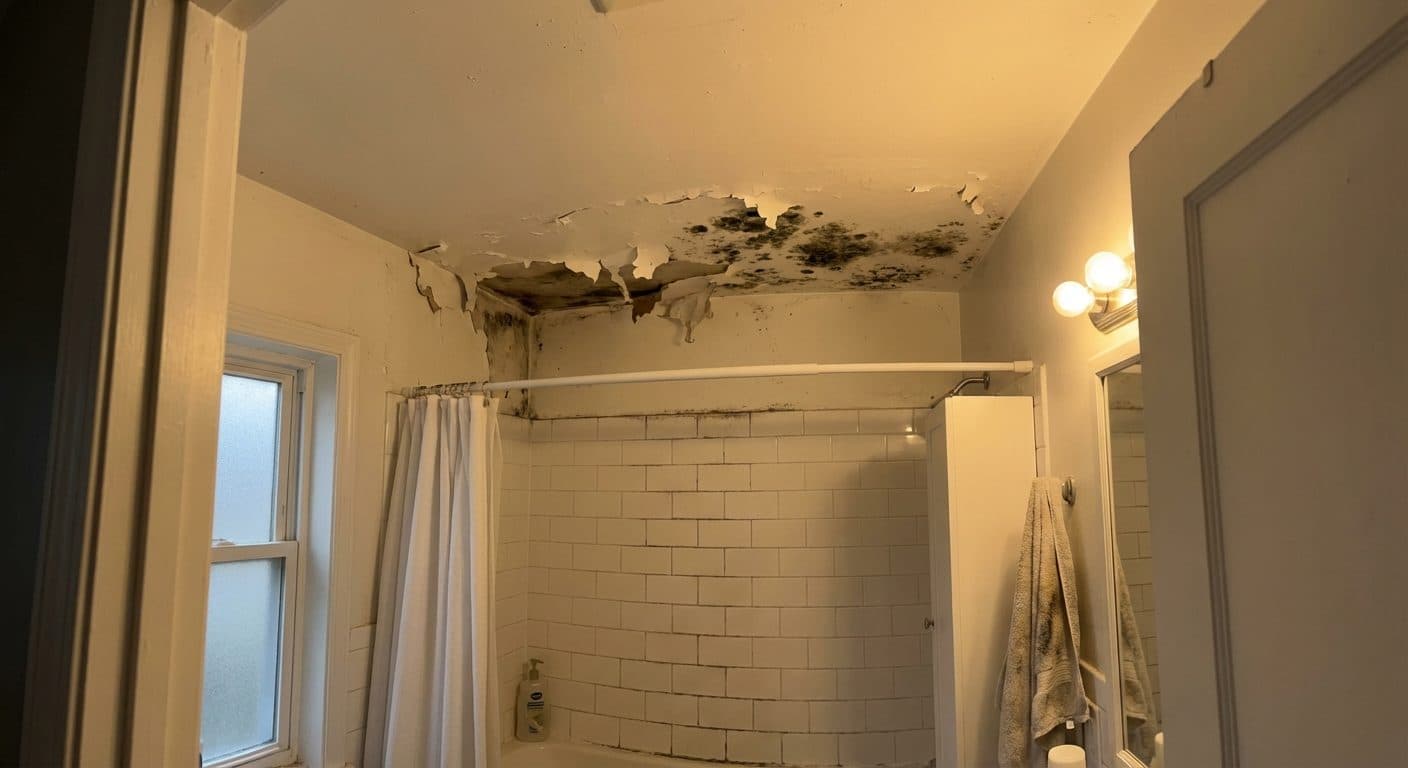
Ceiling directly above the shower
- Most likely cause
- Warm moist air condensing on a cool ceiling, or an exhaust fan that is undersized or unducted
- What it usually is
- Surface growth on paint, which returns quickly if ventilation is unchanged
- What to do
- Clean, then fix ventilation. Repeat growth means the air is not leaving the room
Wall behind the toilet on an exterior wall
- Most likely cause
- Condensation on a cold surface, or a supply or wax-ring leak
- What it usually is
- Either surface growth or the first sign of a wet cavity
- What to do
- Feel the wall and check the floor at the base. Softness or staining means open it up
Inside the vanity cabinet under the sink
- Most likely cause
- A slow supply, trap, or drain-tailpiece leak
- What it usually is
- Rooted growth in particleboard, which swells and darkens
- What to do
- Repair the plumbing, then remove the affected cabinet floor. It rarely cleans
The exhaust fan grille itself
- Most likely cause
- Dust plus moisture, and a duct that is not moving air
- What it usually is
- Surface growth on the housing and blade
- What to do
- Vacuum the grille, and confirm the duct discharges outside, never into the attic
| Where you see it | Most likely cause | What it usually is | What to do |
|---|---|---|---|
| Silicone bead at the tub or shower base | Water sitting in a shrunken or split bead | Growth inside the silicone, not on top of it | Cut the old bead out and replace it. Cleaning a colonized bead is temporary |
| Grout lines in the shower | Soap film plus humidity, no drying time between uses | Surface growth on residue rather than in the cement | Clean, rinse, dry, and squeegee the walls after use |
| Ceiling directly above the shower | Warm moist air condensing on a cool ceiling, or an exhaust fan that is undersized or unducted | Surface growth on paint, which returns quickly if ventilation is unchanged | Clean, then fix ventilation. Repeat growth means the air is not leaving the room |
| Wall behind the toilet on an exterior wall | Condensation on a cold surface, or a supply or wax-ring leak | Either surface growth or the first sign of a wet cavity | Feel the wall and check the floor at the base. Softness or staining means open it up |
| Inside the vanity cabinet under the sink | A slow supply, trap, or drain-tailpiece leak | Rooted growth in particleboard, which swells and darkens | Repair the plumbing, then remove the affected cabinet floor. It rarely cleans |
| The exhaust fan grille itself | Dust plus moisture, and a duct that is not moving air | Surface growth on the housing and blade | Vacuum the grille, and confirm the duct discharges outside, never into the attic |
What The Term Really Covers
Black mold is a description of color, not an organism. Several common indoor species appear dark, and Cladosporium is the one most often found on bathroom grout and painted surfaces. Stachybotrys chartarum, the species behind the phrase, needs cellulose that has stayed saturated for days, so it appears in wet drywall and behind a failed shower pan far more often than on a tile face.
Why Color Does Not Grade The Risk
EPA does not rank mold by color and does not recommend testing to identify species before cleanup, because the response is the same regardless. EPA notes mold exposure is associated with respiratory symptoms in sensitive individuals, and its guidance is that all indoor growth should be removed along with the moisture supporting it. Symptoms belong with a physician, not with a color chart.
What Are The Early Signs Of Black Mold On A Bathroom Ceiling?
A ceiling gives warning before it discolors. Three of the four early signs are things you notice without looking up.
Speckles Versus A Continuous Stain
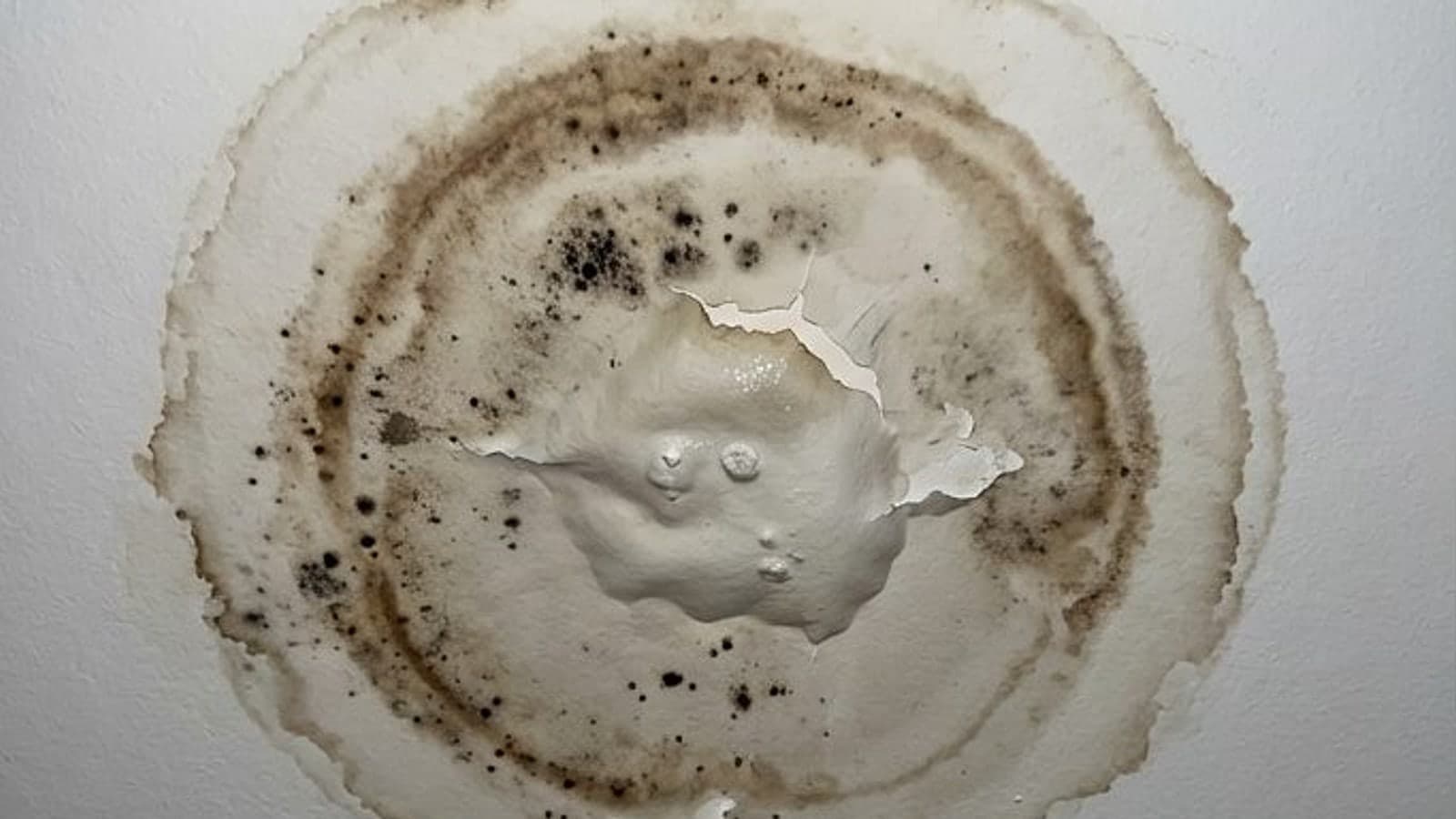
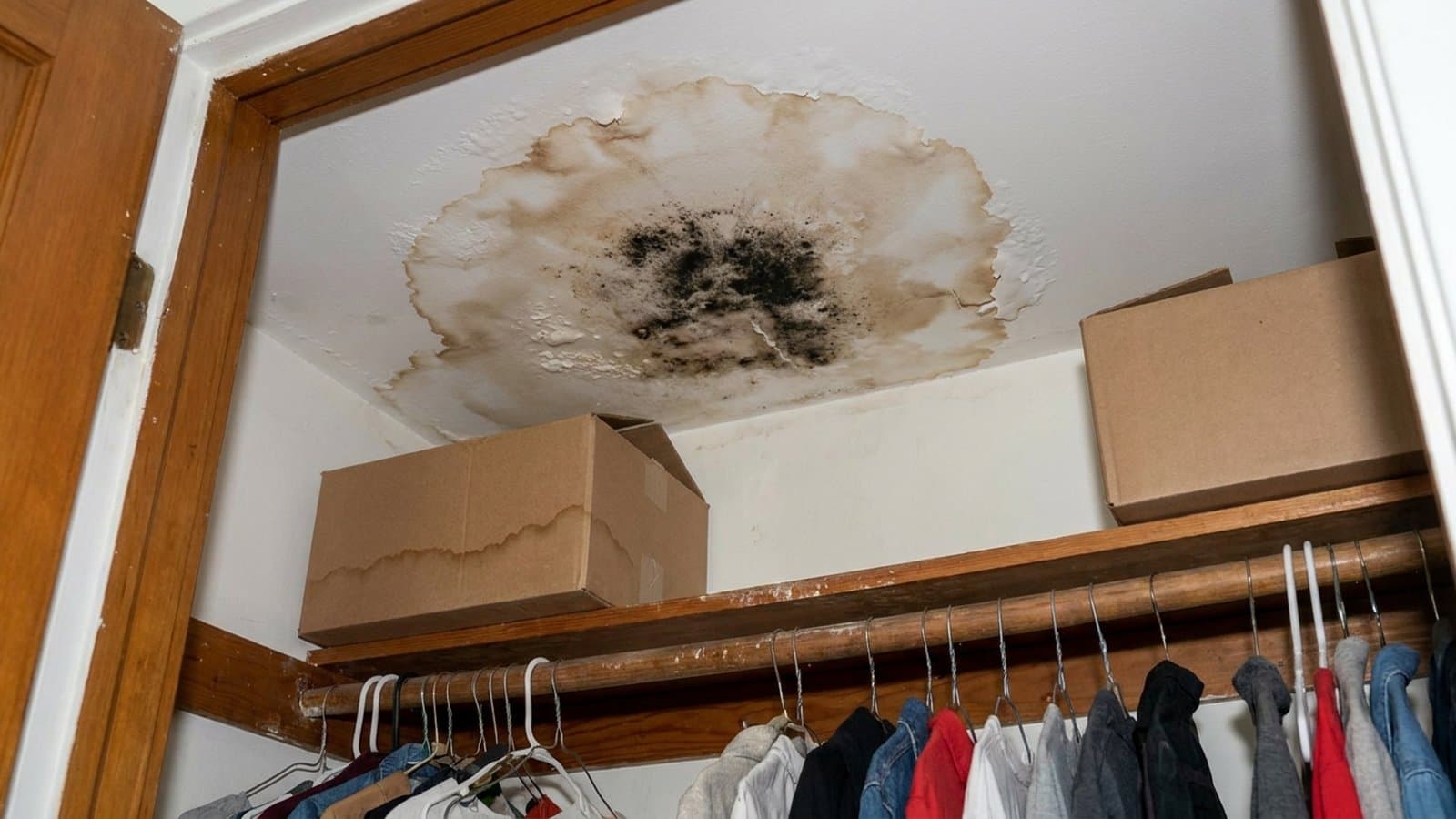
Scattered speckling that follows no shape is condensation growth on the paint film. A continuous stain with a defined edge, sometimes with a ring, is water arriving from above rather than condensing below, and a bathroom on a lower floor with a stained ceiling is a plumbing question.
The Four Signals, In The Order They Appear
First, the mirror stays fogged for a long time after a shower, which means moist air is not leaving. Second, a faint musty smell that is strongest in the morning with the door closed. Third, a dull matte patch on the paint, often above the shower or over the doorway, visible only in raking light from the side. Fourth, small dark speckles that spread outward from that patch.
"In a bathroom, location tells you more than color does. Growth on caulk is housekeeping. The same growth on a ceiling that stays damp all morning is a ventilation fault wearing a disguise."
Why Does Mold Grow On Bathroom Walls In The First Place?
Not because the room gets wet. Because it stays wet, and almost always because the air has nowhere to go.
Bathroom exhaust sizing, using the standard rate of one cubic foot per minute per square foot with a fifty CFM floor.
Up to 50 square feet, powder room or small full bath
- Minimum fan capacity
- 50 CFM
- How long to run it
- Through the shower and 20 minutes after
- The usual failure
- Fan wired to the light switch, so it stops when you leave
50 to 100 square feet
- Minimum fan capacity
- 1 CFM per square foot, so 70 to 100 CFM
- How long to run it
- Through the shower and 20 minutes after
- The usual failure
- Original builder fan never upgraded after a shower was added
Over 100 square feet
- Minimum fan capacity
- Sum the fixtures, roughly 50 CFM each for toilet, shower and tub, 100 for a jetted tub
- How long to run it
- 20 to 30 minutes after use
- The usual failure
- One central fan trying to serve a separate wet room
Any size with a long or flexible duct run
- Minimum fan capacity
- Step up one size to cover duct losses
- How long to run it
- Same, with the door left ajar for makeup air
- The usual failure
- Crushed flex duct, or a duct terminating in the attic instead of outdoors
| Room size | Minimum fan capacity | How long to run it | The usual failure |
|---|---|---|---|
| Up to 50 square feet, powder room or small full bath | 50 CFM | Through the shower and 20 minutes after | Fan wired to the light switch, so it stops when you leave |
| 50 to 100 square feet | 1 CFM per square foot, so 70 to 100 CFM | Through the shower and 20 minutes after | Original builder fan never upgraded after a shower was added |
| Over 100 square feet | Sum the fixtures, roughly 50 CFM each for toilet, shower and tub, 100 for a jetted tub | 20 to 30 minutes after use | One central fan trying to serve a separate wet room |
| Any size with a long or flexible duct run | Step up one size to cover duct losses | Same, with the door left ajar for makeup air | Crushed flex duct, or a duct terminating in the attic instead of outdoors |
The Condensation Mechanism
A hot shower pushes relative humidity in a small bathroom close to saturation within minutes. Any surface cooler than the dew point of that air collects liquid water: the ceiling, an outside wall, a window, a cold water pipe. Growth follows the coldest surfaces, which is why a patch often maps the framing behind the drywall, appearing between studs where insulation is thinner.
Ventilation Is The Real Variable
Most bathroom mold in Connecticut and Westchester homes traces to one of four faults: no exhaust fan, a fan too small for the room, a fan ducted into an attic or soffit rather than outside, or a fan switched off the moment the shower stops. The fourth is the most common and the easiest to fix.
How Do You Get Rid Of Black Mold In A Bathroom?
On hard surfaces this is a genuine weekend job. The sequence matters more than the product does.
The Sequence That Works
Ventilate the room and wear an N95, gloves, and eye protection. Clean with detergent and water and a stiff brush on grout, working the residue off rather than trying to kill it in place. Rinse. Dry the surfaces completely with a cloth, then leave the fan running. If you want a disinfectant afterward, our guide to what rubbing alcohol does and does not do covers which products suit which surface.
Caulk And Grout Are Different Problems
Silicone darkened through its thickness is colonized and will not clean, because the growth is inside a flexible polymer rather than on it. Cut it out with a blade, clean the joint back to sound material, let it dry fully, and re-bead with a sanitary grade silicone. Grout is porous cement and usually does clean, though badly stained lines may need raking out and re-grouting.
When Is Bathroom Mold Bigger Than The Bathroom?
Four situations move this out of cleaning and into removal work, and none of them are about how bad the stain looks.
The Four Thresholds
Area above roughly ten square feet, which is the EPA point for bringing in help. Any softness in drywall, ceiling board, or a vanity floor. Growth returning in the same outline after cleaning and a fixed fan. And growth on a wall shared with a bedroom, because a wet cavity does not respect the tile line.
What Removal Work Involves
Under IICRC S520 the area is isolated with sheeting and held under negative air pressure with HEPA filtration so air flows into the work zone rather than out of it. Porous material with rooted growth, meaning wet drywall, ceiling board, and particleboard cabinet bases, is removed rather than treated, the cavity is dried to a documented standard, and the space is cleaned before rebuild.
What It Costs, And What Insurance Usually Says
A single bathroom typically falls in the small single-area band, 1,500 to 4,500 dollars in Connecticut and Massachusetts, with a basement or whole-room scope at 3,000 to 8,000 dollars, roughly 14 to 28 dollars per square foot. Full derivation sits in our mold remediation cost guide. On insurance, carriers generally cover growth that followed a sudden covered event and exclude growth from long term humidity or a slow leak. We document the loss and submit the scope to your insurer. We are not licensed public adjusters and do not negotiate claims on your behalf.
How To Find Out Which One You Have
A visual assessment settles most bathrooms in twenty minutes, and where the answer is genuinely unclear, independent mold inspection and air testing gives lab results rather than opinion. The scope of the removal work itself is described on our mold remediation page, with local pages such as Greenwich mold remediation and Norwalk mold remediation. If the source turns out to be a leak rather than humidity, that becomes water damage restoration first.
Need Restoration Services?
60-minute response across CT, NY & MA. Licensed, insured, free inspections.
How Do You Stop Bathroom Mold Coming Back?
Every bathroom we return to had the cleaning done well and the drying left undone.
The Rest Of The Short List
Squeegee the shower walls after use. Confirm the fan duct terminates outdoors through a wall or roof cap, never into an attic or soffit. Hold indoor humidity between thirty and fifty percent, and replace failed caulk promptly, because a split bead holds water against the substrate.
The Twenty Minute Rule
Run the exhaust fan through the shower and for twenty minutes afterward. A ten dollar timer switch does this without anyone remembering to, and it is the single highest-return change available in a bathroom. Leave the door ajar while the fan runs so replacement air can enter, because a sealed room starves the fan and it moves far less than its rated capacity.
Questions Homeowners Ask
Is the black mold in my bathroom the dangerous kind?+
There is no regulatory category called black mold. Most dark growth on bathroom grout and paint is an ordinary species feeding on soap film. EPA notes mold exposure is associated with respiratory symptoms in sensitive individuals, and its guidance is to remove all indoor growth regardless of type rather than to identify the species first.
Why does mold keep growing on my bathroom ceiling?+
Because moist air is condensing on a surface that stays cooler than the air, and the room is not clearing that moisture fast enough. In practice it is an exhaust fan that is missing, undersized, ducted into an attic, or switched off with the light. Cleaning the ceiling without changing that returns you to the same patch within weeks.
What are the early signs of mold on a bathroom ceiling?+
A mirror that stays fogged long after a shower, a musty smell strongest in the morning with the door shut, a dull matte patch on the paint visible in raking light from the side, and then fine dark speckles spreading from it. The first three arrive before anything is visible from the doorway.
Should I clean bathroom mold or replace the caulk?+
Grout usually cleans because it is porous cement holding surface residue. Silicone that has darkened through its thickness does not, because the growth is inside the polymer. Cut the bead out, clean the joint back to sound material, let it dry completely, and re-bead with a sanitary grade silicone.
How big does bathroom mold have to be before I call someone?+
EPA guidance uses roughly ten square feet as the point to bring in help, but area is not the only trigger. Soft drywall or ceiling board, a swollen vanity floor, growth returning after cleaning with ventilation corrected, or growth on a wall shared with a bedroom all move it out of the cleaning category regardless of size.
Does painting over bathroom mold work?+
No. A stain-blocking primer hides discoloration and changes nothing about the moisture or the growth beneath it, and the patch typically reappears through the new coating within a season. Paint is the last step after the source is corrected, the growth is removed, and the surface has been dried.
Can mold in a bathroom spread into the rest of the house?+
A wet wall cavity does not stop at the tile line, so growth in a bathroom assembly can present on the far side of a shared wall in a bedroom or hallway. Airborne spores also move on normal air currents. The practical containment is fixing the water and removing the affected material, not sealing the door.
Does homeowners insurance cover bathroom mold removal?+
It usually turns on the cause of the water rather than the mold. Growth following a sudden covered event such as a burst supply line is frequently covered, often subject to a mold sublimit, while growth from long term humidity or a slow leak is typically excluded. Coverage decisions belong to your carrier under your policy.