Here is the answer first. As a tenant you cannot authorize repairs or testing on the building, but you can hire a restoration company to document the damage to your own belongings for your renter's insurance, and you can call your town's health department if the landlord will not fix a leak or the mold that followed it. Nobody needs the landlord's permission for either of those.
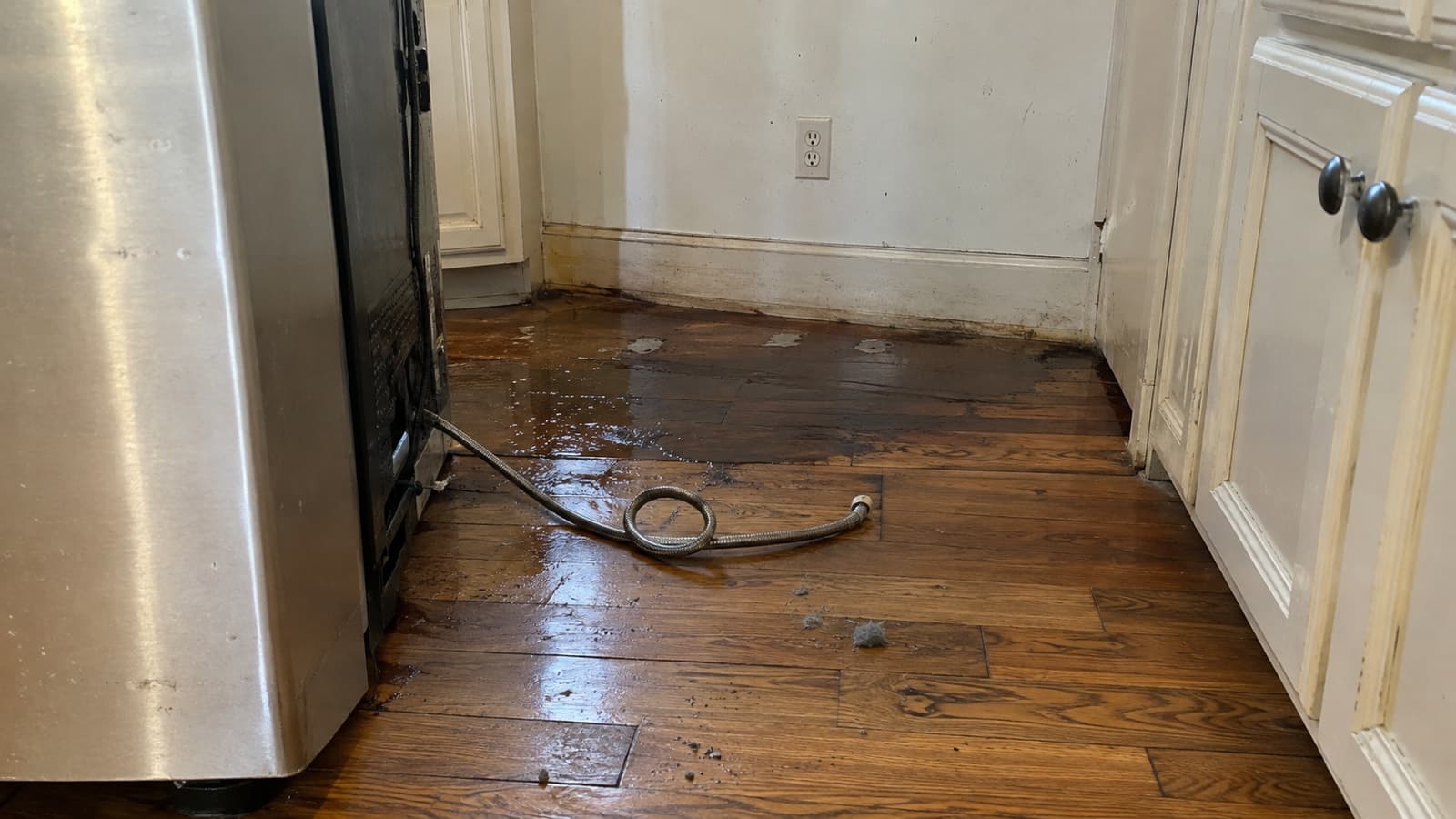
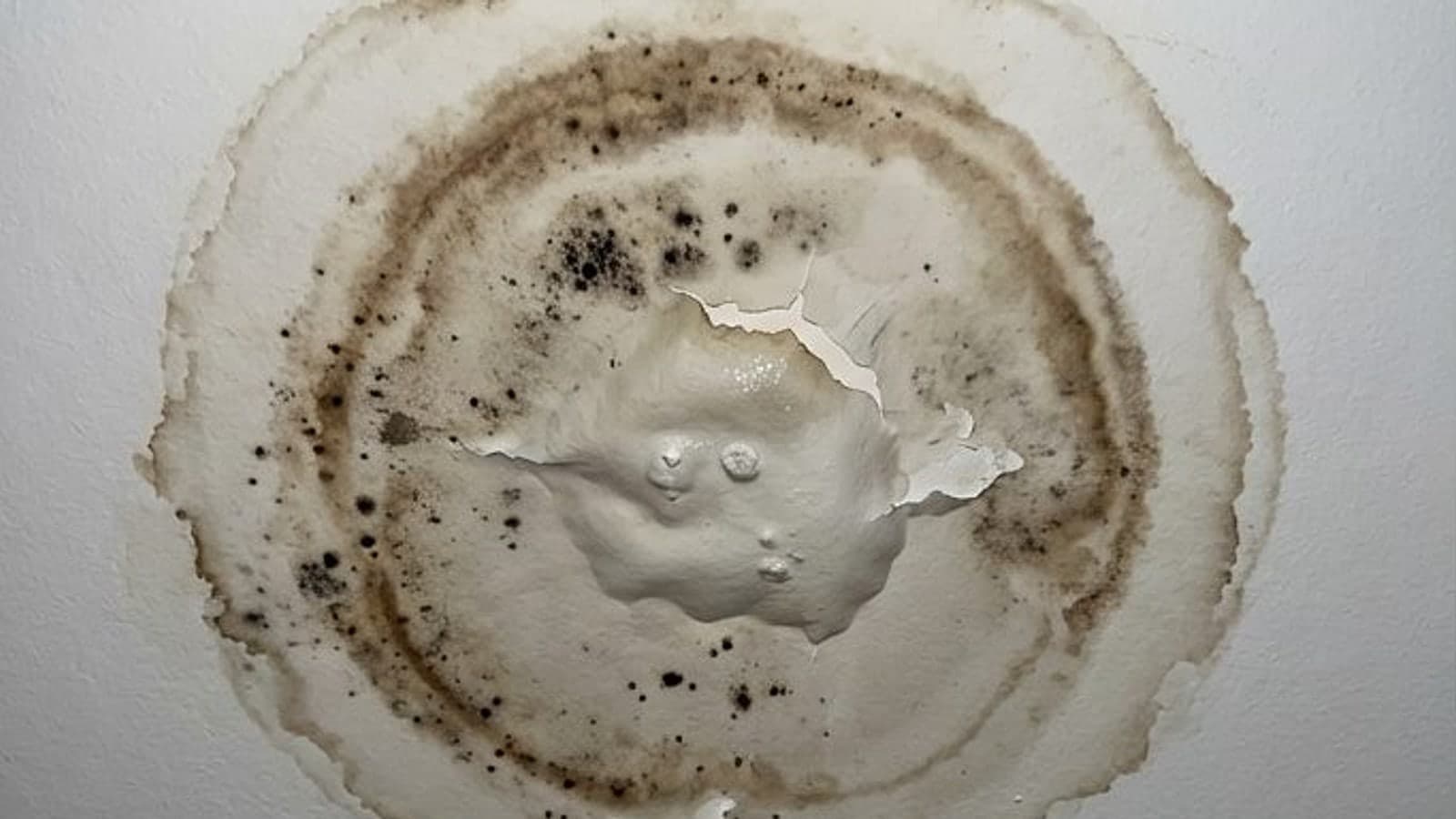
We wrote this after a call we did not handle well. A renter had a roof leak come through the attic into her bathroom and closet, growth on the ceiling and on her clothes, and a landlord whose contractor was on site for the landlord's claim and told her that her belongings were not his problem. She hung up thinking she had no options. She had two.
This is not legal advice. It is what we see on rentals across Connecticut, Westchester and Western Massachusetts, and the path that actually gets a tenant's claim moving.
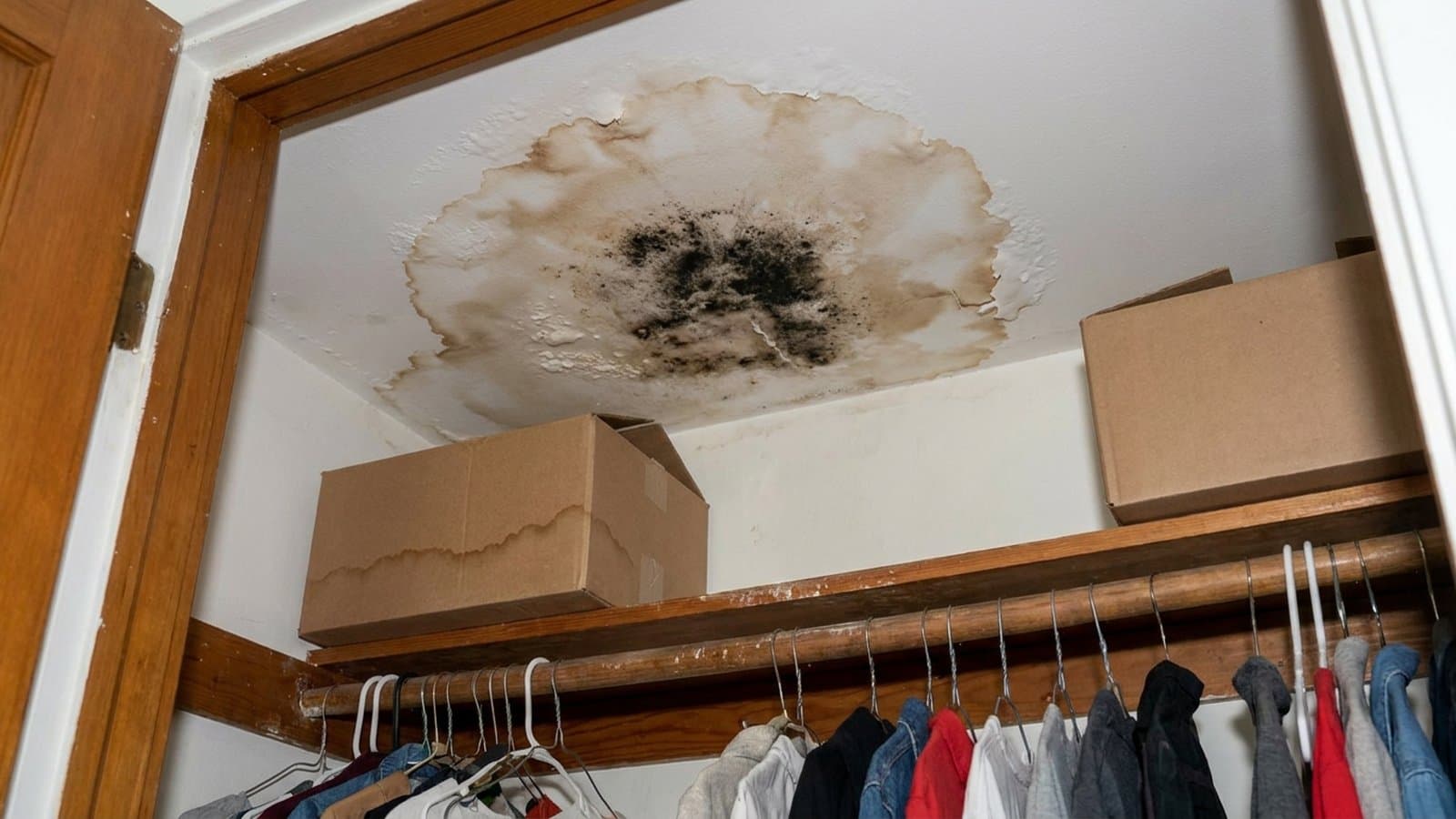
Two Claims Are Happening At Once
When a roof or a pipe fails in a rental there are two losses and two insurance policies, and only one of them has anyone working on it.
The Building Belongs To The Landlord
The roof, the ceiling, the walls, the floors and the fixtures are the landlord's property and fall under the landlord's policy. The adjuster and the contractor you see in the hallway are working that claim. Their scope is the building. When they say your things are not their responsibility, it is usually not a dodge; the landlord's policy simply does not cover a tenant's contents.
Your Belongings Are A Separate Claim
Your furniture, clothing, electronics, books and everything else you carried in fall under your renter's insurance. That claim does not start until you start it. Most renter's policies respond to sudden water damage from a leak above; whether mold on the contents is included depends on the policy, so ask your adjuster directly rather than assuming either way.
What A Tenant Can Hire On Their Own
You control your unit and your possessions. That is the line between what you can order today and what needs the owner.
Documenting Your Belongings
You can bring in a restoration company to photograph and log the damage to your belongings, take moisture readings on your contents, and write a summary your renter's insurance adjuster can use. You do not need the landlord's permission for that, because it is your property, not the building. Green Restoration does this across Connecticut, Westchester County and Western Massachusetts, and we will speak with your carrier about what we found. The visit is scheduled on a weekday like any free estimate.
What Still Needs The Owner
Anything that touches the building needs the property owner's written authorization: air sampling in the unit, opening a wall, treating a ceiling, removing wet insulation. A contractor who skips that step ends up on the phone with the owner's attorney, and the work usually gets undone. We will not do it, and you should be wary of anyone who will. In New York the rules are stricter still: mold remediation follows a separate licensed assessment under Labor Law Article 32, and we do not sell mold testing there at all.
What The Law Expects From The Landlord
Habitability law is the tenant's real lever, and the health department is the office that enforces it.
Connecticut
Connecticut General Statutes section 47a-7 requires a landlord to keep the rental fit and habitable and to make repairs. If a leak or mold is not being addressed, the local health department or building official can inspect and order the landlord to act. That inspection report also becomes evidence for your own claim.
New York
New York Real Property Law section 235-b, the warranty of habitability, applies to every residential lease. New York City tenants can report leaks and mold to the Department of Housing Preservation and Development; in Westchester and the rest of the state the town or county health department handles it.
Massachusetts
The State Sanitary Code, 105 CMR 410, sets the minimum standards a rental must meet, and the local board of health inspects and enforces it. Western Massachusetts tenants call the board of health in their own town.
When The Landlord Still Refuses
A tenants' rights organization or an attorney can tell you what remedies apply to your lease, including rent escrow in some situations. We are a restoration company, not a law office, so we stop at pointing you to the office that can help.
While You Wait
Five things to do tonight, none of which need a contractor.
Protect Yourself And The Evidence
Keep out of the affected closet or room and do not disturb anything that looks like growth. Keep the space ventilated and run a dehumidifier if you have one. Photograph everything now, with a date, before it dries or gets cleaned up. Move undamaged belongings away from the wet area. Keep receipts for anything you have to replace, wash or throw away, because the adjuster will ask for them.
What To Say When You Call
The order of the questions decides how fast this moves.
Town And ZIP First, Then Rent Or Own
Give us the town and ZIP first, because what we can offer depends on the state. Then tell us you rent and that the landlord already has a contractor on the building. We will document your belongings for your renter's claim, and if the landlord later authorizes work on the unit, that becomes a separate scope with its own written estimate.
Questions Homeowners Ask
Can I order a mold test in my apartment without my landlord?+
Not through us. Air sampling and swabs are testing on the building, so they need the owner's authorization, and in New York we do not sell mold testing at all. Documenting your own belongings is a different service and needs nobody's permission but yours.
Will my renter's insurance pay for mold on my clothes?+
It depends on the policy. Most renter's policies respond to sudden water damage from a leak; mold on contents is handled differently from policy to policy. Ask your adjuster, and give them the documentation and photos so the question is answered on evidence.
The landlord says the leak is fixed. Is the mold gone too?+
Not on its own. Fixing the source stops new water; growth that already started on plaster, insulation or fabric stays until it is removed. That is the owner's work on the building and your work on your belongings.
Do I have to move out?+
That is a question for your doctor, your lease and, if needed, the health department, not for a restoration company. We will tell you honestly what we see in the unit and put it in writing so you can make that call with facts.
What does the documentation visit cost?+
It is scheduled like any free estimate on a weekday. If your adjuster then asks for a formal contents inventory or cleaning of salvageable items, that is a written estimate before any work, and most of it is billed to the claim, which your adjuster confirms.