

01RIGHT
Your policy, your selection.
Your policy is between you and your insurer. Selecting the licensed restoration contractor generally sits with the property owner.
South Shore + Post-Sandy Soot Cleanup · IICRC S700 Board-Up, Contents & Direct Insurance Billing · 24/7
 IICRC Certified
 Eco-Friendly Solutions For Healthier Spaces
Reviewed by Green Restoration's IICRC-Certified Team·Licensed & Insured·IICRC Certified Firm
Fire damage restoration is the ANSI/IICRC S700 documented process of stabilizing a fire-damaged building, classifying the smoke residue, and cleaning it off every affected surface, the contents, and the HVAC system. Residue type decides method. Dry smoke, wet smoke, protein and fuel oil each clean differently, and soot is acidic, so it keeps corroding metal, electronics and finishes until it is removed. Cleaning is followed by source deodorization, HEPA filtration, and verification that the odor is gone rather than covered.
In Staten Island, NY, the order is fixed. The fire department releases the scene, then the building is secured and boarded. Water from the suppression effort is extracted and dried first, because soot pressed into wet material sets, and wet cellulose grows mold within days. Residue is typed, then structure and contents are cleaned separately, contents off site where needed. Deodorization runs last, at the source, with the assembly open. Every stage is documented for the carrier.
New York fire work is scoped against ANSI/IICRC S700. The fire department holds the scene until its investigation releases it. Repairs outside New York City fall under the New York State Uniform Fire Prevention and Building Code, permitted through the local building department. Inside the five boroughs the NYC Construction Codes apply instead, and permits are filed with the Department of Buildings.
Green Restoration works to ANSI/IICRC S700: stabilize first, type the residue before choosing a cleaning method, run HEPA filtration throughout, and treat odor at the source. Ozone deodorization runs only in an empty structure, because no federal agency has approved ozone generators for use in occupied space.
From 24/7 rapid local dispatch to soda blasting char removal, IICRC S700 soot cleanup, contents pack-out, and full reconstruction, every Staten Island fire scenario is managed end to end by certified crews, from Tottenville and Great Kills South Shore detached homes to New Dorp and South Beach post-Sandy East Shore rebuilds and North Shore prewar stock.
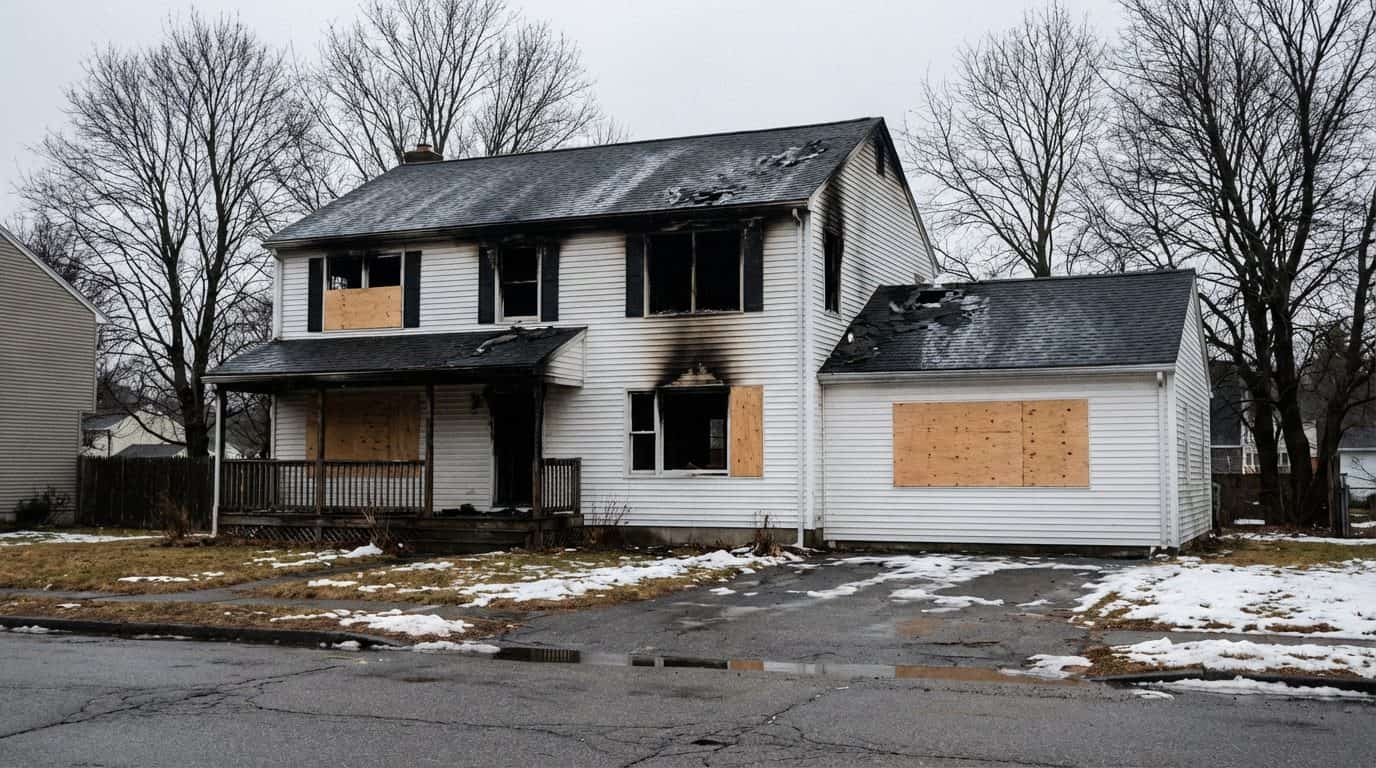
Emergency fire crews dispatched within 60 minutes from Staten Island location across all Staten Island neighborhoods. IICRC S700 certified board-up, suppression water extraction, generator site power, and stabilization from minute one.
IICRC S700 · 60 minute dispatch · Staten Island HQ
Sodium bicarbonate abrasive blasting strips fire char from joists, sheathing, and masonry chimneys without damaging the substrate underneath. Mohs 2.5 media is softer than wood, FDA GRAS, silica-free, and water-soluble for HEPA-vac cleanup that wire brushing and sanding cannot match.
Sodium bicarbonate · Mohs 2.5 · IICRC S700 aligned
Smoke damage in Staten Island requires HVAC decontamination, negative-air containment, and HEPA scrubbing on every affected zone. We coordinate with property managers, condo boards, and adjusters so containment, scope, and access stay aligned across the entire affected footprint.
HVAC decon · Negative-air containment
Same-day plywood board-up of broken windows and doors plus roof tarp-over to secure your Staten Island property against weather, animals, and theft while the IICRC S700 restoration scope is finalized.
Whole-home and commercial generators staged on every Staten Island fire response when utility power is cut at the meter. We run dehumidifiers, HEPA scrubbers, hydroxyl generators, and temporary lighting off our own diesel and propane gensets so drying, containment, and crew safety continue around the clock without waiting on Con Edison to re-energize the service.
Full IICRC S700 puff back remediation for Staten Island homes with oil-fired heat. Mechanical room cleanup, NADCA-aligned supply duct rotary brushing, soft-goods laundering, hydroxyl deodorization through every upstairs bedroom, and coordination with licensed NY oil burner technicians so the furnace returns to safe operation before close-out.
Creosote-bonded soot blowback from clogged chimneys, downdrafts, and flue fires cleaned with soda blasting on the masonry, full firebox and damper service, and HVAC riser decontamination where the flue shares a chase with supply ducts. We coordinate with a licensed NY chimney sweep on flue liner inspection before reuse.
Grease fire cleanup for Staten Island kitchens including cabinet refinishing, appliance cleaning, soda blasting on charred framing behind drywall, and full structural restoration.
Inventoried, barcoded contents pack-out to our secure climate-controlled storage facility for off-site ultrasonic cleaning, ozone deodorization, and soft-goods laundering. Your Staten Island belongings stay in humidity-controlled storage, documented for your insurer, until reconstruction is complete and we pack them back.
IICRC S500 structural drying for fire suppression water. LGR commercial dehumidifiers, moisture mapping, and EPA-registered antimicrobial treatment within the 48-hour mold-prevention window so the fire loss does not become a mold loss on top of it.
Thermal fogging, ozone chamber treatment, and hydroxyl generators neutralize smoke odor at the molecular level throughout the structure. The pH-neutralizing chemistry of our soda blast media also breaks down acidic soot odor compounds at the source, not just behind a fragrance mask.
Single-source reconstruction once mitigation is signed off. Licensed NY contractors handle framing, drywall, electrical re-feed off our gensets, plumbing, hardwood refinishing, and finish carpentry through the Staten Island building department permit process. One restoration partner from board-up and generator power through reconstruction handoff means no scope gaps between trades and one closeout file for your carrier.
Staten Island Fire Damage Does Not Wait For Morning. 60 Minute Response.
Certified local crews dispatched across Staten Island, every fire scenario managed end to end from board-up through reconstruction across Tottenville, Great Kills, New Dorp, and the North Shore.
IICRC S700 certified fire damage response with 24/7 rapid local dispatch, soda blasting soot removal, and direct insurance billing across Staten Island and Richmond County.
Green Restoration runs IICRC S700 fire and smoke protocol on every Staten Island fire job, with S500 water and S520 microbial training across the crew so soot, suppression water, and secondary mold are one team.
IICRC S700 certified crews dispatch to Staten Island via the Belt Parkway and Verrazzano-Narrows Bridge with board-up materials, roof tarps, HEPA air scrubbers, blast pots, and water extraction equipment.
Sodium bicarbonate char removal on dimensional framing, joists, sheathing, masonry chimneys, and post-Sandy elevated rebuild structure across Staten Island detached and semi-detached fire damage.
We bill State Farm, Liberty Mutual, Travelers, Allstate, Chubb, and Lemonade directly with IICRC documentation, soda blasting protocol records, and contents inventory, plus NFIP coordination for Staten Island East Shore and South Shore flood-zone claims.
These are the fire and smoke losses we restore most often, every job run to the IICRC S700 standard with documented cleaning, source odor control, and a record built for your insurer.
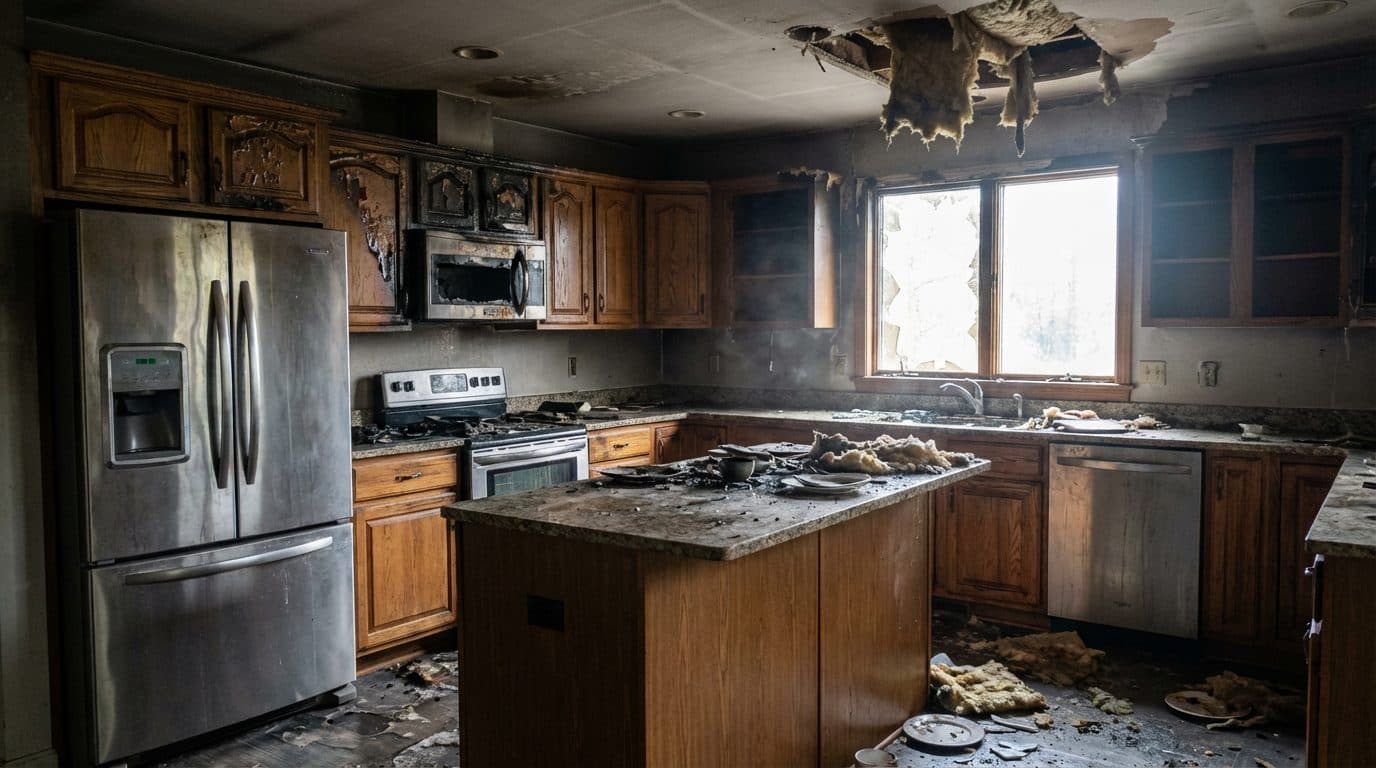
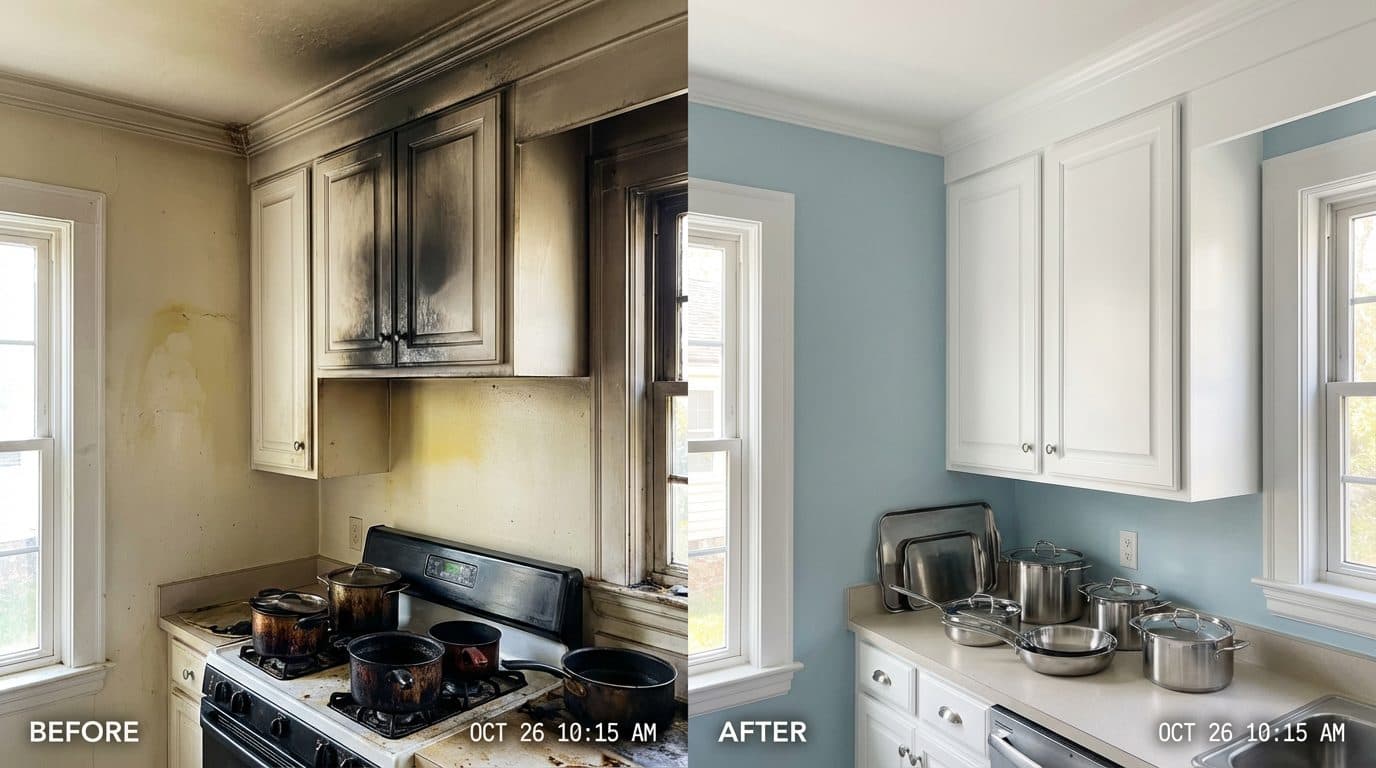
In Staten Island, a grease fire on the range scorches cabinets in a St. George or Stapleton prewar home and films the kitchen in soot.
Most home fires start in the kitchen, where a grease or stovetop flare can scorch cabinets, melt fixtures, and drive greasy soot across the ceiling and into adjoining rooms. The residue is acidic, so it keeps etching metal, stone, and finishes for as long as it sits.
Our IICRC S700 crews stabilize the scene, remove unsalvageable material, and clean structural surfaces with the right method for each soot type, dry sponge, solvent, or abrasive, before sealing odor-bearing surfaces. Contents are inventoried and either cleaned on site or packed out for off-site restoration.
Surfaces are cleaned to a documented standard and deodorized so the kitchen does not carry a lingering burnt odor. Every line of scope, photo, and cleaning record is documented for your insurer so the claim moves on evidence.
Scenario 1 of 4: Kitchen Fire Damage
The same local Green Restoration team covers all of these across Staten Island. One number for every emergency and every cleanup.
Common range across single-room smoke remediation through whole-home fire reconstruction. East Shore post-Sandy elevated rebuilds and South Shore coastal stock can add scope. Final pricing depends on on-site inspection.
Four quick questions. Starting figures on this page. No call required.
FLIR thermal scope. Free, no obligation. Owner-led on every fire job.
Ranges shown are starting figures only. Final pricing depends on on-site inspection and carrier coverage. We are not licensed public adjusters and do not negotiate claims on your behalf.
Most Staten Island property owners do not realize the first 72 hours after a fire determine whether finishes, contents, and structural framing are salvageable. Acidic soot, suppression water, and smoke odor compound fast across the borough heavy detached single-family stock unless IICRC S700 response and soda blasting source removal begin immediately.
Acidic Residue Attacks Glass And Metal Fast
Fire soot is acidic and begins etching glass, marble, brass, and stainless within 72 hours. Delayed cleanup in a Great Kills or Tottenville South Shore detached home turns salvageable finishes, cabinetry, and contents into total losses before the adjuster arrives.
Hidden Spread Beyond The Fire Room
A single-room fire in an Annadale or New Dorp detached home pushes smoke through wall cavities, return-air plenums, and shared HVAC trunks within minutes. Without negative-air containment and HEPA scrubbing, rooms the original fire never reached are contaminated by soot through the duct system.
South Shore And East Shore Detached Blocks
Many South Shore and East Shore Staten Island blocks pack detached and semi-detached homes close together with shared driveways and narrow side yards. A single-home fire scorches neighbor siding, eaves, and windows and pushes smoke into adjacent attics through soffit vents, requiring exterior board-up and IICRC S700 remediation across more than one property.
New Dorp + South Beach + Midland Beach
New Dorp, South Beach, Midland Beach, and Oakwood Beach were Hurricane Sandy 2012 ground zero, and remaining homes were rebuilt on FEMA AE and VE elevated foundations with new wiring layered over salvaged framing. Electrical faults at the splice points between old and new systems are a recurring ignition source, and fire restoration includes coordination with a licensed NY electrician.
Mold Colonizes In 48 Hours Unsealed
FDNY suppression water soaks drywall, subfloors, and detached-home basement framing. Without IICRC S500 structural drying within 48 hours, mold colonizes behind burned-out walls and the fire loss becomes a mold loss on top of it. IICRC S520 soda blasting on the dried framing prevents trapping live spores under new sheetrock, critical in Staten Island South Shore coastal crawl assemblies that already run high humidity.
Con Edison Or National Grid Cut At The Meter
FDNY often pulls the meter on a structural fire, and re-energization from Con Edison or National Grid runs days to weeks. Without site generators running dehumidifiers, HEPA scrubbers, and hydroxyl machines, drying and odor work stalls. Our trucks roll with diesel and propane gensets so work continues around the clock.
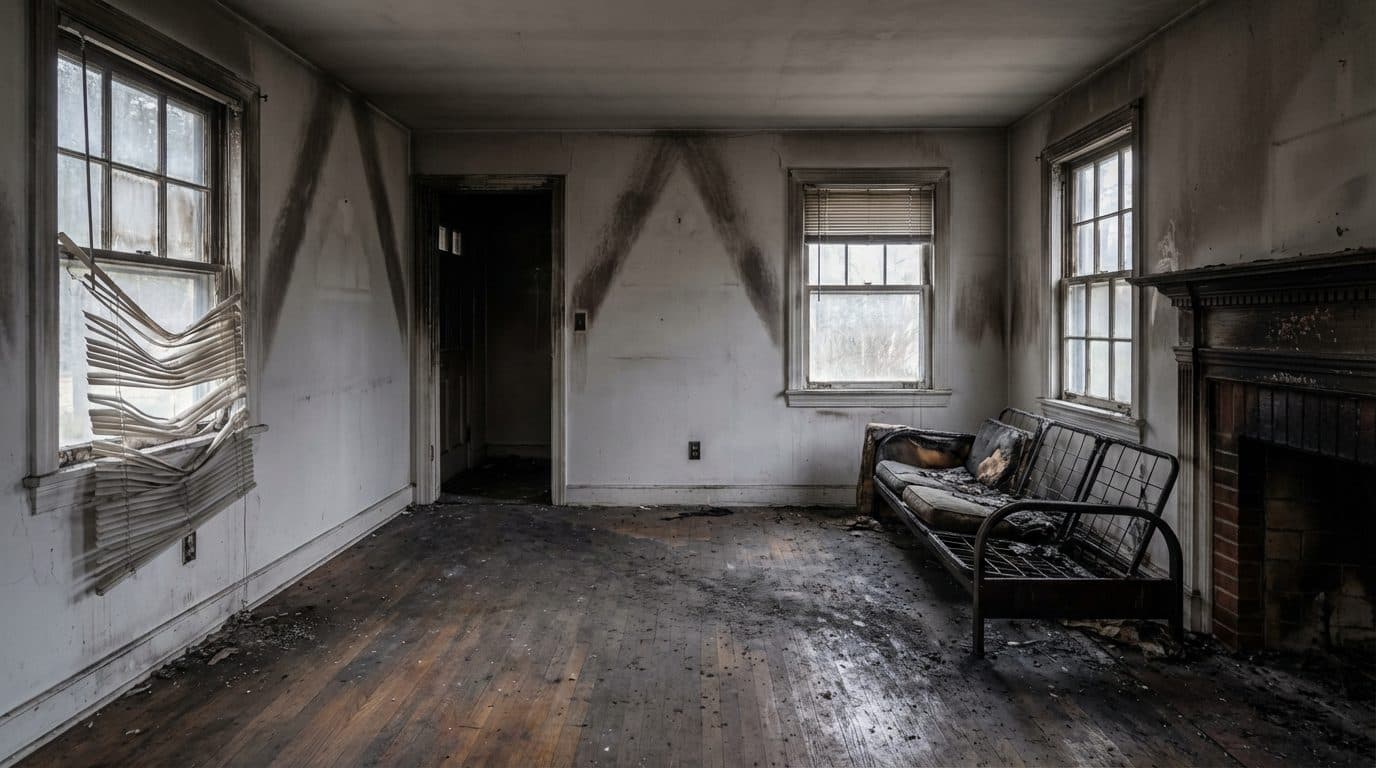
Staten Island carries the highest detached single-family density of any NYC borough, with 1950s through 1980s suburban stock dominating the South Shore and East Shore, North Shore prewar homes around St. George and Stapleton, and post-Sandy elevated rebuilds in New Dorp, South Beach, and Midland Beach. Each creates fire patterns that DIY cleanup and surface-only methods cannot solve. Knob-and-tube remnants in pre-1960 North Shore pockets and tight suburban lot spacing make IICRC S700 response with in-house soda blasting the durable fix.
Green Restoration is an IICRC Certified Firm running IICRC S700 fire and smoke protocol on every Staten Island fire loss. Our crews carry S500 water and S520 microbial training so suppression water, soot removal, and secondary mold are handled by one team, with documentation signed off for your adjuster before reconstruction begins.
A crew is dispatched to Staten Island within minutes of your call, day or night, via the Belt Parkway and Verrazzano-Narrows Bridge. Same-visit board-up, tarp-over, and fire suppression water extraction begin on arrival so the loss stops compounding while your adjuster is still being assigned.
Green Restoration runs Econoline blast pots, sodium bicarbonate media, and trained operators in-house on Staten Island fire jobs. Staten Island detached-home dimensional framing, post-Sandy elevated rebuild structure, masonry chimneys, and semi-detached party walls are all candidates for source-removal char cleanup that wire brushing cannot match.
We bill State Farm, Liberty Mutual, Travelers, Allstate, Chubb, Lemonade, and every other major carrier directly with IICRC documentation, timestamped photos, soda blasting protocol records, and contents inventory, plus NFIP coordination for East Shore and South Shore flood-zone properties so your Staten Island claim closes fast.
Soda blasting is the difference between a fire-cleaned Staten Island property that stays clean and one that smells like smoke six months later. Staten Island detached-home dimensional framing, post-Sandy elevated rebuild structure, and masonry chimneys absorb fire soot into the substrate itself, where sanding and wire brushing cannot reach without driving carbon deeper. Our IICRC S700 crews run sodium bicarbonate abrasive blasting in-house on every Staten Island fire job that needs source removal, with IICRC S520 mold prevention running in parallel.
Pharmaceutical-grade baking soda. Softer than wood (Mohs 4) and original lath, harder than soot bond layer. Friable on impact, shatters into dust on contact with the substrate rather than embedding into grain or finish.
IICRC S700 fire protocol and S520 mold protocol both list abrasive blasting as a recognized source-removal method for porous structural wood, charred framing, joists, and sheathing where wire brushing leaves residue.
Same compound used in food and pharmaceuticals. No crystalline silica, no toxic residue, no respirable lung hazard beyond standard PPE. Non-sparking and non-flammable on partially-cleared fire scenes.
On Staten Island, the dimensional framing of 1950s through 1980s detached suburban stock and the elevated rebuild structure of post-Sandy East Shore homes hold soot differently, which is why blast media choice matters. Wire brushing leaves a thin carbon film bonded to the wood grain that re-emerges as odor weeks later. Sanding charred framing opens the grain and drives soot deeper while creating airborne carbon dust that recontaminates adjacent rooms and tightly spaced neighbors. Soda blasting shatters the soot at impact without abrading the substrate, leaving Staten Island framing ready for a stain-blocking primer and a clean finish coat. The water-soluble residue HEPA-vacs up in a single pass.
On Staten Island fire jobs we typically deploy soda blasting on three substrates: charred dimensional framing and ceiling joists where the fire reached structural wood, brick masonry chimneys and semi-detached party walls with creosote-bonded soot, and sheathing behind blown-out drywall where a stain-blocking primer alone will not contain odor. Drywall and finish surfaces get IICRC S700 dry-sponge cleaning first, then a test patch decides whether selective soda blasting or full repaint is the right call. East Shore post-Sandy elevated framing gets the same source-removal treatment.
Sodium bicarbonate residue is water-soluble and FDA GRAS, so post-blast cleanup is HEPA vacuuming followed by a damp wipe with a microfiber towel, then a final pass with EPA-registered antimicrobial under IICRC S520 protocol to address any mold spores exposed by the char removal. We document moisture content on cleaned framing back to under 16 percent before any new sheathing or drywall goes up. In Staten Island South Shore coastal crawl assemblies and post-Sandy East Shore foundations that already run high humidity, that 16 percent moisture gate is the line between a clean rebuild and a callback.
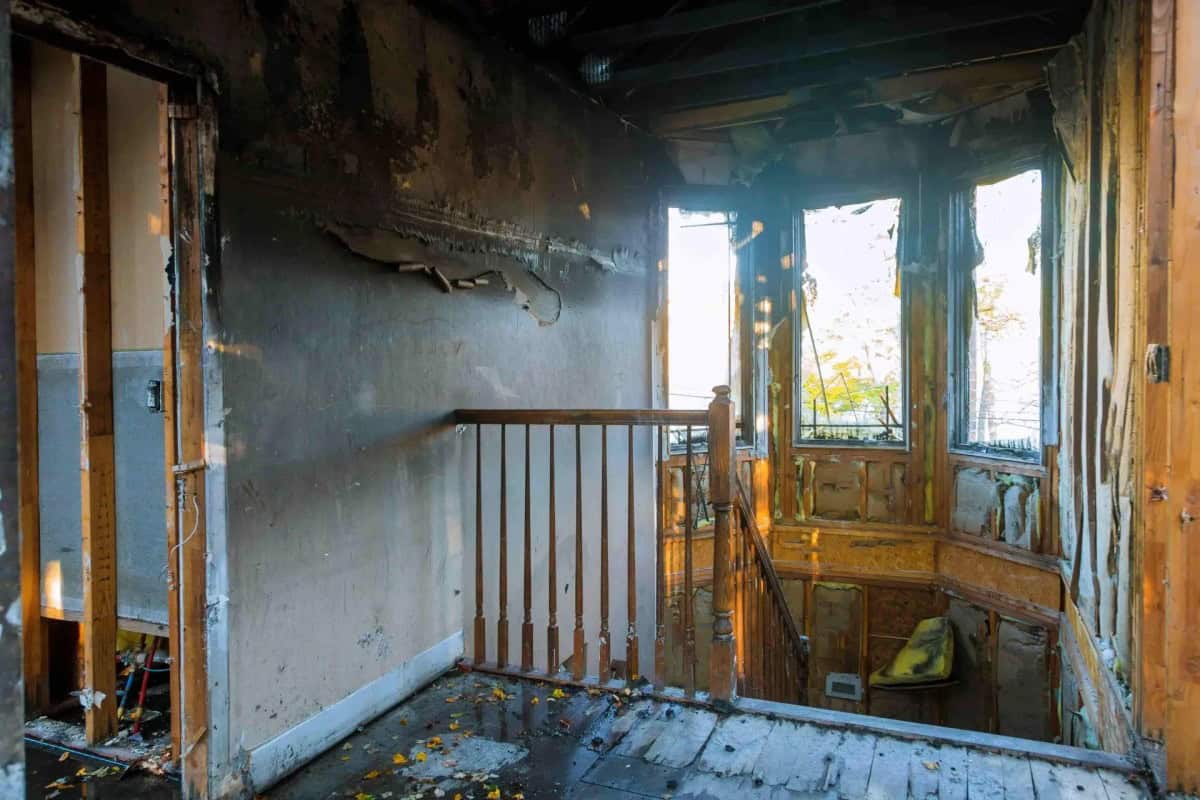
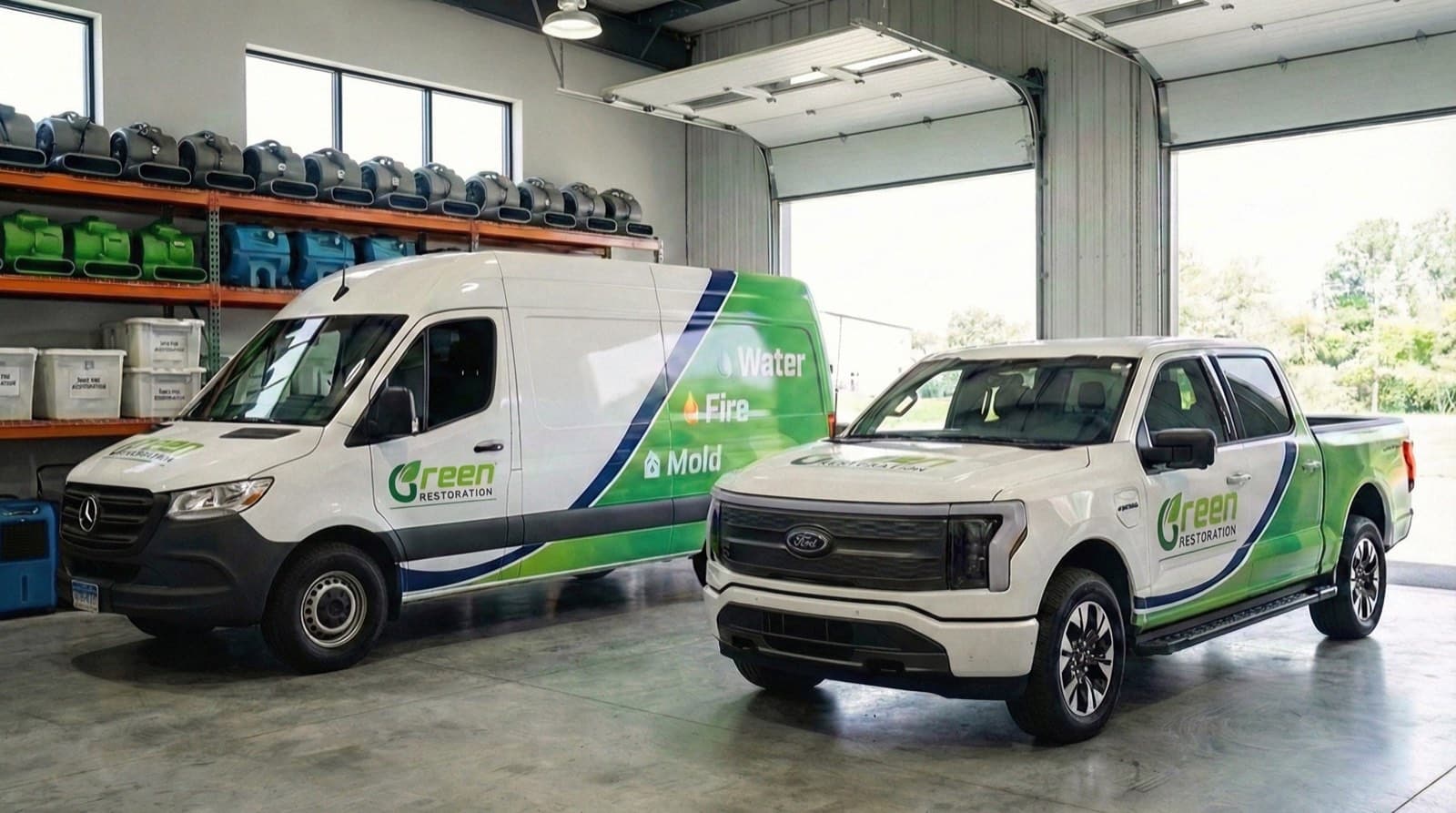
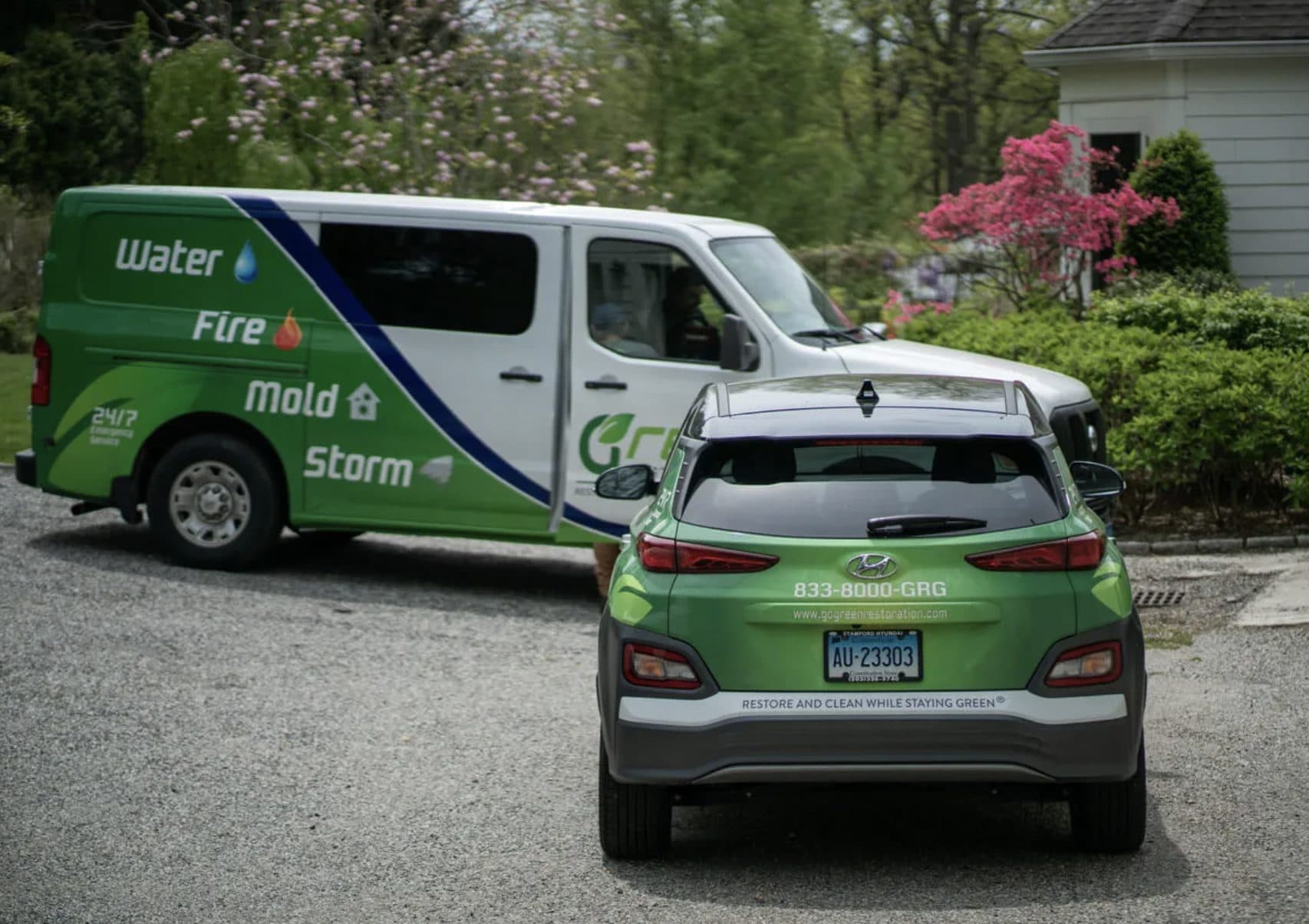
Staten Island fire calls range from Tottenville South Shore detached-home kitchen fires through New Dorp post-Sandy rebuild electrical fires and North Shore prewar ignitions. Our branded Green Restoration fleet rolls with one fully-loaded kit that covers every scenario, so dispatch, scope, and execution stay on a single IICRC-certified crew.
Every Staten Island response truck is staged with the full IICRC S700 fire kit, soda blasting setup, contents pack-out crates, and structural drying equipment so a single dispatch handles board-up through reconstruction handoff.
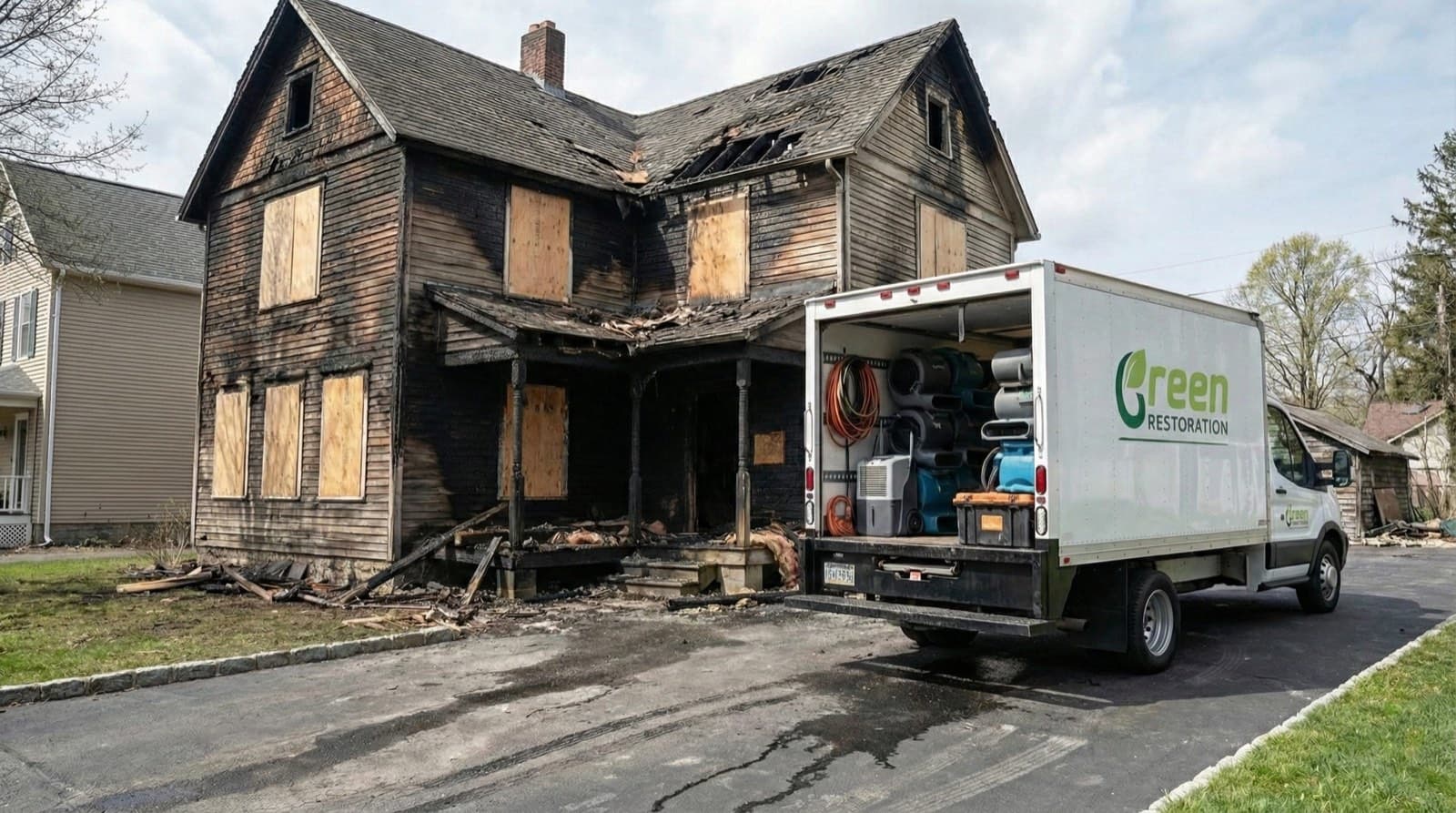
On a Staten Island dispatch our branded local fleet deploys across the Verrazzano-Narrows Bridge to any neighborhood from St. George and Stapleton to Tottenville, Great Kills, and the East Shore. We pre-stage soda blast pots and HEPA scrubbers for structural fires, contents crates for smoke-only jobs, and negative-air machines for containment. The crew evaluates on arrival and stages only what the scene requires across South Shore coastal, East Shore post-Sandy, and North Shore prewar stock.
Staten Island fire patterns differ by shore: South Shore Raritan Bay coastal detached-home fires in Tottenville, Great Kills, and Annadale, East Shore post-Sandy elevated rebuild fires in New Dorp, South Beach, and Midland Beach, and North Shore prewar fires around St. George and Stapleton. The fleet handles all of them with one IICRC S700 protocol, only the staging order and bridge-route timing change.
From the first call to final walkthrough, every step is documented, insured, and owner-supervised.
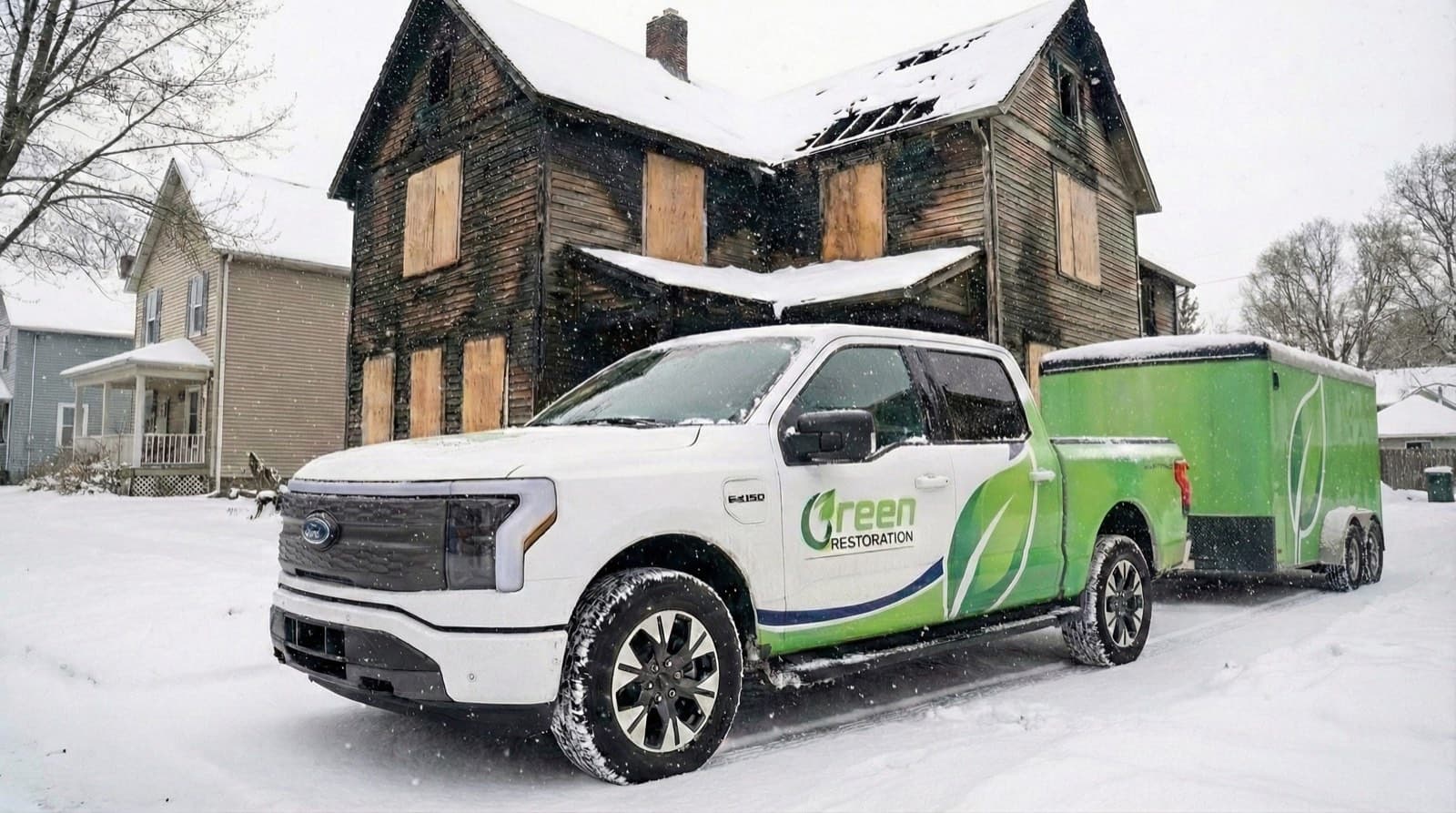
Full service fire damage response, soda blasting soot cleanup, contents pack-out, and reconstruction for Staten Island homes and businesses. 60-minute emergency dispatch across Richmond County, day or night.
Green Restoration provides IICRC S700 certified fire damage restoration and soda blasting soot removal in Staten Island, NY, serving neighborhoods including St. George, Stapleton, New Brighton, Tottenville, Great Kills, New Dorp, South Beach, Midland Beach, and Annadale. Certified crews arrive with board-up, tarp-over, soda blast pots, and contents protection.
Crews know the fire conditions Staten Island properties face across the borough heavy detached housing mix: South Shore Raritan Bay coastal detached-home fires in Tottenville, Great Kills, and Annadale, East Shore post-Sandy elevated rebuild fires in New Dorp, South Beach, and Midland Beach, and North Shore prewar fires around St. George and Stapleton. We coordinate directly with adjusters from State Farm, Travelers, Liberty Mutual, Allstate, Chubb, and Lemonade, and with NFIP flood claims on East Shore and South Shore coastal properties.
We are not licensed public adjusters and do not negotiate claims on your behalf. We submit IICRC S700 scope documentation directly to your insurer.
60-minute emergency dispatch, 24/7/365.
(347) 783-6383Request Free InspectionIICRC S700 · Licensed & Insured · All Insurance Accepted
All Staten Island fire calls served by our local New York crews via the Belt Parkway and Verrazzano-Narrows Bridge.
Crews dispatched to Staten Island around the clock for fire and smoke emergencies. Board-up, soda blasting source removal, contents pack-out, and reconstruction managed end to end by an IICRC S700 certified firm across Richmond County.
Crews on site in 75 to 110 minutes off-peak via the Belt Parkway and Verrazzano-Narrows Bridge with board-up, HEPA scrubbers, blast pots, and generator power for Staten Island.
Every Staten Island fire job follows IICRC S700 fire and smoke protocol with S500 water and S520 microbial training across the crew.
We file scope documentation and itemized estimates directly with major carriers, plus NFIP coordination for East Shore and South Shore flood-zone properties. Not licensed public adjusters.
Econoline blast pots and sodium bicarbonate media run by trained operators on every Staten Island fire job that needs structural source removal.
Your Staten Island Fire & Smoke Damage Specialists Since 2014
Green Restoration provides IICRC S700 certified fire and smoke damage restoration, soda blasting soot cleanup, contents pack-out, and reconstruction for homes and businesses in Staten Island, NY. Our process focuses on rapid stabilization, hospital-grade soot removal, molecular odor treatment, and documented reconstruction. We work with property owners and insurance providers to document scope clearly and restore affected areas the right way, without unnecessary steps or delays.
“Green Restoration of New York dispatches IICRC S700 certified fire and smoke crews across Staten Island with rapid local response over the Verrazzano-Narrows Bridge. Every Staten Island fire job, from a Great Kills South Shore detached-home fire to a New Dorp post-Sandy elevated rebuild fire, follows IICRC S700 protocol with soda blasting soot removal, negative-air containment, and molecular odor treatment. We document the full loss for your insurer and stay on the job through reconstruction. We are not licensed public adjusters and do not negotiate claims on your behalf.”
New York policyholders generally have the ability to select their own licensed restoration contractor. Carriers and contractors work the same claim process together.
Your policy is between you and your insurer. Selecting the licensed restoration contractor generally sits with the property owner.
Carrier referral and preferred-vendor programs are offered to streamline claims. You can use a referred contractor or retain a different licensed contractor.
Referred or independent, we submit IICRC S700 documentation, photo-logged inventory, and itemized line items directly to your adjuster.
If you bring in a different licensed contractor mid-project, the scope and remaining work are documented at handoff so the claim continues without gaps.
Educational reference only. We are not licensed public adjusters and do not negotiate claims on your behalf. Coverage and process specifics live with your carrier and your policy language.
4.9 out of 5, Rated by your neighbors on Google
We discovered mold when removing our pellet stove and called Green Restoration for help. David was very communicative and helpful throughout the entire process. He did the job thoroughly and professionally. Highly recommended!
David Woolner
Mold RemediationI had a fantastic experience with Green Restoration. From start to finish, the team was professional, thorough, and extremely knowledgeable. David came for the initial inspection and took the time to explain the entire process.
Annmarie Gieparda
Mold RemediationWe had mold due to a water leak in our half finished basement. David and his crew did a great job, we were very satisfied. I would highly recommend Green Restoration to anyone.
Tanya
Water DamageI needed my entire condo completely cleaned after a soot blow back. Green Restoration was top shelf! So thorough and professional. Thank you so much!
Jacki Hornish
Fire & Soot CleanupInstant estimate for emergency response, soda blasting soot cleanup, contents pack-out, and reconstruction across Staten Island and Richmond County. Transparent pricing, direct insurance billing.
Ranges based on IICRC S700 fire jobs we have handled across Richmond County, drawn from 136 verified Google reviews (4.9★) and our internal job-cost ledger. Final pricing depends on on-site inspection.
Clear, honest answers about emergency fire response, soda blasting, IICRC certifications, and insurance coverage on Staten Island, NY.
Our IICRC S700 certified fire crews dispatch rapidly across Staten Island via the Cross Bronx Expressway, Belt Parkway, and Verrazzano-Narrows Bridge, reaching most Staten Island addresses within 75 to 110 minutes during off-peak hours. North Shore St. George and Stapleton addresses are closest after the bridge, South Shore Tottenville and Annadale addresses run longest. This is the longest borough drive we run because of the Verrazzano crossing, but active fire emergencies are prioritized day and night. Call (347) 783-6383 any time.
Soda blasting uses sodium bicarbonate at Mohs 2.5, softer than wood, drywall, or framing lumber, so the abrasive shatters into water-soluble dust on impact instead of embedding into the substrate. On charred joists, sheathing, and Staten Island detached-home dimensional framing or post-Sandy elevated rebuild structure, soda blasting removes the carbon layer that wire brushing leaves behind. The pH-neutralizing chemistry of the media also breaks down acidic soot odor at the source, so post-blast surfaces are visually clean and chemically deodorized in one pass. That matters across the borough heavy single-family detached inventory.
Staten Island fire damage restoration typically runs $4,500 for a contained single-room smoke remediation to $90,000 or more for whole-home jobs that include soda blasting on structural framing, HVAC decontamination, contents pack-out, and finish reconstruction. New Dorp, South Beach, and Midland Beach East Shore post-Sandy elevated foundations with FEMA AE and VE geometry can add scope, and South Shore Raritan Bay coastal stock with salt-corrosion damage varies. We provide a written IICRC S700 scope estimate on-site after thermal imaging and soot density mapping. Ranges reflect Staten Island jobs across Richmond County.
New York homeowner policies cover fire damage at replacement cost on Staten Island, subject to your policy terms and deductible. We submit IICRC S700 documentation, soda blasting protocol records, and contents inventory directly to State Farm, Travelers, Liberty Mutual, Allstate, Chubb, and Lemonade. East Shore and South Shore coastal properties in FEMA flood zones often carry NFIP federal coverage alongside private homeowner policies, and we document both scopes where a fire follows or compounds a flood-zone loss. We are not licensed public adjusters and do not negotiate claims on your behalf, but we provide the scope documentation your adjuster requires.
Green Restoration is an IICRC Certified Firm, and our fire crews carry IICRC S700 fire and smoke restoration training, S500 water restoration training for suppression water mitigation, and S520 microbial training for secondary mold after suppression water. Every Staten Island fire job follows IICRC S700 protocol from board-up through clearance documentation. We coordinate with NYC-licensed electricians and asbestos abatement contractors where older Staten Island stock requires it.
A contained kitchen fire in a Staten Island detached home typically takes 6 to 12 days. Larger smoke spread through wall cavities and HVAC runs 12 to 22 days. Whole-home restoration with soda blasting on structural framing, reconstruction, and NYC Department of Buildings permits ranges from 35 to 90 days. East Shore post-Sandy elevated foundation rebuilds in New Dorp, South Beach, or Midland Beach with FEMA AE or VE geometry can extend the timeline. Timeline depends on soot density, suppression water involvement, and reconstruction scope.
Yes. Many South Shore and East Shore Staten Island blocks pack detached and semi-detached homes close together with shared driveways and narrow side yards, so a single-home fire can scorch siding, eaves, and windows on neighbors and push smoke into adjacent attics through soffit vents. We board up and tarp affected exteriors, run negative-air containment, soda blast charred framing, and document each affected property separately for its own carrier. Semi-detached pairs sharing a party wall get full IICRC S700 remediation across the shared assembly.
FDNY often pulls the meter on a structural fire and re-energization from Con Edison or National Grid runs days to weeks. Our trucks roll with diesel and propane generators so dehumidifiers, HEPA scrubbers, hydroxyl machines, temporary site lighting, and crew tools run around the clock without waiting on utility restoration. Generator power keeps the IICRC S500 drying clock under 48 hours, which is the difference between a fire loss and a fire-plus-mold loss in Staten Island detached-home basements and South Shore coastal crawl assemblies.
Green Restoration is an IICRC S700 certified firm dispatching fire crews across Staten Island with rapid local response over the Verrazzano-Narrows Bridge, running soda blasting in-house for fire soot removal on structural framing and masonry. We carry HEPA air scrubbers, hydroxyl generators, contents pack-out trucks, and Econoline blast pots on every Staten Island response. We handle South Shore Raritan Bay coastal detached stock, East Shore post-Sandy elevated rebuilds, and North Shore prewar homes with one IICRC S700 protocol. Direct insurance billing, 24/7 dispatch, and toll-free response at (347) 783-6383 mean fire damage is stabilized, blasted clean, and reconstructed with one call.
Yes. Our IICRC S700 contents pack-out includes inventoried, climate-controlled storage of your salvageable belongings while your Staten Island property is restored. We photograph and barcode every item, clean and deodorize soft goods, electronics, artwork, and upholstery off-site, then hold them in a secure humidity-controlled facility until reconstruction is complete and we pack them back. Pack-out, storage, and pack-back are all documented for your insurer as part of the claim. Call (347) 783-6383 to schedule a Staten Island contents inventory.

