Mold Remediation Canton, CT
Green Restoration, Hartford County, mold remediation in Canton, call (860) 222-9498 IICRC S520 Containment • ACAC Clearance • AMRT And WRT Certified Leadership
 IICRC Certified
 Eco-Friendly Solutions For Healthier Spaces
Reviewed by David Megeneishvili·Licensed & Insured In CT·IICRC AMRT + WRT
What Is IICRC S520 Mold Remediation?
Mold remediation is the IICRC S520-2024 documented process of source-cause moisture diagnosis, HEPA-filtered negative-air containment construction, condition-1 vs condition-2 vs condition-3 substrate triage, controlled removal of porous Condition 3 materials, antimicrobial application of EPA-registered formulations, HEPA post-cleaning, and ACAC-certified independent third-party clearance verification before any reconstruction.
In Canton, CT, remediation is sequenced strictly: identify and stop the moisture source, build containment with negative-air HEPA AFD machines and 6-mil poly barriers, remove visibly contaminated porous materials, decontaminate semi-porous surfaces per S520 § 12.2, antimicrobial mist treat, HEPA vacuum the work area, and only release containment after independent third-party air and surface sample clearance falls inside the Condition 1 envelope.
- IICRC S520-2024 aligned
- HEPA negative-air containment
- ACAC independent clearance
- EPA-registered antimicrobials
Why Canton Mold Jobs Run IICRC S520
Connecticut has no mandatory mold licensing regime, but IICRC S520-2024 is the de facto industry standard. CT § 20-427 still requires HIC registration for any remediation work over $200, with documented scope, antimicrobial application records, and clearance testing.
Green Restoration runs IICRC S520-2024 protocol with HEPA negative-air containment, ACAC-certified independent third-party clearance, and full chain-of-custody microbial documentation on every remediation.
Complete Mold Remediation In Canton, CT
S520 containment for hillside cottages in Collinsville, stone cellars on Cherry Brook, riverside mill space and farm outbuildings, reaching all four villages the same day.
Same-Day Mold Inspection And Air Sampling
Canton is four post-office villages inside one town, and the ground drops from about 434 feet at the Cherry Brook gage in Canton Center to about 252 feet at the Farmington River gage in Collinsville. Green Restoration reaches any of it the same day with Tramex meters, thermal imaging and ACAC-certified cassettes, establishing whether the water is riverside, slope-driven or mechanical before anything is opened.
IICRC S520, ACAC air sampling, four villages
Full Mold Remediation And Removal
An 1832 company-built two-family cottage stepping up Sweetheart Mountain and a Federal farmhouse on a stone foundation along Cherry Brook Road fail in completely different ways, and a Route 44 commercial building fails in a third. Green Restoration sizes HEPA negative-air containment to the assembly actually present, removes under IICRC S520 while sparing material that meters clear, and reads closing counts against the outdoor baseline.
IICRC S520, Hospital-grade containment
Riverside Mill Building Mold In Collinsville
The Collins Company mill complex sits on the east bank of the Farmington River amid what the National Register nomination calls a highly articulated system of reservoirs and waterways, with load-bearing stone walls, barn-like wood structures, brick buildings and corrugated steel sheds all in one campus. The nomination also records that numerous mill buildings closest to the river were destroyed by a flood in 1955. Green Restoration works those mixed assemblies under IICRC S520 rather than by a residential template.
Mixed-assembly containment
Additional Mold Remediation Services In Canton
Black Mold (Stachybotrys) Remediation
The Farmington River at Collinsville peaked at 140,000 cubic feet per second and 35.60 feet on August 19, 1955, which is 2.6 times the second largest flood ever measured at that gage. Buildings that have taken water at that scale, or that sit low along Cherry Brook, carry cavities that never got a long dry stretch. IICRC S520 double-poly containment under negative air isolates the zone, and clearance proves ambient counts before re-occupancy.
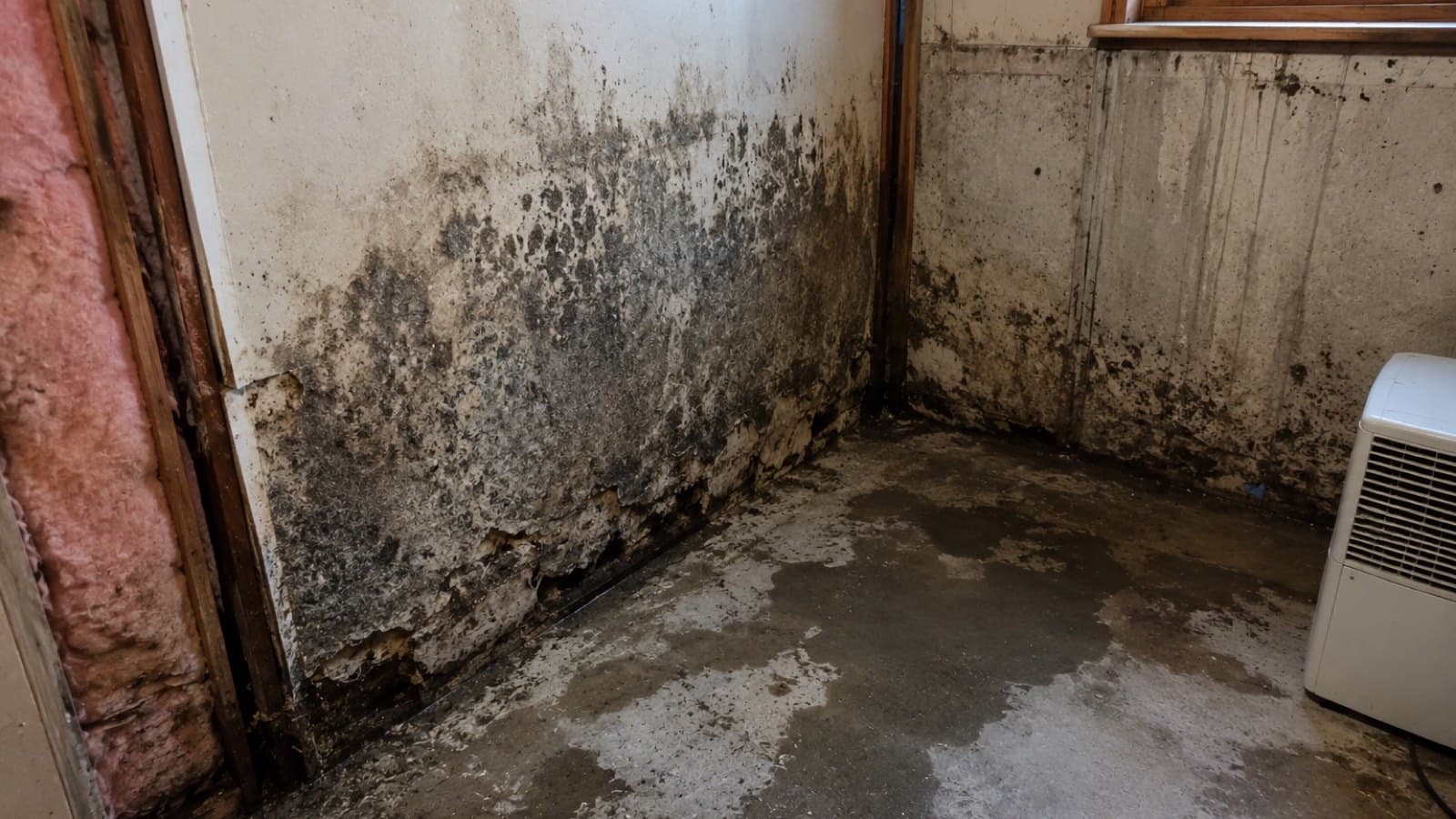
Stone Foundation And Cellar Mold
The Canton Center Historic District nomination lists the district's foundation material plainly as stone and concrete, and the 1830 house at 22 Barbourtown Road is built of stone outright. A rubble or dressed-stone cellar wall breathes water rather than blocking it. Green Restoration removes colonized finishes, HEPA cleans and treats the masonry and framing per IICRC S520, and sizes dehumidification for a wall that will always pass some moisture.
Hillside Crawlspace Mold Remediation
Collinsville streets follow the contour and fall lines of Huckleberry Hill on the east and Sweetheart Mountain on the west, and the mapped bedrock under the village is The Straits Schist rather than porous valley fill, so water that reaches rock moves sideways instead of soaking in. It arrives at the uphill wall, not the front door. Green Restoration seals the ground plane, treats framing per IICRC S520, and corrects grading and roof water on the high side.
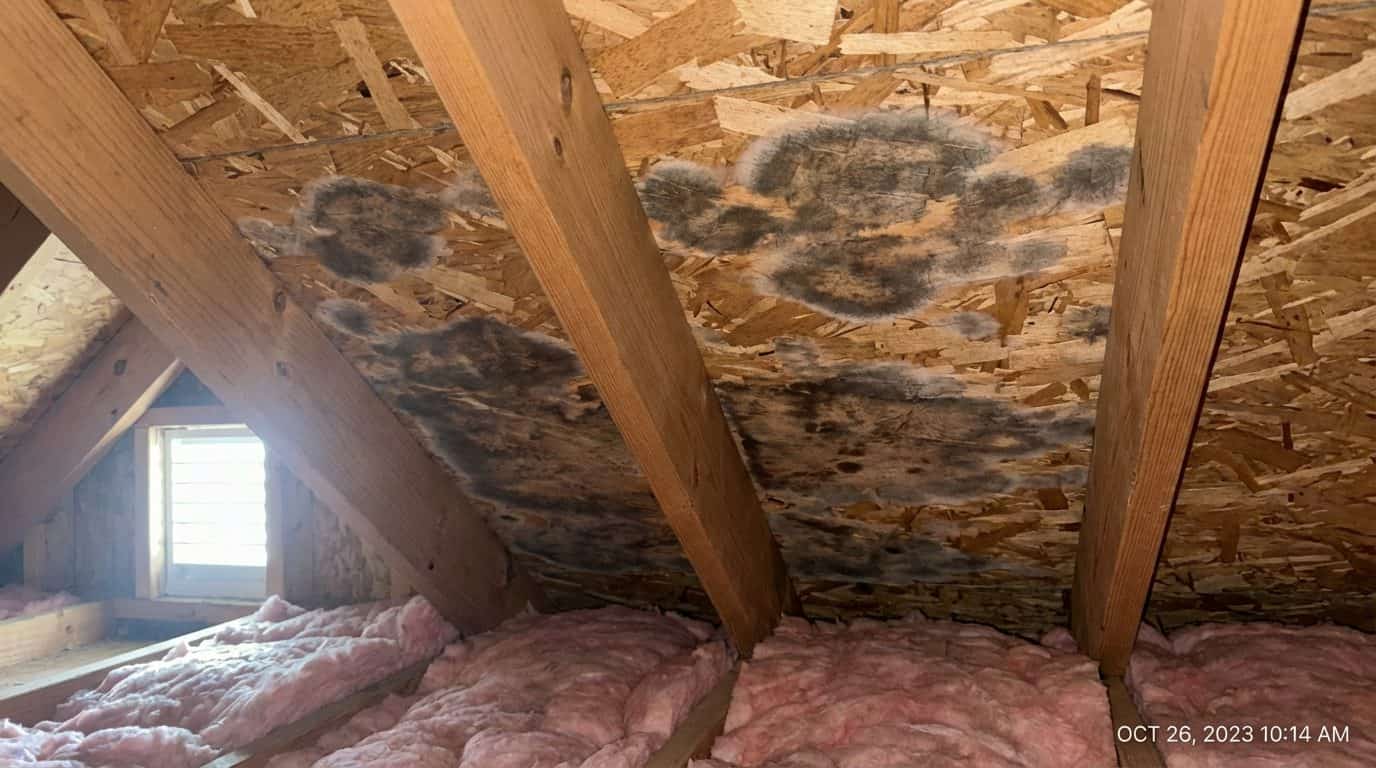
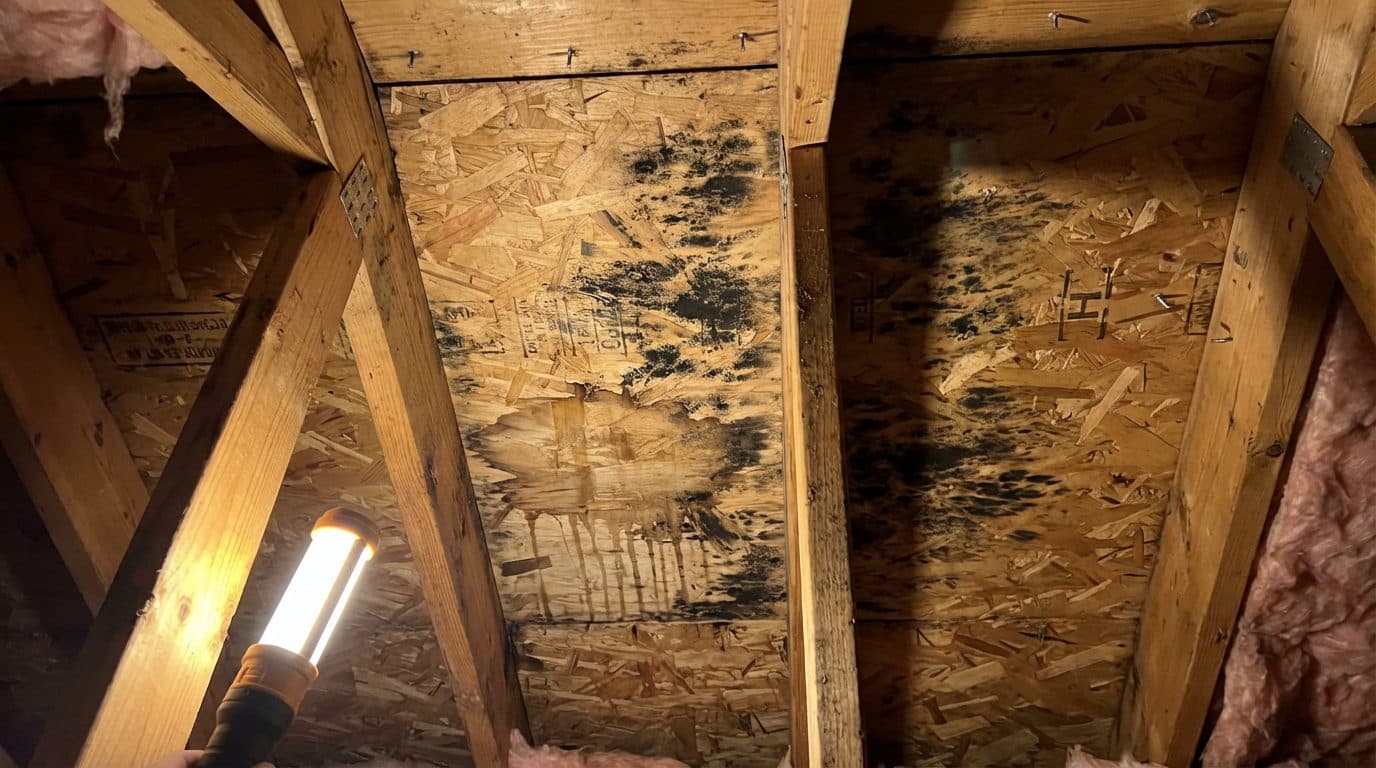
Attic Mold Cleanup
A nineteenth-century roof plane over a modern heated ceiling holds meltwater at the eaves long enough to stain sheathing from the outside inward, and on a two-family cottage the problem is shared by both units. Green Restoration treats sheathing and rafters per IICRC S520, re-terminates bath fans to exterior discharge, corrects the ventilation faults driving the cycle, and replaces saturated insulation before the attic closes back up.
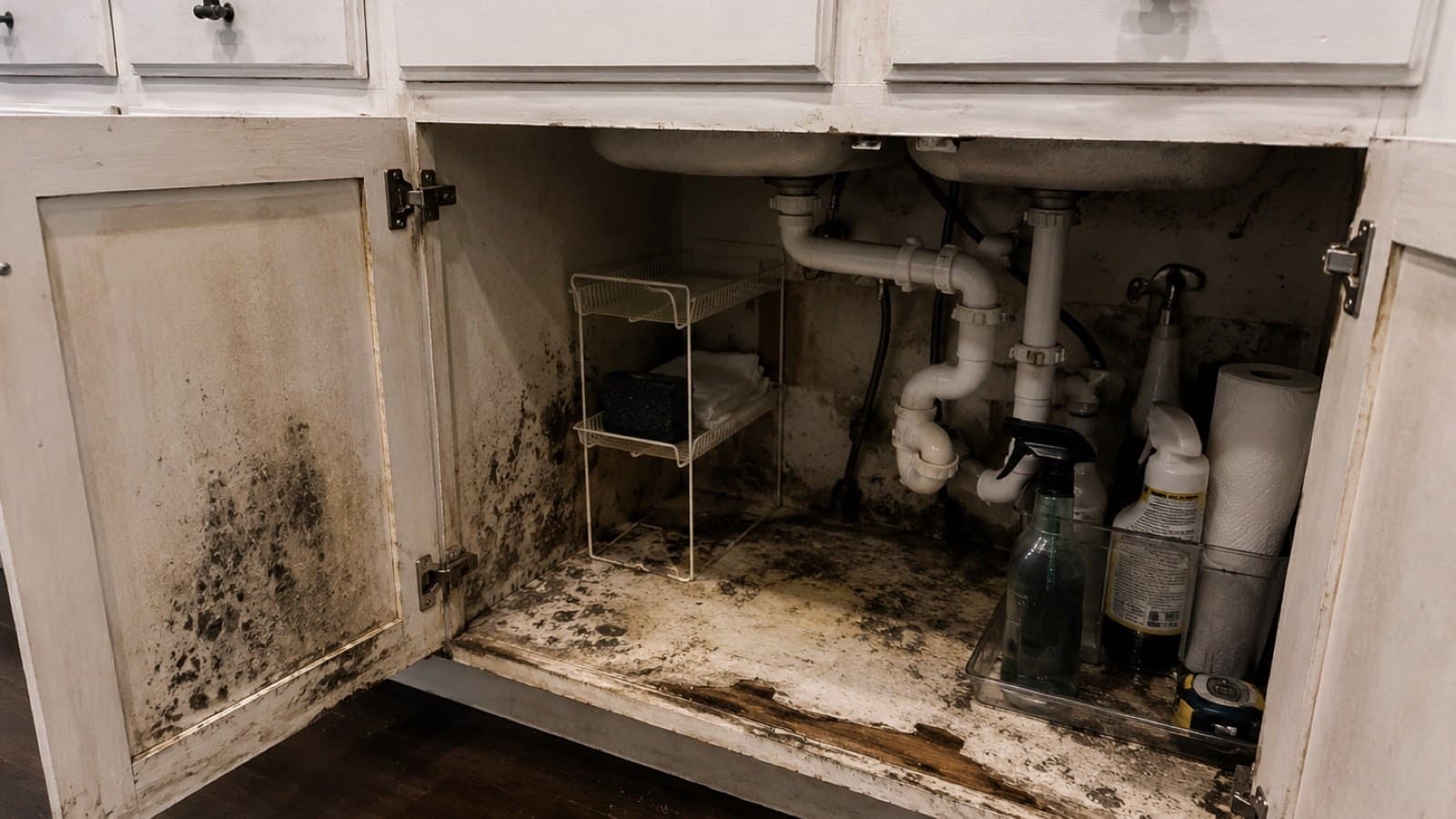
Bathroom And Kitchen Mold Removal
A bathroom cut into a worker cottage framed in 1831 sits in a cavity nobody designed for shower vapor, and a fan terminating in a roof bay simply moves the problem upward into shared framing. Green Restoration re-terminates every fan to exterior discharge, strips colonized backer and grout, treats the substrate per IICRC S520, and rebuilds in mildew-resistant materials that suit an older frame.
HVAC And Duct Mold Cleaning
Canton sits on Connecticut Natural Gas territory rather than the Eversource gas list, and outside the Collinsville and Route 44 corridor plenty of properties still run oil or propane, so duct runs are commonly threaded through an existing frame and cross an unconditioned bay where they sweat every season. Green Restoration cleans and treats the system to NADCA ACR practice, corrects the insulation and termination faults, and samples the supply air afterward.
Multi-Family And Company Cottage Mold
West Church Street and Bridge Street are lined with identical two-family houses the Collins Company built in 1832 and rented to workers for $25 a year, with larger company tenements on Dunne Avenue and matching cottages east of the river from 1831. In shared-wall stock a single failed riser or roof leak becomes more than one household's problem, so Green Restoration builds containment that isolates the neighboring unit while the assembly is open.
Barn And Farm Outbuilding Mold
The Canton Center nomination says barns with weathered wood siding, sheds, dairy barns and an occasional service area are seldom out of sight, and those buildings were framed to move air through themselves rather than to hold a climate. Heat one, insulate one, or fill one with storage that cannot take humidity and it starts holding what it used to release. Green Restoration treats framing per IICRC S520 and rebuilds the ventilation the new use actually requires.
Post-Remediation Clearance Testing
Closing air samples are read by an independent laboratory against the day-one outdoor baseline, and the written result keeps working long after the containment comes down. With Canton's effective flood map dated September 26, 2008 and preliminary Hartford County maps from 2023 and 2024 still in process, a measured record is what an owner shows a carrier now and a buyer later.

The Water Is Coming From Uphill. Get It Inspected Today.
S520 Crews Reach Collinsville, Canton Center, Canton Village And North Canton Same Day. Containment Sized To Your Building, Clearance Verified By An Independent Laboratory.
Green Restoration, Hartford County in Canton
Green Restoration, Hartford County handles mold remediation in Canton, CT, where stone cellar walls along Cherry Brook pass moisture by design and cannot simply be sealed shut. Owner-led crews set HEPA containment and remove affected porous materials to IICRC S520 standards, under IICRC Certified Firm #70236106. Call (860) 222-9498.
Why Choose Us In Canton
Owner-led mold remediation with same-day inspection, laboratory-verified clearance, and containment sized to the building across Collinsville, Canton Center, Canton Village and North Canton.
Four Villages, One Dispatch
Inspectors reach Collinsville, Canton Center, Canton Village and North Canton the day you call, from Main Street and Maple Avenue to Cherry Brook Road, West Road and Town Bridge Road, carrying thermal imaging, Tramex meters and ACAC sampling cassettes ready for stone cellars and hillside crawl spaces alike.
We Read The Ground Before The Stain
Schist and gneiss under this town will not take water downward, and the villages sit between about 252 feet at the river and about 434 feet at Cherry Brook. We establish whether the moisture arrives sideways off a slope or through a stone wall before containment goes up, because the correction changes completely with the answer.
Botanical Antimicrobials, No Harsh Fumes
EPA-registered Benefect Decon-30 and Concrobium treat exposed framing and lath after removal, chosen for occupied houses and for framing that has stood in this valley since the 1830s.
Clearance That Holds Up Later
Third-party ACAC sampling closes every project at or below outdoor baseline, producing the independent record a buyer, a lender or a carrier can be shown while Hartford County works through a live FEMA remapping against a map still effective from 2008.
What Untreated Mold Costs Your Canton Home
Canton holds four post-office villages across 25 square miles of crystalline bedrock that will not take water downward, with a mill village pressed against the Farmington River and a farming center strung along Cherry Brook, so moisture here arrives sideways and settles into assemblies built in the 1830s.
140,000 Cubic Feet Per Second, August 19, 1955
USGS Gage 01187980 At Collinsville
The Farmington River at Collinsville peaked at 140,000 cubic feet per second and a stage of 35.60 feet on August 19, 1955, during Hurricanes Connie and Diane. The second largest event ever measured at that gage, the 1938 hurricane, reached 54,000 cubic feet per second at 25.70 feet. The National Register nomination records that numerous mill buildings closest to the river were destroyed by that 1955 flood, and the buildings that survived are the ones still standing today.
Streets That Follow The Fall Line
Huckleberry Hill East, Sweetheart Mountain West
The Collinsville nomination describes two building clusters climbing from the river banks up the steep sides of Huckleberry Hill on the east and Sweetheart Mountain on the west, with the streets following the contour and fall lines of those hills. On a slope like that water arrives at the uphill foundation wall rather than at the front door, and gutter work on the low side never touches the mechanism.
Rock That Will Not Take Water
Schist And Gneiss, Not Valley Sand
The mapped bedrock under Collinsville and North Canton is The Straits Schist, under Canton Center it is Ratlum Mountain Schist, and under Canton Valley it is the hornblende gneiss member of the Collinsville Formation, a unit named for this town's own village. None of that is the sand and gravel valley fill that lets water drain downward, so water that reaches rock moves sideways into whatever foundation is next.
Stone Foundations Along A Brook
1.5 Miles Of Canton Center On Cherry Brook
The Canton Center Historic District covers roughly 500 acres running a mile and a half along Cherry Brook Road parallel to the brook, and the National Register nomination lists the district's foundation material as stone and concrete. A rubble or dressed-stone cellar wall passes moisture by design rather than blocking it, and the buildings sit close to the road and close to the water.
Shared Walls From 1831 And 1832
Company Cottages And Dunne Avenue Tenements
West Church Street and Bridge Street are lined with identical two-family houses built by the Collins Company in 1832 and rented to workers for $25 a year, with larger company tenements on Dunne Avenue and matching cottages east of the river from 1831. In shared-wall stock a single failed riser or a slow roof leak becomes more than one household's problem before anyone reports it.
Buildings Framed To Breathe, Then Asked Not To
Barns, Sheds And Dairy Barns In Canton Center
The Canton Center nomination says the agricultural appearance persists and that barns with weathered wood siding, sheds, dairy barns and an occasional service area are seldom out of sight. Those buildings were framed to move air through themselves. Heat one, insulate one, or fill one with storage that cannot take humidity, and an assembly that used to release moisture starts holding it, which is a different failure from anything a house does.
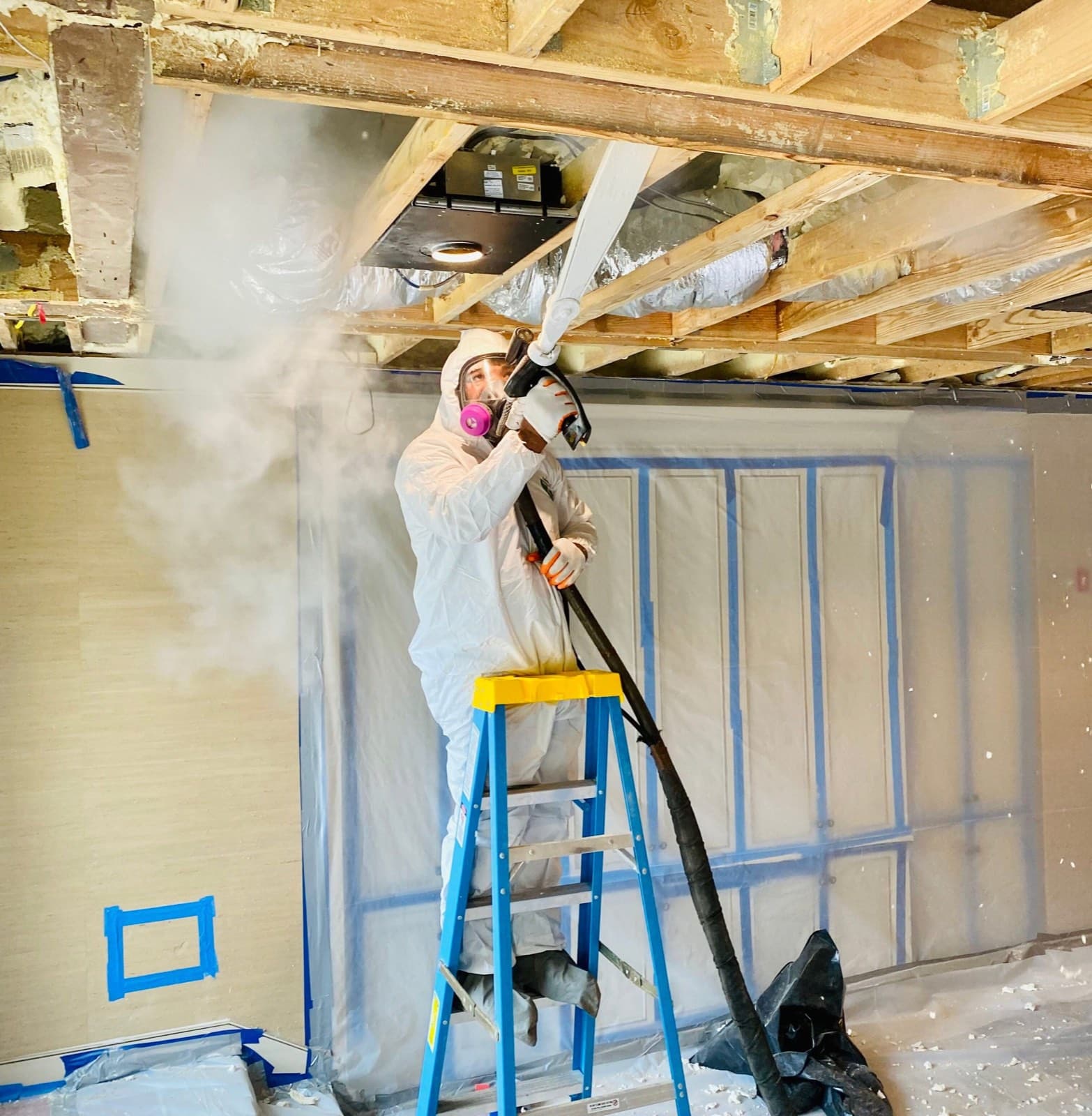
Why Canton Properties Need Professional Mold Remediation
Water moving laterally over schist and gneiss, stone cellar walls that pass moisture by design, and shared-wall cottages from 1831 put mold pressure on surfaces no cleaning product reaches. Hospital-grade containment closed by laboratory clearance is the only durable answer.
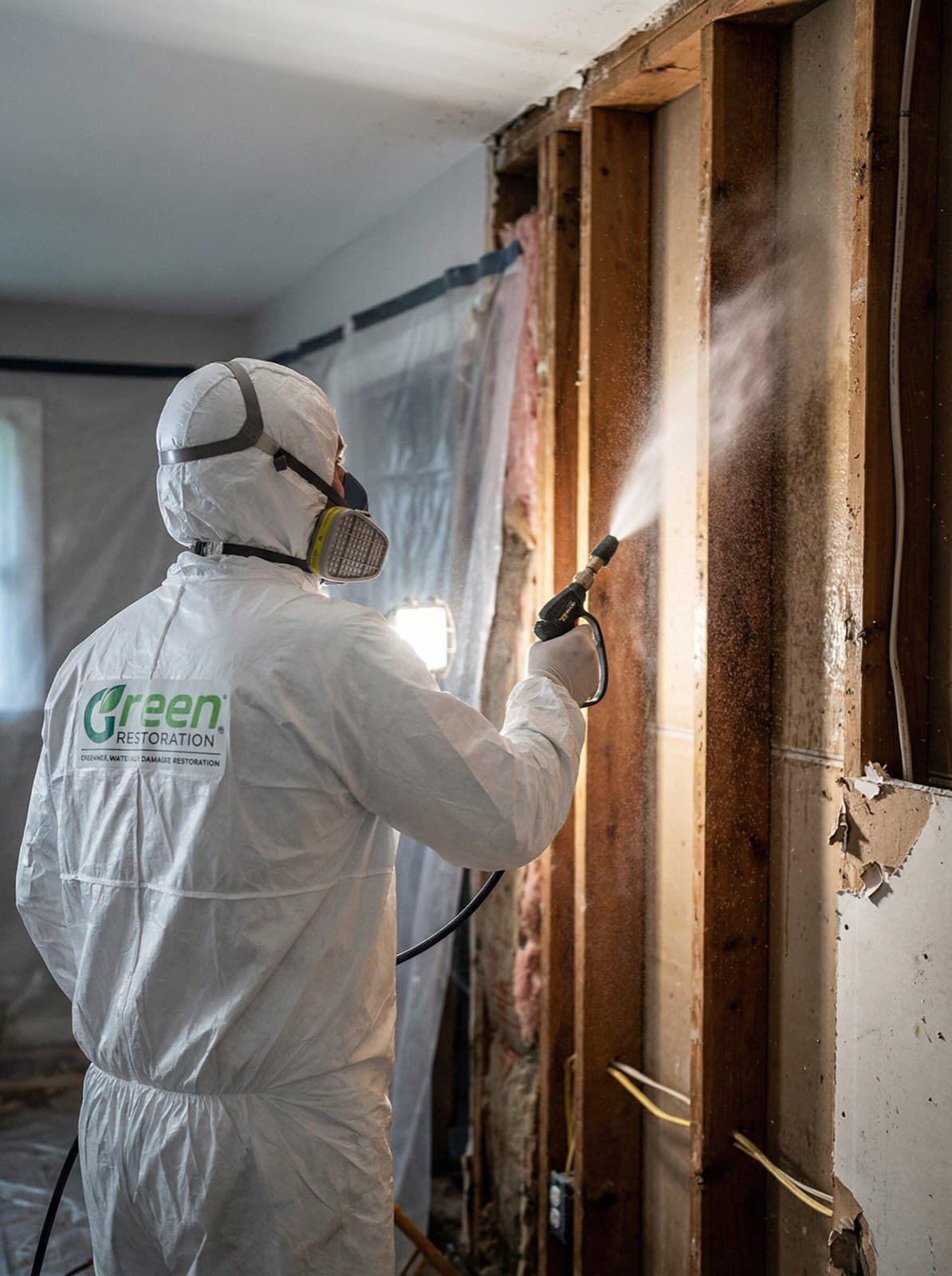
Containment Built For Three Different Canton Building Types
Every Green Restoration mold crew holds IICRC S520 certification, and Canton puts three separate questions to it: a company-built two-family cottage on a hillside, a Federal farmhouse on a stone foundation beside a brook, and a mill building whose walls run from load-bearing stone to corrugated steel. The containment geometry changes with each, and our owner carries IICRC AMRT and WRT credentials behind every call.
Same-Day Inspection Across All Four Villages
One dispatch reaches Collinsville, Canton Center, Canton Village and North Canton the day you call, from Main Street and Maple Avenue to Cherry Brook Road, West Road, Town Bridge Road and the Route 44 corridor. Thermal imaging, moisture meters and ACAC air sampling ride along on that first visit, so a written scope exists before a price does.
Correcting Water That Arrives Sideways
Where dense schist and gneiss refuse to take water and the streets run down the fall line, the correction has to match the mechanism: grading, roof water and uphill perimeter drainage on a slope site, interior perimeter work and vapor control against a stone cellar wall, and ventilation rather than sealing on an agricultural building. We bring masons, roofers and excavators in before any wall closes, because growth returns to whatever moisture the cleanup left in place.
Clearance Files That Serve Three Audiences
Every Canton project closes with third-party ACAC air sampling at or below the outdoor baseline, and the resulting file works for the carrier today and for the closing table later. It contains scope, containment photography, laboratory reports and IICRC-standard documentation that adjusters at Liberty Mutual, State Farm, Travelers, Allstate, USAA, Chubb and Hartford Insurance Group process without a second visit.
The Mold We See Most in Canton
These are the mold problems we remediate most often, every job run to the IICRC S520 standard, contained with HEPA negative air, and cleared by independent ACAC air testing.
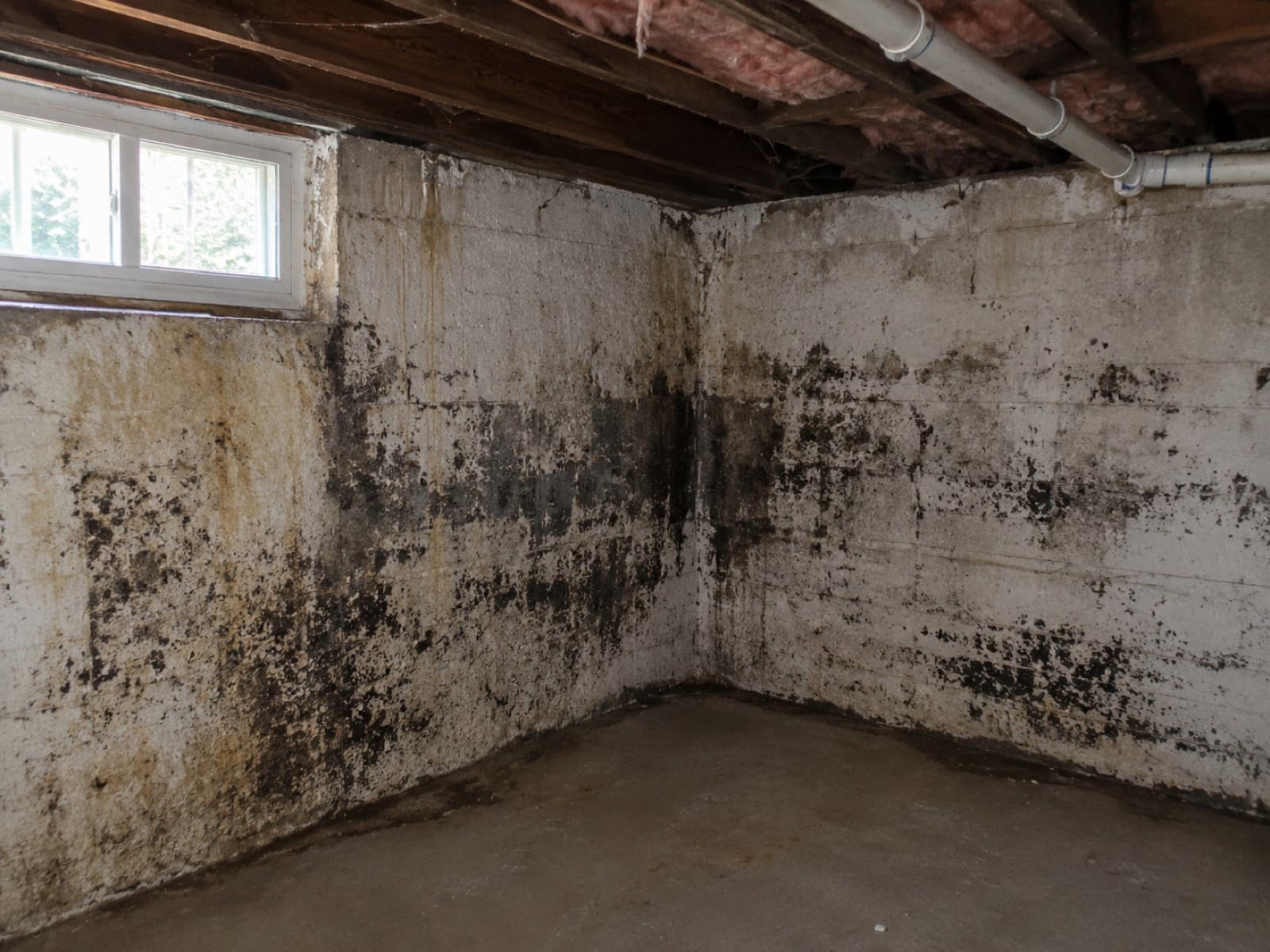
A Cellar Wall That Passes Water By Design
In Canton, dense schist and gneiss refuse water downward, so runoff arrives at the uphill foundation wall instead.
The Canton Center Historic District nomination lists the district's foundation material as stone and concrete, and the district runs a mile and a half along Cherry Brook Road parallel to the brook. A rubble or dressed-stone cellar wall was never built to block water, it was built to hold a house up, so an owner keeps painting a wall that is going to keep passing moisture no matter what goes on the inside face.
The lower level is isolated from the floors above and held under negative air with HEPA scrubbing. Colonized finishes and porous material are removed under IICRC S520, and the masonry itself is HEPA cleaned and treated rather than sealed shut, because trapping moisture inside a stone wall moves the problem into the sill and the joist ends. Interior perimeter drainage and vapor control are set, and dehumidification is sized to a wall that will always pass some moisture.
Independent ACAC sampling reads the cellar and the rooms above it at or below outdoor baseline, and the closing package, meaning scope, source correction and laboratory numbers, satisfies the carrier now and answers a buyer question later.
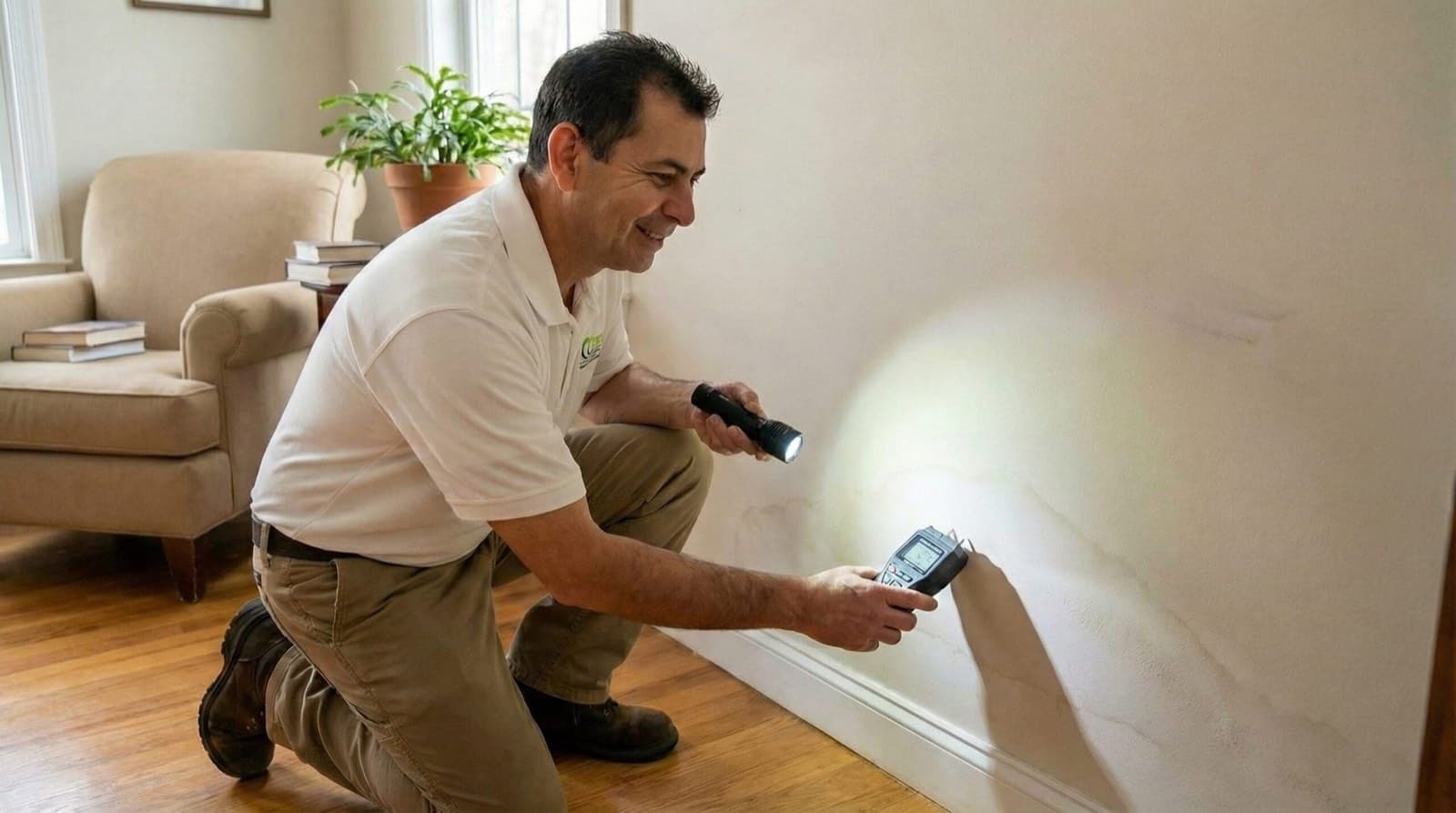
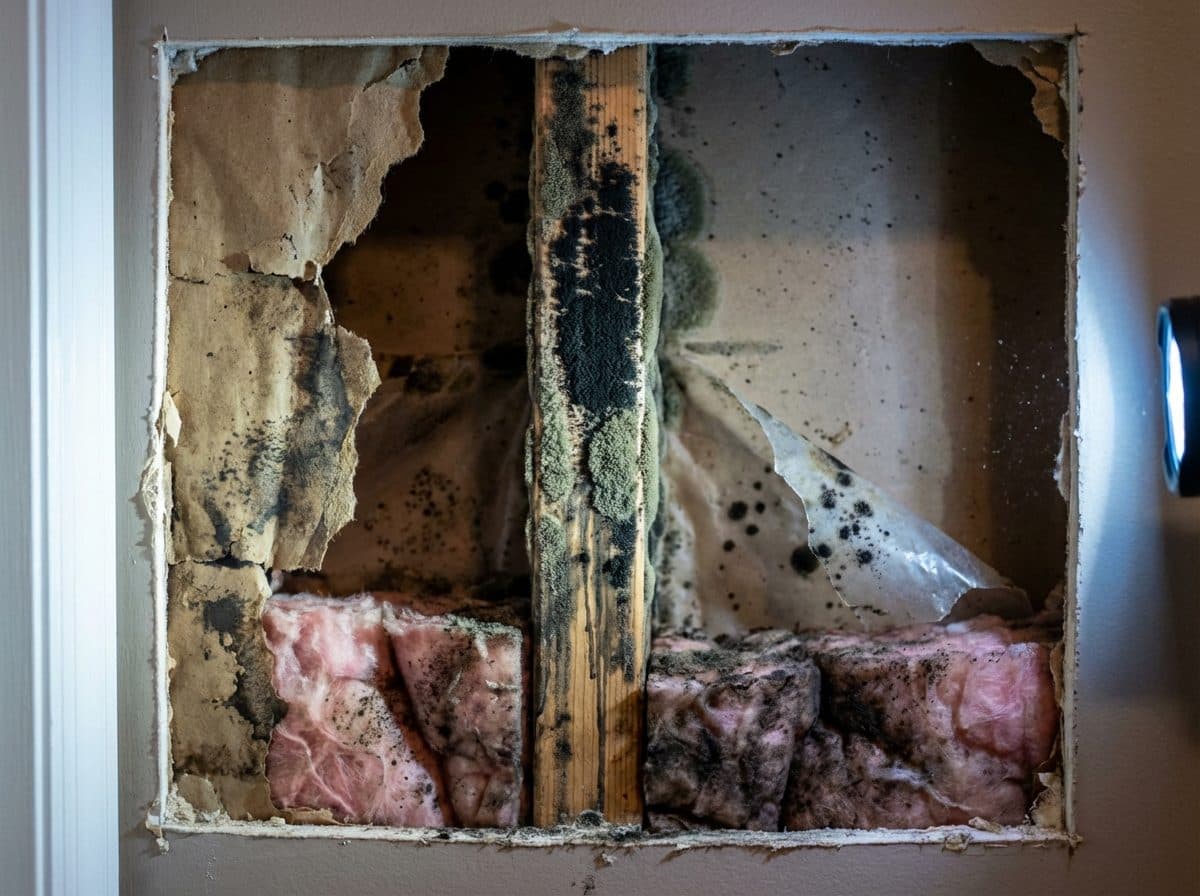
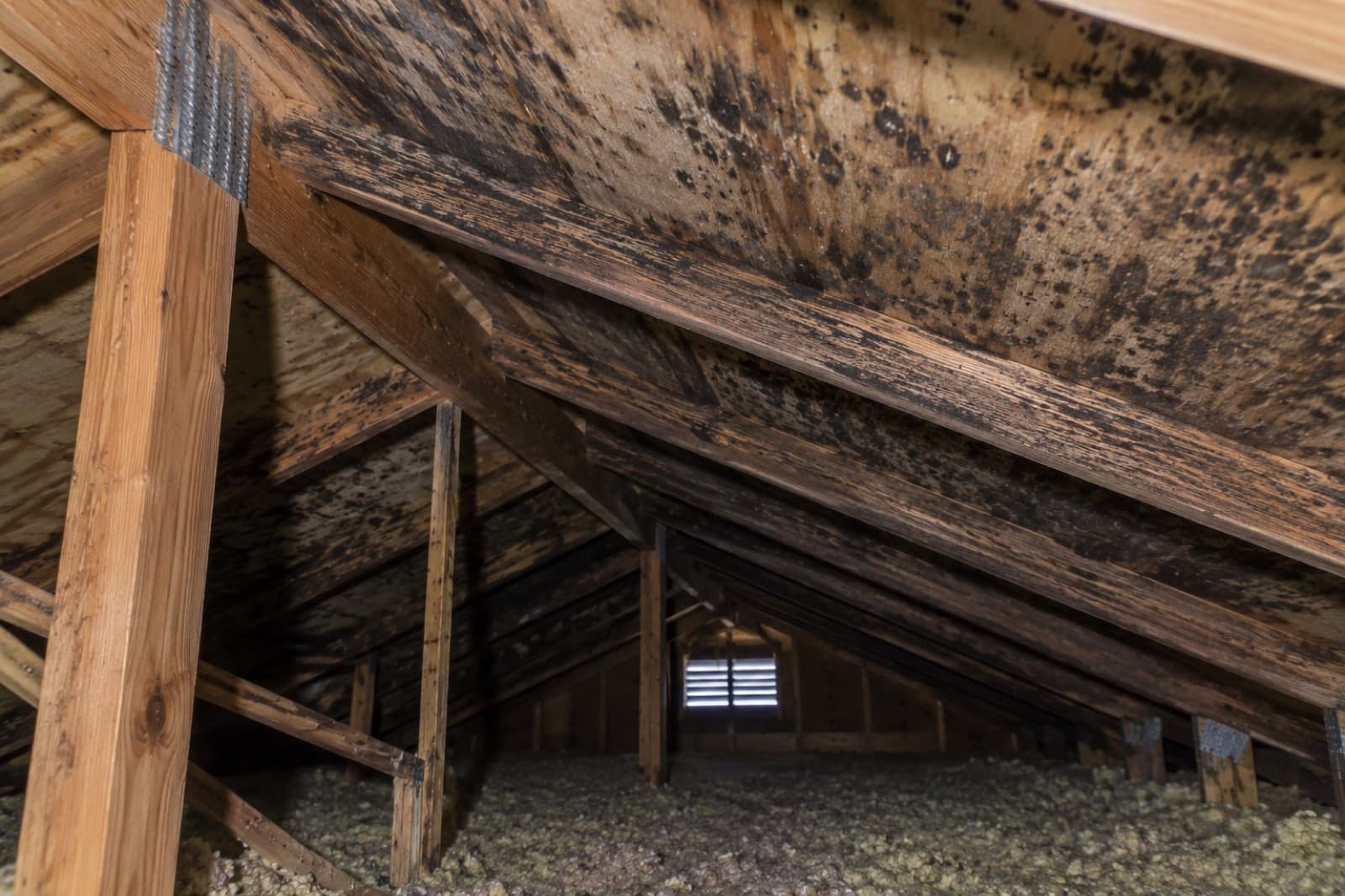
Scenario 1 of 5: Stone Foundations On Cherry Brook
What To Do When You Find Mold In Your Home
The first 24 hours matter. Follow these steps to contain the colony and protect your air quality while waiting for our IICRC S520 certified crew to arrive.
What To Do Immediately
EPA guidelines recommend professional remediation for any visible mold patch larger than a 3x3 square foot area. Anything more releases spores beyond safe DIY containment.
Close doors leading to the contaminated room and turn off HVAC immediately. Every minute of shared air movement spreads spores throughout the rest of your home.
Take timestamped photos of all visible mold and any related water damage before cleanup begins. Your insurance adjuster will need this for the claim file.
If you must enter the contaminated area before remediators arrive, wear an N95 respirator, nitrile gloves, and sealed eye protection. Skin and airway contact with active colonies is how symptoms start.
Mold needs water to grow. Fix the leak, correct the humidity, or remediate the flood before any cleanup attempt. Scrubbing without moisture correction guarantees regrowth.
Third-party post-remediation air sampling confirms spore counts are at or below outdoor baseline. Without it, you have no way to verify the work actually worked.
What NOT To Do
Bleach lifts color on drywall, carpet, and wood but does not kill mold at the root. The colony returns within weeks and the stain looks smaller only because the surface is lighter.
Central heating and cooling circulates spores through every duct run, colonizing rooms that were never affected. Shut the system off until professional containment is in place.
EPA guidelines require professional containment for anything larger than a 3x3 patch. Tearing out drywall without negative air pressure releases millions of spores instantly.
Even mildew-resistant primer cannot seal an active colony. The mold feeds on the paper backing of drywall and bleeds through within weeks, often worse than before.
A persistent musty smell without visible mold almost always means a hidden colony behind walls, under flooring, or in ductwork. Smell usually precedes visibility by months.
Disturbed mold releases millions of spores in seconds. Ripping carpet, pulling drywall, or breaking up tile without proper negative air pressure contaminates the entire home.
Our Mold Remediation Process In Canton, CT
From the first call to final walkthrough, every step is documented, insured, and owner-supervised.
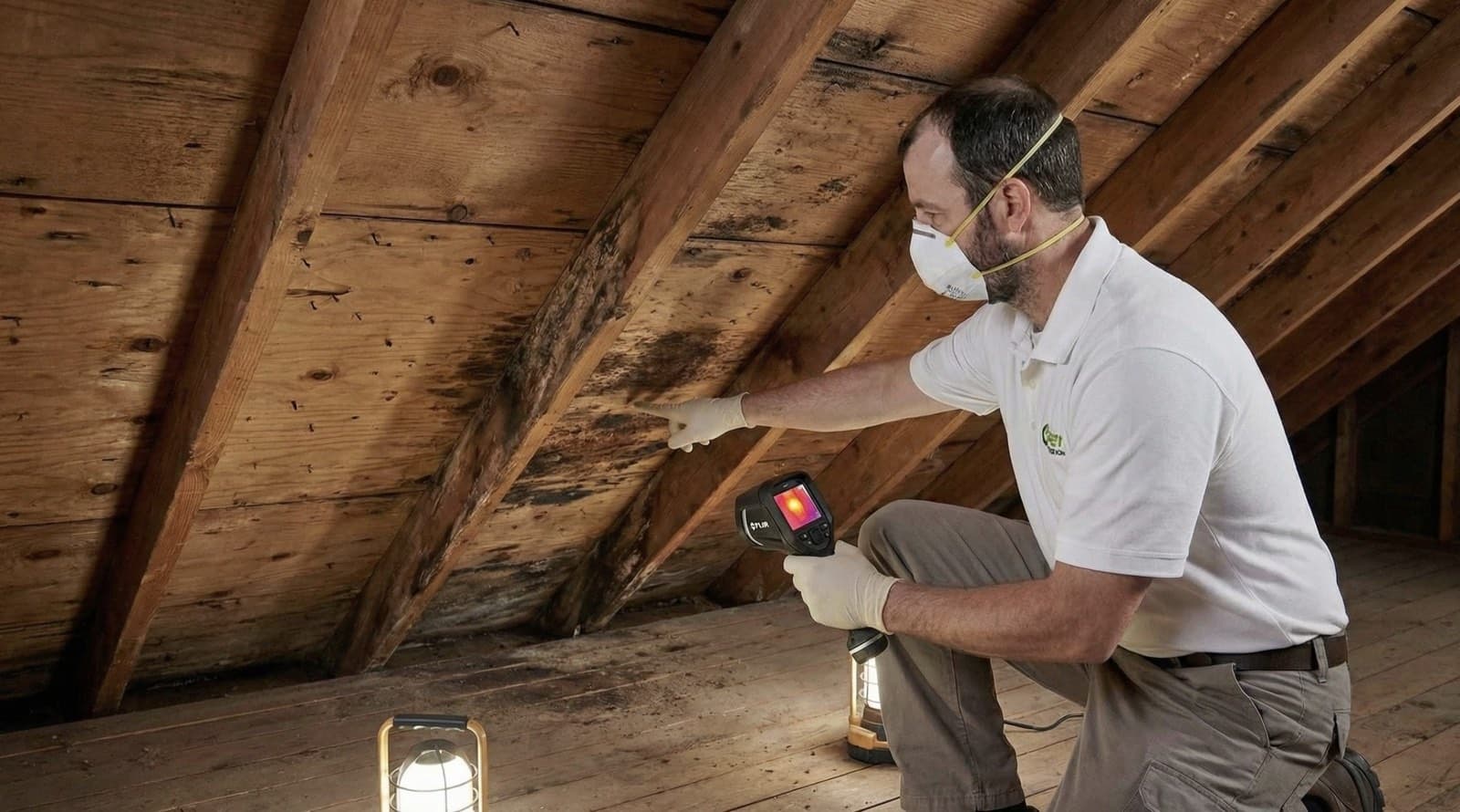
Mold Remediation Coverage In Canton, CT
Full service mold inspection, containment, remediation, and lab-verified clearance testing for Canton homes and businesses, from the Collinsville mill village and Main Street to Canton Center on Cherry Brook, the Route 44 corridor at Canton Village, and North Canton. Same-day inspection response across Hartford County.
Green Restoration provides IICRC S520 certified mold remediation in Canton, CT, serving local neighborhoods throughout Hartford County. Our certified technicians arrive same day with thermal imaging, moisture meters, and ACAC-certified air sampling kits. We work directly with all major insurance carriers, from initial inspection through hospital-grade containment and lab-verified clearance testing.
As a service-area business led by our owner across Hartford County, our crews know the specific mold conditions Canton properties face. We coordinate directly with adjusters from Liberty Mutual, State Farm, Travelers, Allstate, USAA, Chubb, Hartford Insurance Group, and all other major carriers, documenting scope from inspection through ACAC clearance for every claim across Canton and surrounding Hartford County. Green Restoration is not a licensed public adjuster and does not negotiate claims on your behalf.
Active Mold Exposure In Canton?
Same-day inspection dispatch, 24/7/365.
(860) 222-9498IICRC S520 · Licensed & Insured · HIC.0668405
All Towns Served By Green Restoration Of Hartford For IICRC S520 Mold Inspection And Remediation.
Same-Day Mold Inspection In Canton, CT
IICRC S520 crews cover all four Canton villages the same day in 2026, from company-built two-family cottages stepping up Sweetheart Mountain in Collinsville to stone-walled cellars along Cherry Brook in Canton Center, mixed-assembly mill space on the east bank of the Farmington River, the Route 44 corridor at Canton Village, and the barns and dairy sheds of North Canton, supervised under the IICRC AMRT and WRT credentials our owner holds. Green Restoration is not a licensed public adjuster and does not negotiate claims on your behalf.
Canton carries four post-office ZIPs across four villages, and 06019 is the one the town itself puts on every civic street address, from the town hall on Market Street to the police department on River Road. Canton Center uses 06020, Collinsville 06022 and North Canton 06059, so this page brands one ZIP and names the villages in prose.
USGS gage 01187980, the Farmington River at Collinsville, peaked at 140,000 cubic feet per second and 35.60 feet on August 19, 1955, against 54,000 cubic feet per second and 25.70 feet for the 1938 hurricane, the second largest on record there. The National Register nomination records that numerous mill buildings closest to the river were destroyed in that flood.
Canton was first settled by farmers in 1737, recognized as the West Simsbury parish in 1750, and incorporated as a town in May 1806. The Connecticut Secretary of the State's register notes that the original proposed name was Suffrage, and that Canton was chosen for a likeness to a Swiss canton. The Collins Company began making axes here in 1826.
The Straits Schist underlies Collinsville and North Canton, Ratlum Mountain Schist underlies Canton Center, and Canton Valley sits on the hornblende gneiss member of the Collinsville Formation, a unit named for this town's own village. None of it is trap rock, and none of it lets water drain downward, so water moves laterally into foundations.

About Green Restoration In Canton, CT
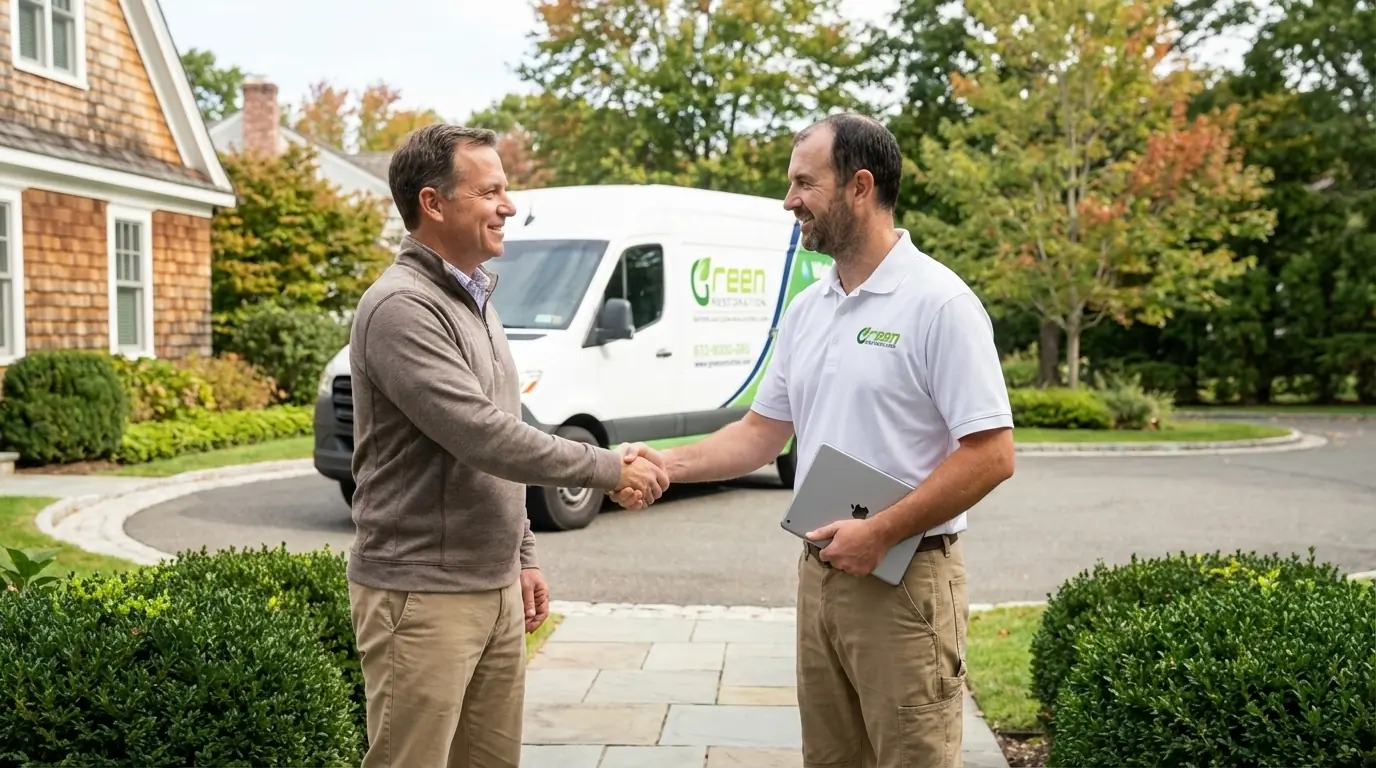
IICRC AMRT+WRT Certified
Canton receives the full IICRC S520 discipline applied to a town where the ground itself sends water sideways: spore sampling read against a real outdoor baseline, containment engineered for an 1832 company cottage on a hillside, a stone cellar beside Cherry Brook, or a mill building whose walls run from load-bearing stone to corrugated steel, physical removal that spares material the meters clear, and source correction that takes slope drainage over crystalline bedrock, masonry that passes moisture by design, and the flood history of the Farmington River seriously as separate problems. Owner-operated under IICRC AMRT and WRT certified leadership, documented end to end for property owners and their carriers across Hartford County, without unnecessary steps or delays.

“As the local co-owner covering Canton and the Hartford County corridor, I bring 15+ years of IICRC-certified restoration experience, both AMRT and WRT, and the full support of the Green Restoration network to a town where the rock decides where the water goes. Every job is personally overseen, documented for your insurer, and stays open until lab-verified clearance confirms the work is complete.”
Trusted by Families in Canton &
Hartford County
4.9 out of 5, Rated by your neighbors on Google
We discovered mold when removing our pellet stove and called Green Restoration for help. David was very communicative and helpful throughout the entire process. He did the job thoroughly and professionally. Highly recommended!
David Woolner
Mold RemediationI had a fantastic experience with Green Restoration. From start to finish, the team was professional, thorough, and extremely knowledgeable. David came for the initial inspection and took the time to explain the entire process.
Annmarie Gieparda
Mold RemediationWe had mold due to a water leak in our half finished basement. David and his crew did a great job, we were very satisfied. I would highly recommend Green Restoration to anyone.
Tanya
Water DamageI needed my entire condo completely cleaned after a soot blow back. Green Restoration was top shelf! So thorough and professional. Thank you so much!
Jacki Hornish
Fire & Soot CleanupHow Much Does Mold Remediation Cost In Canton, CT?
What carries the labor here is the wall you are working against: a rubble stone cellar that passes moisture by design asks a different scope from a poured wall, and a shared-wall cottage adds neighbor protection. Most Canton projects settle in the $3,000 to $8,000 band.
Small Project, Single Area
$1,500 to $4,500
A bathroom ceiling, a window return, or an eave-line attic patch caught early
Medium Project, Cellar Or Crawl
$3,000 to $8,000
A stone cellar or hillside crawl space worked under containment, the common Canton job
Large Project, Whole-Home
$8,000 to $25,000+
Stachybotrys through multiple rooms, full attic sheathing, or a duct system
Priced by scope under IICRC S520. Read the full mold cost guide.
Canton CT Mold Remediation FAQs
Straight 2026 answers on hillside drainage, stone cellars, the 1955 Farmington flood, insurance coverage, and laboratory-verified clearance.
Yes. Canton is 25 square miles holding four post-office villages, Canton, Canton Center, Collinsville and North Canton, and one dispatch covers all of them the day you call. Main Street and West Church Street in Collinsville, Cherry Brook Road and Barbourtown Road through Canton Center, the Route 44 corridor at Canton Village, and the quiet roads of North Canton are the same trip to us. The truck already carries thermal imaging, Tramex meters and ACAC-certified sampling cassettes, so a written scope exists before anyone quotes a price. (860) 222-9498 is answered day and night, every day of the year.
A single contained area, meaning a bathroom ceiling, a window return or a patch of attic sheathing, runs $1,500 to $4,500. The common job here, a stone-walled cellar or a hillside crawl space worked under containment, lands between $3,000 and $8,000. Stachybotrys through several rooms, a full attic plane or a duct system reaches $8,000 to $25,000 and above. What moves the number in Canton is the wall you are working against. A rubble stone foundation that passes moisture by design asks a different scope from a poured wall, and a shared-wall company cottage adds neighbor protection, so the estimate itemizes both rather than burying them in a lump sum.
That turns on what wet the building. A sudden covered event, meaning a burst supply line, a failed appliance hose or a storm-driven roof leak, is what most Connecticut policies respond to. Growth fed by a standing condition, meaning water moving laterally off a hillside onto an uphill foundation wall, chronic seepage through a stone cellar, or a crawl space that has been damp for years, usually needs a separate flood or mold endorsement. Our files state cause plainly, with IICRC S520 scope, laboratory-analyzed spore counts and clearance results prepared under our owner AMRT credential. We are not licensed public adjusters and do not negotiate claims on your behalf.
Three to seven days covers most projects, and a single room closes faster. Two things stretch a schedule here. Drying a rubble stone cellar wall takes longer than drying a poured wall, because the assembly holds and releases moisture rather than blocking it, so it has to reach a metered content rather than a calendar date. And a building from the 1830s, whether a company cottage in Collinsville or a farmhouse on Cherry Brook Road, gets minimal-removal treatment that is slower than demolition and worth it. Whole-house and duct scopes reach ten days. Any project waiting on a plumber, a roofer, a mason or an excavator also inherits that trade calendar.
Both. Connecticut allows one firm to inspect and to remediate, and we do the two together. ACAC-certified sampling sets the pre-work baseline against outdoor air, closing samples prove the counts came back down, and the written laboratory result keeps working long after the containment comes down. Sampling pumps run 5 to 15 minutes per zone and the independent lab returns results in 24 to 72 hours.
With Canton's effective flood map dated September 26, 2008 and preliminary Hartford County maps from 2023 and 2024 still working through the process, that written report is what lets an owner answer a carrier, a lender or a buyer with a measurement rather than an opinion.
It is the number that defines this town. USGS gage 01187980, the Farmington River at Collinsville, recorded a peak of 140,000 cubic feet per second at a stage of 35.60 feet on August 19, 1955, during Hurricanes Connie and Diane. The second largest flood ever measured at that gage, the Great New England Hurricane of September 1938, reached 54,000 cubic feet per second at 25.70 feet. In other words 1955 was roughly 2.6 times the next largest event on record there. The National Register nomination for the Collinsville Historic District states independently that numerous mill buildings closest to the river were destroyed by a flood in 1955. We do not publish a Canton casualty or homes-lost figure, because no source we could verify supports one.
Yes, and the difference is the ground under each. Collinsville streets follow the contour and fall lines of Huckleberry Hill on the east and Sweetheart Mountain on the west, and the mapped bedrock there is The Straits Schist, a dense crystalline rock rather than porous valley fill, so water that reaches it runs sideways and arrives at the uphill foundation wall. Canton Center runs a mile and a half along Cherry Brook on largely stone foundations, over Ratlum Mountain Schist, where the problem is a wall that passes moisture by design and a brook at the bottom of the yard. Canton is also not a trap-rock town, whatever the Farmington Valley reputation suggests. The trap rock is east of here at Talcott Mountain.
Close the room and stop disturbing the growth. No box fans, no dehumidifier aimed at it, no forced air, because moving air is how spores travel through a house. Skip the bleach, which scatters what it fails to reach. Photograph what is visible with a tape measure in frame, note when the odor began, and tell us on the phone whether it followed heavy rain, snowmelt on the uphill side, a plumbing failure or years of quiet dampness. Three local notes. Public water in Collinsville and the surrounding area is the Connecticut Water Collinsville System, reachable 24 hours at 800-286-5700.
A sanitary sewer emergency goes to 860-693-7894 in business hours and to Canton Police at 860-693-0221 after hours. And the gas utility here is Connecticut Natural Gas, not Eversource, so if you ever smell gas, leave the building first and call 911, then CNG at 866-924-5325 from outside.
More Green Restoration Services in Canton
The same local Green Restoration team covers all of these across Canton. One number for every emergency and every cleanup.

