Mold Behind a Master Bathroom and Garage Wall in Darien
 1 / 9
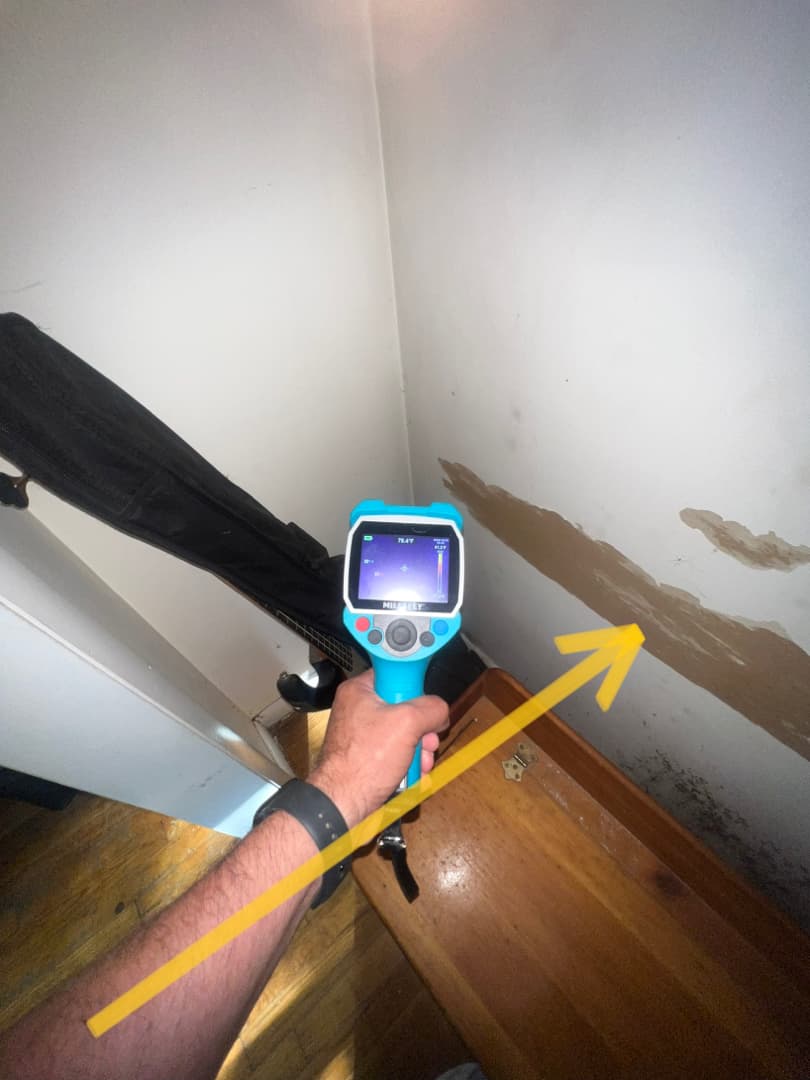
1 / 9What the homeowner saw: staining at the base of the bathroom door casing.
See How the Work Was Done
Darien master bathroom and garage mold remediation in 20 seconds: the stain at the door, the garage side of the wall, the rotted subfloor under the shower, five days of containment, and the garage clean and drying.
What Happened
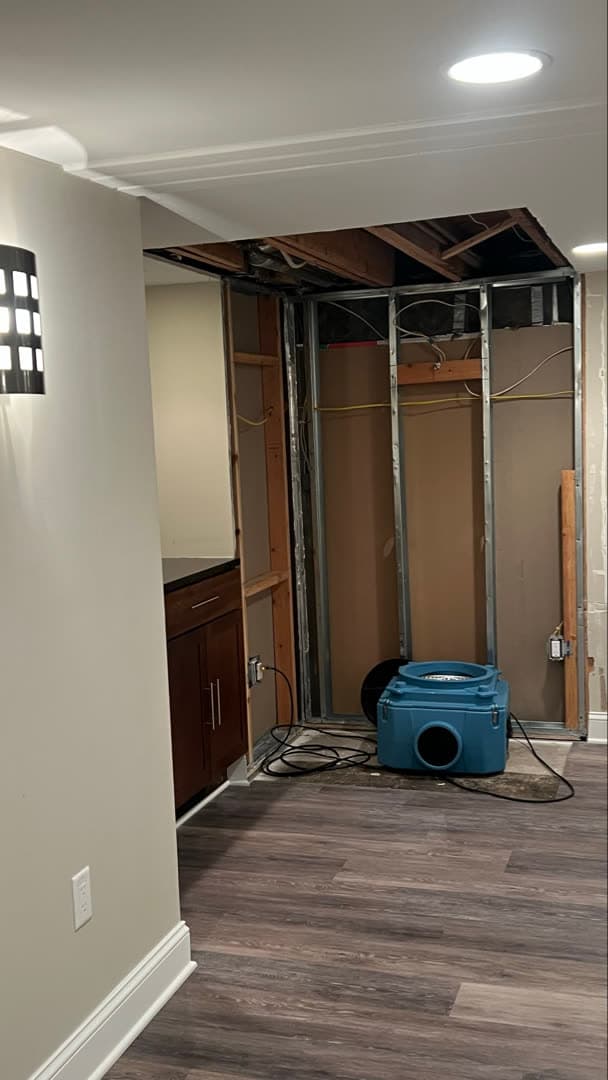
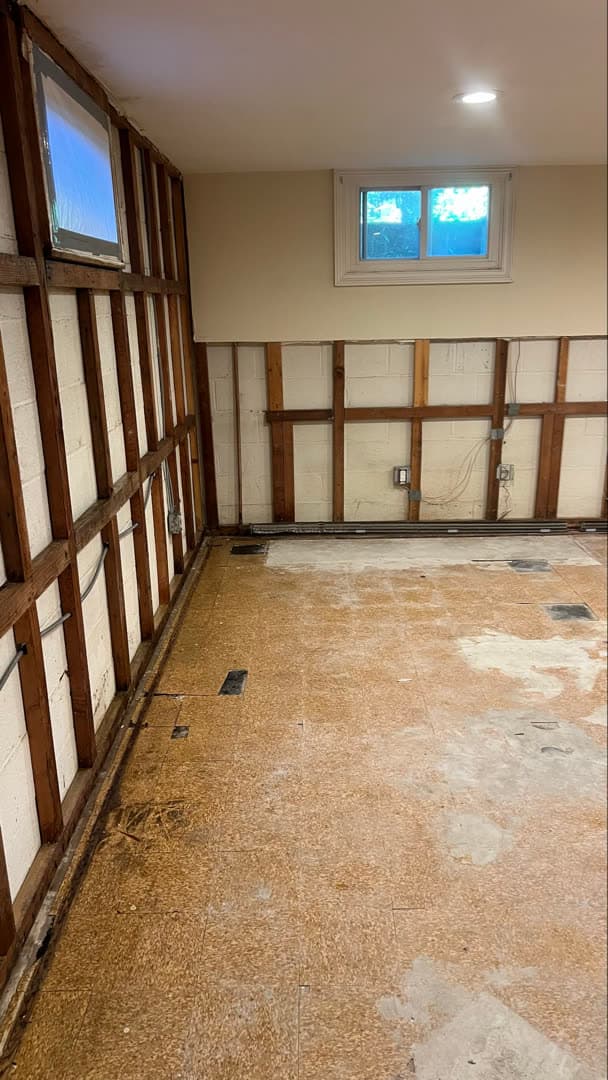
What the homeowner could see was a dark stain at the bottom of the master bathroom door casing and a patch on the garage side of the wall the two rooms share. What the moisture readings said was that the water had been running for a long time. The tile floor came up and the subfloor under the shower was black and soft around the drain, with the joists below it wet. On the garage side, the drywall and insulation on the shared wall and the garage ceiling carried mold across the back of the board and onto the sheathing above the insulation. One water path, two rooms, and everything between them had to come out.
Scope of Damage
Master Bathroom Subfloor
SevereSubfloor under the shower rotted through around the drain, joists below stained and wet. 160 square feet of tile floor removed to reach it, vanity top, vanity and toilet detached.
Garage Ceiling and Shared Wall
SevereDrywall and batt insulation on the garage ceiling and the wall shared with the bathroom carried mold on the back of the board and the sheathing behind it. 540 square feet of drywall and insulation torn out and bagged.
Garage Joist System
Moderate204 square feet of exposed ceiling joists wet-wiped and treated once the drywall was down, then the open cavities HEPA vacuumed.
How We Solved It
- 1
Containment and Negative Air
288 square feet of poly containment with an airlock sealed the bathroom and the garage work zones from the house, the floors were protected along the access path, and a HEPA negative air scrubber ran for five days with lay-flat ducting carrying the exhaust out.
- 2
Tear-Out
Tile floor up in the master bathroom, vanity and toilet detached, then 540 square feet of drywall and insulation removed from the garage ceiling, the shared wall and around the bathroom, bagged inside containment.
- 3
Cleaning and HEPA Vacuuming
The garage joist system wet-wiped and bio-cleaned, then every open cavity on both sides HEPA vacuumed in detail so no spores were left in the framing.
- 4
Drying and Close-Out
A large LGR dehumidifier ran for five days alongside the scrubber until the framing and subfloor read dry, then the moisture readings were logged and the spaces handed back ready for the rebuild.
Tools & Equipment Used
Questions Homeowners Ask
Why did a bathroom mold problem end up in the garage?
The master bathroom and the garage share a wall. Water that got under the shower ran along the subfloor and into that wall cavity, and the garage side, which nobody looks at, is where it showed up first. When two rooms share a wet wall, both sides are part of the job.
Did the tile floor really have to come up?
Yes. The moisture readings on the marble were high and the subfloor under it was rotted around the drain. There is no way to dry or clean a subfloor through a tile floor, and leaving it means the rebuild goes on top of rot.
What is the containment and negative air for?
Tearing out moldy drywall and insulation releases spores. The sealed poly with an airlock keeps them out of the rest of the house, and the HEPA scrubber pulls the air through a filter and exhausts it outside through ducting for the whole job.
Why five days?
Two of them are tear-out and cleaning. The rest is drying: the framing and subfloor have to read dry on the meter before the cavities are closed, and a dehumidifier and scrubber running continuously is what gets them there.
Does this include putting the bathroom back together?
This job was the remediation and drying. The rebuild, new subfloor, tile, drywall and fixtures, is a separate scope and starts once the moisture readings are documented dry.
Was the mold tested first?
The visible growth and the moisture readings were enough to define the work. Where a homeowner wants air sampling before or after, we offer it in Connecticut and Massachusetts through an independent lab.
Darien is served by
Green Restoration of Fairfield County
Available 24 / 7 for emergency response