Mold in a Basement Playroom Ceiling in Westport
 1 / 9
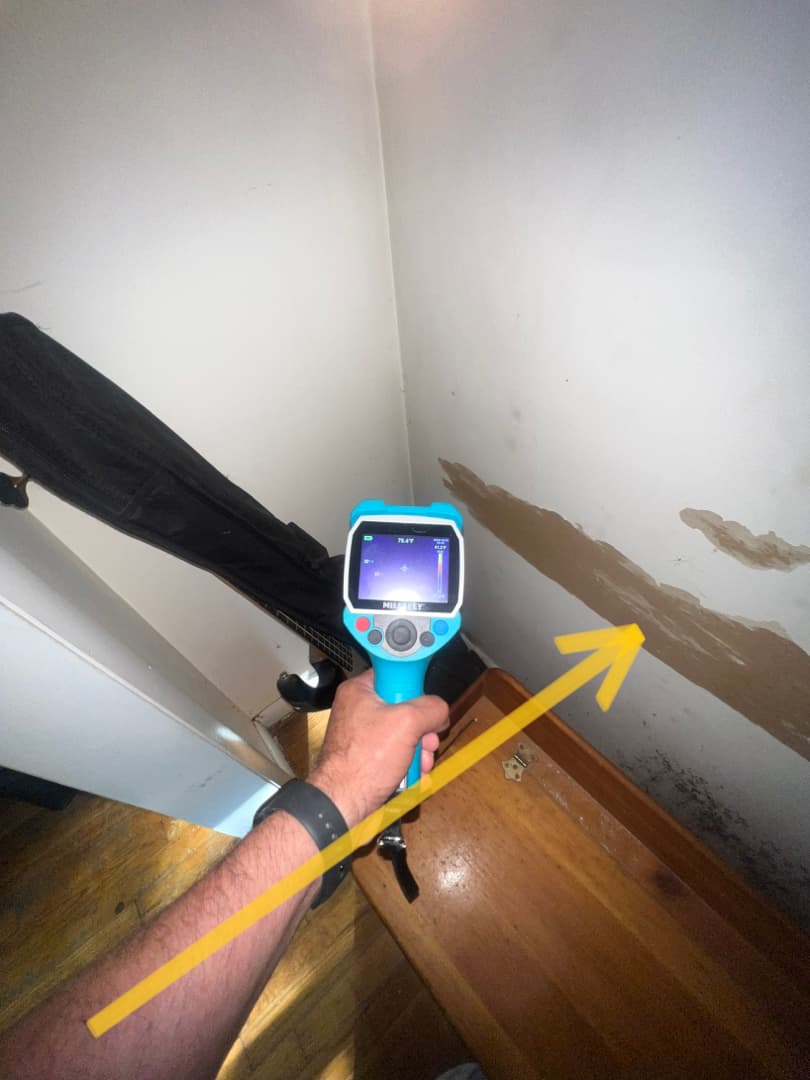
1 / 9What the family saw: a dark patch at the top of a wall column, where the drywall meets the ceiling.
See How the Work Was Done
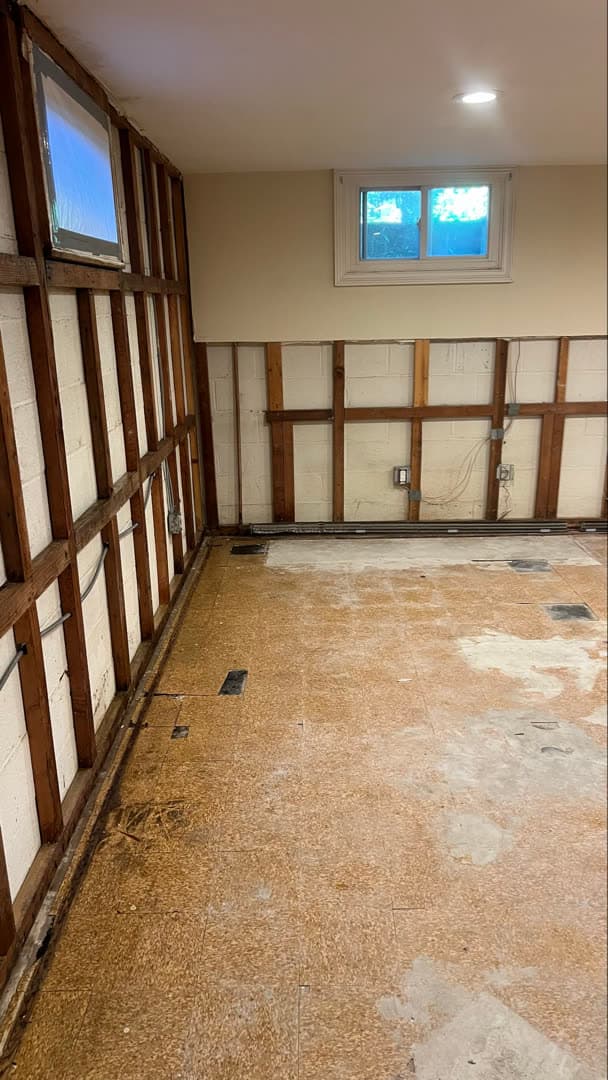
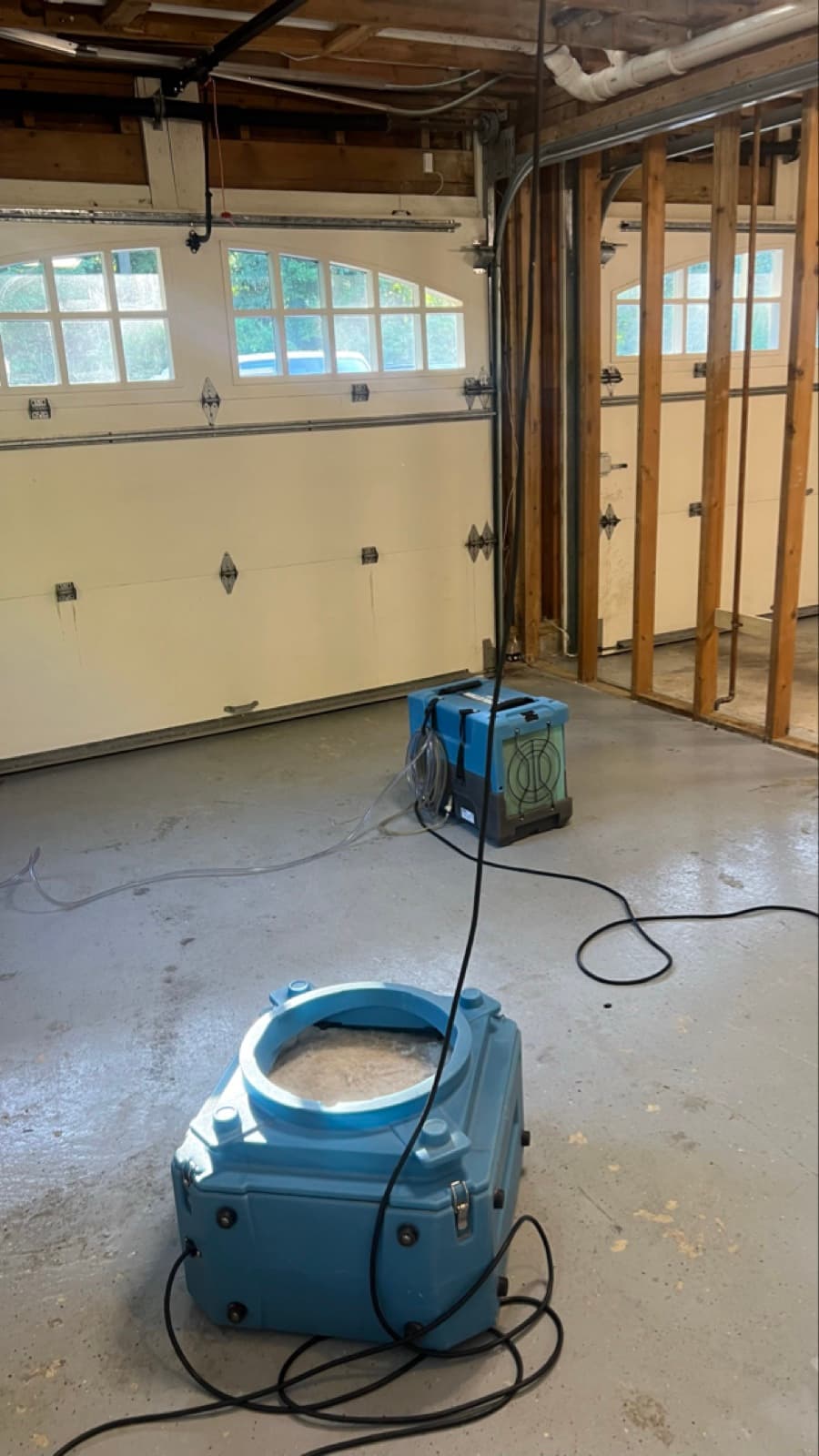
Real photos from this Westport job: the dark patch at the playroom ceiling, the stained corner below it, the water on the other side of the wall, and the wall opened to the framing on completion day.
What Happened
The first thing the homeowner noticed was a dark patch at the top of a wall column in the basement playroom, right where the drywall meets the ceiling beside a mirrored wall. At the foot of the same corner the baseboard was stained and flaking. Moisture readings taken at the floor in that corner came back high, so the assessment on September 18 followed the wall through to the other side.
The unfinished half of the basement showed the rest of the picture: water sitting on the slab around the air handler and beside the oil tank, and mold along the base of a painted wall panel where that water had been standing. The areas to remove were marked up on the assessment photos so the work would follow the evidence. On the work day the crew built a containment barrier with a zipper door and a decontamination chamber, set a HEPA negative air scrubber with lay-flat ducting, and moved the playroom contents out of the way.
The affected drywall came off the column and the ceiling above it in the playroom and along the unfinished area by the oil tank, the insulation behind it came out and was bagged, and a section of the wall mirror was removed to reach the wall it covered. The exposed joists and stud wall were HEPA vacuumed and fogged with a plant based antimicrobial, and the horizontal and vertical surfaces in the work area were HEPA vacuumed and wiped down. The job was completed on September 22 with the framing open. Rebuilding the wall and ceiling is a separate scope.
Scope of Damage
Playroom Wall Column and Ceiling
ModerateDark growth at the ceiling line on a wall column beside the mirrored wall. The drywall on the column and the ceiling above it came off, with the insulation behind it, and a section of the mirror was removed to reach the wall.
Baseboard Corner
LightStained, flaking baseboard at the foot of the same corner, where the moisture readings at the floor came back high.
Unfinished Area by the Oil Tank
ModerateWater on the slab around the air handler and beside the oil tank, and mold along the base of a painted wall panel. Affected drywall in this area was removed as part of the same 150 linear feet.
How We Solved It
- 1
Containment and Decon Chamber
120 square feet of containment barrier with a zipper door and a decontamination chamber for the technicians and the debris, so nothing from the opened walls crossed into the rest of the house.
- 2
Negative Air
A HEPA negative air scrubber ran inside the containment for three 24 hour periods, exhausting through lay-flat ducting.
- 3
Removal
150 linear feet of affected drywall and 150 square feet of insulation removed and bagged from the playroom column and ceiling and the unfinished area by the oil tank, plus a section of the wall mirror.
- 4
HEPA Vacuuming and Antimicrobial
150 square feet of exposed joist system and stud wall HEPA vacuumed, then fogged with a plant based antimicrobial through a cold ULV fogger to reach the cavity surfaces.
- 5
Environmental Cleaning
300 square feet of horizontal and vertical surfaces in the work area HEPA vacuumed and wiped down, contents reset, and the debris hauled off site.
Tools & Equipment Used
Questions Homeowners Ask
Why did a spot on the playroom ceiling lead to the unfinished side of the basement?
Mold at the top of a wall is where it showed, not necessarily where the water came from. The readings at the floor in the same corner were high, so the assessment followed the wall through. On the unfinished side there was water on the slab and mold at the base of a wall, which put both sides of the wall in the scope.
What is the decontamination chamber for?
It is a sealed space between the work area and the rest of the house. Technicians and bagged debris pass through it on the way out, so material disturbed inside the containment is not carried across finished rooms. On this job it sat inside 120 square feet of containment with a zipper door.
Why remove drywall and insulation instead of cleaning the surface?
Drywall and insulation are porous. Growth on the face of the board usually continues into the paper and the cavity behind it, and wet insulation holds moisture against the framing. Removing the affected material exposes the framing so it can be HEPA vacuumed and treated directly.
What does the antimicrobial step do?
After removal and HEPA vacuuming, a plant based antimicrobial was fogged across 150 square feet of exposed framing with a cold ULV fogger to reach surfaces a vacuum cannot. It follows the physical cleaning rather than replacing it.
Does the price include rebuilding the playroom wall?
No. The signed estimate on this job covered remediation only: containment, removal, cleaning, treatment and debris disposal. Replacing drywall, insulation and finishes is a separate reconstruction scope that starts once the remediation is complete.
Can you test for mold in Westport?
Yes. In Connecticut Green Restoration offers mold testing as its own service, with samples sent to an independent lab. On this job the visible growth and the moisture readings were enough to define the work, so no sampling was part of the scope.
Westport is served by
Green Restoration of Westport
Available 24 / 7 for emergency response