Mold at the Base of Finished Basement Walls in Weston
 1 / 11
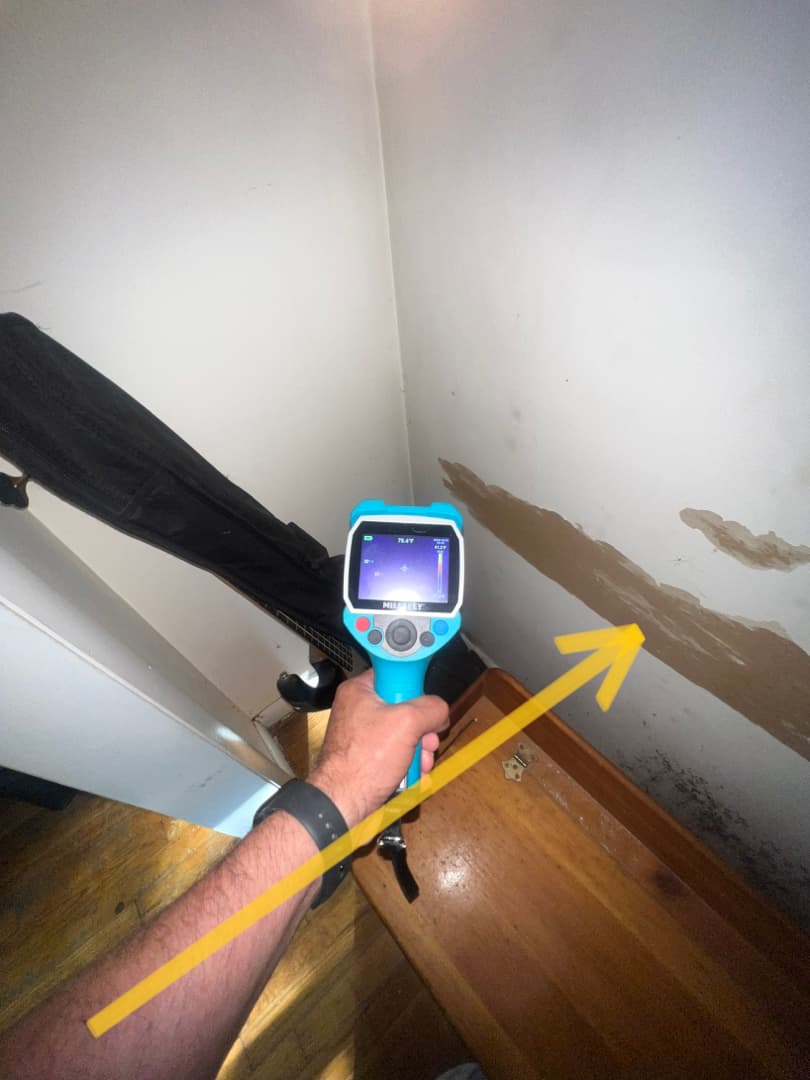
What the assessment found on August 22: growth climbing the bottom of a closet wall, heaviest at the floor line.
See How the Work Was Done
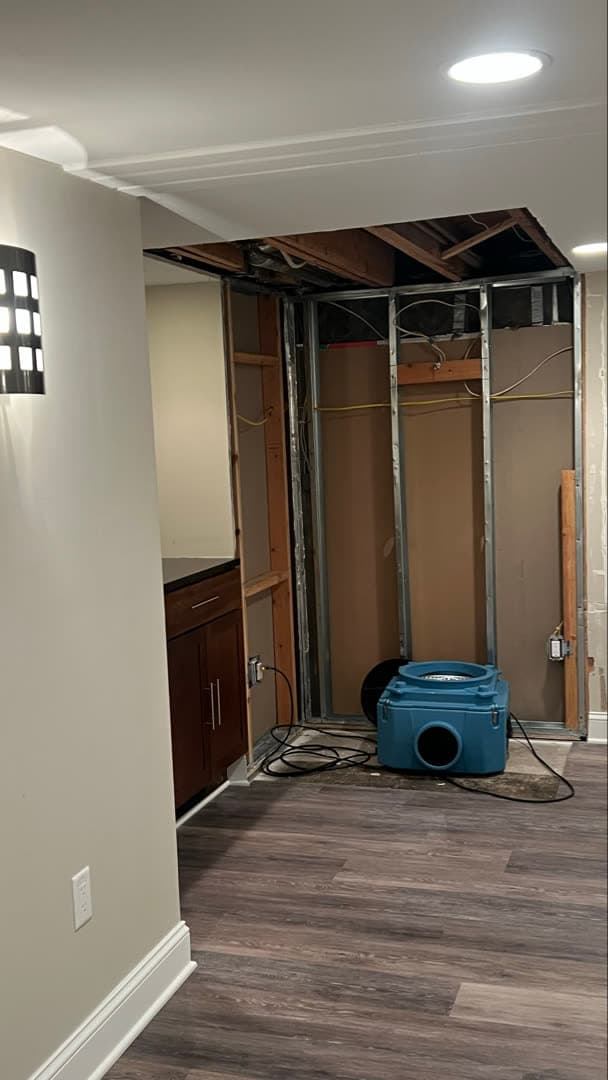
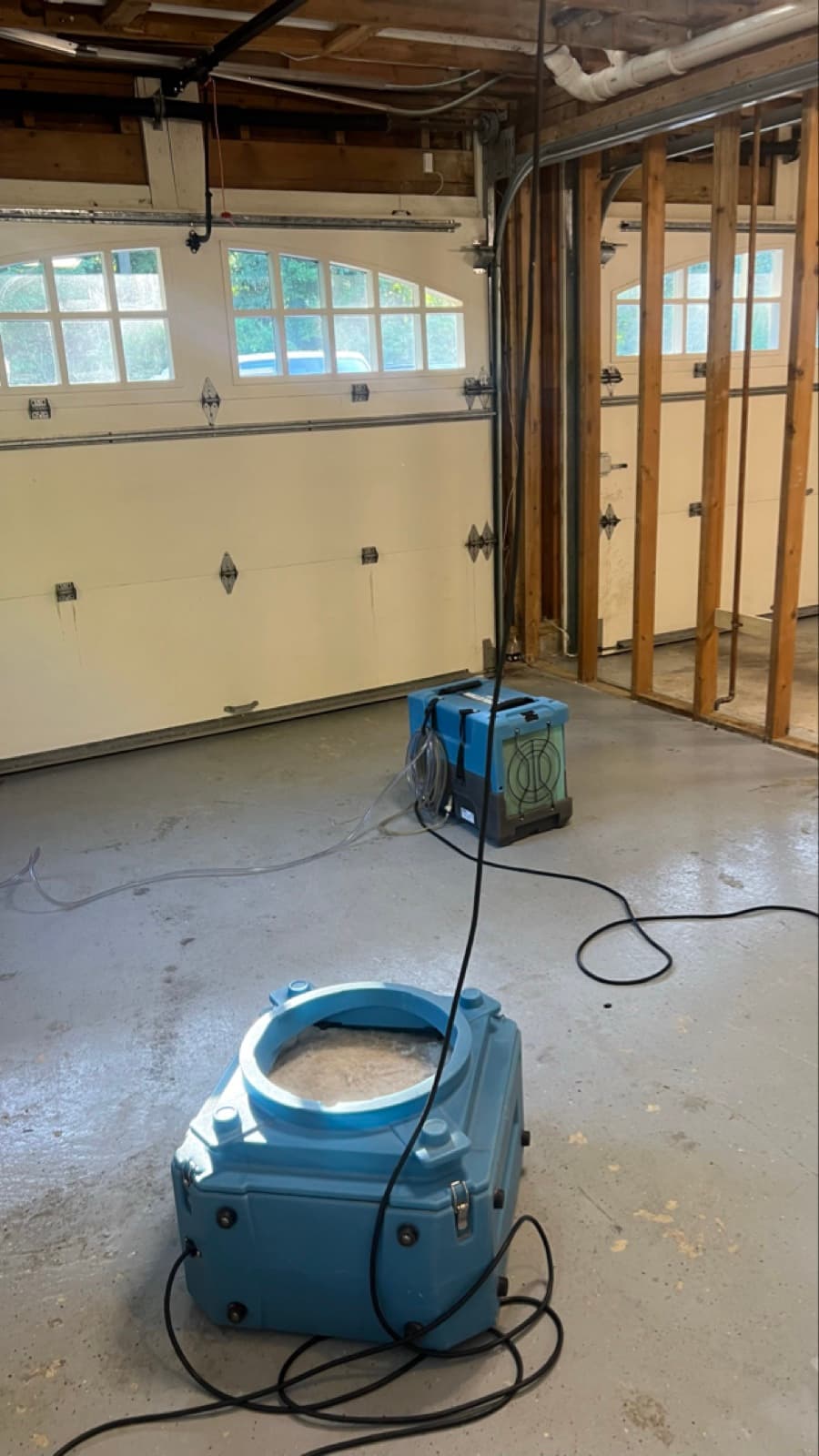
Real photos from this Weston job: mold at the base of the walls, the sealed corridor, the back of a removed board, and the lower walls opened to the block.
What Happened
The assessment on August 22 found the same pattern in several places across the finished lower level of this Weston, CT home: dark growth climbing the bottom of the drywall, heaviest right at the floor line. It showed inside a closet behind the hanging clothes and under a shelving unit, along the base of the main room walls, beside a doorway, and in a corner where the painted drywall meets the concrete block foundation. The finish walls here were built against the block, with drywall on wood furring and rigid foam board between the furring strips.
An assembly like that can hold moisture against the back of the board where nobody sees it, so the visible spots were treated as the edge of the problem rather than all of it. The work was set up so nothing disturbed inside the walls could travel through the house. A poly lined corridor with floor protection ran to the exterior door, a small space was sealed in poly as a chamber, and a HEPA air scrubber exhausted through lay-flat ducting out a window.
Inside that envelope the lower part of the affected walls came off, and the back of the removed board showed growth that had not come through to the painted face. Where the photos show bare block, the foam board behind the drywall came out as well. The exposed framing and block were then HEPA vacuumed. A bathroom on the same level was opened the same way along the lower walls behind the toilet and the vanity.
Scope of Damage
Closet Walls
SevereHeavy dark growth across the bottom of the drywall inside a closet, behind the hanging clothes and under the shelving unit.
Main Room Walls and Corners
ModerateGrowth along the base of the finished walls, beside a doorway and in a corner where the drywall meets the block foundation. The lower walls came off down to the furring, the foam board and the block.
Lower Level Bathroom
ModerateThe lower walls behind the toilet and the vanity opened to the studs in the same pass.
How We Solved It
- 1
Assessment
The lower level was walked and photographed on August 22, room by room, to document where the growth showed at the base of the walls.
- 2
Containment and Negative Air
A poly lined corridor with floor protection ran to the exterior door and a small space was sealed in poly as a chamber, with a HEPA air scrubber exhausting through lay-flat ducting out a window.
- 3
Lower Walls Opened
The lower part of the affected walls came off in the main rooms, the closet and the bathroom, and the foam board behind the drywall came out where the block is now bare.
- 4
HEPA Vacuuming
The exposed framing, furring and block were HEPA vacuumed so loose debris and spores were captured rather than spread.
Tools & Equipment Used
Questions Homeowners Ask
Why does mold show up at the bottom of finished basement walls?
The bottom of a basement wall is where moisture collects. Finish walls built against concrete block, as these were, sit on drywall and furring that can hold moisture against the back of the board. Growth tends to start at the floor line and climb, which is the pattern this Weston lower level showed in several rooms.
Why open the walls instead of cleaning the stains?
Drywall is porous, and what shows on the painted face is usually less than what is on the back. On this job the back of a removed panel carried growth that had not come through to the front. Opening the lower walls is how the hidden side gets seen and cleaned.
What is the containment corridor for?
It gives the crew and the debris a sealed route between the work area and the exterior door. With the corridor lined in poly and the floor protected, material from the opened walls leaves the house without crossing the finished rooms.
What does the HEPA air scrubber do?
It pulls air from the work area through a HEPA filter and pushes it outside through lay-flat ducting. That keeps the work area under negative pressure, so particles disturbed during demolition are drawn out rather than drifting into the rest of the home.
Is rebuilding the walls part of mold remediation?
Remediation removes and cleans. Closing the walls back in with new material is a separate reconstruction step, and it should wait until the cause of the moisture has been dealt with so the new wall is not built into the same conditions.
Can you test for mold in Weston?
Yes. In Connecticut Green Restoration offers mold testing as its own service, with samples read by an independent lab. Where growth is visible and the pattern is clear, as it was here, the work can be defined from the inspection and the photos.
Weston is served by
Green Restoration of Westport
Available 24 / 7 for emergency response