Certified Mold Remediation Conway, MA
South River Valley Damp And Hill Town Cellars Cleared In 2026 Conway Village To Burkeville And South Part, S520, ACAC, AMRT, WRT
 IICRC Certified
 Eco-Friendly Solutions For Healthier Spaces
Reviewed by David Megeneishvili·Fully Insured·IICRC AMRT + WRT
What Is IICRC S520 Mold Remediation?
Mold remediation is the IICRC S520-2024 documented process of source-cause moisture diagnosis, HEPA-filtered negative-air containment construction, condition-1 vs condition-2 vs condition-3 substrate triage, controlled removal of porous Condition 3 materials, antimicrobial application of EPA-registered formulations, HEPA post-cleaning, and ACAC-certified independent third-party clearance verification before any reconstruction.
In Conway, MA, remediation is sequenced strictly: identify and stop the moisture source, build containment with negative-air HEPA AFD machines and 6-mil poly barriers, remove visibly contaminated porous materials, decontaminate semi-porous surfaces per S520 § 12.2, antimicrobial mist treat, HEPA vacuum the work area, and only release containment after independent third-party air and surface sample clearance falls inside the Condition 1 envelope.
- IICRC S520-2024 aligned
- HEPA negative-air containment
- ACAC independent clearance
- EPA-registered antimicrobials
Why Conway Mold Jobs Run IICRC S520
Massachusetts has no mandatory mold licensing regime, but post-2020 building-code amendments require IICRC S520-aligned remediation scope, third-party clearance testing, and ASTM D7338 microbial sampling documentation on residential jobs over $15,000.
Green Restoration runs IICRC S520-2024 protocol with HEPA negative-air containment, ACAC-certified independent third-party clearance, and full chain-of-custody microbial documentation on every remediation.
Complete Mold Remediation In Conway, MA
S520 containment built for rubble stone cellars, 1840s village framing, and flood-touched assemblies along the South River, reaching all of 01341 the same day.
Same-Day Mold Inspection And Air Sampling
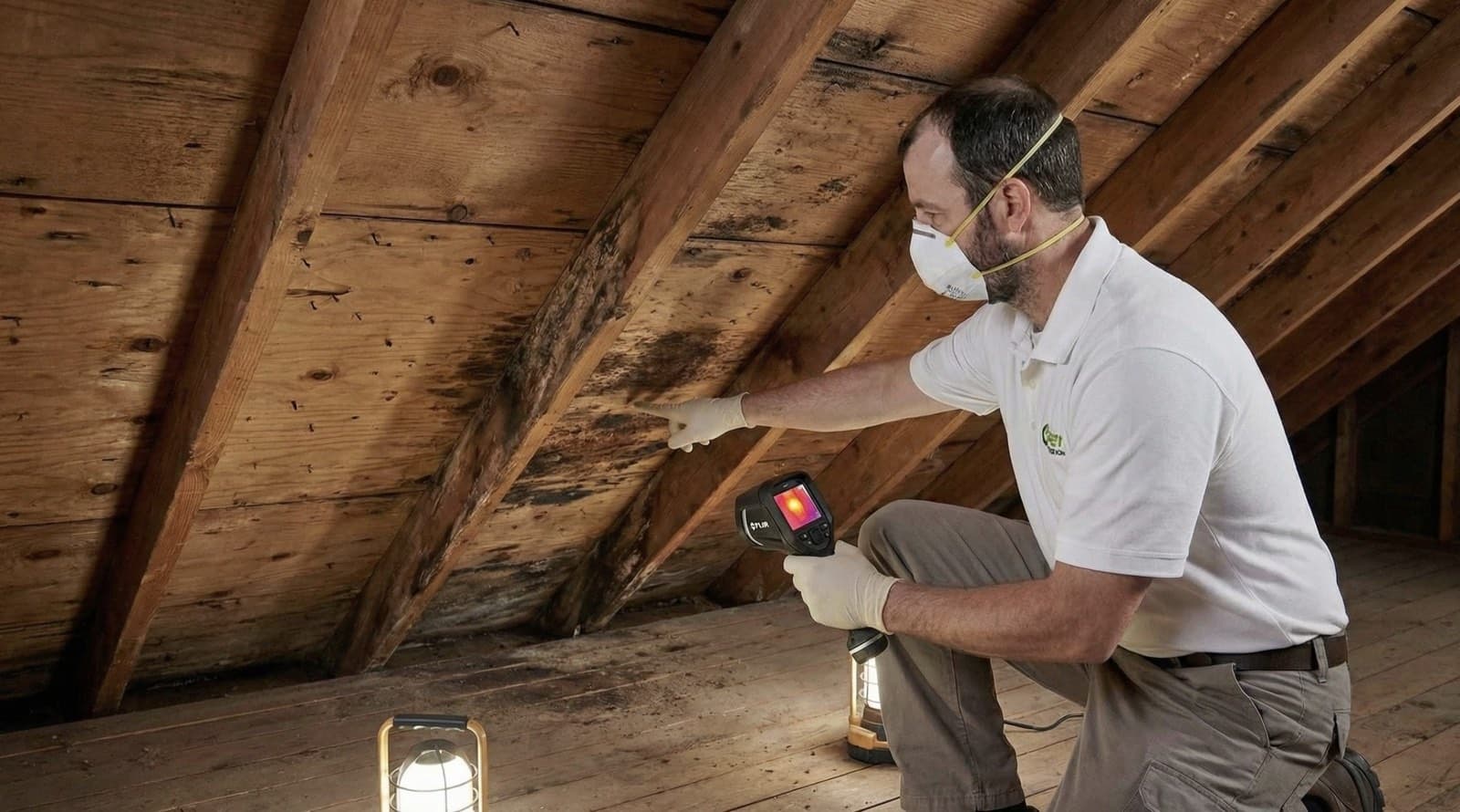
Conway spreads 1,761 people across 37.9 square miles of hill country that was once organized into sixteen separate school districts, and a town with no municipal water gives an owner no meter reading to expose a slow leak. Green Restoration reaches every address in 01341 the same day with Tramex meters, FLIR imaging and ACAC-certified cassettes, mapping how water actually moves down a 673 ft hillside before anything gets opened.
IICRC S520, ACAC air sampling, whole town same day
Full Mold Remediation And Removal
Forty percent of the village center building stock went up during the boom years of the 1840s and 1850s and is Greek Revival in character, while the hill farms outside the center follow no single pattern at all. Green Restoration sizes HEPA negative-air containment to the assembly actually present, removes material under IICRC S520 while sparing what the meters clear, and reads closing counts against the day-one outdoor baseline.
IICRC S520, Hospital-grade containment
Stone Cellar And Basement Mold Cleanup
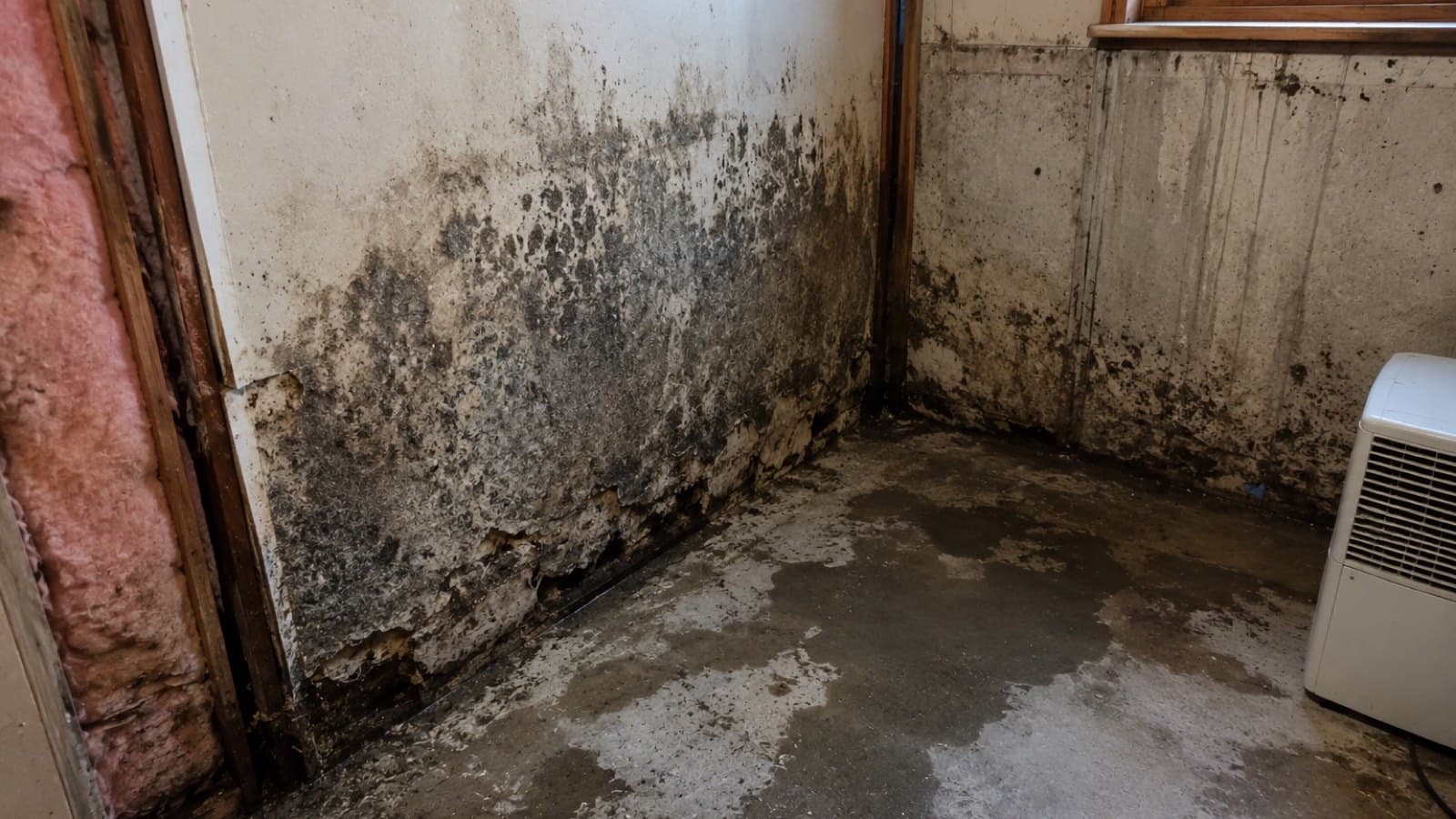
The South River corridor runs through glacial till, small gravel beds, bedrock and the remnants of old mill ponds, and ground like that refuses water rather than absorbing it. On a sloped Conway lot the runoff arrives through the uphill face of a stone foundation wall instead of up through a floor. Green Restoration removes affected material, dries masonry to metered content, corrects the grading and roof water feeding it, and sizes dehumidification to a hillside cellar.
Dehumidification, Source correction
Additional Mold Remediation Services In Conway
Crawlspace Mold Remediation
Houses set into till and shallow ledge on the Conway hillsides sit over partial cellars and crawl spaces dug to whatever depth the rock allowed, and ground moisture rises through those floors every month of the year. Green Restoration HEPA cleans and treats the framing per IICRC S520, seals the ground plane, and holds the space at a metered humidity that the sills and joists above it can actually survive.
Black Mold (Stachybotrys) Remediation
A building that took river water on 2011-08-28, when the South River gage read 9,300 cubic feet per second at 14.27 feet, holds moisture in framing and subfloor long after the visible water is gone, and that is the window Stachybotrys needs. IICRC S520 double-poly containment under negative air isolates the zone, removal and treatment follow the standard, and clearance proves ambient counts before the space goes back into use.
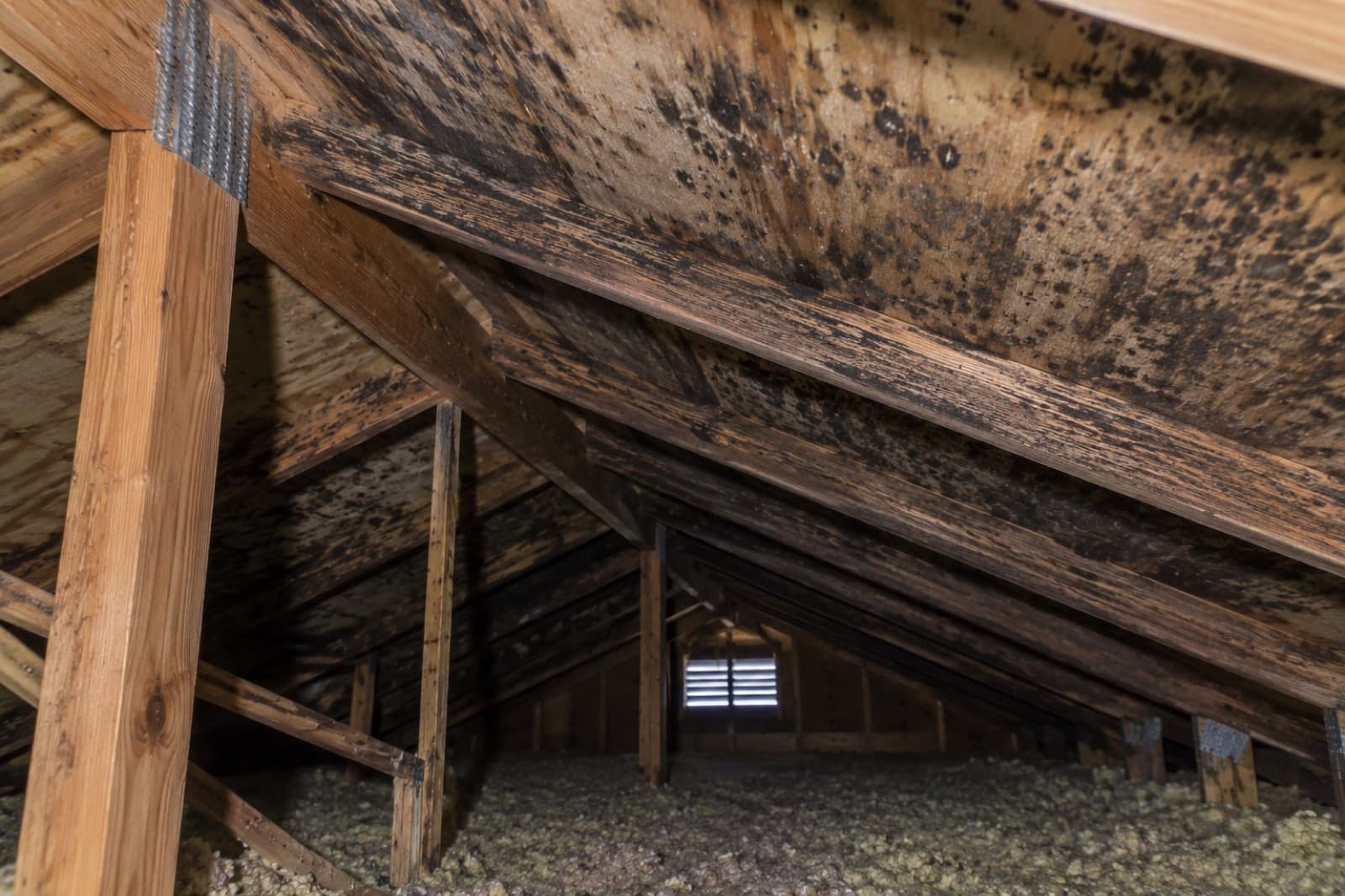
Attic Mold Cleanup
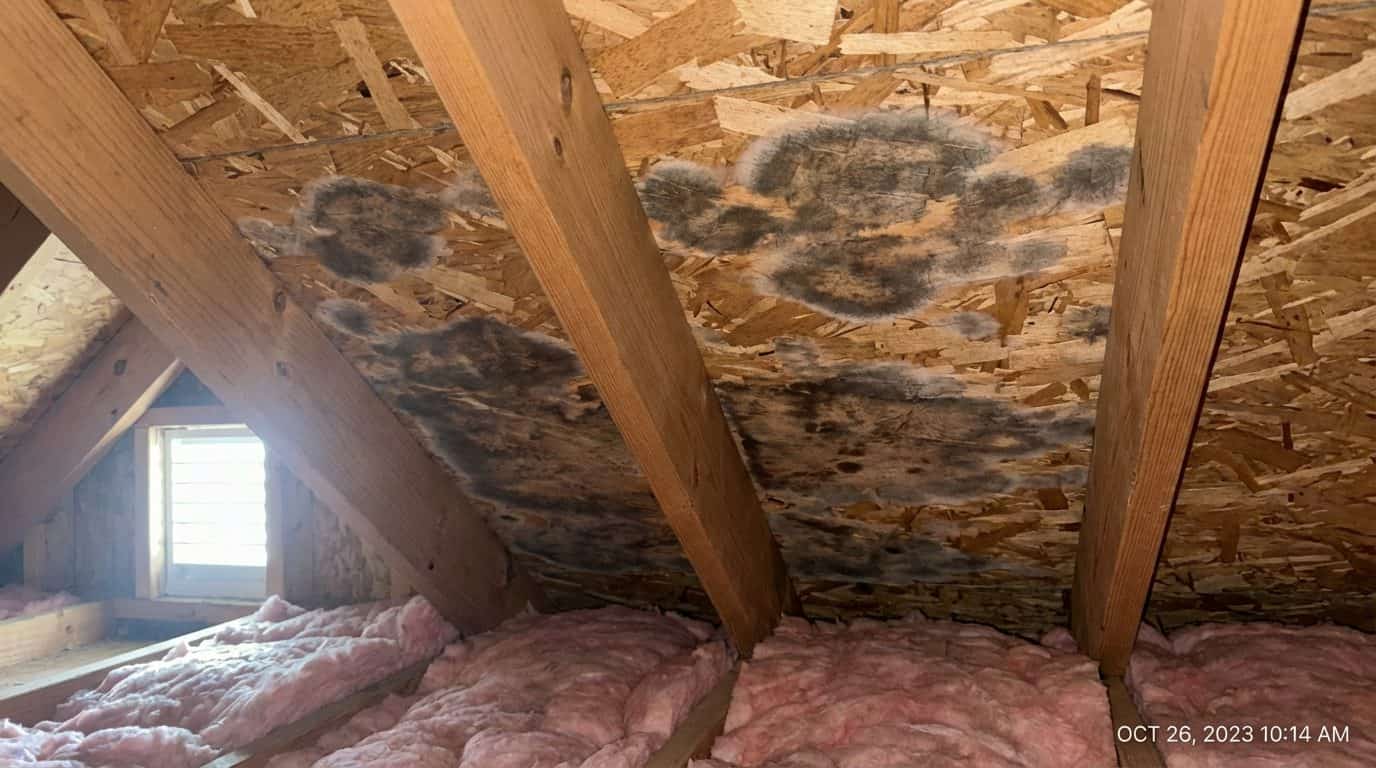
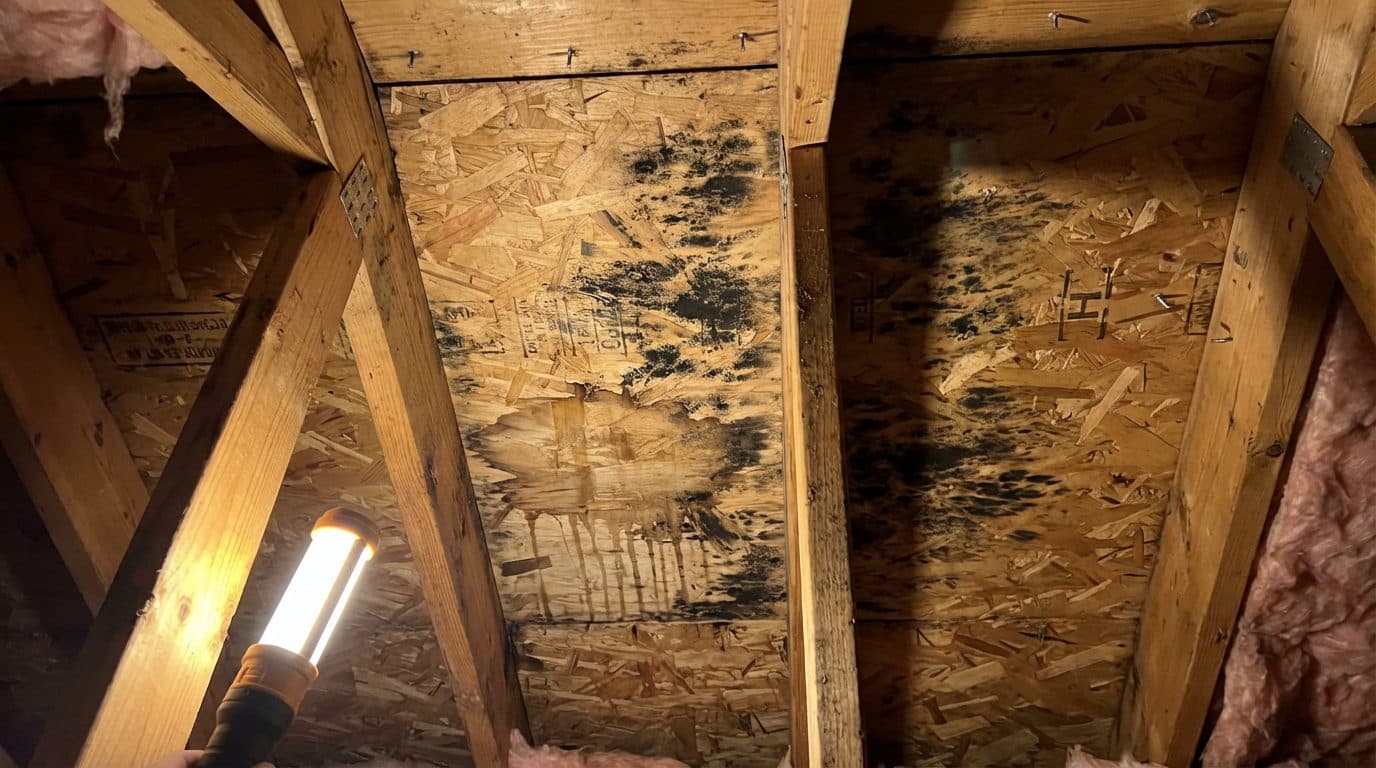
A hill town at 673 feet holds snow on a roof long after the valley floor has cleared it, and a warm ceiling plane under that load builds the ice dam that stains sheathing from the eaves inward by April. Green Restoration treats sheathing and rafters per IICRC S520, corrects the bath fan and ventilation faults driving the cycle, and replaces saturated insulation before the attic is closed back up.
Bathroom And Kitchen Mold Removal
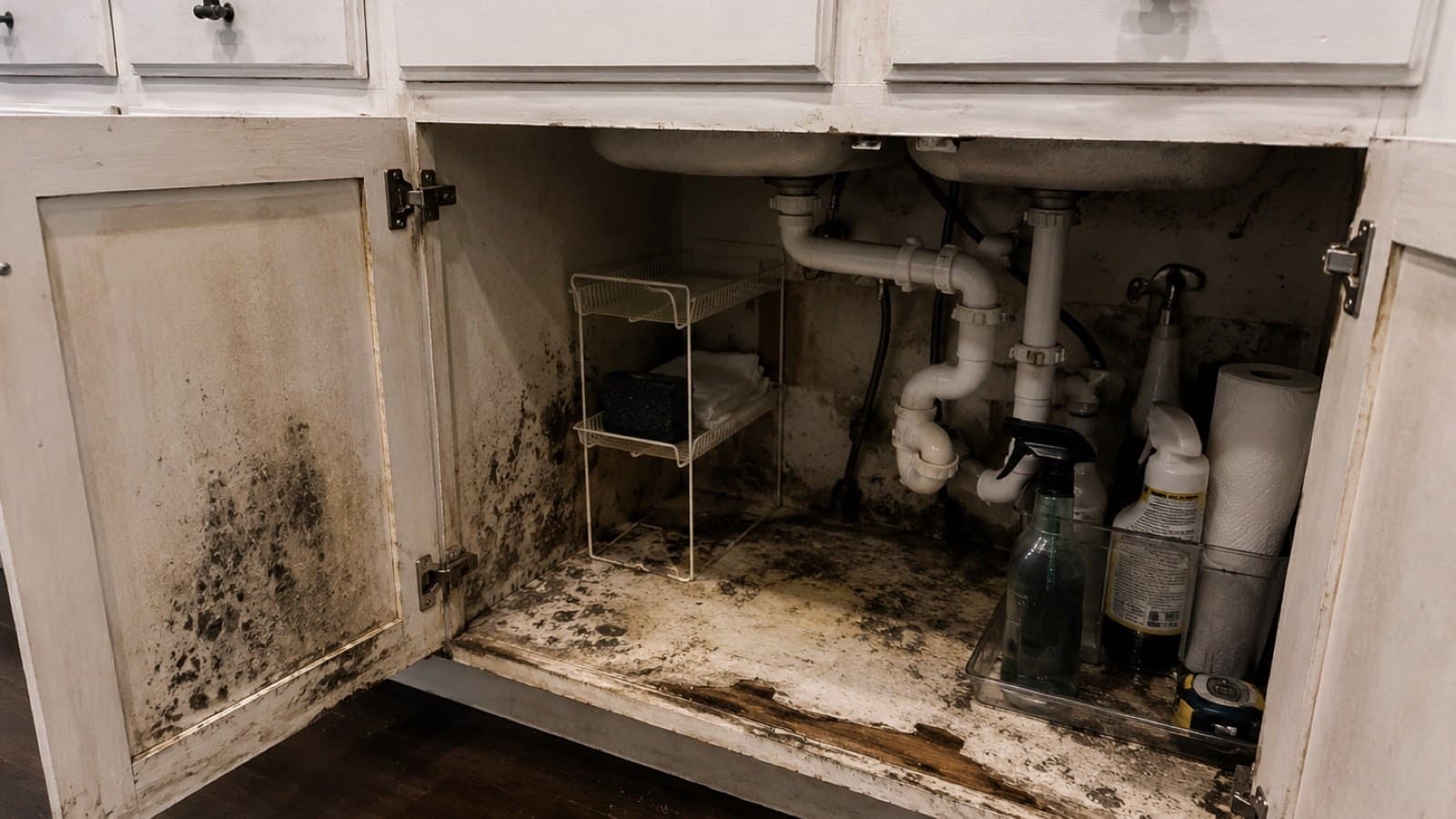
A bathroom retrofitted into a mid-1800s wood-frame house frequently vents into a roof cavity or a gable end rather than outdoors, and plaster on lath holds that moisture quietly for years. Green Restoration re-terminates every fan to exterior discharge, strips colonized backer and grout, treats substrate per IICRC S520, and rebuilds in materials that tolerate a room used by a household on well water and a septic system.
South River Flood And Storm Water Mold Response
The South River drops 1,000 feet over 17 miles before it reaches the Deerfield, so Conway floods fast and falls fast. During Tropical Storm Irene the water went over the Main Street retaining walls and took out the barricade beside the bridge. Green Restoration meters flood-touched assemblies rather than assuming they dried, opens what the numbers require, and works the removal under IICRC S520 with drying sized to soaked framing.
Post-Remediation Clearance Testing
A house on a private well and a private septic system has no municipal record standing behind it, so the laboratory file is the only independent proof the work closed properly. Closing air samples are read by an independent laboratory against the day-one outdoor baseline, and the written result serves the insurance claim now and the Title 5 and disclosure paperwork whenever the property next changes hands.
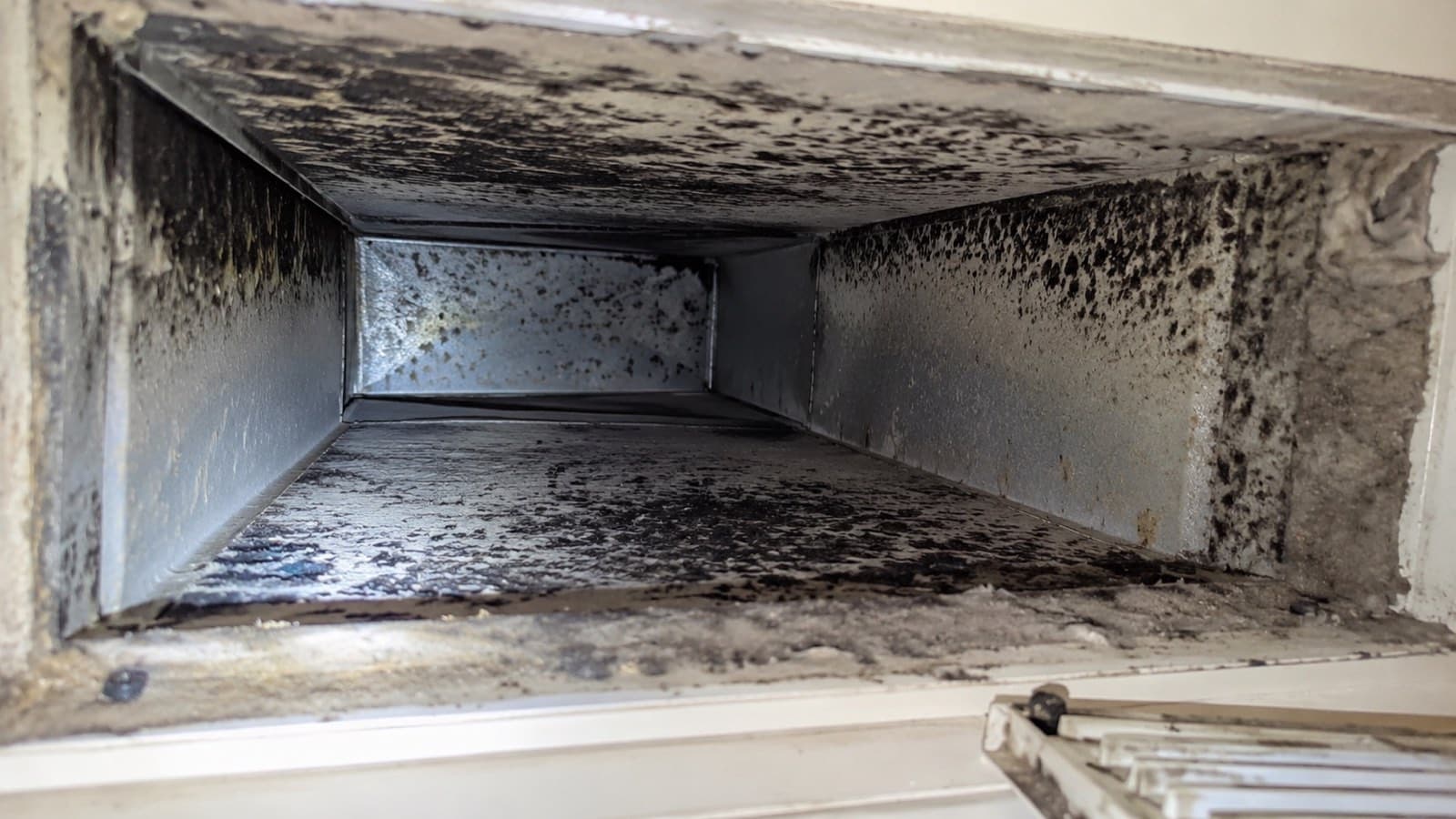
HVAC And Duct Mold Cleaning
No gas main reaches Conway, so heat here is oil, propane and wood, and duct runs pushed through an existing farmhouse usually cross an unconditioned bay where they sweat through the heating season. Green Restoration cleans and treats the system to NADCA ACR practice, corrects the insulation and termination faults feeding the condensation, and samples the supply air after the work is finished.
Historic Village Property Mold
Two National Register districts cover the village fabric, and the Federal and Greek Revival houses along Main Street, Elm Street and Academy Hill Road were framed generations before anyone drew a vapor profile. Containment for that stock is engineered around original timber and plaster on lath rather than drywall, because the seal geometry follows what we open and the material cannot be bought back.
Mold Odor And Air Quality Investigation
An owner smells something in a house with no visible growth, and on a Conway hillside the source is usually a cellar corner taking water off the slope, a crawl space over till, or a duct bay, rather than the room where the smell lands. Green Restoration meters the whole assembly, samples to an ACAC protocol, and reports what the numbers support instead of opening a wall on a guess.

Hillside Water Keeps Feeding The Cellar. Get It Inspected Today.
S520 Crews Reach Every Address In 01341 Same Day. Containment Sized To Your Foundation, Clearance Verified By An Independent Laboratory.
Green Restoration of Western Mass in Conway
Green Restoration of Western Mass handles mold remediation in Conway, MA, where the South River drops 1,000 feet over 17 miles before it reaches the Deerfield, so Conway floods fast and falls fast, leaving rubble stone cellars above the village damp. Owner-led crews set HEPA containment and remove affected porous materials to IICRC S520 standards, under IICRC Certified Firm #70236106. Call (833) 970-2121.
Why Choose Us In Conway
Owner-led mold remediation with same-day inspection, laboratory-verified clearance, and containment sized to the building across the Route 116 village, Burkeville, and the hill farms out toward South Part.
Whole Town, Same Day
Inspectors reach any address in 01341 the day you call, carrying thermal imaging, Tramex meters, and ACAC sampling cassettes ready for stone cellars, crawl spaces over till, and flood-touched lower levels alike.
Containment Sealed Against Stone
Negative air, sealed transitions, and HEPA scrubbing arranged for irregular rubble foundation walls and original plaster on lath, so remediation never costs material the house cannot replace.
Botanical Antimicrobials, No Harsh Fumes
EPA-registered Benefect Decon-30 and Concrobium treat exposed framing and lath after removal, chosen for households on a private well and for timber that has stood since the 1840s.
Clearance That Holds Up Later
Third-party ACAC sampling closes every project at or below outdoor baseline, producing documentation strong enough for a carrier, a disclosure file in a National Register district, and a private-well property with no municipal record behind it.
What Untreated Mold Costs Your Conway Home
A river that climbs to a record in one afternoon, a hillside that pushes water through stone walls, and 1840s framing that never had a vapor profile: Conway moisture starts out of sight and compounds in all three.
The River Rises In A Single Afternoon
South River Flash Flooding
The South River drops a thousand feet over seventeen miles before it reaches the Deerfield, so Conway gets a fast, violent, short-duration flood rather than a slow soak. On 2011-08-28 the gage below the village hit 9,300 cubic feet per second at a height of 14.27 feet, the highest reading since measurements began in 1966, and water went over the Main Street retaining walls.
Water Arrives Through The Wall, Not The Floor
Till, Gravel And Bedrock On A Slope
The valley here is glacial till, small gravel beds, bedrock and the remnants of old mill ponds, and ground like that sheds water rather than taking it in. On a hillside lot the runoff travels sideways and reaches a stone foundation through its uphill face, which is why a persistent musty note in a Conway cellar usually means active seepage and not age.
1869 Rearranged The Valley Floor
The Dam Breach That Took 14 Bridges
A reservoir dam on the South River gave way in 1869, destroying fourteen bridges and wrecking the mills, factories and homes along the water. The industrial base never came back at scale, but the mill pond remnants and a channel straightened over the following century did stay, and they still steer perched water and altered groundwater paths near the village.
Greek Revival Framing Was Never Built To Dry
The 1840s And 1850s Building Boom
Forty percent of the village center stock dates from the boom years of the 1840s and 1850s and is mainly Greek Revival, with Federal work beside it and Colonial Revival added in the early 1900s. Sawn timber, plaster on lath and a rubble cellar wall hold moisture quietly and give no drywall stain to warn anyone, so growth is usually established before it is visible.
Massachusetts Requires The Disclosure
Resale And Rental Turnover Both
Massachusetts follows caveat emptor, so there is no general seller disclosure statute for mold, but a seller cannot conceal or misrepresent a known problem and must answer truthfully when a buyer asks, and licensed agents carry a broader Chapter 93A duty. Professional remediation closed by laboratory clearance is what lets a Conway owner answer that question cleanly, and on a property running on a private well and a private septic system the laboratory file is the only independent record a buyer can be shown.
No Water Bill Ever Warns You Here
A Town Entirely On Private Wells
Conway has no municipal water system. Every home draws from a private well permitted through the Board of Health, with the well shown on the septic plan and drilled by a MassDEP-licensed contractor. A slow supply-line weep that a metered town would catch on a bill instead runs unnoticed for months, and the wall cavity it feeds is doing the accounting.
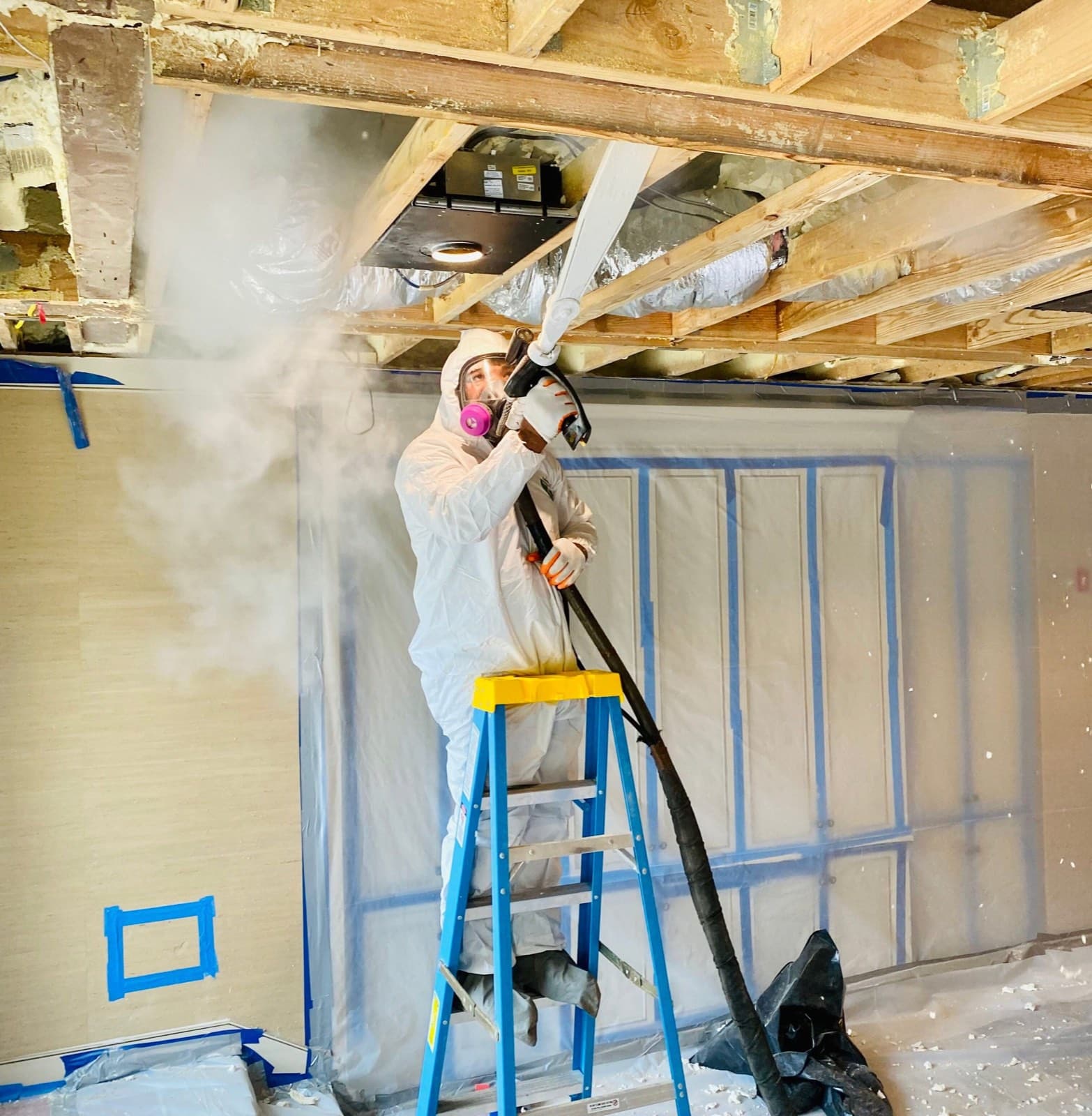
Why Conway Properties Need Professional Mold Remediation
A steep valley river, rubble cellars under 19th-century framing, and a town with no water main and no gas main put mold pressure on surfaces no cleaning product reaches. Hospital-grade containment closed by laboratory clearance is the only durable answer.
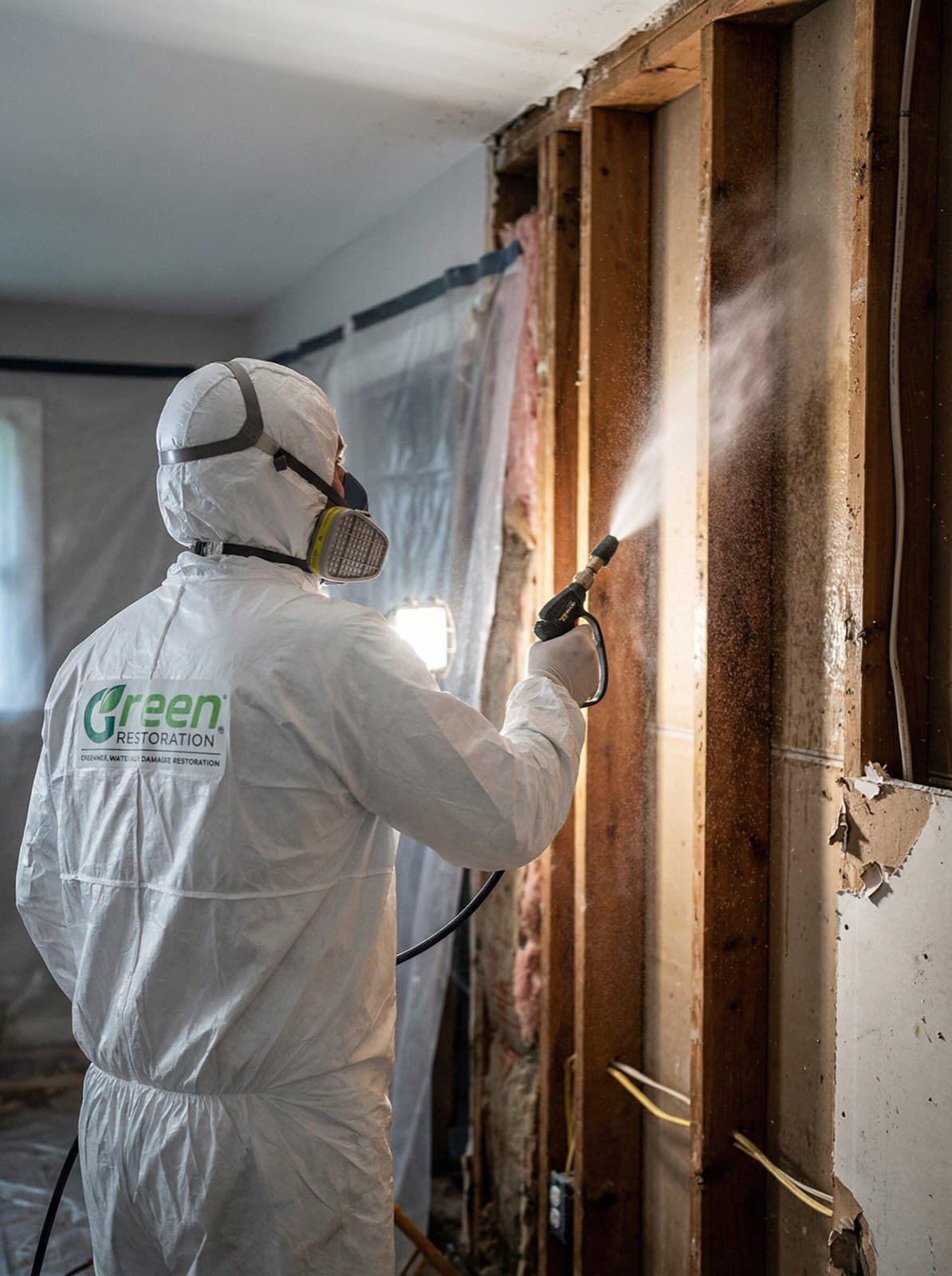
Containment Built For Stone, Not For Drywall
Every Green Restoration mold crew holds IICRC S520 certification, and Conway asks that certification a specific question: how do you seal a containment against an irregular rubble cellar wall and original plaster on lath inside two National Register districts, without losing material that cannot be replaced. The seal geometry follows the assembly we actually find, and our owner carries IICRC AMRT and WRT credentials behind every call.
One Dispatch Reaches A Scattered Hill Town
Conway spreads 1,761 people over 37.9 square miles that were once organized into sixteen school districts, and a technician reaches any of it the day you call: Conway village and Academy Hill, Burkeville and the covered bridge, Pumpkin Hollow, Shirkshire, Cricket Hill and South Part, and the farms out along Shelburne Falls Road and Bardwell's Ferry Road. Thermal imaging, moisture meters and ACAC air sampling ride along on that first visit, so a written scope exists before a price does.
Source Correction On A Hillside With No Storm Sewer
There is no municipal storm system to inherit the problem, and no municipal water main to blame either. On a Conway property the moisture path is the site itself: roof water, grading, a driveway cut that turned into a channel, a culvert the town flagged in its own stream crossing and culvert assessments, or a river reach the flood mitigation program is still working on. We bring in roofers, plumbers and HVAC contractors before any wall closes, because growth returns to whatever moisture the cleanup left alone.
Clearance Files That Serve Three Audiences
Third-party ACAC sampling closes every Conway project at or below outdoor baseline, and the package that comes out of it has to satisfy three different readers: the carrier settling the claim, the buyer whose attorney will ask what happened to this cellar, and the owner who wants proof the money bought a result. Scope, containment photography, laboratory reports and IICRC-standard documentation go into one file that adjusters at Liberty Mutual, MAPFRE, Quincy Mutual, Travelers, Allstate, USAA and Chubb can process without sending anyone back out.
The Mold We See Most in Conway
These are the mold problems we remediate most often, every job run to the IICRC S520 standard, contained with HEPA negative air, and cleared by independent ACAC air testing.
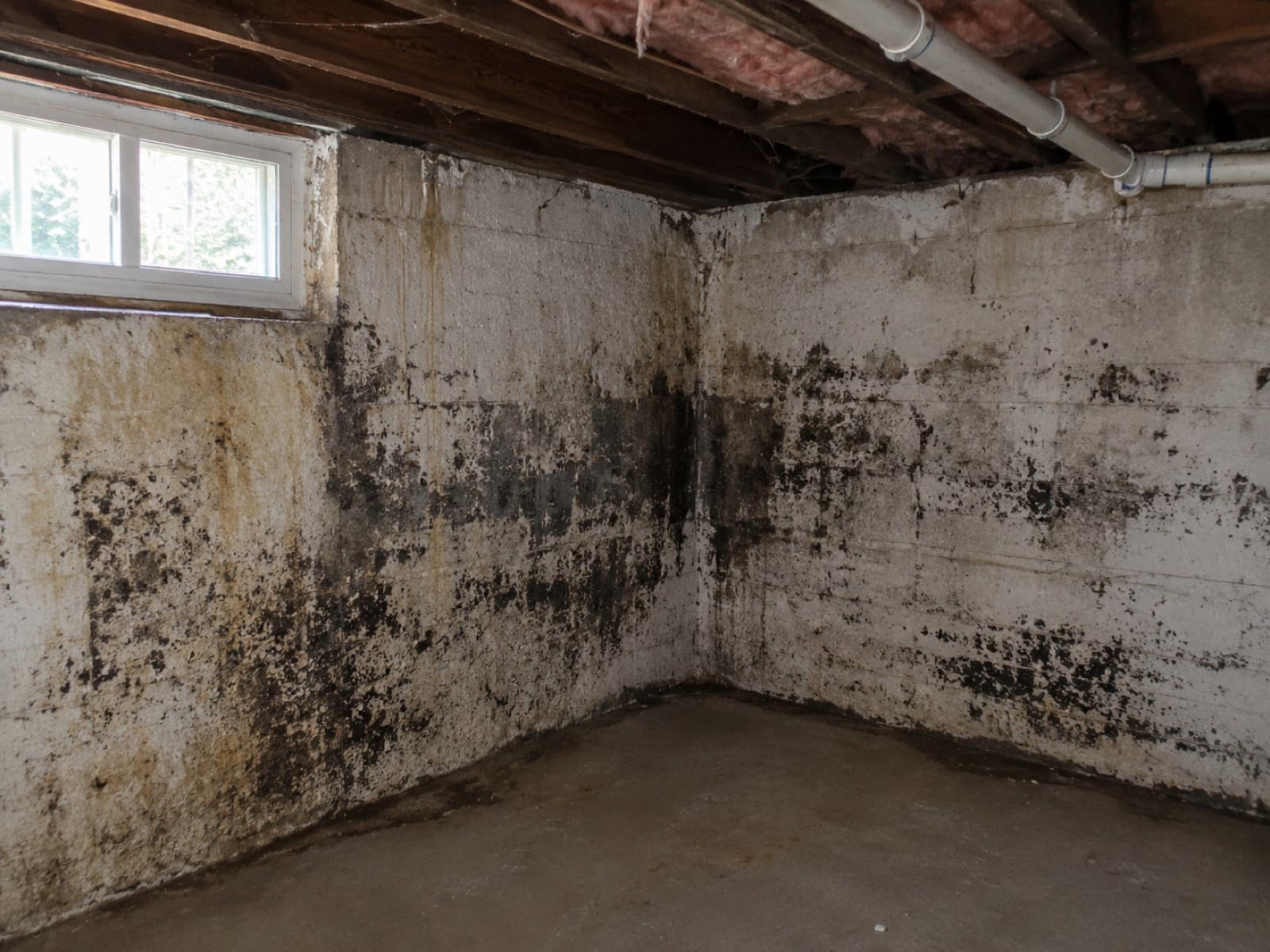
Rubble Stone Cellar Above The Village, Returned To Baseline
In Conway, hillside runoff reaches rubble cellar walls sideways, because till and ledge will not take it down.
A cellar cut into the slope never quite dries. The ground around it is glacial till and shallow bedrock that will not take water down, so every rain and every thaw arrives at the uphill face of the wall instead, and after a wet season the humidity crosses what the sills, joists and stored contents above can tolerate.
The cellar is isolated from the living floors and worked under negative air with HEPA scrubbing, with the containment sealed against irregular stone rather than a flat wall. Colonized material is removed or treated per IICRC S520, the masonry itself is left in place and HEPA cleaned, roof water and grading above the house are corrected, and drying is metered against the wall instead of the calendar.
Independent ACAC sampling puts the cellar and the rooms above it at or below outdoor baseline, and the closing file, meaning scope, source correction and laboratory numbers, is written to satisfy a carrier now and a buyer in a listed village district later.
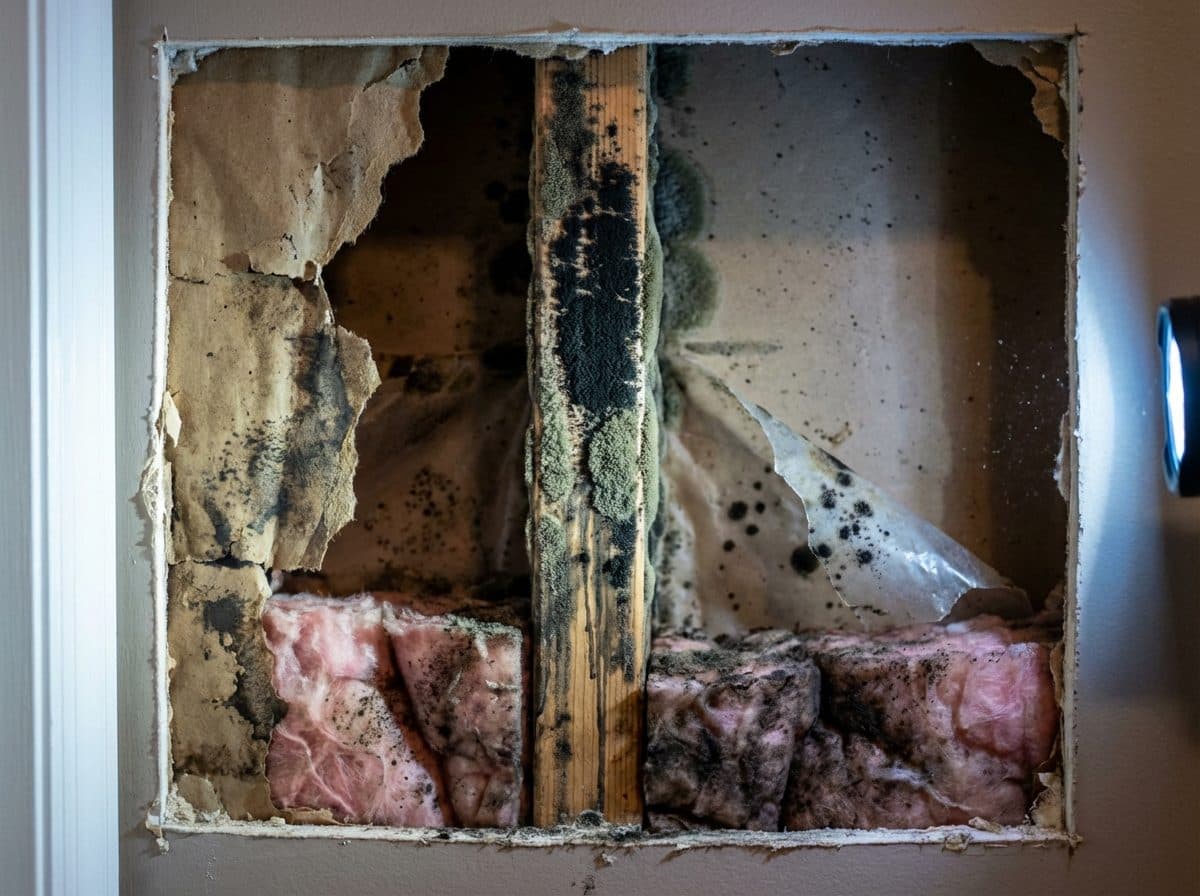
Scenario 1 of 5: Hillside Cellar Seepage
What To Do When You Find Mold In Your Home
The first 24 hours matter. Follow these steps to contain the colony and protect your air quality while waiting for our IICRC S520 certified crew to arrive.
What To Do Immediately
EPA guidelines recommend professional remediation for any visible mold patch larger than a 3x3 square foot area. Anything more releases spores beyond safe DIY containment.
Close doors leading to the contaminated room and turn off HVAC immediately. Every minute of shared air movement spreads spores throughout the rest of your home.
Take timestamped photos of all visible mold and any related water damage before cleanup begins. Your insurance adjuster will need this for the claim file.
If you must enter the contaminated area before remediators arrive, wear an N95 respirator, nitrile gloves, and sealed eye protection. Skin and airway contact with active colonies is how symptoms start.
Mold needs water to grow. Fix the leak, correct the humidity, or remediate the flood before any cleanup attempt. Scrubbing without moisture correction guarantees regrowth.
Third-party post-remediation air sampling confirms spore counts are at or below outdoor baseline. Without it, you have no way to verify the work actually worked.
What NOT To Do
Bleach lifts color on drywall, carpet, and wood but does not kill mold at the root. The colony returns within weeks and the stain looks smaller only because the surface is lighter.
Central heating and cooling circulates spores through every duct run, colonizing rooms that were never affected. Shut the system off until professional containment is in place.
EPA guidelines require professional containment for anything larger than a 3x3 patch. Tearing out drywall without negative air pressure releases millions of spores instantly.
Even mildew-resistant primer cannot seal an active colony. The mold feeds on the paper backing of drywall and bleeds through within weeks, often worse than before.
A persistent musty smell without visible mold almost always means a hidden colony behind walls, under flooring, or in ductwork. Smell usually precedes visibility by months.
Disturbed mold releases millions of spores in seconds. Ripping carpet, pulling drywall, or breaking up tile without proper negative air pressure contaminates the entire home.
Our Mold Remediation Process In Conway, MA
From the first call to final walkthrough, every step is documented, insured, and owner-supervised.
Mold Remediation Coverage In Conway, MA
Inspection, containment, remediation, and laboratory-verified clearance from the Route 116 village and Burkeville out to Pumpkin Hollow, Shirkshire, Cricket Hill and South Part, and the hill farms toward Shelburne Falls Road. Same-day inspection response from our Western Massachusetts base.
Green Restoration performs IICRC S520 certified mold remediation throughout Conway, MA, 37.9 square miles of hill country on a single ZIP code and covered end to end. Certified technicians arrive the same day carrying thermal imaging, moisture meters, and ACAC-certified air sampling kits, and stay with the property from the first inspection through hospital-grade containment to laboratory-verified clearance.
As a service-area business led by our owner across the Pioneer Valley, our crews know the moisture conditions specific to this town: a South River that drops a thousand feet over seventeen miles and set its record of 9,300 cubic feet per second at 14.27 feet on 2011-08-28, a narrow steep-sided valley where Route 116 crosses the water on Main Street, glacial till and gravel and bedrock that push hillside runoff sideways into rubble foundation walls, mill pond remnants and a channel straightened over a century and a half, and a village center where forty percent of the building stock went up in the 1840s and 1850s.
Every property here runs on a private well and a private septic system, so there is no water bill to expose a slow leak. We coordinate directly with adjusters from Liberty Mutual, MAPFRE, Quincy Mutual, Travelers, Allstate, USAA, Chubb, and every other major carrier, documenting scope from inspection through ACAC clearance on each claim across Conway and Franklin County.
Active Mold Exposure In Conway?
Inspection dispatched same day, every day of the year.
(833) 970-2121IICRC S520 · Fully Insured · All Insurance Accepted
Green Restoration Of Western Mass Covers Every Franklin County Town For IICRC S520 Mold Inspection And Remediation.
Same-Day Mold Inspection In Conway, MA
IICRC S520 crews cover all of 01341 the same day in 2026, from rubble stone cellars on the hillsides and 1840s village houses on Route 116 to flood-touched lower levels along the South River, ice-dam attic losses, and retrofit duct runs in hill farmhouses, supervised under the IICRC AMRT and WRT credentials our owner holds. Green Restoration is not a licensed public adjuster and does not negotiate claims on your behalf.
Conway runs on a single ZIP, so one dispatch covers 37.9 square miles: the Route 116 village and Academy Hill, Burkeville and the 1871 covered bridge, Pumpkin Hollow, Shirkshire, Cricket Hill, South Part, and the farms out toward Shelburne Falls Road and the Deerfield River line.
Settled in 1762 as the southwestern corner of Deerfield and incorporated in 1767, Conway built most of its village center between 1830 and 1930, with forty percent of that stock raised in the 1840s and 1850s and mainly Greek Revival in character. Two National Register districts cover it, and containment here is engineered around timber and plaster rather than drywall.
The South River rises at Ashfield Lake, falls a thousand feet over seventeen miles through a narrow valley where Main Street crosses it, and joins the Deerfield. Conway is headwaters country, not bottomland: water moves fast, ground of till and ledge refuses to absorb it, and below-grade assemblies take scope priority because hillside seepage drives most of the recurrence we are called back to inspect.
During Tropical Storm Irene on 2011-08-28 the USGS gage on the South River near Conway recorded 9,300 cubic feet per second at a height of 14.27 feet, the highest in a record that begins in 1966, and the water went over the Main Street retaining walls. An 1869 dam breach on the same river destroyed fourteen bridges. Assemblies wetted in a fast rise can hold elevated moisture for months, which is why flood-touched buildings get metered rather than assumed dry.

About Green Restoration In Conway, MA

IICRC AMRT+WRT Certified
Conway receives the full IICRC S520 discipline applied to a hill town rather than a valley one: spore sampling read against a real outdoor baseline, containment sealed against irregular rubble cellar walls and original plaster inside two National Register districts, physical removal that spares material the meters clear, and source correction that takes hillside runoff and a fast-rising South River seriously. Owner-operated under IICRC AMRT and WRT certified leadership, documented end to end for property owners and their carriers across Franklin County, without unnecessary steps or delays.

“As the local co-owner covering Conway and Franklin County, I bring 15 years of IICRC AMRT and WRT certified restoration experience to a town where the hillside sets one problem and the river sets another. Every mold project here gets my direct oversight, from containment setup through ACAC clearance sampling. We work with owners and insurers across Franklin County to document scope clearly and restore properties the right way, without unnecessary steps or delays.”
Trusted by Families in Conway &
Franklin County
4.9 out of 5, Rated by your neighbors on Google
We had mold due to a water leak in our half finished basement. David and his crew did a great job, we were very satisfied. I would highly recommend Green Restoration to anyone.
Tanya M.
Mold RemediationReview part 1: inspection. While they did show up a few minutes late, they actually called ahead to inform me they were running late. Bonus point for communication.
Brian Preston
Mold InspectionThank you!
Andriish Andiosh
Mold RemediationHow Much Does Mold Remediation Cost In Conway, MA?
The foundation is what carries the labor here: sealing containment against irregular stone and drying masonry that never had a vapor barrier takes more equipment days than a flat poured wall. Most Conway projects settle in the $3,000 to $8,000 band.
Small Project, Single Area
$1,500 to $4,500
A bathroom ceiling, a window return, or an eave-line attic patch caught early
Medium Project, Stone Cellar
$3,000 to $8,000
A rubble cellar under containment with drying sized to masonry, the common Conway job
Large Project, Whole-Home
$8,000 to $25,000+
Stachybotrys through multiple rooms, full attic sheathing, or an HVAC system
Priced by scope under IICRC S520. Read the full mold cost guide.
Conway MA Mold Remediation FAQs
Straight 2026 answers on Conway hillside seepage, South River flood work, insurance coverage, and laboratory-verified clearance.
Same day, anywhere in 01341, any day of the year. Conway is 37.9 square miles of hill country on one ZIP code, and the truck arrives already carrying thermal imaging, Tramex meters, and ACAC-certified air sampling, so a written scope exists by the end of the first visit whether the property sits in the Route 116 village, out at Burkeville by the covered bridge, up Pumpkin Hollow or Shirkshire, or down in South Part. (833) 970-2121 is answered around the clock.
A single contained area, meaning a bathroom ceiling, a window return, or a small patch of attic sheathing, runs $1,500 to $4,500. The most common job in this town, a stone cellar under containment, settles between $3,000 and $8,000. Whole-home Stachybotrys, multi-room containment, or an HVAC system reaches $8,000 to $25,000 and higher. What moves the number here is the foundation itself: sealing containment against irregular rubble and drying masonry that was laid without a vapor barrier takes more equipment days than a flat poured wall does, and the estimate itemizes that rather than burying it.
When the growth traces back to a covered water event, meaning a split supply line, a failed pump, a sudden ice-dam leak, most Massachusetts policies respond. Growth from chronic conditions, meaning long-term hillside seepage through a foundation wall or ground moisture in a crawl space, generally requires its own endorsement, and in a hill town that distinction decides claims. Flood water that came out of the South River is a separate question again, because river flooding is handled by flood coverage rather than a standard homeowners policy. Our files document cause explicitly with IICRC S520 scope, laboratory-analyzed spore counts, and clearance results prepared under our owner AMRT credential. We are not licensed public adjusters and do not negotiate claims on your behalf.
Three to seven days covers most projects from containment to clearance, and small single-room work finishes sooner. Two things stretch a Conway timeline. Drying a rubble stone cellar that keeps taking water off the slope above it takes patience a poured foundation never demands, and a property reached by a long dirt drive on a hillside can slow equipment staging in bad weather. Whole-home and HVAC scopes reach ten days, and source correction adds calendar whenever a roofer, an excavator, or a plumber has to close the moisture path before we close the wall.
Yes, inspection and remediation together, which Massachusetts allows. ACAC-certified sampling sets the pre-remediation baseline, closing samples prove counts at or below outdoor ambient, and the written laboratory results serve three files in this town: the insurance claim now, the disclosure paperwork when a property changes hands, and the record a buyer asks for on a house that has no municipal water account and no town sewer connection behind it.
More likely than most owners expect, for two reasons particular to this town. Plaster on lath over sawn timber gives no drywall stain to warn anyone, so a colony fed by a flashing fault or a retrofit plumbing failure can work quietly for years. And on a hillside lot the water enters at the uphill face of a foundation, spreads inside the wall, and shows itself somewhere entirely different from where it came in. Thermal imaging and moisture metering find the differential first, so an investigation means a small inspection port rather than a lost wall.
Shut the door on the affected room and stop moving air through it, because a fan or a running system is how a colony reaches the rest of the house. Leave the growth alone and leave the bleach in the cupboard, since it scatters spores and never reaches what is feeding them. Photograph what is visible, note when the dampness started and what the weather was doing, and tell us on the phone whether this followed the river coming up, an ice dam, a burst line, or a cellar that has been wet since the last long spring, because that answer decides what equipment is loaded before the truck leaves.
A household on a private well should also think about where drinking water comes from if the pump goes down, which the town itself named as a gap in its 2018 resiliency planning.
Because a hill town on the South River needs a contractor who works stone, not just drywall. Green Restoration is IICRC S520 certified and owner-operated under AMRT and WRT credentials, with containment engineered against irregular rubble cellar walls and original plaster inside two National Register districts, removal that spares what treatment can genuinely save, drying sized to assemblies that were soaked fast rather than dampened slowly, and clearance documented by an independent laboratory. Hospital-grade containment, HEPA scrubbers, and ACAC sampling ride on every truck, with direct insurance billing and 24/7 availability at (833) 970-2121.

