Water Damage Restoration Orange, MA
IICRC-Certified Water Damage For A Millers River Town 60-Minute Response, Direct Insurance Billing
 IICRC Certified
 Eco-Friendly Solutions For Healthier Spaces
Reviewed by David Megeneishvili·Fully Insured·IICRC AMRT + WRT
What Is IICRC S500 Water Damage Restoration?
Water damage restoration is the IICRC S500-2021 documented process of extracting standing water, classifying the loss by category (clean, gray, black) and class (1 through 4), then drying the structure to equilibrium moisture content within a defined psychrometric window using commercial LGR dehumidifiers, axial air movers, and Tramex meter verification across every previously affected substrate.
In Orange, MA, Green Restoration sequences the restoration: 60-minute dispatch, FLIR thermal imaging and Tramex CME 5 mapping, truck-mounted extraction, controlled drying to S500 § 12 benchmarks, antimicrobial application per S520-2024, and a carrier-ready scope file with daily moisture logs. Cutting steps drives mold colonization risk, claim denial risk, and reinjury rework within weeks.
- IICRC S500-2021 aligned
- ASTM E1745 vapor retarder spec
- ASHRAE 160 humidity targets
- Carrier-grade documentation
Why Orange Sits in Climate Zone 5A
IECC International Energy Conservation Code
IECC Climate Zone 5A (Western Massachusetts, Pioneer Valley, and the Berkshires fringe). The 2023 Massachusetts State Building Code adopts the IECC with stretch-code amendments.
The 2023 MA Building Code (10th Edition Residential, IRC base) requires Class I or II vapor retarder per ASTM E1745 across the floor assembly after Category 2 or Category 3 water restoration.
Conditions from the National Weather Service and Open-Meteo.
Orange Emergency Utility Lines
Stopping water at the source is step 1 of any water-damage scope. Use these verified Orange lines while our IICRC crew is en route.For life-threatening emergencies (active fire, gas odor, electrical shock), call 911 first.
Water Authority
Orange Water Department
(978) 544-1115
Board of Water Commissioners, 16 West Myrtle Street. System operating since 1892.
Source: townoforange.org
Gas Leak
No Gas Mains, Orange Fire Rescue EMS
(978) 544-3145
No natural gas mains in Orange; homes heat with oil, propane, wood, and electric. For a propane or fuel-oil emergency leave the building and call 911, then the fire department business line.
Source: townoforange.org
Electric Emergency
National Grid MA
(800) 465-1212
Submerged outlets or wet panel: cut breaker, then call to confirm service drop is safe.
Source: nationalgridus.com
Police (Non-Emergency)
Orange Police
(978) 544-2129
Department business line. Call 911 for emergencies.
Source: townoforange.org
Numbers verified against public utility and municipal sources. Green Restoration is not affiliated with these agencies. We provide these as a courtesy resource alongside our IICRC water-damage response.
Complete Water Damage Restoration In Orange, MA
A mill downtown standing on the Millers River, a housing stock older than the war, and no gas mains anywhere in town: every Orange scope pairs river-aware documentation with metered drying your carrier can read.
24/7 Emergency Water Removal & Extraction
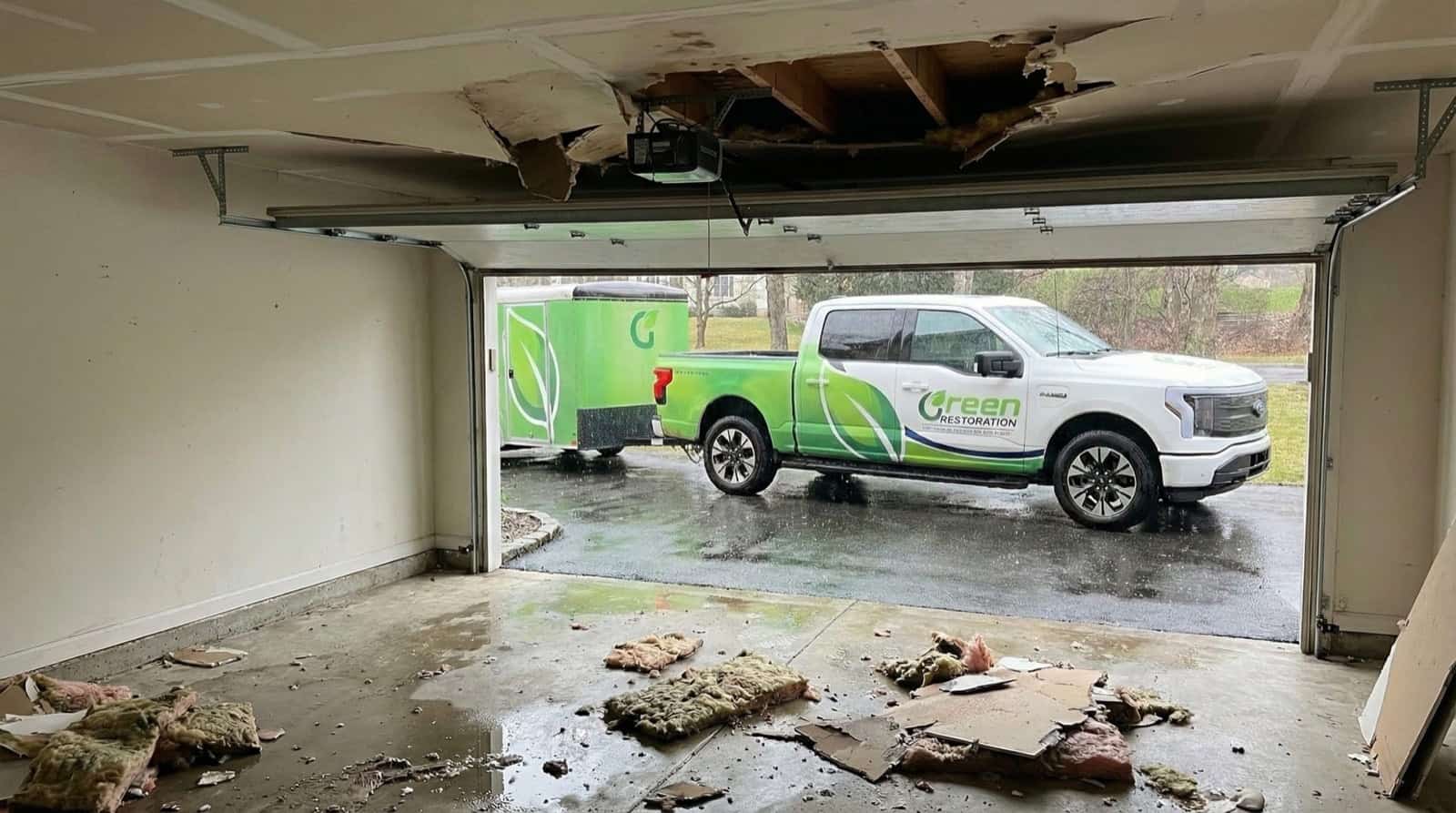
Truck-mounted Hydramaster CDS-4.8 extractors arrive same day across the Pioneer Valley and all of Hampden, Hampshire and Franklin counties, pumping Connecticut River high water, brook and tributary flooding, plaster-era supply-line bursts, and commercial slabs, including Category 3 black water from sewer backup or standing surface water per IICRC S500-2021 §5.3 protocol.
60-min target
Burst & Frozen Pipe Cleanup
January and February freeze-thaw bursts in pre-war Victorians, 1920s capes, plaster-era village homes, and mill-block apartments across Hampden, Hampshire and Franklin counties get same-day truck-mounted extraction, IICRC S500-2021 structural drying, and a fully documented scope filed directly with State Farm, Travelers, Liberty Mutual, USAA, Allstate, or Chubb.
S500 protocol
Structural Drying & Dehumidification
Phoenix Axial air movers, LGR dehumidifiers, and desiccants stage daily across Pioneer Valley and Hampden + Hampshire counties properties with timestamped Tramex CME 5 moisture meter logs and FLIR thermal imaging delivered to your adjuster every 24 hours until IICRC S500-2021 dry-standard clearance is independently confirmed.
3 to 7 days
Additional Water Damage Services In Orange
Moisture Detection & Leak Mapping
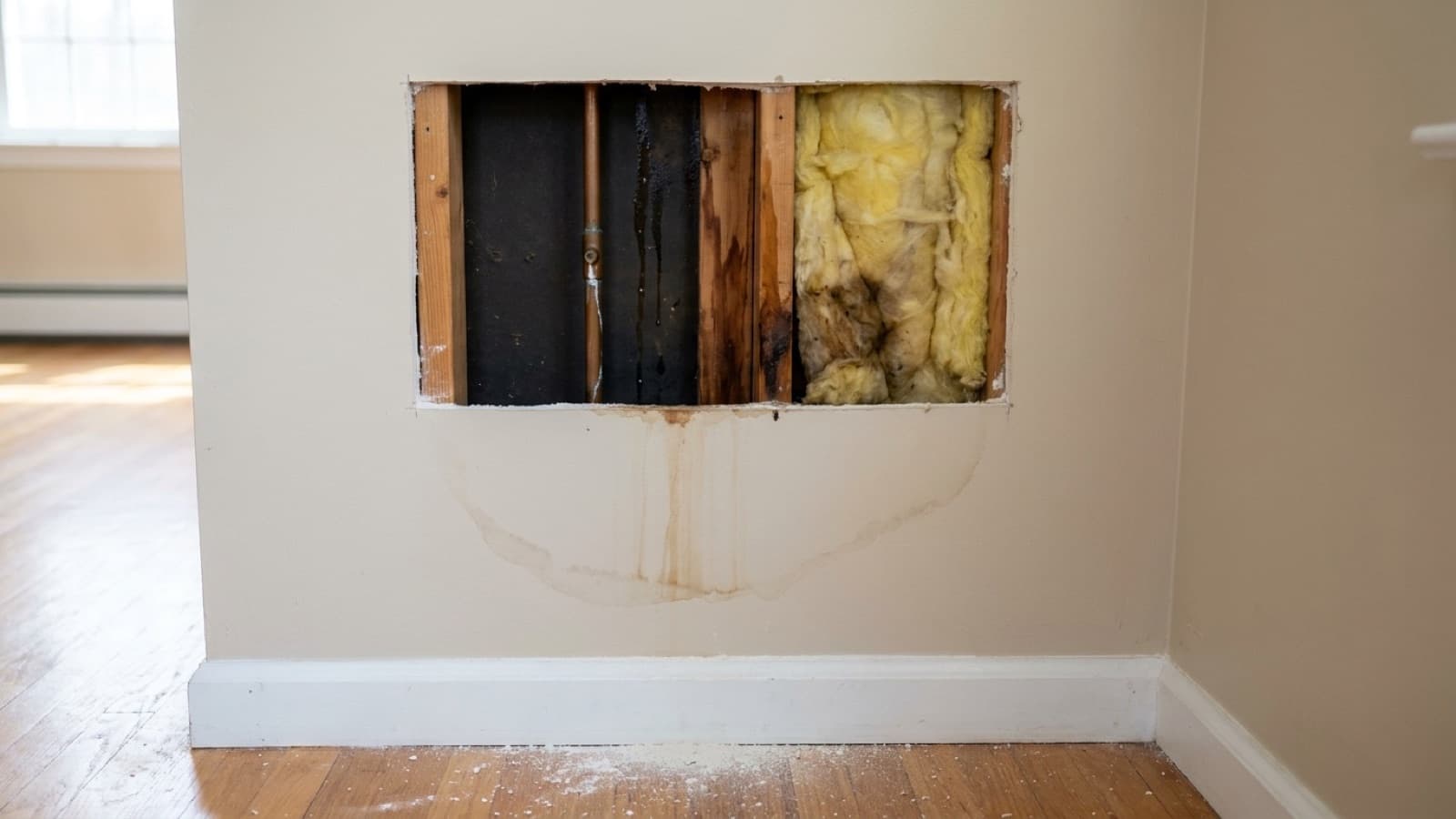
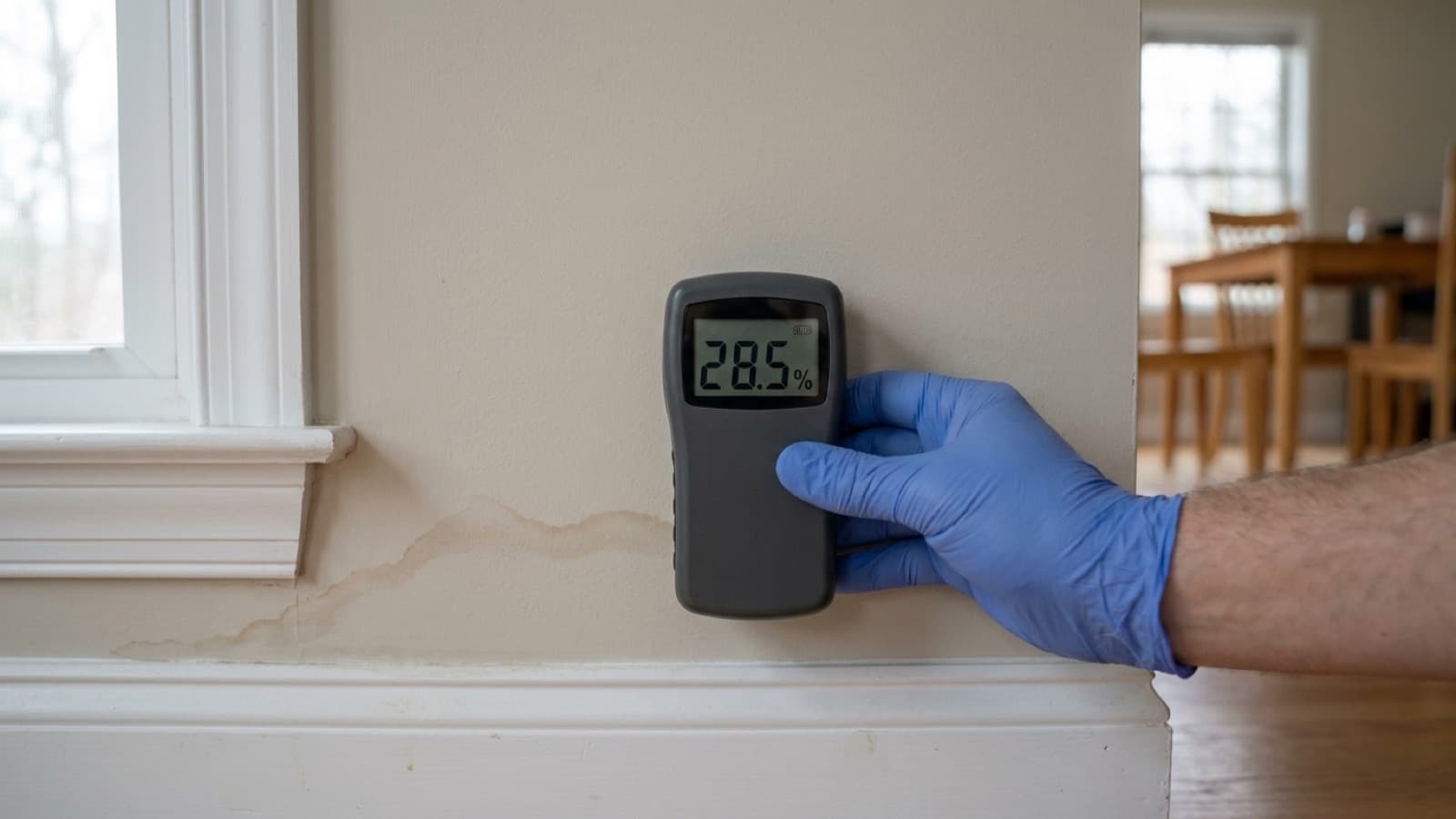
FLIR E96 thermal imaging and Tramex CME 5 moisture meters map hidden water behind plaster-and-lath walls in pre-war valley homes, behind vinyl-siding retrofits on mid-century ranches, and inside mill-block party-wall cavities before any destructive opening cuts begin.
Flooded Basement Cleanup
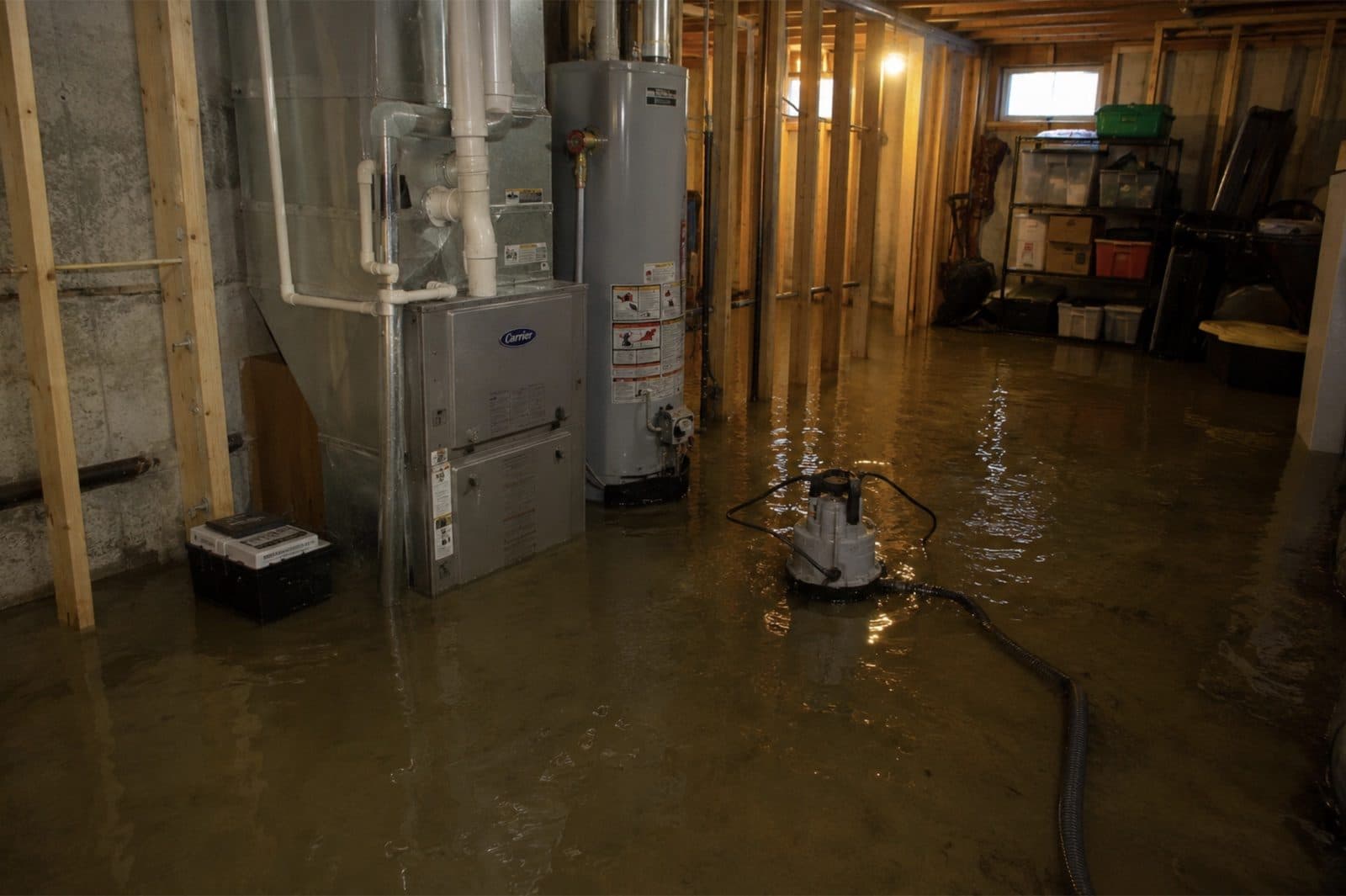
Connecticut River floodplain basements in Springfield, Holyoke, Chicopee, West Springfield, Hadley, and Northampton, plus brook-corridor and lakeside properties across the valley, get pumped, sanitized, dried, and documented for FEMA NFIP Write-Your-Own carriers and major insurers with full chain-of-custody from extraction through final clearance.
Sump Pump Failure Cleanup
When the sump fails during a nor-easter or a tropical-remnant downpour anywhere in the Pioneer Valley, we pump standing water within minutes, replace failed primary and battery-backup equipment, and dry framing assemblies with EPA-registered antimicrobial treatment applied per IICRC S500-2021 standards.
Sewage Cleanup
Category 3 black water from septic surcharge on rural lots, municipal backup in downtown Springfield and the North End, and combined-sewer overflow in pre-1900 mill-era brick stock gets IICRC S500-2021 §5.3 full-PPE remediation with negative-pressure containment, double-bagged porous waste removal, and lab-verified post-cleanup sampling.
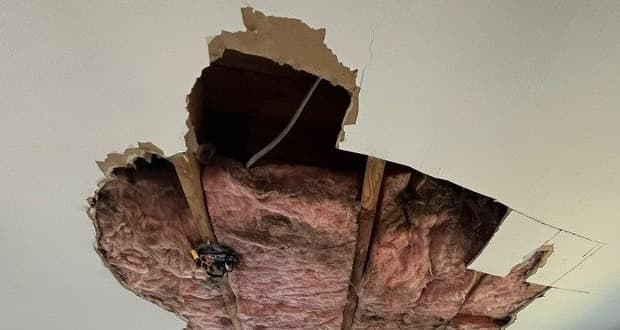
Ceiling & Drywall Water Damage Repair
Plaster ceilings in pre-war valley Victorians, horsehair-plaster cornices in 19th-century village homes, and drywall in 1960s split-levels across the Pioneer Valley get cut, dried, and replaced with paint-ready finish, photo-documented for your insurance file with daily moisture readings on every reinstalled assembly.
Hardwood Floor Drying & Salvage
Pre-war quartersawn oak floors in Pioneer Valley Victorians, original wide-plank pine in pre-1820 colonial centers, and engineered floors in modern builds get controlled-airflow drying with desiccant dehumidifiers staged within the first hour to salvage finish before cupping locks in beyond IICRC S500-2021 tolerance.
Appliance Leak Cleanup
Washing machine hoses, dishwasher supply lines, ice maker tubing, and refrigerator water connections fail without warning in Pioneer Valley kitchens and laundry rooms. We extract standing water, dry subfloors and cabinet base plates, document scope for the carrier, and coordinate appliance replacement so your kitchen returns to service quickly.
Roof Leak & Storm Intrusion Cleanup
Nor-easter ice dams, slate-roof flashing failures on the valley's pre-war Victorians, and tropical-remnant wind damage drive meltwater and rain into attic assemblies, second-floor ceilings, and exterior wall cavities. We dry roof decks, treat framing with antimicrobials, and document for full carrier roof-and-interior claim coordination.
Water Heater Failure Cleanup
Tank ruptures, pressure-relief valve failures, and supply-line bursts on residential 40 to 80 gallon water heaters release 30 to 80 gallons across utility rooms, basements, and garage slabs. Our crews extract within the hour, dry framing and slab assemblies, coordinate replacement with your plumber, and file a complete IICRC S500 scope.

Water Damage Only Gets Worse From Here. Every Minute Counts.
Call Now For 60-Minute Response Across Orange And The North Quabbin.
Green Restoration of Western Mass in Orange
Green Restoration of Western Mass handles water damage restoration in Orange, MA, where Orange grew outward from a 1785 bridge over the Millers River, and the commercial blocks of the Orange Center Historic District still sit on the banks it was thrown across. Owner-operated crews extract the water and dry the structure to IICRC S500 standards with documented moisture logs, under IICRC Certified Firm #70236106. Call (833) 970-2121.
Why Choose Us In Orange
Owner-led service with 60-minute response, direct insurance billing, and eco-friendly methods across Orange.
60-Minute Emergency Response
IICRC-certified crews arrive within 60 minutes, day or night, every day of the year.
Owner-Operated Local Crew
Every job is personally overseen by our owner, IICRC AMRT and WRT certified, from first call to final moisture reading.
Direct Insurance Billing
We bill State Farm, Liberty Mutual, MAPFRE, USAA, Travelers, Allstate, and Chubb directly with full IICRC S500 documentation.
EPA-Registered Antimicrobials
EPA-registered antimicrobials and Safer Choice cleaning products applied per IICRC S500 and S520 standards.
What Untreated Water Damage Costs Your A Mill Downtown Built On The Riverbank
Untreated water damage in a Orange home becomes mold colonization within 24 to 48 hours, hardwood cupping within 12 hours, and plaster delamination within 72 hours. A $4,500 same-day extraction can become a $25,000 plaster and finish-floor rebuild after 48 hours. The earlier we measure, the smaller the rebuild.
The River Runs Straight Through The Business District
Millers River At The Town Center
Orange grew outward from a 1785 bridge over the Millers River, and the commercial blocks of the Orange Center Historic District still sit on the banks it was thrown across. Storefront cellars, back-of-house storage, and mechanical rooms occupy the lowest ground in town, which is exactly where river water and street runoff arrive first.
Two Federal Dams Exist Because Of What Happened Here
1936 And 1938 Are Not Ancient History
The Army Corps of Engineers states plainly that flooding devastated Athol and Orange in 1936 and 1938, and 1900 belongs on the same list. Birch Hill Dam followed in 1942 and Tully Lake Dam in 1949. This valley is managed, not immune, and property scopes here should treat the river as a controlled hazard rather than a solved one.
The Tully Comes Down From The North
A Second Watershed Feeding The Same Valley
The East Branch of the Tully River drains the hill country toward Royalston and passes its own 62-foot Corps structure before reaching the lower valley. Two watersheds converging near one downtown means a heavy regional rain loads Orange from more than one direction, and drainage that copes with an ordinary storm can be overtopped by a sustained one.
A Town Whose Median House Predates The War
Original Foundations Under Most Addresses
The median Orange home was built around 1938, and somewhere between a third and half of the housing stock is older than 1939 depending on which count you read. Original foundations, hand-dug cellar floors, and additions layered on across a century mean water finds seams and joints that no modern waterproofing detail was ever designed to close.
Camps And Cottages That Nobody Watches In February
Lake Mattawa And Lake Rohunta Shoreline
Orange holds the public beach on Lake Mattawa off Holtshire Road and shares Lake Rohunta on its southern edge, and both shorelines carry seasonal buildings that sit closed for months. A supply line lets go in an unheated camp and the discovery comes at the spring opening, by which point the floor system and the contents have been wet since winter.
No Gas Mains, So Heat Is A Delivery Problem
Oil, Propane, Wood, And Electric
Orange has no natural gas utility. Every heated building in town runs on a tank, a woodpile, or a meter, which makes a cold-snap outage or an empty oil tank a plumbing event rather than an inconvenience. Pipes in an uninsulated 1930s wall bay freeze quietly and announce themselves the hour the building warms back up.
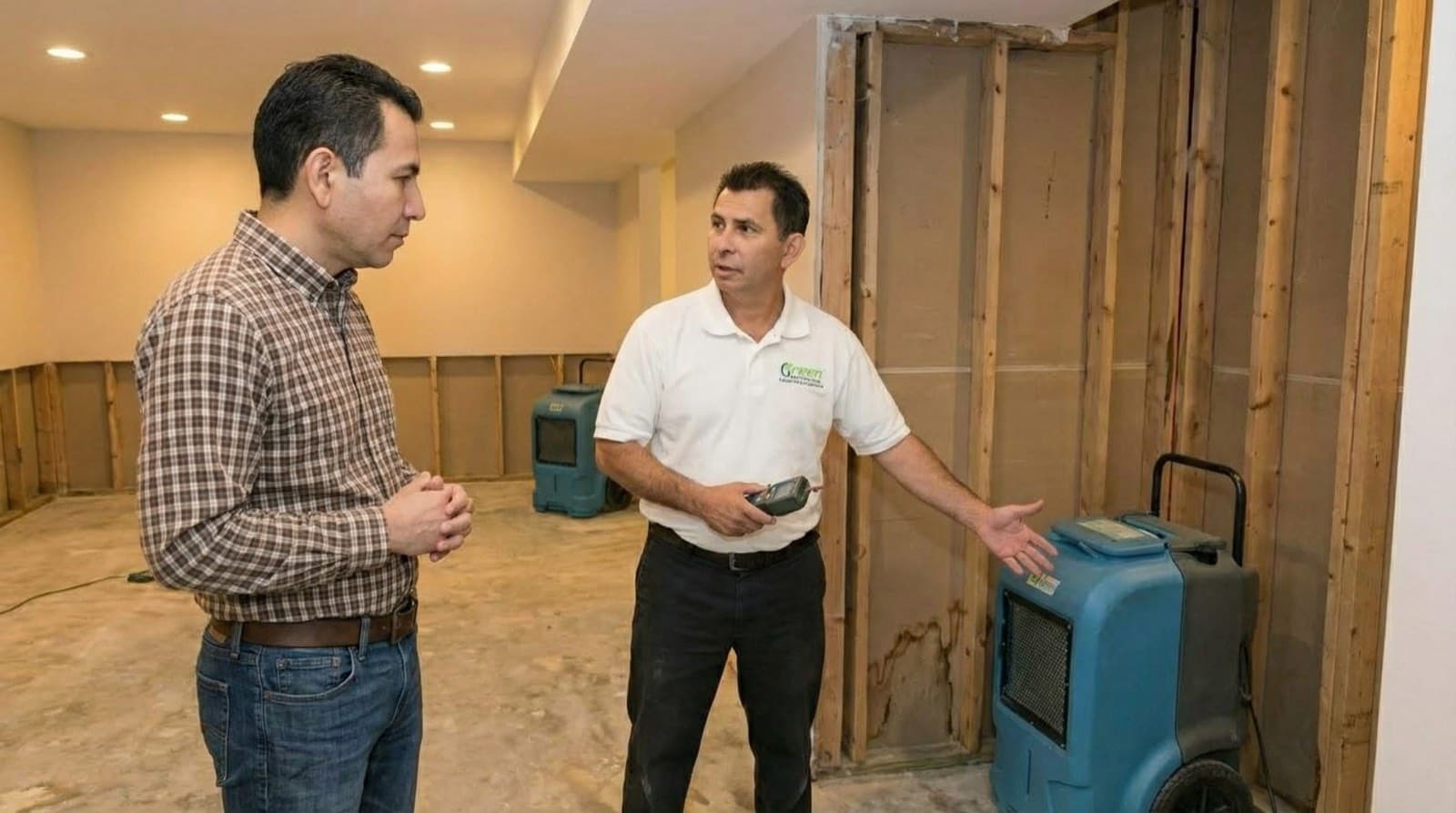
Why Orange Properties Need Professional Water Damage Restoration
Professional water damage restoration in Orange means IICRC S500-2021 extraction written for a working river town: mill-block commercial cellars, pre-1939 residential basements, and lake camps opened wet in April. Carrier files go to MAPFRE, Quincy Mutual, Travelers, Liberty Mutual, Allstate, USAA, and State Farm. Air movement before containment simply relocates the problem.
Commercial Scope That Understands A Mill Block
A 19th-century block on the riverbank is one structure holding several tenancies, shared cellars, and mechanical runs that ignore lease lines. We map the wet footprint across the whole building before equipment lands, isolate the affected tenancy so neighboring businesses keep trading, and bill each policy from its own itemized scope rather than a single blended number nobody can approve.
River Documentation Built For A Managed Valley
When water arrives from the Millers or the Tully rather than from a fixture, the file has to say so in its first paragraph and prove it with elevation reference, timestamped exterior conditions, and mechanism-explicit photography from the opening hour. Federal flood-control works upstream do not change the coverage question, and a blended file answers it badly.
Category 3 Discipline On Backup And River Water
Street runoff into a downtown cellar and flow up a basement drain both arrive as Category 3 and both get the full standard: sealed containment under negative air, PPE crews, porous material double-bagged out, EPA-registered antimicrobial per IICRC S520-2024, and independent laboratory clearance before anyone reoccupies the space.
Files Built For North Quabbin Adjusters
Orange households and landlords carry MAPFRE, Quincy Mutual, Travelers, Liberty Mutual, Allstate, USAA, and State Farm paper, and every one of them receives the same package: IICRC-standard scope, daily psychrometric logs, and metered readings at every affected assembly, signed by our IICRC AMRT and WRT certified owner. We are not licensed public adjusters and do not negotiate claims on your behalf.
The Water Damage We See Most in Orange
In Orange the Millers River runs straight through the business district, and the town carries a flood record serious enough that two federal dams were built upstream in answer to it. Every loss gets classified under the IICRC S500 standard and documented for your insurer with that geography in view. These are the water-damage patterns we meet most often across the town.
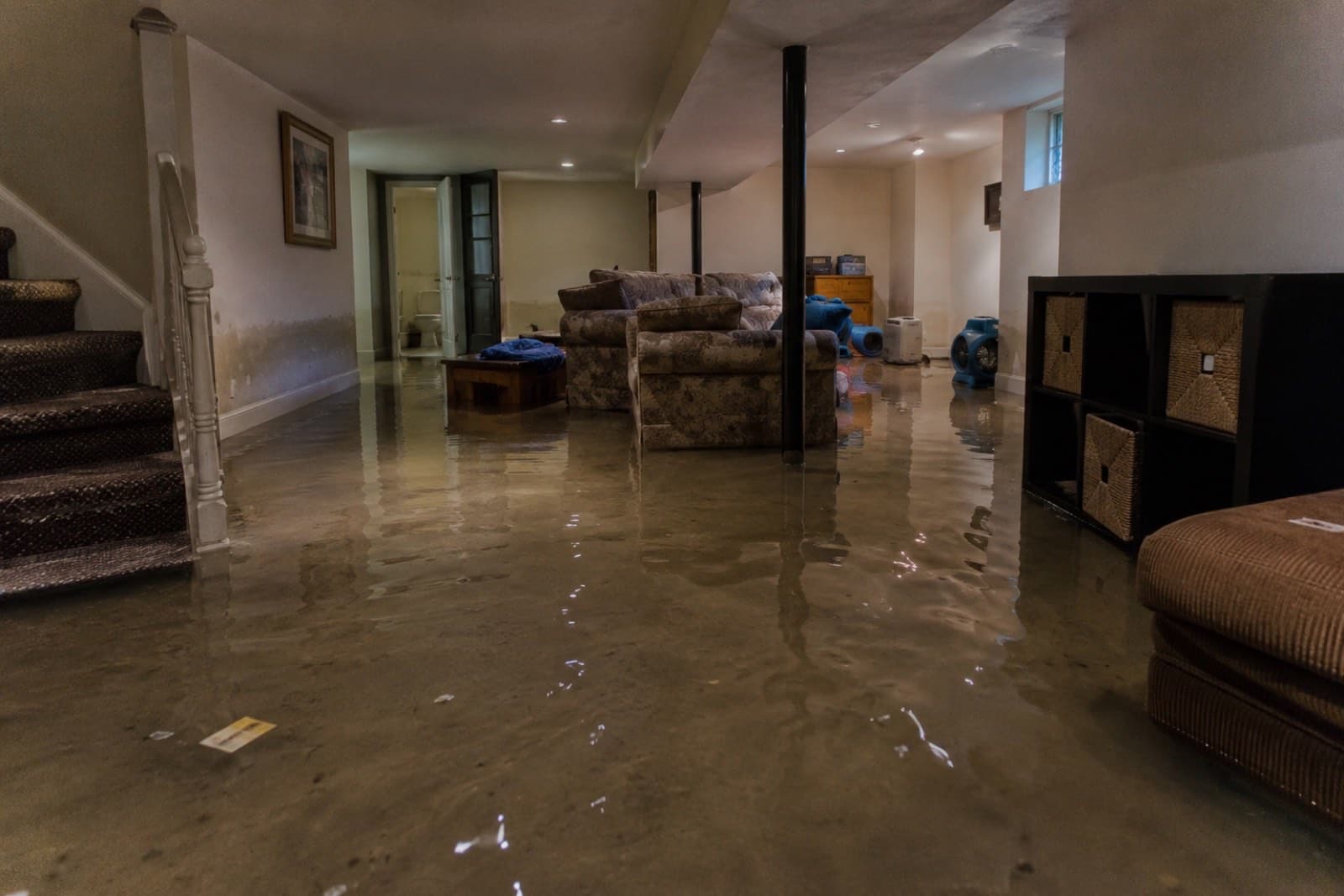
Flooded Basement, Fully Dried
In Orange, downtown blocks sit on the riverbank, so the lowest floor takes water from the grid and the channel together.
A failed sump pump, a burst supply line, or storm-driven groundwater can leave inches of standing water sitting against framing, drywall, and stored belongings. The longer it sits, the further moisture wicks up the walls and the faster the Category of the water deteriorates.
Our IICRC-certified technicians classify the water under IICRC S500, then pull the standing water down to the slab with truck-mounted and submersible extraction. We open wet wall cavities, set air movers and LGR dehumidifiers for structural drying, and apply an antimicrobial per IICRC S520 where Category 2 or 3 water is involved.
We take daily Tramex moisture readings and dry the assembly to the ANSI/IICRC dry standard, not to a calendar. Every reading, photo, and scope line is documented for your insurer so the claim moves on facts, not guesswork.
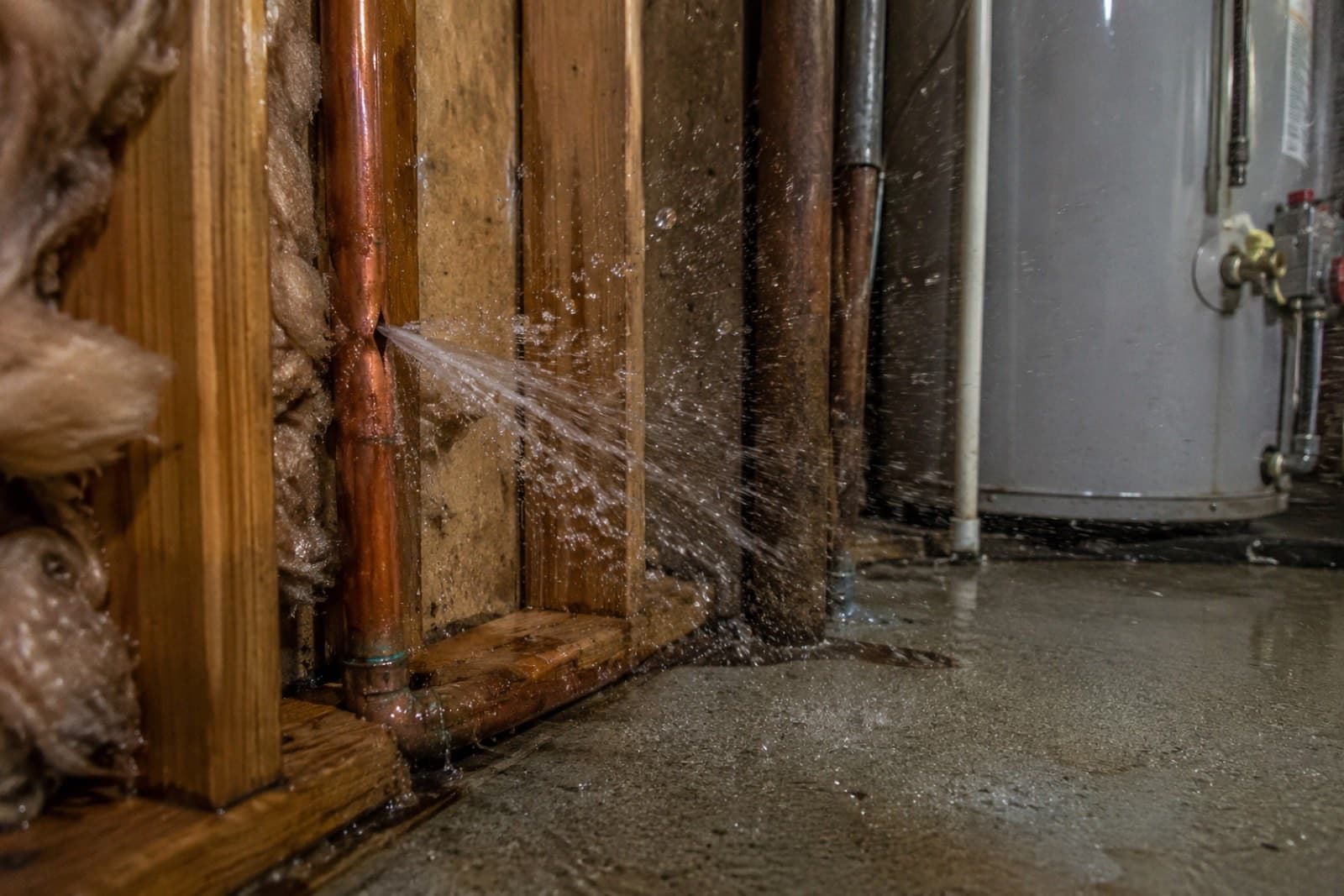
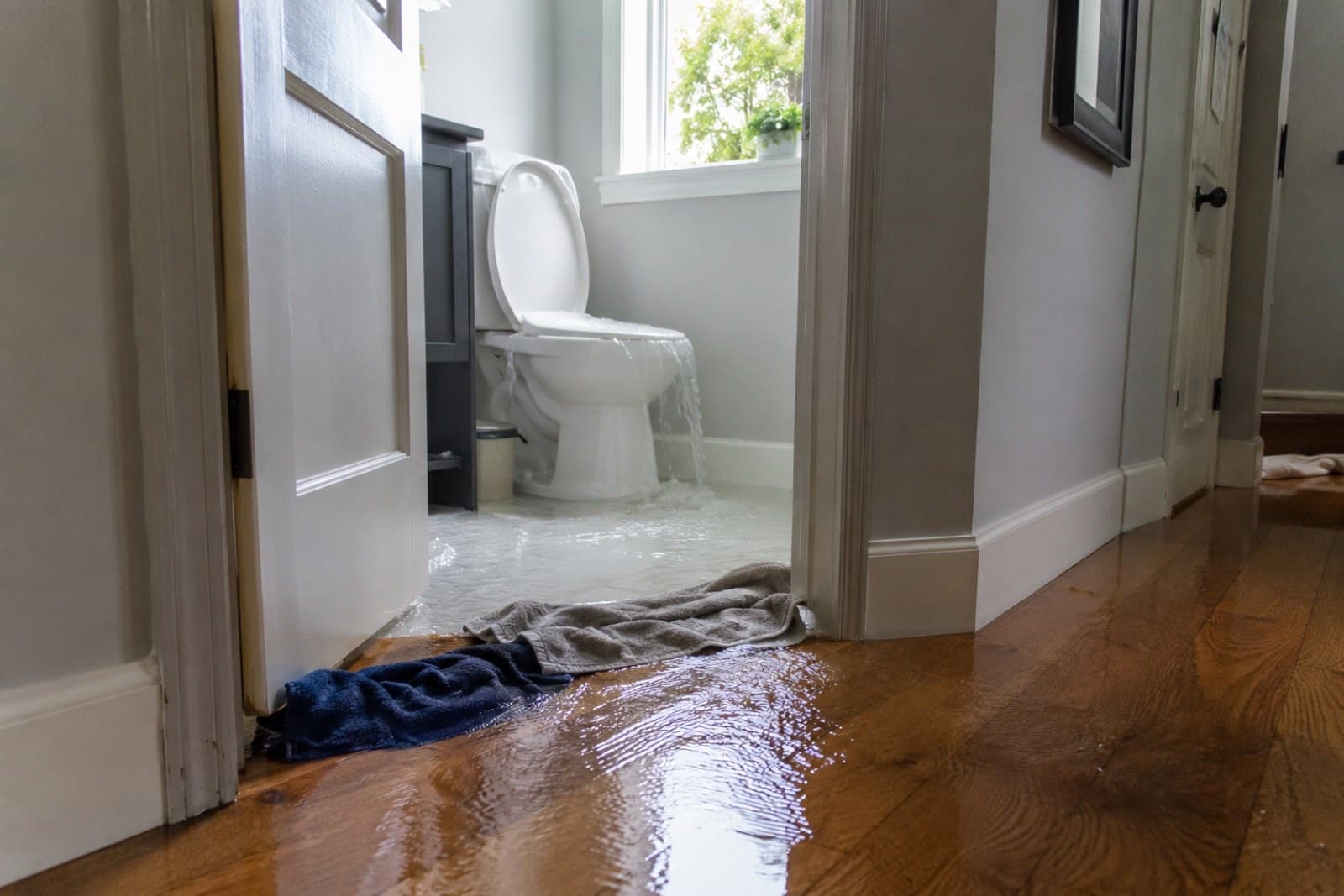
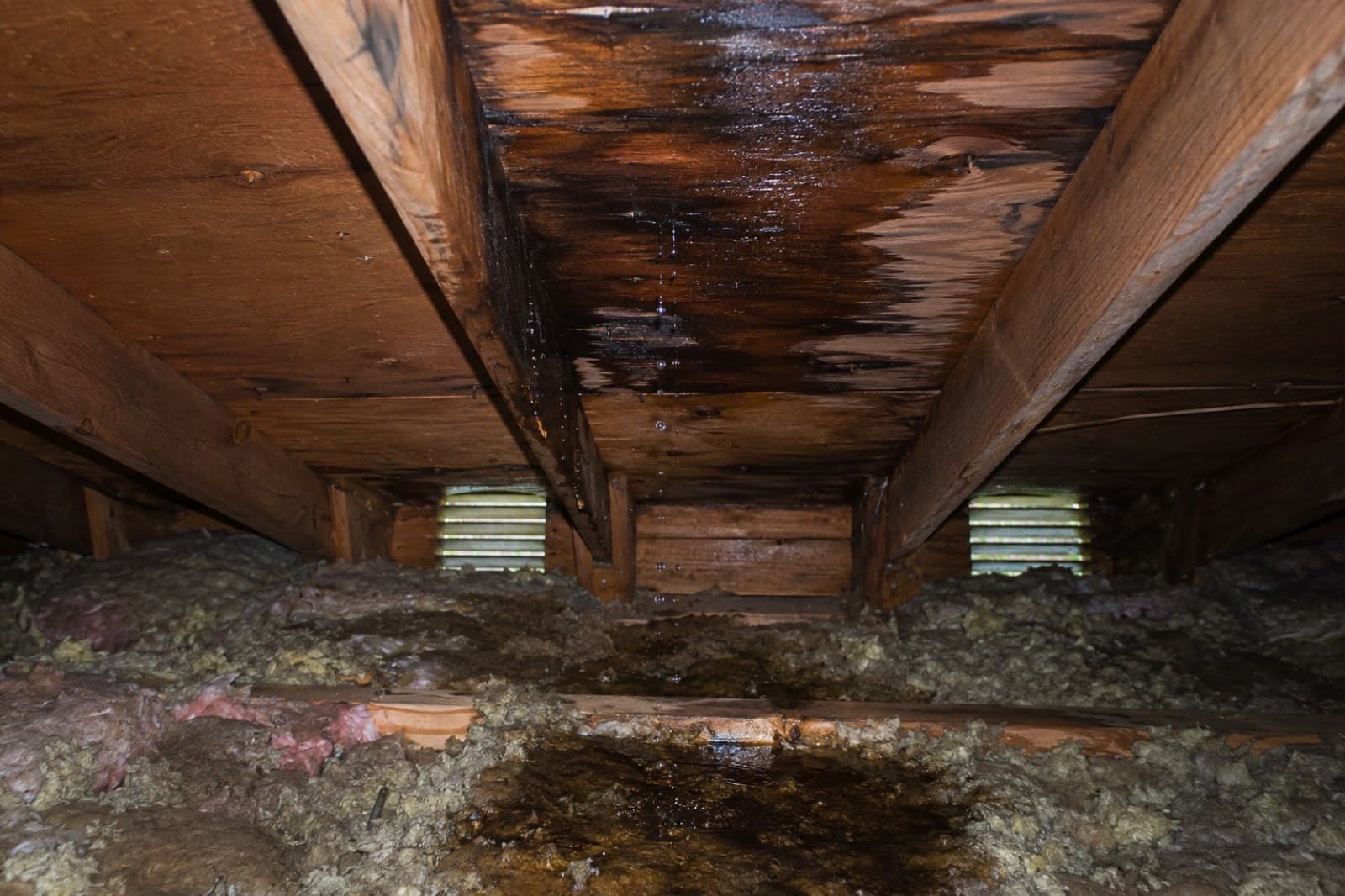
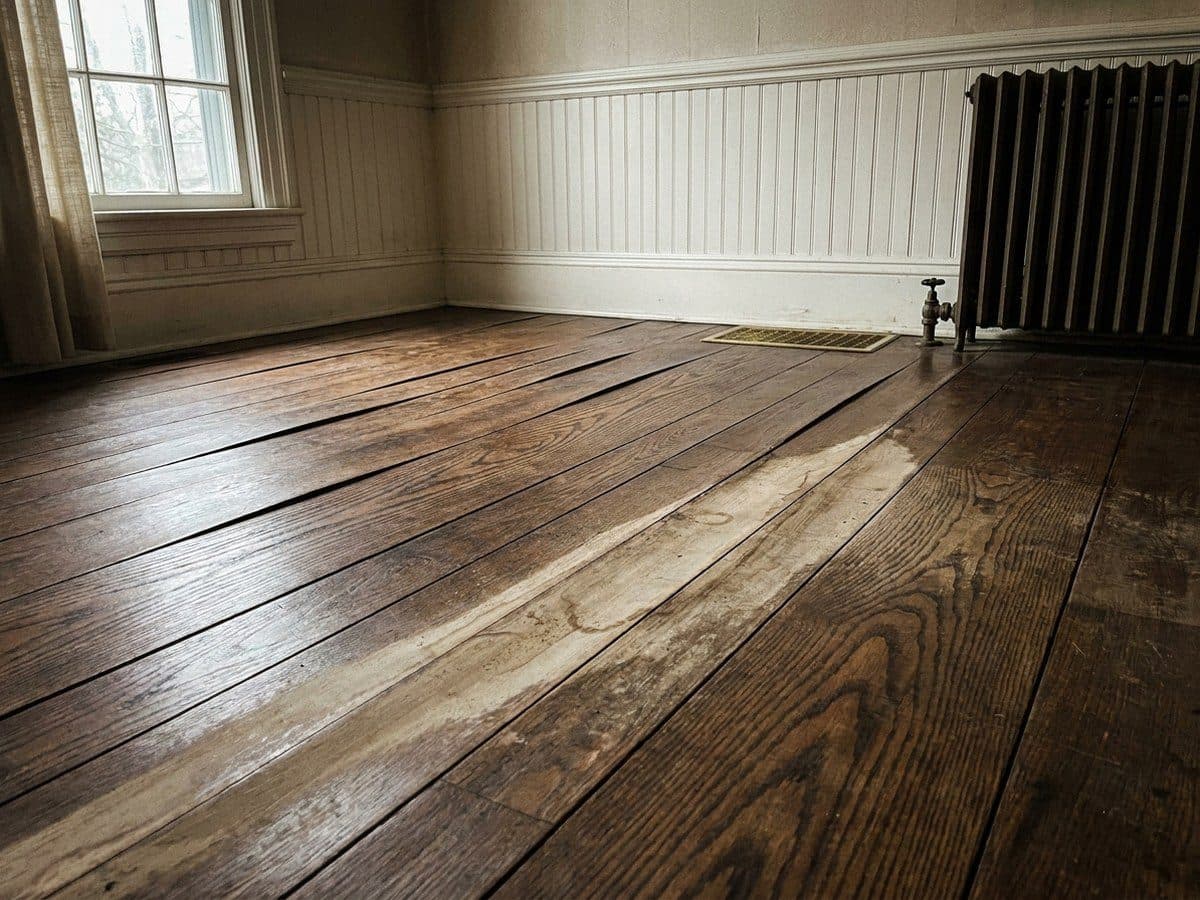
Scenario 1 of 5: Basement Flooding
What To Do After Water Damage In Orange, MA
An Orange water emergency gets cheaper the sooner extraction and drying begin. Work these IICRC-aligned steps the moment the river rises, a frozen line lets go, or a cellar drain starts running backward.
What To Do Immediately
In a downtown block it may sit in a shared cellar behind stock; in a pre-1939 house it is usually on the street wall of the basement. Locate it on a dry day and close it fast on the wet one.
Century-old buildings hide splices and retrofits nobody documented. If water is anywhere near a panel or you cannot see the floor, leave the electrical question to National Grid instead of guessing from the stairs.
Dial (833) 970-2121 at any hour. On this housing stock the gap between a week of drying and a demolition scope is usually decided inside the first two hours.
Business records, tools, photographs, and stored inventory come up and out of the wet zone before anything else moves. In a mill block the cellar is often where the irreplaceable ended up.
Waterline, source, and every affected room, timestamped, before a single item shifts. Your adjuster rebuilds the entire loss from those frames and nothing else.
Cross-ventilation helps on a cold clear day and hurts on a humid one. When the valley is damp, keep the building closed and wait for dehumidification to arrive.
What NOT To Do
Uncontained airflow through an old cellar or a shared block carries spores into spaces the water never reached. Air movement comes after the barrier, never before it.
Downtown cellars are dark, uneven, and wired unpredictably. Nothing stored down there is worth entering before power to the space is confirmed dead.
Dragging wet carpet, insulation, or stock along an exit path smears contamination through clean rooms. Extraction and bagged removal happen under containment.
Oil, propane, or forced electric, pushing air through a saturated structure distributes moisture and spores everywhere the ductwork reaches. The system stays off pending inspection.
Massachusetts policies expect prompt notice and active mitigation. Reporting the same day and handing over a submission-ready file keeps the coverage argument short.
Sealer or bleach on a stained ceiling hides the meter evidence and traps moisture behind the finish. The stain stays visible until readings clear the assembly.
Our Water Damage Restoration Process In Orange, MA
From the first call to final walkthrough, every step is documented, insured, and owner-supervised.
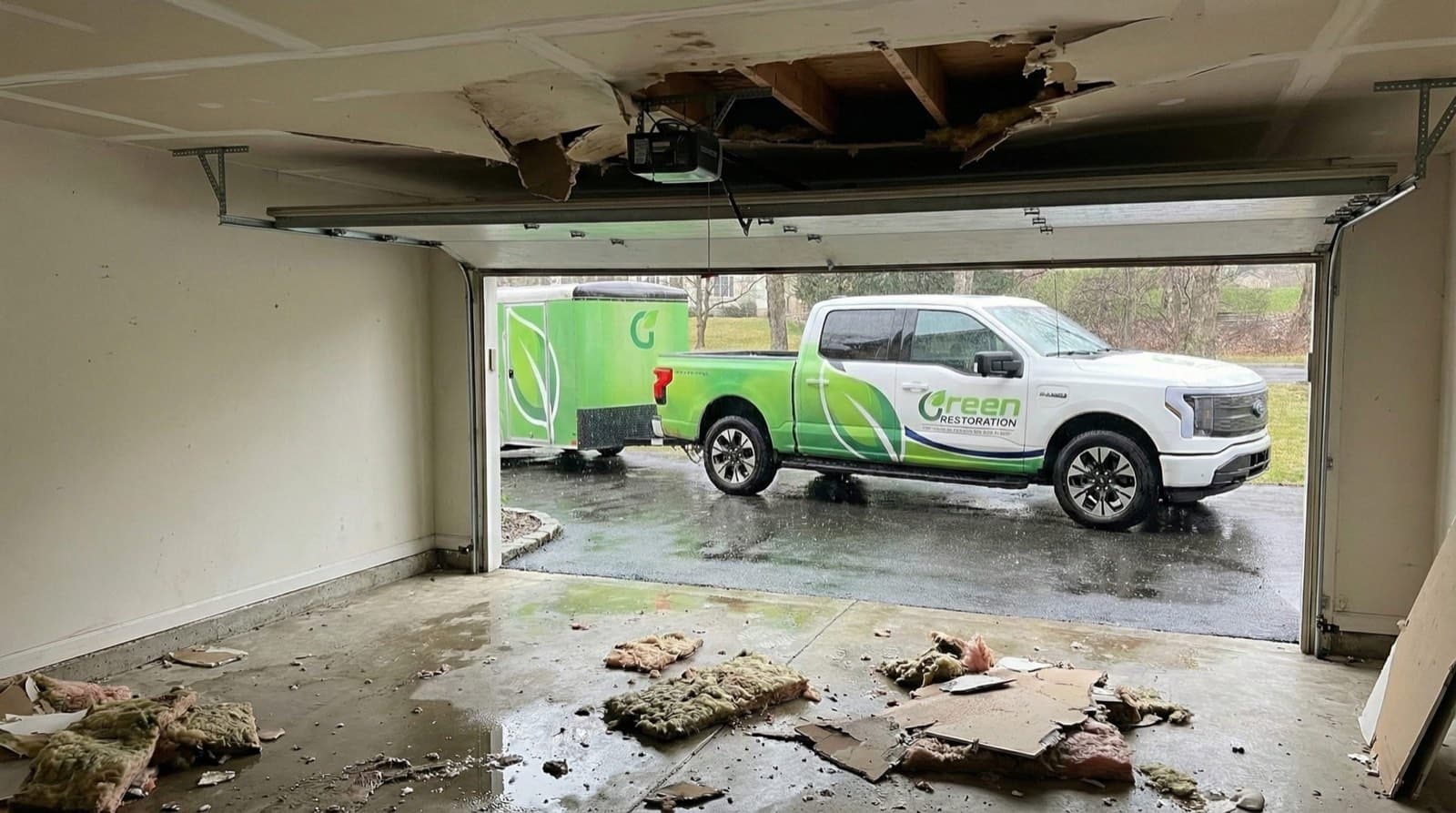
Water Damage Restoration Coverage In Orange, MA
Water damage restoration for the whole town: the downtown blocks along the Millers River, the residential streets around them, the hilltop villages at North Orange and Tully, and the seasonal shoreline at Mattawa and Rohunta, with crews arriving on the Route 2 corridor from our Western Massachusetts dispatch.
Green Restoration provides certified water damage restoration in Orange, MA 01364, covering the downtown blocks on the Millers River, the Orange Center Historic District, West and East River Street, South Main Street, the hilltop villages at North Orange and Tully, the Lake Mattawa shoreline off Holtshire Road, and the Route 2 and Route 122 corridors. Our IICRC-certified technicians reach town day or night on Route 2 from our Western Massachusetts dispatch. We handle riverfront commercial cellar losses, backup and street-runoff intrusion, freeze bursts in oil and propane heated buildings, long-dwell losses in seasonal shoreline camps, and supply failures inside pre-1939 residential stock. We submit our scope of work directly to your insurer. We are not licensed public adjusters and do not negotiate claims on your behalf.
According to Green Restoration field documentation, Orange losses tied to the Millers River are scoped by water category before any equipment is placed, because the category decides containment and what material has to come out. Locally owned and operated, we scope Orange for what it actually is: a 19th-century manufacturing downtown standing on a riverbank, a residential stock whose median build year sits around 1938, hilltop villages that were rural long before the mills arrived, and a shoreline of buildings that spend half the year closed.
The town has a documented flood record and two federal dams built in answer to it, and no natural gas utility at all, which shapes both the freeze losses and the mechanical rooms we walk into. Our owner and crews produce IICRC-standard documentation that adjusters from MAPFRE, Quincy Mutual, Travelers, Liberty Mutual, Allstate, USAA, and State Farm accept, with direct carrier billing keeping the claim moving.
See typical Orange water damage pricing in 60 seconds. Category 1 to 3.
Water Emergency In Orange?
Call now for immediate dispatch, 24/7/365.
(833) 970-2121IICRC Certified Firm · Fully Insured
All Towns Served By Green Restoration Of Western Mass Across The Pioneer Valley, Hampden County, And Hampshire County.
Why Orange Water Damage Is Different
Local drainage, housing stock, and foundation construction shape every restoration scope.
Free On-Site Assessment
Not sure what you are dealing with in Orange?
We establish the scope on site, before anything is quoted.
(833) 970-2121How Orange Geography Shapes A Restoration Scope
Orange is a river town in the literal sense: the Millers River runs through the middle of the business district, and the Orange Center Historic District grew outward from the bridge thrown across it in 1785, which is why the oldest commercial blocks stand on the banks rather than back from them. The flood record is documented and severe. Major Millers River events hit in 1900, 1936, and 1938, and the Army Corps of Engineers has written that the 1936 and 1938 floods devastated Athol and Orange, which is a large part of why Birch Hill Dam went up in 1942 and Tully Lake Dam in 1949.
Between river events, the losses come from the buildings themselves. The median Orange home dates to roughly 1938, a third to half of the stock is older than 1939 depending on the source, and with no natural gas utility in town every building depends on oil, propane, wood, or electricity for heat, which makes a cold-snap interruption a plumbing failure waiting to happen. According to Green Restoration documentation practice, old mortar and hand-finished cellar floors hold water past any surface reading, so every Orange scope runs on daily Tramex CME 5 verification until the IICRC S500-2021 dry standard holds.
24/7 Water Damage Response In Orange, MA
IICRC-certified water damage response in Orange is scope written for a working river downtown: mill-block cellar losses, pre-1939 residential freeze bursts, backup and runoff intrusion, and long-dwell losses in closed shoreline camps. Crews dispatch on the Route 2 corridor from our Western Massachusetts hub.
Connecticut River AE floodplain properties across Springfield, Holyoke, Chicopee, West Springfield, and Hadley face recurring spring-thaw and tropical-surge backwater. 1936 and 1955 historic flood events left chestnut framing, plaster-on-lath cavities, and pre-war brick row stock saturated for weeks. We pump, extract, and dry to IICRC S500-2021 standard.
Pre-1900 brick mill complexes and worker tenements across Holyoke canal district, Easthampton Cottage Street, Ludlow Mills, and Northampton Florence Village hold moisture in old vapor barriers and plaster-on-lath wall cavities. Phoenix Axial movers and LGR dehumidifiers calibrated for masonry cavity drying.
Same-day dispatch across Hampden and Hampshire counties from our Western Mass response footprint. Truck-mounted Hydramaster CDS-4.8 extractors, submersible pumps, FLIR thermal imaging, and Tramex CME 5 moisture meters staged for arrival within 60 minutes across 18 communities.
Our owner personally leads every water-damage scope across Springfield, Holyoke, Northampton, Chicopee, Westfield, Amherst, and the Pioneer Valley. Documented scope, daily moisture logs, and clearance filed with MAPFRE, State Farm, Travelers, Liberty Mutual, USAA, Allstate, and Chubb.
About Green Restoration In Orange, MA

Your Orange Water Damage Specialists Since 2014
Orange scope covers riverfront commercial cellar losses in the downtown blocks, backup and street-runoff intrusion below Millers River grade, freeze bursts in oil and propane heated pre-1939 houses, long-dwell saturation in seasonal Lake Mattawa and Lake Rohunta buildings, and supply failures inside hilltop stock at North Orange and Tully. Our owner runs the work from our Western Massachusetts dispatch, IICRC AMRT and WRT certified, with Tramex CME 5 moisture mapping, Phoenix Axial movers, and LGR dehumidifiers. Carrier files go straight to your adjuster. We are not licensed public adjusters and do not negotiate claims on your behalf.
According to Green Restoration project records, floor assemblies and subfloor in Orange are monitored separately from wall cavities, because the two dry at different rates in the older Orange housing stock.

“I am our owner, and I run our Western Massachusetts work personally. Across 15 years of restoration work, IICRC AMRT and WRT certified, Orange is the town where the river and the calendar both matter: a cellar under a downtown block can take water from two directions, and a shoreline camp can sit wet from January to April before anyone opens the door. Every Orange job gets my direct oversight, scoped to IICRC S500 dry standard, billed to your carrier.”
Trusted by Families in Orange &
Franklin County
4.9 out of 5, Rated by your neighbors on Google
A pipe broke at two in the morning. I called a few different services, but only the Western Mass Green Restoration team picked up their emergency line. They came early in the morning, worked hard, and even wrote down notes for our insurance claim. I really think you should use them.
Micki Kraft
Water DamageGreat service! I used Green Restoration again for carpet and upholstery cleaning and they did a spectacular job! Both times their staff was very professional and they were very polite. The cost was average for what you get and the work was clean.
Angela Borowik
Carpet & Upholstery CleaningJeremy and William did an excellent job. They promised my house would look like they were never here and it was better than that. They were honest and very helpful. Melissa, the girl in the office, was also great to work with throughout the job.
Jeremy Robare
Restoration ServiceHow Much Does Water Damage Restoration Cost In Orange, MA?
The S500 category opens the band and the address closes it: a shared riverbank cellar and a camp that sat wet all winter both carry hours a simple loss never does. Most Orange claims settle in Category 2 territory, $2,500 to $8,500.
Category 1, Clean Water
$1,500 to $4,500
A supply break or freeze split caught early and dried before it travels
Category 2, Gray Water
$2,500 to $8,500
Sump failures, appliance discharge, and cellar losses, the common Orange claim
Category 3, Black Water
$7,500 to $50,000+
River and runoff intrusion or drain backup, with containment and laboratory clearance
Priced by IICRC S500 water category. Read the full water damage cost guide.
Orange MA Water Damage Restoration FAQs
Straight answers on emergency water removal, riverbank cellar losses, freeze bursts in a town with no gas mains, and restoration costs across Orange.
Orange sits at the eastern end of our Western Massachusetts territory, and crews run the Route 2 corridor with the truck already loaded: Hydramaster CDS-4.8 extraction, Phoenix Axial movers, and LGR dehumidification, so work begins the minute it parks. The downtown blocks, the residential streets around them, North Orange, Tully, and the Lake Mattawa shoreline all see a crew on site within 60 minutes. (833) 970-2121 is answered around the clock, storms and holidays included.
Three bands, set by the IICRC S500 category. Clean Category 1 water from a burst line or an appliance: $1,500 to $4,500. Category 2 gray water from washer discharge, sump failure, or overflow: $2,500 to $8,500, where most claims land. Category 3 black water off the river, off the street, or up a drain: $7,500 to $50,000 and beyond once containment and porous demolition enter. Orange adds two multipliers of its own, a shared mill-block cellar and a camp that sat wet all winter, and the written estimate that follows the Tramex CME 5 walk shows exactly where those hours go.
The route the water took decides it. Internal and sudden, a pipe, an appliance, wind-driven rain behind storm damage, belongs to your homeowner policy. The Millers River leaving its channel belongs to NFIP flood coverage. A cellar drain running backward belongs to a backup endorsement. Our file names the door the water came through in its first paragraph and supports it with IICRC S500 scope, daily logs, and timestamped photographs. We are not licensed public adjusters and do not negotiate claims on your behalf.
The building sets the pace. Newer construction releases its moisture in roughly 4 to 6 days. Pre-1939 stock with layered subfloor, plaster, and old cellar masonry wants 6 to 9, and a shoreline camp discovered wet in April can run past ten because the saturation has had a whole winter to travel. Cold months stretch every one of those figures. The job ends when the daily Tramex readings hold dry standard, and the log reaches your adjuster entry by entry.
Yes, under unabridged Category 3 protocol. When heavy rain on the downtown grid pushes flow back up a basement drain, the space is sealed and run under negative air, crews work in full PPE, porous material leaves in double bags, EPA-registered antimicrobial covers the structure that stays, and laboratory sampling clears the space before anyone returns. The mechanism is written in plain words on the file, because that is the sentence a backup endorsement pays on.
Source, safety, evidence, in that order. Close the main if plumbing is the cause. Touch anything electrical only from dry footing, and stay out of a flooded cellar completely. Photograph the waterline and every affected room before moving anything, carry records and irreplaceable contents up out of the wet zone, and keep fans and the heating system off so nothing spreads. The crew brings everything else on the truck.
First colonization can begin 24 to 48 hours after saturation under IICRC S520-2024, and this town compresses the practical window. Old cellar masonry carries hidden humidity long after surfaces read dry, riverside buildings sit on the lowest ground in the district, and a seasonal camp opened in spring passed that window months earlier. Mapping therefore starts on arrival and every assembly gets a daily meter reading until dry standard holds.
Because this town asks for two different disciplines in the same trade: commercial scope that can read a shared riverbank block without dragging neighboring tenancies into the claim, and residential scope that understands a housing stock whose median build year is around 1938 in a town with no gas mains. Green Restoration brings IICRC certification, owner-led oversight on every job, truck-mounted extraction and metered drying, direct carrier billing, and 24/7 dispatch at (833) 970-2121 from our Western Massachusetts base.
More Green Restoration Services in Orange
The same local Green Restoration team covers all of these across Orange. One number for every emergency and every cleanup.

