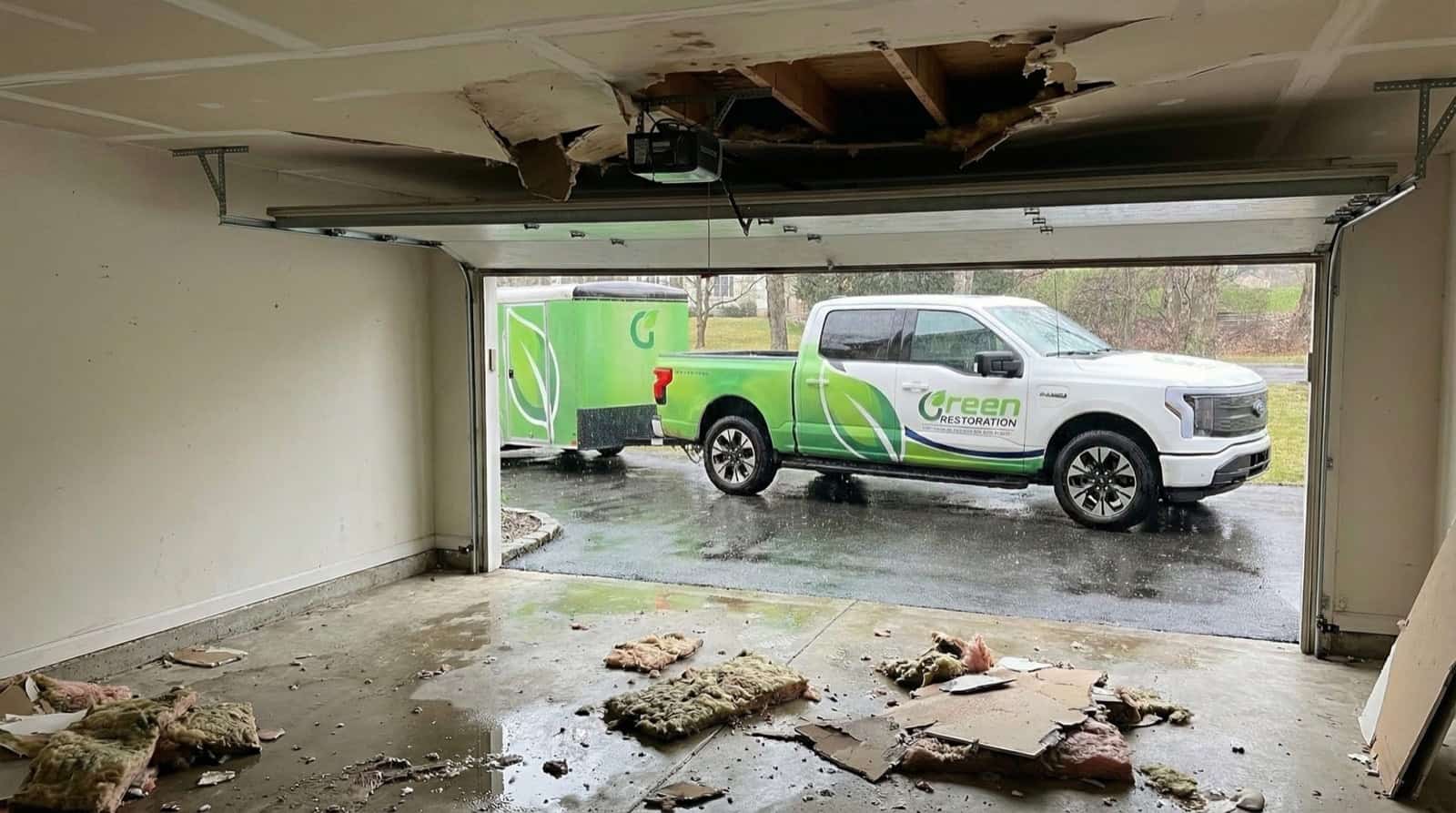
Water Damage Restoration Plainville, CT
Pequabuck Valley Floor And Canal Line Basements 60-Minute Response • Direct Insurance Documentation
 IICRC Certified
 Eco-Friendly Solutions For Healthier Spaces
Reviewed by David Megeneishvili·Licensed & Insured In CT·IICRC AMRT + WRT
What Is IICRC S500 Water Damage Restoration?
Water damage restoration is the IICRC S500-2021 documented process of extracting standing water, classifying the loss by category (clean, gray, black) and class (1 through 4), then drying the structure to equilibrium moisture content within a defined psychrometric window using commercial LGR dehumidifiers, axial air movers, and Tramex meter verification across every previously affected substrate.
In Plainville, CT, Green Restoration sequences the restoration: 60-minute dispatch, FLIR thermal imaging and Tramex CME 5 mapping, truck-mounted extraction, controlled drying to S500 § 12 benchmarks, antimicrobial application per S520-2024, and a carrier-ready scope file with daily moisture logs. Cutting steps drives mold colonization risk, claim denial risk, and reinjury rework within weeks.
- IICRC S500-2021 aligned
- ASTM E1745 vapor retarder spec
- ASHRAE 160 humidity targets
- Carrier-grade documentation
Why Plainville Sits in Climate Zone 5A
IECC International Energy Conservation Code
IECC Climate Zone 5A across most of Connecticut. Coastal towns sit in Zone 5A while the inland NW Corner edges into Zone 6A.
Connecticut adopts the 2021 IECC under the State Building Code, requiring documented psychrometric drying logs and Class I or II vapor retarder per ASTM E1745 after Category 2 or Category 3 water restoration.
Conditions from the National Weather Service and Open-Meteo.
Plainville Emergency Utility Lines
Stopping water at the source is step 1 of any water-damage scope. Use these verified Plainville lines while our IICRC crew is en route.For life-threatening emergencies (active fire, gas odor, electrical shock), call 911 first.
Water Authority
Aquarion Water Co
(800) 732-9678
24/7 emergency. Request curb-stop shutoff if your main valve fails.
Source: aquarionwater.com
Gas Leak
Eversource Gas (Yankee Gas)
(877) 944-5325
If you smell gas, leave immediately, call 911 first, then this line from a safe location.
Source: eversource.com
Electric Emergency
Eversource Electric
(800) 286-2000
Submerged outlets or wet panel: cut breaker, then call to confirm service drop is safe.
Source: eversource.com
Police (Non-Emergency)
Plainville Police
(860) 747-1616
Sewer-backup Cat-3 claims sometimes need a police report. Call dispatch.
Source: plainvillect.com
Numbers verified against public utility and municipal sources. Green Restoration is not affiliated with these agencies. We provide these as a courtesy resource alongside our IICRC water-damage response.
Complete Water Damage Restoration In Plainville, CT
Every Plainville scope is extracted, dried, and documented by IICRC-certified crews on a Hartford County dispatch, with river-sourced water classified honestly and daily moisture readings written for your carrier from the first hour.
24/7 Emergency Water Removal & Extraction
Truck-mounted extractors reach Plainville addresses the same day, with submersible pumps staged for lower levels holding more than a few inches. On flat ground that the town plan says discharges slowly, waiting for the water to leave on its own is what turns a drying job into a demolition job, so the first pass starts on arrival.
60-min response
Burst & Frozen Pipe Cleanup
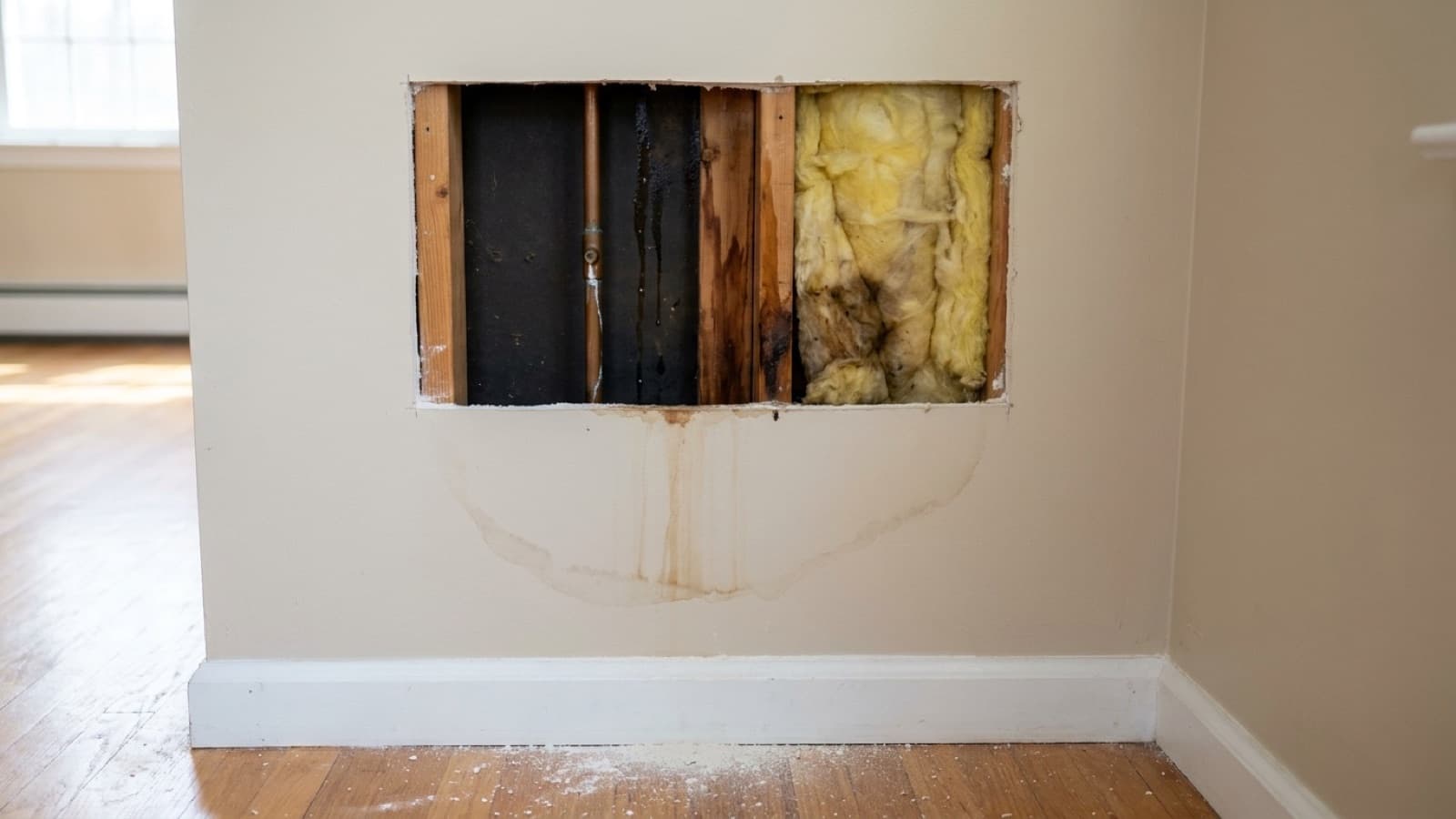
Roughly one in six Plainville houses predates 1940, and those older runs sit in shallow, poorly insulated cavities where a January cold snap splits them. A break that opens while the house is empty puts water through the ceiling assembly and the insulation. Extraction the same day, structural drying, and a scope written under HIC.0668405.
S500 protocol
Structural Drying & Dehumidification
Phoenix Axial movers and LGR dehumidifiers are set to the assembly rather than the room, which matters in a town holding a large pre-1940 core inside a postwar buildout. On slow-draining valley ground the equipment usually stays longer than the same loss would need on a slope, and Tramex readings are logged daily until the S500 dry standard is met.
4 to 10 days
Additional Water Damage Services In Plainville
Moisture Detection & Leak Mapping
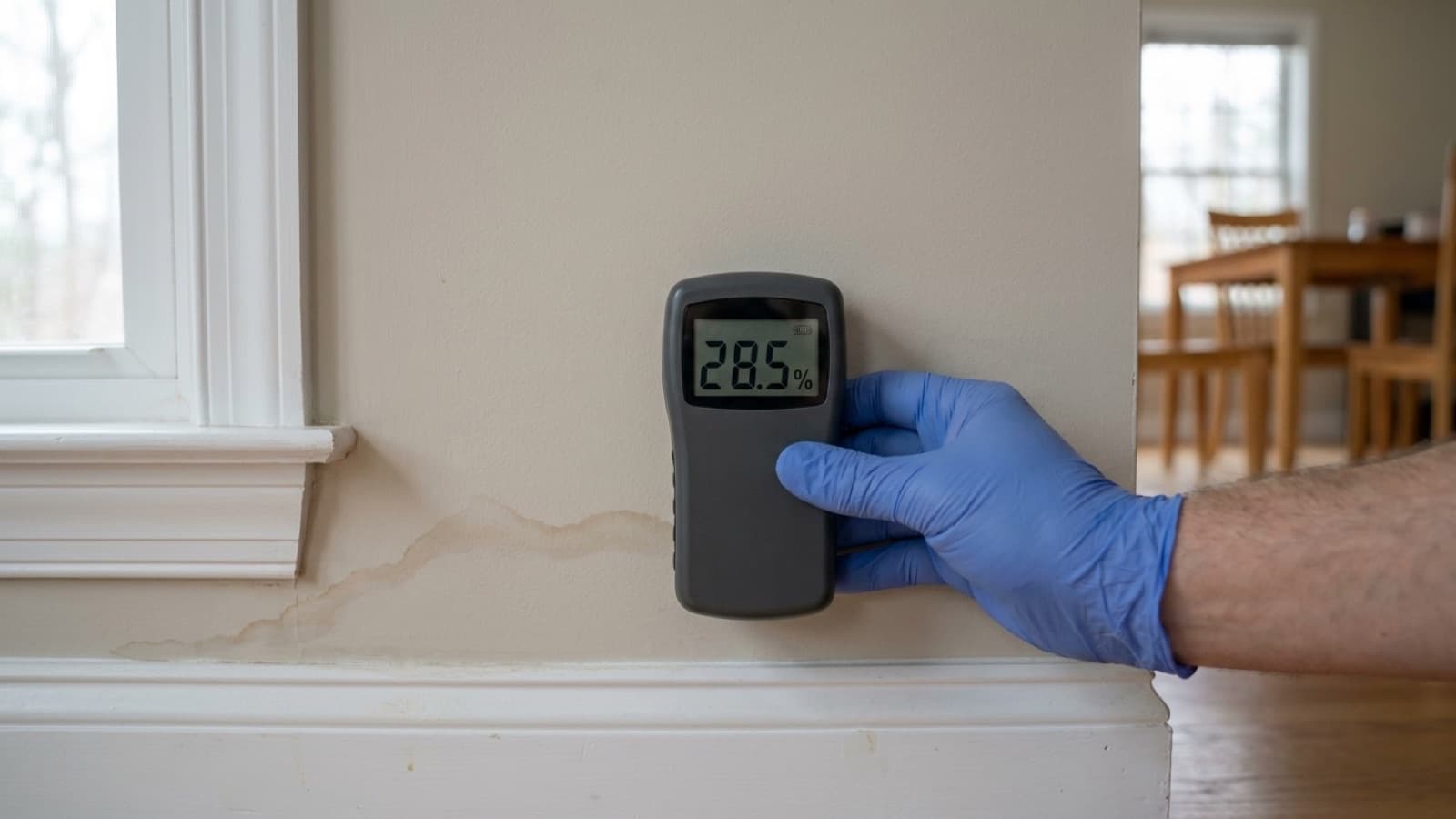
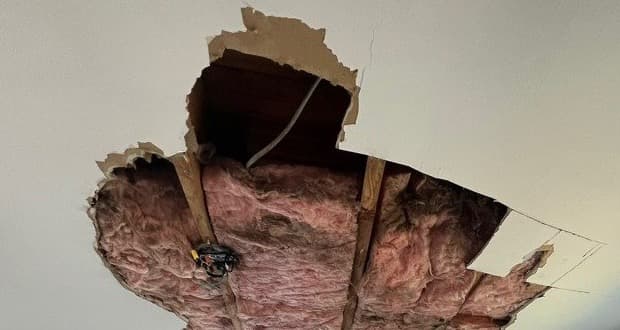
FLIR thermal imaging finds the moisture front behind plaster and drywall before anything is opened, so a Plainville ceiling takes one clean inspection cut instead of four exploratory ones. Cavity readings settle whether water travelled a joist bay across the house or stayed where it landed on the floor above.
Flooded Basement Cleanup
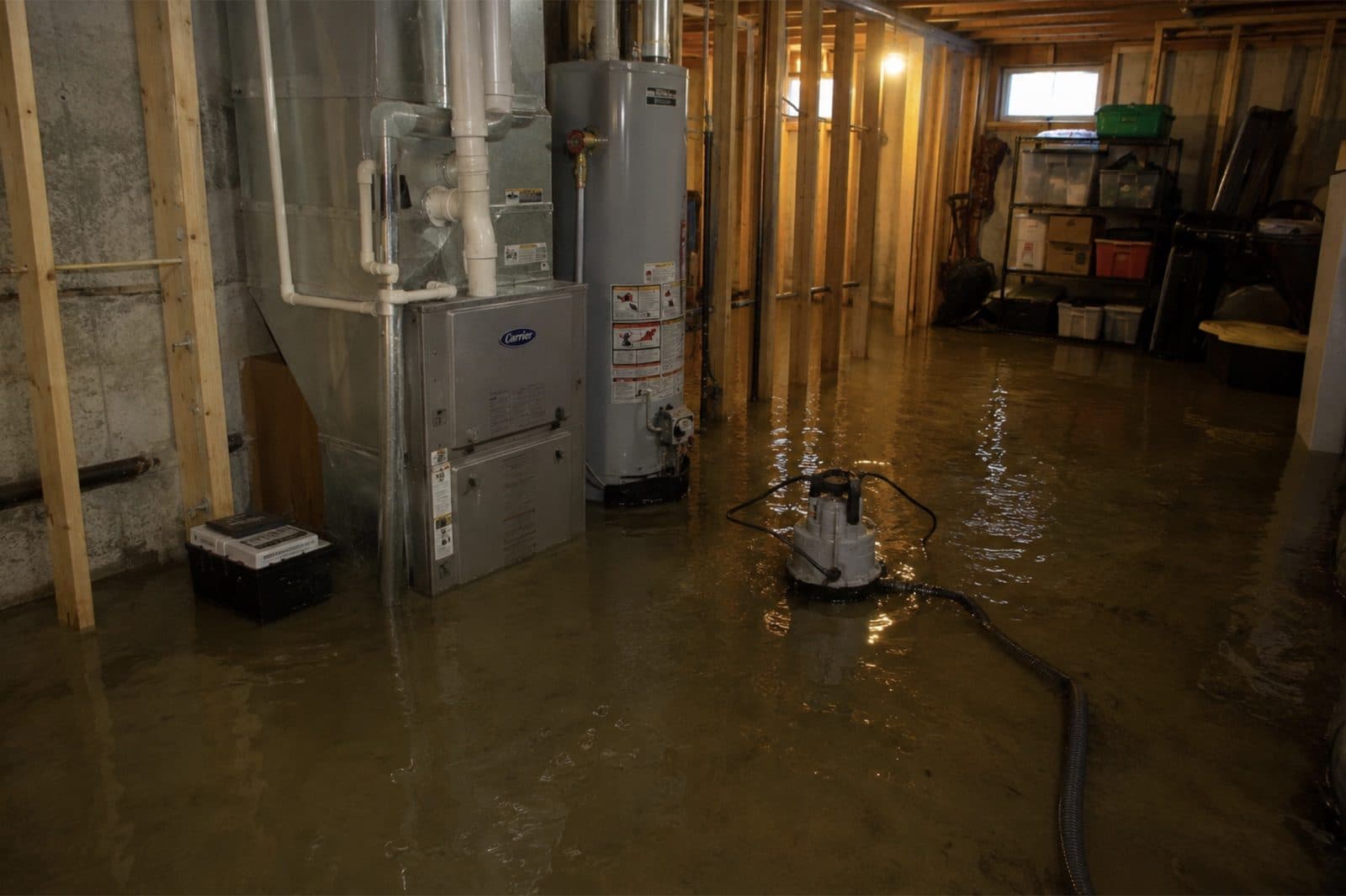
Plainville basements fill from ground that gives water back. The town describes a broad sandy plain underlain by significant groundwater deposits, and the regional hazard plan records backwater along the Pequabuck and the Quinnipiac that keeps water from draining away. We pump, sanitize, dry, and record which of the two mechanisms produced the loss.
Sump Pump Failure Cleanup
With a close water table under much of the town, the sump is the working part of a Plainville basement rather than an accessory, and it fails on the night the ground is fully loaded. We pump the standing water, replace the failed unit, dry the framing and slab edge to S500, and treat with EPA-registered antimicrobials before close-up.
Sewage & Septic Backup Cleanup
The town hazard plan notes that even slight river flooding can back up the sewer and storm water systems here. Any of that reaching a finished lower level is Category 3 under IICRC S500: full PPE, HEPA containment, porous material double-bagged out, framing and slab treated, then dried and verified before rebuild.
Ceiling & Drywall Water Damage Repair
Plaster ceilings in the older Broad Street and Whiting Street houses and drywall in the postwar stock get cut back to sound material, dried, and rebuilt to a paint-ready finish, photographed at every stage so the repair line in your claim matches exactly what was opened and why.
Hardwood Floor Drying & Salvage
Oak strip flooring cups within hours once the subfloor stays wet, and on ground that holds moisture the subfloor stays wet longer. Controlled-airflow drying with desiccant dehumidifiers pulls moisture from the assembly at a rate the finish can survive, which usually beats a full replacement line on the estimate.
Appliance & Water Heater Failure Cleanup
Washing machine hoses, dishwasher gaskets, ice maker lines, and 40 to 80 gallon tanks are the routine Plainville losses. The 2016 hazard plan records that mechanicals here have never been elevated out of basements, so a ruptured tank lands directly on the furnace and the panel. We extract, dry the mechanical corner under S500, and bill the carrier directly.
Roof Leak & Storm Intrusion Cleanup
Ice dams lift shingles over the eaves and flashing failures soak attic insulation across Plainville, while the flat commercial roofs in the Route 372 and Route 10 corridors pond during heavy rain. We extract, dry the framing per IICRC S500, and file the storm-intrusion scope with your insurer as its own documented cause.
Campground Cottage & Seasonal Building Losses
The Plainville Campground on Camp Street holds 89 wood-frame cottages, listed on the National Register in 1980 and still used as summer homes. Seasonally heated buildings behave nothing like conditioned houses in a water loss, so we scope them with lower target temperatures, tighter monitoring intervals, and salvage-first drying on original millwork.

On This Ground, Water Does Not Leave On Its Own. Start The Clock Now.
Call Now For A 60-Minute Response Across Plainville Center, White Oak, Camp Hill, And The Rest Of Hartford County.
Green Restoration, Hartford County in Plainville
Green Restoration, Hartford County handles water damage restoration in Plainville, CT, where some areas of Plainville flood because the flat topography slows the discharge of water, producing backup rather than throughput. Owner-operated crews extract the water and dry the structure to IICRC S500 standards with documented moisture logs, under IICRC Certified Firm #70236106. Call (860) 222-9498.
More Green Restoration Services in Plainville
The same local Green Restoration team covers all of these across Plainville. One number for every emergency and every cleanup.
Proof of Work
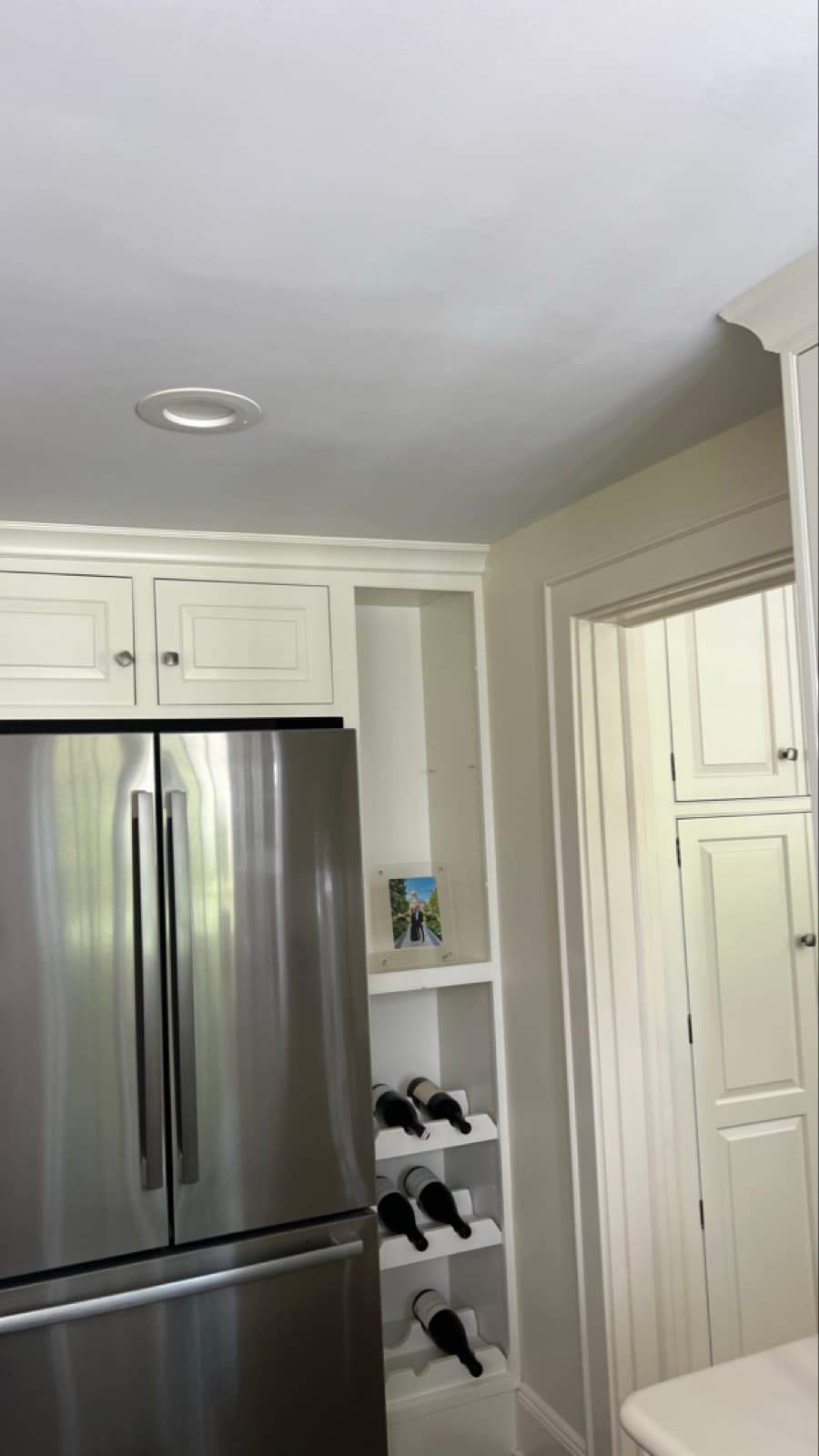
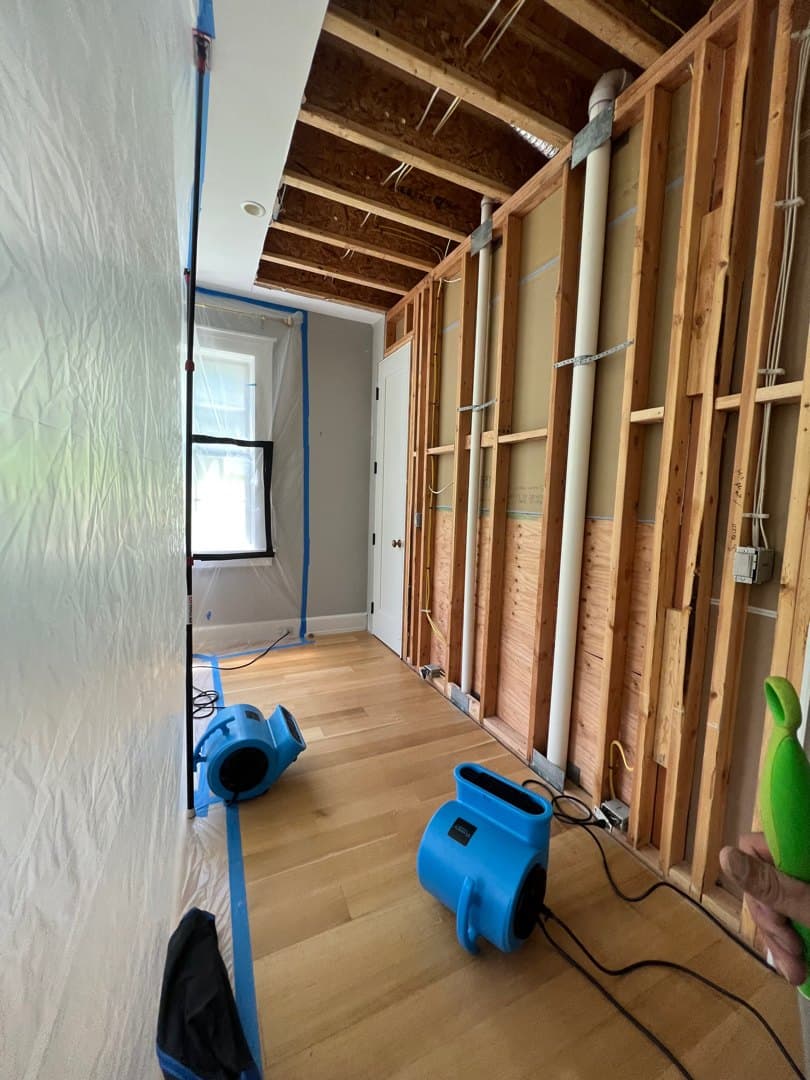
Recent Water Damage Projects
Documented Connecticut water losses our crews saw through to closeout.
Why Choose Us In Plainville
Owner-led service with 60-minute response, direct insurance billing, and eco-friendly methods across Plainville.
60-Minute Emergency Response
IICRC-certified crews arrive within 60 minutes, day or night, every day of the year.
Owner-Operated Local Crew
Every job is personally overseen by our owner, from first call to final moisture reading.
Direct Insurance Billing
We bill State Farm, Liberty Mutual, USAA, Travelers, Allstate, and Chubb directly under HIC.0668405.
EPA-Registered Antimicrobials
EPA-registered antimicrobials and Safer Choice cleaning products applied per IICRC S500 and S520 standards.
What Untreated Water Damage Costs Your Plainville Property
Untreated water damage in a Plainville home becomes mold colonization within 24 to 48 hours, hardwood cupping within 12 hours, and plaster delamination within 72 hours. A $4,500 same-day extraction can become a $25,000 plaster and finish-floor rebuild after 48 hours. The earlier we measure, the smaller the rebuild.
One Town Sitting On Two Watersheds
Pequabuck And Quinnipiac
The town plan of conservation and development describes two distinct watersheds inside Plainville: the Pequabuck and Farmington system on the west and north, and the headwaters of the Quinnipiac on the south and east. Water leaving one side of town ends up in the Connecticut River, water leaving the other side reaches Long Island Sound.
Flat Ground Slows The Discharge
Water Arrives And Stays
The town plan states that some areas of Plainville flood because the flat topography slows the discharge of water, producing backup rather than throughput. The 2016 hazard plan adds that backwater along the Pequabuck and the Quinnipiac keeps water from draining away quickly. Plainville is a town where flood water sits instead of passing through.
A Sandy Plain Over Significant Groundwater
Aquifer Protection Town
The town describes its own terrain as a broad sandy plain underlain by significant groundwater deposits, and it operates a formal Aquifer Protection Agency under the Connecticut Aquifer Protection Act of 2006 because Plainville draws on those reserves for drinking water. A high, close water table is the background condition under a lot of these basements.
Slight River Rises Push Back Through The Drains
Sewer And Storm Backups
The town hazard plan is explicit that even slight flooding of the Quinnipiac can cause backups in the sewer and storm water systems, and that a 1975 townwide drainage study found the engineered fixes prohibitively expensive. A drain-side backup does not need a river in the street to put contaminated water into a finished lower level.
Basements That Have Been Wet Before
Mechanicals Never Elevated
The 2016 hazard plan records that repeat flood damage in Plainville has not risen to the threshold that would require elevating utilities sitting in basements, and that those homes continue to receive insurance payouts. Furnaces, water heaters, and panels stay where they are, which is exactly where the water goes.
Postwar Stock On A Pre-1980 Town
Doubled Between 1945 And 1970
The town Conditions and Trends booklet records that population roughly doubled between 1945 and 1970 and has been essentially flat since, and census year-built counts show roughly 1,357 units predating 1940. That means a large pre-war core wrapped in a 30-year postwar burst, and two very different wall assemblies in the same neighborhood.
Why Plainville Properties Need Professional Water Damage Restoration
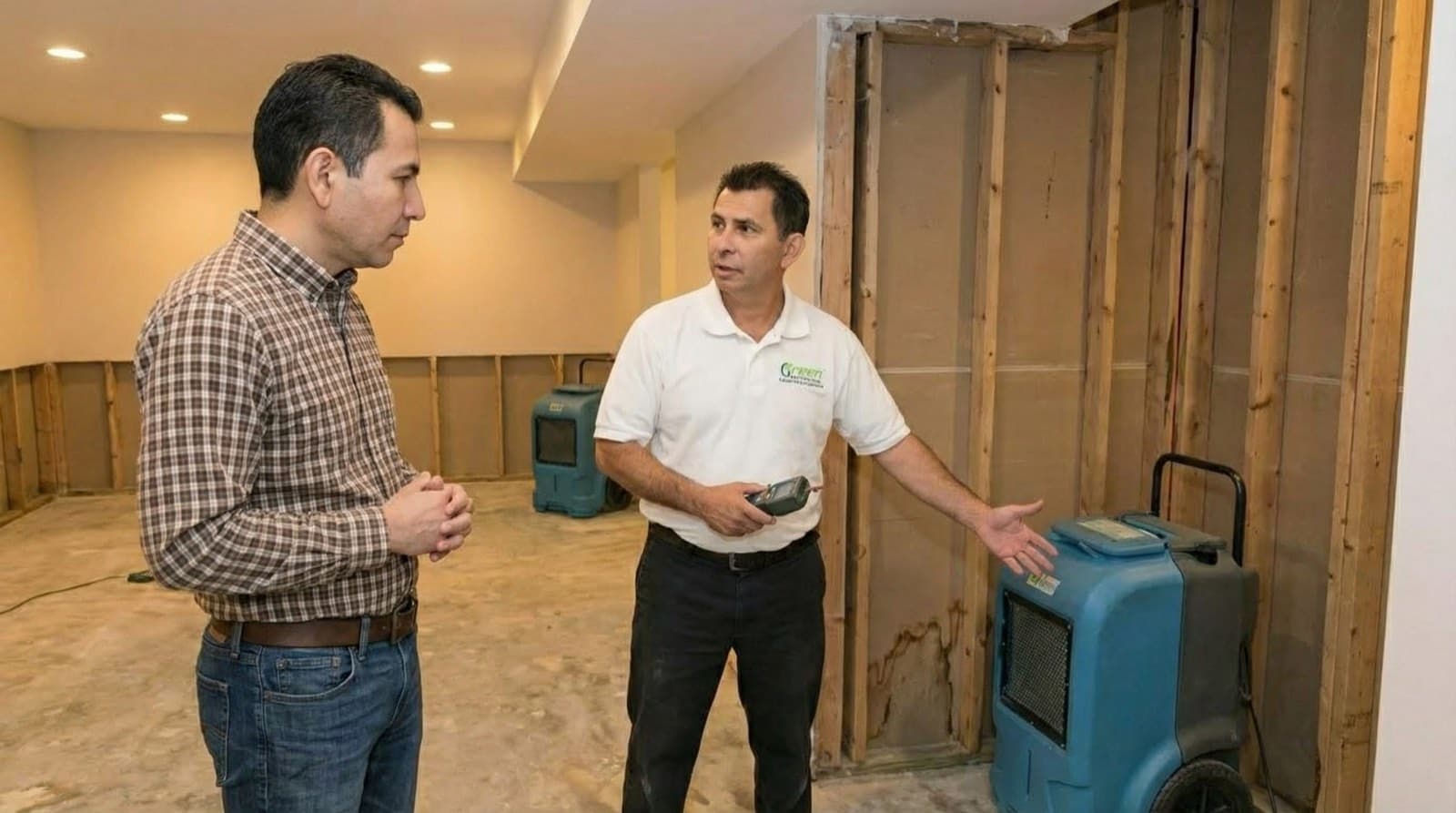
Water damage work in Plainville is shaped by a town that holds water rather than shedding it. Extraction under IICRC S500, drying built for a raised water table and a slow discharge, and a scope file an adjuster can approve on the first read. According to Green Restoration crew records, the flat valley floor here means equipment often has to run longer than the same loss would need in a hillside town, because the ground outside the wall keeps reloading the assembly inside it. A rented household fan does not change that; it only moves the surface air.
Source Control First, Then The Ground Water Question
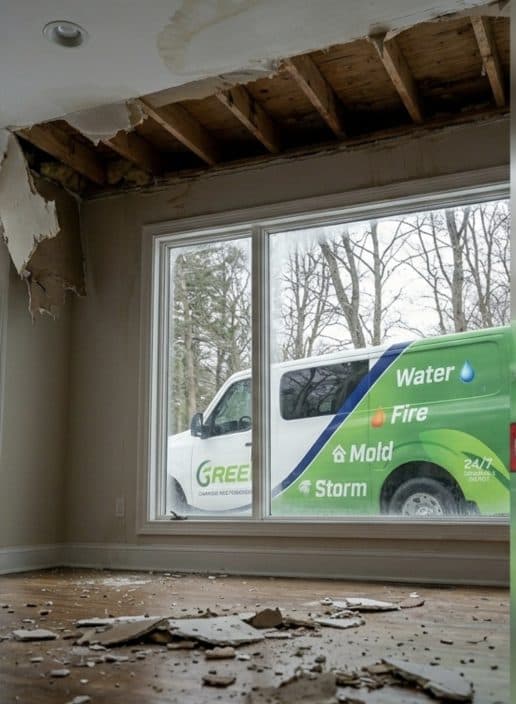
Nothing dries while water is still arriving, so the interior main comes first on any supply-side Plainville loss. Aquarion runs the Plainville Regional System and staffs a 24-hour line at 1-800-732-9678 when the curb stop is the only valve left. On a backup or a groundwater event there is no valve at all, and the scope turns immediately to containment, volume control, and drainage.
Pequabuck Flood Water Is Not Clean Water
CT DEEP lists the Pequabuck River, segment CT 4315, as not supporting recreational uses because of indicator bacteria, and the river carries an E. coli TMDL requiring stormwater load reductions. That is a documented reason to classify river-sourced flood water in Plainville as Category 3 under IICRC S500 rather than treating it as rain, and it changes what gets removed instead of dried.
Drying Calibrated To A Town Built In Two Eras
A pre-1940 house near Broad Street or Whiting Street with plaster over lath and a 1960s ranch off White Oak Avenue with drywall over fiberglass release moisture at different rates and hide it in different places. Phoenix Axial movers and LGR dehumidifiers are set to the assembly, with FLIR thermal imaging finding the moisture front before any surface is opened.
Documentation Built For Hartford-Area Carriers
Plainville homeowners are commonly insured through Travelers, The Hartford, State Farm, Liberty Mutual, USAA, Allstate, or Chubb, and each wants daily moisture logs, timestamped photographs, and an itemized IICRC-standard scope. Every file leaves here under HIC.0668405, signed off by an owner holding IICRC AMRT and WRT certification. We are not licensed public adjusters and do not negotiate claims on your behalf.
The Water Damage We See Most in Plainville
Plainville sits on a watershed divide where the Pequabuck heads one way and the Quinnipiac headwaters head the other, on flat sandy ground that the town plan says discharges slowly. That shape decides what these losses look like. Each loss is categorized under IICRC S500 and the record goes to your insurer.
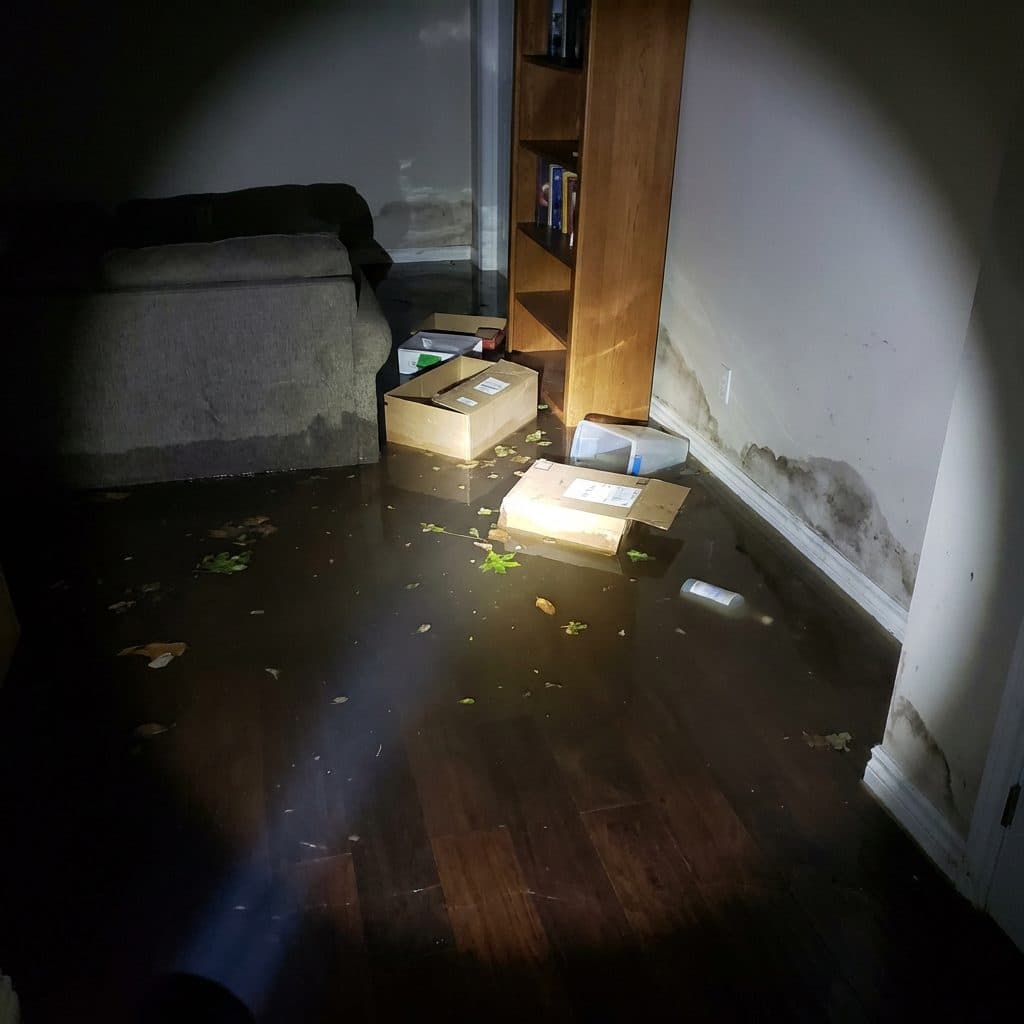
Flooded Basement, Fully Dried
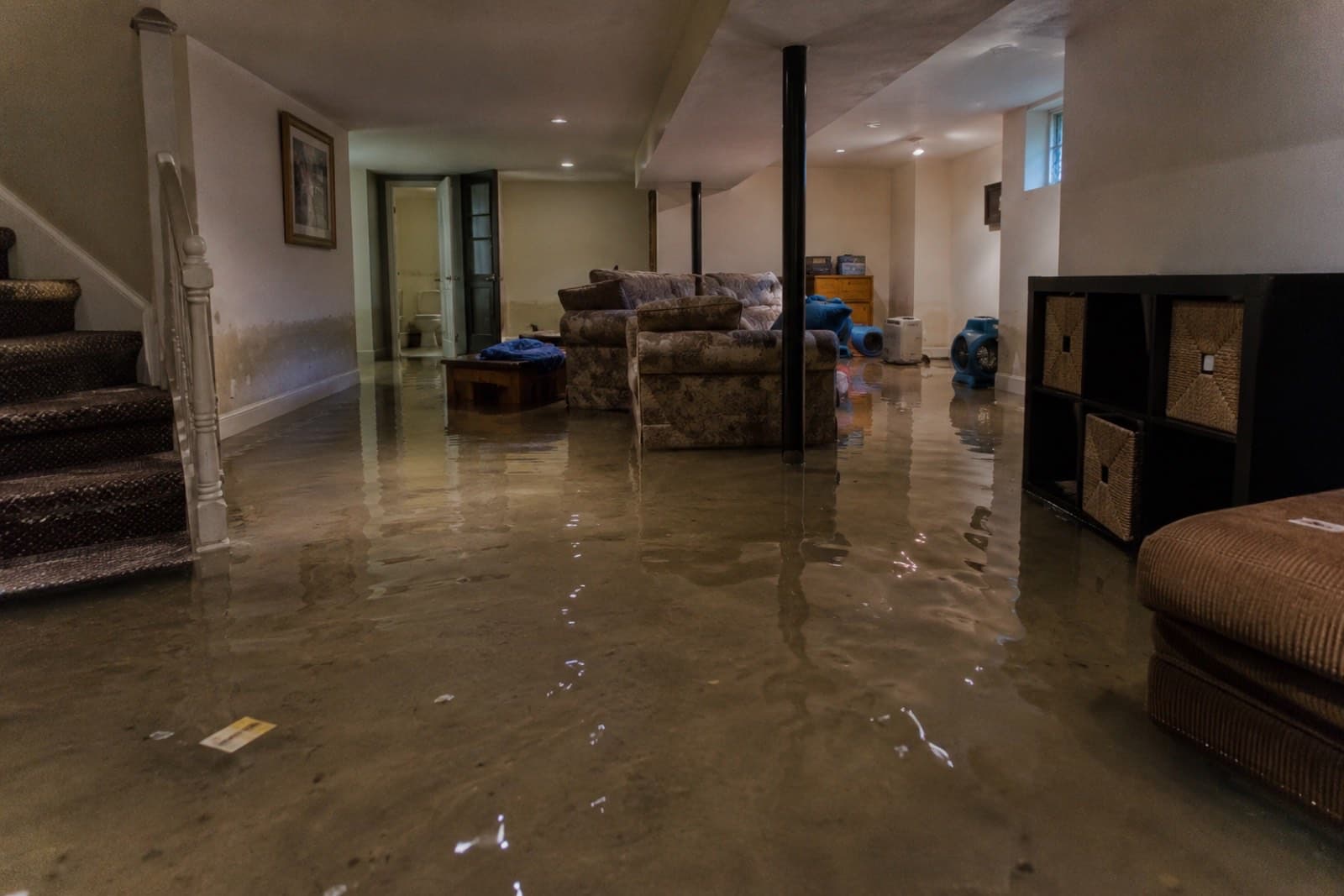
In Plainville, on ground that discharges slowly the equipment days matter more than the equipment count.
A failed sump pump, a burst supply line, or storm-driven groundwater can leave inches of standing water sitting against framing, drywall, and stored belongings. The longer it sits, the further moisture wicks up the walls and the faster the Category of the water deteriorates.
Our IICRC-certified technicians classify the water under IICRC S500, then pull the standing water down to the slab with truck-mounted and submersible extraction. We open wet wall cavities, set air movers and LGR dehumidifiers for structural drying, and apply an antimicrobial per IICRC S520 where Category 2 or 3 water is involved.
We take daily Tramex moisture readings and dry the assembly to the ANSI/IICRC dry standard, not to a calendar. Every reading, photo, and scope line is documented for your insurer so the claim moves on facts, not guesswork.
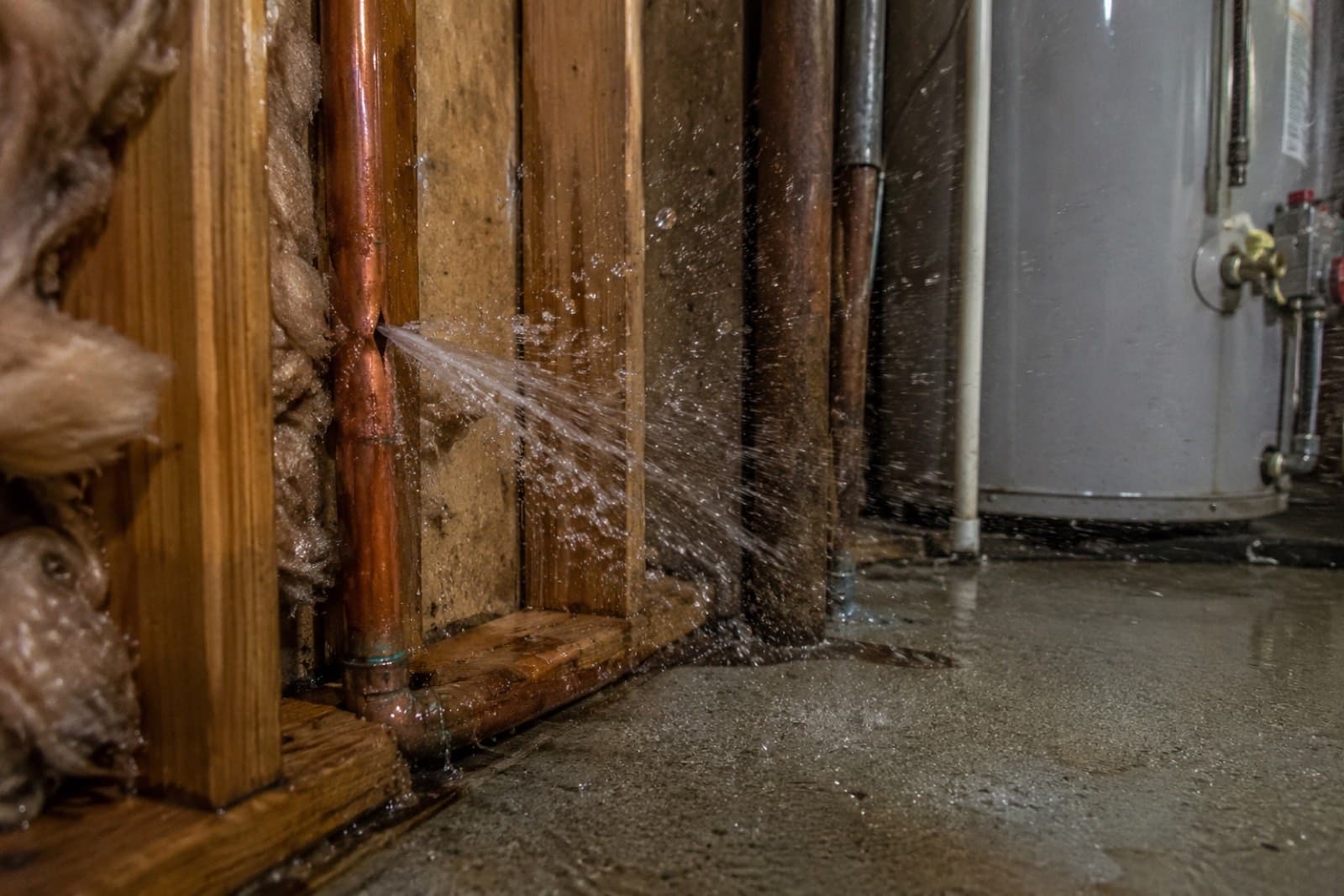
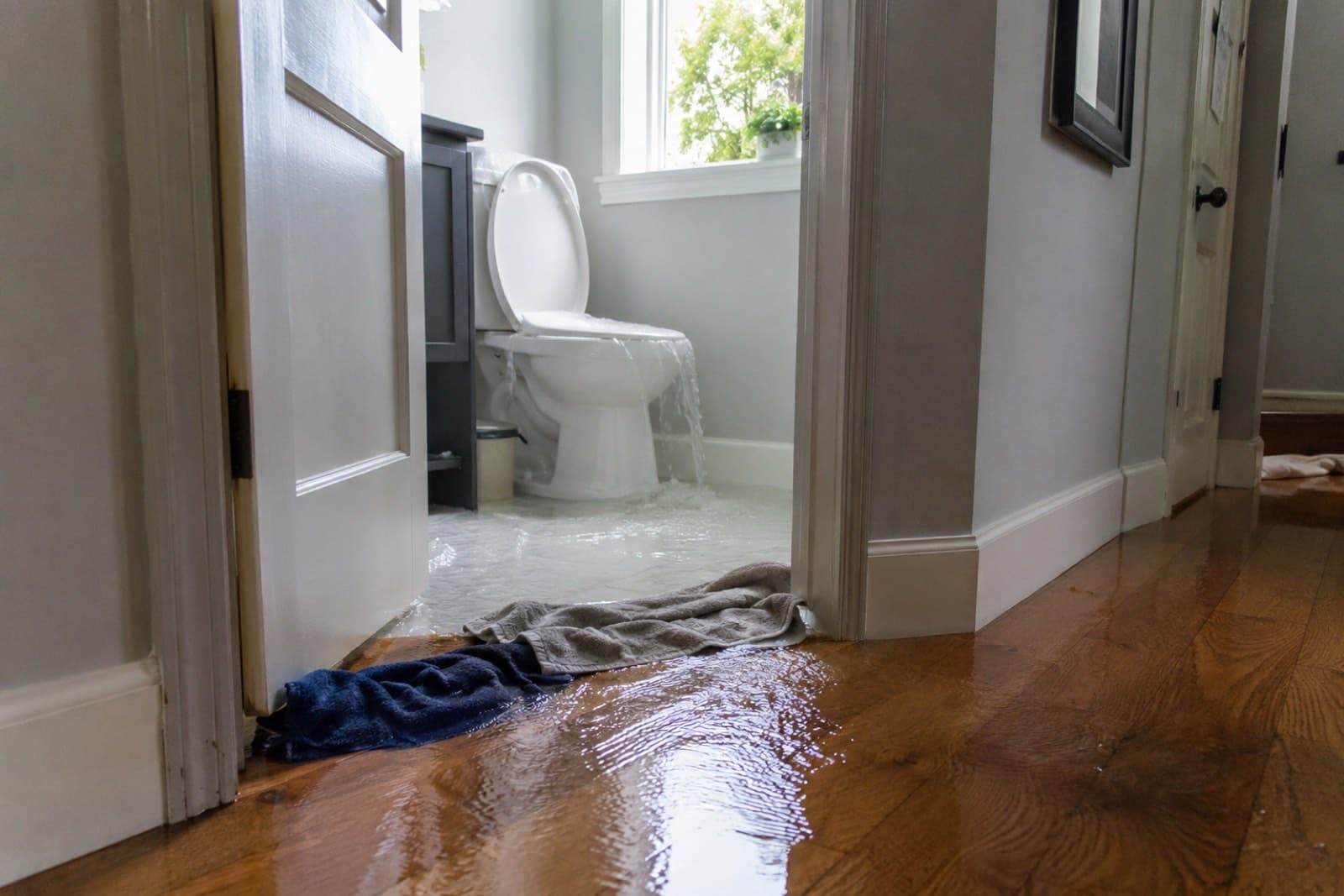
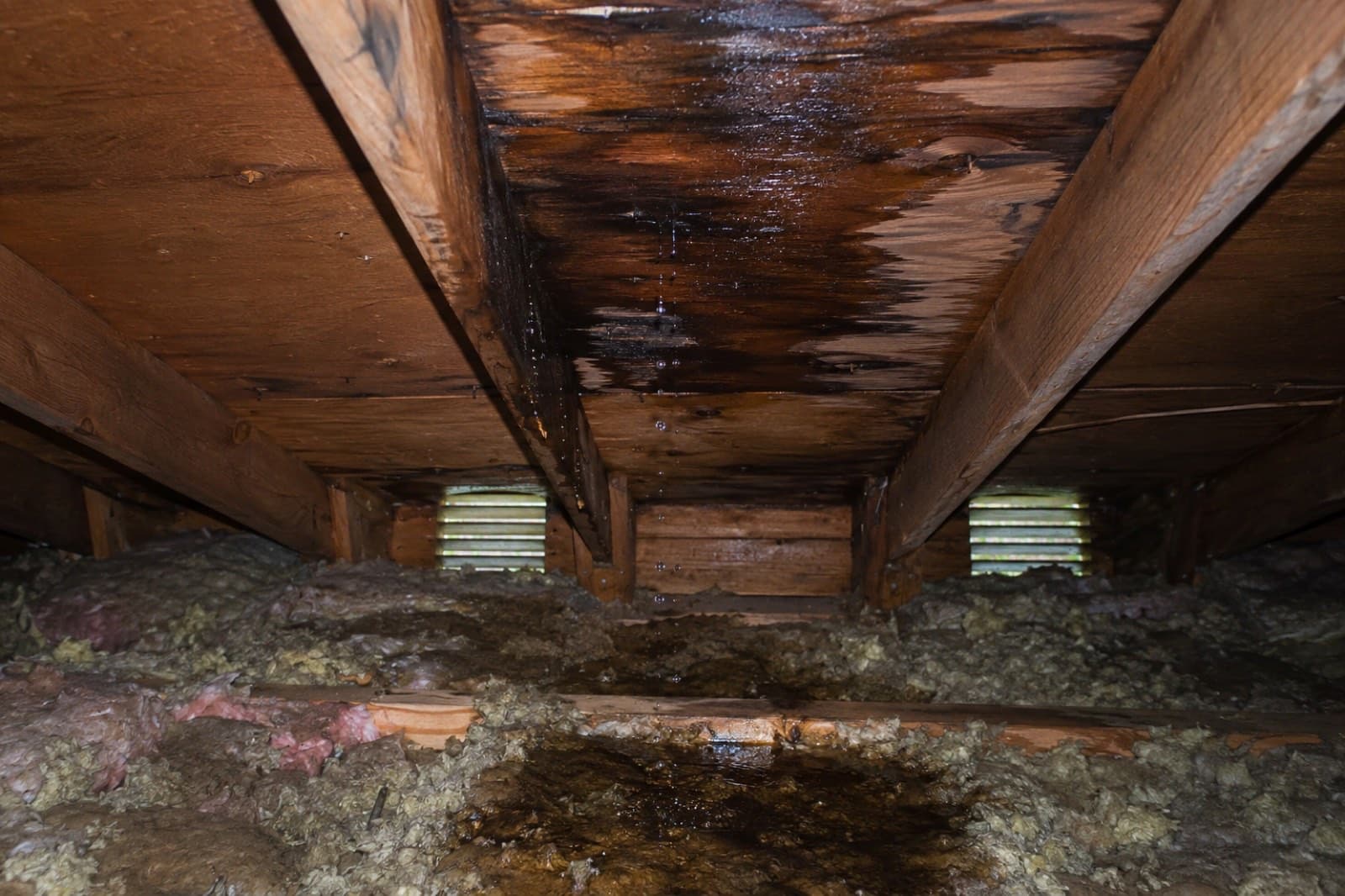
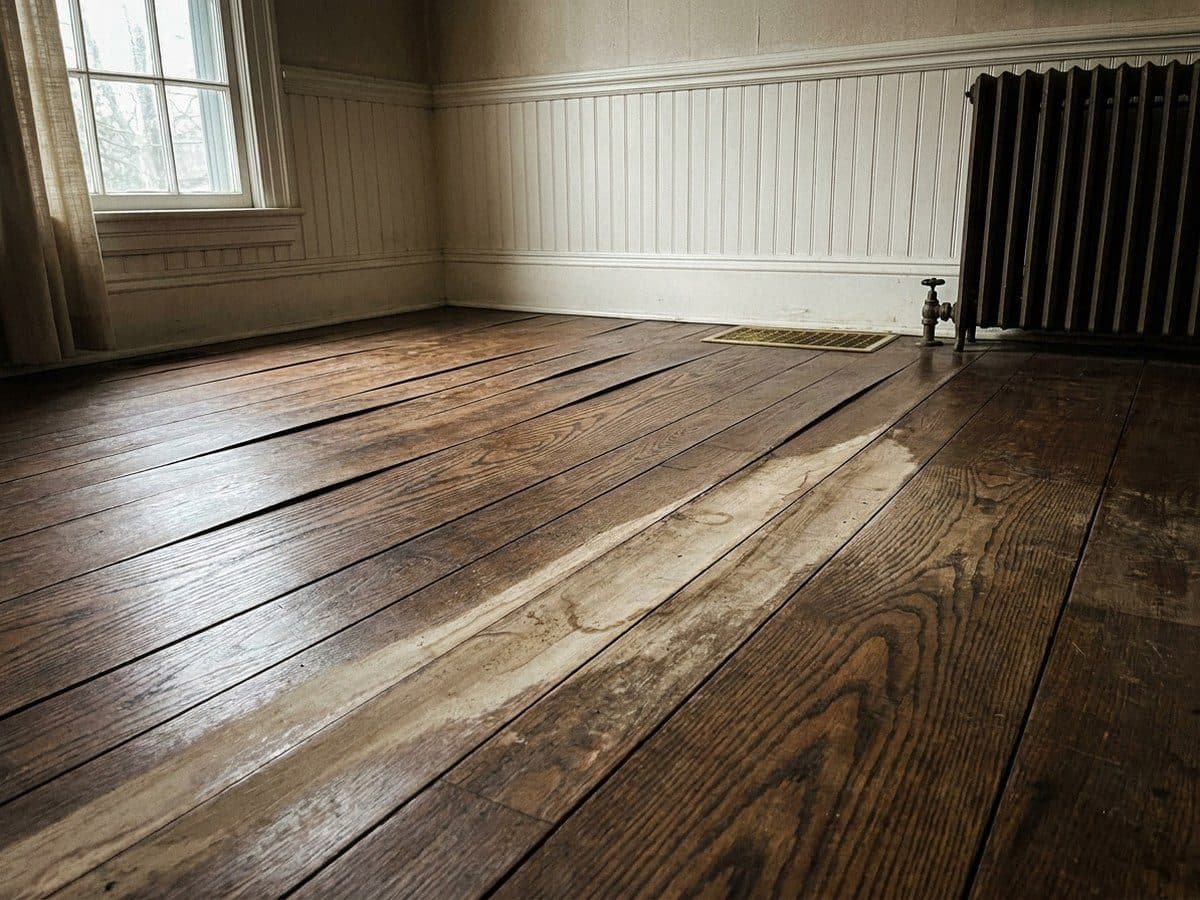
Scenario 1 of 5: Basement Flooding
What To Do After Water Damage In Plainville, CT
On a valley floor that drains slowly, what you do in the first hour changes how much of a Plainville house is still salvageable. These steps follow IICRC guidance and matter most before our truck is in the driveway.
What To Do Immediately
In most Plainville homes the interior main sits near the meter on the basement wall. Find it on a dry day, because the flat lots here fill faster than you can search.
Drop the breakers feeding any space holding water before you step into it. Basement panels and mechanicals across town were never elevated out of the wet zone.
Dial (860) 222-9498 for same-day dispatch. On slow-draining ground, every hour of delay adds equipment days rather than equipment hours to the scope.
The town asks residents to contact the Water Pollution Control Department at (860) 793-0221 before calling a plumber. After hours the number is the police line at (860) 747-1616.
Carry paper, electronics, and soft furniture up to a dry level. Set foil or blocks under wood legs so finish stain does not bleed into damp flooring.
Shoot the high-water mark on the wall before anything is extracted. That single frame anchors the depth claim in your file better than any later measurement.
What NOT To Do
CT DEEP lists the Pequabuck as impaired for indicator bacteria. River-sourced flood water in a Plainville basement is handled as Category 3, not as clean water.
Floor outlets, submerged cords, and debris you cannot see are what injure people on these jobs. Power comes off from a dry position first, every time.
A household vacuum aerosolizes contaminated water and has no filtration to catch what it throws. Category 3 extraction needs sealed equipment and PPE.
Forced air carries spores out of the wet zone into every conditioned room in the house. Kill the system until containment is up.
Because the ground here discharges slowly, waiting for the water to leave on its own is what turns a drying job into a demolition job. Start extraction anyway.
A consumer unit cannot lower vapor pressure inside a wet cavity or hold a grain-depression target. Only LGR and desiccant equipment reaches the S500 dry standard.
Our Water Damage Restoration Process In Plainville, CT
From the first call to final walkthrough, every step is documented, insured, and owner-supervised.
Water Damage Restoration Coverage In Plainville, CT
Documented water damage restoration for Plainville homes and Hartford County businesses, from the Pequabuck corridor through Plainville Center to the Quinnipiac headwater ground on the south and east side of town, with crews dispatched the same day.
Green Restoration provides IICRC-certified water damage restoration in Plainville, CT 06062, the single ZIP that covers the whole town, serving Plainville Center, the Plainville Campground, White Oak, Redstone Hill, Camp Hill, Robertson Field, and the blocks along Broad Street, Whiting Street, Cooke Street, and East Street. Interstate 84 and Route 72 cross town with Routes 10, 177, and 372 as the arterials, so crews reach these addresses on a normal Hartford County run at any hour, with a 60-minute response. We handle burst and frozen supply lines, water heater and appliance failures, sump failures, sewer and storm-drain backups, and groundwater intrusion on the valley floor.
Everything we document is sent on to your insurer as one submitted package. We are not licensed public adjusters and do not negotiate claims on your behalf.
As a locally owned company operating under HIC.0668405, we work Plainville around the fact that this town holds water instead of shedding it. The town plan describes a broad sandy plain underlain by significant groundwater deposits and flat topography that slows discharge, and the 2016 hazard plan adds that backwater along the Pequabuck and the Quinnipiac prevents water from draining away quickly, so even slight river rises push back through the sewer and storm systems.
Aquarion runs the Plainville Regional System and staffs a 24-hour line at 1-800-732-9678; the town asks residents to call Water Pollution Control at (860) 793-0221 before a plumber on any backup, with the police line at (860) 747-1616 after hours; and the Eversource and Yankee Gas emergency number for a suspected leak is 877-944-5325. Roughly one in six houses here predates 1940 and about seventy percent predate 1980, which puts plaster cavities and postwar drywall on the same street and on separate drying curves.
See typical Plainville water damage pricing in 60 seconds. Category 1 to 3.
Water Emergency In Plainville?
Call now for immediate dispatch, 24/7/365.
(860) 222-9498IICRC Certified · Licensed & Insured · CT HIC.0668405
All Towns Served By Green Restoration Across The Hartford-Tolland Corridor With 60-Minute Emergency Response Under HIC.0668405.
Why Plainville Water Damage Is Different
Two watersheds, a sandy plain over the aquifer, and ground the town plan says discharges slowly.
Free On-Site Assessment
Not sure what you are dealing with in Plainville?
We establish the scope on site, before anything is quoted.
(860) 222-9498How The Plainville Valley Floor Shapes A Restoration Scope
Plainville covers 9.7 square miles of land at roughly 190 feet of elevation at the center, with the ground running from about 170 to 660 feet across the town, and it sits on a watershed divide. The town plan of conservation and development names two distinct watersheds inside the borders: the Pequabuck and Farmington system on the west and north, and the headwaters of the Quinnipiac on the south and east.
The Pequabuck rises up in Harwinton and runs roughly nineteen miles east through Plymouth, Bristol, and Plainville before it empties into the Farmington River, and the 1828 Farmington Canal came through this town precisely because it is the hinge point where one river system hands off to the other. What matters to a restoration scope is not the size of either river but the shape of the ground between them. The town describes its own terrain as a broad sandy plain underlain by significant groundwater deposits, and its own plan says some areas flood because the flat topography slows the discharge of water.
The 2016 hazard plan is blunter still: backwater conditions along the Pequabuck and along the Quinnipiac prevent water from draining away quickly, and even slight flooding can back up the sewer and storm systems. According to Green Restoration field documentation, that combination is why Plainville drying scopes carry more equipment days than a comparable loss on higher ground, and why river-sourced water here is classified against the CT DEEP impairment listing rather than treated as rain. Every project here follows IICRC S500 protocol: truck-mounted extraction, Phoenix Axial movers, and Tramex readings taken daily until the dry standard holds at every monitoring point.
24/7 Water Damage Response In Plainville, CT
IICRC-certified crews run Plainville on a normal Hartford County dispatch, from the Pequabuck corridor through the center of town to the Quinnipiac headwater ground on the south and east side. We aim to have a truck in the driveway inside the hour.
Hartford County sits in the Connecticut River valley, and the mapped floodplain follows the river and its tributaries through the towns on both banks. Spring snowmelt and tropical-system rainfall push backwater up through floor drains and sump systems. We pump with Hydramaster CDS truck-mounts, document Category 3 stormwater per IICRC S500-2021, and dry to S500 standard.
The Farmington River runs through the valley towns of western Hartford County before it joins the Connecticut River. Low-lying parcels along that corridor take on groundwater and storm-drain backflow during heavy rain. Phoenix Axial movers and FLIR thermal imaging map hidden moisture inside wall cavities before viable mold colonies form.
Hartford County housing runs from pre-war plaster-on-lath factory and mill-worker stock to post-war ranches and colonials on sump-dependent basements and crawl spaces. Continuous balloon-frame stud bays in the older stock wick moisture vertically from basement to attic. We calibrate drying to the assembly rather than the square footage, with daily documented readings.
Our owner personally leads every Hartford County water-damage scope, IICRC AMRT and WRT certified under HIC.0668405. Documented scope, daily Tramex CME 5 moisture logs, and clearance filed with State Farm, Travelers, Liberty Mutual, USAA, Allstate, Chubb, and other major carriers.

About Green Restoration In Plainville, CT
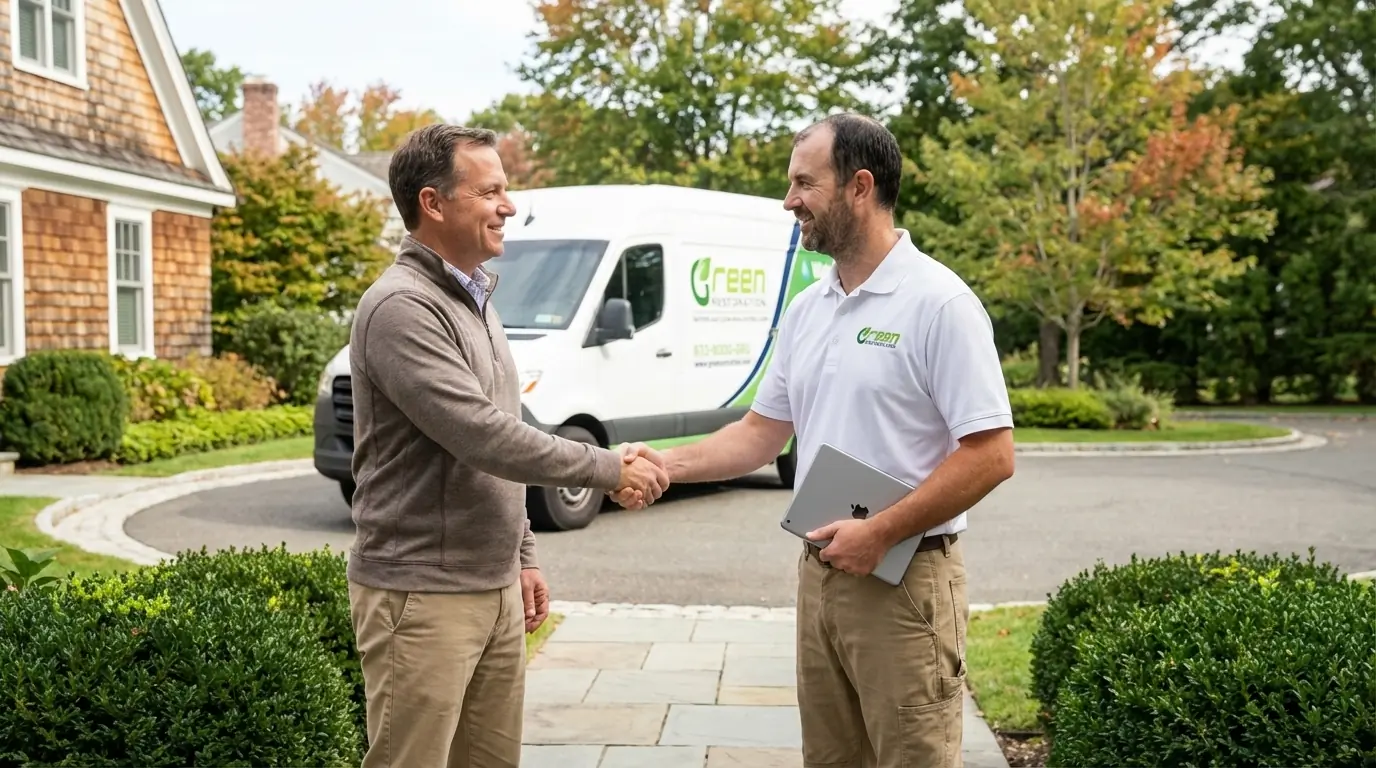
Your Plainville Water Damage Specialists Since 2014
A Plainville scope has to account for ground that gives water back. The town plan calls this a broad sandy plain underlain by significant groundwater deposits with flat topography that slows discharge, and the hazard plan records backwater along both the Pequabuck and the Quinnipiac. In practice that means extraction, then drying that is monitored longer than the same loss would need on a slope, and it means river-sourced water gets classified against the CT DEEP impairment listing rather than assumed clean.
Our owner holds IICRC AMRT and WRT certification and works under HIC.0668405, with Tramex mapping, Phoenix Axial movers, and LGR dehumidifiers on the job and the finished carrier file going to your adjuster. We are not licensed public adjusters and do not negotiate claims on your behalf.

“I lead the Hartford County crews myself, and Plainville taught me to stop reading a wet basement as a single event. This town sits on a divide with the Pequabuck heading one way and the Quinnipiac headwaters heading the other, on flat sandy ground that the town plan itself says discharges slowly. So the water arrives, and then it stays, and the equipment has to stay with it. Kill the source where there is a source, classify the water honestly, dry to the S500 standard, and put every reading in writing under HIC.0668405.”
Trusted by Families in Plainville &
Hartford County
4.9 out of 5, Rated by your neighbors on Google
We discovered mold when removing our pellet stove and called Green Restoration for help. David was very communicative and helpful throughout the entire process. He did the job thoroughly and professionally. Highly recommended!
David Woolner
Mold RemediationI had a fantastic experience with Green Restoration. From start to finish, the team was professional, thorough, and extremely knowledgeable. David came for the initial inspection and took the time to explain the entire process.
Annmarie Gieparda
Mold RemediationWe had mold due to a water leak in our half finished basement. David and his crew did a great job, we were very satisfied. I would highly recommend Green Restoration to anyone.
Tanya
Water DamageI needed my entire condo completely cleaned after a soot blow back. Green Restoration was top shelf! So thorough and professional. Thank you so much!
Jacki Hornish
Fire & Soot CleanupHow Much Does Water Damage Restoration Cost In Plainville, CT?
Pricing follows the IICRC S500 water category. Most Plainville claims settle in the Category 2 range of 2,500 to 8,500 dollars. Typical ranges are below.
Category 1, Clean Water
1,500 to 4,500 dollars
Supply line break, ice maker feed, appliance overflow, single-room scope
Category 2, Gray Water
2,500 to 8,500 dollars
Washer or dishwasher line, toilet overflow, sump failure, lower level
Category 3, Black Water
7,500 to 50,000+ dollars
Sewer or storm-drain surcharge, river-sourced water, multi-room containment
Priced by IICRC S500 water category. Read the full water damage cost guide.
Plainville Water Damage Restoration FAQs
Straight answers on emergency extraction, why water sits on this valley floor, drain backups, insurance documentation, and restoration cost in Plainville, CT.
A Category 1 clean-water loss in a Plainville ranch or cape, a split supply line or a failed water heater, generally lands between 2,800 and 9,500 dollars. Category 3 work, a sewer or storm-drain backup into a finished basement, runs far higher once porous material has to be removed, commonly 14,000 to 32,000 dollars. Slow-draining valley-floor ground tends to add equipment days rather than equipment units, because the soil outside the wall keeps reloading the assembly inside it. The number your adjuster approves is set against our itemized IICRC S500 file. Call (860) 222-9498.
Interstate 84 and Route 72 both cross Plainville, with Routes 10, 177, and 372 as the arterials, which makes the town one of the quicker Hartford County runs at any hour. We dispatch same day with a 60-minute response across Plainville Center, White Oak, Redstone Hill, Camp Hill, Robertson Field, and the Campground blocks off Camp Street. Truck-mounted extraction and submersible pumps roll on every call, so the first pass at standing water starts on arrival. Our owner takes Hartford County dispatch calls himself on (860) 222-9498.
Because the ground here is built to hold it. The town plan of conservation and development describes Plainville as a broad sandy plain underlain by significant groundwater deposits, and says directly that some areas flood due to the flat topography which slows the discharge of water. The 2016 regional hazard plan goes further: backwater conditions along the Pequabuck River, coming off the Farmington, and along the Quinnipiac prevent water from quickly draining away, and even slight flooding can cause backups in the sewer and storm water systems.
According to Green Restoration dispatch records, that is why a Plainville drying plan is written in equipment days rather than equipment hours, and why we monitor to the reading rather than to a schedule. Call (860) 222-9498.
Yes. CT DEEP lists the Pequabuck River, segment CT 4315, as not supporting recreational uses because of indicator bacteria, and it carries an E. coli TMDL requiring stormwater load reductions of 14 to 89 percent. That published impairment is a documented basis for classifying river-sourced flood water in a Plainville property as Category 3 grossly contaminated water under IICRC S500 rather than as clean rainwater. In practice it changes the scope: porous material that contacted the water comes out instead of being dried in place, containment goes up, and framing and slab get EPA-registered antimicrobial treatment before anything is closed back.
The town asks residents to contact the Water Pollution Control Department before contacting a plumber, at (860) 793-0221 during business hours and through the police non-emergency line at (860) 747-1616 after hours. That sequence matters here, because Plainville operates a gravity-fed collection system feeding a treatment plant built in the 1940s, and the town hazard plan notes that infiltration and inflow can push flows past plant capacity during spring thaw and major storms. If the backup is in the municipal line it is a town problem; if it stops at your lateral it is yours. Then call us at (860) 222-9498 for the cleanup.
Sudden and accidental water damage is covered under standard Connecticut policies from Travelers, The Hartford, State Farm, Liberty Mutual, USAA, Allstate, and Chubb, which is most of what happens here: burst and frozen supply lines, water heater ruptures, appliance and washing-machine failures, and sudden breaks in exterior wall cavities. Surface water entering from outside is excluded and needs a separate NFIP policy, and Plainville has participated in the National Flood Insurance Program since 1980. Long-term seepage is excluded as well, which is why we date and document the onset carefully. We file the IICRC S500 scope, the daily moisture logs, and timestamped photographs under HIC.0668405. We are not licensed public adjusters and do not negotiate claims on your behalf.
Yes, and they are handled as a distinct building type rather than as small houses. The Plainville Campground on Camp Street, listed on the National Register in 1980, is roughly 17 acres holding 89 wood-frame cottages arranged around a central pavilion, one to two stories, still used as summer homes. Seasonally heated wood-frame buildings behave nothing like a year-round conditioned house in a water loss: the shell is thin, the assemblies are shallow, and a winter freeze break can run undetected for weeks. We scope those with lower target temperatures, tighter monitoring intervals, and salvage-first drying on the original millwork wherever the readings allow it.
Under IICRC S520, cellulosic material can show visible growth in as little as 24 to 48 hours whenever moisture content stays over roughly 16 percent. In Plainville that clock is harder to beat than in a hillside town, because the flat ground and the backwater conditions the town hazard plan describes mean the source of the moisture does not leave when the storm does. That is the single most common reason a Plainville homeowner sees growth after what looked like a small event. Drying runs to the S500 standard, Tramex readings confirm it, and S520 protocols cover anything contaminated.

