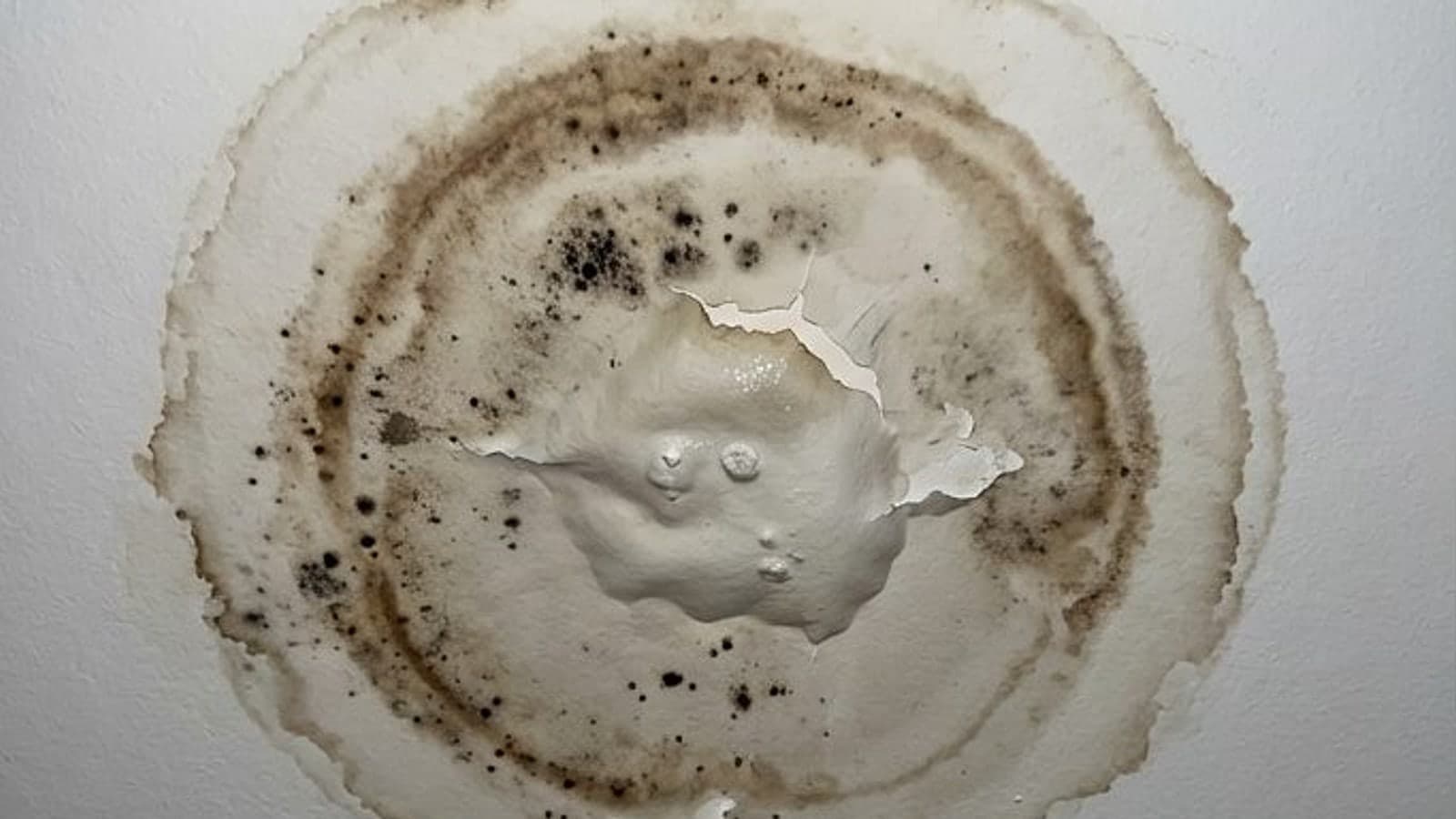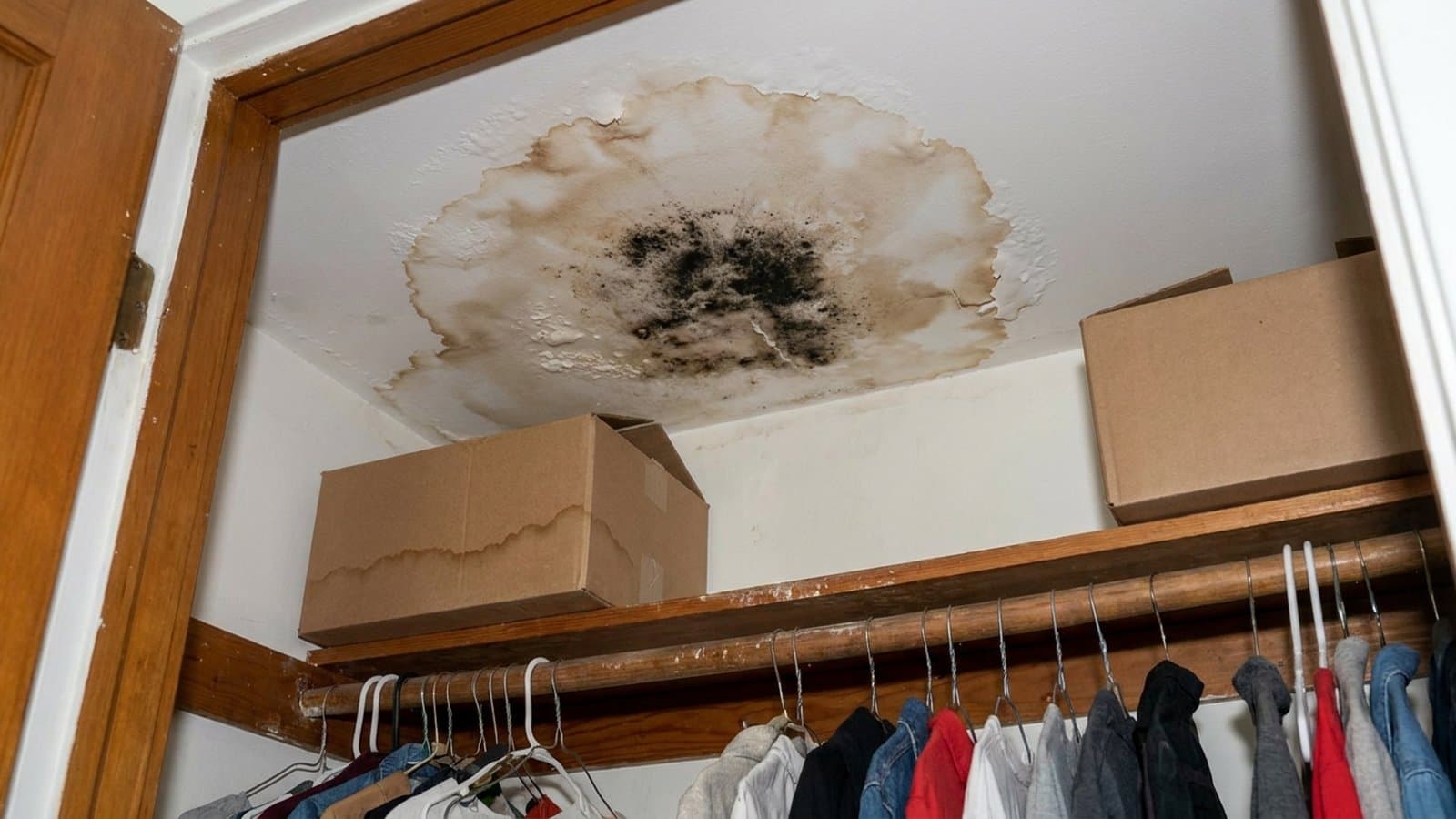
The frustrating part of this problem is that it seems solved. You clean, the smell goes, and a few weeks later a humid afternoon brings it straight back. That pattern is not a sign the cleaning failed. It is a sign the cleaning happened on the wrong layer.
Urine is mostly water carrying urea, salts and organic compounds. The water evaporates and leaves crystals behind, and those crystals are effectively odorless while they stay dry. Add humidity and they take on moisture, bacteria go back to work on the urea, ammonia is released, and the smell returns exactly as strong as before. Every humid day is a fresh release from the same deposit.
This guide covers how far down the liquid actually goes, what works at each layer, why enzyme cleaners succeed and fail, and the point at which replacing material is cheaper than treating it again.
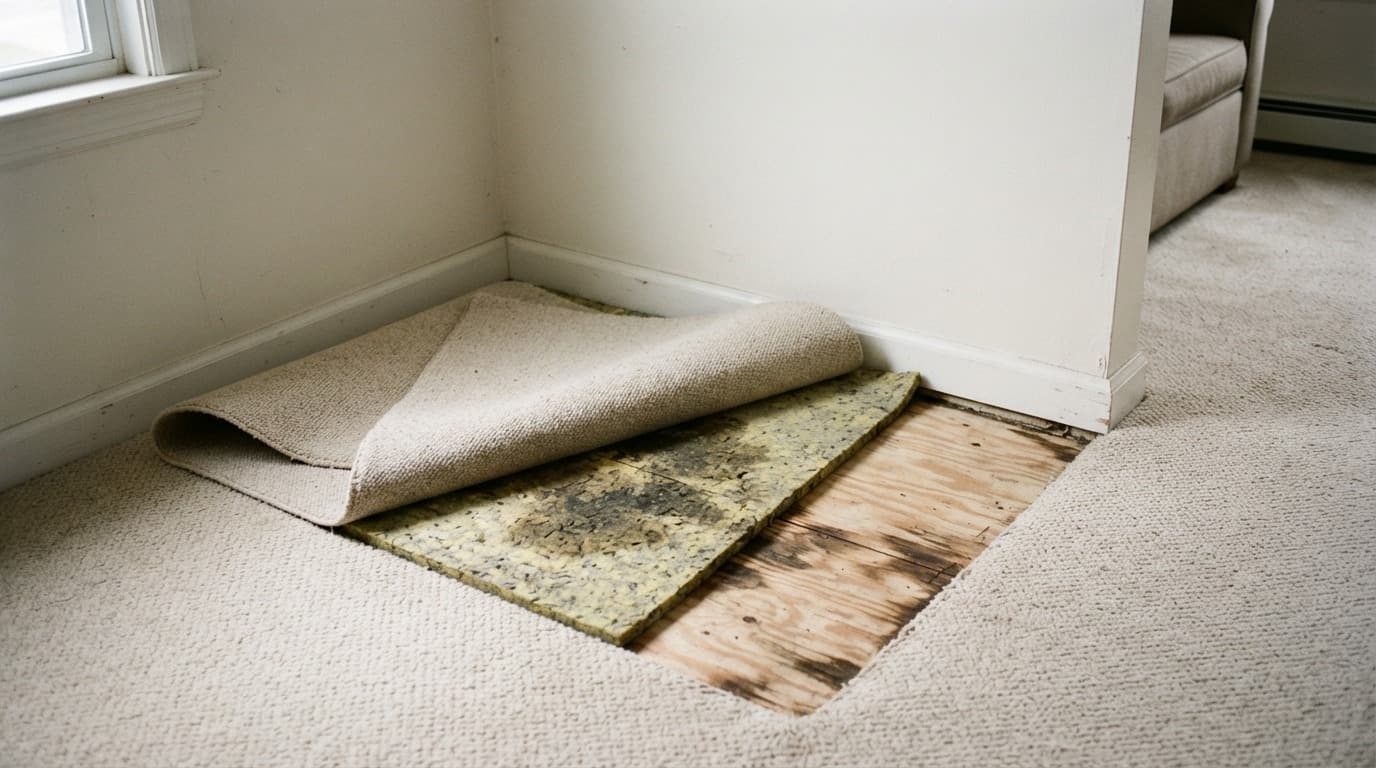
How Far Down Does Pet Urine Really Go?
Four layers, and each accident travels further than the last because the layers above are already saturated.
Where the liquid ends up, and what each layer needs. Most treatment stops at layer one.
Carpet face
- What happens there
- Holds the least urine. Wicks and shows the stain, so it gets the attention.
- What it needs
- Cleaning. Genuinely effective at this layer and genuinely insufficient alone.
Carpet pad
- What happens there
- Foam or rebond acts as a sponge. This is where the bulk of the liquid sits and where most of the ongoing smell comes from.
- What it needs
- Saturating enzyme treatment, or replacement. Pad is inexpensive and replacing it is often the fastest honest fix.
Subfloor
- What happens there
- Plywood absorbs and holds. Repeat accidents in one spot soak through the pad every time and build a reservoir in the wood.
- What it needs
- Enzyme treatment worked into the wood, then a sealing primer once dry. Cutting out the section for heavy saturation.
Below the subfloor
- What happens there
- In serious cases urine reaches the seam between sheets, the joist top, or the ceiling below in a two storey house.
- What it needs
- Assessment of the assembly from below. This is the point at which it stops being a cleaning question.
| Layer | What happens there | What it needs |
|---|---|---|
| Carpet face | Holds the least urine. Wicks and shows the stain, so it gets the attention. | Cleaning. Genuinely effective at this layer and genuinely insufficient alone. |
| Carpet pad | Foam or rebond acts as a sponge. This is where the bulk of the liquid sits and where most of the ongoing smell comes from. | Saturating enzyme treatment, or replacement. Pad is inexpensive and replacing it is often the fastest honest fix. |
| Subfloor | Plywood absorbs and holds. Repeat accidents in one spot soak through the pad every time and build a reservoir in the wood. | Enzyme treatment worked into the wood, then a sealing primer once dry. Cutting out the section for heavy saturation. |
| Below the subfloor | In serious cases urine reaches the seam between sheets, the joist top, or the ceiling below in a two storey house. | Assessment of the assembly from below. This is the point at which it stops being a cleaning question. |
Why Cats Are Harder Than Dogs
Cat urine is more concentrated than dog urine, so the same volume carries more urea and more of the compounds that produce the smell. Cats also tend to return to a spot they have already marked, which concentrates repeat deposits in one place rather than spreading them. A single dog accident on a rug is usually a cleaning job. A cat that has used the same corner for a year is usually a materials job.
Finding Every Spot Before You Start
A UV light in a dark room makes dried urine fluoresce, which is far more reliable than following your nose to the strongest area. Mark every spot with tape before you treat anything. Treating three of five deposits leaves you convinced the treatment failed, when what actually happened is that you missed two.
What Works And What Does Not
The category is full of products that address the symptom. Here is the honest sort.
Approaches ranked by whether they break down the source or cover it.
Enzyme cleaner, applied properly
- Does it work
- Yes
- Why
- Enzymes digest the uric acid compounds rather than masking them. This is the only consumer product category that addresses the source, and it is genuinely effective when used correctly.
Enzyme cleaner, applied lightly
- Does it work
- No
- Why
- Most failures are application failures. A surface spray reaches the carpet face and nothing else, and the reservoir in the pad continues untouched.
Vinegar and baking soda
- Does it work
- Partly
- Why
- Vinegar neutralises some ammonia and helps with a fresh accident. It does not break down crystallised uric acid, so it fades an old deposit rather than removing it.
Hydrogen peroxide solutions
- Does it work
- Partly
- Why
- Oxidises some compounds and helps with staining. Can bleach carpet fibre and wood, so test somewhere hidden first.
Steam cleaning
- Does it work
- Counterproductive on old deposits
- Why
- Heat sets the proteins into the fibre, which is the opposite of what you want. Steam is fine after enzyme treatment, not before it.
Carpet deodorising powders
- Does it work
- No
- Why
- Perfume over an active source. The powder also settles into the pad, which adds material without removing any.
Replacing the pad
- Does it work
- Yes
- Why
- Pad is one of the cheapest components in the room and it holds most of the liquid. On any significant contamination this is faster, cheaper and more certain than repeated treatment.
Sealing the subfloor
- Does it work
- Yes, as the last step
- Why
- A shellac based or purpose made sealing primer locks down what remains in the wood. Only valid after cleaning and full drying, never as a shortcut over a wet or untreated deposit.
| Approach | Does it work | Why |
|---|---|---|
| Enzyme cleaner, applied properly | Yes | Enzymes digest the uric acid compounds rather than masking them. This is the only consumer product category that addresses the source, and it is genuinely effective when used correctly. |
| Enzyme cleaner, applied lightly | No | Most failures are application failures. A surface spray reaches the carpet face and nothing else, and the reservoir in the pad continues untouched. |
| Vinegar and baking soda | Partly | Vinegar neutralises some ammonia and helps with a fresh accident. It does not break down crystallised uric acid, so it fades an old deposit rather than removing it. |
| Hydrogen peroxide solutions | Partly | Oxidises some compounds and helps with staining. Can bleach carpet fibre and wood, so test somewhere hidden first. |
| Steam cleaning | Counterproductive on old deposits | Heat sets the proteins into the fibre, which is the opposite of what you want. Steam is fine after enzyme treatment, not before it. |
| Carpet deodorising powders | No | Perfume over an active source. The powder also settles into the pad, which adds material without removing any. |
| Replacing the pad | Yes | Pad is one of the cheapest components in the room and it holds most of the liquid. On any significant contamination this is faster, cheaper and more certain than repeated treatment. |
| Sealing the subfloor | Yes, as the last step | A shellac based or purpose made sealing primer locks down what remains in the wood. Only valid after cleaning and full drying, never as a shortcut over a wet or untreated deposit. |
How To Actually Use An Enzyme Cleaner
Use enough to reach the same depth the urine reached, which is far more than the label picture implies, often a cup or more per spot. Do not clean with anything else first, because residue from other cleaners can deactivate the enzymes. Keep the area damp for the full dwell time on the label, several hours in most cases, by covering it with plastic so it does not dry out early. Enzymes need moisture and time to work, and letting the area dry in twenty minutes stops the reaction before it has done anything.
When Treating It Again Stops Making Sense
There is a point where materials cost less than another round of chemistry and another month of the smell.
The Signs You Are Past It
You have treated the same area properly more than twice and the smell still returns with humidity. Staining is visible on the subfloor when you lift the carpet. The affected area is larger than a few square feet. The deposits are years rather than months old. Any one of those means the reservoir is deeper than treatment reaches.
What Replacement Actually Involves
When Green Restoration handles replacement, carpet and pad come up in the affected area, the subfloor is inspected and cleaned, an enzyme treatment is worked into the wood and allowed to dwell, the wood is dried, then a sealing primer goes down over the affected section. New pad and carpet follow. The sequence matters. Laying new pad over an untreated subfloor produces a new carpet that smells like the old one within a season, which is the single most common way this job gets done twice.
Hard Flooring Is Not Automatically Safe
Urine travels along the seams between planks and into the subfloor underneath, and hardwood absorbs through the finish once the finish is worn. Tile is genuinely resistant but grout is porous and holds odor well. Luxury vinyl plank is waterproof at the surface and passes liquid straight through at the seams, so what looks like the easiest floor to clean is often hiding the same reservoir underneath.
Stopping It From Happening Again
Removal that is not paired with behaviour work gets undone, because animals return to spots they can still smell even after people cannot.
Rule Out The Medical Cause First
Sudden indoor urination in a previously reliable animal is frequently a urinary tract infection, kidney issue or diabetes rather than a behavioural problem. That is a veterinary question and it is worth answering before spending on flooring, because otherwise the new floor gets the same treatment as the old one.
Remove The Marker, Not Just The Smell
Animals detect the deposit at concentrations people cannot, so a spot that smells clean to you can still read as a marked location to them. This is the practical argument for enzyme treatment over masking: enzymes remove the compounds the animal is responding to, while a deodoriser leaves them in place under a scent the animal simply ignores.
A Note On Ammonia Based Cleaners
Do not clean pet accidents with an ammonia based product. Urine contains ammonia, so cleaning with ammonia leaves behind exactly the smell that tells the animal this is an appropriate place to go. It is a common and self defeating mistake.
What Professional Removal Costs
Priced by how many layers are involved and how much area, not by how strong the smell is.
Typical Connecticut ranges. Every property is quoted after a walkthrough.
Spot treatment, one or two areas
- Typical range
- $300 to $700
- What is included
- Location with UV, saturating enzyme treatment, extraction, air movement.
Room, pad replacement
- Typical range
- $800 to $2,000
- What is included
- Carpet lifted, pad replaced, subfloor treated and sealed, carpet re-laid where sound.
Whole home, heavy contamination
- Typical range
- $3,000 to $9,000
- What is included
- Multiple rooms, carpet and pad removed, subfloor treated and sealed throughout, air treatment.
Subfloor section replacement
- Typical range
- Added $500 to $2,500
- What is included
- Where saturation went through the plywood and treating it is no longer sufficient.
| Scope | Typical range | What is included |
|---|---|---|
| Spot treatment, one or two areas | $300 to $700 | Location with UV, saturating enzyme treatment, extraction, air movement. |
| Room, pad replacement | $800 to $2,000 | Carpet lifted, pad replaced, subfloor treated and sealed, carpet re-laid where sound. |
| Whole home, heavy contamination | $3,000 to $9,000 | Multiple rooms, carpet and pad removed, subfloor treated and sealed throughout, air treatment. |
| Subfloor section replacement | Added $500 to $2,500 | Where saturation went through the plywood and treating it is no longer sufficient. |
When It Is Worth Calling
Two rounds of proper enzyme treatment that did not hold, contamination across several rooms, a house you are preparing to sell or have just bought, or a rental turnover. Those are the cases where the cost of doing it once properly is lower than the cost of doing it repeatedly. Our odor removal page covers how we approach the work.
Questions Homeowners Ask
Why does the cat urine smell come back when it rains?+
Because dried urine leaves crystallised salts that are hygroscopic, meaning they draw moisture from the air. They sit odorless while dry, and when humidity rises they take on water, bacteria resume breaking down the urea, and ammonia is released again. The smell returning on damp days is the clearest possible sign that a deposit is still present rather than that the cleaning failed.
Do enzyme cleaners really work on pet urine?+
Yes, and they are the only widely available consumer category that addresses the source rather than covering it, because the enzymes digest the uric acid compounds. Most disappointing results come from application rather than the product. The cleaner has to reach the same depth the urine reached, has to stay wet for the full dwell time, and cannot be applied over residue from other cleaners that deactivate the enzymes.
Should I replace the carpet or just clean it?+
Clean it if the accidents were recent, few and treated properly. Replace the pad at minimum if the same spot has been used repeatedly or the deposits are old, because pad holds most of the liquid and is one of the cheapest parts of the floor. Replacing carpet while leaving the original pad and an untreated subfloor is the most common way this job ends up being paid for twice.
Does a black light really find pet urine?+
Yes. Dried urine fluoresces under UV, showing as dull yellow or greenish patches in a fully darkened room. It is far more reliable than following the smell, which leads you to the strongest deposit and not to all of them. Mark every spot you find before treating anything.
Can I use steam cleaning on pet urine?+
Not as a first step on an older deposit. Heat sets proteins into the fibre and makes the odor harder to remove afterward. Enzyme treatment first, full dwell time, then extract. Steam or hot water extraction is reasonable after the enzymes have done their work, and counterproductive before.
Is pet urine smell in the house harmful?+
Ammonia is an irritant at concentrations high enough to smell strongly, and a heavily contaminated space in a closed house can reach levels that irritate eyes and airways, particularly for anyone with asthma. Ordinary household levels are more of a livability and property value problem than a health emergency, and any specific health concern belongs with a physician.
Will sealing the subfloor trap the smell permanently?+
A shellac based or purpose made sealing primer over a cleaned and fully dried subfloor is effective and is standard practice. Sealing over a deposit that has not been treated and dried traps an active source under a film, which tends to fail at the edges and returns the smell looking like a flooring defect. Treat, dry, then seal.
Why does my dog keep going in the same spot after I clean it?+
Because the animal can still detect the deposit at concentrations far below what a person can smell, so the location still reads as marked. That is the practical case for enzyme treatment over deodorising: removing the compounds removes the signal, while masking leaves the signal in place under a scent the animal disregards. And never clean with an ammonia based product, since urine contains ammonia and you are reinforcing the marker.