Water Damage Restoration Brooklyn, CT
Valley Cellars, Well Failures, And Septic Backups IICRC S500 Drying, Documented For Your Adjuster
 IICRC Certified
 Eco-Friendly Solutions For Healthier Spaces
Reviewed by David Megeneishvili·Licensed & Insured In CT·IICRC AMRT + WRT
What Is IICRC S500 Water Damage Restoration?
Water damage restoration is the IICRC S500-2021 documented process of extracting standing water, classifying the loss by category (clean, gray, black) and class (1 through 4), then drying the structure to equilibrium moisture content within a defined psychrometric window using commercial LGR dehumidifiers, axial air movers, and Tramex meter verification across every previously affected substrate.
In Brooklyn, CT, Green Restoration sequences the restoration: 60-minute dispatch, FLIR thermal imaging and Tramex CME 5 mapping, truck-mounted extraction, controlled drying to S500 § 12 benchmarks, antimicrobial application per S520-2024, and a carrier-ready scope file with daily moisture logs. Cutting steps drives mold colonization risk, claim denial risk, and reinjury rework within weeks.
- IICRC S500-2021 aligned
- ASTM E1745 vapor retarder spec
- ASHRAE 160 humidity targets
- Carrier-grade documentation
Why Brooklyn Sits in Climate Zone 5A
IECC International Energy Conservation Code
IECC Climate Zone 5A across most of Connecticut. Coastal towns sit in Zone 5A while the inland NW Corner edges into Zone 6A.
Connecticut adopts the 2021 IECC under the State Building Code, requiring documented psychrometric drying logs and Class I or II vapor retarder per ASTM E1745 after Category 2 or Category 3 water restoration.
Conditions from the National Weather Service and Open-Meteo.
Complete Water Damage Restoration In Brooklyn, CT
IICRC-certified Windham County crews handle the whole arc of a Brooklyn loss, from shutting down a well or a street feed through the last verifying meter reading, and the paperwork your carrier needs is built while the work happens.
24/7 Emergency Water Removal & Extraction
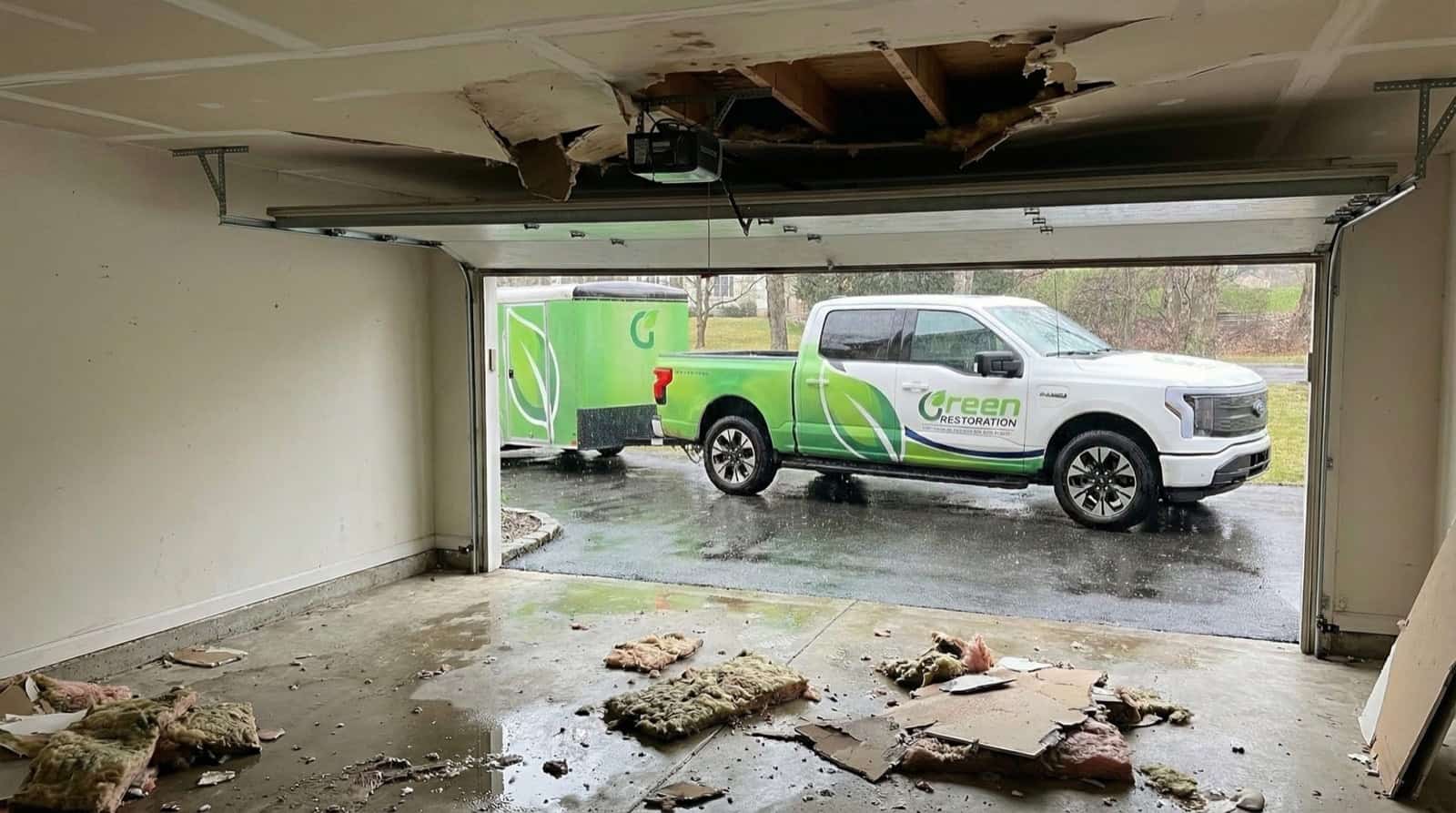
Extraction gear travels on the first truck to any Brooklyn address, with submersible pumps aboard for cellars carrying more than a couple of inches. Before a single gallon comes out we establish what feeds the property, because a well with a charged pressure tank keeps discharging long after the pump breaker has been thrown.
60-min response
Burst & Frozen Pipe Cleanup
January and February find every unheated run in Brooklyn, and this town has plenty of them: attached ells, barn space, back rooms behind a closed door. A split in one of those can flow through a full working day before anyone notices, which is how a single line ends up costing ceilings, insulation, and subfloor across two levels.
S500 protocol
Structural Drying & Dehumidification
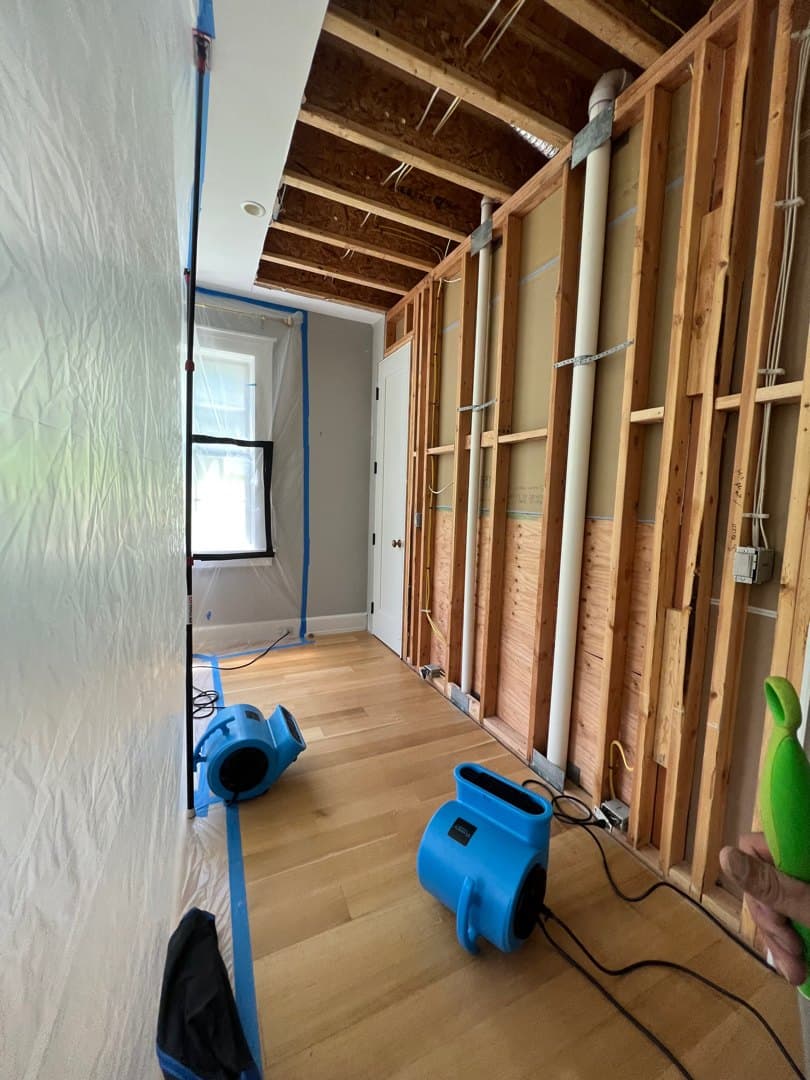
Movers and LGR dehumidifiers are staged against the wall assembly instead of the floor plan, which matters in a town holding both lath cavities near the Green and sheetrock over fiberglass in the later ranches. Meter readings are recorded daily and the equipment stays until the IICRC S500 dry standard holds everywhere.
3 to 10 days
Additional Water Damage Services In Brooklyn
Moisture Detection & Leak Mapping
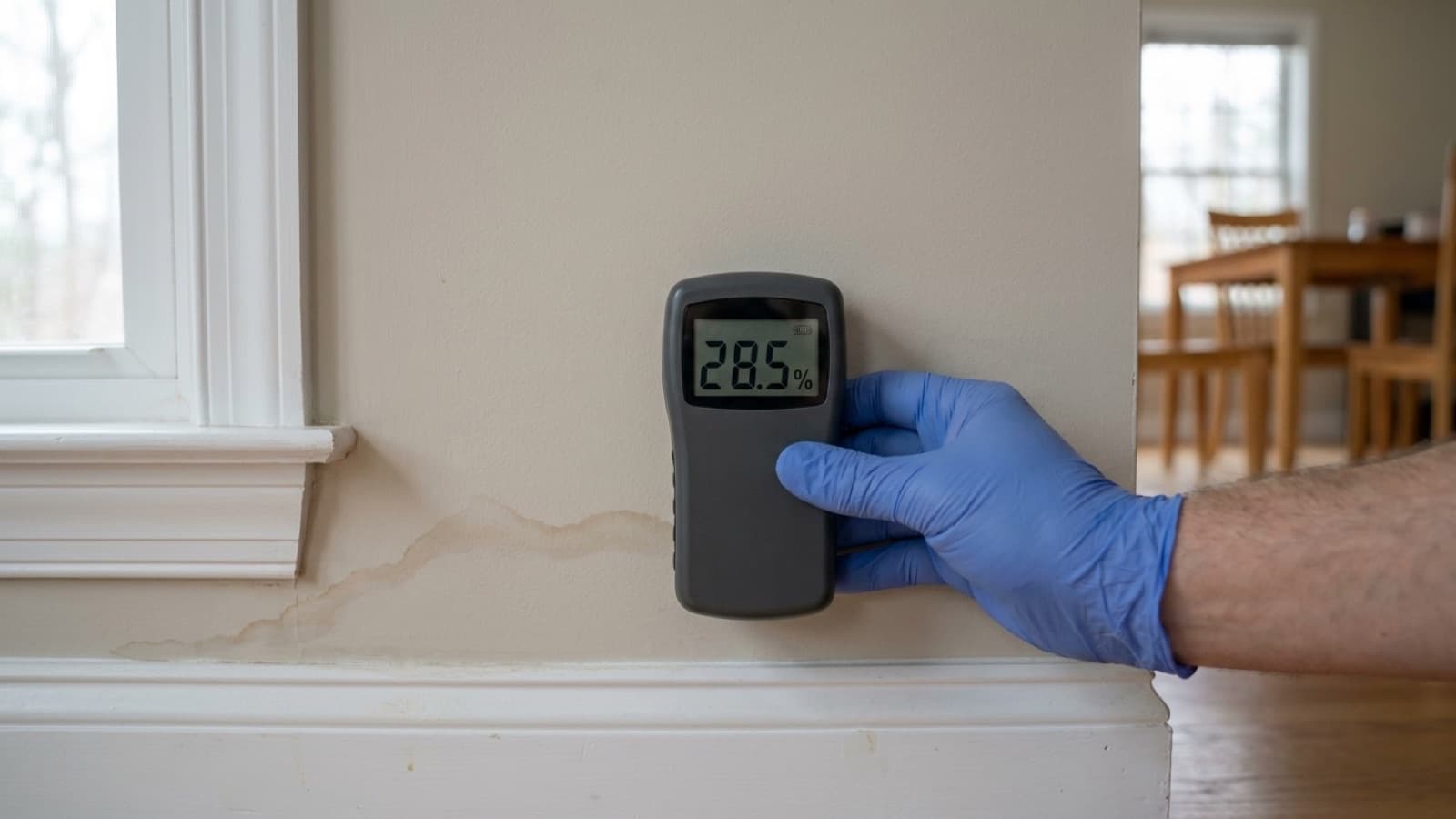
Thermal imaging traces the wet edge behind plaster and drywall before anything is cut, so a Brooklyn ceiling gives up its answer in one opening rather than four exploratory ones. What the cavity readings settle is whether the water travelled a joist bay or stopped where it landed, and that decides the size of the scope.
Flooded Basement Cleanup
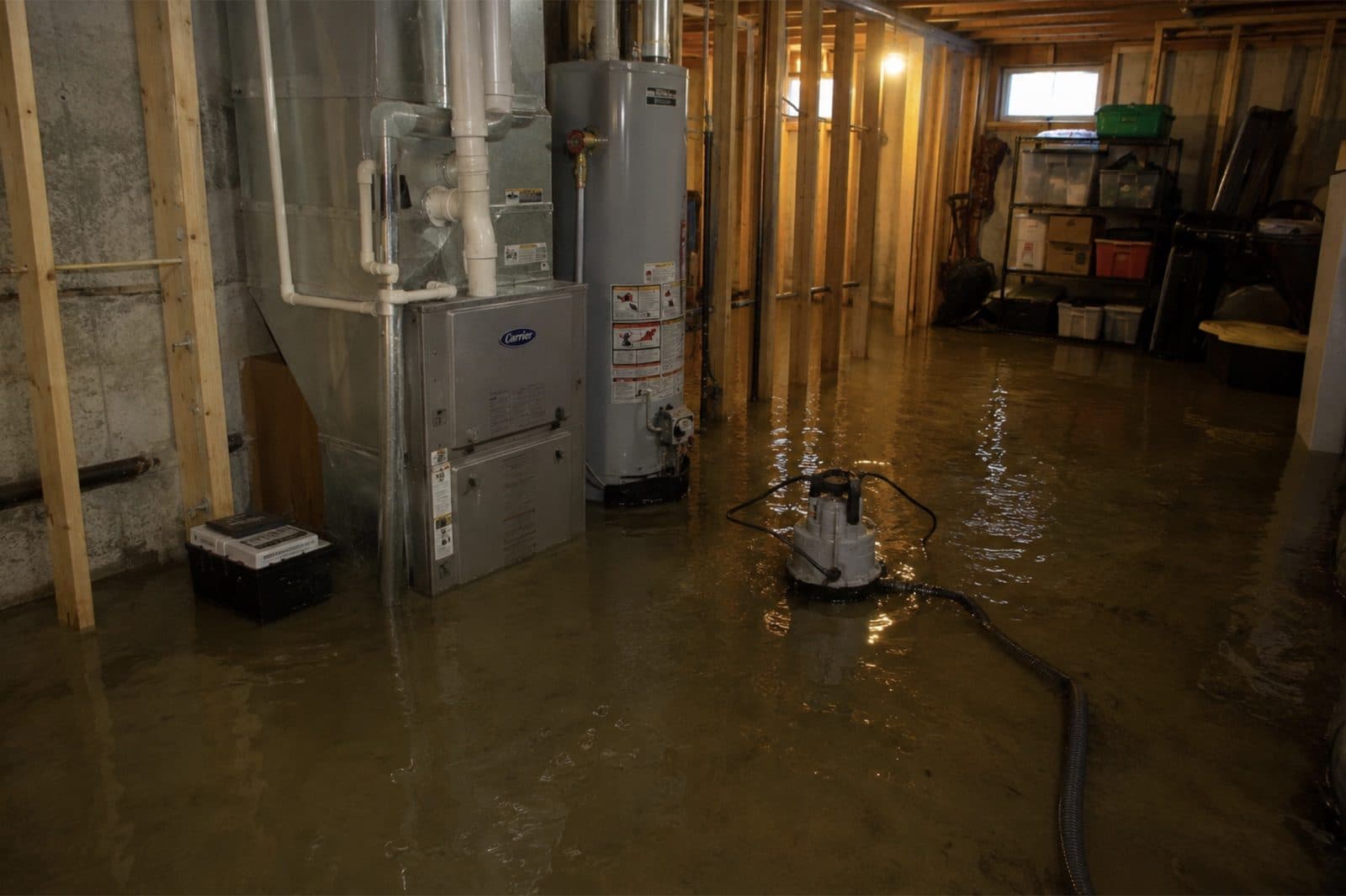
Two mechanisms fill cellars here. East of Brooklyn Center it is a charged water table on the Quinebaug descent working against a foundation for days. Inland it is surface volume off flat farm ground backing up Blackwells Brook and its ditch network in an afternoon. We pump, sanitize, dry, and name which one it was in writing.
Sump Pump Failure Cleanup
Down toward the river the sump is doing real work every wet season, and it tends to quit on the night it matters. We clear the standing water, swap the failed unit, bring framing and slab edge to the S500 dry standard, and apply EPA-registered antimicrobial before anything is closed back up.
Septic & Sewer Backup Cleanup
A saturated leach field on a rural Brooklyn lot pushes contaminated water into a finished lower level, and a surcharged line in one of the village centers does the identical thing. IICRC S500 calls both Category 3, so both draw full PPE, HEPA containment, removal of porous material below the contamination line, and double-bagged waste handling.
Ceiling & Drywall Water Damage Repair
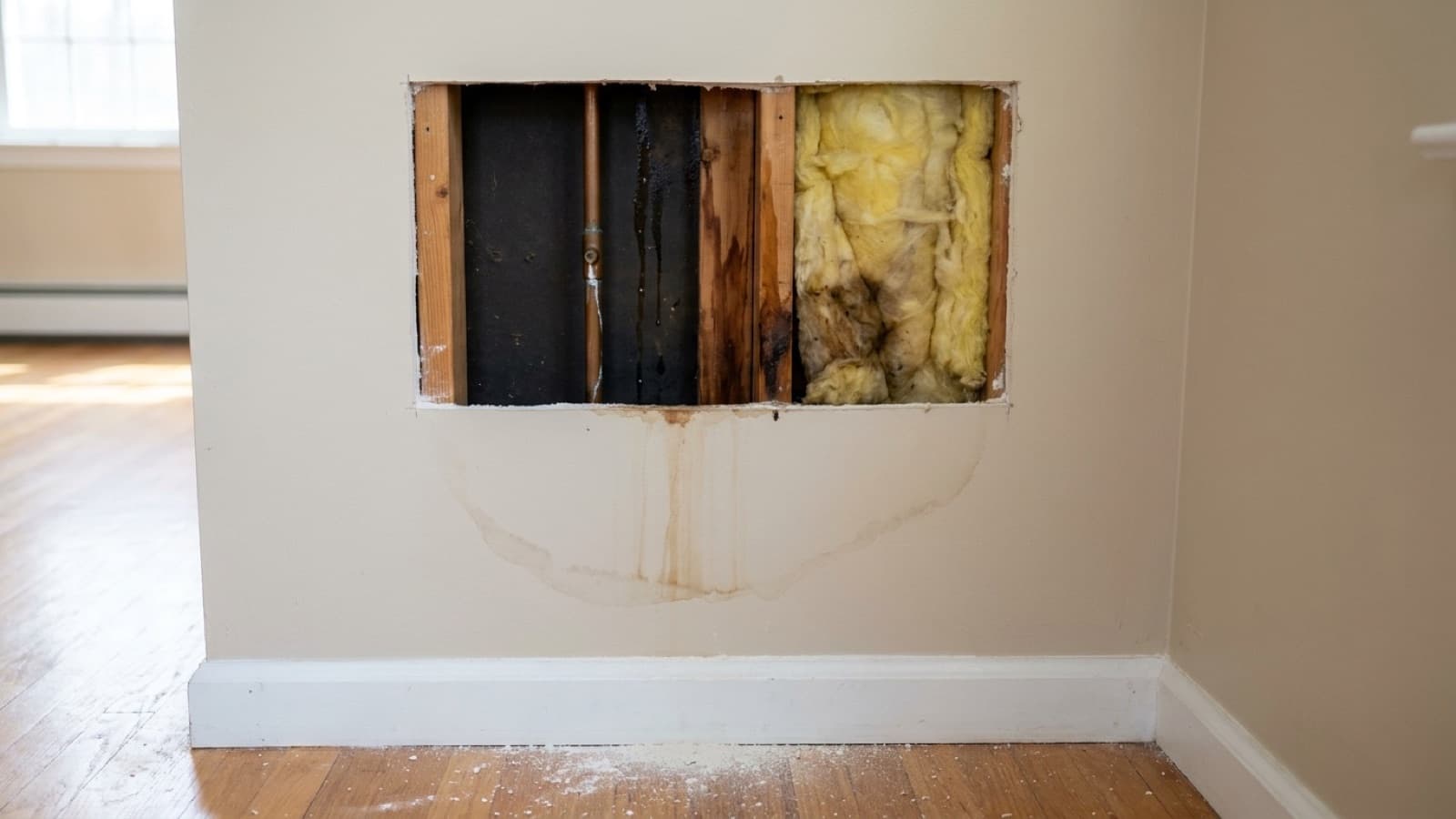
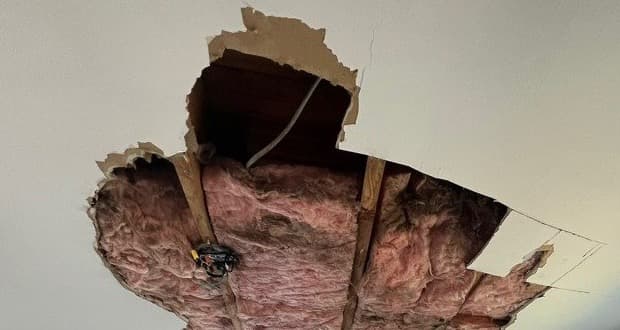
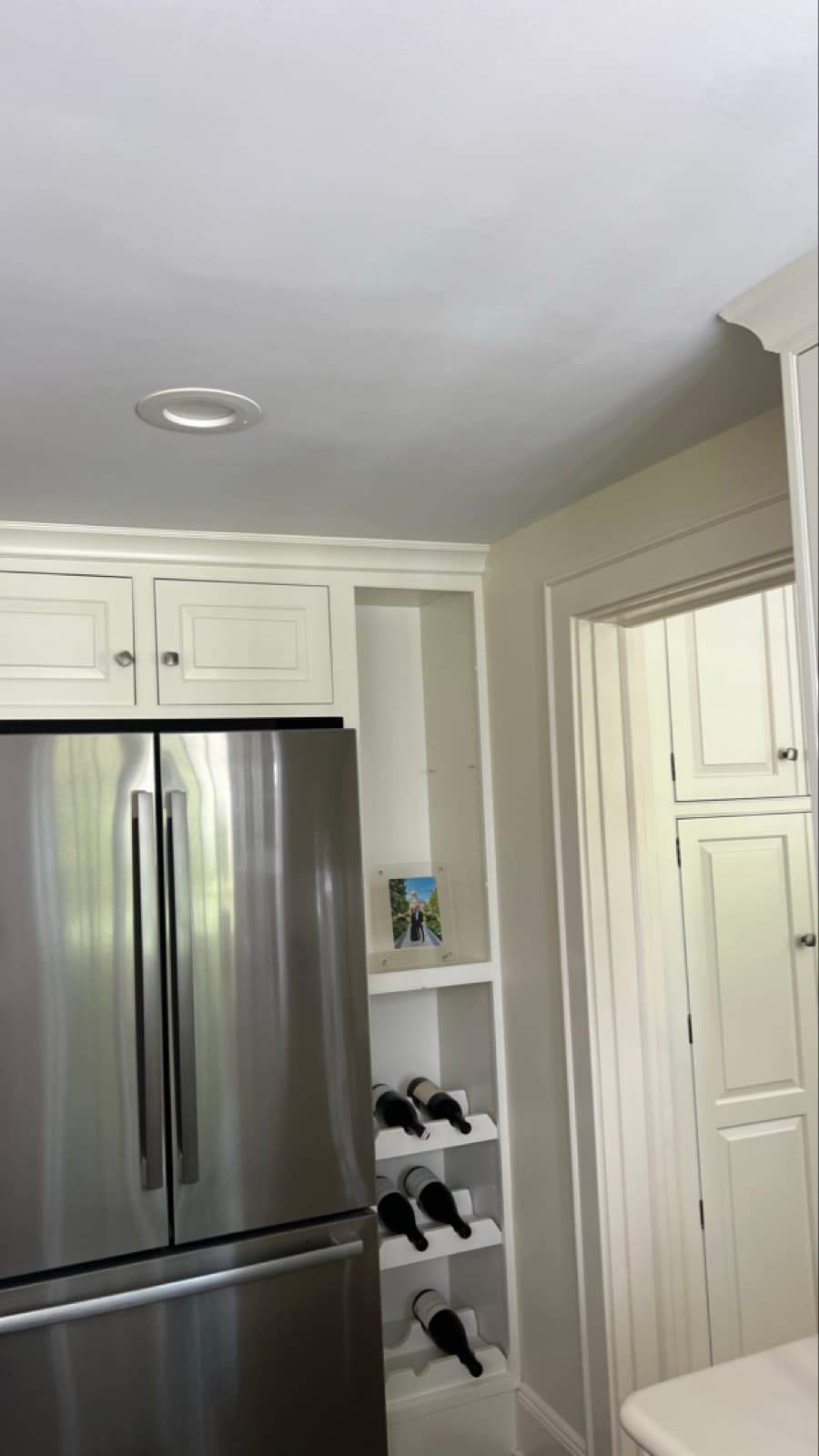
Plaster in the older houses off the Green and sheetrock in the post-war stock both get trimmed back until the remaining material reads dry, then dried and rebuilt to a finish ready for primer. Each stage is photographed, so the repair line your carrier sees matches the opening that was actually made rather than an estimate written from the doorway.
Hardwood Floor Drying & Salvage
Wide-plank and strip flooring starts cupping within hours of the subfloor beneath it staying wet, and once the cup sets, salvage is no longer on the table. Desiccant dehumidification with controlled airflow draws moisture out of the assembly slowly enough that an original finish survives the process.
Appliance & Water Heater Failure Cleanup
The bread-and-butter Brooklyn call is a braided hose letting go, a dishwasher seal giving out, an ice maker line weeping behind a cabinet, or a storage tank splitting at the seam. A ruptured tank or a relief valve that discharges spreads dozens of gallons across a cellar slab in minutes. We extract, dry subfloor and cabinet boxes under S500, and package it for direct carrier billing.
Roof Leak & Storm Intrusion Cleanup
Ice dams work under shingles at the eaves and failed flashing soaks attic insulation, while the remnant of a tropical system can deliver rain faster than any gutter here will clear it. We extract, dry framing per IICRC S500, and file storm intrusion as its own scope rather than burying it in a generic water line item.
Well & Pressure Tank Water Losses
Past the Brooklyn village centers the odds favor a private well and pressure tank over municipal service. A seam failure in the tank, a switch that will not release, or a break on the line running off the well produces the same flooded cellar a street main would, except nothing at the road will stop it. We work both systems and ask which you have on the first call.
Wet Framing Keeps Working Overnight. So Do We.
One Call Puts A Crew On The Road To Brooklyn Center, East Brooklyn, The Green, Tatnic, And Every Farm Road In Between.
Green Restoration of Windham County in Brooklyn
Green Restoration of Windham County handles water damage restoration in Brooklyn, CT, where Federal and Greek Revival framing carries plaster on lath over generous stud bays, and that assembly surrenders moisture on a much slower curve than sheetrock. Owner-operated crews extract the water and dry the structure to IICRC S500 standards with documented moisture logs, under IICRC Certified Firm #70236106. Call (860) 222-9498.
Proof of Work
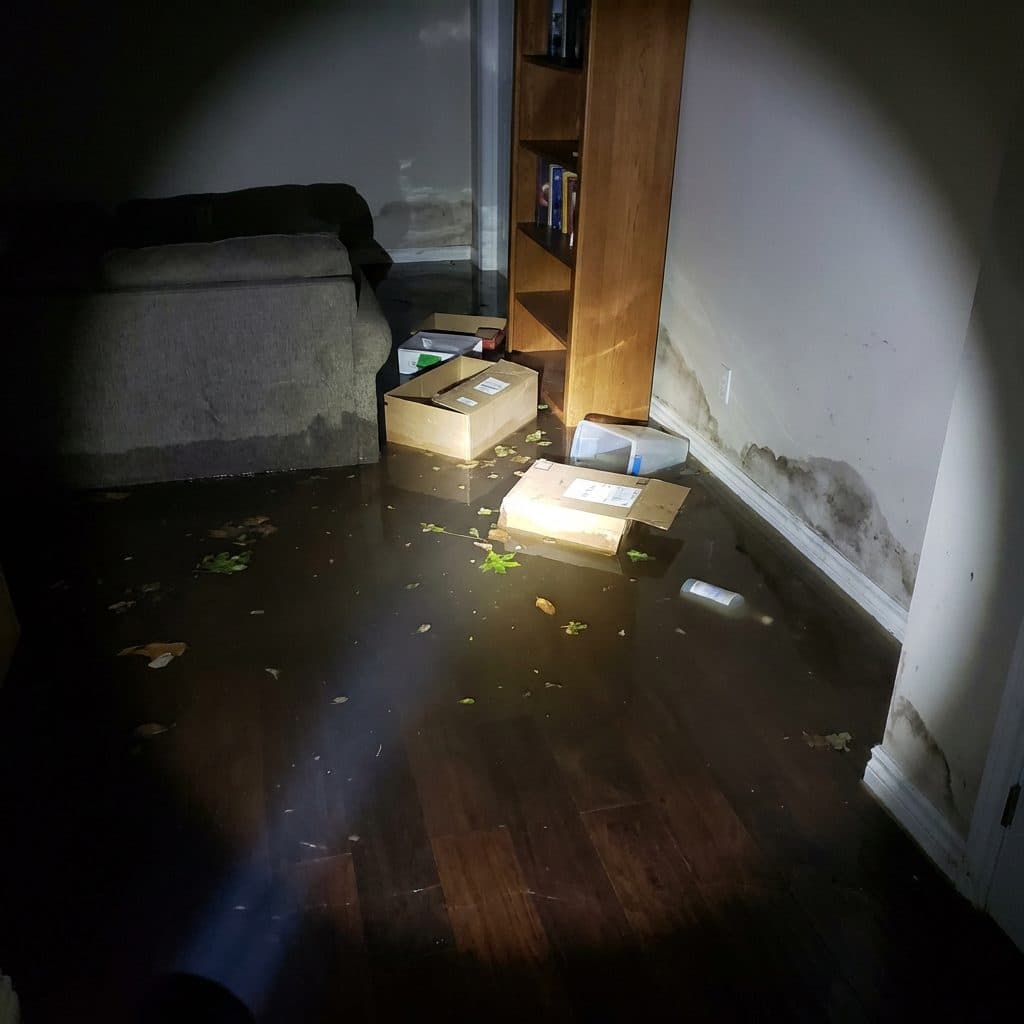
Recent Water Damage Projects
Real Connecticut water losses our crews documented and closed out.
Why Choose Us In Brooklyn
Owner-led service with 60-minute response, direct insurance billing, and eco-friendly methods across Brooklyn.
60-Minute Emergency Response
IICRC-certified crews arrive within 60 minutes, day or night, every day of the year.
Owner-Operated Local Crew
Every job is personally overseen by our owner, from first call to final moisture reading.
Direct Insurance Billing
We bill State Farm, Liberty Mutual, USAA, Travelers, Allstate, and Chubb directly under HIC.0668405.
EPA-Registered Antimicrobials
EPA-registered antimicrobials and Safer Choice cleaning products applied per IICRC S500 and S520 standards.
What Untreated Water Damage Costs Your Brooklyn Property
Untreated water damage in a Brooklyn home becomes mold colonization within 24 to 48 hours, hardwood cupping within 12 hours, and plaster delamination within 72 hours. A $4,500 same-day extraction can become a $25,000 plaster and finish-floor rebuild after 48 hours. The earlier we measure, the smaller the rebuild.
The Quinebaug Valley Holds The Low Ground
Eastern Edge Toward Killingly
Land in Brooklyn falls away eastward toward the Quinebaug River, and the lowest addresses in town sit along that descent. Valley soil stays loaded for days once a storm has crested, and loaded soil keeps pushing against foundation walls well after the sky has cleared. Losses on that side of town are usually slow arrivals rather than sudden ones.
Blackwells Brook Carries The Interior
Field Ditches Fill Fast
Most Brooklyn property is nowhere near the river. Inland drainage runs through Blackwells Brook and the shallow field ditches feeding it, which take on volume quickly during a summer cell and then release it slowly across flat agricultural ground. An address a mile from the Quinebaug can still stand in water because the brook system backed up behind it.
Deep Plaster Cavities Around The Green
Federal And Greek Revival Frames
The oldest housing in town clusters near the Brooklyn Green historic district and along the roads radiating out from it. Federal and Greek Revival framing carries plaster on lath over generous stud bays, and that assembly surrenders moisture on a much slower curve than sheetrock. Read the surface and it looks finished. Read the cavity and it is not.
No Curb Stop On A Well Property
Pump Breakers And Pressure Tanks
Step past the village centers and a Brooklyn address is far more likely to draw from a private well with a pressure tank. That system fails the way a street main does, flooding a cellar in minutes, but there is nothing at the road for anyone to close. Killing the supply means the pump breaker plus the tank valve, in that order.
A Septic Failure Is Never Category One
Contaminated Water Indoors
Rural lots here carry an on-site septic system, which introduces a failure mode a sewered address does not have. Once a leach field saturates or a tank surcharges into a finished lower level, IICRC S500 classifies the water as grossly contaminated no matter how clear it appears. Porous material below the contamination line leaves the building rather than being dried in place.
Unheated Wings Split In Deep Winter
Barns, Ells, And Back Rooms
Northeast Connecticut cycles hard through January and February, and Brooklyn carries an unusual amount of barn space, attached ells, and back rooms nobody heats. A line that lets go behind a closed door can run unnoticed through a full working day, which turns what should have been one wet room into ceilings, insulation, and subfloor on two levels.
Why Brooklyn Properties Need Professional Water Damage Restoration
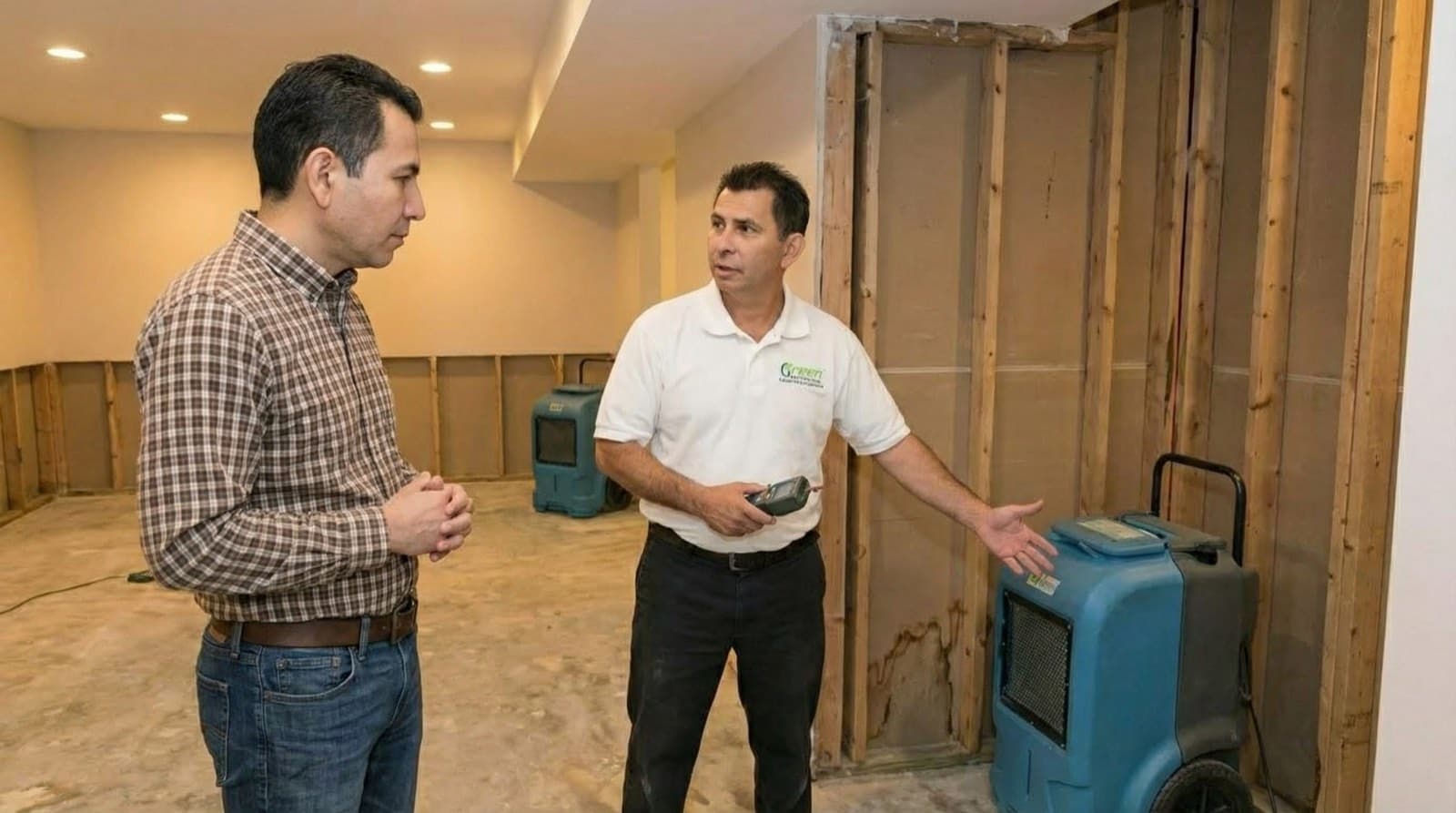
Restoration here comes down to three things: stopping the supply on whatever system the property actually runs, drying to IICRC S500 at a rate the materials can take, and handing your adjuster a file that answers its own questions. According to Green Restoration crew records, material era is the variable that decides a Brooklyn timeline. Plaster over lath near the Green and sheetrock over fiberglass in the later ranches sit on different curves, so they are metered on different schedules. Borrowed household fans move room air past a wet cavity without ever lowering the vapor pressure inside it, and colonization starts anyway.
Whatever Feeds It, We Close It First
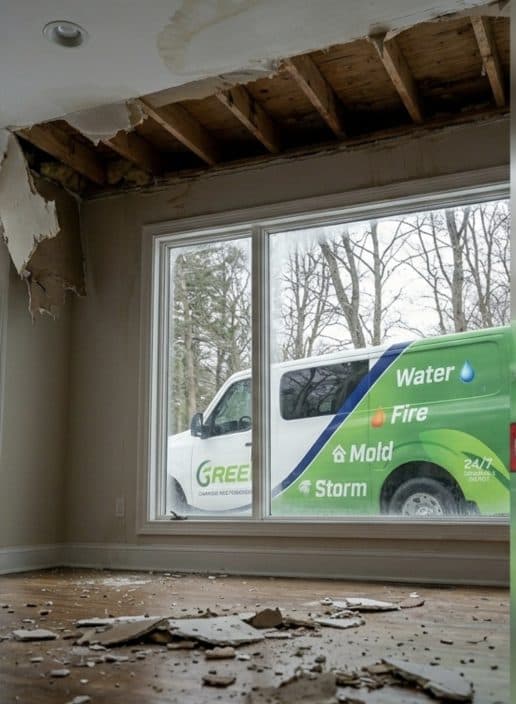
Extraction accomplishes very little while the supply is still live, so the opening question on any Brooklyn call is what the property draws from. A street-fed address ends at a valve near the meter. A well address ends at a pump breaker and a pressure tank that can keep discharging stored water after the pump is dead. We settle that on the phone while the truck is already rolling.
Equipment Placed By Assembly, Not By Room
An early farmhouse off Route 169 and a 1970s ranch on Day Street release moisture nothing alike. Lath bays trap water behind a surface that stays intact and convincing, while sheetrock over fiberglass gives it up sooner and hides what remains lower in the wall. Thermal imaging locates the wet edge before a single cut is made, and the movers and dehumidifiers follow the assembly.
A Water Table Gets Written Up As A Water Table
Along the Quinebaug descent and behind the Blackwells Brook drainage there is frequently no failed component at all. What you have is a saturated column pressing on a foundation, or field water arriving at a perimeter drain quicker than the drain can move it along. Those scopes belong in the file as drainage findings, because a carrier reading a plumbing narrative will price the wrong repair.
Documentation Eastern Connecticut Adjusters Accept
Policies on Brooklyn property typically sit with State Farm, Travelers, Liberty Mutual, USAA, Allstate, or Chubb, and each of them expects daily moisture logs, timestamped photographs, and an itemized IICRC-standard scope before approving anything. Our owner carries IICRC AMRT and WRT credentials and runs the file under HIC.0668405. We are not licensed public adjusters and do not negotiate claims on your behalf.
The Water Damage We See Most in Brooklyn
A town split between the Quinebaug descent on its eastern edge and open farm ground draining into Blackwells Brook does not produce one kind of loss, it produces two. Whichever one you are dealing with, the water gets a category under IICRC S500 and the job gets a written record your insurer can read. The patterns below are the ones our Brooklyn calls keep landing on.
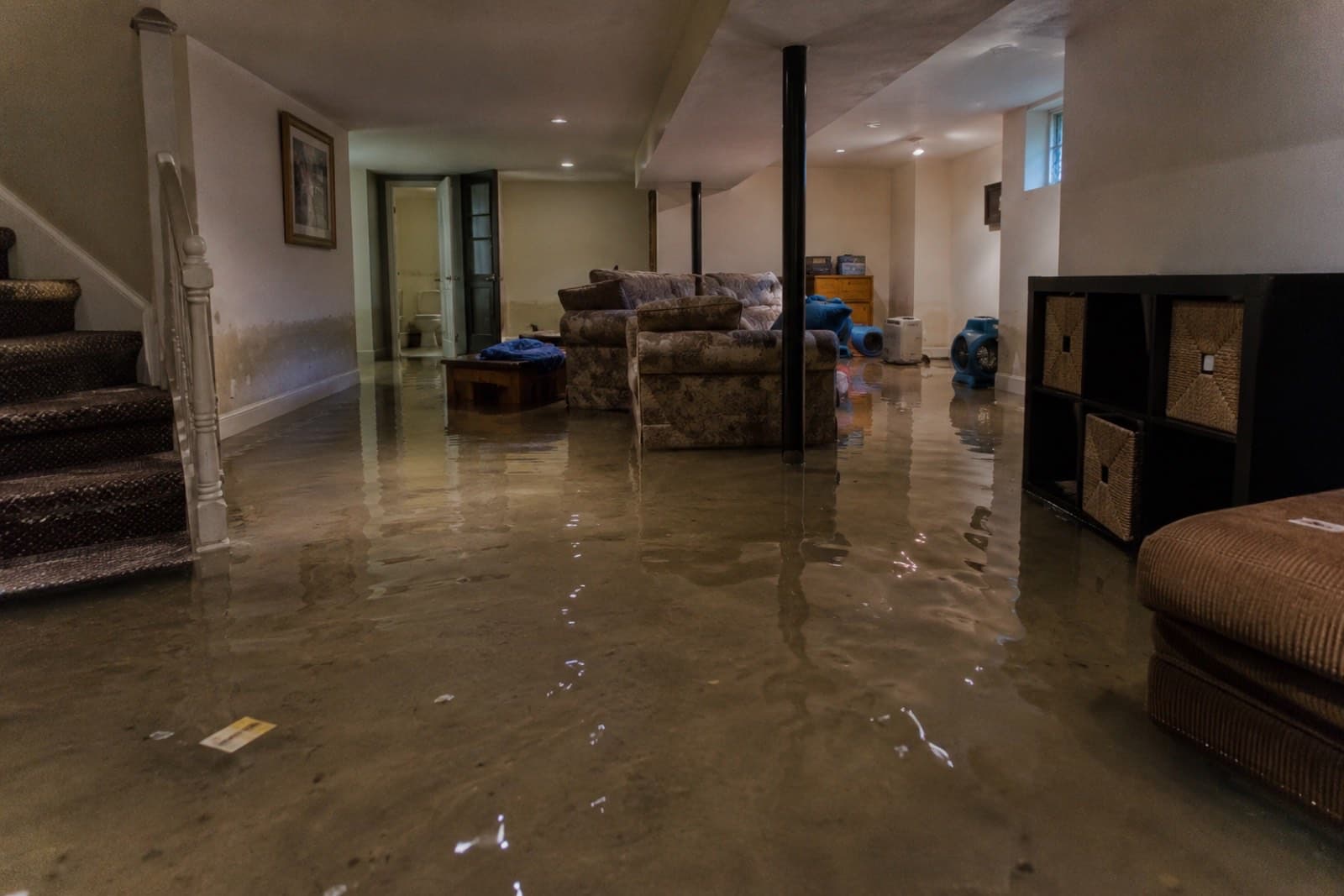
Flooded Basement, Fully Dried
In Brooklyn, east of Brooklyn Center a charged water table is usually behind it rather than any failed component.
A failed sump pump, a burst supply line, or storm-driven groundwater can leave inches of standing water sitting against framing, drywall, and stored belongings. The longer it sits, the further moisture wicks up the walls and the faster the Category of the water deteriorates.
Our IICRC-certified technicians classify the water under IICRC S500, then pull the standing water down to the slab with truck-mounted and submersible extraction. We open wet wall cavities, set air movers and LGR dehumidifiers for structural drying, and apply an antimicrobial per IICRC S520 where Category 2 or 3 water is involved.
We take daily Tramex moisture readings and dry the assembly to the ANSI/IICRC dry standard, not to a calendar. Every reading, photo, and scope line is documented for your insurer so the claim moves on facts, not guesswork.
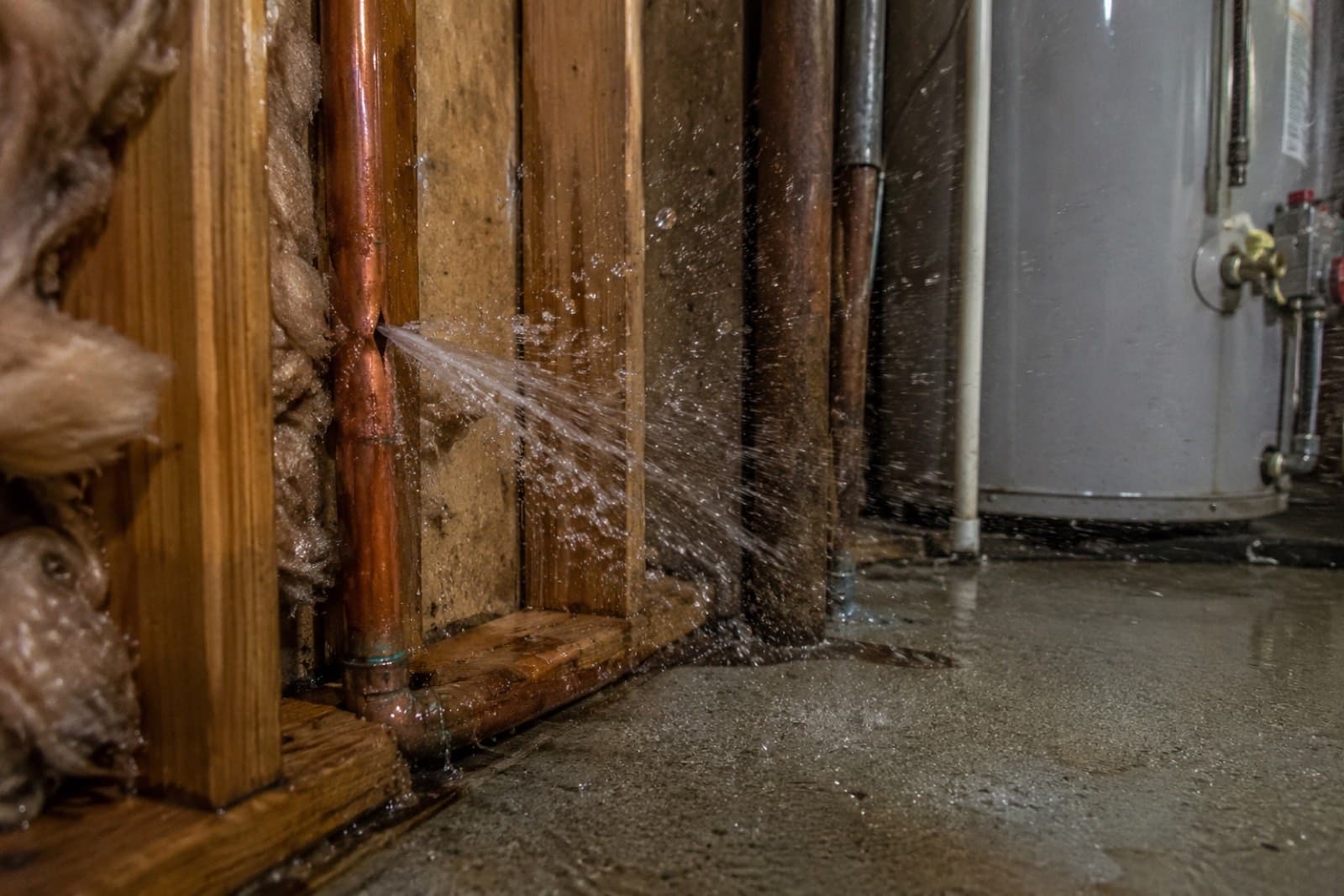
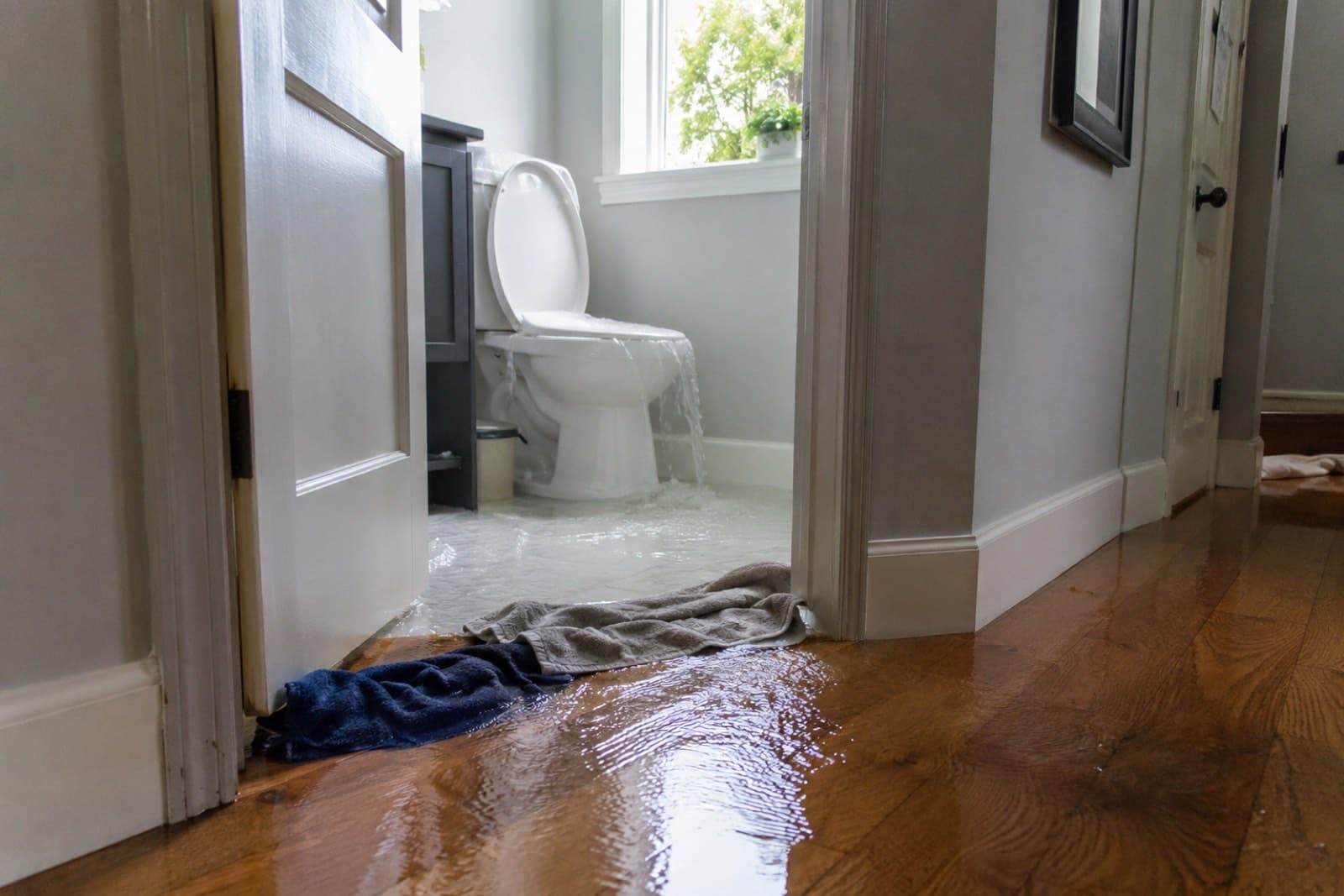
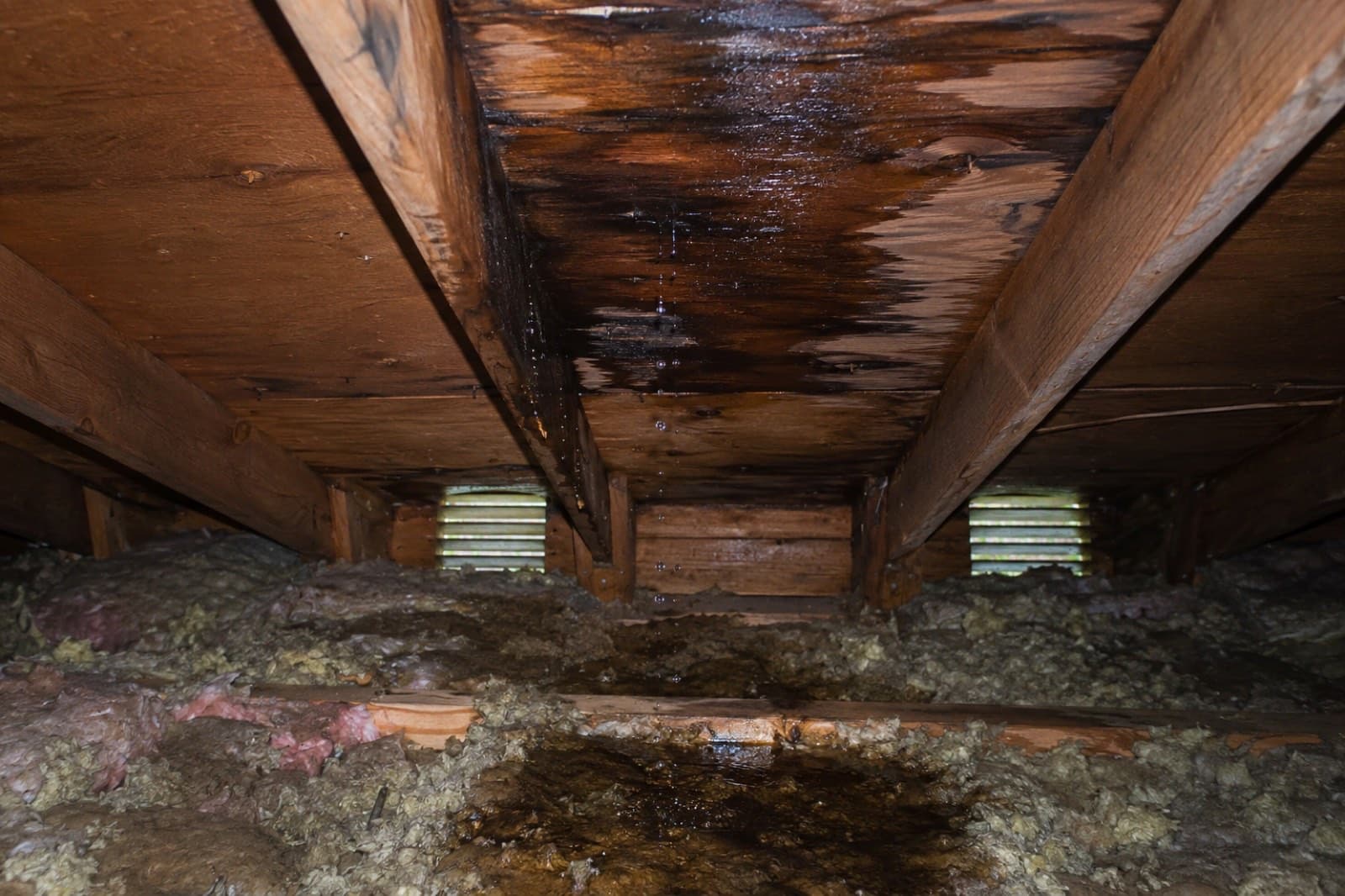
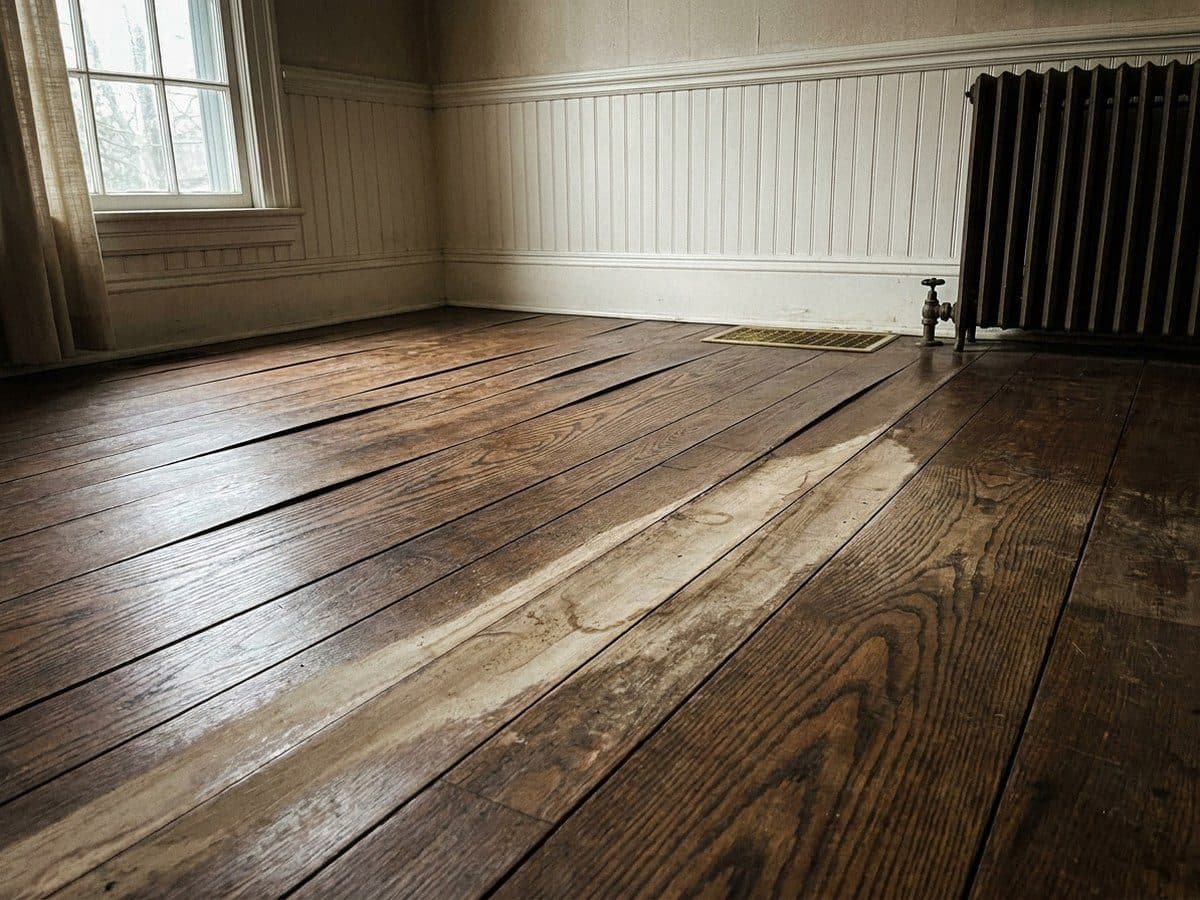
Scenario 1 of 5: Basement Flooding
What To Do After Water Damage In Brooklyn, CT
Most of what determines whether a Brooklyn floor assembly is saved or replaced happens before our truck arrives. These steps follow IICRC guidance and cost nothing but the minute it takes to do them.
What To Do Immediately
Street-fed addresses have a valve near the meter. Well properties need the pump breaker off and the pressure tank valve closed, since a charged tank keeps discharging on its own.
De-energize any space holding water before setting foot in it. Brooklyn cellars and converted farm buildings mix wiring from several decades, and water reaches all of it.
Same-day dispatch runs across Brooklyn day and night. Each hour a cavity holds moisture stretches the dry-down and enlarges the scope your carrier has to approve.
Odor, or water rising through a floor drain on a septic property, means contaminated. Stay out of it and tell us on the call, because that answer rewrites the entire scope.
Documents, electronics, and furniture belong on a dry level. Slide foil or blocks beneath wood legs so stain does not transfer down into damp flooring while you wait.
Wide frames and detail frames, captured before extraction starts. Carriers treat pre-mitigation imagery as a condition of the claim rather than a nice extra.
What NOT To Do
Room fans push air across a surface without touching the vapor pressure inside the wall. What they reliably accomplish is broadcasting contamination and accelerating growth.
Injuries on these jobs come from submerged debris and live circuits, not from the water itself. Cut power first, and stay entirely clear of anything contaminated.
Carpet and pad together run into the hundreds of pounds soaked, and hauling it through the house tracks contamination into rooms that were dry. Containment handles it.
Ducted systems distribute spores from the wet zone into every other room in the building. Shut the system off until containment is standing.
Late reporting puts coverage in question. Notify within hours, and have our documented scope in front of the adjuster the same day.
It lifts the stain and leaves the colony intact inside porous material. Resolution comes from remediation under IICRC S520, not from a spray bottle.
Our Water Damage Restoration Process In Brooklyn, CT
From the first call to final walkthrough, every step is documented, insured, and owner-supervised.
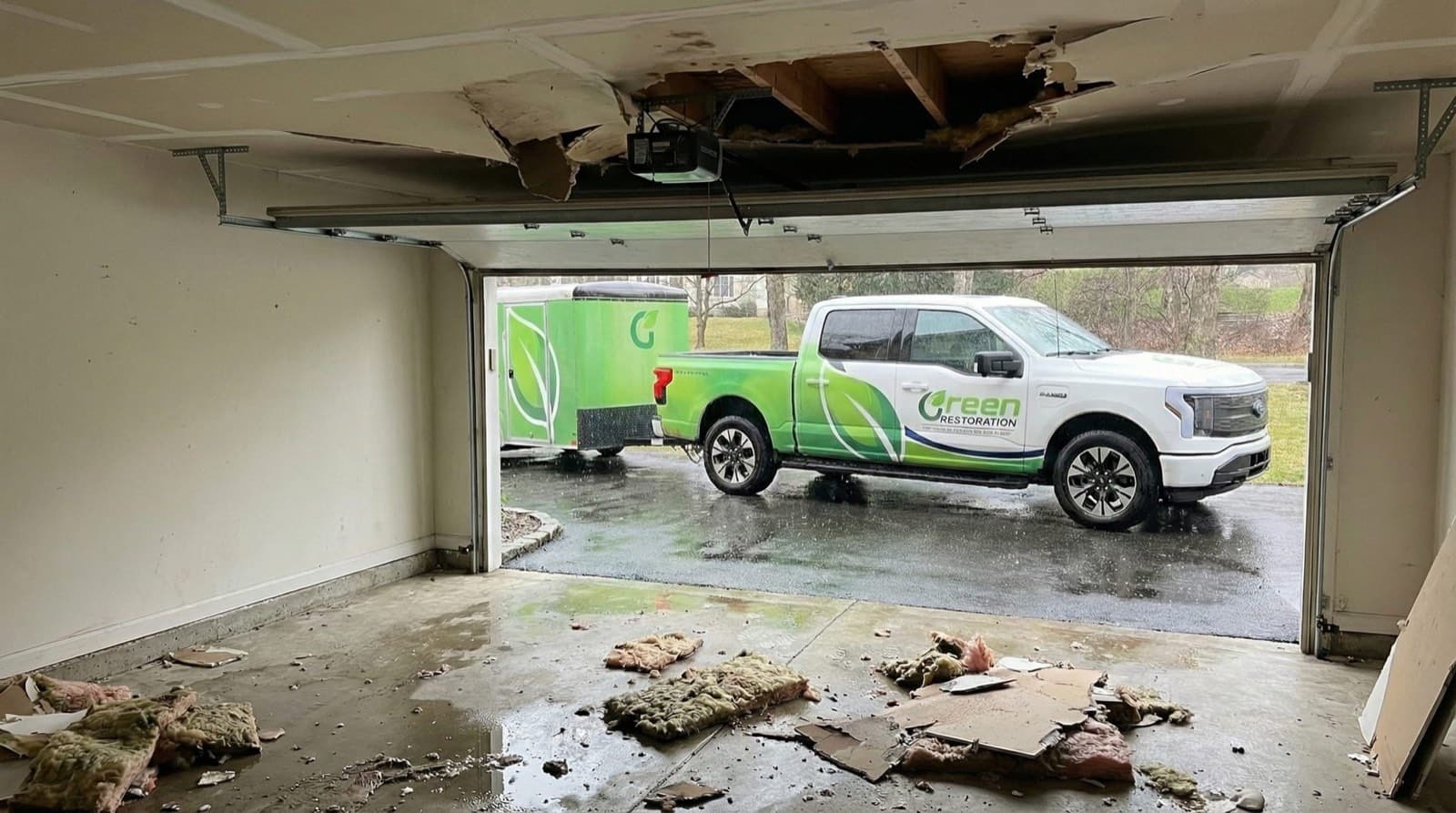
Water Damage Restoration Coverage In Brooklyn, CT
Documented water damage restoration for Brooklyn homes and Windham County businesses, reaching from the Quinebaug descent in East Brooklyn through Brooklyn Center and the Green out to the farm roads on the western side, and a crew reaches all of it the day you call.
Brooklyn, CT 06234 is covered end to end by IICRC-certified Green Restoration crews, reaching Brooklyn Center, the Brooklyn Green historic district, East Brooklyn, South Brooklyn, Allendale, Allen Hill, Tatnic, and the farm roads running west toward Hampton. US Route 6 and Route 169 intersect at the center of town and Interstate 395 runs just beyond the Quinebaug, which puts every Brooklyn address inside a normal Quiet Corner dispatch at any hour. Scopes we run here include frozen and burst supply lines, well and pressure tank failures, water heater and appliance losses, sump failures, septic and sewer surcharge, and groundwater intrusion along the valley descent.
Our scope of work and its supporting documentation go straight to your insurer. We are not licensed public adjusters and do not negotiate claims on your behalf.
Working locally under HIC.0668405 means scoping Brooklyn against what is actually standing here. Around the Green, where the Israel Putnam statue marks the junction of the two state routes, the housing runs Federal and Greek Revival, and those frames hold plaster over lath in deep bays that have to be metered on their own timeline instead of the buildings around them. Beyond the village centers the odds shift heavily toward a private well with a pressure tank alongside an on-site septic system. That pairing rewrites the shutoff sequence, and if the septic side is what surcharged into a finished lower level it also raises the contamination category.
Out across the open agricultural ground toward the Brooklyn Fairgrounds, rainfall sheds fast over flat fields, so a single heavy cell can load Blackwells Brook and back up the ditches behind a property before the Quinebaug itself has risen at all.
See typical Brooklyn water damage pricing in 60 seconds. Category 1 to 3.
Water Emergency In Brooklyn?
Call now for immediate dispatch, 24/7/365.
(860) 222-9498IICRC Certified · Licensed & Insured · CT HIC.0668405
All Towns Served By Green Restoration Across The Windham County Corridor With 60-Minute Emergency Response Under HIC.0668405.
Why Brooklyn Water Damage Is Different
A river valley on one edge, flat farm ground on the other, and wells and septic under most of it.
Free On-Site Assessment
Not sure what you are dealing with in Brooklyn?
We establish the scope on site, before anything is quoted.
(860) 222-9498How Brooklyn Geography Shapes A Restoration Scope
Two settings share one town here, and they produce losses that look nothing alike on paper. East of Brooklyn Center the land steps down into the Quinebaug valley, where saturated ground holds its charge for days and works against a foundation continuously rather than in a single event; those files read as hydrostatic findings and they close with drainage recommendations.
West and south of the Green the story is volume instead of duration, since flat agricultural ground sheds a heavy cell straight into Blackwells Brook and the shallow ditch network feeding it, and a cellar can take standing water from a backed-up ditch line while the river itself has not moved. According to Green Restoration field documentation, keeping those two causes separate in the write-up is what keeps the repair recommendation honest, because a sump sized for surface volume does nothing about a water table that stays loaded.
Whichever mechanism applies, the work runs IICRC S500: truck-mounted extraction, air movers set to the assembly, and daily meter readings until the dry standard holds at every monitoring point, with the record going to your adjuster as it is produced.
24/7 Water Damage Response In Brooklyn, CT
IICRC-certified crews cover Brooklyn on a standard Quiet Corner dispatch, from the Quinebaug descent in East Brooklyn out to the farm roads west of the Green. Most calls are on site inside the hour.
Windham, Willimantic, and the Willimantic and Natchaug River confluence sit in flood-mapped territory through the former Thread City mill district. River overflow and storm-drain backflow push Category 3 stormwater into 1880s mill-worker triple-decker basements and downtown commercial slabs. We pump with Hydramaster CDS truck-mounts and dry to IICRC S500-2021 standard.
Danielson, Putnam, Moosup, and the Quinebaug River mill corridor carry pre-war textile-mill worker housing with plaster-on-lath wall systems and continuous balloon-frame stud bays. Phoenix Axial movers and FLIR thermal imaging map hidden moisture inside lath bays before viable mold colonies form.
Woodstock, Pomfret, and Brooklyn Quiet Corner estate towns hold 18th-century fieldstone foundations and original-growth chestnut framing. Class 4 drying for fieldstone foundations requires careful psychrometric control to preserve historic plaster and quartersawn oak finishes.
Our owner personally leads every Windham County water-damage scope, IICRC AMRT and WRT certified under HIC.0668405. Documented scope, daily Tramex CME 5 moisture logs, and clearance filed with State Farm, Travelers, Liberty Mutual, USAA, Allstate, Chubb, and other major carriers.
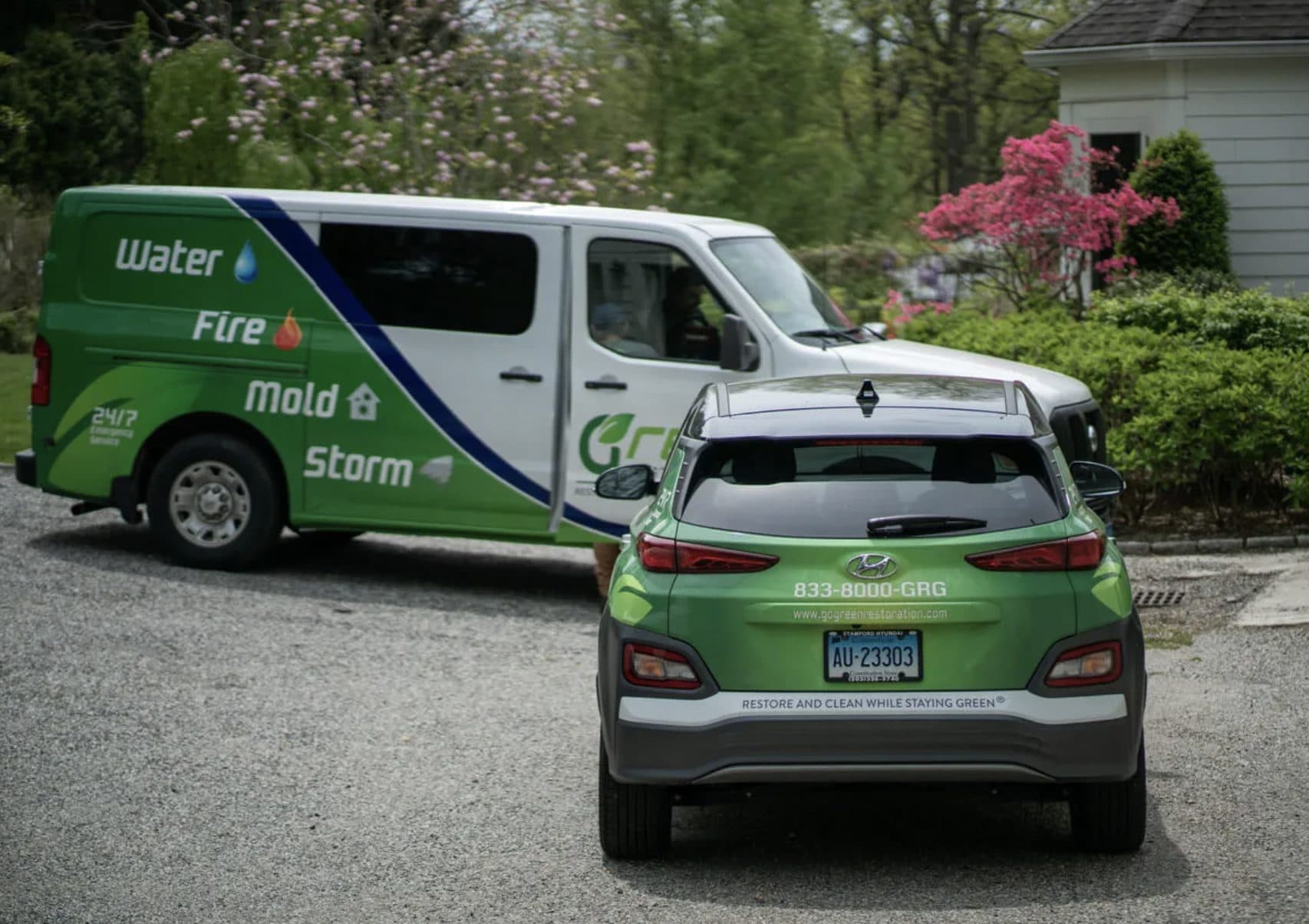
About Green Restoration In Brooklyn, CT
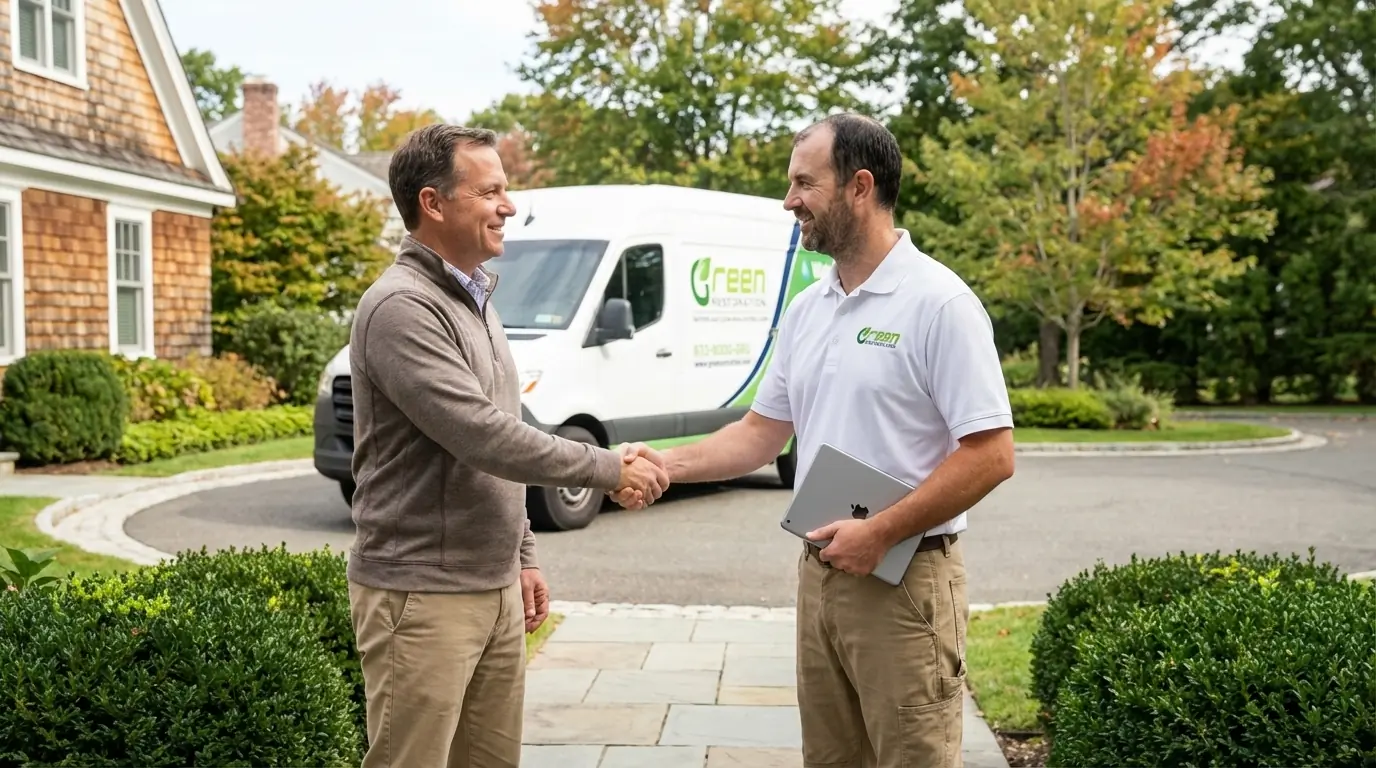
Your Brooklyn Water Damage Specialists Since 2014
Brooklyn work runs to valley-edge groundwater pumping, staged plaster-cavity drying in the Federal and Greek Revival stock near the Green, well and pressure tank failures, and septic surcharge in finished lower levels. Our owner holds IICRC AMRT and WRT credentials and runs every file under HIC.0668405, with thermal mapping, axial movers, and LGR dehumidifiers. According to Green Restoration documentation records, cavity drying in this housing stock is closed out by meter reading rather than by a fixed number of equipment days. We are not licensed public adjusters and do not negotiate claims on your behalf.

“I run the Windham County water crews myself, fifteen years in restoration and IICRC AMRT and WRT certified. I have pumped valley cellars in East Brooklyn and opened plaster ceilings in the old houses off the Green, and I know which one is going to hold moisture longer. Every Brooklyn job carries my oversight, closes on the S500 dry standard, and bills to your carrier under HIC.0668405.”
Trusted by Families in Brooklyn &
Windham County
4.9 out of 5, Rated by your neighbors on Google
We discovered mold when removing our pellet stove and called Green Restoration for help. David was very communicative and helpful throughout the entire process. He did the job thoroughly and professionally. Highly recommended!
David Woolner
Mold RemediationI had a fantastic experience with Green Restoration. From start to finish, the team was professional, thorough, and extremely knowledgeable. David came for the initial inspection and took the time to explain the entire process.
Annmarie Gieparda
Mold RemediationWe had mold due to a water leak in our half finished basement. David and his crew did a great job, we were very satisfied. I would highly recommend Green Restoration to anyone.
Tanya
Water DamageI needed my entire condo completely cleaned after a soot blow back. Green Restoration was top shelf! So thorough and professional. Thank you so much!
Jacki Hornish
Fire & Soot CleanupHow Much Does Water Damage Restoration Cost In Brooklyn, CT?
What you pay tracks the IICRC S500 water category more than anything else. The majority of Brooklyn files settle inside the Category 2 band. Bands are listed below.
Category 1, Clean Water
1,500 to 4,500 dollars
Clean supply break, split pressure tank, overflowing fixture, one contained area
Category 2, Gray Water
2,500 to 8,500 dollars
Laundry or dish line, fixture overflow without solids, dead sump, finished lower level
Category 3, Black Water
7,500 to 50,000+ dollars
Leach field surcharge, sewer backup, contaminated scope across several rooms
Priced by IICRC S500 water category. Read the full water damage cost guide.
Brooklyn CT Water Damage Restoration FAQs
Plain answers on well shutoffs, septic contamination, drying an old plaster house, what carriers will and will not pay, and what a Brooklyn job actually costs.
Caught early, a clean-water event such as a split supply line or a failed water heater generally settles between 1,500 and 4,500 dollars. Once valley groundwater or a septic surcharge forces removal of subfloor and wall material, IICRC S500 scopes here run 12,000 to 28,000 dollars. Expect roughly 30 to 50 percent above a comparable modern scope in the Federal and Greek Revival houses near the Green, since plaster over lath has to be dried in stages rather than under one equipment set. Your adjuster settles final pricing against our documented file. Dial (860) 222-9498 for a same-day Brooklyn estimate under HIC.0668405.
We target arrival inside 60 minutes anywhere in Brooklyn, and the Route 6 and Route 169 crossing at the center of town makes that workable from either approach. Brooklyn Center, the Green, and East Brooklyn sit nearest that junction. The longest runs are out toward Tatnic and the western farm roads, and those still land inside the hour under normal conditions. Extraction gear travels on the first truck, so nothing waits on a second trip. The line is answered at (860) 222-9498 around the clock.
It changes it completely, which is why we ask before anything else. A street-fed property ends at a valve the utility can reach at the road. A well property has no such valve: the supply is only dead once the pump breaker is off and the pressure tank is isolated, and a charged tank will keep pushing stored water into the break until you close it. Well systems also fail in ways municipal service cannot, including a ruptured tank or a pressure switch stuck closed that runs the pump without stopping. We handle both, and we confirm which you have while the crew is already moving.
Standard Connecticut coverage from State Farm, Travelers, Liberty Mutual, USAA, Allstate, and Chubb responds to sudden and accidental losses, the category that covers a burst supply line, a failed appliance, or a ruptured pressure tank. Surface water rising out of the Quinebaug or overtopping a brook is excluded and needs a separate NFIP policy. Slow seepage through a foundation is normally handled as deferred maintenance rather than a covered event. What we supply is the IICRC S500 scope, the daily moisture logs, and timestamped photography, filed under HIC.0668405. We are not licensed public adjusters and do not negotiate claims on your behalf.
Category 1 and Category 2 losses usually close in 3 to 5 days. Once porous material has to be removed under IICRC S500, plan on 7 to 10. Older Brooklyn buildings sit at the long end of that band because lath bays and the deep cavities behind them stay wet past the point where sheetrock would have released, and rubble or fieldstone foundation walls give up moisture slowly on top of that. Equipment does not leave until meter readings hold at the dry standard on every monitoring point, and those readings are entered in the file rather than kept on a clipboard.
Both, and the difference matters enough that we scope them separately. The Quinebaug valley defines the eastern edge of town, and those losses arrive slowly: sustained rain charges the ground, the water table climbs, and pressure keeps moving water through a foundation long after the weather has moved on. Blackwells Brook and its ditch network drain everything inland, and those losses arrive fast, driven by one heavy cell crossing flat agricultural ground quicker than the channel can carry it away.
A property nowhere near the river can still take standing water because that ditch line backed up behind it, which is why the cause statement in the file carries as much weight as the extraction itself.
Yes, and it is routine work on the rural lots here. When a leach field saturates or a tank surcharges into a finished lower level, IICRC S500 puts that water in Category 3 regardless of how clean it looks coming up the drain. The crew builds HEPA containment, removes porous material below the contamination line, applies EPA-registered antimicrobial to framing and slab, then dries to the S500 standard and verifies it with readings before anything is closed back up. We enter the contamination category into the file on arrival, because that classification is what justifies the removal scope to your adjuster later. Call (860) 222-9498 for same-day Brooklyn dispatch.
The threshold IICRC S520 documents is a day to two days of cellulosic material held above roughly 16 percent moisture content before growth becomes visible. Older Brooklyn buildings are unfortunately well suited to sustaining that condition: plaster over lath, wide board sheathing, and original framing all hold water longer than modern materials, and an unheated ell or a closed-off back room supplies still air on top of the moisture. Our answer is to dry to the IICRC S500 standard, confirm it by meter at every monitoring point, and treat under S520 wherever contamination is already established instead of assuming that drying alone will settle it.

