Water Damage Restoration Danielson, CT
Mill-House Cellars, Sewer Backups, Shared-Wall Losses Same-Day Quiet Corner Dispatch, IICRC S500 Certified
 IICRC Certified
 Eco-Friendly Solutions For Healthier Spaces
Reviewed by David Megeneishvili·Licensed & Insured In CT·IICRC AMRT + WRT
What Is IICRC S500 Water Damage Restoration?
Water damage restoration is the IICRC S500-2021 documented process of extracting standing water, classifying the loss by category (clean, gray, black) and class (1 through 4), then drying the structure to equilibrium moisture content within a defined psychrometric window using commercial LGR dehumidifiers, axial air movers, and Tramex meter verification across every previously affected substrate.
In Danielson, CT, Green Restoration sequences the restoration: 60-minute dispatch, FLIR thermal imaging and Tramex CME 5 mapping, truck-mounted extraction, controlled drying to S500 § 12 benchmarks, antimicrobial application per S520-2024, and a carrier-ready scope file with daily moisture logs. Cutting steps drives mold colonization risk, claim denial risk, and reinjury rework within weeks.
- IICRC S500-2021 aligned
- ASTM E1745 vapor retarder spec
- ASHRAE 160 humidity targets
- Carrier-grade documentation
Why Danielson Sits in Climate Zone 5A
IECC International Energy Conservation Code
IECC Climate Zone 5A across most of Connecticut. Coastal towns sit in Zone 5A while the inland NW Corner edges into Zone 6A.
Connecticut adopts the 2021 IECC under the State Building Code, requiring documented psychrometric drying logs and Class I or II vapor retarder per ASTM E1745 after Category 2 or Category 3 water restoration.
Conditions from the National Weather Service and Open-Meteo.
Complete Water Damage Restoration In Danielson, CT
IICRC-certified Windham County crews handle the whole arc of a Danielson loss, from stopping the source through the last verifying meter reading on both sides of a shared wall, and the paperwork your carrier needs is built while the work happens.
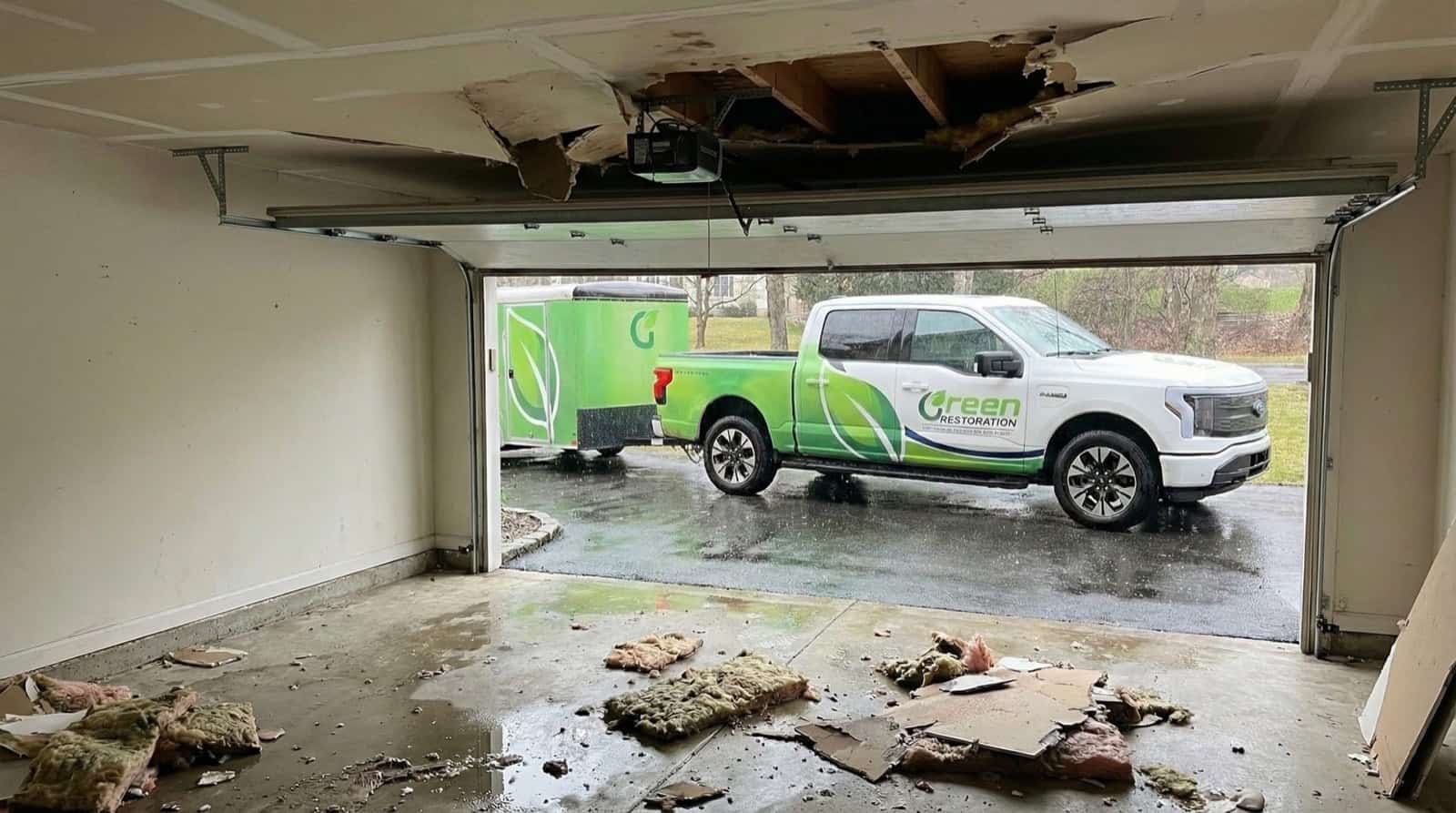
24/7 Emergency Water Removal & Extraction
Extraction gear rides on the first truck to any Danielson address, with submersible pumps aboard for cellars carrying real depth. On the mill grid the opening question is not only where the water came from but how far along the party wall it already travelled, because a shared bay is filling while the room in front of you is being pumped.
60-min response
Burst & Frozen Pipe Cleanup
Tight side yards and unheated stair halls give a Danielson freeze plenty to work with, and in attached housing a split behind a vacant unit can run all day without a soul noticing. We open the wet bay, meter across the partition, and dry both sides to the same standard so the neighbor does not become a second claim in February.
S500 protocol
Structural Drying & Dehumidification
Movers and LGR dehumidifiers are staged against the assembly rather than the floor plan, which matters in a borough holding plaster over lath, post-war sheetrock, and heavy timber mill decks within three blocks of each other. Meter readings are logged daily and equipment stays until the IICRC S500 dry standard holds at every point.
3 to 10 days
Additional Water Damage Services In Danielson
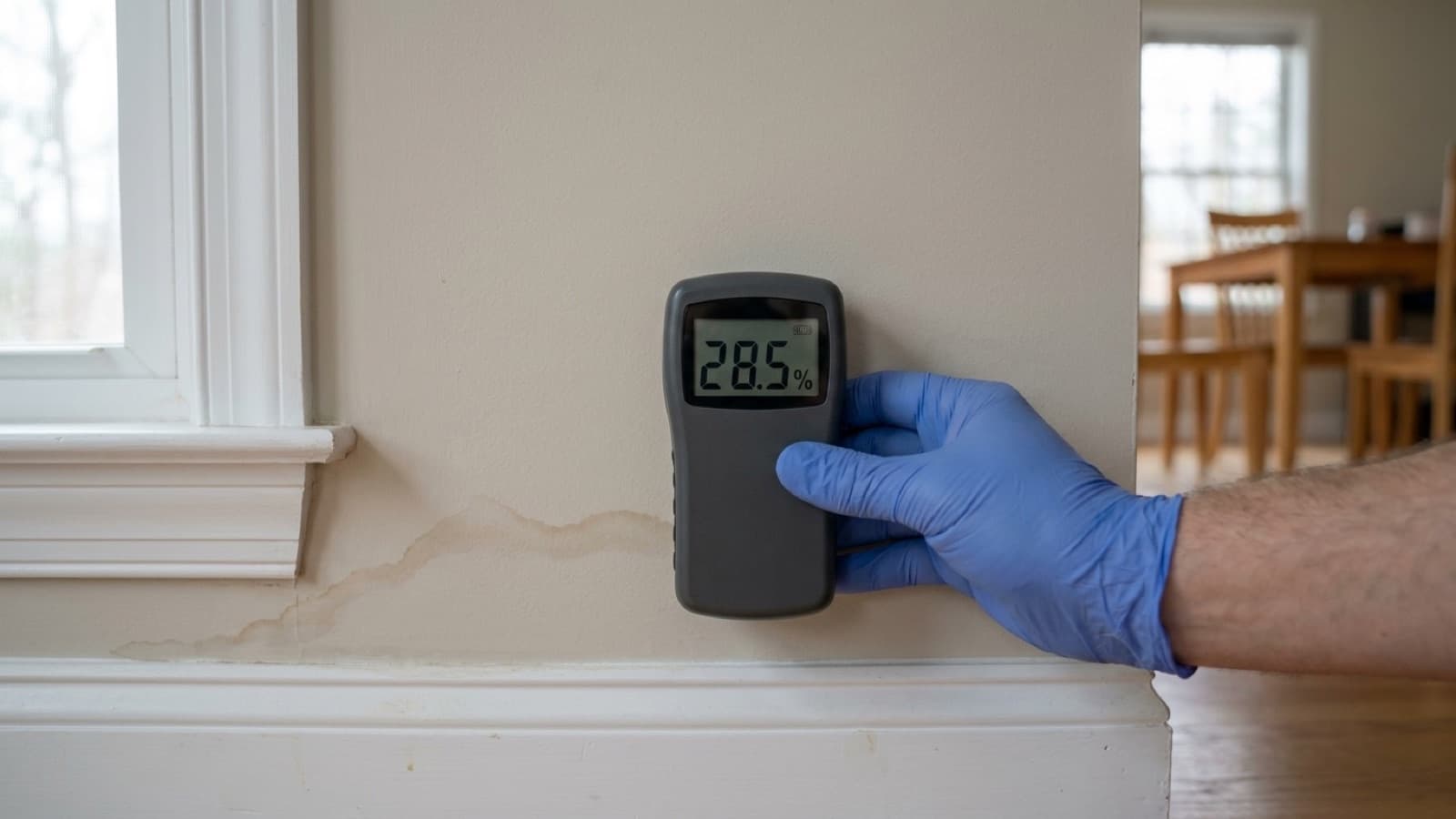
Moisture Detection & Leak Mapping
Thermal imaging finds the wet edge behind plaster and brick before anything is cut, which keeps an attached Danielson unit to one opening instead of four exploratory ones. On a shared wall the reading that matters is the one taken from the far side, because that is what tells you whether the loss is one address or two.
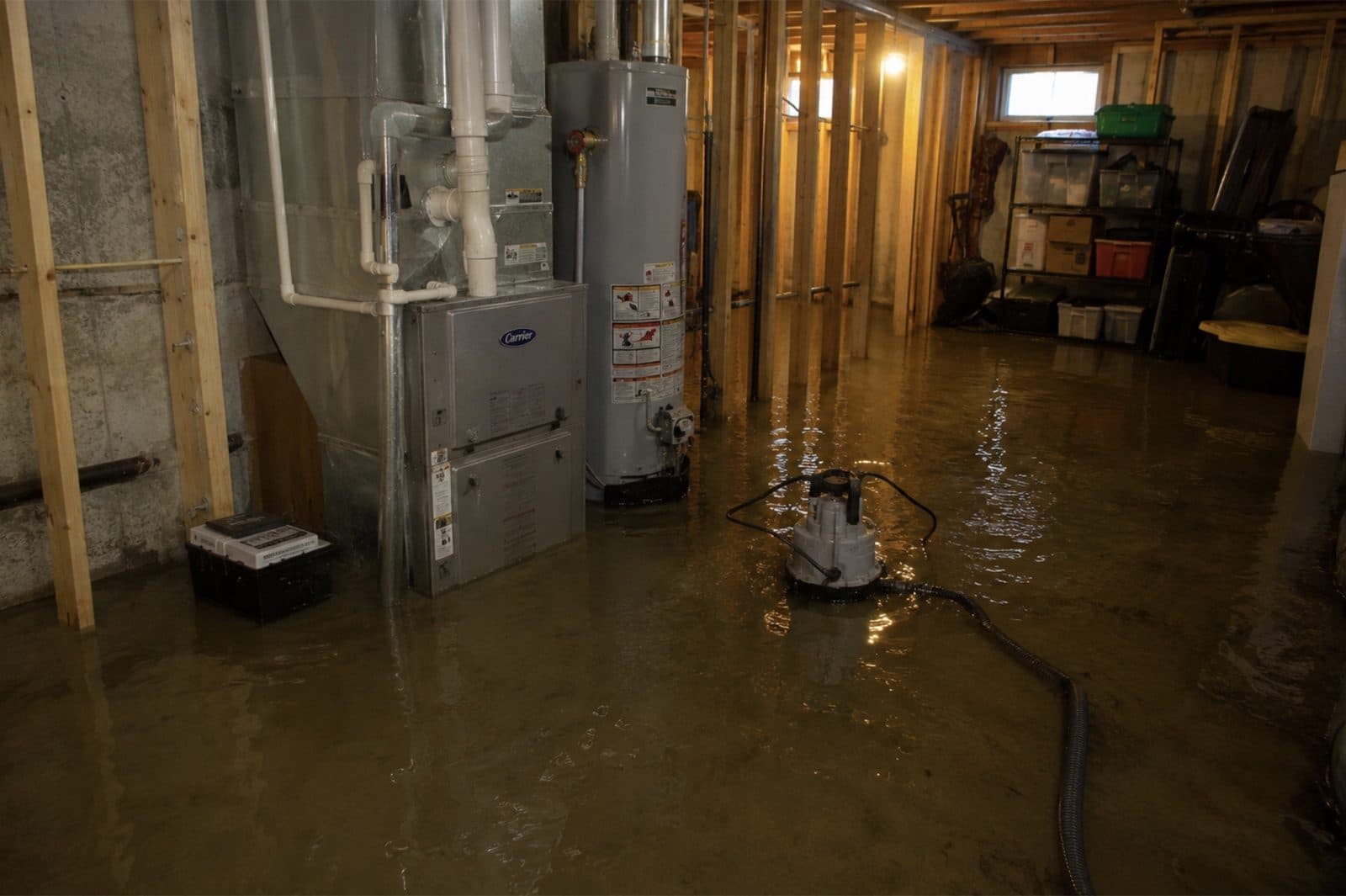
Flooded Basement Cleanup
Cellars here fill from the river grade and from the street. Down near the Quinebaug and Five Mile confluence a loaded water table presses through rubble and brick for days after the weather clears. Up in the grid it is runoff finding an areaway or a main backing up. We pump, sanitize, dry, and name which one it was in writing.
Sump Pump Failure Cleanup
Any cellar cut into the grade beside the Quinebaug is asking its sump to work every wet season, and the unit tends to quit on the night that matters. We clear the standing water, replace the failed pump, bring framing and slab edge to the S500 dry standard, and apply EPA-registered antimicrobial before anything is closed back up.
Sewage & Sewer Backup Cleanup
Borough addresses are on the municipal sewer, so a surcharged main pushes back through the lowest fixture in the building, which in this housing stock is a cellar floor drain or a basement laundry. IICRC S500 calls that Category 3 on sight: full PPE, HEPA containment, removal of porous material below the contamination line, and double-bagged waste handling.
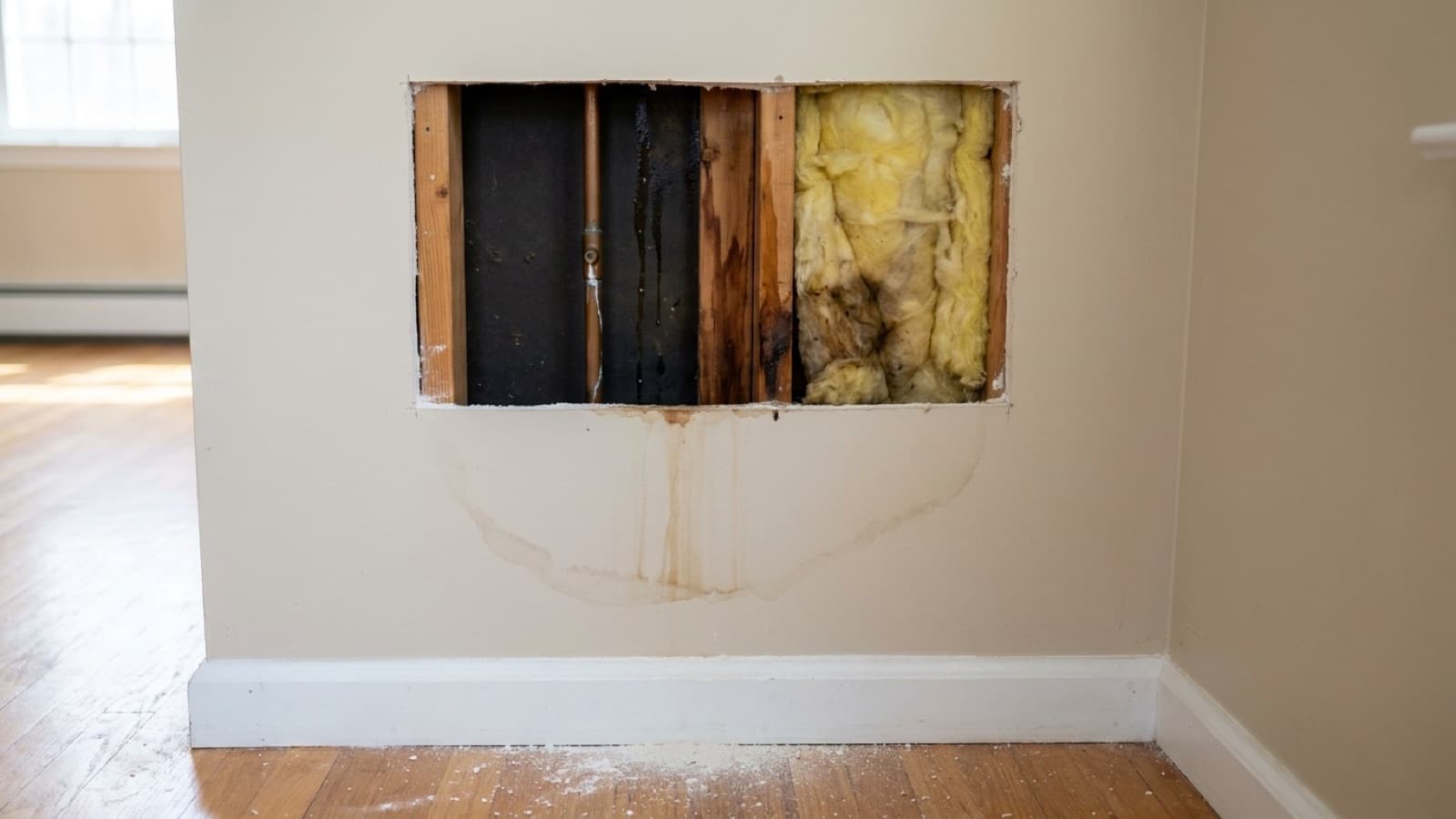
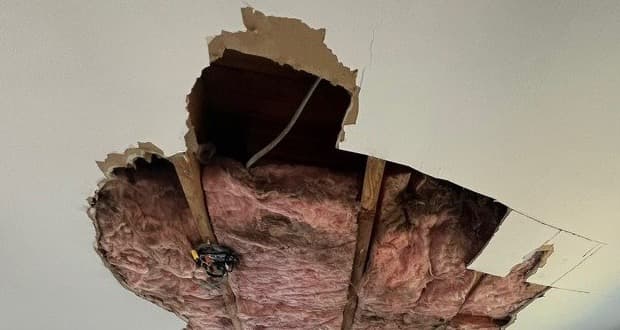
Ceiling & Drywall Water Damage Repair
Plaster in the mill duplexes and sheetrock in the later stock both get trimmed back until the remaining material reads dry, then dried and rebuilt to a finish ready for primer. Every stage is photographed, so the repair line your carrier sees matches the opening that was actually made rather than an estimate written from the doorway.
Hardwood Floor Drying & Salvage
Narrow strip flooring over a plank subfloor starts cupping within hours of the assembly beneath it staying wet, and once the cup sets, salvage leaves the table. Desiccant dehumidification with controlled airflow pulls moisture out slowly enough that an original finish survives, which matters in rooms where the floor is the only original detail left.
Appliance & Water Heater Failure Cleanup
The routine Danielson call is a braided hose letting go, a dishwasher seal giving out, an ice maker line weeping behind a cabinet, or a storage tank splitting at the seam. In stacked units a tank failure on an upper floor is a two-level loss before anyone is home. We extract, dry subfloor and cabinet boxes under S500, and package it for direct carrier billing.
Roof Leak & Storm Intrusion Cleanup
Flat and low-slope roofs over the commercial blocks pond rather than shed, and ice at the eaves works under shingles on the housing behind them. The tail of a tropical system can deliver rain faster than any of it clears. We extract, dry framing per IICRC S500, and file storm intrusion as its own scope rather than burying it in a generic water line item.
Hydronic & Boiler Failure Water Losses
Much of Danielson never left hot water heat, and a fair amount still runs original cast iron. A cracked section, a failed circulator, or a radiator valve letting go discharges continuously rather than in a burst, and hot water drives deeper into plaster and framing than cold does. We isolate the system, extract, and dry the assemblies the heat pushed it into.
A Shared Wall Does Not Contain A Leak. We Meter Both Sides.
One Call Puts A Crew On The Road To Danielson Center, Water Street, Westfield, Dayville, And Every Street In Between.
Green Restoration of Windham County in Danielson
Green Restoration of Windham County handles water damage restoration in Danielson, CT, where the brick complexes along the river were built as textile floors and later cut into apartments and offices. Owner-operated crews extract the water and dry the structure to IICRC S500 standards with documented moisture logs, under IICRC Certified Firm #70236106. Call (860) 222-9498.
Proof of Work
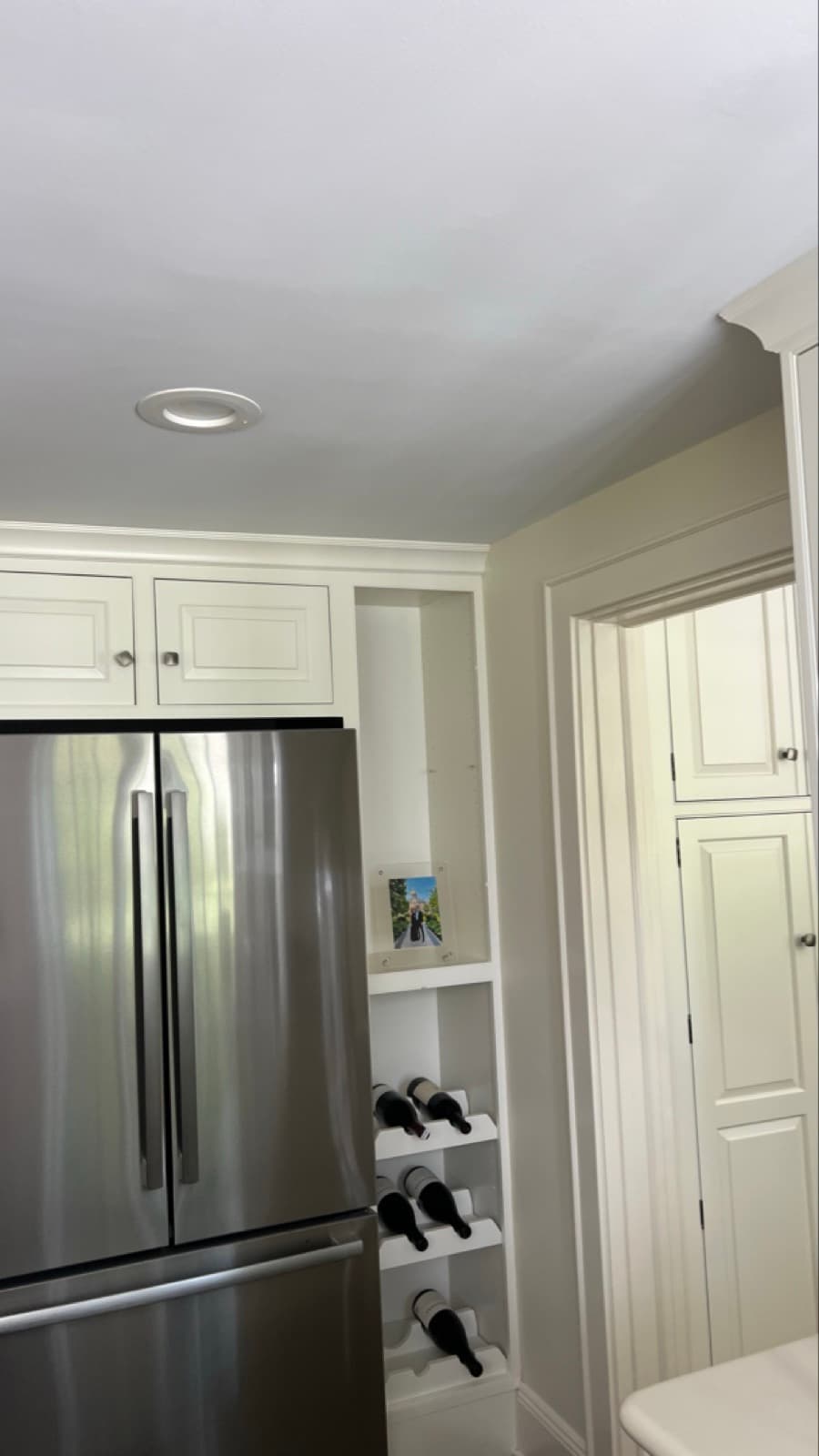
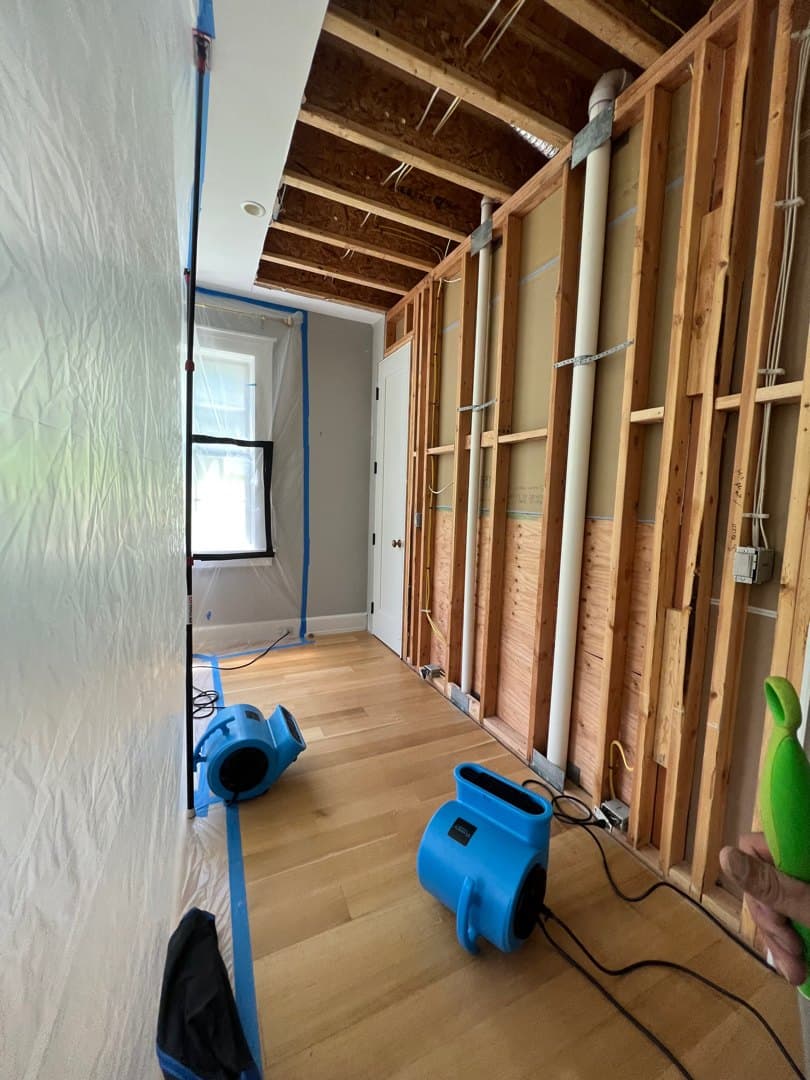
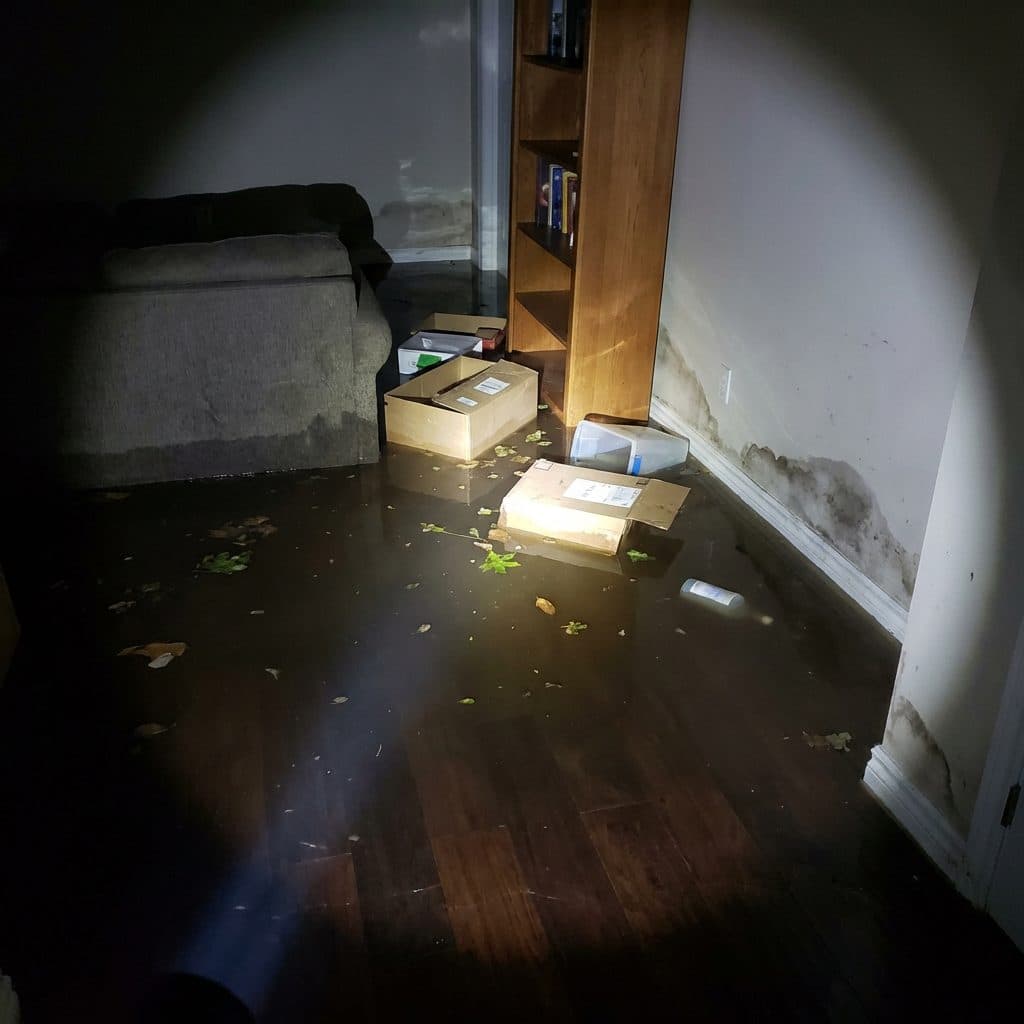
Recent Water Damage Projects
Real Connecticut water losses our crews documented and closed out.
Why Choose Us In Danielson
Owner-led service with 60-minute response, direct insurance billing, and eco-friendly methods across Danielson.
60-Minute Emergency Response
IICRC-certified crews arrive within 60 minutes, day or night, every day of the year.
Owner-Operated Local Crew
Every job is personally overseen by our owner, from first call to final moisture reading.
Direct Insurance Billing
We bill State Farm, Liberty Mutual, USAA, Travelers, Allstate, and Chubb directly under HIC.0668405.
EPA-Registered Antimicrobials
EPA-registered antimicrobials and Safer Choice cleaning products applied per IICRC S500 and S520 standards.
What Untreated Water Damage Costs Your Danielson Property
Untreated water damage in a Danielson home becomes mold colonization within 24 to 48 hours, hardwood cupping within 12 hours, and plaster delamination within 72 hours. A $4,500 same-day extraction can become a $25,000 plaster and finish-floor rebuild after 48 hours. The earlier we measure, the smaller the rebuild.
Two Rivers Meet Under The Borough
Quinebaug And Five Mile Confluence
Danielson sits where the Five Mile River comes down out of the eastern hills and hands its volume to the Quinebaug. That junction is the reason the low streets near the water carry a different risk profile than anything uphill on Broad Street. When both channels crest inside the same twelve hours, the confluence has nowhere to put the surplus and the ground beside it stays charged for days.
Party Walls Move Water Sideways
Mill Duplexes And Tenement Rows
The worker housing built here between the 1870s and the 1920s shares walls. A failed supply line in one unit does not stay in that unit: it travels the shared bay, wets the framing on both sides of the partition, and shows up as a stain on a neighbor ceiling a day later. Scoping one address and ignoring the one attached to it is the single most common way a Danielson job gets reopened.
Converted Mill Floors Sit On Timber
Brick Envelopes, Heavy Plank Decks
The brick complexes along the river were built as textile floors and later cut into apartments and offices. Those decks are heavy timber and thick plank rather than joist and subfloor, and they absorb an enormous amount of water before anything drips through to the level below. By the time a tenant reports a ceiling, the deck above has usually been holding for hours.
The Borough Runs Sewer, Not Septic
Municipal Lines Under Main Street
Inside the borough most addresses are on public water and public sewer, which changes the failure mode from the rural Killingly villages around it. A surcharged municipal line pushes back through the lowest fixture in the building, and in this housing stock the lowest fixture is almost always a cellar floor drain or a basement laundry. IICRC S500 puts that water in Category 3 the moment it arrives.
Storefront Cellars Hold The Stock
Main Street Commercial Basements
The commercial blocks through the center of Danielson keep inventory, mechanicals, and electrical service in cellars cut into the slope beside the river. Those spaces flood from three separate directions: a failed line overhead, groundwater through the rubble wall, and street runoff finding the areaway. Business interruption on those files usually costs more than the drying does.
Steam And Hot Water Heat Still Runs Here
Cast Iron, Radiators, Buried Returns
A great deal of this housing never left hydronic heat, and a fair amount still runs the original cast iron. A cracked section, a failed circulator, or a radiator valve letting go discharges hot water continuously rather than in a burst, and hot water drives further into plaster and framing than cold. Winter calls here are as often a heating system as a supply line.
Why Danielson Properties Need Professional Water Damage Restoration
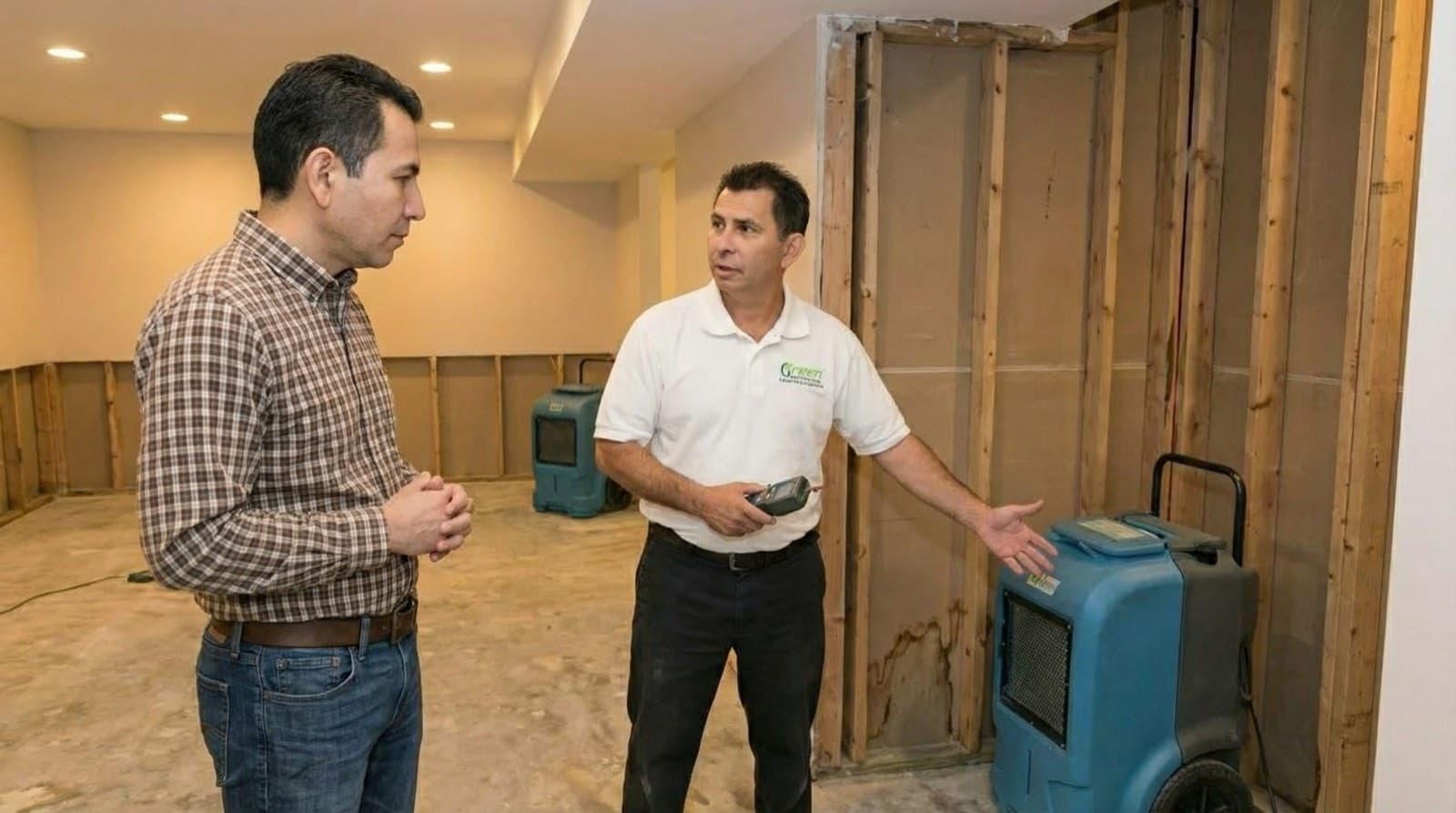
A Danielson scope answers three questions before equipment is placed: how far the water travelled through a shared wall, whether it came from a supply line or back through a municipal sewer, and how much of it is still sitting inside a timber deck. According to Green Restoration crew records, the shared-wall question is the one that decides whether a file closes once. Dense attached housing does not contain a loss the way a detached house does, so the meter has to cross the partition even when the neighbor reports nothing. Borrowed fans move room air past a wet bay without lowering the vapor pressure inside it, and the colony starts anyway.
We Meter Past The Property Line
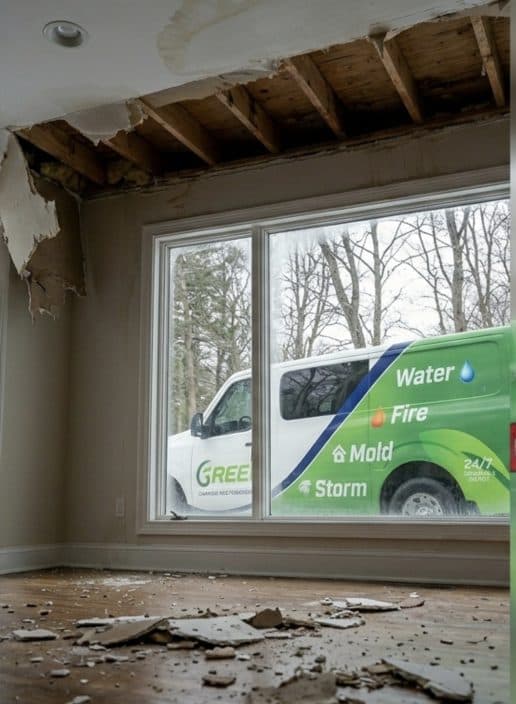
On an attached Danielson address the first thermal pass covers the adjoining unit as well, with permission, because a shared stud bay carries water in both directions and a partition reads dry on the surface long after the cavity is loaded. Finding it on day one keeps it inside the original claim instead of turning it into a second loss for a neighbor three weeks later.
Category Is Decided Before The Hose Comes Out
Water that arrived through a cellar floor drain on a municipal sewer is not the same job as a split supply line upstairs, even when it looks identical. IICRC S500 puts sewer surcharge in Category 3, which means containment, full PPE, removal of porous material below the contamination line, and double-bagged waste handling. That determination goes in the file on arrival, because it is what justifies the removal scope later.
Timber Decks Get Their Own Schedule
A heavy plank deck in a converted mill floor releases moisture on a curve nothing like sheetrock over fiberglass, and drying it on a residential schedule leaves the middle of the deck wet under a surface that reads finished. Those assemblies get dedicated dehumidification, deeper probe readings, and more days, and the daily log shows why.
Documentation Eastern Connecticut Adjusters Accept
Policies on Danielson property sit mostly with State Farm, Travelers, Liberty Mutual, USAA, Allstate, and Amica, and every one of them expects daily moisture logs, timestamped photographs, and an itemized IICRC-standard scope before it approves anything. Our owner holds IICRC AMRT and WRT credentials and runs the file under HIC.0668405. We are not licensed public adjusters and do not negotiate claims on your behalf.
The Water Damage We See Most in Danielson
A mill borough concentrates its losses. Attached framing, cellars cut into the river grade, and a municipal line under the street produce a short list of patterns that repeat, and the ones below are what our Danielson calls keep landing on. Whichever applies, the water gets a category under IICRC S500 and the job gets a written record your insurer can read.
Flooded Basement, Fully Dried
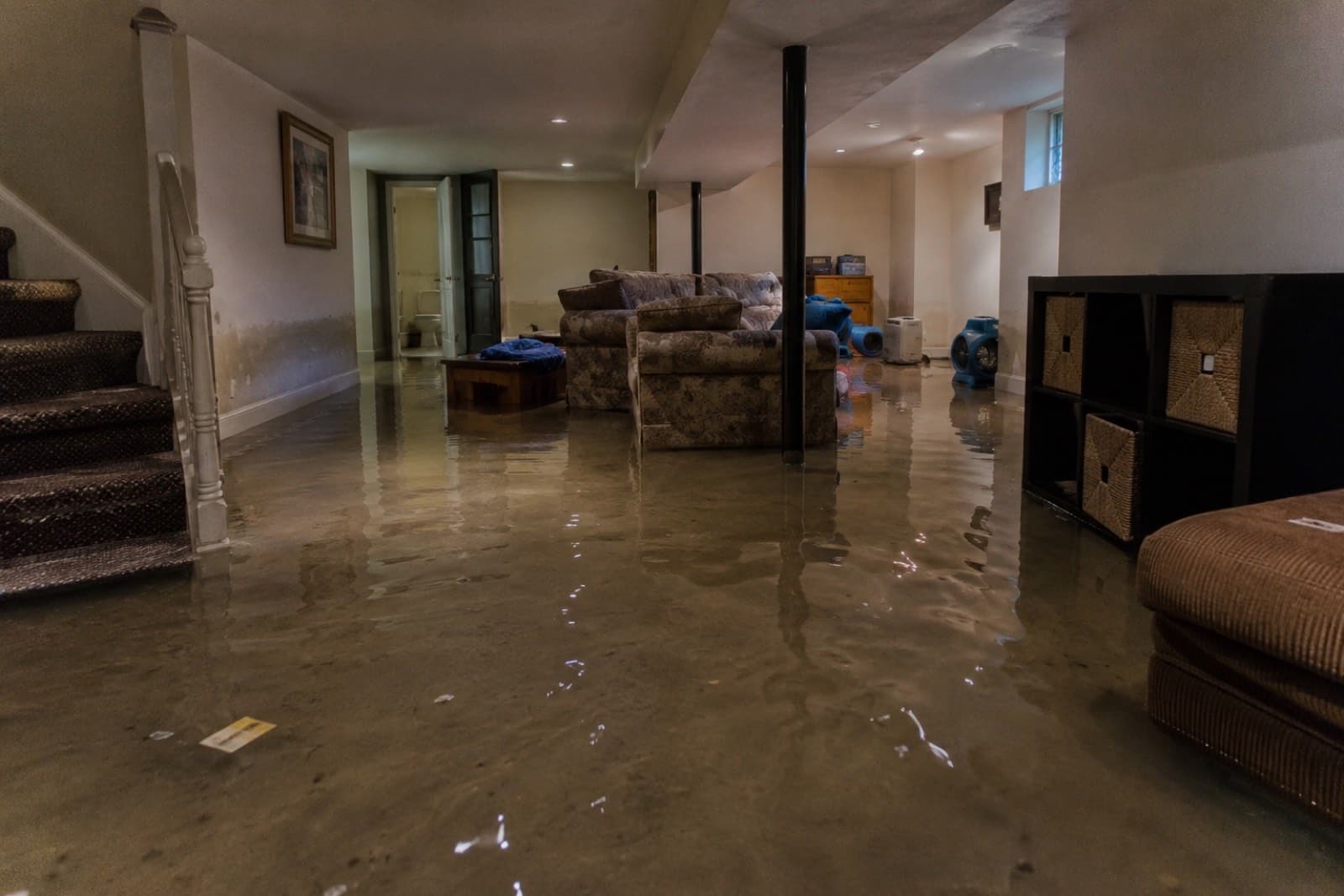
In Danielson, on an attached unit the wet bay usually runs past the partition before anyone reports a stain.
A failed sump pump, a burst supply line, or storm-driven groundwater can leave inches of standing water sitting against framing, drywall, and stored belongings. The longer it sits, the further moisture wicks up the walls and the faster the Category of the water deteriorates.
Our IICRC-certified technicians classify the water under IICRC S500, then pull the standing water down to the slab with truck-mounted and submersible extraction. We open wet wall cavities, set air movers and LGR dehumidifiers for structural drying, and apply an antimicrobial per IICRC S520 where Category 2 or 3 water is involved.
We take daily Tramex moisture readings and dry the assembly to the ANSI/IICRC dry standard, not to a calendar. Every reading, photo, and scope line is documented for your insurer so the claim moves on facts, not guesswork.
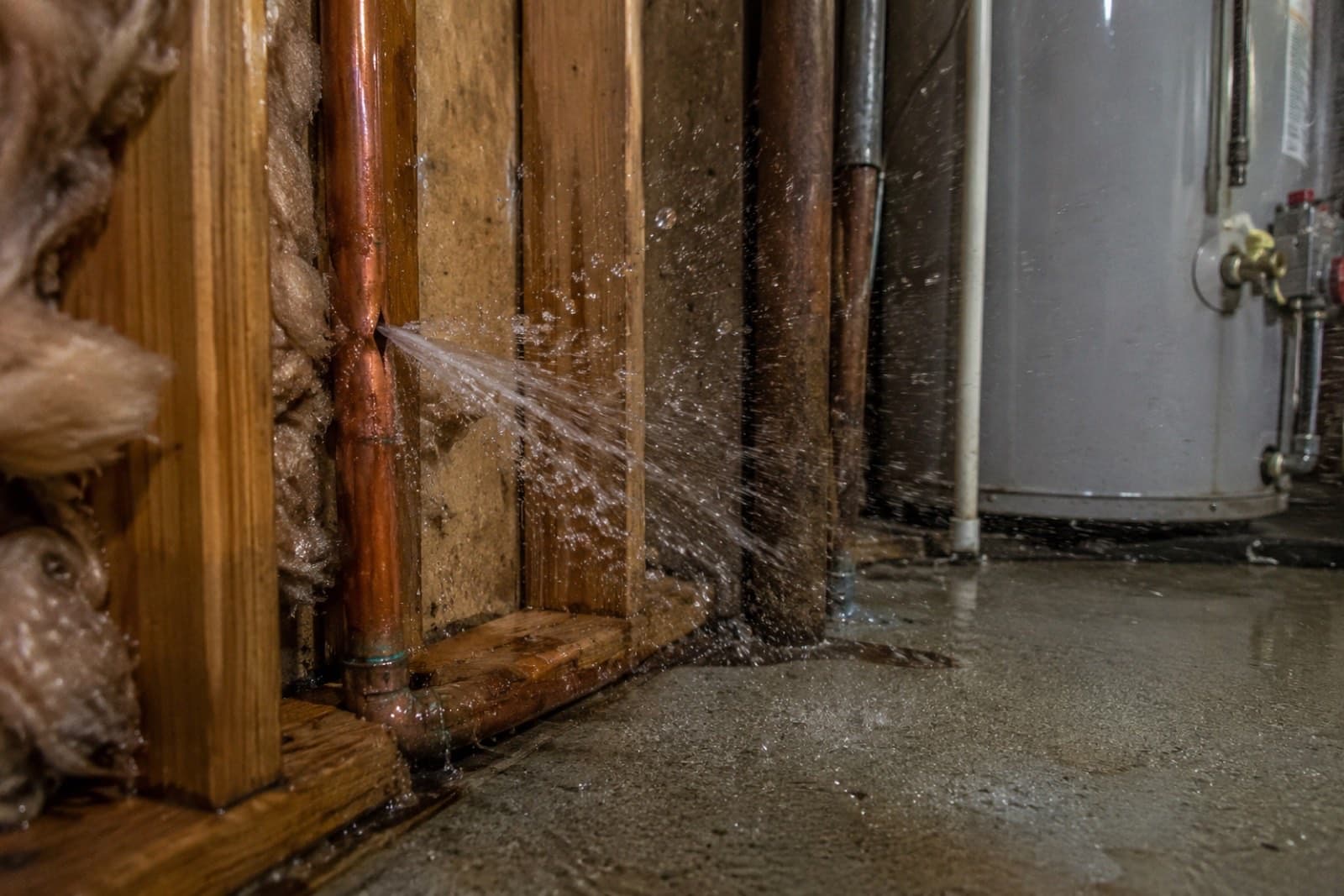
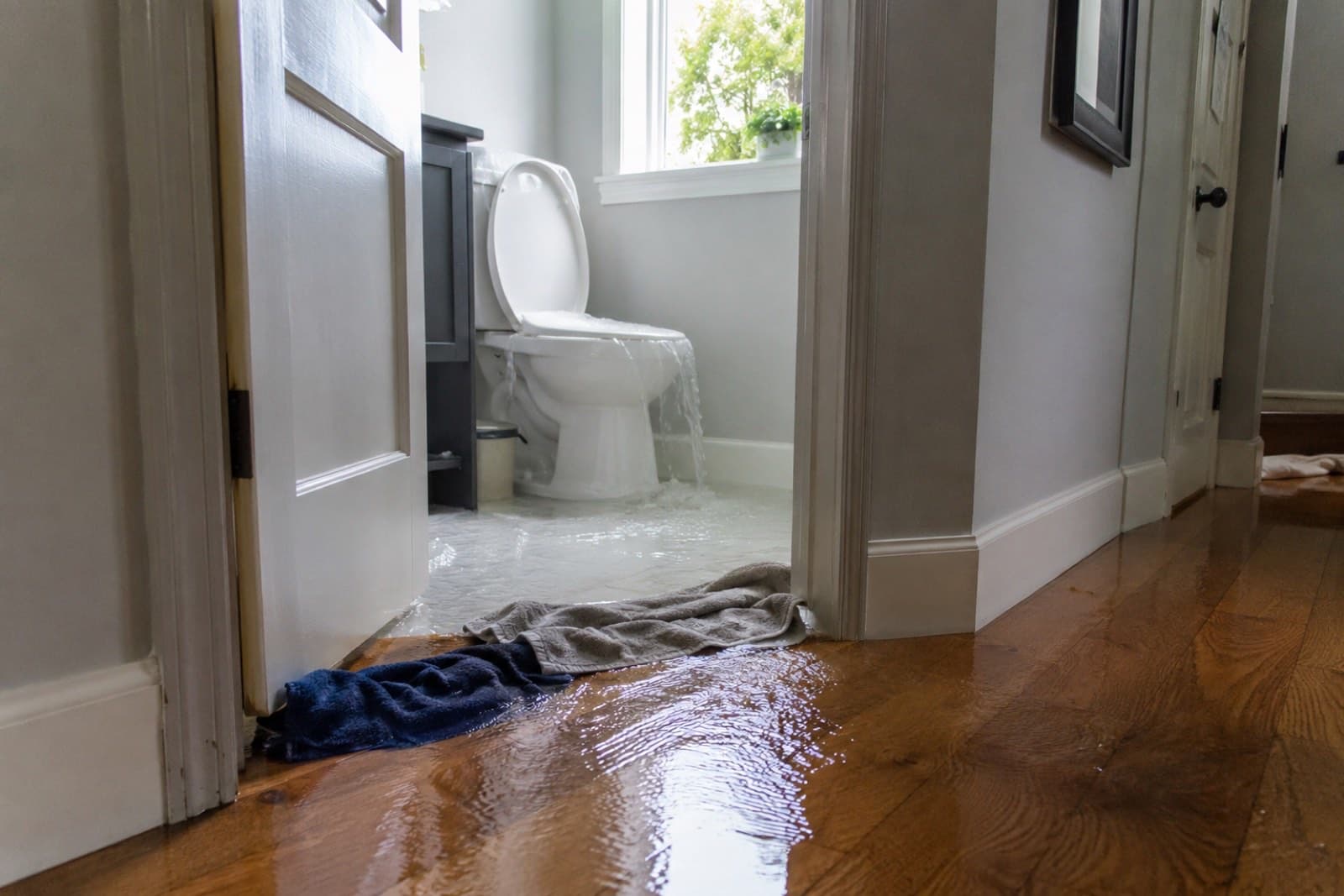
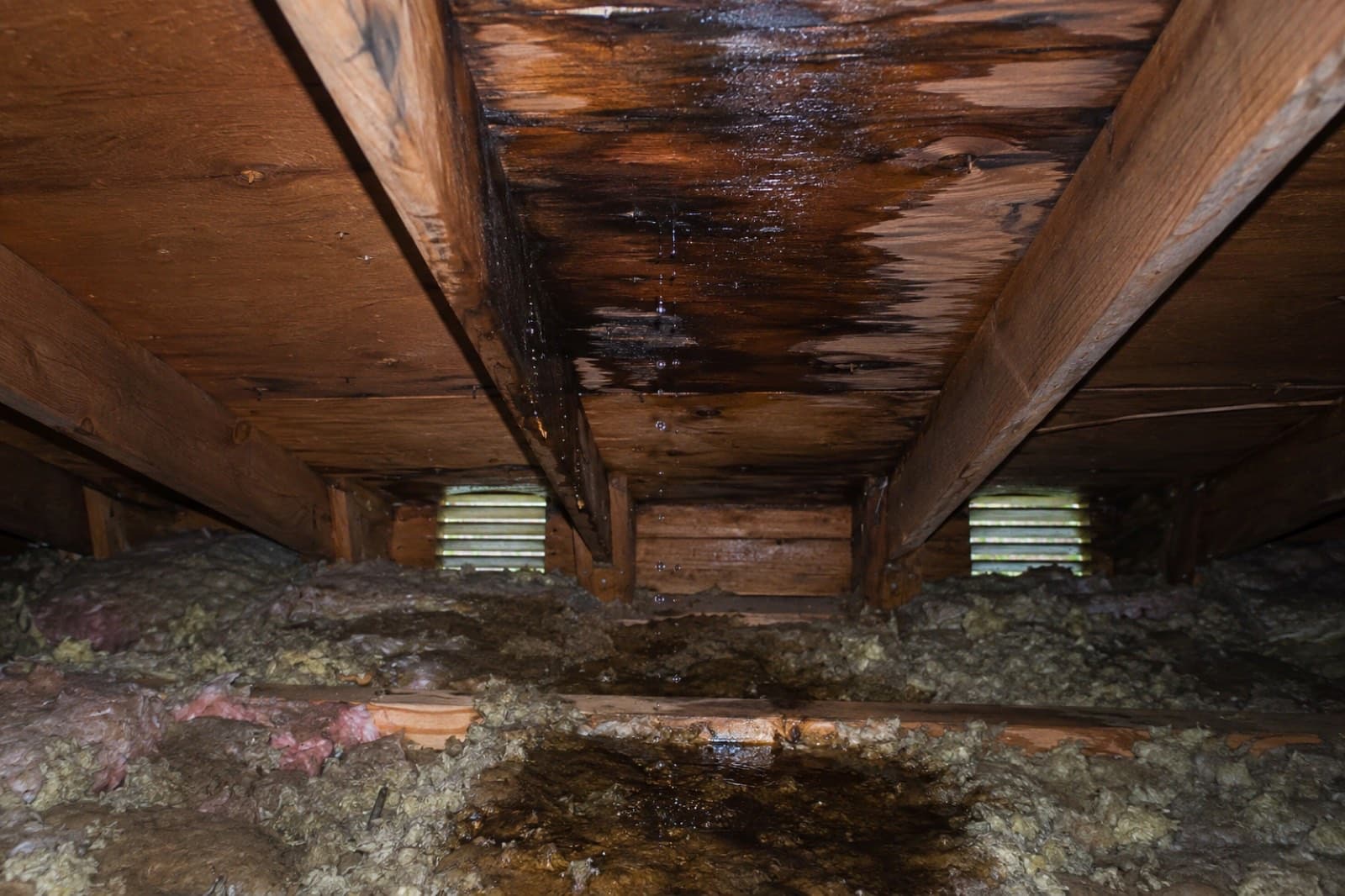
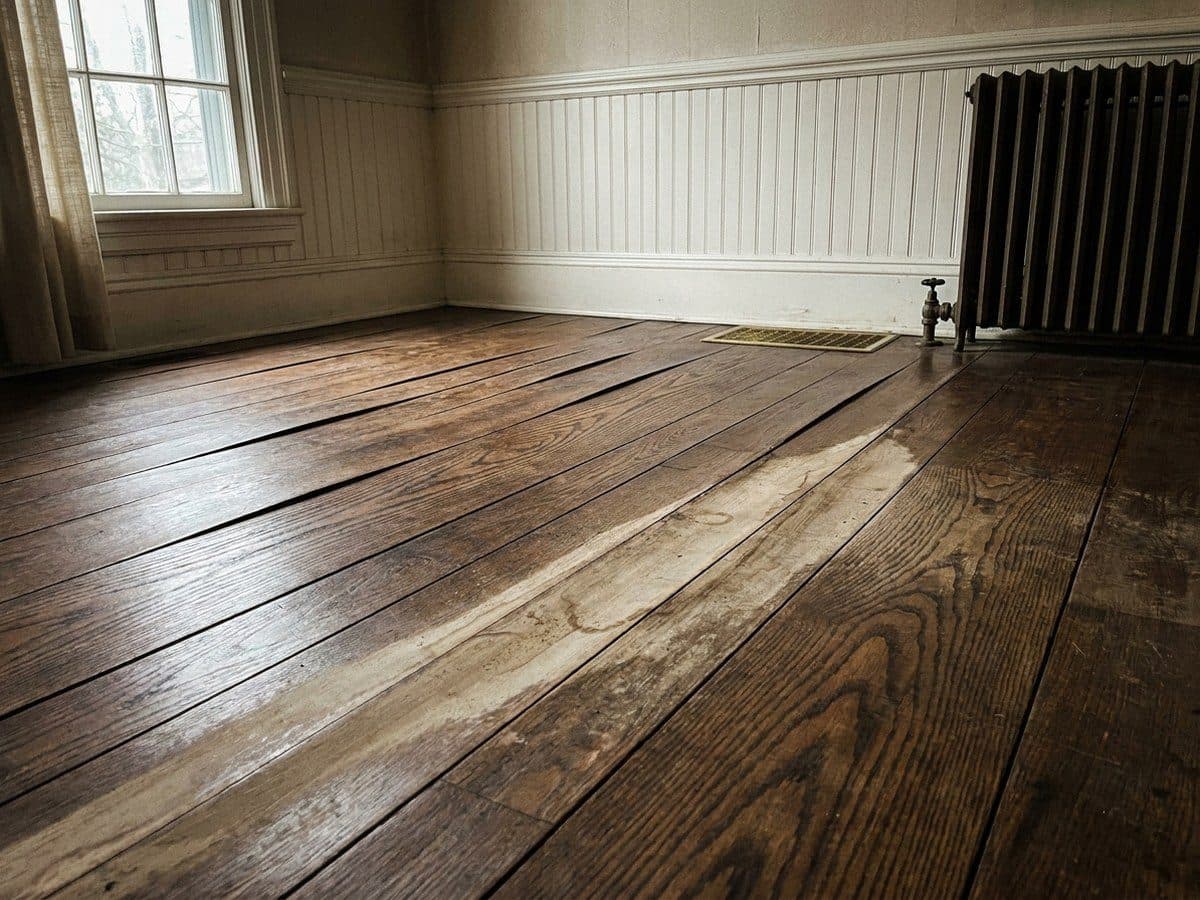
Scenario 1 of 5: Basement Flooding
What To Do After Water Damage In Danielson, CT
Most of what decides whether a Danielson floor assembly is dried or replaced happens before our truck reaches the curb. The steps below follow IICRC guidance and cost nothing except the minute each one takes.
What To Do Immediately
Borough addresses have a shutoff near the meter, usually in the cellar at the street wall. In an attached unit, know which valve serves your side before you need it.
De-energize any space holding water before you step into it. Danielson cellars mix wiring from several eras, and mill-era panels sit low on the wall.
Same-day dispatch covers the borough day and night. Every hour a shared stud bay holds water widens the scope your carrier has to approve.
On a duplex or a row unit the attached side needs to look at its own ceilings and walls now, not after the stain appears. Early access keeps it one claim.
Water rising through a cellar floor drain points at the municipal line rather than your plumbing. Stay out of it and tell us on the call, because it rewrites the whole scope.
Wide frames and close frames, taken before extraction begins. Carriers treat pre-mitigation imagery as a condition of the claim, not a courtesy.
What NOT To Do
A household fan moves air over a surface and leaves the vapor pressure inside the wall exactly where it was. What they reliably do is spread contamination and speed up growth.
Injuries on these jobs come from submerged debris and live circuits rather than from the water. Cut power first, and stay clear of anything contaminated.
Carpet and pad together weigh hundreds of pounds wet, and dragging them up a narrow mill stair tracks contamination through rooms that were dry.
A ducted system distributes spores from the wet level into every other room. Shut it down until containment is standing.
Late reporting puts coverage in question. Notify within hours and have our documented scope in front of the adjuster the same day.
It lifts the stain and leaves the colony alive inside porous material. What actually resolves it is remediation under IICRC S520.
Our Water Damage Restoration Process In Danielson, CT
From the first call to final walkthrough, every step is documented, insured, and owner-supervised.
Water Damage Restoration Coverage In Danielson, CT
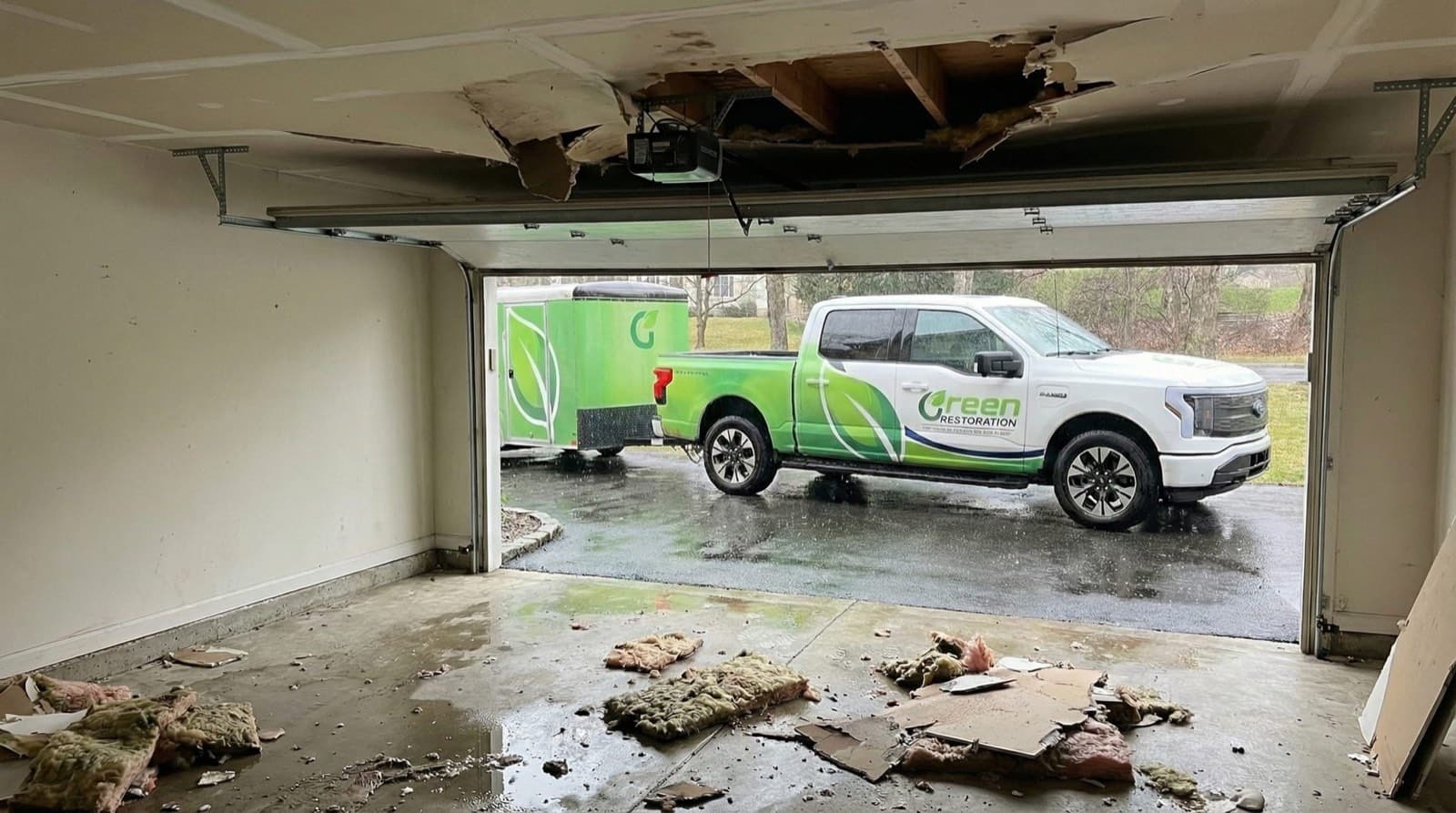
Documented water damage restoration for Danielson homes, mill conversions, and Main Street businesses, covering the borough grid from Davis Park and Water Street out through Westfield and the Killingly villages beyond it, with a crew reaching all of it the day you call.
Danielson, CT 06239 is covered end to end by IICRC-certified Green Restoration crews, reaching Danielson Center, Davis Park, Main Street, Broad Street, Academy Street, Water Street, Furnace Street, Westfield, and out through Dayville, Attawaugan, Ballouville, and Rogers. Route 12 runs the length of the borough beside the Quinebaug and Interstate 395 passes on the eastern side, so every Danielson address sits inside a normal Quiet Corner dispatch at any hour. Scopes we run here include frozen and burst supply lines, hydronic heating failures, water heater and appliance losses, sump failures, municipal sewer surcharge, and groundwater intrusion along the river grade.
Our scope of work and its supporting documentation go straight to your insurer. We are not licensed public adjusters and do not negotiate claims on your behalf.
Working locally under HIC.0668405 means scoping Danielson against what is actually standing here, and what is standing here is a mill village. The borough grew around the textile mills on the Quinebaug and it kept their housing: duplexes and tenement rows from the 1870s through the 1920s, tight side yards, shared party walls, and cellars cut into the grade beside the river. That density is the whole scoping problem, because attached framing carries a loss sideways into a unit nobody reported. The brick mill buildings themselves are now apartments and offices sitting on heavy timber decks that hold far more water than a modern floor assembly before anything appears below.
Beyond the borough line the pattern flips: Dayville, Attawaugan, Ballouville, and Rogers run more detached stock, more private wells, and more on-site septic, which changes both the shutoff sequence and the contamination category on the same kind of call.
See typical Danielson water damage pricing in 60 seconds. Category 1 to 3.
Water Emergency In Danielson?
Call now for immediate dispatch, 24/7/365.
(860) 222-9498IICRC Certified · Licensed & Insured · CT HIC.0668405
All Towns Served By Green Restoration Across The Windham County Corridor With 60-Minute Emergency Response Under HIC.0668405.
Why Danielson Water Damage Is Different
A dense mill borough on public sewer, dropped into a rural town of wells and septic.
Free On-Site Assessment
Not sure what you are dealing with in Danielson?
We establish the scope on site, before anything is quoted.
(860) 222-9498Why A Mill Borough Scopes Differently From The Town Around It
Danielson is a dense borough dropped inside a rural town, and the two produce different files from the same weather. Down on the river grade, where the Five Mile River delivers into the Quinebaug, the ground beside the confluence holds its charge after a sustained event and works against rubble and brick foundation walls for days, so those scopes read as hydrostatic findings and close with drainage recommendations rather than a plumbing repair.
Up in the borough grid the driver is not groundwater at all, it is density: attached framing, shared stud bays, and municipal sewer under the street, which together mean one failure inside one unit can produce three affected addresses and a Category 3 classification that nobody expected on arrival. According to Green Restoration field documentation, naming which of those two mechanisms applied is what keeps the repair recommendation honest, because a sump sized for surface volume does nothing about a loaded water table and a plumbing line item does nothing about a surcharged main.
Either way the work runs IICRC S500: truck-mounted extraction, air movers set to the assembly rather than the room, and daily meter readings until the dry standard holds at every monitoring point, with the record going to your adjuster as it is produced.
24/7 Water Damage Response In Danielson, CT
IICRC-certified crews cover Danielson on a standard Quiet Corner dispatch, from the mill grid beside the Quinebaug out through Westfield and the Killingly villages. Most of these calls have a truck at the curb inside the hour.
Windham, Willimantic, and the Willimantic and Natchaug River confluence sit in flood-mapped territory through the former Thread City mill district. River overflow and storm-drain backflow push Category 3 stormwater into 1880s mill-worker triple-decker basements and downtown commercial slabs. We pump with Hydramaster CDS truck-mounts and dry to IICRC S500-2021 standard.
Danielson, Putnam, Moosup, and the Quinebaug River mill corridor carry pre-war textile-mill worker housing with plaster-on-lath wall systems and continuous balloon-frame stud bays. Phoenix Axial movers and FLIR thermal imaging map hidden moisture inside lath bays before viable mold colonies form.
Woodstock, Pomfret, and Brooklyn Quiet Corner estate towns hold 18th-century fieldstone foundations and original-growth chestnut framing. Class 4 drying for fieldstone foundations requires careful psychrometric control to preserve historic plaster and quartersawn oak finishes.
Our owner personally leads every Windham County water-damage scope, IICRC AMRT and WRT certified under HIC.0668405. Documented scope, daily Tramex CME 5 moisture logs, and clearance filed with State Farm, Travelers, Liberty Mutual, USAA, Allstate, Chubb, and other major carriers.
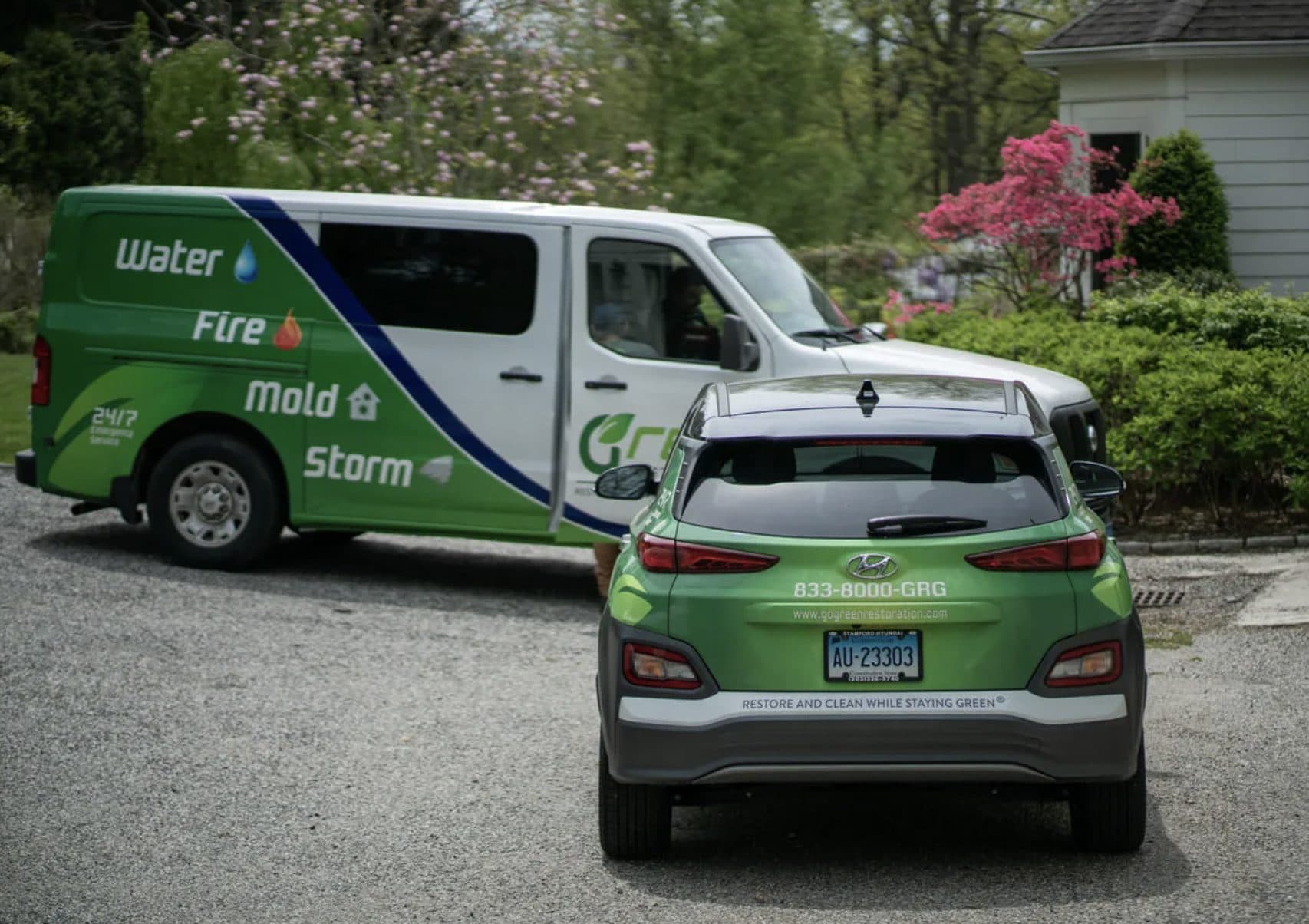
About Green Restoration In Danielson, CT
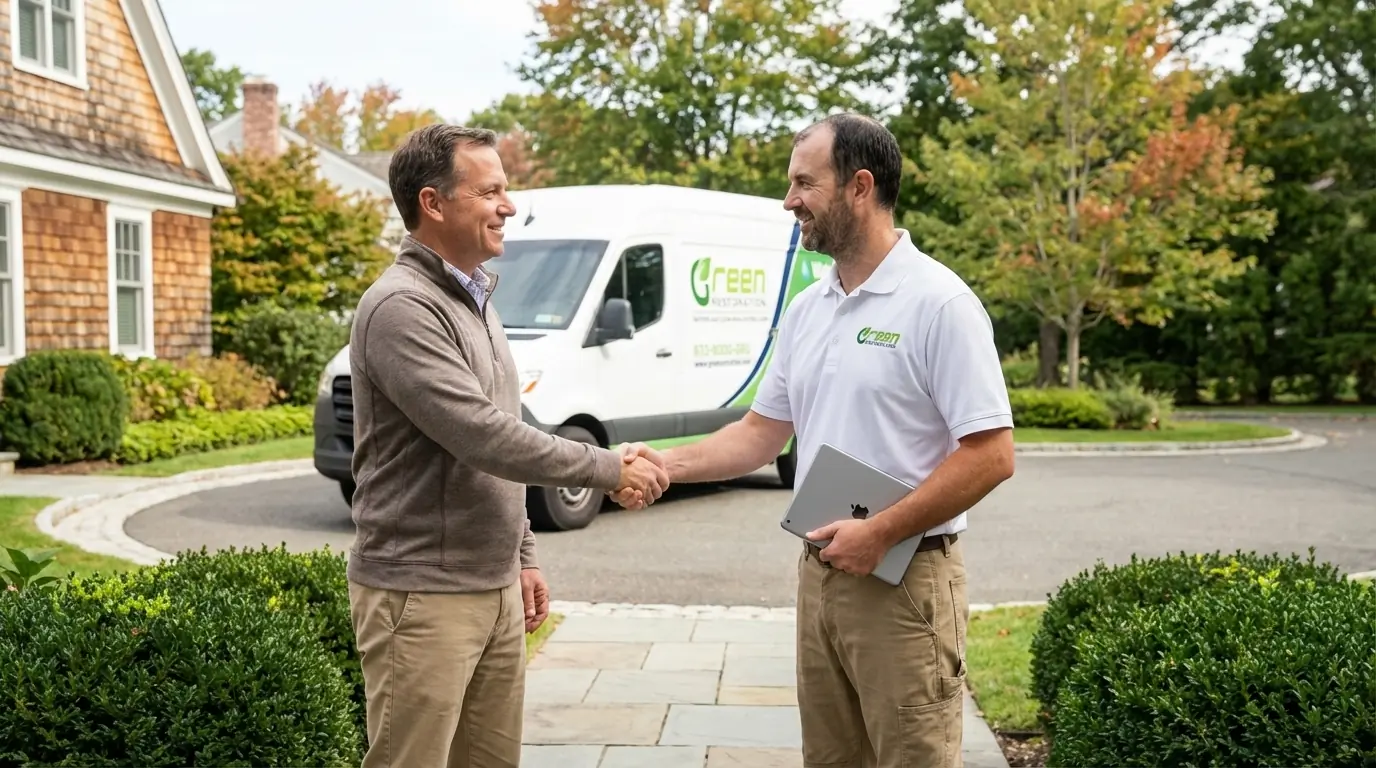
Your Danielson Water Damage Specialists Since 2014
Danielson work runs to mill-duplex party-wall drying, timber-deck moisture in the converted brick complexes, municipal sewer surcharge in cellar floor drains, hydronic heating failures in the older stock, and groundwater against rubble foundations along the river grade. Our owner holds IICRC AMRT and WRT credentials and runs every file under HIC.0668405, with thermal mapping, axial movers, and LGR dehumidifiers. According to Green Restoration documentation records, drying in this housing stock is closed out by meter reading rather than by a fixed number of equipment days. We are not licensed public adjusters and do not negotiate claims on your behalf.

“Fifteen years in restoration, IICRC AMRT and WRT certified, and the Windham County water crews answer to me directly. In Danielson the job is usually bigger than the address that called it in, because these walls are shared and the water does not respect the property line, so we meter both sides on day one. Every Danielson job carries my oversight, closes on the S500 dry standard, and bills to your carrier under HIC.0668405.”
Trusted by Families in Danielson &
Windham County
4.9 out of 5, Rated by your neighbors on Google
We discovered mold when removing our pellet stove and called Green Restoration for help. David was very communicative and helpful throughout the entire process. He did the job thoroughly and professionally. Highly recommended!
David Woolner
Mold RemediationI had a fantastic experience with Green Restoration. From start to finish, the team was professional, thorough, and extremely knowledgeable. David came for the initial inspection and took the time to explain the entire process.
Annmarie Gieparda
Mold RemediationWe had mold due to a water leak in our half finished basement. David and his crew did a great job, we were very satisfied. I would highly recommend Green Restoration to anyone.
Tanya
Water DamageI needed my entire condo completely cleaned after a soot blow back. Green Restoration was top shelf! So thorough and professional. Thank you so much!
Jacki Hornish
Fire & Soot CleanupHow Much Does Water Damage Restoration Cost In Danielson, CT?
What you pay tracks the IICRC S500 water category more than anything else, and on attached housing it also tracks how many units the assembly reaches. Bands are listed below.
Category 1, Clean Water
1,500 to 4,500 dollars
Clean supply break, failed water heater, overflowing fixture, one contained area
Category 2, Gray Water
2,500 to 8,500 dollars
Laundry or dish line, cracked boiler section, dead sump, finished lower level
Category 3, Black Water
7,500 to 50,000+ dollars
Municipal sewer surcharge, contaminated scope crossing a shared wall or several rooms
Priced by IICRC S500 water category. Read the full water damage cost guide.
Danielson CT Water Damage Restoration FAQs
Plain answers on sewer backups, shared walls, drying a mill-era building, what carriers will and will not pay, and what a Danielson job actually costs.
Caught early, a clean-water event such as a split supply line or a failed water heater generally settles between 1,500 and 4,500 dollars. Once a municipal sewer surcharge or a loaded water table forces removal of subfloor and wall material, IICRC S500 scopes here run 12,000 to 28,000 dollars. Attached mill housing usually lands above a comparable detached scope because the drying plan has to cross the party wall and the file has to document two units instead of one. Converted mill floors with heavy timber decks add days for the same reason. Final pricing is settled by your adjuster against the file we document. Dial (860) 222-9498 for a same-day Danielson estimate under HIC.0668405.
We target arrival inside 60 minutes anywhere in Danielson. The borough is compact and Route 12 runs its whole length beside the river, with Interstate 395 on the eastern side, so approach is rarely the constraint. Danielson Center, Davis Park, and the Water Street grade are the quickest runs. Dayville, Attawaugan, Ballouville, and Rogers sit a little further out and still land inside the hour under normal conditions. Everything needed to start extraction rides on the first truck, so no part of the job waits for a second trip. Someone answers (860) 222-9498 at every hour of the day.
Usually it is not. Inside the borough most addresses are on the public sewer, and water rising through the lowest fixture in the building is the signature of a surcharged main rather than a failure on your side of the wall. The important consequence is the classification: IICRC S500 puts sewer water in Category 3 no matter how clear it looks coming up. That triggers HEPA containment, full PPE, removal of porous material below the contamination line, EPA-registered antimicrobial on framing and slab, and double-bagged waste handling.
We record the category on arrival, because that determination is what justifies the removal scope to your adjuster later, and we note the municipal cause separately so the file does not read as a plumbing claim.
Each owner files with their own carrier for their own property, and the two claims run in parallel. What matters technically is that a shared stud bay carries water in both directions, so the drying plan has to treat the partition as one assembly even though it sits under two policies. With permission we meter the adjoining side on day one and document what we find there in its own report, which gives that neighbor something to hand their adjuster instead of a stain that appeared for no stated reason.
Ignoring the attached side is how a Danielson file gets reopened a month later, at which point the causal link back to the original event is much harder to establish.
Standard Connecticut coverage from State Farm, Travelers, Liberty Mutual, USAA, Allstate, and Amica responds to sudden and accidental losses, which is the category that covers a burst supply line, a failed appliance, or a cracked boiler section. Surface water rising out of the Quinebaug or the Five Mile River is excluded and needs a separate NFIP flood policy. Sewer backup is normally excluded as well unless a backup endorsement was added, and on this housing stock that endorsement is worth asking about. Slow seepage through a foundation is generally treated as deferred maintenance rather than a covered event.
What we supply is the IICRC S500 scope, the daily moisture logs, and timestamped photography, filed under HIC.0668405. We are not licensed public adjusters and do not negotiate claims on your behalf.
Category 1 and Category 2 losses usually close in 3 to 5 days. Once porous material has to come out under IICRC S500, plan on 7 to 10. Two things here push toward the long end. Rubble and brick foundation walls give up moisture on their own slow schedule rather than the schedule the equipment is set to, and any assembly that crosses into an attached unit has to reach the dry standard on both sides before equipment leaves. Converted mill floors run longer again, because a heavy plank deck holds water deep in the section where a surface reading will not find it. Equipment stays until meter readings hold at every monitoring point, and those readings go in the file rather than on a clipboard.
The deck absorbs it. Textile floors were framed in heavy timber with thick plank rather than joist and subfloor, so a failure on an upper level can run for hours before anything shows on the ceiling below, and by then the section is holding water through its full depth. We probe the deck rather than reading its surface, set dedicated dehumidification against that assembly, and check the bearing points and the wall pockets where the timber ends sit in masonry, which is where trapped moisture does structural harm rather than cosmetic harm. Those jobs carry a longer log and a slower close, and the daily readings are what show the adjuster why the equipment stayed.
The threshold IICRC S520 documents is a day to two days of cellulosic material held above roughly 16 percent moisture content before growth becomes visible. This building stock sustains that condition easily: plaster over lath, wide board sheathing, heavy timber, and interior partitions that get very little air movement in the first place. Attached units make it worse, because the wet side of a party wall is often a closed cavity nobody opens.
Our answer is to dry to the IICRC S500 standard, confirm it by meter at every monitoring point on both sides of a shared assembly, and treat under S520 wherever contamination is already established rather than assuming that drying alone settles it.

