Basement Mold Cleaned After Rain Water Sat on the Slab in Amherst
 1 / 6
At the assessment: growth following the grout lines, where the water soaked in.
What Happened
This Amherst basement is half finished: knotty pine paneling on the walls, tile laid over the slab, a run of base cabinets along one wall, a wall of bookshelves, and a keyboard and furniture in the finished part. It has had water problems for years. The carpet was pulled out some time ago and tile went down in its place. Around August 3 and 4, heavy rain put about an inch of water across the floor. The homeowner wet vacuumed it up and kept a fan and a dehumidifier running. White growth bloomed on the floor anyway, so she asked for an expert assessment and a cleanup.
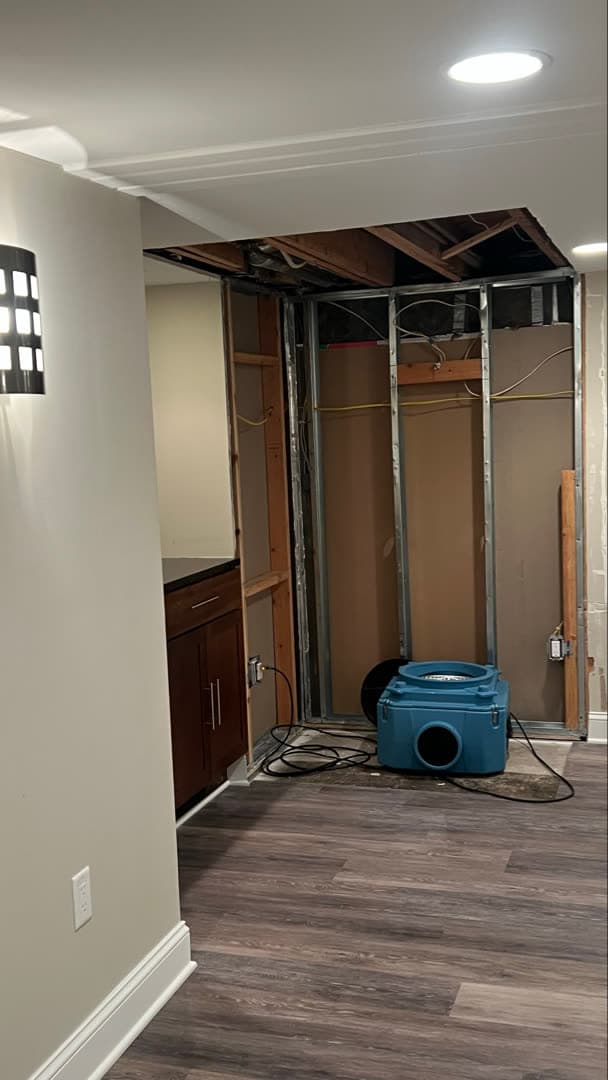
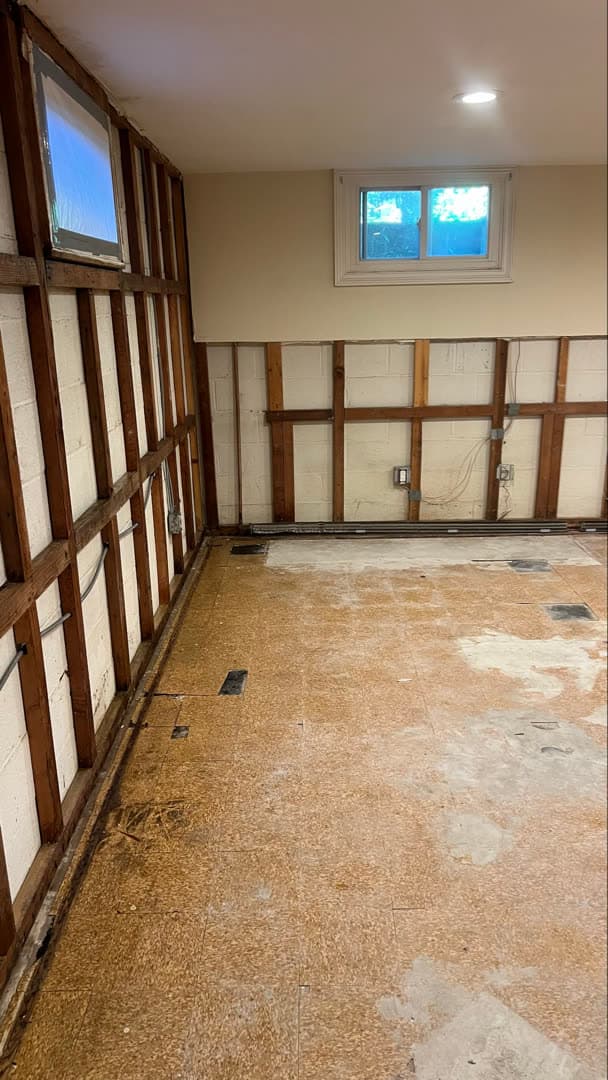
David assessed it on August 13. A wet vacuum takes the standing water. It does not take the water that has gone into the grout and into the bottom edge of the paneling and the cabinets. That is where the growth showed: white across the tile and along the grout lines, and dark staining at the base of the paneling. The plan followed the IICRC S520 standard for mold remediation. Work started on August 21. The space was sealed with six mil poly and an airlock, with critical barriers over the heating and cooling registers and a zippered entry door.
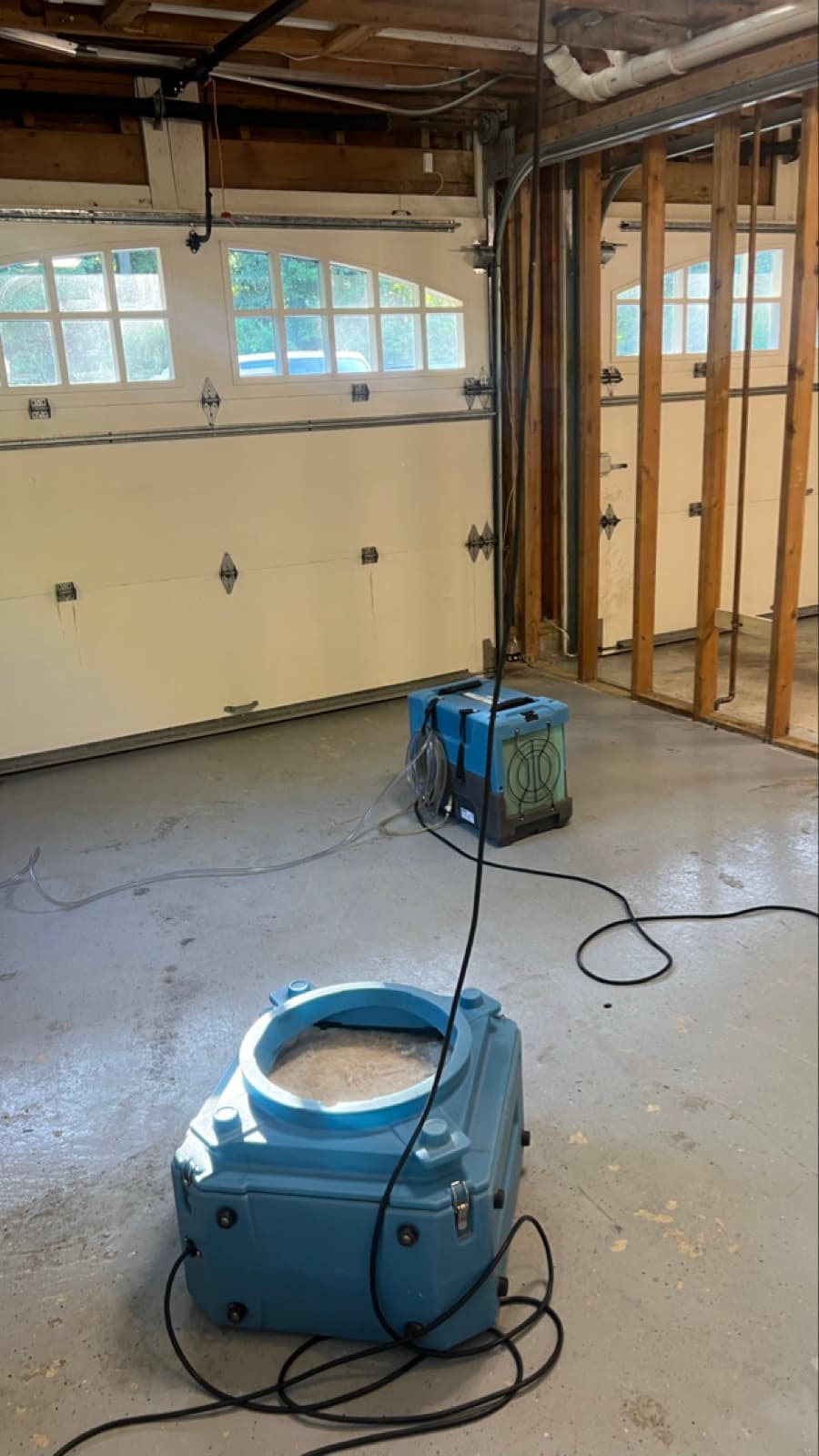
A HEPA negative air scrubber, sized to four air changes per hour, ran for five 24 hour periods through the work and the drying. The base cabinets came off the wall and went up on cribbing so the floor and the wall behind them were exposed. Every surface inside the sealed area was HEPA vacuumed, 912 square feet in all. The tile and grout got a heavy clean across 360 square feet, and 552 square feet of knotty pine paneling was wiped down. Then Benefect, an EPA registered botanical antimicrobial with no bleach in it, went on after the cleaning.
Four air movers and a commercial dehumidifier ran for three days, with moisture readings taken every day. The air movers came out once every monitored point read dry against an unaffected reference, and the cabinets went back only after the slab met that standard. The debris left in two pickup loads. One thing this job did not do is stop the water. It comes in from outside, and that is a separate repair for a foundation or drainage contractor. It has to be handled, or the growth comes back.
Scope of Damage
Tile and Grout Floor
SevereWhite growth across the tile and along the grout lines where the rain water sat. 360 square feet heavy cleaned, then treated with a botanical antimicrobial.
Knotty Pine Paneling
ModerateDark staining at the floor line. 552 square feet of paneling wiped down inside the sealed area, measured around the perimeter at a seven foot ceiling.
Behind the Base Cabinets
ModerateThe floor and the wall behind the cabinets, where water sits and nobody sees it. The cabinets were detached and set on cribbing so that area could be cleaned and dried.
Air in the Rest of the House
LightCleaning moldy surfaces puts particles in the air. Critical barriers covered the heating and cooling registers and HEPA negative air ran for five 24 hour periods.
How We Solved It
- 1
Sealed Off Under Negative Air
Six mil poly containment with an airlock and a zippered entry door, critical barriers over the registers, and a HEPA negative air scrubber sized to four air changes per hour.
- 2
Base Cabinets Detached
The base cabinets came off the wall and went up on cribbing, so the floor and the wall behind them were exposed.
- 3
HEPA Vacuumed and Scrubbed
Every surface inside the sealed area HEPA vacuumed, 912 square feet in all, including the area behind the cabinets.
- 4
Cleaned, Then Treated
A heavy clean of 360 square feet of tile and grout and a wipe down of 552 square feet of knotty pine paneling, then Benefect, a botanical antimicrobial with no bleach, applied after the cleaning.
- 5
Dried to a Measured Standard
Four air movers and a commercial dehumidifier for three days with daily moisture readings. The air movers came out when every point read dry against an unaffected reference, and the cabinets went back after that.
Tools & Equipment Used
David on This Job
White growth on a tile floor after a wet vac cleanup. What was actually happening?
The rain water sat on the slab before it was vacuumed up, and tile over concrete holds moisture in the grout. In a basement that stays humid, the growth came up along the grout lines first. That is what the homeowner was seeing.
Why detach the base cabinets instead of cleaning around them?
Because the floor and the wall behind them are where the water went. You cannot HEPA vacuum and scrub what you cannot reach. We set them on cribbing, cleaned behind them and reset them once the slab met the dry standard.
Why five days of negative air for a cleaning job?
The scrubber runs through the work days and the drying days. Cleaning growth puts particles in the air, and the air movers and dehumidifier run for three days after. Keeping the sealed area under HEPA filtered negative air the whole time is what keeps the rest of the house out of it.
What happens if the water comes in again?
The growth comes back. We cleaned and treated the room and dried it to the reference readings, but the water entry from outside is a foundation or drainage repair, and that was not part of this job. I said that plainly in the proposal.
Questions Homeowners Ask
Why did mold grow after the water was vacuumed up and a dehumidifier was running?
A wet vacuum takes the standing water, not the water that has gone into the grout and into the bottom of the paneling and cabinets. A household dehumidifier dries the room air slowly, and the floor stayed damp long enough for growth to bloom. Here it showed as white growth across the tile and along the grout lines.
Why were the base cabinets taken off the wall?
The floor and the wall behind base cabinets are where water sits and nobody sees it. On this job the cabinets were detached and set on cribbing so that area could be HEPA vacuumed, cleaned and dried. They went back only after the slab met the dry standard, measured against an unaffected reference.
Can knotty pine paneling be cleaned instead of torn out?
On this job the scope was cleaning. The knotty pine was HEPA vacuumed and wiped down inside the sealed area, 552 square feet measured around the room at a seven foot ceiling, where the staining at the floor line was. Benefect, a botanical antimicrobial with no bleach in it, went on after the cleaning.
Does this stop water from getting into the basement again?
No. The water comes in from outside, and that is a separate repair for a foundation or drainage contractor. It was not part of this job, and until it is handled the growth can come back. No mold testing, lab sampling or clearance testing was part of this job either.
Do you serve Amherst and Western Massachusetts?
Yes. Green Restoration serves Amherst, Hadley, Northampton, South Hadley, Easthampton and Springfield for mold remediation, water damage cleanup and basement work. David Megeneishvili, who led this job, is IICRC AMRT and WRT certified. We are insured and BBB A+ Rated. Call (833) 970-2121 for a free estimate.
Amherst is served by
Green Restoration of Western Mass
Available 24 / 7 for emergency response