Basement Mold Remediation in Bethel Where the Contents Were Cleaned, Not Discarded
 1 / 5
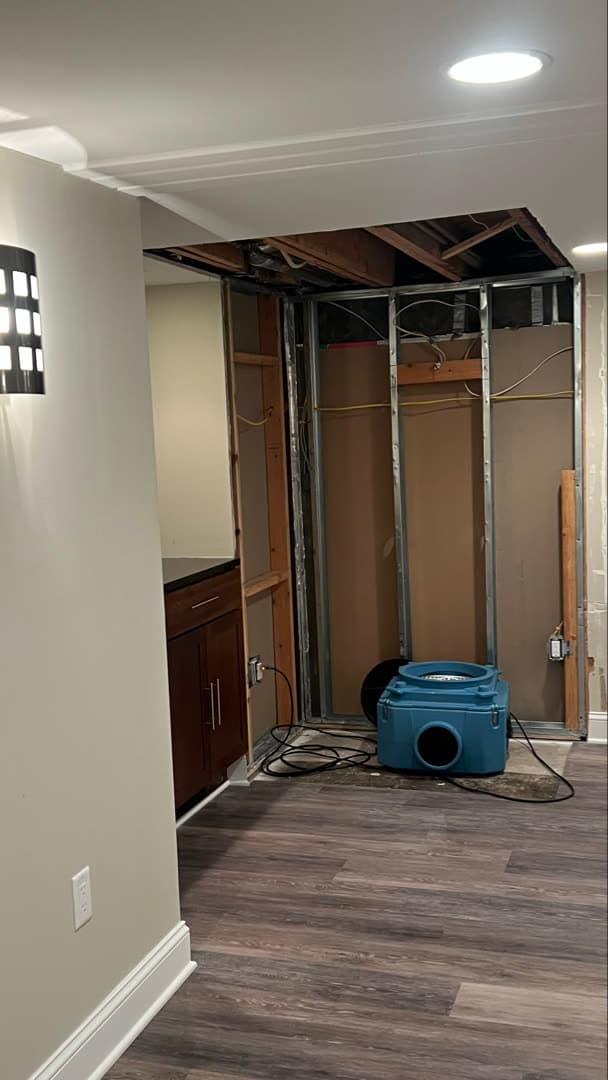
1 / 5At the opening edge. What is visible from the room is the least informative surface in a finished basement, which is why the wall had to come open to scope the job honestly.
See How the Work Was Done
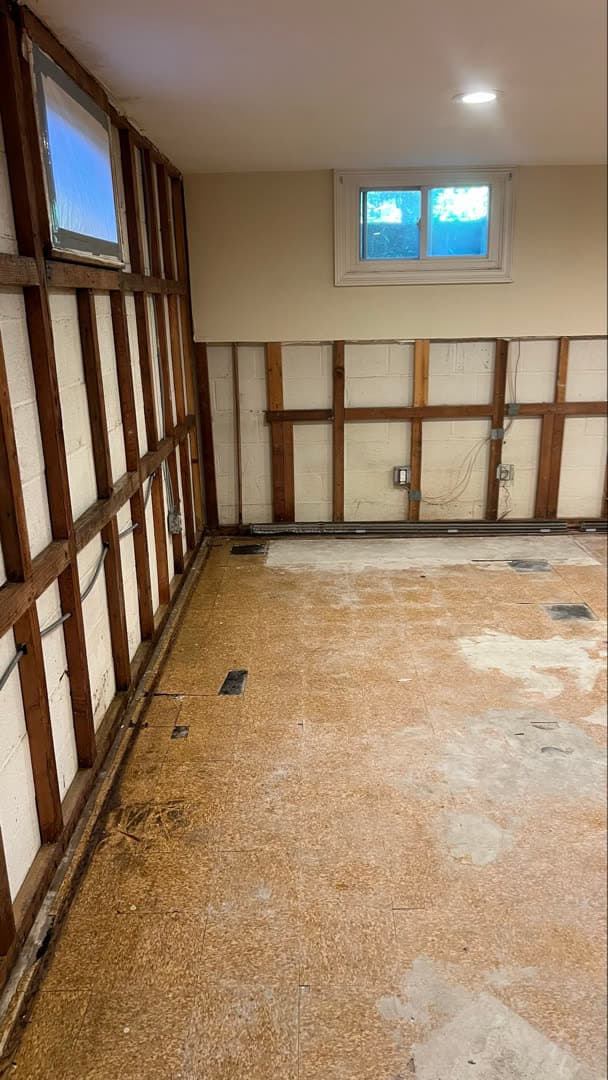
Real photos from this Bethel job: mold behind the finished wall, the back of a removed board, the wall opened low, and the contents cleaned rather than discarded.
What Happened
The photograph that explains this job is the one of a single board lying face up on the floor. The room side of that board looked like a normal finished basement wall. The back of it did not. That is the whole difficulty with mold in a finished basement: the surface a homeowner can see is the one surface that tells you the least. The scope was deliberately narrow on demolition and deliberately wide on cleaning. 75 square feet of drywall came out, chosen low on the wall where the moisture had been, along with 75 square feet of affected insulation behind it.
Nothing beyond that was removed, because nothing beyond that needed to be. What was exposed was then treated as a cleaning problem rather than a removal problem: 75 square feet of stud wall cleaned heavy, and the same 75 square feet run with an industrial HEPA vacuum to lift spores off the framing rather than smear them along it. About four planks of laminate floor came up as well, recorded in the crew note rather than as a large flooring line, because that was the actual extent of it.
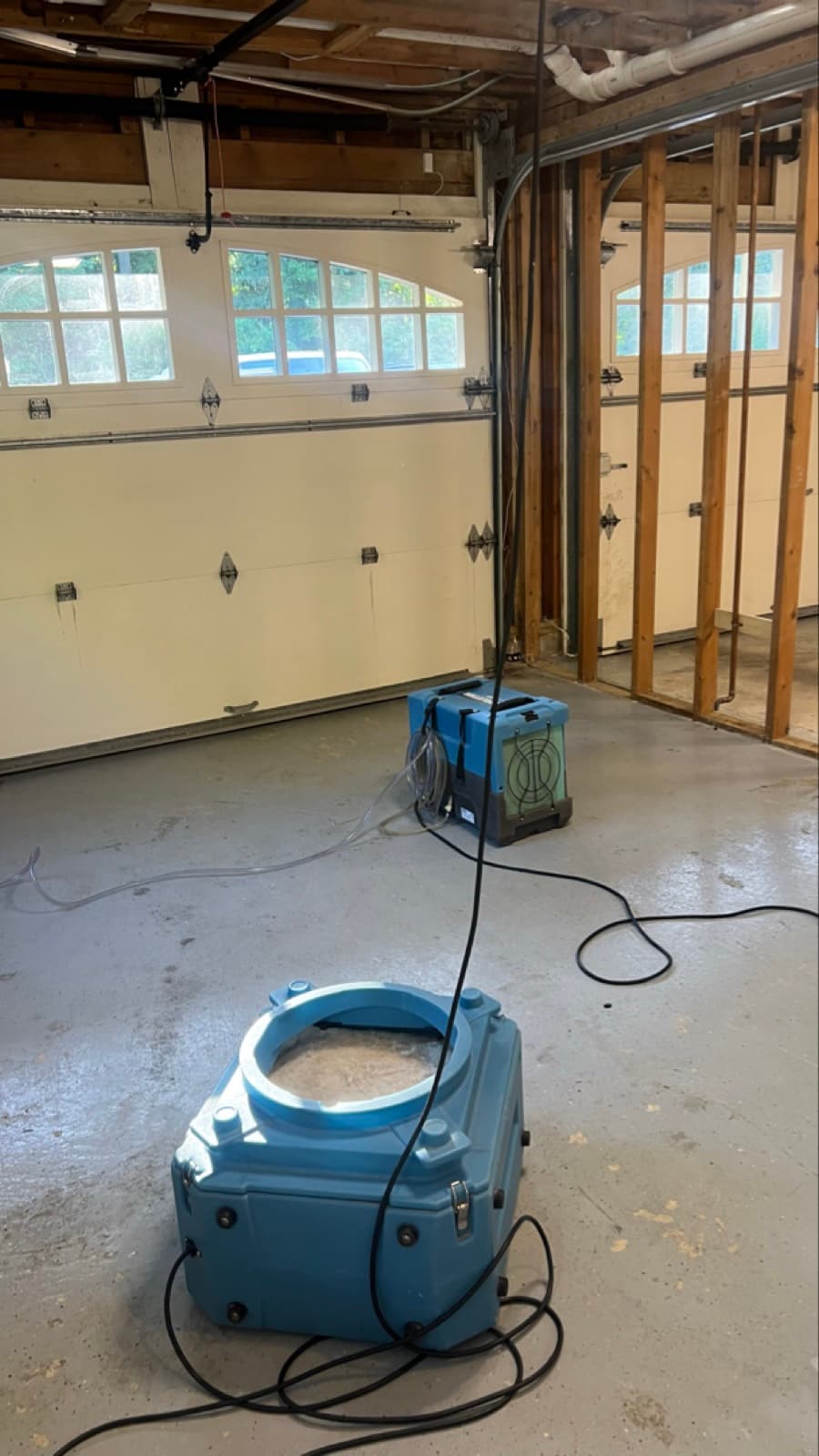
Containment was proportionate to the work. 180 square feet of barrier, two zipper doors, 120 square feet of floor protection, three 24 hour negative air periods and 25 linear feet of lay flat ducting to carry the scrubber exhaust out of the space. The largest single line on this project, at $2,250, was not demolition and not equipment. It was two contents cleaning technicians HEPA vacuuming and cleaning what was stored in that basement. That is a choice worth naming, because the cheaper path is always to call contents unsalvageable and dispose of them.
Here the contents were cleaned and kept, the affected areas were hand wiped with an antimicrobial where the growth was visible, and 720 square feet received a plant based antimicrobial agent. The crew closed the job with a signed completion form. What was not done should also be clear. No testing, no air sampling and no clearance testing were performed. No new drywall, insulation or flooring was installed, so the basement was handed back cleaned and opened rather than rebuilt.
Scope of Damage
Finished Basement Wall
ModerateGrowth on the concealed back face of the wall boards rather than the room side. 75 square feet was opened low, where the moisture had been.
Wall Insulation
Moderate75 square feet of wet or mold affected insulation came out with the wall opening and left the property as debris.
Stud Framing
LightThe exposed framing was cleaned heavy across 75 square feet and run with an industrial HEPA vacuum rather than being removed.
Laminate Flooring
LightAbout four planks were lifted, recorded in the crew notes. The extent was small enough that no flooring line was billed.
Stored Contents
LightContents in the basement were HEPA vacuumed and cleaned by two technicians rather than being discarded. This was the largest single line on the project.
How We Solved It
- 1
Contain And Protect
180 square feet of containment barrier with two zipper doors and 120 square feet of floor protection, sized to the work rather than to the room.
- 2
Negative Air With Exhaust Run
Three 24 hour negative air periods with 25 linear feet of lay flat ducting, so scrubber exhaust was carried out of the basement rather than recirculated in it.
- 3
Open Low, Not Wide
75 square feet of drywall removed where the moisture had been, with the affected insulation behind it. Nothing beyond the affected area was demolished.
- 4
Clean The Framing
Stud walls cleaned heavy and run with an industrial HEPA vacuum across 75 square feet, lifting spores off the framing instead of spreading them along it.
- 5
Clean The Contents
Two contents technicians HEPA vacuumed and cleaned what was stored in the basement. At $2,250 this was the largest line on the job, and it is the line most quotes replace with disposal.
- 6
Spot Wipe And Treat
Antimicrobial hand wipe applied to visible mold areas, then a plant based antimicrobial agent across 720 square feet.
- 7
Sign Off
The crew closed the project with a signed job completion form, recorded in the job notes.
Tools & Equipment Used
Questions Homeowners Ask
Why open a finished basement wall to find mold?
Because the room side of a finished wall is the surface that tells you least. On this Bethel project the visible wall looked ordinary while the concealed back face of the same board carried heavy growth. Opening a limited area low, where moisture collects, is how the real extent gets scoped without demolishing a room that does not need it.
Can basement contents be saved after mold, or do they have to be thrown out?
Many can be cleaned. On this project two contents technicians HEPA vacuumed and cleaned what was stored in the basement, and at $2,250 that was the single largest line on the job. Disposal is usually the cheaper path for the contractor. Ask specifically whether contents cleaning is in your quote or whether contents are being written off.
Why clean stud framing instead of removing it?
Framing is structural and is usually salvageable when growth is surface level. Here 75 square feet of stud wall was cleaned heavy and run with an industrial HEPA vacuum, which lifts spores off the wood rather than smearing them along it. Removing sound framing adds cost and rebuild scope without improving the outcome.
What is lay flat ducting for on a mold job?
It carries the exhaust from a negative air scrubber out of the work area, so filtered air leaves the space instead of recirculating inside it. This project used 25 linear feet across three 24 hour negative air periods. Without it a scrubber in a closed basement is moving the same air in a loop.
Was the basement rebuilt after the mold work?
No. No new drywall, insulation or flooring was installed on this project, so the basement was handed back cleaned and opened rather than finished. Reconstruction is a separate scope and is quoted separately. Nothing on this page should be read as a rebuild.
Do you serve Bethel and Fairfield County?
Yes. Green Restoration serves Bethel and towns across Fairfield County for mold remediation, water damage, crawl space cleaning and attic work. Our crews are IICRC certified, licensed and insured, and BBB A+ Rated. Call (203) 674-9573 for a free estimate.
Bethel is served by
Green Restoration of Fairfield County
Available 24 / 7 for emergency response