Crawl Space Mold Remediation Across 770 Square Feet in Fairfield
 1 / 4
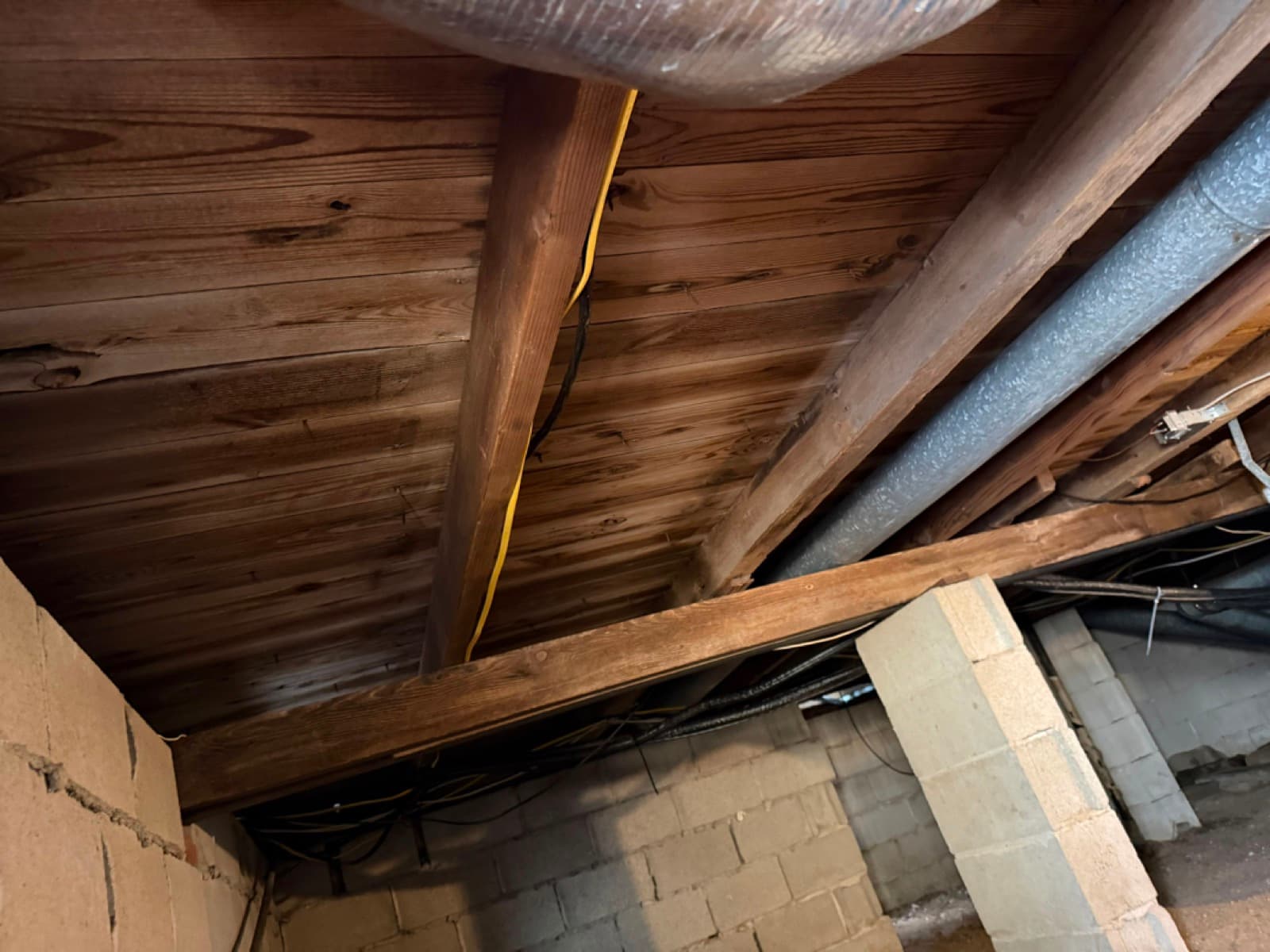
1 / 4The condition found. Growth on the joist system and the underside of the subfloor, across the full 770 square foot footprint.
See How the Work Was Done
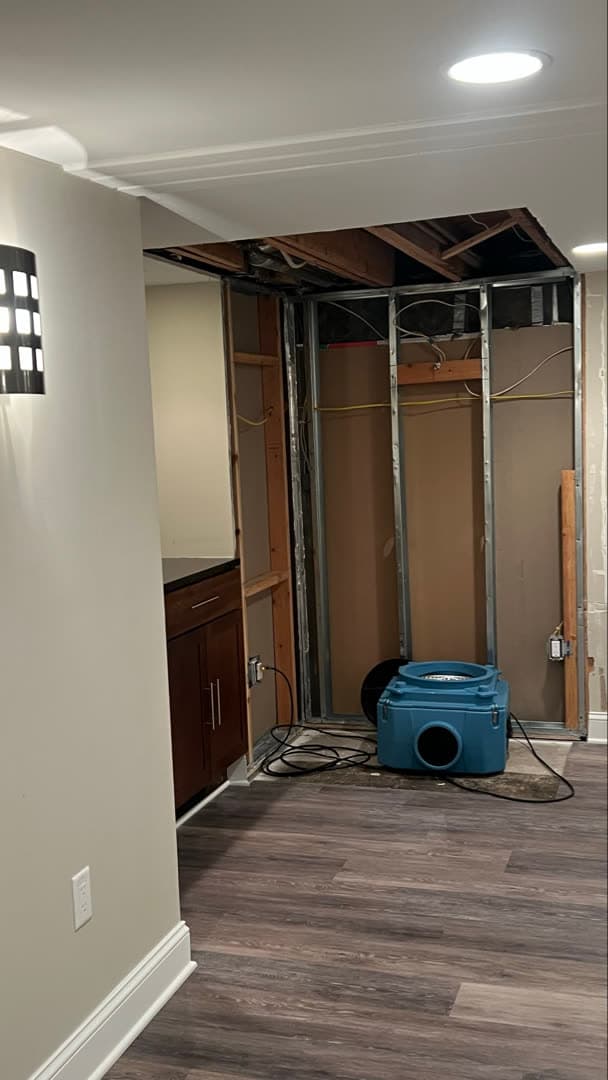
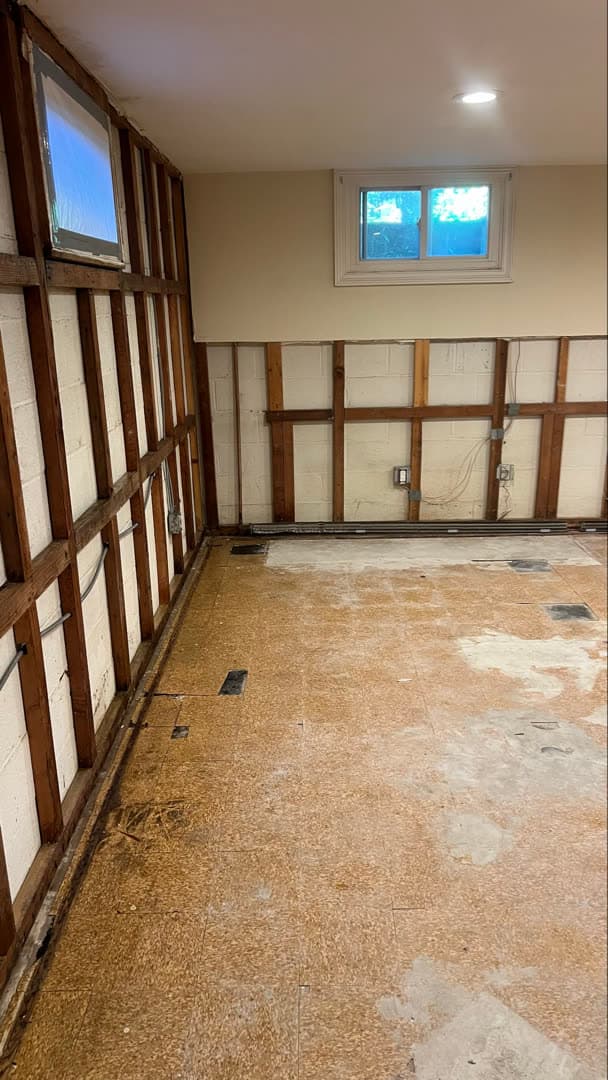
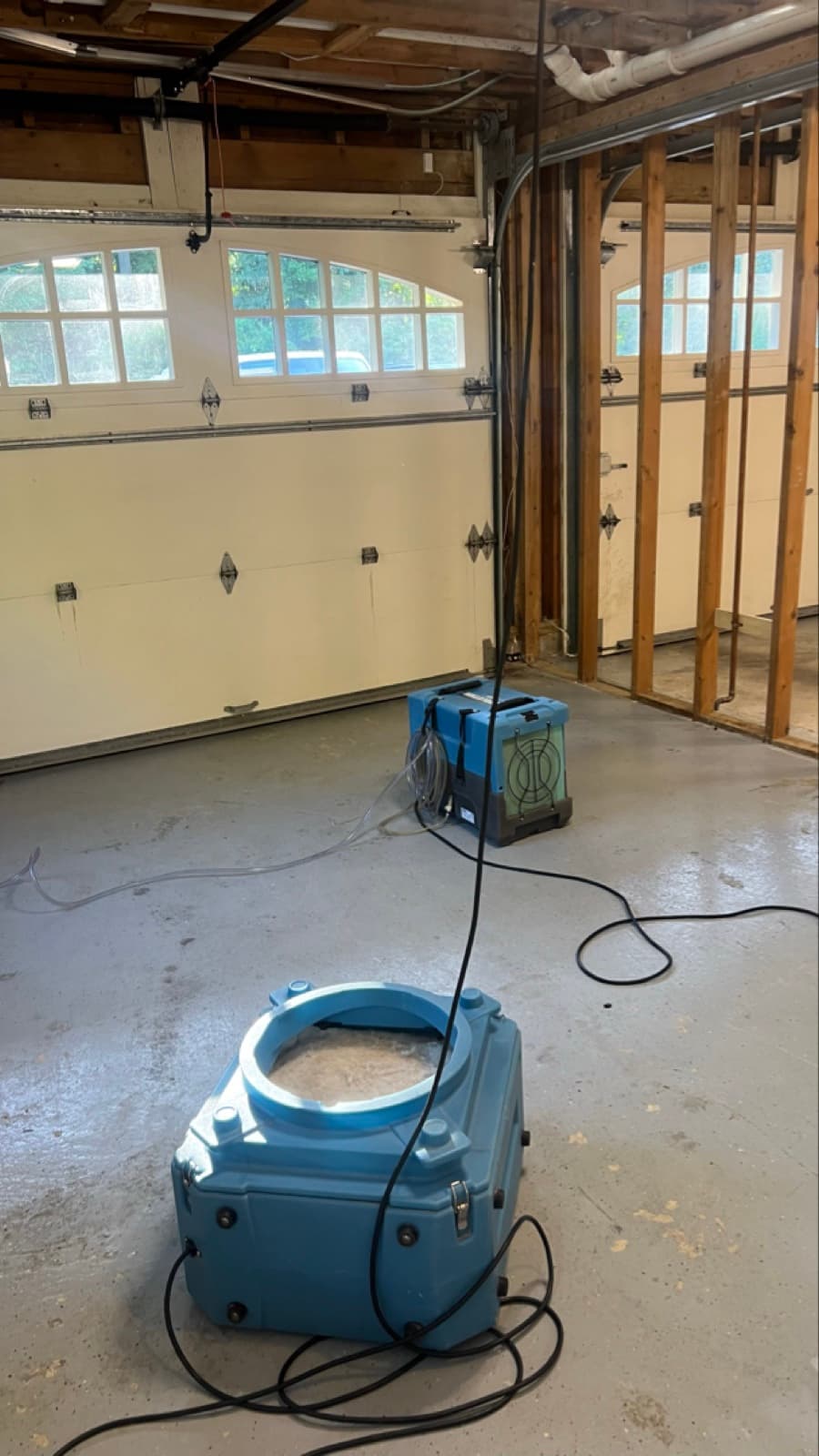
Real photos from this Fairfield crawl space: the mold on the joist system, the torn batting and duct runs, the filtration running, and the framing after HEPA vacuuming.
What Happened
A crawl space is the part of a house nobody looks at until something makes them look. Under this Fairfield home it ran the full footprint, 770 square feet of exposed joists and subfloor sheathing over a dirt floor, with duct runs and batting threaded through the framing. The growth was on the wood. That distinction sets the entire job, because mold on a structural surface cannot be bagged and carried out the way a wet carpet can. The joists hold the house up. They stay.
So the work is cleaning, not removal, and the standard for cleaning a joist system is physical: you take the growth off the wood by hand, and you filter what you disturb out of the air while you do it. The sequence was containment first. The crawl space was isolated and the crew worked the job in full protective equipment, respirators with N95 filtration, eye protection, Tyvek suits and gloves, because disturbing a mold colonised joist system puts spores in the air by design.
HEPA negative air scrubbers were installed to hold the work area under negative pressure and capture airborne spores across the working period, and large LGR dehumidifiers ran alongside them to pull the relative humidity down and reduce the moisture content in the building materials themselves. Both ran for four 24 hour periods. That matters more than it sounds: a crawl space that gets cleaned but stays humid is a crawl space that will be cleaned again, so lowering the moisture content of the wood is part of the remediation, not an afterthought.
With containment holding and the air under control, the crew HEPA vacuumed 770 square feet of exposed joist system and sheathing, working the framing bay by bay so that growth left the space inside a sealed filter rather than being redistributed through it. Only after that physical cleaning was complete was a plant based antimicrobial applied, fogged across the same 770 square feet with a ULV cold fogger so it carried into the gaps and shadowed faces of the framing that a sprayer cannot reach. It is worth being exact about where this scope stopped, because on this job the paperwork and the work are not the same document.
The quote carried a standard cover message describing insulation and debris removal. Those charges were struck before the job was sold, and the homeowner cleared the crawl space herself as the agreed precondition for the crew starting. Green Restoration did not remove or dispose of insulation or debris here, and this page does not claim it. Beyond that, no encapsulation and no vapor barrier were part of this scope, no reconstruction followed, and no mold testing or post remediation clearance was sold. Encapsulating a crawl space is a separate decision that belongs after remediation, not bundled into it.
Scope of Damage
Joist System and Subfloor Sheathing
SevereMold growth across the exposed framing and the underside of the subfloor. 770 square feet was HEPA vacuumed by hand and then treated with a plant based antimicrobial.
Crawl Space Air
ModerateDisturbing a mold colonised joist system releases spores by design, so the space was held under HEPA negative air pressure for four 24 hour periods while the work ran.
Relative Humidity and Material Moisture
ModerateLarge LGR dehumidifiers ran for four 24 hour periods to bring indoor relative humidity down and reduce the moisture content held in the building materials.
Duct Runs and Batting
LightTorn batting and duct runs threaded through the framing. Insulation removal and disposal were struck from this scope and are not claimed. The homeowner cleared the space before the crew arrived.
How We Solved It
- 1
Containment and Protective Equipment
The work area was isolated before anything was disturbed, and the crew worked in respirators with N95 filtration, eye protection, Tyvek suits and gloves for the duration.
- 2
HEPA Negative Air Filtration
Negative air scrubbers with HEPA filtration held the crawl space under negative pressure and captured airborne mold and bacteria spores, running across four 24 hour periods.
- 3
LGR Dehumidification
Large LGR dehumidifiers ran alongside the scrubbers for four 24 hour periods to bring relative humidity to a suitable level and reduce the moisture content in the building materials.
- 4
HEPA Vacuuming the Joist System
770 square feet of exposed joists and subfloor sheathing was HEPA vacuumed by hand, bay by bay, so growth left the space inside a sealed filter instead of being redistributed through it.
- 5
Plant Based Antimicrobial Fogging
After the physical cleaning was complete, a plant based antimicrobial was applied across the same 770 square feet with a ULV cold fogger, carrying into the shadowed faces and gaps in the framing that a sprayer cannot reach.
- 6
Equipment Set Up and Take Down
Delivery, placement and removal of the negative air equipment, dehumidification and safety gear across the working period.
Tools & Equipment Used
Questions Homeowners Ask
Why was the mold cleaned off the joists instead of removed with the material?
Because the joists are structural. Mold on a carpet or on wet batting leaves the building with the material, but mold on a joist system is growth on the framing that holds the house up, so the framing stays and the growth is taken off it. IICRC S520 treats that as a physical cleaning job: HEPA vacuum the surface, capture what you disturb, then treat what is left.
What does HEPA negative air actually do in a crawl space?
It holds the work area at lower pressure than the rest of the house and pulls the air inside it through a HEPA filter before exhausting it. That does two things at once: airborne spores released by the cleaning get captured rather than settling, and the pressure difference stops contaminated air migrating up into the living space through floor penetrations while the work is running.
Why run dehumidifiers on a mold job when nothing flooded?
Because humidity is what let the growth start. Large LGR dehumidifiers were run for four 24 hour periods to bring the relative humidity down and reduce the moisture content held in the wood itself. Cleaning a crawl space and leaving it damp just resets the clock. Lowering the moisture content of the framing is part of the remediation, not an extra.
What is a ULV cold fogger and why use one instead of spraying?
A ULV cold fogger breaks the antimicrobial into a very fine mist that stays suspended and carries into gaps, shadowed faces of framing and other areas a sprayer cannot physically reach. It is applied after the HEPA vacuuming, never instead of it. The physical cleaning removes the growth; the fog treats what the vacuum could not get to.
Was the insulation removed from this crawl space?
No, and it is worth being clear about that. Debris removal and dumpster charges were struck from this quote before the work was sold, and the homeowner cleared the crawl space herself as the agreed condition for the crew starting. Green Restoration did not remove or dispose of insulation or debris on this job.
Does this remediation mean the crawl space is now encapsulated?
No. Encapsulation is a separate scope: a sealed vapor barrier system across the floor and walls, usually with insulation and a dedicated dehumidifier. None of that was part of this job. Remediation deals with the growth that is there now. Encapsulation is a decision about keeping the space dry going forward, and it belongs after remediation rather than bundled into it.
Was the crawl space tested for mold before or after the work?
Not on this job. No air sampling, laboratory testing or post remediation clearance was sold here, and none is claimed on this page. Where a homeowner wants independent verification, clearance testing is arranged through a third party hygienist so the company performing the remediation is not also grading it.
Will homeowners insurance cover crawl space mold remediation in Connecticut?
It depends on the cause. Mold that follows a sudden, accidental event such as a burst supply line is often covered, while mold from long term humidity or ground moisture in a crawl space is usually treated as a maintenance issue and excluded. We submit our scope of work and supporting documentation directly to your insurer. We are not licensed public adjusters and do not negotiate claims on your behalf.
Fairfield is served by
Green Restoration of Stratford
Available 24 / 7 for emergency response