Living Room Ceiling Mold Remediation in a Fairfield Home
 1 / 6
1 / 6Heavy mold growth across the ceiling sheathing and joists of a Fairfield, CT living room before remediation
See How the Work Was Done
Real photos from this Fairfield job: the moisture reading, the mold above the drywall, the sealed containment, and the cleaned joist system.
What Happened
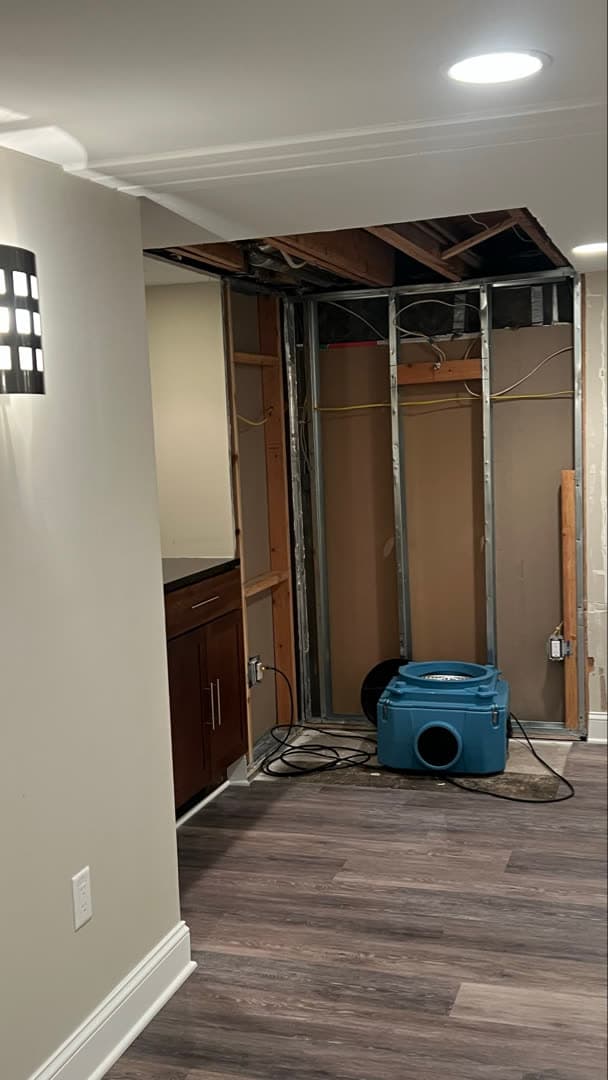
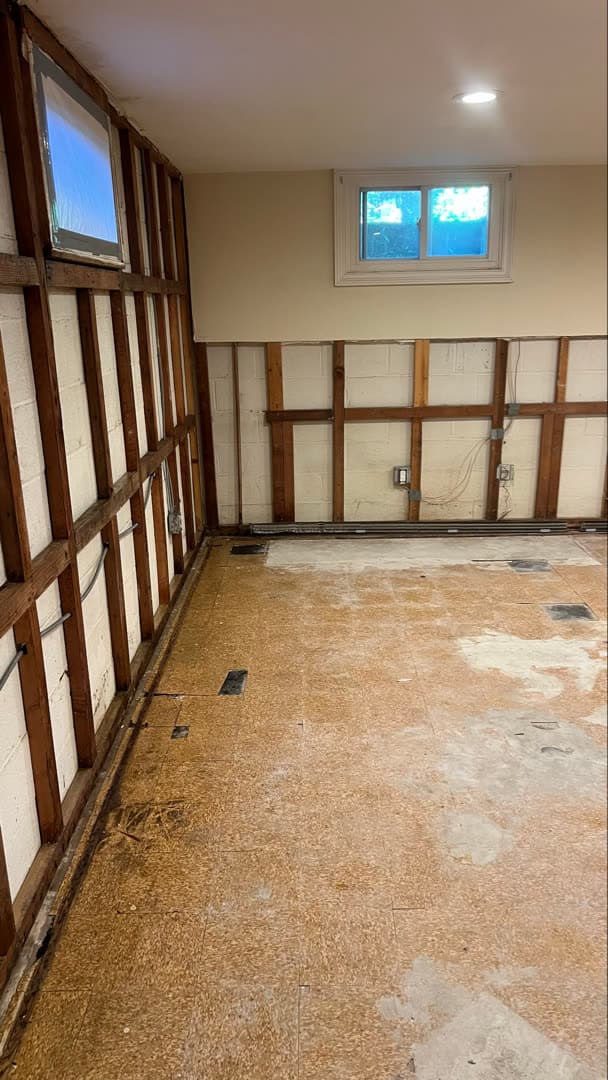
From below, this Fairfield living room ceiling looked like a stain. Behind the drywall it was worse: mold had spread across the sheathing and down the sides of the joists where water had been tracking above the room. The crew read the ceiling and the surrounding walls with a moisture meter first, so the removal followed the actual wet area instead of a guess. Because the home was occupied and full of contents, the job was built around containment before anything came down.
Floor protection went over 86 square feet of finished flooring, contents were moved and reset, and 240 square feet of poly containment went up with a decontamination chamber and two zipper doors so the crew could enter and exit without carrying spores into the rest of the home. A HEPA air scrubber ran the work zone under negative pressure and an LGR dehumidifier pulled the humidity down while the ceiling was open. 56 square feet of affected ceiling drywall and 55 square feet of insulation were cut out and bagged inside containment.
The exposed joist system was then HEPA vacuumed in detail, bio cleaned with a plant-based antimicrobial, treated for residual staining, and sealed with one coat of an antimicrobial coating rated for humid conditions. Debris left the home bagged, through the airlock, in one truckload.
Scope of Damage
Ceiling Sheathing & Joists
SevereHeavy mold growth across the sheathing and the joist faces above the living room, found once the drywall came down. 55 square feet of the joist system was cleaned, treated, and sealed.
Ceiling Drywall & Insulation
SeverePorous material that cannot be cleaned. 56 square feet of ceiling drywall and 55 square feet of insulation were cut out and bagged inside containment.
Occupied Living Space
ModerateAn occupied room full of contents directly under the work. 86 square feet of floor protection, contents manipulation, and a sealed airlock kept the rest of the home clean.
How We Solved It
- 1
Moisture Mapping
The ceiling and surrounding walls were read with a moisture meter before any material came down, so the removal followed the actual wet area rather than the visible stain.
- 2
Containment & Airlock
240 square feet of poly containment with a decontamination chamber and two zipper doors, plus 86 square feet of floor protection and contents moved clear of the work zone.
- 3
HEPA Negative Air & Dehumidification
A HEPA air scrubber held the work zone under negative pressure while an LGR dehumidifier brought the humidity down with the ceiling open.
- 4
Controlled Removal
56 square feet of mold affected ceiling drywall and 55 square feet of insulation cut out and bagged inside containment, in full PPE.
- 5
Clean, Treat & Seal
The exposed joists were HEPA vacuumed in detail, bio cleaned with a plant-based antimicrobial, treated for residual staining, then sealed with one coat of an antimicrobial coating rated for humid conditions.
Tools & Equipment Used
Marvin on This Job
The drywall looked fine. What tipped you off?
The stain was the clue, and the moisture meter told us the rest. Water running above a ceiling will travel along the framing and soak the wood well before it shows through the drywall. So we read the ceiling and the walls around it first, and the readings told us how big the real problem was before anything came down.
What was on the sheathing when the ceiling came down?
Heavy growth across the sheathing and down the sides of the joists, a lot more than that stain suggested from below. That is very typical when water has been tracking above a room for a while. The drywall and insulation came out, and the wood got HEPA vacuumed, cleaned, treated for the staining and sealed.
How do you protect the rest of the house while the family is living there during the work?
You build the job around the containment. Floor protection down, contents moved out of the way, plastic walls up with a decon chamber and zipper doors, and the air scrubber pulling the work area under negative pressure so air flows in, not out. Everything we cut out gets bagged inside, and it leaves through the airlock.
What should a Fairfield homeowner check on a ceiling under a bathroom or roof leak?
Any ring, yellowing, or soft spot on a ceiling under a bathroom or near the roofline deserves a second look, even if it is small and dry to the touch. Press on it gently; if it gives, there is water damage behind it. And do not just paint over a stain, because paint hides the sign without stopping what is causing it.
Questions Homeowners Ask
How does mold grow on a ceiling with no visible leak?
Water travels. A leak from a pipe, a fixture, a roof detail, or an appliance above the room runs along the framing and soaks the sheathing and joists long before it marks the drywall below. That is why this Fairfield ceiling looked like a small stain from the living room and showed heavy growth across the sheathing once it was opened.
Why open the ceiling instead of spraying the stain?
Mold grows into porous material, so drywall and insulation cannot be cleaned and have to come out. Spraying a ceiling only treats the surface you can reach and leaves the colonized sheathing above it untouched. IICRC S520 puts physical removal of contaminated material ahead of chemical treatment for exactly this reason.
Is mold remediation safe to do in an occupied home?
Yes, when containment does the work. This project used 240 square feet of sealed poly containment with a decontamination chamber and two zipper doors, floor protection over the finished flooring, and a HEPA air scrubber holding the work zone under negative pressure, so the removal never vented into the rest of the home.
What does sealing the joists actually do?
After the wood is HEPA vacuumed and bio cleaned, one coat of an antimicrobial coating goes on the exposed joist system. It encapsulates the cleaned surface and is formulated to hold up in humid conditions. It is applied after physical removal and cleaning, never instead of them, and it is not a substitute for fixing the moisture source.
How long does a ceiling mold remediation take?
A single room ceiling of this size is typically a two to three day job on site: one day to protect, contain, and set negative air, then removal, detailed HEPA vacuuming, cleaning, and the sealing coat. The variable is how far the water traveled above the ceiling, which is why the moisture mapping happens first.
Will homeowners insurance cover ceiling mold in Connecticut?
It depends on the cause. Mold that follows a sudden, accidental event such as a burst pipe is often addressed under the water loss, while mold from a slow, long term leak is usually treated as gradual and may be limited or excluded. We document the loss so you can review it with your agent. We work with insurance, but Green Restoration is independent and not on any insurer's panel. We are not licensed public adjusters and do not negotiate claims on your behalf.
Do you serve Fairfield, CT?
Yes. Green Restoration serves Fairfield and towns across Fairfield County for mold remediation, water damage, and crawl space work. Our crews are IICRC certified, licensed and insured, and BBB A+ Rated. Call (203) 742-0492 for a free estimate.
Fairfield is served by
Green Restoration of Stratford
Available 24 / 7 for emergency response