Whole House Mold Remediation in Farmington, Basement to Attic Across Nine Areas
 1 / 2
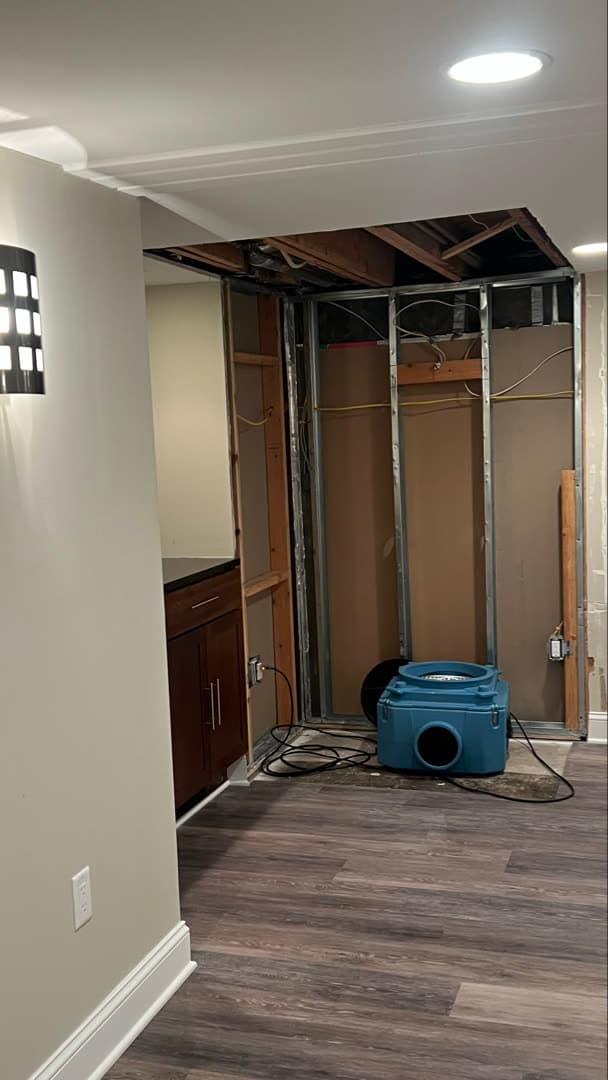
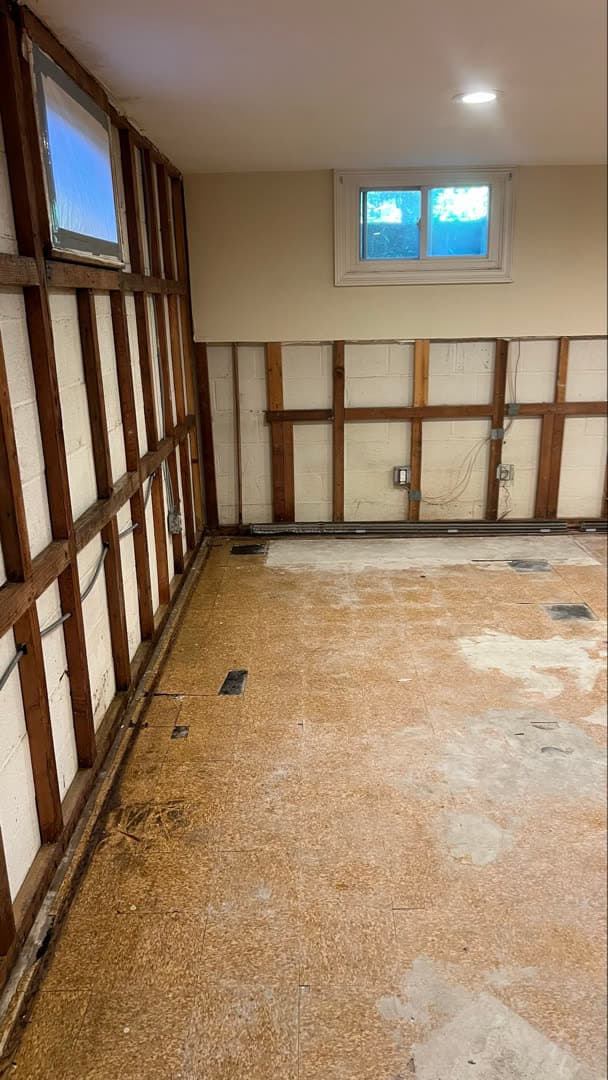
1 / 2The unfinished basement. Joist systems and stud walls like these carry the 3,840 square feet that was vacuumed, cleaned and then coated across this project.
What Happened
This project started as a mold inspection request and became the largest remediation on our Hartford County books. The quote is written room by room and the list is long: the unfinished basement and its concrete floor, the attic, the joist systems and stud walls throughout, the TV room in the finished basement, a first floor bedroom, a bathroom, a sunroom corner, the garage floor, and the ductwork insulation in the basement. Nine areas, worked as one continuous job.
Three numbers carry the whole scope, and they are the same number three times. 3,840 square feet HEPA vacuumed in detail. 3,840 square feet cleaned of visible growth using a peroxide based professional cleaner. 3,840 square feet then sealed with one coat of antimicrobial coating. Vacuum, clean, seal, over an identical footprint each time, in that order. The coating line alone is $11,097.60, and it is worth stating clearly that a coating applied over an uncleaned surface is decoration rather than remediation. The order is the value.
Alongside it, 2,765 square feet of wet or mold affected insulation was torn out and bagged, and a 30 yard dumpster took it away. The removals elsewhere were surgical rather than sweeping: 18 linear feet of drywall near a bedroom door, the baseboards in that room, a plinth block and roughly two feet by two feet of hardwood, a vanity toe kick lifted in a bathroom to inspect underneath, a corner of wood paneling in the sunroom, and 216 square feet of non salvageable fabric in the TV room. A house of this size could easily have been gutted. It was not.
Sixteen 24 hour negative air periods ran across the job inside 440 square feet of containment with five zipper doors, 240 square feet of floor protection and 35 linear feet of lay flat ducting. Sixteen periods is what it takes to hold pressure across a house being worked from the basement to the attic over an extended schedule. Contents were manipulated after hours so the household could keep functioning, and a final cleaning with antimicrobial covered 1,200 square feet of the finished basement including contents. One honest limitation.
This job was photographed as a walkthrough of the rooms in scope rather than as damage documentation, so only two images from it are publishable and there is no before and after pair. The scope above comes from the written quote rather than from photographs, and it is reproduced here because the documentation is unusually detailed even where the imagery is not.
Scope of Damage
Unfinished Basement And Attic
SevereThe two ends of the house. 2,765 square feet of wet or mold affected insulation torn out and bagged across both, with the concrete basement floor HEPA vacuumed and bio cleaned.
Joist Systems And Stud Walls
SevereThe structural surfaces carrying the 3,840 square feet of detailed HEPA vacuuming, cleaning and antimicrobial coating that define this scope.
Finished Basement And TV Room
Moderate216 square feet of non salvageable fabric removed, with a final clean and antimicrobial across 1,200 square feet including contents.
First Floor Bedroom
Moderate18 linear feet of drywall near the door, baseboards, a plinth block and roughly two feet by two feet of hardwood flooring removed.
Bathroom And Sunroom
LightA vanity toe kick lifted to inspect and address underneath, and a corner of wood paneling removed from the sunroom wall.
Garage And Basement Ductwork
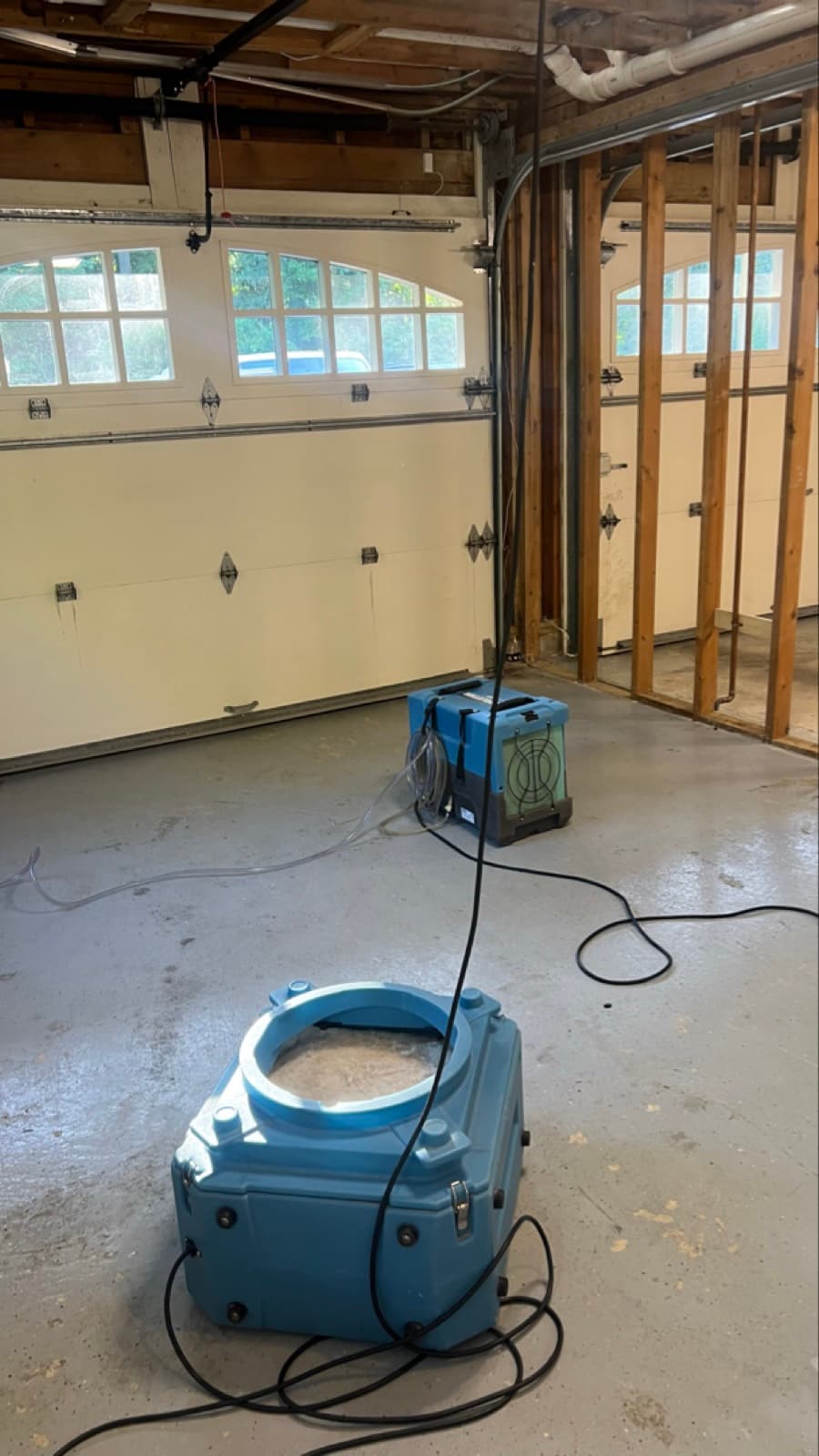
LightGarage floor and walls HEPA vacuumed and bio cleaned, and insulation removed from the basement ductwork and bagged.
How We Solved It
- 1
Contain A Whole House
440 square feet of containment with five zipper doors, 240 square feet of floor protection and 35 linear feet of lay flat ducting, because the work crossed nine areas on multiple levels.
- 2
Sixteen Negative Air Periods
Sixteen 24 hour periods held the working zones under negative pressure for as long as the house stayed open, which is what stops a basement scope contaminating a bedroom.
- 3
Remove The Insulation
2,765 square feet of wet or mold affected insulation torn out and bagged from the basement and attic, hauled away in a 30 yard dumpster.
- 4
Surgical Removals Elsewhere
Drywall by the linear foot, one plinth block, a small hardwood section, a vanity toe kick and a paneling corner. A house this size could have been gutted; it was not.
- 5
Vacuum, Then Clean, Then Seal
3,840 square feet HEPA vacuumed, the same area cleaned of visible growth with a peroxide based professional cleaner, then sealed with one coat of antimicrobial coating. Coating an uncleaned surface is decoration, not remediation.
- 6
Final Clean With Contents
1,200 square feet of the finished basement, including ceilings, walls, floors and contents, cleaned and sanitised with a plant based antimicrobial agent.
- 7
Work Around The Household
Contents manipulation was billed after hours so the family could keep using the house while nine areas were worked.
Tools & Equipment Used
Questions Homeowners Ask
What does a whole house mold remediation cost?
This Farmington project totalled $35,252.89 across nine areas, covering 3,840 square feet of vacuuming, cleaning and antimicrobial coating, 2,765 square feet of insulation removal, sixteen negative air periods and a 30 yard dumpster. Cost scales with treated square footage and how long containment has to be held, not with the number of rooms.
Why vacuum, clean and coat the same square footage three times?
Because they are three different operations. HEPA vacuuming lifts loose material into a sealed filter, cleaning removes what is bonded to the surface, and the coating is applied only once the surface is clean. Coating an uncleaned surface seals material in and produces a finish that looks resolved and is not.
Does a whole house job mean gutting the house?
Not necessarily. On this project the removals were deliberately surgical: 18 linear feet of drywall, one plinth block, roughly four square feet of hardwood, a vanity toe kick and a paneling corner. The large numbers are cleaning and coating, not demolition, which is the outcome most homeowners want.
Why sixteen negative air periods?
Because pressure has to be held for as long as the structure is open, and this house was worked from the basement to the attic across nine areas over an extended schedule. Negative air is priced against duration and the number of zones, not against how much material leaves the property.
Why does this page have only two photographs?
Because this job was photographed as a pre-work walkthrough of the rooms in scope rather than as damage documentation, and most of the set shows finished furnished rooms. Only two frames are publishable. Rather than pad the page, the scope here is reproduced from the written quote, which is unusually detailed.
Do you serve Farmington and Hartford County?
Yes. Green Restoration serves Farmington and towns across Hartford County for mold remediation, water damage mitigation and structural drying. Our crews are IICRC certified, licensed and insured, and BBB A+ Rated. Call (860) 222-9498 for a free estimate.
Farmington is served by
Green Restoration of Hartford
Available 24 / 7 for emergency response