Wood Paneling Off a Milford Basement Wall, Thirty Square Feet
 1 / 2
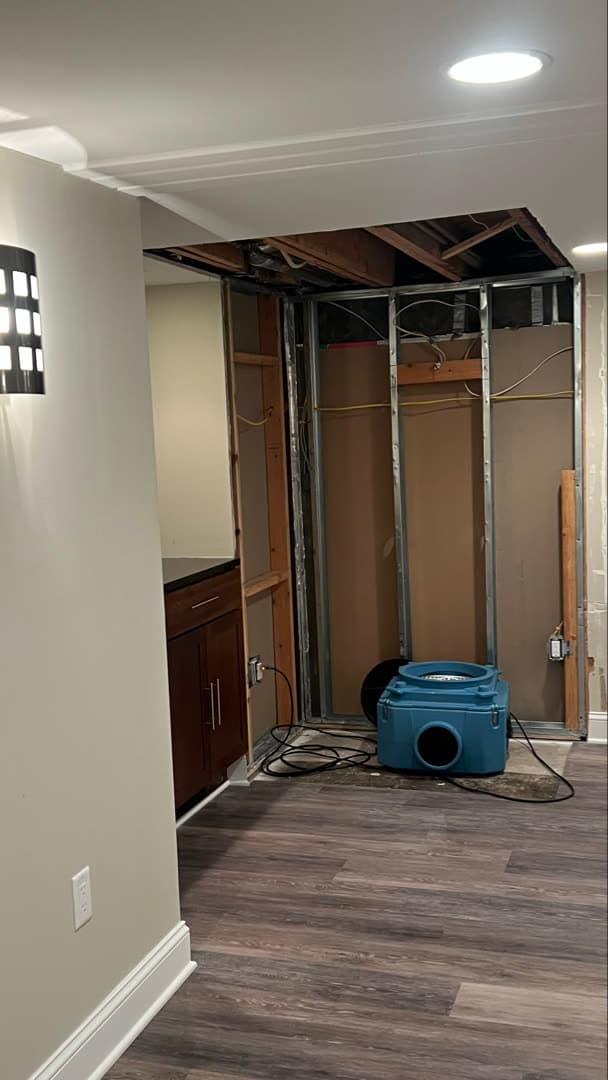
1 / 2The panelled wall. What sits behind paneling like this is the one surface in the room nobody has looked at, which is why removal is the first line on the scope.
What Happened
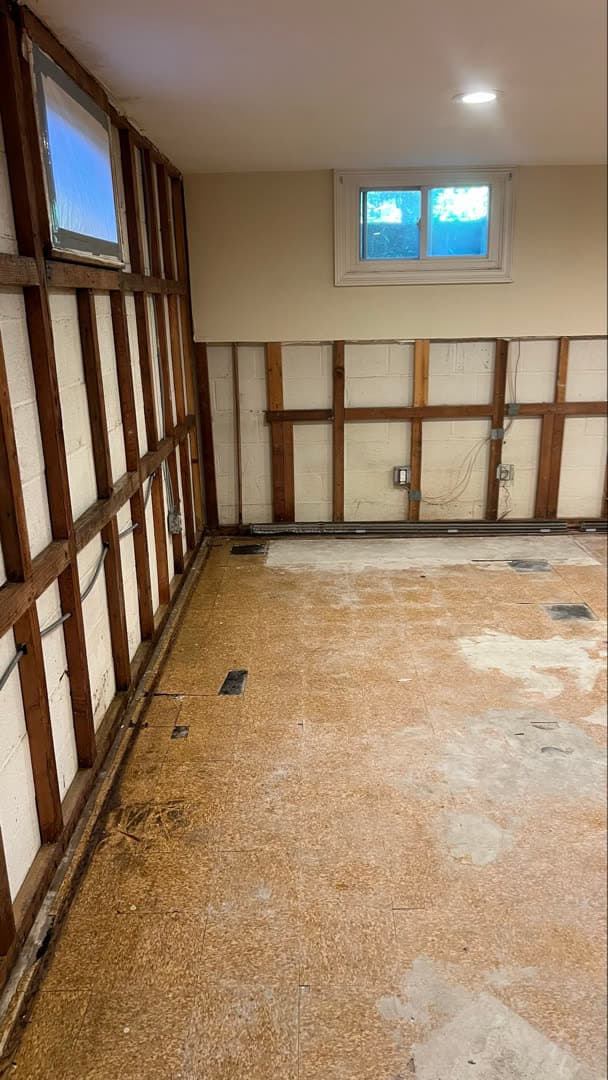
Wood paneling fixed to a basement wall creates a cavity nobody inspects. Warm moist air gets behind it, the masonry behind stays cool, and the gap between the two becomes the place where moisture condenses and stays. The paneling itself is not the problem, but it is the reason the problem goes unseen for years, and it is why removing it is usually the first line on a scope like this. Thirty square feet came off here. That number is small on purpose, matched to the affected run rather than to the wall.
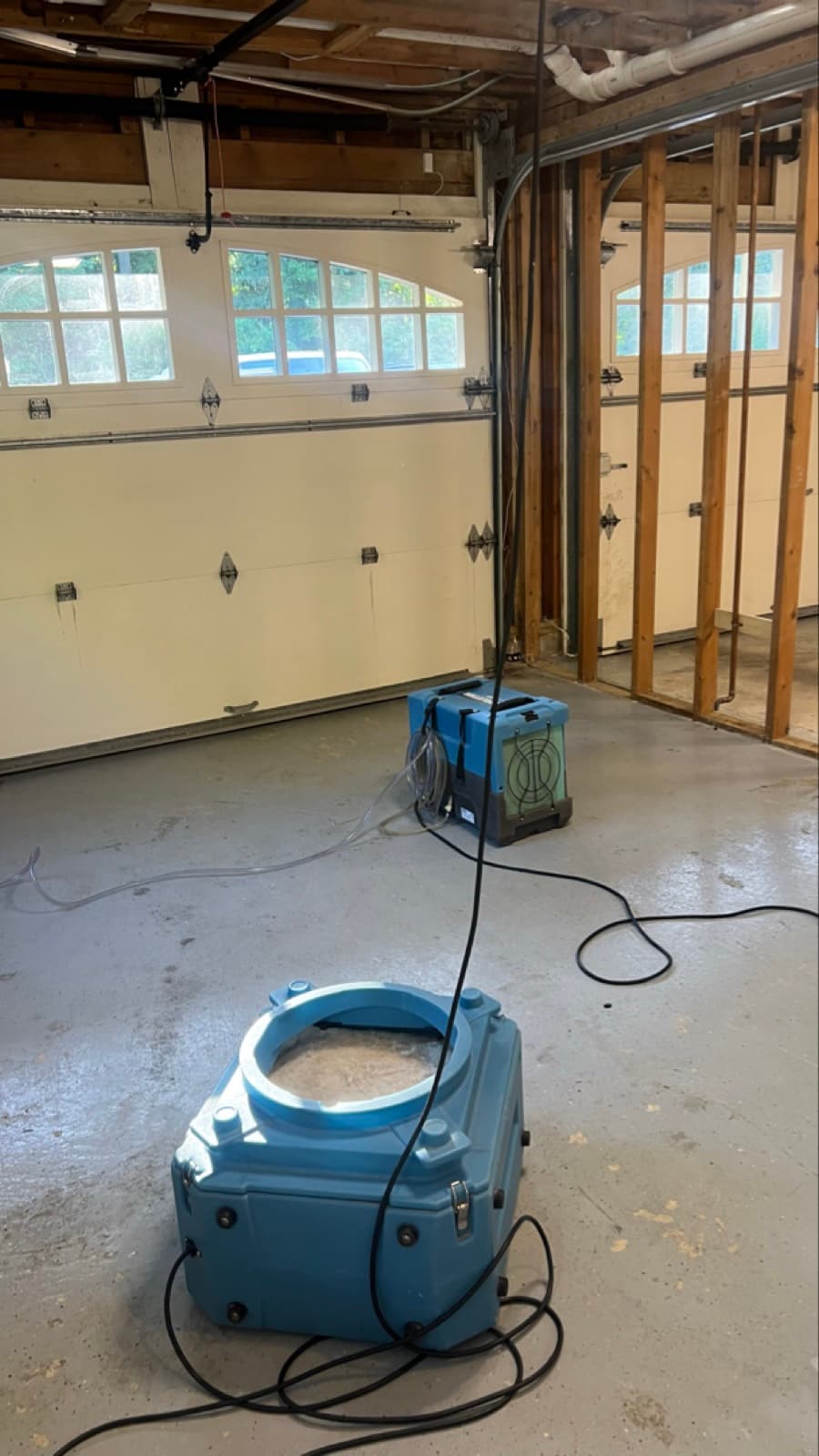
Behind and around it, 50 square feet of visible mold was cleaned and removed directly, and 250 square feet was HEPA vacuumed in detail, which is the area that actually needed attention once the paneling was off and the extent could be seen properly. A plant based antimicrobial agent was applied across 300 square feet. Four 24 hour negative air periods ran with an additional HEPA filter on the exhaust fan, inside 200 square feet of containment, and equipment was decontaminated per piece three times across the job.
In a basement where the affected material is being pulled off a wall in an enclosed space, that filtration is doing most of the protective work. Nothing was put back. No new paneling, drywall or insulation was installed, and no testing, air sampling or clearance testing was performed. The wall was handed back open and cleaned, which is the right state to leave it in until the moisture source behind it has been understood. Refinishing a basement wall before that question is answered simply rebuilds the same cavity.
Scope of Damage
Wood Panelled Wall
Moderate30 square feet of paneling removed, matched to the affected run rather than to the whole wall. Paneling creates an uninspected cavity where moisture condenses and stays.
Wall Surface Behind
Moderate50 square feet of visible mold cleaned and removed once the paneling was off and the extent could actually be seen.
Surrounding Basement
Light250 square feet HEPA vacuumed in detail and 300 square feet treated with a plant based antimicrobial agent.
How We Solved It
- 1
Contain First
200 square feet of containment before any paneling was disturbed, because pulling material off a wall in an enclosed basement releases everything behind it at once.
- 2
Four Negative Air Periods
Negative air scrubbers with an additional HEPA filter on the exhaust ran across four 24 hour periods, doing most of the protective work on a job of this kind.
- 3
Take Off Only The Affected Run
30 square feet of paneling removed, sized to the affected area rather than stripping the wall.
- 4
Clean What Is Revealed
50 square feet of visible mold cleaned and removed directly, with 250 square feet HEPA vacuumed in detail around it.
- 5
Treat And Decontaminate
300 square feet treated with a plant based antimicrobial agent, and equipment decontaminated per piece three times across the job.
Tools & Equipment Used
Questions Homeowners Ask
Why does mold grow behind basement wood paneling?
Paneling creates a cavity against cool masonry. Warm moist air gets behind it, condenses on the cold surface and has nowhere to dry to. The paneling is not the cause, but it hides the surface for years, which is why removal usually appears as the first line on a scope like this.
Does all the paneling have to come off?
Not usually. On this Milford project 30 square feet was removed, matched to the affected run rather than the whole wall. A scope that strips an entire basement should be able to justify why the whole area is affected rather than defaulting to it for convenience.
Should the wall be refinished afterwards?
Not until the moisture source is understood. No new paneling, drywall or insulation was installed on this project, so the wall was handed back open and cleaned. Refinishing before the cause is dealt with rebuilds the same uninspected cavity.
Why is the vacuumed area bigger than the removed area?
Because material released during removal does not stay at the wall. Here 30 square feet came off while 250 square feet was HEPA vacuumed and 300 square feet treated. The cleaning footprint should always exceed the demolition footprint on an enclosed job.
Do you serve Milford and New Haven County?
Yes. Green Restoration serves Milford and towns across New Haven County for mold remediation, water damage and crawl space cleaning. Our crews are IICRC certified, licensed and insured, and BBB A+ Rated. Call (203) 493-3677 for a free estimate.
Milford is served by
Green Restoration of Orange
Available 24 / 7 for emergency response