Basement Cleaned in Place in Ridgefield, 2,100 Square Feet and Nothing Torn Out
 1 / 5
1 / 5The joists as found. Surface growth on structural wood, which is a cleaning problem rather than a removal problem when the timber itself is sound.
See How the Work Was Done
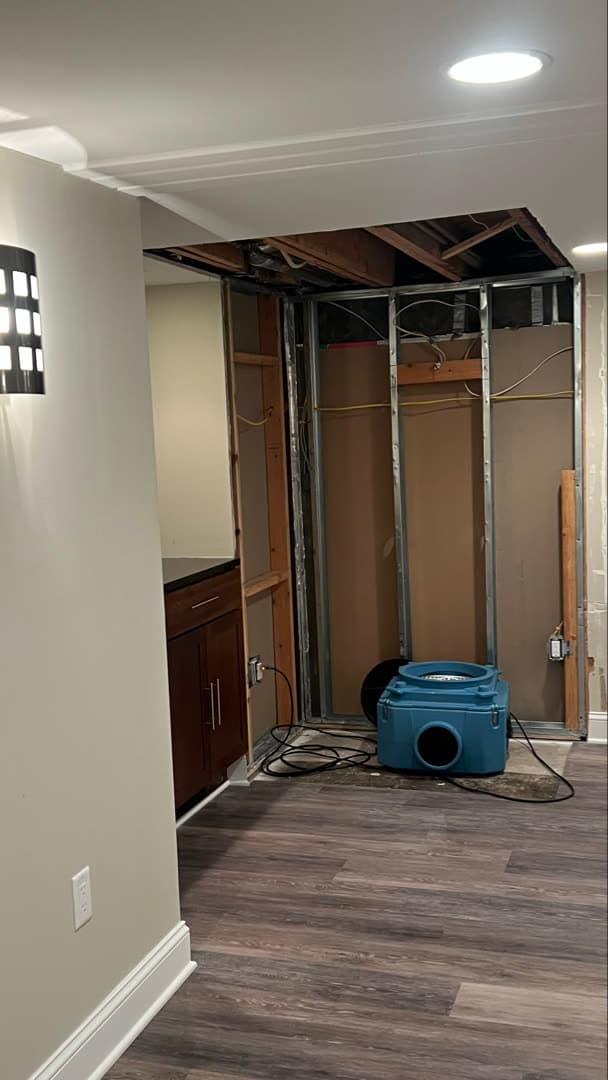
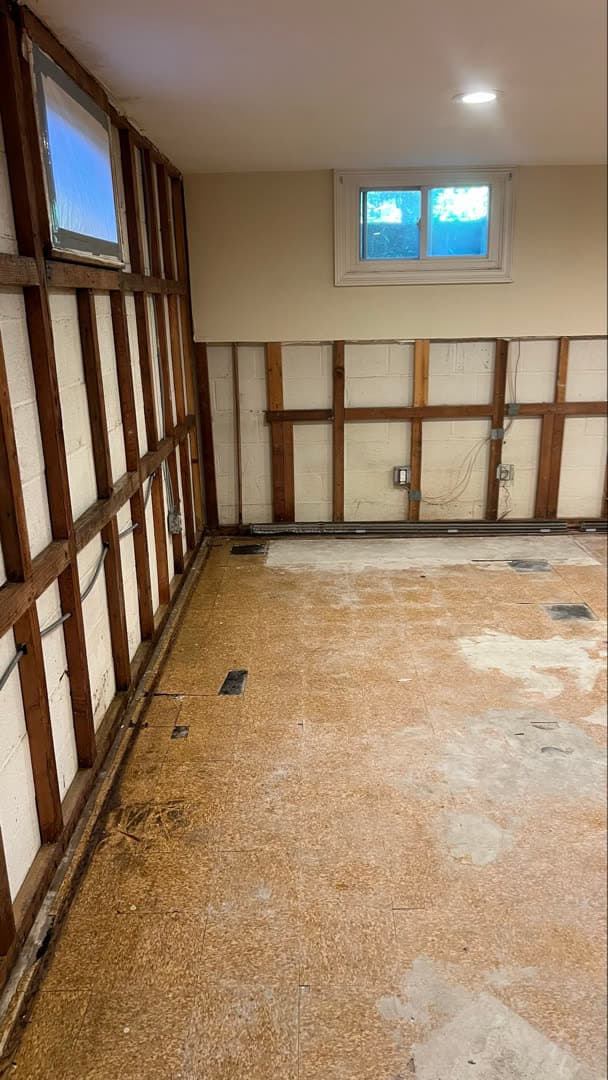
Real photos from this Ridgefield basement job: growth along the joists, the open framing, the services in every bay, and 2,100 square feet cleaned in place.
What Happened
The most useful thing about this Ridgefield project is what is missing from the invoice. There is no drywall removal line. No insulation tear out. No disposal of building materials beyond a single debris haul. On a job that ran $6,292.42 across an entire basement, nothing structural was removed. It was all cleaned in place. That is worth understanding, because the reflex assumption about mold work is that it means demolition, and a homeowner who expects demolition often ends up buying it whether the condition called for it or not. What the condition called for here was surface cleaning at scale.
The same 2,100 square feet appears three times in the scope, and the repetition is the method rather than a billing quirk. First, HEPA vacuuming in detail across 2,100 square feet, which lifts loose material off the wood into a sealed filter. Second, 2,100 square feet of stud wall cleaned heavy, which is a hand process on vertical framing. Third, 2,100 square feet of joist system cleaned, which is the overhead work and the slowest part of any basement, because a joist system is not a flat plane.
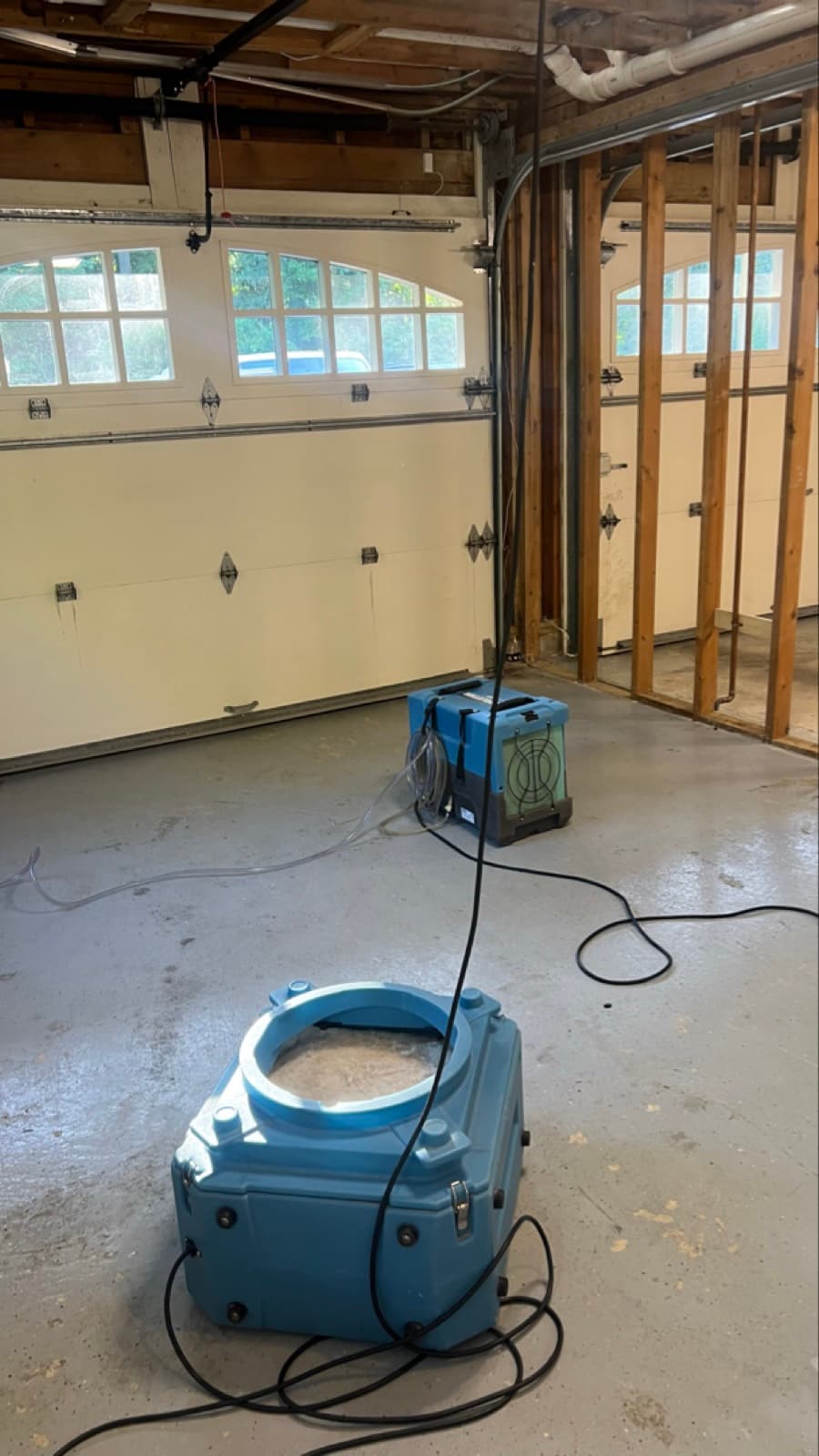
It is a repeating set of three sided bays with wiring, pipe and duct running through them, and cleaning it properly means working every bay rather than passing a vacuum along the underside. Vacuum, then walls, then ceiling structure, over the same footprint each time. Containment was modest at 110 square feet with two zipper doors, because the work zone was the basement itself rather than a room inside a finished house. Four 24 hour negative air periods ran across the job with 25 linear feet of lay flat ducting carrying scrubber exhaust out of the space, which matters more when nothing is being removed.
In a demolition job much of the contamination leaves in bags. In a cleaning job all of it becomes airborne at the moment of cleaning and the only route out is the filter. Contents were manipulated rather than discarded, in line with the instruction, which asked for the joist system and some contents to be cleaned. The crew notes read exactly as the work sounds: start cleaning joist system, continue cleaning joist system, continue cleaning. Three days of the same patient work across the same 2,100 square feet. What was not part of this project should be stated plainly. No antimicrobial coating and no encapsulation were sold or applied.
No testing, air sampling or clearance testing was performed. The basement was cleaned and handed back unfinished, exactly as it was found minus what came off it.
Scope of Damage
Basement Joist System
Moderate2,100 square feet of joist system cleaned in place. A joist system is a repeating set of three sided bays with services running through them, so it is cleaned bay by bay rather than as a flat surface.
Stud Walls
Moderate2,100 square feet of stud wall cleaned heavy by hand. Nothing was removed and no framing was replaced.
Basement Contents
LightContents were moved and handled during the work rather than discarded, in line with the instruction to clean the joist system including some contents.
How We Solved It
- 1
Contain The Work Zone
110 square feet of containment barrier with two zipper doors. Modest, because the basement itself was the work zone rather than a room inside a finished space.
- 2
Four Negative Air Periods
Four 24 hour negative air scrubber periods with 25 linear feet of lay flat ducting carrying exhaust out. On a cleaning job with no demolition, the filter is the only route out for what comes off the structure.
- 3
Detailed HEPA Vacuum
2,100 square feet HEPA vacuumed in detail first, lifting loose material off the wood into a sealed unit before any hand cleaning began.
- 4
Clean The Stud Walls
The same 2,100 square feet cleaned heavy as stud wall. Vertical framing is a hand process and it is where a rushed job leaves lines.
- 5
Clean The Joist System
The same 2,100 square feet again, overhead. The slowest part of any basement, because every bay has wiring, pipe or duct in it that has to be cleaned around rather than moved.
- 6
Handle The Contents
Contents were moved and worked around rather than written off, which is what the original instruction asked for.
- 7
Single Debris Haul
One pickup truck load including dump fees. On a job with no demolition there is very little to dispose of, and the invoice reflects that.
Tools & Equipment Used
Questions Homeowners Ask
Does mold remediation always require demolition?
No. This Ridgefield project removed no building material at all. The condition was surface growth on sound structural wood, so 2,100 square feet was HEPA vacuumed, cleaned as stud wall and cleaned as joist system in place. Demolition is appropriate when material is saturated or degraded, not as a default setting.
Why does the same square footage appear three times in the scope?
Because it is three different operations over the same area. A detailed HEPA vacuum lifts loose material into a sealed filter, cleaning the stud walls is a hand process on vertical framing, and cleaning the joist system is overhead work bay by bay. Each pass removes what the previous one could not.
Why is cleaning a joist system slower than cleaning a ceiling?
A joist system is not a flat plane. It is a repeating set of three sided bays with wiring, pipe and ductwork running through them. Each bay has to be worked individually and cleaned around the services rather than past them, which is why it is priced separately from a flat surface.
Why run negative air when nothing is being demolished?
It matters more, not less. In a demolition job much of the material leaves the property in bags. In a cleaning job everything becomes airborne at the moment of cleaning and the filter is the only route out. This project ran four 24 hour negative air periods with lay flat ducting carrying exhaust from the basement.
Was any coating or sealant applied after cleaning?
No. No antimicrobial coating and no encapsulation were sold or applied on this project, and no testing, air sampling or clearance testing was performed. The basement was cleaned and handed back unfinished, which is how it was found. Coatings are quoted separately when a project calls for one.
Do you serve Ridgefield and Fairfield County?
Yes. Green Restoration serves Ridgefield and towns across Fairfield County for mold remediation, water damage, crawl space cleaning and attic work. Our crews are IICRC certified, licensed and insured, and BBB A+ Rated. Call (203) 674-9573 for a free estimate.
Ridgefield is served by
Green Restoration of Fairfield County
Available 24 / 7 for emergency response